Lab-created heart valves can grow with the recipient

A groundbreaking new study led by University of Minnesota Twin Cities researchers from both the College of Science and Engineering and the Medical School shows for the first time that lab-created heart valves implanted in young lambs for a year were capable of growth within the recipient. The valves also showed reduced calcification and improved blood flow function compared to animal-derived valves currently used when tested in the same growing lamb model.

If confirmed in humans, these new heart valves could prevent the need for repeated valve replacement surgeries in thousands of children born each year with congenital heart defects. The valves can also be stored for at least six months, which means they could provide surgeons with an “off the shelf” option for treatment.

The study was published today in Science Translational Medicine, an interdisciplinary medical journal by the American Association for the Advancement of Science (AAAS). The valve-making procedure has also been patented and licensed to the University of Minnesota startup company Vascudyne, Inc. (Stillwater, Minn.).

“This is a huge step forward in pediatric heart research,” said Robert Tranquillo, the senior researcher on the study and a University of Minnesota professor in the Departments of Biomedical Engineering and the Department of Chemical Engineering and Materials Science. “This is the first demonstration that a valve implanted into a large animal model, in our case a lamb, can grow with the animal into adulthood. We have a way to go yet, but this puts us much farther down the path to future clinical trials in children. We are excited and optimistic about the possibility of this actually becoming a reality in years to come.”

Currently, researchers have not been able to develop a heart valve that can grow and maintain function for pediatric patients. The only accepted options for these children with heart defects are valves made from chemically treated animal tissues that often become dysfunctional due to calcification and require replacement because they don’t grow with the child. These children will often need to endure up to five (or more) open heart surgeries until a mechanical valve is implanted in adulthood. This requires them to take blood thinners the rest of their lives.

In this study, Tranquillo and his colleagues used a hybrid of tissue engineering and regenerative medicine to create the growing heart valves. Over an eight-week period, they used a specialized tissue engineering technique they previously developed to generate vessel-like tubes in the lab from a post-natal donor’s skin cells. To develop the tubes, researchers combined the donor sheep skin cells in a gelatin-like material, called fibrin, in the form of a tube and then provided nutrients necessary for cell growth using a bioreactor.

The researchers then used special detergents to wash away all the sheep cells from the tissue-like tubes, leaving behind a cell-free collagenous matrix that does not cause immune reaction when implanted. This means the tubes can be stored and implanted without requiring customized growth using the recipient’s cells.

The next step was to precisely sew three of these tubes (about 16 mm in diameter) together into a closed ring. The researchers then trimmed them slightly to create leaflets to replicate a structure similar to a heart valve about 19 mm in diameter.

Video: https://www.youtube.com/watch?v=zpRbFsAVofA

“After these initial steps, it looked like a heart valve, but the question then became if it could work like a heart valve and if it could grow,” Tranquillo said. “Our findings confirmed both.”

This second generation of tri-tube valves were implanted into the pulmonary artery of three lambs. After 52 weeks, the valve regenerated as its matrix became populated by cells from the recipient lamb, and the diameter increased from 19 mm to a physiologically normal valve about 25 mm. The researchers also saw a 17 to 34 percent increase in the length of the valve leaflets as measured from ultrasound images. In addition, researchers showed that the tri-tube valves worked better than current animal-derived valves with almost none of the calcification or blood clotting that the other valves showed after being implanted in lambs of the same age.

“We knew from previous studies that the engineered tubes have the capacity to regenerate and grow in a growing lamb model, but the biggest challenge was how to maintain leaflet function in a growing valved conduit that goes through 40 million cycles in a year,” said Zeeshan Syedain, the lead researcher on the study and a University of Minnesota senior research associate in Tranquillo’s lab. “When we saw how well the valves functioned for an entire year from young lamb to adult sheep, it was very exciting.”

https://www.youtube.com/watch?v=rme9CZgRgsg

Tranquillo said the next steps are to implant the tri-tube valve directly into the right ventricle of the heart to emulate the most common surgical repair and then start the process of requesting approval from the U.S. Food and Drug Administration (FDA) for human clinical trials over the next few years.

“If we can get these valves approved someday for children, it would have such a big impact on the children who suffer from heart defects and their families who have to deal with the immense stress of multiple surgeries,” Tranquillo said. “We could potentially reduce the number of surgeries these children would have to endure from five to one. That’s the dream.”

In addition to Tranquillo and Syedain, the research team included Bee Haynie (independent contractor); University of Minnesota researchers Sandra L. Johnson and Greeshma Thrivikraman (biomedical engineering), James Berry, Richard Bianco, John P. Carney, and Matthew Lahti (experimental surgical services); Jirong Li (mechanical engineering); and Ryan C. Hill and Kirk C. Hansen (University of Colorado Anschutz Medical Campus).

The research was funded by the National Institutes of Health (R01 HL107572).

To read the full research paper entitled “Pediatric tri-tube valved conduits made from fibroblast-produced extracellular matrix evaluated over 52 weeks in growing lambs,” visit the Science Translational Medicine website.

Share Button

Coronavirus shielding advice to end on 1 April – Hancock

More than 3.7 million people in England will no longer have to stay at home to avoid the virus.

Share Button

Covid-19: EU warns UK over vaccine exports

The EU threatens to block vaccine exports to the UK unless it “gets its fair share”.

Share Button

Covid: People aged 50-54 invited for jab in England

The England rollout comes as figures show nearly half of UK adults have had one dose.

Share Button

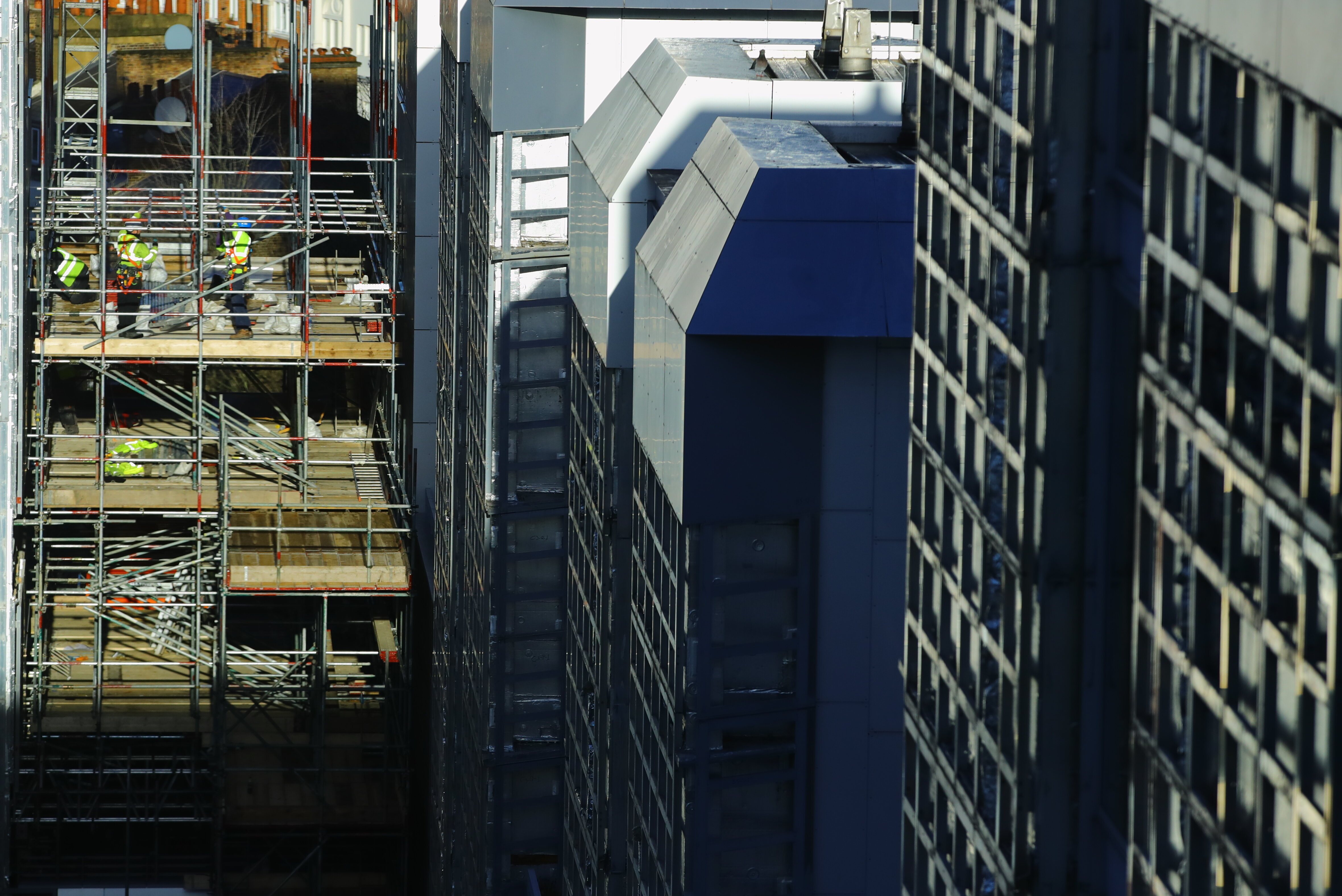
Government Defeated Again Over Cladding Scandal In Lords Vote

The government has been defeated again over the cladding scandal as peers backed a fresh bid to ensure flat owners do not have to pay for fire safety work.

The House of Lords passed an amendment to the fire safety bill proposed by the Lord Bishop of St Albans, Alan Smith, by 326 votes to 248, to ensure leaseholders do not have to pay for the removal of unsafe cladding from homes.

It sets up a fresh headache for Boris Johnson in the Commons, where Tory MPs are threatening to rebel over what they see as unfair costs being passed to homeowners to fix historic fire safety defects identified after the Grenfell Tower disaster.

Thousands of people living in flats cased in combustible cladding face huge bills after the Grenfell fire revealed major flaws in medium- and high-rise buildings’ fire-safety.

Housing secretary Robert Jenrick last month attempted to defuse the row by promising £3.5bn of cash to help homeowners.

But he was accused of “betrayal” of leaseholders as it was revealed the plans would force some leaseholders into taking out loans.

The money will only pay for the removal of cladding in buildings over 18 metres high. 

People living in buildings below that height will have to take out loans, wiping thousands of pounds off the value of their homes.

Leading Tory rebel MP Stephen McPartland said the government defeat was “brilliant news”.

He told HuffPost UK: “The amendment protects leaseholders from paying for historic fire safety costs and retains the status quo in the Fire Safety Reform Order 2005.

“Leaseholders, action groups and supporters of the amendment do not want the taxpayer to pay – we want those responsible to pay, and only the government has the power to provide the funds up front and then levy those responsible to pay them back.

“The focus is now on to persuade the government to work with us and leaseholders to find a compromise that protects leaseholders from paying for historic fire safety costs.”

Smith told the Lords that ministers had not addressed the “severe adverse financial consequences that this bill will create for leaseholders”, and that ministers were “morally wrong in their treatment of leaseholders in this crisis”.

He said freeholders would be able to force leaseholders to reimburse “staggering” costs for fire safety work that need to be carried out through no fault of their own. 

The bishop told the Lords: “Far from the government’s estimated remedial costs of around £9,000 per leaseholder depending on the terms of the lease and the work involved, a leaseholder could very easily be handed a bill of £50,000 payable within weeks.”

Citing a survey by Inside Housing, he said many of those affected are already seeking bankruptcy options.

“How can this be fair? How can this be just?” he said.

“It’s not the leaseholders who sold defective cladding.

“It was not leaseholders who fitted defective cladding.

“Leaseholders are the innocent party – they purchased their properties in good faith, believing them to be safe.

“And if this bill passes unamended, it is they who will pay.

“Not the cladding providers, not the developers, but hardworking ordinary people, forced to pay for defects that were deemed safe when they purchased their apartments.”

He added: “By not including sufficient provision to protect leaseholders, a conscious decision would be made to impose poverty, possibly bankruptcy, and certainly misery on thousands of ordinary people – people whose only crime was being aspirational.

“Those responsible should be the ones who pay.”

Labour housing spokesperson Lord Kennedy of Southwark, who backed the amendment, said: “The leaseholders are victims and have done nothing wrong.

“They deserve to be treated much better than they have been by the government.

“They have done everything right, they have bought their property and are paying their mortgage and are being penalised for the failure of others.

“Surely that cannot be right.

“The fact that their building has been covered in dangerous cladding has made their flats worthless – they cannot sell them but they are still expected to pay their mortgage and other charges.”

The bill will now return to the Commons for further consideration in another round of parliamentary ping-pong.

Share Button

Patsy Palmer Takes On Her Critics With Sweary Statement After Shutting Down Good Morning Britain Interview

ITV

Patsy Palmer cut short an interview on Wednesday’s GMB

Revealing she was appearing to discuss her company, Good and Proper Hair, Patsy wrote under a previous Insta post: “My apologies to anyone that wants to hear good news as I have great faith that considering what is going on in the world right now there are still some people that do.

“I keep seeing people saying ‘get over yourself’, I have gotten over my old self years ago and no longer wish to discuss it when I only have 5 minutes air time

“I have been a people pleaser my whole life. I am not going to waste those precious 5 minutes talking about things that are 20 years old or about Meghan and Harry.

“If I do post things on social media in reaction to a TV show or an article I’ve read about something that’s my platform.

“I have always been very open and honest at certain times in my life as many people are forced to be in the public eye…

“I was supposed to be on there to talk about a new business that I created that couldn’t be more opposite to that headline.”

ITV

Patsy took offence to the strap line that appeared on screen

The former Bianca Jackson actor then hit out at “trolls and haters” who had criticised her actions.

“Go fuck yourselves,” she wrote. “I’ve worked hard on myself to remove negativity from my life and the lives of my children so if anyone has a problem with that you need to go and take a look at your lives and wonder what drives you to jump on here to attack me for standing my ground.

“If you are parents doing that then shame on you. I hope you find some joy amidst all the madness.”

Patsy had been speaking on GMB from her home in Malibu via video link, with Susanna asking about her life out in the US as her opening question.  

After noticing the offending strap line, she said: “You know what, actually, I don’t even want to do this interview because I don’t even want to look at what it says at the bottom of the screen,” she said. 

“So I’m going to switch off, do a real Piers Morgan, and just say that it’s not okay to have ‘addict to wellness guru’ at the bottom of the screen.

“My issues I had years ago, that were talked about by me many, many years ago and it’s over so I’m not going to talk about it.

“I don’t really want to talk to you,” she said, as she pulled down the lid of her laptop. 

Susanna and Ben tried to apologise, before throwing to a weather forecast. 

Good Morning Britain airs weekdays at 6am on ITV. 

Share Button

RuPaul’s Drag Race UK Final: Who Should Win The Series 2 Crown?

For many of us around the country, the weekend officially started at 7pm on Thursday nights these last nine weeks, as that’s when we’ve been treated to new episodes of RuPaul’s Drag Race UK.

Series two of the hit reality show arrived a little bit later than many of us would have liked, but it more than made up for it with a season jam-packed with surprises, stunts and total serves.

This series has gifted us some incredible moments, from the early exits of initial favourites Joe Black and Asttina Mandella, Ginny Lemon’s walk-off and Rats: The Rusical, to the debut of UK Hun and a glorious Snatch Game.

Now, just four queens remain in the running, and the question remains…who is going to take home the season two crown?

Here we weigh up the four finalists’ chances of following in series one champion The Vivienne’s footsteps…

Bimini Bon Boulash 

Ray BurmistonBBC/World of Wonder/Ray Burmiston

Release the beast! It’s definitely not an understatement to say that as the Drag Race UK finale approaches, Bimini Bon Boulash is the favourite for the crown by some way.

Since the queens returned from their enforced seven-month break due to the pandemic, Bimini has been picking up challenge wins left, right and centre. She’s now ahead of all of her competitors with four Ru-Peter Badges to her name, including wins for her United Kingdolls verse and her scene-stealing Snatch Game performance, which even got the seal of approval from Katie Price herself.

Not only is she ahead in wins, Bimini is trouncing the rest of the queens when it comes to fan support on social media, and has won praise for candid conversations around gender and her own non-binary identity.

The only real criticism we could have for Bimini is that it did take her a little while to find her footing in the competition (if she does win, she’ll be the only non-All Stars winner to be crowned after lip syncing in week one), but there’s no denying she’s definitely come into her own since those early weeks. The incredible performer and self-professed “cis-tem offender” would unquestionably be a great representative of UK drag on the world stage.

High-point: Returning after a seven-month break with her immediately-iconic UK Hun verse

Low moment: Winding up in the bottom two in the first week of the competition 

Serve of the season: 

Tayce

Ray BurmistonBBC/World of Wonder/Ray Burmiston

On paper, Tayce might not be as far ahead as some of her competitors, with four challenge losses over the course of the competition. That being said, she’s kept her composure and come back fighting every single time… and let’s be honest, of those four lip syncs, how many times did she actually deserve to be in the bottom?

Exactly.

Since Drag Race launched over a decade ago, RuPaul has stuck with his “charisma, uniqueness, nerve and talent” mantra as a way of determining who the next drag superstar will be, and those are four boxes Tayce definitely ticks.

Charisma? Her quick wit and unique way with words in the confessionals regularly has us howling, and she’s probably responsible for more quotes and memes than most of her competitors.

Uniqueness? Absolutely, who else in the competition is serving the levels of glamour and quirky sense of humour like Tayce?

Nerve? Did we mention those four lip syncs, and the fact she barely batted her perfect eyelashes despite her place in the competition being on the line every single time?

And as for talent, that’s something she’s showcased throughout her time in the workroom. Her efforts might not always have translated into individual challenge wins, but Tayce is a queen we won’t forget in a hurry.

High-point: Every time she walked the runway, to be honest.

Low moment: Making an outfit out of scouring pads, despite being advised not to by RuPaul.

Serve of the season:   

Lawrence Chaney

Ray BurmistonBBC/World of Wonder/Ray Burmiston

Lawrence Chaney was a frontrunner from the time she first stepped foot in the workroom and declared she was “like the Loch Ness monster… a legend”.

From the word go, Lawrence was clearly a favourite of RuPaul’s, picking up three successive wins, including for her performances in the daytime TV and design challenges. Her sense of humour also set her apart with viewers, but she was no one-trick pony, as her looks were also almost always on point.

If you’d asked anyone – including the remaining queens – in the early stages of the competition, they’d have probably said Lawrence had it in the bag. It’s been something of a different story in the post-lockdown half of the series, with Lawrence struggling more than we’d seen before, even winding up in the bottom when her Miriam Margolyes impression failed to impress the judges in the Snatch Game.

It has to be said, though, that even when Lawrence is slightly off her game or gets in her head – as she did in the lead-up to both the Ruruvision Song Contest and BeastEnders challenges – she’s always managed to deliver when it counts.

Since Drag Race has become a global phenomenon, RuPaul has frequently described the show as being about the “tenacity of the human spirit”, and tenacity is one thing Lawrence has in abundance, as evidenced when she’s discussed her struggles with bullying or how she’s personally been hit hard by the pandemic.

It’s been a few weeks since we’ve seen her winning a Ru-Peter badge, but she does have three of them to her name, so no one should be writing her off just yet.

High-point: Winning three challenges in a row

Low moment: The Snatch Game routine that landed her in the bottom two

Serve of the season:

Ellie Diamond 

Ray BurmistonBBC/World of Wonder/Ray Burmiston

Ellie Diamond

No challenge wins and coming into the final straight off the back of her first lip sync might put Ellie Diamond as something of an underdog in this last stage of the competition. But what is Drag Race, if not a celebration of underdogs?

Ellie entered the competition as a queen primarily known for her incredible make-up abilities, but don’t count out her other talents, too. Her Snatch Game performance impersonation of Vicky Pollard earned the praise of Little Britain star Matt Lucas, and she kept up with renowned dancer Tayce not just in their semi-final lip sync but also Rats: The Rusical.

And even though past Drag Race queens who specialise in makeup have perhaps taken the look side of the contest a little too seriously, Ellie has never been afraid to lean into the silly side of things, whether she’s channelling Dennis The Menace for her hometown look or walking the runway dressed as a giant bikini-clad seagull.

Admittedly, of the four contestants still in the running, Ellie would be the one we’d be most shocked to see take home the crown, but there’s a reason the 21-year-old has lasted as long as she has in the race.

High-point: Serving physical comedy with “Mickaaaay” in BeastEnders

Low moment: Dirty Diamond in her stand-up comedy challenge

Serve of the season: 

The final of RuPaul’s Drag Race series 2 will be available to stream on BBC Three from 7pm on Thursday.

Share Button

Oxford-AstraZeneca Covid jab safe, insists Hancock

People should “get the jab”, the health secretary says, after some countries suspend its use.

Share Button

Covid-19 disruptions killed 228,000 children in South Asia, says UN report

A new UN report says interrupted health services caused hundreds of thousands of deaths in South Asia.

Share Button

How life on land recovered after ‘The Great Dying’

Over the course of Earth’s history, several mass extinction events have destroyed ecosystems, including one that famously wiped out the dinosaurs. But none were as devastating as “The Great Dying,” which took place 252 million years ago during the end of the Permian period. A new study, published today in Proceedings of the Royal Society B, shows in detail how life recovered in comparison to two smaller extinction events. The international study team — composed of researchers from the China University of Geosciences, the California Academy of Sciences, the University of Bristol, Missouri University of Science and Technology, and the Chinese Academy of Sciences — showed for the first time that the end-Permian mass extinction was harsher than other events due to a major collapse in diversity.

To better characterize “The Great Dying,” the team sought to understand why communities didn’t recover as quickly as other mass extinctions. The main reason was that the end-Permian crisis was much more severe than any other mass extinction, wiping out 19 out of every 20 species. With survival of only 5% of species, ecosystems had been destroyed, and this meant that ecological communities had to reassemble from scratch.

To investigate, lead author and Academy researcher Yuangeng Huang, now at the China University of Geosciences, Wuhan, reconstructed food webs for a series of 14 life assemblages spanning the Permian and Triassic periods. These assemblages, sampled from north China, offered a snapshot of how a single region on Earth responded to the crises. “By studying the fossils and evidence from their teeth, stomach contents, and excrement, I was able to identify who ate whom,” says Huang. “It’s important to build an accurate food web if we want to understand these ancient ecosystems.”

The food webs are made up of plants, molluscs, and insects living in ponds and rivers, as well as the fishes, amphibians, and reptiles that eat them. The reptiles range in size from that of modern lizards to half-ton herbivores with tiny heads, massive barrel-like bodies, and a protective covering of thick bony scales. Sabre-toothed gorgonopsians also roamed, some as large and powerful as lions and with long canine teeth for piercing thick skins. When these animals died out during the end-Permian mass extinction, nothing took their place, leaving unbalanced ecosystems for ten million years. Then, the first dinosaurs and mammals began to evolve in the Triassic. The first dinosaurs were small — bipedal insect-eaters about one meter long — but they soon became larger and diversified as flesh- and plant-eaters.

“Yuangeng Huang spent a year in my lab,” says Peter Roopnarine, Academy Curator of Geology. “He applied ecological modelling methods that allow us to look at ancient food webs and determine how stable or unstable they are. Essentially, the model disrupts the food web, knocking out species and testing for overall stability.”

“We found that the end-Permian event was exceptional in two ways,” says Professor Mike Benton from the University of Bristol. “First, the collapse in diversity was much more severe, whereas in the other two mass extinctions there had been low-stability ecosystems before the final collapse. And second, it took a very long time for ecosystems to recover, maybe 10 million years or more, whereas recovery was rapid after the other two crises.”

Ultimately, characterizing communities — especially those that recovered successfully — provides valuable insights into how modern species might fare as humans push the planet to the brink.

“This is an amazing new result,” says Professor Zhong-Qiang Chen of the China University of Geosciences, Wuhan. “Until now, we could describe the food webs, but we couldn’t test their stability. The combination of great new data from long rock sections in North China with cutting-edge computational methods allows us to get inside these ancient examples in the same way we can study food webs in the modern world.”

Story Source:

Materials provided by California Academy of Sciences. Note: Content may be edited for style and length.

Share Button