Increase school funding to meet need for special education, MPs urge

A cross-party group calls on the government to “align funding to need”, as ministers consider SEND reforms.

Share Button

Statin pills much safer than advertised, major review finds

The results, in The Lancet journal, come from trials involving more than 120,000 people comparing statins with a dummy drug or placebo.

Share Button

Donald Trump Rows Back Criticism On Keir Starmer’s Chagos Deal

Donald Trump has now backed Keir Starmer’s Chagos deal once again just weeks after attacking it.

The UK government announced last year that it was going to pay Mauritius £9 billion over the next 99 years so the UK-US military base at Diego Garcia will continue to operate as it does at the moment.

At the height of his row with Europe over control of Greenland last month, the US president accused the UK of giving away the site of “vital US military base” for “NO REASON WHATSOEVER” – despite appearing to be content with the deal at the end of 2025.

But, after a phone call with the prime minister on Thursday, Trump U-turned again, and now seems much more at ease with the plan.

In a post on TruthSocial, he wrote: “I understand that the deal prime minister Starmer has made, according to many, the best he could make.

“However, if the lease deal, sometime in the future, ever falls apart of anyone threatens or endangers US operations and forces at our base, I retain the right to militarily secure and reinforce the American presence in Diego Garcia.

“Let it be known that I will never allow our presence on a base as important as this to ever be undermined or threatened by fake claims or environmental nonsense.

“Thank you for your attention to this matter!”

The prime minister reportedly spoke to Trump about the “importance of the deal to secure the joint UK-US base on Diego Garcia, which remains vital to shared security interests”.

The two leaders agreed that the UK and US “will continue to work closely on the implementation of the deal”, according to Downing Street’s readout of the call.

No.10 will be breathing a huge sigh of relief at the president’s latest change of heart, considering Trump had condemned Starmer’s decision to give up the islands as “an act of great stupidity” in January.

The president said: “There is no doubt that China and Russia have noticed this act of total weakness.”

He added: “The UK giving away extremely important land is an act of GREAT STUPIDITY, and is another in a very long line of National Security reasons why Greenland has to be acquired. Denmark and its European Allies have to DO THE RIGHT THING.”

The outburst stunned the Westminster at the time and there were concerns about the future of the so-called “special relationship” between the US and UK.

But, unlike the European Union, Starmer ruled out imposing retaliatory tariffs on America, even if Trump went ahead with his threat to slap 10% import charges on British goods from February 1.

And, once Trump had supposedly worked up a “framework of a future deal” with Nato over Greenland, he dropped the tariff threat.

Share Button

Trump Says It ‘Bothers Me That Somebody Is Going After Bill Clinton’ Amid Epstein Scandal

US President Donald Trump said it “bothers” him that former President Bill Clinton is facing scrutiny and an order to testify about his past ties to the late child sex predator Jeffrey Epstein, who Trump infamously also had a relationship with.

“It bothers me that somebody is going after Bill Clinton. See, I like Bill Clinton. I still like Bill Clinton,” Trump told NBC News in a White House interview Wednesday.

Asked what he likes about the former president, Trump answered: “I liked his behaviour towards me. I thought he got me, he understood me.”

This expressed support came one day after Trump called it “a shame” that Clinton and his wife, Hillary, have been subpoenaed to testify about their ties to Epstein.

Bill Clinton’s relationship with Epstein was documented in investigative files released by the Justice Department last week. The files include a shirtless photo of Clinton in a hot tub with someone that a DOJ official described as a “victim” of Epstein’s sexual abuse. He has denied wrongdoing and having any knowledge that Epstein was abusing underage girls.

Trump, who also faces unverified allegations of sexual misconduct involving minors in the documents and has denied wrongdoing, said it’s time to “move on” from the Epstein files and expressed support for the Clintons. This about-face follows Trump infamously calling for the former secretary of state to be locked up during and long after their vitriolic 2016 presidential campaign battle.

“I think it’s a shame, to be honest. I always liked him. Her? Yeah, she’s a very capable woman. She was better in debating than some of the other people, I will tell you that,” he told reporters on Tuesday. “She was smarter. She’s a smart woman. I hate to see it in many ways. I hate to see it, but then look at me, they went after me like — you know, they wanted me to go to jail for the rest of my life. Then it turned out I was innocent.”

Share Button

‘Universally Low’: How Labour MPs’ Plummeting Morale Has Left Keir Starmer In The Danger Zone

Keir Starmer threw himself on the mercy of Jeffrey Epstein’s victims today as he desperately tried to save his premiership.

The prime minister stared down the barrel of a TV camera and apologised to them for appointing Peter Mandelson as the UK’s ambassador to Washington, despite his known links to the convicted paedophile.

“I am sorry,” he said. “Sorry for what was done to you. Sorry for having believing Mandelson’s lies and appointed him. And sorry that even now you are forced to watch this story unfold in public once again.”


But the prime minister’s audience was as much his own MPs as it was the women who were abused by Epstein.

They are the ones who hold his fate in their hands, and the bad news for Starmer is that, if anything, they are even angrier than they were yesterday.

One veteran backbencher described the mood among his colleagues as “universally low”.

Another MP said: “Taking refuge in constituency stuff this weekend seems appealing.

“But trying to pretend it’s all a bad dream for a few days won’t work, as constituents will be taking the chance to make very clear how they feel about Starmer and Mandelson and that’ll end up feeding into things back in parliament next week.”

Starmer’s argument is that he was unaware of the extent of Lord Mandelson’s ongoing friendship with Epstein, and was lied to by the then Labour peer during the vetting process for the ambassadorial post.

“He portrayed Epstein as someone he barely knew,” the PM said. “And when that became clear and it was not true, I sacked him.”

But that is failing to convince even his own ministers, with one telling HuffPost UK: “Everyone knows Peter was always going to be a high risk appointment and that’s the most disappointing thing.

“On balance the ‘is this worth the risk’ question should have been answered with a ‘no’.”

For a prime minister and former barrister, Starmer does seem to be remarkably incurious.

The full extent of Mandelson’s deep connections with Epstein were, of course, unknown until the latest tranche of documents on the billionaire financier were released last week by the US Department of Justice.

Details of him allegedly passing on market sensitive information in the aftermath of the 2008 financial crash has stunned Westminster and have put Mandelson at the heart of a criminal investigation.

Nevertheless, there was enough evidence available long before Starmer made Mandelson his ambassador to show that he had maintained contact with Epstein after his conviction.

An internal report from 2019 by the JP Morgan bank containing emails between the pair was reported on by the Financial Times in 2023.

Photographs of the pair shopping in the Caribbean and blowing out candles on a birthday cake in Epstein’s Paris apartment were also widely in circulation.

Given that, it is hard to understand how Starmer could have bought Mandelson’s line that the pair “barely knew” one another.

Labour MP Richard Burgon – no fan of Starmer’s, it must be said – remarked: “No minister should be giving the impression that Mandelson’s relationship with Epstein – even after his jailing – wasn’t known before Mandelson became ambassador. It was.”

Other MPs insist the moment of maximum danger for Starmer has passed, at least in the short term.

But the feeling remains that the PM is now just one mis-step away from a full-blown leadership crisis – and his rivals are preparing to strike.

Share Button

This simple diet shift cut 330 calories a day without smaller meals

For people who committed to an unprocessed food diet as a New Year’s resolution, research suggests the change may guide food choices in a surprising way. Instead of gravitating toward higher calorie whole foods such as rice, meat, and butter, people naturally tend to eat much larger amounts of fruits and vegetables. That shift alone may help support weight loss without deliberate calorie restriction.

A study led by researchers at the University of Bristol, with contributions from leading US nutrition experts, found that participants who ate only unprocessed foods consumed more than 50 percent more food by weight than those eating only UPFs (ultra-processed food). Even so, their daily calorie intake was about 330 calories lower on average.

A Built-In Ability to Balance Nutrition and Energy

Published in The American Journal of Clinical Nutrition, the findings offer new insight into how people make food decisions. The results support the idea that humans may possess a built-in “nutritional intelligence” that helps guide balanced eating. This instinct appears to function best when foods are eaten in their natural form and may be disrupted by modern fast food environments.

Lead author Jeff Brunstrom, Professor of Experimental Psychology at the University of Bristol, said: “It’s exciting to see when people are offered unprocessed options they intuitively select foods that balance enjoyment, nutrition, and a sense of fullness, while still reducing overall energy intake. Our dietary choices aren’t random — in fact we seem to make much smarter decisions than previously assumed, when foods are presented in their natural state.”

Reexamining a Landmark Processed Food Trial

The research involved a fresh analysis of data from a landmark clinical trial led by Dr. Kevin Hall, a longtime researcher at the US National Institutes of Health. That original study showed that diets made up entirely of ultra-processed foods lead to overeating and weight gain. The new analysis took a closer look at why people eating only whole foods consumed much larger portions of certain foods while still taking in fewer total calories.

Participants on the unprocessed diet consistently filled their meals with fruits and vegetables, sometimes eating several hundred grams at a time. They tended to avoid more calorie-dense choices such as steak, pasta, and cream. As a result, people eating whole foods consumed 57 percent more food by weight overall.

Fruits and Vegetables Fill Nutrient Gaps

Researchers also evaluated how nutritious the diets were. They found that the variety and quantity of fruits and vegetables provided essential vitamins and minerals that would have been missing if participants had relied only on higher calorie whole foods.

Study co-author Mark Schatzker, author of The Dorrito Effect and The End of Craving, explained: “Had participants eaten only the calorie-rich foods, our findings showed they would have fallen short on several essential vitamins and minerals and eventually developed micronutrient insufficiencies. Those micronutrient gaps were filled by lower calorie fruits and vegetables.”

The researchers believe this behavior reflects a process they call “micronutrient deleveraging.” In simple terms, people appear to prioritize foods rich in vitamins and minerals, such as fruits and vegetables, even if that means eating fewer energy-dense options.

Why Ultra-Processed Foods Change the Equation

Ultra-processed foods produced a very different outcome. While they are often described as providing “empty calories,” the study found they can meet micronutrient needs, largely because of vitamin fortification. For example, calorie-rich foods like French toast sticks and pancakes turned out to be among the top sources of vitamin A. On the unprocessed diet, vitamin A mostly came from carrots and spinach, which provide far fewer calories.

Study co-author Dr. Annika Flynn, Senior Research Associate at the University of Bristol, said: “This raises the alarming possibility that UPFs deliver both high energy and micronutrients in one hit, which could result in calorie overload, because they effectively kill the beneficial trade-off between calories and micronutrients.”

She added that whole foods restore that balance by encouraging competition between nutrient-rich, lower calorie foods and higher energy options. This helps steer people toward fruits and vegetables rather than foods like pasta and meat.

Processed Foods and Modern Eating Behavior

The findings offer further insight into how widespread consumption of highly processed foods may influence behavior and decision making. According to the researchers, overeating itself may not be the main problem.

Prof Brunstrom said: “Overeating is not necessarily the core problem. Indeed, our research clearly demonstrated consumers on a wholefood diet actually ate far more than those on a processed food one. But the nutritional make-up of food is influencing choices and it seems that UPFs are nudging people towards higher calorie options, which even in much lower quantities are likely to result in excess energy intake and in turn fuel obesity.”

Small Changes Can Shape Healthier Choices

Related research from the University of Bristol has shown that even small adjustments can influence decisions. In a separate study, simply changing the order of healthier, more environmentally friendly meals on a weekly menu led more diners to choose them.

The research was supported by the National Institute for Health and Care Research (NIHR) Bristol Biomedical Research Centre (Bristol BRC).

Share Button

Health warning over Cape Verde travel after stomach bug deaths

Four Britons have died after contracting gut infections on the archapeligo since last year.

Share Button

36 UK infants ill after drinking contaminated baby formula

It comes after some batches made by Nestle and Danone were recalled after being contaminated with a toxin.

Share Button

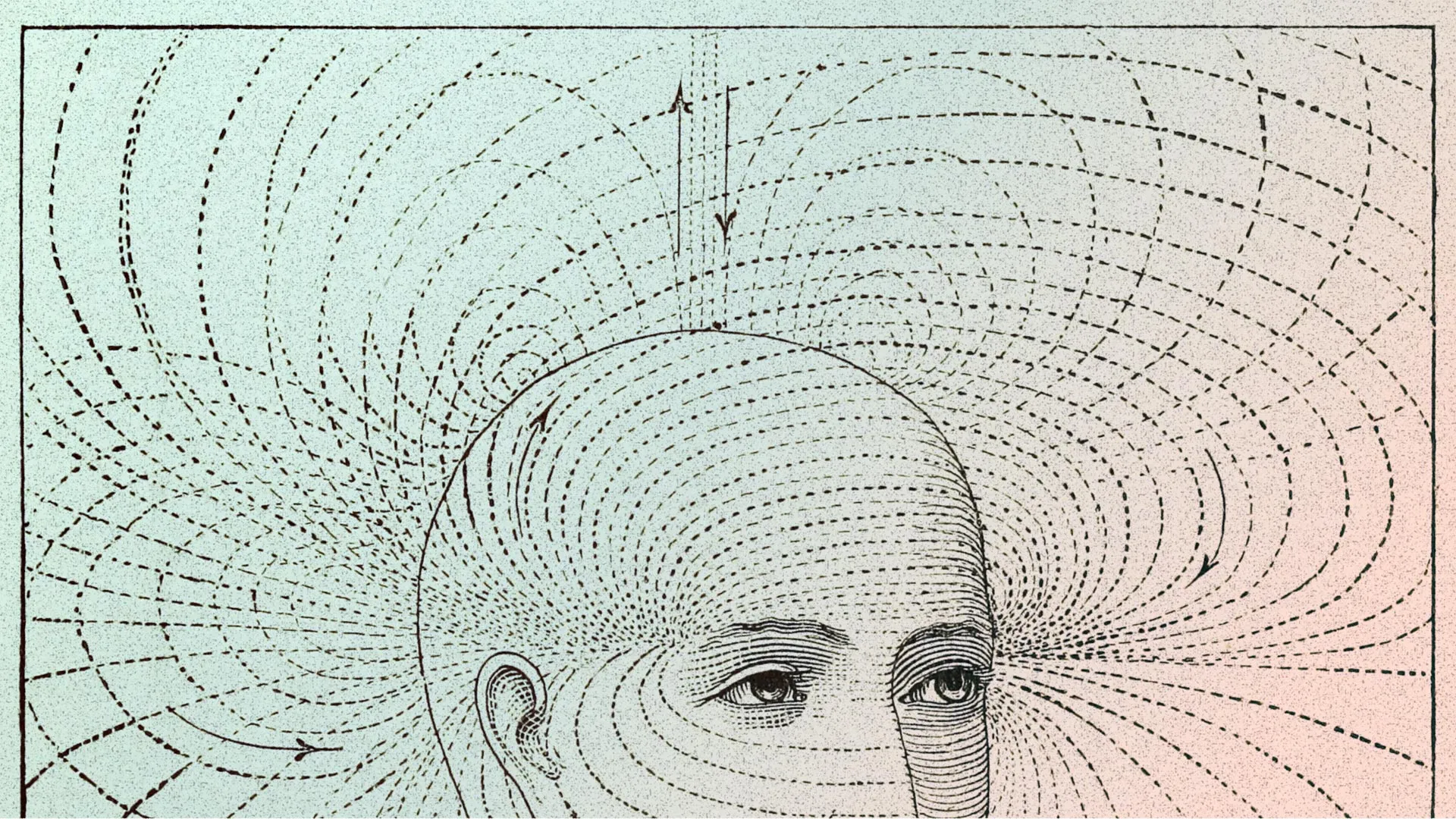
Scientists discover hidden deep-Earth structures shaping the magnetic field

Reaching the deepest parts of Earth is far more difficult than traveling through space. Humans have journeyed roughly 25 billion km beyond our planet, yet drilling beneath Earth’s surface has only reached a depth of just over 12 km. This extreme limitation means scientists still know relatively little about what lies far below the crust.

That knowledge gap is especially important near the boundary between the mantle and the core. This region represents the most critical internal boundary within Earth and is now the focus of new research revealing unexpected magnetic behavior.

Giant Hot Rock Structures Beneath Africa and the Pacific

In a study published in Nature Geoscience, a research team led by the University of Liverpool found magnetic evidence that two massive, intensely hot rock formations at the base of Earth’s mantle influence the liquid outer core beneath them. These structures sit about 2,900 kilometers below Africa and the Pacific Ocean.

The findings suggest that these enormous bodies of solid, superheated rock — surrounded by a pole-to-pole ring of cooler material — have played a role in shaping Earth’s magnetic field for millions of years.

Combining Ancient Magnetism With Supercomputer Models

Reconstructing ancient magnetic fields and modeling the processes that generate them is extremely challenging. To investigate these deep-Earth features, the scientists combined palaeomagnetic data with advanced computer simulations of the geodynamo — the movement of liquid iron in the outer core that produces Earth’s magnetic field in a way similar to how a wind-turbine generates electricity.

These numerical models allowed the team to recreate key features of Earth’s magnetic behavior over the past 265 million years. Even with access to a supercomputer, running simulations across such vast timescales requires immense computational effort.

Uneven Heat at the Core Mantle Boundary

The results showed that the upper boundary of the outer core does not have a uniform temperature. Instead, it contains sharp thermal contrasts, with localized hot zones sitting beneath the continent sized rock structures.

The analysis also revealed that some components of Earth’s magnetic field have remained relatively stable for hundreds of millions of years, while other aspects have changed dramatically over time.

Andy Biggin, Professor of Geomagnetism at the University of Liverpool, said: “These findings suggest that there are strong temperature contrasts in the rocky mantle just above the core and that, beneath the hotter regions, the liquid iron in the core may stagnate rather than participate in the vigorous flow seen beneath the cooler regions.

“Gaining such insights into the deep Earth on very long timescales strengthens the case for using records of the ancient magnetic field to understand both the dynamic evolution of the deep Earth and its more stable properties.

“These findings also have important implications for questions surrounding ancient continental configurations — such as the formation and breakup of Pangaea — and may help resolve long-standing uncertainties in ancient climate, palaeobiology, and the formation of natural resources. These areas have assumed that Earth’s magnetic field, when averaged over long periods, behaved as a perfect bar magnet aligned with the planet’s rotational axis. Our findings are that this may not quite be true.”

Research Team and Publication Details

The study was carried out by scientists from the DEEP (Determining Earth Evolution using Palaeomagnetism) research group within the University of Liverpool’s School of Environmental Sciences, working alongside researchers from the University of Leeds.

Professor Biggin and his team focus on studying magnetic signals preserved in rocks collected from around the world to reconstruct the history of Earth’s magnetic field and the planet’s internal dynamics.

DEEP was established in 2017 with funding from the Leverhulme Trust and the Natural Environment Research Council (NERC).

Share Button

Air ambulance teams are changing who survives critical injuries

People with life-threatening injuries may be more likely to survive when advanced medical care reaches them by helicopter. Survival data from a regional air ambulance service in South East England shows that outcomes were better than expected for major trauma patients. The analysis suggests that about five additional people survived for every 100 severely injured patients treated. The findings were published online in Emergency Medicine Journal.

Researchers say it has been difficult to draw firm conclusions from international studies on Helicopter Emergency Medical Services (HEMS) and trauma survival. Differences in study methods, small patient numbers, and the lack of shared outcome definitions have limited comparisons. Another unresolved question has been identifying which types of patients benefit the most from helicopter-based emergency care.

Nearly a Decade of Trauma Data Analyzed

To explore these issues, researchers reviewed outcomes for 3225 trauma patients who received pre-hospital care from a single HEMS team. The service operates across Kent, Surrey, and Sussex, and the data covered the years from 2013 to 2022.

The team used a statistical method to estimate each patient’s chance of survival (Ws analysis). This approach adjusted for differences in injury severity and patient characteristics, and it also examined factors linked to death within 30 days.

Unexpected Survival and Cardiac Arrest Outcomes

The researchers also examined cases where patients survived against expectations, along with outcomes in traumatic cardiac arrest, when the heart stops beating after severe injury such as major bleeding or chest trauma. A key focus was whether circulation returned before reaching the hospital, known as return of spontaneous circulation.

Out of all patients studied, 2125 survived for at least 30 days after their injury. This represented an actual survival rate of 85% compared with an expected rate of 81%. The difference amounts to five extra survivors per 100 patients and could equal as many as 115 additional lives saved each year based on the service’s typical caseload.

Which Patients Benefited the Most

Patients with severe injuries and a moderate (25-45%) predicted chance of survival showed some of the largest gains. In this group, 35% survived for 30 days even though survival was not expected.

Survival was also higher than predicted among patients with a low probability of survival (less than 50%). Despite the seriousness of their injuries, 39% of these patients survived for at least 30 days.

Factors Associated With Better Survival

Younger age and a higher initial Glasgow Coma Scale score were strong predictors of unexpected survival. The Glasgow Coma Scale is a 3 to 15 point measure used to assess consciousness after a brain injury.

Another important factor was pre-hospital emergency anesthesia. This intervention places patients into an induced coma and can only be delivered by advanced medical teams such as HEMS. It was independently linked to improved survival in severely injured patients.

Outcomes in Traumatic Cardiac Arrest

Among 1316 patients who experienced traumatic cardiac arrest, 356 (27%) regained circulation while being transported to the hospital. The remaining 960 patients were declared dead at the scene.

For the 356 patients who initially survived, 30-day outcome data were available for 185 (52%). Of those, 46 (25%) were still alive after 30 days, while 139 died after arriving at the hospital. The analysis showed that the likelihood of circulation returning increased by 6% each year between 2013 and 2022.

Study Limitations and Cautious Conclusions

The researchers emphasize that their results reflect survival rates that were higher than statistical predictions, not direct proof that HEMS caused the improved outcomes. Their estimates also assume that patient characteristics and service performance remained consistent over time, which may not always be the case.

Even so, the team says the findings highlight “the potential magnitude of clinical benefit, consistent with previous economic and social benefits demonstrated in previous studies.”

They conclude: “These findings provide supportive evidence for continued investment in HEMS, particularly for severely injured patients, though comparative studies with alternative care pathways are needed to establish causal effectiveness.”

Share Button