A multi-national, multi-institutional study led by Weill Cornell Medicine investigators found little natural resistance to a new HIV therapy called lenacapavir in a population of patients in Uganda.
The study, published Jan. 30 in the Journal of Antimicrobial Chemotherapy, adds to growing evidence that lenacapavir may be a powerful new tool in the global anti-HIV drug arsenal. Approximately, 1.5 million people are living with HIV in Uganda.
“Our data shows that only 1.6% of the individuals studied are living with HIV strains that have any known lenacapavir-associated resistance mutations,” said senior author Dr. Guinevere Lee, assistant professor of virology in medicine at Weill Cornell Medicine. “That’s important because it shows lenacapavir is likely to be effective against strains of HIV circulating in East Africa.”
Since the 1990s, HIV drug combinations targeting different steps in the virus’ life cycle have been able to reduce virus load in patients to nearly undetectable levels. But drug resistance is a growing concern as the virus has evolved ways to thwart existing therapies. Lenacapavir, however, is the first drug to disrupt the protective capsid layer surrounding HIV’s genetic material (RNA), blocking the virus’s ability to reproduce and be transmitted from person to person.
Treatment twice a year with lenacapavir has been effective in patients who have never been treated and those with HIV strains that are resistant to other drugs. Last year, clinical trials showed that lenacapavir injections were 100% effective in preventing HIV infection among women in sub-Saharan Africa, who were HIV-negative.
However, little information was available about pre-existing resistance to lenacapavir in less well-studied HIV-1 strains like subtype A1 and D, which are more common in Eastern and Southern Africa. HIV-1 subtype B strains, which predominantly affect Europe and the United States, rarely have pre-existing mutations that would cause lenacapavir drug resistance.
Dr. Lee and her colleagues at Mbarara University of Science and Technology in Uganda and Massachusetts General Hospital in Boston helped fill that gap. They sequenced the capsid proteins from HIV-1 subtypes A1 and D from 546 Ugandan patients, who had never used antiretroviral therapy before. This approach allowed the investigators to examine naturally circulating viral variants.
They found that none of the patients had genetic mutations that would lead to major lenacapavir resistance. Only nine participants had minor lenacapavir resistance mutations that could partially reduce the effectiveness, but not enough to cause full resistance to the drug.
“Our study supports lenacapavir’s potential efficacy in this region. As lenacapavir is rolled out in East Africa, further studies will need to monitor for the emergence of drug-resistant strains,” Dr. Lee said. “It is important that we ensure HIV research reaches understudied communities where unique viral strains circulate.”
While early language models could only process text, contemporary large language models now perform highly diverse tasks on different types of data. For instance, LLMs can understand many languages, generate computer code, solve math problems, or answer questions about images and audio.
MIT researchers probed the inner workings of LLMs to better understand how they process such assorted data, and found evidence that they share some similarities with the human brain.
Neuroscientists believe the human brain has a “semantic hub” in the anterior temporal lobe that integrates semantic information from various modalities, like visual data and tactile inputs. This semantic hub is connected to modality-specific “spokes” that route information to the hub. The MIT researchers found that LLMs use a similar mechanism by abstractly processing data from diverse modalities in a central, generalized way. For instance, a model that has English as its dominant language would rely on English as a central medium to process inputs in Japanese or reason about arithmetic, computer code, etc. Furthermore, the researchers demonstrate that they can intervene in a model’s semantic hub by using text in the model’s dominant language to change its outputs, even when the model is processing data in other languages.
These findings could help scientists train future LLMs that are better able to handle diverse data.
“LLMs are big black boxes. They have achieved very impressive performance, but we have very little knowledge about their internal working mechanisms. I hope this can be an early step to better understand how they work so we can improve upon them and better control them when needed,” says Zhaofeng Wu, an electrical engineering and computer science (EECS) graduate student and lead author of a paper on this research.
His co-authors include Xinyan Velocity Yu, a graduate student at the University of Southern California (USC); Dani Yogatama, an associate professor at USC; Jiasen Lu, a research scientist at Apple; and senior author Yoon Kim, an assistant professor of EECS at MIT and a member of the Computer Science and Artificial Intelligence Laboratory (CSAIL). The research will be presented at the International Conference on Learning Representations.
Integrating diverse data
The researchers based the new study upon prior work which hinted that English-centric LLMs use English to perform reasoning processes on various languages.
Wu and his collaborators expanded this idea, launching an in-depth study into the mechanisms LLMs use to process diverse data.
An LLM, which is composed of many interconnected layers, splits input text into words or sub-words called tokens. The model assigns a representation to each token, which enables it to explore the relationships between tokens and generate the next word in a sequence. In the case of images or audio, these tokens correspond to particular regions of an image or sections of an audio clip.
The researchers found that the model’s initial layers process data in its specific language or modality, like the modality-specific spokes in the human brain. Then, the LLM converts tokens into modality-agnostic representations as it reasons about them throughout its internal layers, akin to how the brain’s semantic hub integrates diverse information.
The model assigns similar representations to inputs with similar meanings, despite their data type, including images, audio, computer code, and arithmetic problems. Even though an image and its text caption are distinct data types, because they share the same meaning, the LLM would assign them similar representations.
For instance, an English-dominant LLM “thinks” about a Chinese-text input in English before generating an output in Chinese. The model has a similar reasoning tendency for non-text inputs like computer code, math problems, or even multimodal data.
To test this hypothesis, the researchers passed a pair of sentences with the same meaning but written in two different languages through the model. They measured how similar the model’s representations were for each sentence.
Then they conducted a second set of experiments where they fed an English-dominant model text in a different language, like Chinese, and measured how similar its internal representation was to English versus Chinese. The researchers conducted similar experiments for other data types.
They consistently found that the model’s representations were similar for sentences with similar meanings. In addition, across many data types, the tokens the model processed in its internal layers were more like English-centric tokens than the input data type.
“A lot of these input data types seem extremely different from language, so we were very surprised that we can probe out English-tokens when the model processes, for example, mathematic or coding expressions,” Wu says.
Leveraging the semantic hub
The researchers think LLMs may learn this semantic hub strategy during training because it is an economical way to process varied data.
“There are thousands of languages out there, but a lot of the knowledge is shared, like commonsense knowledge or factual knowledge. The model doesn’t need to duplicate that knowledge across languages,” Wu says.
The researchers also tried intervening in the model’s internal layers using English text when it was processing other languages. They found that they could predictably change the model outputs, even though those outputs were in other languages.
Scientists could leverage this phenomenon to encourage the model to share as much information as possible across diverse data types, potentially boosting efficiency.
But on the other hand, there could be concepts or knowledge that are not translatable across languages or data types, like culturally specific knowledge. Scientists might want LLMs to have some language-specific processing mechanisms in those cases.
“How do you maximally share whenever possible but also allow languages to have some language-specific processing mechanisms? That could be explored in future work on model architectures,” Wu says.
In addition, researchers could use these insights to improve multilingual models. Often, an English-dominant model that learns to speak another language will lose some of its accuracy in English. A better understanding of an LLM’s semantic hub could help researchers prevent this language interference, he says.
This research is funded, in part, by the MIT-IBM Watson AI Lab.
Breast cancer incidence trends in U.S. women under 40 vary by geography and supports incorporating location information with established risk factors into risk prediction, improving the ability to identify groups of younger women at higher risk for early-onset breast cancer, according to a new study at Columbia University Mailman School of Public Health. This study comprehensively examined trends across different states, regions, metropolitan versus non-metropolitan areas and by racial and ethnic groups. It also is one of the first to incorporate registry data from all 50 states to examine age-specific breast cancer trends. The findings are published in the journal Cancer Causes & Control.
“Breast cancer incidence is increasing in U.S. women under 40, but until now, it was unknownif incidence trends varied by U.S. geographic region,” said Rebecca Kehm, PhD, assistant professor of Epidemiology at Columbia Mailman School, and first author. “Our findings can more accurately inform whether exposures that vary in prevalence across the U.S. also contributes to breast cancer risk in younger women.”
Using the U.S. Cancer Statistics database, the researchers analyzed age-adjusted breast cancer-incidence rates from 2001 to 2020 in women aged 25-39. They calculated the average annual percent change using statistical regression formulas and performed age-distribution analyses.
“Two-thirds of all cancers identified both in the U.S. and globally are diagnosed in women,” said Mary Beth Terry, PhD, professor of Epidemiology at Columbia Mailman School of Public Health, and senior author of the study.
From 2001 to 2020, breast cancer incidence in women under 40 increased by more than 0.50 percent per year in 21 states, while remaining stable or decreasing in the other states. Incidence was 32 percent higher in the five states with the highest rates compared to the five states with the lowest rates. The Western region had the highest rate of increase from 2001 to 2020; the Northeast had the highest absolute rate among women under 40 and experienced a significant increase over time The South was the only region where breast cancer under 40 did not increase from 2001 to 2020.
The overall incidence of early-onset breast cancer ranged from 28.6 per 100,000 in Wyoming to 41 cases per 100,000 people in Connecticut. The five states with the highest early-onset incidence from 2001 to 2020 were Maryland, New York, New Jersey, Hawaii, and Connecticut. Hispanic women had the lowest early-onset frequency rates in all regions, ranging from 26 per 100,000 in the Midwest to 32.6 per 100,000 in the Northeast.
Non-Hispanic White women were the only group to experience a statistically significant increase in early-onset breast cancer incidence across all four regions of the U.S. Non-Hispanic Black women had the highest incidence of early-onset breast cancer. This was true across the regions of the country.
The authors note the importance of investigating other risk factors including alcohol consumption, an established risk factor for breast cancer and which is known to vary across states and also be influenced by state alcohol policies.
“The increase in incidence we are seeing is alarming and cannot be explained by genetic factors, alone which evolve over much longer periods nor by changes in screening practices given that women under 40 years are below the recommended age for routine mammography screening,” noted Kehm.
“While the causes behind the rising incidence of early onset breast cancer are not yet fully understood, studying how trends vary across different population subgroups can offer valuable insights and help generate hypotheses for future research,” said Professor Terry. “We also are able to gain an understanding into the increase in breast cancer incidence among women who are not currently recommended for routine screening.”
Co-authors are Josephine Daaboul, Columbia Mailman School of Public Health and Fielding School of Public Health, University of California Los Angeles; and Parisa Tehranifar, Columbia Mailman School of Public Health.
The study was supported by the National Cancer Institute (R00CA263024).
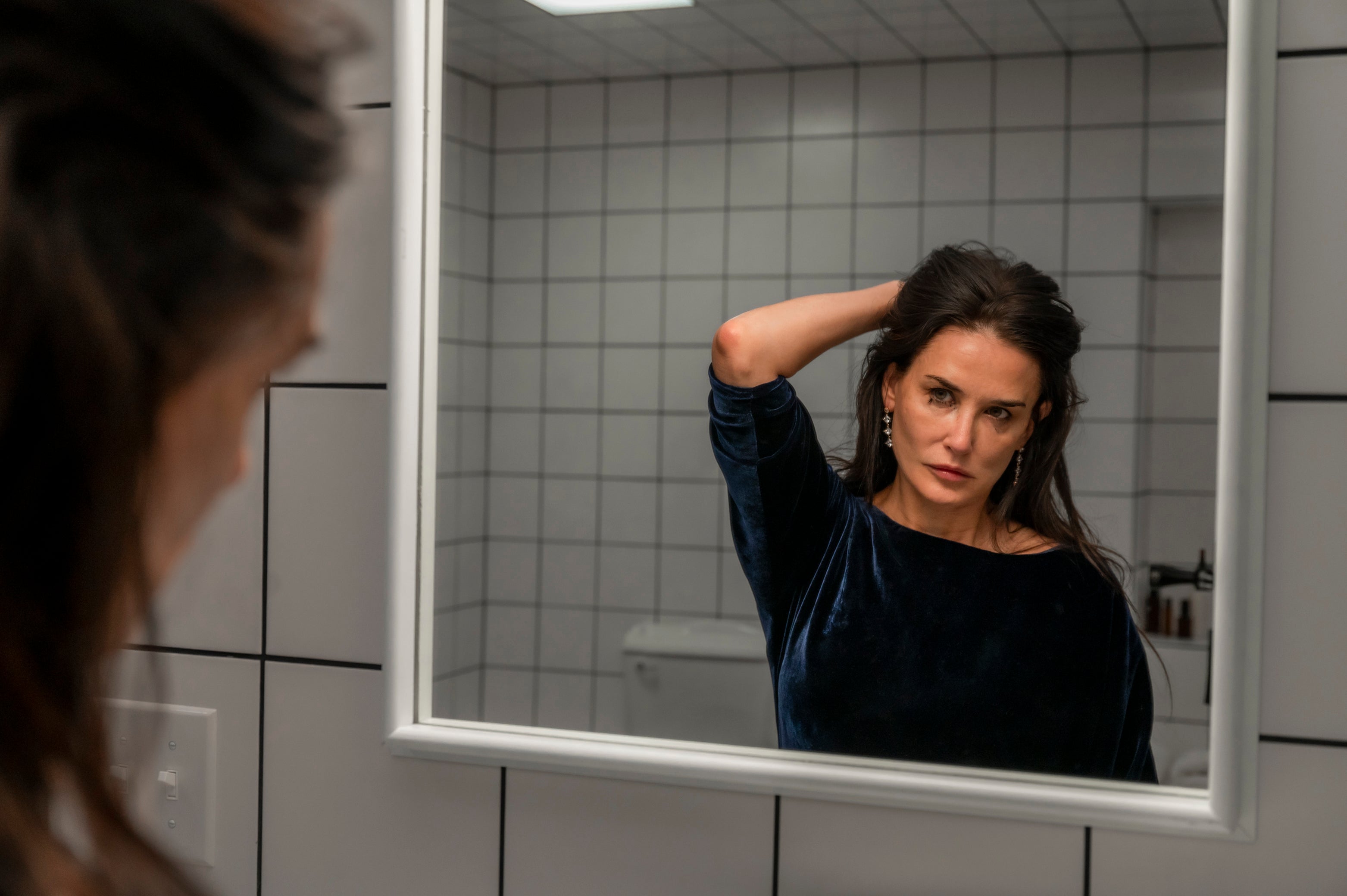
The Substance has undeniably become one of the most talked-about movies of the past year thanks to its grisly gore and violence, scenes of full nudity and career-best performances from leads Demi Moore and Margaret Qualley.
But there’s one other thing that plenty of viewers picked up when watching the graphic body horror.
Yes, we’re talking about all of those arses.
Coralie Fargeat’s film is littered with close-ups of bums, whether it’s Demi Moore’s Elisabeth Sparkle in the shower, Margaret Qualley clad in lycra for her energetic aerobics routine or just the man that Sue sleeps with the night before her big New Year’s Eve show standing in the buff in the hallway.
","type":"rich","meta":{"author":"𐂃pezlikethesweets","author_url":"https://twitter.com/auntiepezza","cache_age":86400,"description":"finally watched the substance and wow i feel like i was wholly unprepared for the butt closeups in every scene— 𐂃pezlikethesweets (@auntiepezza) January 21, 2025\n\n\n","options":{"_maxwidth":{"label":"Adjust width","placeholder":"220-550, in px","value":""},"_theme":{"value":"","values":{"dark":"Use dark theme"}}},"provider_name":"Twitter","title":"𐂃pezlikethesweets on Twitter / X","type":"rich","url":"https://twitter.com/auntiepezza/status/1881806556712632800","version":"1.0"},"flags":[],"enhancements":{},"fullBleed":false,"options":{"theme":"news","device":"desktop","editionInfo":{"id":"uk","name":"U.K.","link":"https://www.huffingtonpost.co.uk","locale":"en_GB"},"originalEdition":"uk","isMapi":false,"isAmp":false,"isAdsFree":false,"isVideoEntry":false,"isEntry":true,"isMt":false,"entryId":"67b5d41ae4b04083cc9994da","entryPermalink":"https://www.huffingtonpost.co.uk/entry/the-substance-director-talks-butt-shots_uk_67b5d41ae4b04083cc9994da","entryTagsList":"ukfilm,the-substance,coralie-fargeat","sectionSlug":"entertainment","deptSlug":null,"sectionRedirectUrl":null,"subcategories":"","isWide":false,"headerOverride":null,"noVideoAds":false,"disableFloat":false,"isNative":false,"commercialVideo":{"provider":"custom","site_and_category":"uk.entertainment","package":null},"isHighline":false,"vidibleConfigValues":{"cid":"60afc140cf94592c45d7390c","disabledWithMapiEntries":false,"overrides":{"all":"60b8e525cdd90620331baaf4"},"whitelisted":["56c5f12ee4b03a39c93c9439","56c6056ee4b01f2b7e1b5f35","59bfee7f9e451049f87f550b","5acccbaac269d609ef44c529","570278d2e4b070ff77b98217","57027b4be4b070ff77b98d5c","56fe95c4e4b0041c4242016b","570279cfe4b06d08e3629954","5ba9e8821c2e65639162ccf1","5bcd9904821576674bc55ced","5d076ca127f25f504327c72e","5b35266b158f855373e28256","5ebac2e8abddfb04f877dff2","60b8e525cdd90620331baaf4","60b64354b171b7444beaff4d","60d0d8e09340d7032ad0fb1a","60d0d90f9340d7032ad0fbeb","60d0d9949340d7032ad0fed3","60d0d9f99340d7032ad10113","60d0daa69340d7032ad104cf","60d0de02b627221e9d819408"],"playlists":{"default":"57bc306888d2ff1a7f6b5579","news":"56c6dbcee4b04edee8beb49c","politics":"56c6dbcee4b04edee8beb49c","entertainment":"56c6e7f2e4b0983aa64c60fc","tech":"56c6f70ae4b043c5bdcaebf9","parents":"56cc65c2e4b0239099455b42","lifestyle":"56cc66a9e4b01f81ef94e98c"},"playerUpdates":{"56c6056ee4b01f2b7e1b5f35":"60b8e525cdd90620331baaf4","56c5f12ee4b03a39c93c9439":"60d0d8e09340d7032ad0fb1a","59bfee7f9e451049f87f550b":"60d0d90f9340d7032ad0fbeb","5acccbaac269d609ef44c529":"60d0d9949340d7032ad0fed3","5bcd9904821576674bc55ced":"60d0d9f99340d7032ad10113","5d076ca127f25f504327c72e":"60d0daa69340d7032ad104cf","5ebac2e8abddfb04f877dff2":"60d0de02b627221e9d819408"}},"connatixConfigValues":{"defaultPlayer":"8b034f64-513c-4987-b16f-42d6008f7feb","clickToPlayPlayer":"5a777b9b-81fe-41a6-8302-59e9953ee8a2","videoPagePlayer":"19654b65-409c-4b38-90db-80cbdea02cf4"},"topConnatixThumnbailSrc":"data:image/png;base64,iVBORw0KGgoAAAANSUhEUgAAAAEAAAABCAQAAAC1HAwCAAAAC0lEQVR42mNkYAAAAAYAAjCB0C8AAAAASUVORK5CYII=","customAmpComponents":[],"ampAssetsUrl":"https://amp.assets.huffpost.com","videoTraits":null,"positionInUnitCounts":{"buzz_head":{"count":0},"buzz_body":{"count":0},"buzz_bottom":{"count":0}},"positionInSubUnitCounts":{"article_body":{"count":8},"blog_summary":{"count":0},"before_you_go_content":{"count":0}},"connatixCountsHelper":{"count":0},"buzzfeedTracking":{"context_page_id":"67b5d41ae4b04083cc9994da","context_page_type":"buzz","destination":"huffpost","mode":"desktop","page_edition":"en-uk"},"tags":[{"name":"ukfilm","slug":"ukfilm","links":{"relativeLink":"news/ukfilm","permalink":"https://www.huffingtonpost.co.uk/news/ukfilm","mobileWebLink":"https://www.huffingtonpost.co.uk/news/ukfilm"},"section":{"title":"Entertainment","slug":"entertainment"},"topic":{"title":"Film","slug":"ukfilm","overridesSectionLabel":false},"url":"https://www.huffingtonpost.co.uk/news/ukfilm/"},{"name":"the substance","slug":"the-substance","links":{"relativeLink":"news/the-substance","permalink":"https://www.huffingtonpost.co.uk/news/the-substance","mobileWebLink":"https://www.huffingtonpost.co.uk/news/the-substance"},"url":"https://www.huffingtonpost.co.uk/news/the-substance/"},{"name":"coralie fargeat","slug":"coralie-fargeat","links":{"relativeLink":"news/coralie-fargeat","permalink":"https://www.huffingtonpost.co.uk/news/coralie-fargeat","mobileWebLink":"https://www.huffingtonpost.co.uk/news/coralie-fargeat"},"url":"https://www.huffingtonpost.co.uk/news/coralie-fargeat/"}],"isLiveblogLive":null,"isLiveblog":false,"cetUnit":"buzz_body","bodyAds":["
","type":"rich","meta":{"author":"p8n","author_url":"https://twitter.com/ughp8n","cache_age":86400,"description":"Just watched the substance and all ik is that director is obsessed with butts— p8n (@ughp8n) January 12, 2025\n\n\n","options":{"_maxwidth":{"label":"Adjust width","placeholder":"220-550, in px","value":""},"_theme":{"value":"","values":{"dark":"Use dark theme"}}},"provider_name":"Twitter","title":"p8n on Twitter / X","type":"rich","url":"https://twitter.com/ughp8n/status/1878321612056924638","version":"1.0"},"flags":[],"enhancements":{},"fullBleed":false,"options":{"theme":"news","device":"desktop","editionInfo":{"id":"uk","name":"U.K.","link":"https://www.huffingtonpost.co.uk","locale":"en_GB"},"originalEdition":"uk","isMapi":false,"isAmp":false,"isAdsFree":false,"isVideoEntry":false,"isEntry":true,"isMt":false,"entryId":"67b5d41ae4b04083cc9994da","entryPermalink":"https://www.huffingtonpost.co.uk/entry/the-substance-director-talks-butt-shots_uk_67b5d41ae4b04083cc9994da","entryTagsList":"ukfilm,the-substance,coralie-fargeat","sectionSlug":"entertainment","deptSlug":null,"sectionRedirectUrl":null,"subcategories":"","isWide":false,"headerOverride":null,"noVideoAds":false,"disableFloat":false,"isNative":false,"commercialVideo":{"provider":"custom","site_and_category":"uk.entertainment","package":null},"isHighline":false,"vidibleConfigValues":{"cid":"60afc140cf94592c45d7390c","disabledWithMapiEntries":false,"overrides":{"all":"60b8e525cdd90620331baaf4"},"whitelisted":["56c5f12ee4b03a39c93c9439","56c6056ee4b01f2b7e1b5f35","59bfee7f9e451049f87f550b","5acccbaac269d609ef44c529","570278d2e4b070ff77b98217","57027b4be4b070ff77b98d5c","56fe95c4e4b0041c4242016b","570279cfe4b06d08e3629954","5ba9e8821c2e65639162ccf1","5bcd9904821576674bc55ced","5d076ca127f25f504327c72e","5b35266b158f855373e28256","5ebac2e8abddfb04f877dff2","60b8e525cdd90620331baaf4","60b64354b171b7444beaff4d","60d0d8e09340d7032ad0fb1a","60d0d90f9340d7032ad0fbeb","60d0d9949340d7032ad0fed3","60d0d9f99340d7032ad10113","60d0daa69340d7032ad104cf","60d0de02b627221e9d819408"],"playlists":{"default":"57bc306888d2ff1a7f6b5579","news":"56c6dbcee4b04edee8beb49c","politics":"56c6dbcee4b04edee8beb49c","entertainment":"56c6e7f2e4b0983aa64c60fc","tech":"56c6f70ae4b043c5bdcaebf9","parents":"56cc65c2e4b0239099455b42","lifestyle":"56cc66a9e4b01f81ef94e98c"},"playerUpdates":{"56c6056ee4b01f2b7e1b5f35":"60b8e525cdd90620331baaf4","56c5f12ee4b03a39c93c9439":"60d0d8e09340d7032ad0fb1a","59bfee7f9e451049f87f550b":"60d0d90f9340d7032ad0fbeb","5acccbaac269d609ef44c529":"60d0d9949340d7032ad0fed3","5bcd9904821576674bc55ced":"60d0d9f99340d7032ad10113","5d076ca127f25f504327c72e":"60d0daa69340d7032ad104cf","5ebac2e8abddfb04f877dff2":"60d0de02b627221e9d819408"}},"connatixConfigValues":{"defaultPlayer":"8b034f64-513c-4987-b16f-42d6008f7feb","clickToPlayPlayer":"5a777b9b-81fe-41a6-8302-59e9953ee8a2","videoPagePlayer":"19654b65-409c-4b38-90db-80cbdea02cf4"},"topConnatixThumnbailSrc":"data:image/png;base64,iVBORw0KGgoAAAANSUhEUgAAAAEAAAABCAQAAAC1HAwCAAAAC0lEQVR42mNkYAAAAAYAAjCB0C8AAAAASUVORK5CYII=","customAmpComponents":[],"ampAssetsUrl":"https://amp.assets.huffpost.com","videoTraits":null,"positionInUnitCounts":{"buzz_head":{"count":0},"buzz_body":{"count":0},"buzz_bottom":{"count":0}},"positionInSubUnitCounts":{"article_body":{"count":8},"blog_summary":{"count":0},"before_you_go_content":{"count":0}},"connatixCountsHelper":{"count":0},"buzzfeedTracking":{"context_page_id":"67b5d41ae4b04083cc9994da","context_page_type":"buzz","destination":"huffpost","mode":"desktop","page_edition":"en-uk"},"tags":[{"name":"ukfilm","slug":"ukfilm","links":{"relativeLink":"news/ukfilm","permalink":"https://www.huffingtonpost.co.uk/news/ukfilm","mobileWebLink":"https://www.huffingtonpost.co.uk/news/ukfilm"},"section":{"title":"Entertainment","slug":"entertainment"},"topic":{"title":"Film","slug":"ukfilm","overridesSectionLabel":false},"url":"https://www.huffingtonpost.co.uk/news/ukfilm/"},{"name":"the substance","slug":"the-substance","links":{"relativeLink":"news/the-substance","permalink":"https://www.huffingtonpost.co.uk/news/the-substance","mobileWebLink":"https://www.huffingtonpost.co.uk/news/the-substance"},"url":"https://www.huffingtonpost.co.uk/news/the-substance/"},{"name":"coralie fargeat","slug":"coralie-fargeat","links":{"relativeLink":"news/coralie-fargeat","permalink":"https://www.huffingtonpost.co.uk/news/coralie-fargeat","mobileWebLink":"https://www.huffingtonpost.co.uk/news/coralie-fargeat"},"url":"https://www.huffingtonpost.co.uk/news/coralie-fargeat/"}],"isLiveblogLive":null,"isLiveblog":false,"cetUnit":"buzz_body","bodyAds":["
","type":"rich","meta":{"author":" ًcapitalist carter","author_url":"https://twitter.com/sixinchbeys","cache_age":86400,"description":"one thing i will say about the substance (2024): very butt-centric— ًcapitalist carter (@sixinchbeys) October 17, 2024\n\n\n","options":{"_maxwidth":{"label":"Adjust width","placeholder":"220-550, in px","value":""},"_theme":{"value":"","values":{"dark":"Use dark theme"}}},"provider_name":"Twitter","title":" ًcapitalist carter on Twitter / X","type":"rich","url":"https://twitter.com/sixinchbeys/status/1846999827126640737","version":"1.0"},"flags":[],"enhancements":{},"fullBleed":false,"options":{"theme":"news","device":"desktop","editionInfo":{"id":"uk","name":"U.K.","link":"https://www.huffingtonpost.co.uk","locale":"en_GB"},"originalEdition":"uk","isMapi":false,"isAmp":false,"isAdsFree":false,"isVideoEntry":false,"isEntry":true,"isMt":false,"entryId":"67b5d41ae4b04083cc9994da","entryPermalink":"https://www.huffingtonpost.co.uk/entry/the-substance-director-talks-butt-shots_uk_67b5d41ae4b04083cc9994da","entryTagsList":"ukfilm,the-substance,coralie-fargeat","sectionSlug":"entertainment","deptSlug":null,"sectionRedirectUrl":null,"subcategories":"","isWide":false,"headerOverride":null,"noVideoAds":false,"disableFloat":false,"isNative":false,"commercialVideo":{"provider":"custom","site_and_category":"uk.entertainment","package":null},"isHighline":false,"vidibleConfigValues":{"cid":"60afc140cf94592c45d7390c","disabledWithMapiEntries":false,"overrides":{"all":"60b8e525cdd90620331baaf4"},"whitelisted":["56c5f12ee4b03a39c93c9439","56c6056ee4b01f2b7e1b5f35","59bfee7f9e451049f87f550b","5acccbaac269d609ef44c529","570278d2e4b070ff77b98217","57027b4be4b070ff77b98d5c","56fe95c4e4b0041c4242016b","570279cfe4b06d08e3629954","5ba9e8821c2e65639162ccf1","5bcd9904821576674bc55ced","5d076ca127f25f504327c72e","5b35266b158f855373e28256","5ebac2e8abddfb04f877dff2","60b8e525cdd90620331baaf4","60b64354b171b7444beaff4d","60d0d8e09340d7032ad0fb1a","60d0d90f9340d7032ad0fbeb","60d0d9949340d7032ad0fed3","60d0d9f99340d7032ad10113","60d0daa69340d7032ad104cf","60d0de02b627221e9d819408"],"playlists":{"default":"57bc306888d2ff1a7f6b5579","news":"56c6dbcee4b04edee8beb49c","politics":"56c6dbcee4b04edee8beb49c","entertainment":"56c6e7f2e4b0983aa64c60fc","tech":"56c6f70ae4b043c5bdcaebf9","parents":"56cc65c2e4b0239099455b42","lifestyle":"56cc66a9e4b01f81ef94e98c"},"playerUpdates":{"56c6056ee4b01f2b7e1b5f35":"60b8e525cdd90620331baaf4","56c5f12ee4b03a39c93c9439":"60d0d8e09340d7032ad0fb1a","59bfee7f9e451049f87f550b":"60d0d90f9340d7032ad0fbeb","5acccbaac269d609ef44c529":"60d0d9949340d7032ad0fed3","5bcd9904821576674bc55ced":"60d0d9f99340d7032ad10113","5d076ca127f25f504327c72e":"60d0daa69340d7032ad104cf","5ebac2e8abddfb04f877dff2":"60d0de02b627221e9d819408"}},"connatixConfigValues":{"defaultPlayer":"8b034f64-513c-4987-b16f-42d6008f7feb","clickToPlayPlayer":"5a777b9b-81fe-41a6-8302-59e9953ee8a2","videoPagePlayer":"19654b65-409c-4b38-90db-80cbdea02cf4"},"topConnatixThumnbailSrc":"data:image/png;base64,iVBORw0KGgoAAAANSUhEUgAAAAEAAAABCAQAAAC1HAwCAAAAC0lEQVR42mNkYAAAAAYAAjCB0C8AAAAASUVORK5CYII=","customAmpComponents":[],"ampAssetsUrl":"https://amp.assets.huffpost.com","videoTraits":null,"positionInUnitCounts":{"buzz_head":{"count":0},"buzz_body":{"count":0},"buzz_bottom":{"count":0}},"positionInSubUnitCounts":{"article_body":{"count":8},"blog_summary":{"count":0},"before_you_go_content":{"count":0}},"connatixCountsHelper":{"count":0},"buzzfeedTracking":{"context_page_id":"67b5d41ae4b04083cc9994da","context_page_type":"buzz","destination":"huffpost","mode":"desktop","page_edition":"en-uk"},"tags":[{"name":"ukfilm","slug":"ukfilm","links":{"relativeLink":"news/ukfilm","permalink":"https://www.huffingtonpost.co.uk/news/ukfilm","mobileWebLink":"https://www.huffingtonpost.co.uk/news/ukfilm"},"section":{"title":"Entertainment","slug":"entertainment"},"topic":{"title":"Film","slug":"ukfilm","overridesSectionLabel":false},"url":"https://www.huffingtonpost.co.uk/news/ukfilm/"},{"name":"the substance","slug":"the-substance","links":{"relativeLink":"news/the-substance","permalink":"https://www.huffingtonpost.co.uk/news/the-substance","mobileWebLink":"https://www.huffingtonpost.co.uk/news/the-substance"},"url":"https://www.huffingtonpost.co.uk/news/the-substance/"},{"name":"coralie fargeat","slug":"coralie-fargeat","links":{"relativeLink":"news/coralie-fargeat","permalink":"https://www.huffingtonpost.co.uk/news/coralie-fargeat","mobileWebLink":"https://www.huffingtonpost.co.uk/news/coralie-fargeat"},"url":"https://www.huffingtonpost.co.uk/news/coralie-fargeat/"}],"isLiveblogLive":null,"isLiveblog":false,"cetUnit":"buzz_body","bodyAds":["
(Also so many butts. Half the time it felt like the camera was stuck at butt level. I did not mind. But it was an interesting artistic choice: butts)
— R \"Nearest\" Nabors (they/them) (@rachelnabors) February 4, 2025
","type":"rich","meta":{"author":"R \"Nearest\" Nabors (they/them)","author_url":"https://twitter.com/rachelnabors","cache_age":86400,"description":"Watched the Substance. That was very good.(Also so many butts. Half the time it felt like the camera was stuck at butt level. I did not mind. But it was an interesting artistic choice: butts)— R \"Nearest\" Nabors (they/them) (@rachelnabors) February 4, 2025\n\n\n","options":{"_maxwidth":{"label":"Adjust width","placeholder":"220-550, in px","value":""},"_theme":{"value":"","values":{"dark":"Use dark theme"}}},"provider_name":"Twitter","title":"R \"Nearest\" Nabors (they/them) on Twitter / X","type":"rich","url":"https://twitter.com/rachelnabors/status/1886708584852976046","version":"1.0"},"flags":[],"enhancements":{},"fullBleed":false,"options":{"theme":"news","device":"desktop","editionInfo":{"id":"uk","name":"U.K.","link":"https://www.huffingtonpost.co.uk","locale":"en_GB"},"originalEdition":"uk","isMapi":false,"isAmp":false,"isAdsFree":false,"isVideoEntry":false,"isEntry":true,"isMt":false,"entryId":"67b5d41ae4b04083cc9994da","entryPermalink":"https://www.huffingtonpost.co.uk/entry/the-substance-director-talks-butt-shots_uk_67b5d41ae4b04083cc9994da","entryTagsList":"ukfilm,the-substance,coralie-fargeat","sectionSlug":"entertainment","deptSlug":null,"sectionRedirectUrl":null,"subcategories":"","isWide":false,"headerOverride":null,"noVideoAds":false,"disableFloat":false,"isNative":false,"commercialVideo":{"provider":"custom","site_and_category":"uk.entertainment","package":null},"isHighline":false,"vidibleConfigValues":{"cid":"60afc140cf94592c45d7390c","disabledWithMapiEntries":false,"overrides":{"all":"60b8e525cdd90620331baaf4"},"whitelisted":["56c5f12ee4b03a39c93c9439","56c6056ee4b01f2b7e1b5f35","59bfee7f9e451049f87f550b","5acccbaac269d609ef44c529","570278d2e4b070ff77b98217","57027b4be4b070ff77b98d5c","56fe95c4e4b0041c4242016b","570279cfe4b06d08e3629954","5ba9e8821c2e65639162ccf1","5bcd9904821576674bc55ced","5d076ca127f25f504327c72e","5b35266b158f855373e28256","5ebac2e8abddfb04f877dff2","60b8e525cdd90620331baaf4","60b64354b171b7444beaff4d","60d0d8e09340d7032ad0fb1a","60d0d90f9340d7032ad0fbeb","60d0d9949340d7032ad0fed3","60d0d9f99340d7032ad10113","60d0daa69340d7032ad104cf","60d0de02b627221e9d819408"],"playlists":{"default":"57bc306888d2ff1a7f6b5579","news":"56c6dbcee4b04edee8beb49c","politics":"56c6dbcee4b04edee8beb49c","entertainment":"56c6e7f2e4b0983aa64c60fc","tech":"56c6f70ae4b043c5bdcaebf9","parents":"56cc65c2e4b0239099455b42","lifestyle":"56cc66a9e4b01f81ef94e98c"},"playerUpdates":{"56c6056ee4b01f2b7e1b5f35":"60b8e525cdd90620331baaf4","56c5f12ee4b03a39c93c9439":"60d0d8e09340d7032ad0fb1a","59bfee7f9e451049f87f550b":"60d0d90f9340d7032ad0fbeb","5acccbaac269d609ef44c529":"60d0d9949340d7032ad0fed3","5bcd9904821576674bc55ced":"60d0d9f99340d7032ad10113","5d076ca127f25f504327c72e":"60d0daa69340d7032ad104cf","5ebac2e8abddfb04f877dff2":"60d0de02b627221e9d819408"}},"connatixConfigValues":{"defaultPlayer":"8b034f64-513c-4987-b16f-42d6008f7feb","clickToPlayPlayer":"5a777b9b-81fe-41a6-8302-59e9953ee8a2","videoPagePlayer":"19654b65-409c-4b38-90db-80cbdea02cf4"},"topConnatixThumnbailSrc":"data:image/png;base64,iVBORw0KGgoAAAANSUhEUgAAAAEAAAABCAQAAAC1HAwCAAAAC0lEQVR42mNkYAAAAAYAAjCB0C8AAAAASUVORK5CYII=","customAmpComponents":[],"ampAssetsUrl":"https://amp.assets.huffpost.com","videoTraits":null,"positionInUnitCounts":{"buzz_head":{"count":0},"buzz_body":{"count":0},"buzz_bottom":{"count":0}},"positionInSubUnitCounts":{"article_body":{"count":8},"blog_summary":{"count":0},"before_you_go_content":{"count":0}},"connatixCountsHelper":{"count":0},"buzzfeedTracking":{"context_page_id":"67b5d41ae4b04083cc9994da","context_page_type":"buzz","destination":"huffpost","mode":"desktop","page_edition":"en-uk"},"tags":[{"name":"ukfilm","slug":"ukfilm","links":{"relativeLink":"news/ukfilm","permalink":"https://www.huffingtonpost.co.uk/news/ukfilm","mobileWebLink":"https://www.huffingtonpost.co.uk/news/ukfilm"},"section":{"title":"Entertainment","slug":"entertainment"},"topic":{"title":"Film","slug":"ukfilm","overridesSectionLabel":false},"url":"https://www.huffingtonpost.co.uk/news/ukfilm/"},{"name":"the substance","slug":"the-substance","links":{"relativeLink":"news/the-substance","permalink":"https://www.huffingtonpost.co.uk/news/the-substance","mobileWebLink":"https://www.huffingtonpost.co.uk/news/the-substance"},"url":"https://www.huffingtonpost.co.uk/news/the-substance/"},{"name":"coralie fargeat","slug":"coralie-fargeat","links":{"relativeLink":"news/coralie-fargeat","permalink":"https://www.huffingtonpost.co.uk/news/coralie-fargeat","mobileWebLink":"https://www.huffingtonpost.co.uk/news/coralie-fargeat"},"url":"https://www.huffingtonpost.co.uk/news/coralie-fargeat/"}],"isLiveblogLive":null,"isLiveblog":false,"cetUnit":"buzz_body","bodyAds":["
","type":"rich","meta":{"author":"harawaycyborg","author_url":"https://twitter.com/cyborg4cyborg","cache_age":86400,"description":"no one told me The Substance was 90% naked butts and i watched it with my parents 😔— harawaycyborg (@cyborg4cyborg) October 13, 2024\n\n\n","options":{"_maxwidth":{"label":"Adjust width","placeholder":"220-550, in px","value":""},"_theme":{"value":"","values":{"dark":"Use dark theme"}}},"provider_name":"Twitter","title":"harawaycyborg on Twitter / X","type":"rich","url":"https://twitter.com/cyborg4cyborg/status/1845611700441010178","version":"1.0"},"flags":[],"enhancements":{},"fullBleed":false,"options":{"theme":"news","device":"desktop","editionInfo":{"id":"uk","name":"U.K.","link":"https://www.huffingtonpost.co.uk","locale":"en_GB"},"originalEdition":"uk","isMapi":false,"isAmp":false,"isAdsFree":false,"isVideoEntry":false,"isEntry":true,"isMt":false,"entryId":"67b5d41ae4b04083cc9994da","entryPermalink":"https://www.huffingtonpost.co.uk/entry/the-substance-director-talks-butt-shots_uk_67b5d41ae4b04083cc9994da","entryTagsList":"ukfilm,the-substance,coralie-fargeat","sectionSlug":"entertainment","deptSlug":null,"sectionRedirectUrl":null,"subcategories":"","isWide":false,"headerOverride":null,"noVideoAds":false,"disableFloat":false,"isNative":false,"commercialVideo":{"provider":"custom","site_and_category":"uk.entertainment","package":null},"isHighline":false,"vidibleConfigValues":{"cid":"60afc140cf94592c45d7390c","disabledWithMapiEntries":false,"overrides":{"all":"60b8e525cdd90620331baaf4"},"whitelisted":["56c5f12ee4b03a39c93c9439","56c6056ee4b01f2b7e1b5f35","59bfee7f9e451049f87f550b","5acccbaac269d609ef44c529","570278d2e4b070ff77b98217","57027b4be4b070ff77b98d5c","56fe95c4e4b0041c4242016b","570279cfe4b06d08e3629954","5ba9e8821c2e65639162ccf1","5bcd9904821576674bc55ced","5d076ca127f25f504327c72e","5b35266b158f855373e28256","5ebac2e8abddfb04f877dff2","60b8e525cdd90620331baaf4","60b64354b171b7444beaff4d","60d0d8e09340d7032ad0fb1a","60d0d90f9340d7032ad0fbeb","60d0d9949340d7032ad0fed3","60d0d9f99340d7032ad10113","60d0daa69340d7032ad104cf","60d0de02b627221e9d819408"],"playlists":{"default":"57bc306888d2ff1a7f6b5579","news":"56c6dbcee4b04edee8beb49c","politics":"56c6dbcee4b04edee8beb49c","entertainment":"56c6e7f2e4b0983aa64c60fc","tech":"56c6f70ae4b043c5bdcaebf9","parents":"56cc65c2e4b0239099455b42","lifestyle":"56cc66a9e4b01f81ef94e98c"},"playerUpdates":{"56c6056ee4b01f2b7e1b5f35":"60b8e525cdd90620331baaf4","56c5f12ee4b03a39c93c9439":"60d0d8e09340d7032ad0fb1a","59bfee7f9e451049f87f550b":"60d0d90f9340d7032ad0fbeb","5acccbaac269d609ef44c529":"60d0d9949340d7032ad0fed3","5bcd9904821576674bc55ced":"60d0d9f99340d7032ad10113","5d076ca127f25f504327c72e":"60d0daa69340d7032ad104cf","5ebac2e8abddfb04f877dff2":"60d0de02b627221e9d819408"}},"connatixConfigValues":{"defaultPlayer":"8b034f64-513c-4987-b16f-42d6008f7feb","clickToPlayPlayer":"5a777b9b-81fe-41a6-8302-59e9953ee8a2","videoPagePlayer":"19654b65-409c-4b38-90db-80cbdea02cf4"},"topConnatixThumnbailSrc":"data:image/png;base64,iVBORw0KGgoAAAANSUhEUgAAAAEAAAABCAQAAAC1HAwCAAAAC0lEQVR42mNkYAAAAAYAAjCB0C8AAAAASUVORK5CYII=","customAmpComponents":[],"ampAssetsUrl":"https://amp.assets.huffpost.com","videoTraits":null,"positionInUnitCounts":{"buzz_head":{"count":0},"buzz_body":{"count":0},"buzz_bottom":{"count":0}},"positionInSubUnitCounts":{"article_body":{"count":8},"blog_summary":{"count":0},"before_you_go_content":{"count":0}},"connatixCountsHelper":{"count":0},"buzzfeedTracking":{"context_page_id":"67b5d41ae4b04083cc9994da","context_page_type":"buzz","destination":"huffpost","mode":"desktop","page_edition":"en-uk"},"tags":[{"name":"ukfilm","slug":"ukfilm","links":{"relativeLink":"news/ukfilm","permalink":"https://www.huffingtonpost.co.uk/news/ukfilm","mobileWebLink":"https://www.huffingtonpost.co.uk/news/ukfilm"},"section":{"title":"Entertainment","slug":"entertainment"},"topic":{"title":"Film","slug":"ukfilm","overridesSectionLabel":false},"url":"https://www.huffingtonpost.co.uk/news/ukfilm/"},{"name":"the substance","slug":"the-substance","links":{"relativeLink":"news/the-substance","permalink":"https://www.huffingtonpost.co.uk/news/the-substance","mobileWebLink":"https://www.huffingtonpost.co.uk/news/the-substance"},"url":"https://www.huffingtonpost.co.uk/news/the-substance/"},{"name":"coralie fargeat","slug":"coralie-fargeat","links":{"relativeLink":"news/coralie-fargeat","permalink":"https://www.huffingtonpost.co.uk/news/coralie-fargeat","mobileWebLink":"https://www.huffingtonpost.co.uk/news/coralie-fargeat"},"url":"https://www.huffingtonpost.co.uk/news/coralie-fargeat/"}],"isLiveblogLive":null,"isLiveblog":false,"cetUnit":"buzz_body","bodyAds":["
","type":"rich","meta":{"author":"zade","author_url":"https://twitter.com/zadtwt","cache_age":86400,"description":"There’s a jumpscare in The Substance that’s a guy’s butt— zade (@zadtwt) September 29, 2024\n\n\n","options":{"_maxwidth":{"label":"Adjust width","placeholder":"220-550, in px","value":""},"_theme":{"value":"","values":{"dark":"Use dark theme"}}},"provider_name":"Twitter","title":"zade on Twitter / X","type":"rich","url":"https://twitter.com/zadtwt/status/1840535582155374604","version":"1.0"},"flags":[],"enhancements":{},"fullBleed":false,"options":{"theme":"news","device":"desktop","editionInfo":{"id":"uk","name":"U.K.","link":"https://www.huffingtonpost.co.uk","locale":"en_GB"},"originalEdition":"uk","isMapi":false,"isAmp":false,"isAdsFree":false,"isVideoEntry":false,"isEntry":true,"isMt":false,"entryId":"67b5d41ae4b04083cc9994da","entryPermalink":"https://www.huffingtonpost.co.uk/entry/the-substance-director-talks-butt-shots_uk_67b5d41ae4b04083cc9994da","entryTagsList":"ukfilm,the-substance,coralie-fargeat","sectionSlug":"entertainment","deptSlug":null,"sectionRedirectUrl":null,"subcategories":"","isWide":false,"headerOverride":null,"noVideoAds":false,"disableFloat":false,"isNative":false,"commercialVideo":{"provider":"custom","site_and_category":"uk.entertainment","package":null},"isHighline":false,"vidibleConfigValues":{"cid":"60afc140cf94592c45d7390c","disabledWithMapiEntries":false,"overrides":{"all":"60b8e525cdd90620331baaf4"},"whitelisted":["56c5f12ee4b03a39c93c9439","56c6056ee4b01f2b7e1b5f35","59bfee7f9e451049f87f550b","5acccbaac269d609ef44c529","570278d2e4b070ff77b98217","57027b4be4b070ff77b98d5c","56fe95c4e4b0041c4242016b","570279cfe4b06d08e3629954","5ba9e8821c2e65639162ccf1","5bcd9904821576674bc55ced","5d076ca127f25f504327c72e","5b35266b158f855373e28256","5ebac2e8abddfb04f877dff2","60b8e525cdd90620331baaf4","60b64354b171b7444beaff4d","60d0d8e09340d7032ad0fb1a","60d0d90f9340d7032ad0fbeb","60d0d9949340d7032ad0fed3","60d0d9f99340d7032ad10113","60d0daa69340d7032ad104cf","60d0de02b627221e9d819408"],"playlists":{"default":"57bc306888d2ff1a7f6b5579","news":"56c6dbcee4b04edee8beb49c","politics":"56c6dbcee4b04edee8beb49c","entertainment":"56c6e7f2e4b0983aa64c60fc","tech":"56c6f70ae4b043c5bdcaebf9","parents":"56cc65c2e4b0239099455b42","lifestyle":"56cc66a9e4b01f81ef94e98c"},"playerUpdates":{"56c6056ee4b01f2b7e1b5f35":"60b8e525cdd90620331baaf4","56c5f12ee4b03a39c93c9439":"60d0d8e09340d7032ad0fb1a","59bfee7f9e451049f87f550b":"60d0d90f9340d7032ad0fbeb","5acccbaac269d609ef44c529":"60d0d9949340d7032ad0fed3","5bcd9904821576674bc55ced":"60d0d9f99340d7032ad10113","5d076ca127f25f504327c72e":"60d0daa69340d7032ad104cf","5ebac2e8abddfb04f877dff2":"60d0de02b627221e9d819408"}},"connatixConfigValues":{"defaultPlayer":"8b034f64-513c-4987-b16f-42d6008f7feb","clickToPlayPlayer":"5a777b9b-81fe-41a6-8302-59e9953ee8a2","videoPagePlayer":"19654b65-409c-4b38-90db-80cbdea02cf4"},"topConnatixThumnbailSrc":"data:image/png;base64,iVBORw0KGgoAAAANSUhEUgAAAAEAAAABCAQAAAC1HAwCAAAAC0lEQVR42mNkYAAAAAYAAjCB0C8AAAAASUVORK5CYII=","customAmpComponents":[],"ampAssetsUrl":"https://amp.assets.huffpost.com","videoTraits":null,"positionInUnitCounts":{"buzz_head":{"count":0},"buzz_body":{"count":0},"buzz_bottom":{"count":0}},"positionInSubUnitCounts":{"article_body":{"count":8},"blog_summary":{"count":0},"before_you_go_content":{"count":0}},"connatixCountsHelper":{"count":0},"buzzfeedTracking":{"context_page_id":"67b5d41ae4b04083cc9994da","context_page_type":"buzz","destination":"huffpost","mode":"desktop","page_edition":"en-uk"},"tags":[{"name":"ukfilm","slug":"ukfilm","links":{"relativeLink":"news/ukfilm","permalink":"https://www.huffingtonpost.co.uk/news/ukfilm","mobileWebLink":"https://www.huffingtonpost.co.uk/news/ukfilm"},"section":{"title":"Entertainment","slug":"entertainment"},"topic":{"title":"Film","slug":"ukfilm","overridesSectionLabel":false},"url":"https://www.huffingtonpost.co.uk/news/ukfilm/"},{"name":"the substance","slug":"the-substance","links":{"relativeLink":"news/the-substance","permalink":"https://www.huffingtonpost.co.uk/news/the-substance","mobileWebLink":"https://www.huffingtonpost.co.uk/news/the-substance"},"url":"https://www.huffingtonpost.co.uk/news/the-substance/"},{"name":"coralie fargeat","slug":"coralie-fargeat","links":{"relativeLink":"news/coralie-fargeat","permalink":"https://www.huffingtonpost.co.uk/news/coralie-fargeat","mobileWebLink":"https://www.huffingtonpost.co.uk/news/coralie-fargeat"},"url":"https://www.huffingtonpost.co.uk/news/coralie-fargeat/"}],"isLiveblogLive":null,"isLiveblog":false,"cetUnit":"buzz_body","bodyAds":["
","type":"rich","meta":{"author":"Feral Chicken","author_url":"https://twitter.com/Xeromatter","cache_age":86400,"description":"Real talk:If you removed all the butts from The Substance, how long would the run time be?— Feral Chicken (@Xeromatter) November 30, 2024\n\n\n","options":{"_maxwidth":{"label":"Adjust width","placeholder":"220-550, in px","value":""},"_theme":{"value":"","values":{"dark":"Use dark theme"}}},"provider_name":"Twitter","title":"Feral Chicken on Twitter / X","type":"rich","url":"https://twitter.com/Xeromatter/status/1862680908954051019","version":"1.0"},"flags":[],"enhancements":{},"fullBleed":false,"options":{"theme":"news","device":"desktop","editionInfo":{"id":"uk","name":"U.K.","link":"https://www.huffingtonpost.co.uk","locale":"en_GB"},"originalEdition":"uk","isMapi":false,"isAmp":false,"isAdsFree":false,"isVideoEntry":false,"isEntry":true,"isMt":false,"entryId":"67b5d41ae4b04083cc9994da","entryPermalink":"https://www.huffingtonpost.co.uk/entry/the-substance-director-talks-butt-shots_uk_67b5d41ae4b04083cc9994da","entryTagsList":"ukfilm,the-substance,coralie-fargeat","sectionSlug":"entertainment","deptSlug":null,"sectionRedirectUrl":null,"subcategories":"","isWide":false,"headerOverride":null,"noVideoAds":false,"disableFloat":false,"isNative":false,"commercialVideo":{"provider":"custom","site_and_category":"uk.entertainment","package":null},"isHighline":false,"vidibleConfigValues":{"cid":"60afc140cf94592c45d7390c","disabledWithMapiEntries":false,"overrides":{"all":"60b8e525cdd90620331baaf4"},"whitelisted":["56c5f12ee4b03a39c93c9439","56c6056ee4b01f2b7e1b5f35","59bfee7f9e451049f87f550b","5acccbaac269d609ef44c529","570278d2e4b070ff77b98217","57027b4be4b070ff77b98d5c","56fe95c4e4b0041c4242016b","570279cfe4b06d08e3629954","5ba9e8821c2e65639162ccf1","5bcd9904821576674bc55ced","5d076ca127f25f504327c72e","5b35266b158f855373e28256","5ebac2e8abddfb04f877dff2","60b8e525cdd90620331baaf4","60b64354b171b7444beaff4d","60d0d8e09340d7032ad0fb1a","60d0d90f9340d7032ad0fbeb","60d0d9949340d7032ad0fed3","60d0d9f99340d7032ad10113","60d0daa69340d7032ad104cf","60d0de02b627221e9d819408"],"playlists":{"default":"57bc306888d2ff1a7f6b5579","news":"56c6dbcee4b04edee8beb49c","politics":"56c6dbcee4b04edee8beb49c","entertainment":"56c6e7f2e4b0983aa64c60fc","tech":"56c6f70ae4b043c5bdcaebf9","parents":"56cc65c2e4b0239099455b42","lifestyle":"56cc66a9e4b01f81ef94e98c"},"playerUpdates":{"56c6056ee4b01f2b7e1b5f35":"60b8e525cdd90620331baaf4","56c5f12ee4b03a39c93c9439":"60d0d8e09340d7032ad0fb1a","59bfee7f9e451049f87f550b":"60d0d90f9340d7032ad0fbeb","5acccbaac269d609ef44c529":"60d0d9949340d7032ad0fed3","5bcd9904821576674bc55ced":"60d0d9f99340d7032ad10113","5d076ca127f25f504327c72e":"60d0daa69340d7032ad104cf","5ebac2e8abddfb04f877dff2":"60d0de02b627221e9d819408"}},"connatixConfigValues":{"defaultPlayer":"8b034f64-513c-4987-b16f-42d6008f7feb","clickToPlayPlayer":"5a777b9b-81fe-41a6-8302-59e9953ee8a2","videoPagePlayer":"19654b65-409c-4b38-90db-80cbdea02cf4"},"topConnatixThumnbailSrc":"data:image/png;base64,iVBORw0KGgoAAAANSUhEUgAAAAEAAAABCAQAAAC1HAwCAAAAC0lEQVR42mNkYAAAAAYAAjCB0C8AAAAASUVORK5CYII=","customAmpComponents":[],"ampAssetsUrl":"https://amp.assets.huffpost.com","videoTraits":null,"positionInUnitCounts":{"buzz_head":{"count":0},"buzz_body":{"count":0},"buzz_bottom":{"count":0}},"positionInSubUnitCounts":{"article_body":{"count":8},"blog_summary":{"count":0},"before_you_go_content":{"count":0}},"connatixCountsHelper":{"count":0},"buzzfeedTracking":{"context_page_id":"67b5d41ae4b04083cc9994da","context_page_type":"buzz","destination":"huffpost","mode":"desktop","page_edition":"en-uk"},"tags":[{"name":"ukfilm","slug":"ukfilm","links":{"relativeLink":"news/ukfilm","permalink":"https://www.huffingtonpost.co.uk/news/ukfilm","mobileWebLink":"https://www.huffingtonpost.co.uk/news/ukfilm"},"section":{"title":"Entertainment","slug":"entertainment"},"topic":{"title":"Film","slug":"ukfilm","overridesSectionLabel":false},"url":"https://www.huffingtonpost.co.uk/news/ukfilm/"},{"name":"the substance","slug":"the-substance","links":{"relativeLink":"news/the-substance","permalink":"https://www.huffingtonpost.co.uk/news/the-substance","mobileWebLink":"https://www.huffingtonpost.co.uk/news/the-substance"},"url":"https://www.huffingtonpost.co.uk/news/the-substance/"},{"name":"coralie fargeat","slug":"coralie-fargeat","links":{"relativeLink":"news/coralie-fargeat","permalink":"https://www.huffingtonpost.co.uk/news/coralie-fargeat","mobileWebLink":"https://www.huffingtonpost.co.uk/news/coralie-fargeat"},"url":"https://www.huffingtonpost.co.uk/news/coralie-fargeat/"}],"isLiveblogLive":null,"isLiveblog":false,"cetUnit":"buzz_body","bodyAds":["
","type":"rich","meta":{"author":"kes 🇵🇸","author_url":"https://twitter.com/joesnicky","cache_age":86400,"description":"watching the substance. i think this director just really likes asses— kes 🇵🇸 (@joesnicky) October 16, 2024\n\n\n","options":{"_maxwidth":{"label":"Adjust width","placeholder":"220-550, in px","value":""},"_theme":{"value":"","values":{"dark":"Use dark theme"}}},"provider_name":"Twitter","title":"kes 🇵🇸 on Twitter / X","type":"rich","url":"https://twitter.com/joesnicky/status/1846354786125599178","version":"1.0"},"flags":[],"enhancements":{},"fullBleed":false,"options":{"theme":"news","device":"desktop","editionInfo":{"id":"uk","name":"U.K.","link":"https://www.huffingtonpost.co.uk","locale":"en_GB"},"originalEdition":"uk","isMapi":false,"isAmp":false,"isAdsFree":false,"isVideoEntry":false,"isEntry":true,"isMt":false,"entryId":"67b5d41ae4b04083cc9994da","entryPermalink":"https://www.huffingtonpost.co.uk/entry/the-substance-director-talks-butt-shots_uk_67b5d41ae4b04083cc9994da","entryTagsList":"ukfilm,the-substance,coralie-fargeat","sectionSlug":"entertainment","deptSlug":null,"sectionRedirectUrl":null,"subcategories":"","isWide":false,"headerOverride":null,"noVideoAds":false,"disableFloat":false,"isNative":false,"commercialVideo":{"provider":"custom","site_and_category":"uk.entertainment","package":null},"isHighline":false,"vidibleConfigValues":{"cid":"60afc140cf94592c45d7390c","disabledWithMapiEntries":false,"overrides":{"all":"60b8e525cdd90620331baaf4"},"whitelisted":["56c5f12ee4b03a39c93c9439","56c6056ee4b01f2b7e1b5f35","59bfee7f9e451049f87f550b","5acccbaac269d609ef44c529","570278d2e4b070ff77b98217","57027b4be4b070ff77b98d5c","56fe95c4e4b0041c4242016b","570279cfe4b06d08e3629954","5ba9e8821c2e65639162ccf1","5bcd9904821576674bc55ced","5d076ca127f25f504327c72e","5b35266b158f855373e28256","5ebac2e8abddfb04f877dff2","60b8e525cdd90620331baaf4","60b64354b171b7444beaff4d","60d0d8e09340d7032ad0fb1a","60d0d90f9340d7032ad0fbeb","60d0d9949340d7032ad0fed3","60d0d9f99340d7032ad10113","60d0daa69340d7032ad104cf","60d0de02b627221e9d819408"],"playlists":{"default":"57bc306888d2ff1a7f6b5579","news":"56c6dbcee4b04edee8beb49c","politics":"56c6dbcee4b04edee8beb49c","entertainment":"56c6e7f2e4b0983aa64c60fc","tech":"56c6f70ae4b043c5bdcaebf9","parents":"56cc65c2e4b0239099455b42","lifestyle":"56cc66a9e4b01f81ef94e98c"},"playerUpdates":{"56c6056ee4b01f2b7e1b5f35":"60b8e525cdd90620331baaf4","56c5f12ee4b03a39c93c9439":"60d0d8e09340d7032ad0fb1a","59bfee7f9e451049f87f550b":"60d0d90f9340d7032ad0fbeb","5acccbaac269d609ef44c529":"60d0d9949340d7032ad0fed3","5bcd9904821576674bc55ced":"60d0d9f99340d7032ad10113","5d076ca127f25f504327c72e":"60d0daa69340d7032ad104cf","5ebac2e8abddfb04f877dff2":"60d0de02b627221e9d819408"}},"connatixConfigValues":{"defaultPlayer":"8b034f64-513c-4987-b16f-42d6008f7feb","clickToPlayPlayer":"5a777b9b-81fe-41a6-8302-59e9953ee8a2","videoPagePlayer":"19654b65-409c-4b38-90db-80cbdea02cf4"},"topConnatixThumnbailSrc":"data:image/png;base64,iVBORw0KGgoAAAANSUhEUgAAAAEAAAABCAQAAAC1HAwCAAAAC0lEQVR42mNkYAAAAAYAAjCB0C8AAAAASUVORK5CYII=","customAmpComponents":[],"ampAssetsUrl":"https://amp.assets.huffpost.com","videoTraits":null,"positionInUnitCounts":{"buzz_head":{"count":0},"buzz_body":{"count":0},"buzz_bottom":{"count":0}},"positionInSubUnitCounts":{"article_body":{"count":8},"blog_summary":{"count":0},"before_you_go_content":{"count":0}},"connatixCountsHelper":{"count":0},"buzzfeedTracking":{"context_page_id":"67b5d41ae4b04083cc9994da","context_page_type":"buzz","destination":"huffpost","mode":"desktop","page_edition":"en-uk"},"tags":[{"name":"ukfilm","slug":"ukfilm","links":{"relativeLink":"news/ukfilm","permalink":"https://www.huffingtonpost.co.uk/news/ukfilm","mobileWebLink":"https://www.huffingtonpost.co.uk/news/ukfilm"},"section":{"title":"Entertainment","slug":"entertainment"},"topic":{"title":"Film","slug":"ukfilm","overridesSectionLabel":false},"url":"https://www.huffingtonpost.co.uk/news/ukfilm/"},{"name":"the substance","slug":"the-substance","links":{"relativeLink":"news/the-substance","permalink":"https://www.huffingtonpost.co.uk/news/the-substance","mobileWebLink":"https://www.huffingtonpost.co.uk/news/the-substance"},"url":"https://www.huffingtonpost.co.uk/news/the-substance/"},{"name":"coralie fargeat","slug":"coralie-fargeat","links":{"relativeLink":"news/coralie-fargeat","permalink":"https://www.huffingtonpost.co.uk/news/coralie-fargeat","mobileWebLink":"https://www.huffingtonpost.co.uk/news/coralie-fargeat"},"url":"https://www.huffingtonpost.co.uk/news/coralie-fargeat/"}],"isLiveblogLive":null,"isLiveblog":false,"cetUnit":"buzz_body","bodyAds":["
Well, Coralie has finally shared her take on why her work focusses so heavily on people’s posteriors (it’s been noted that her first film, Revenge, uses similar framing techniques).
Advertisement
The Oscar nominee told Letterboxd: “The ass is a very strong symbol of how [a woman’s body] is not neutral in the public space. How our body is constantly scrutinised, has been shaped to please the man’s eyes, has been seen as a body part that was objectified, that was detached from the person who was simply bearing it.”
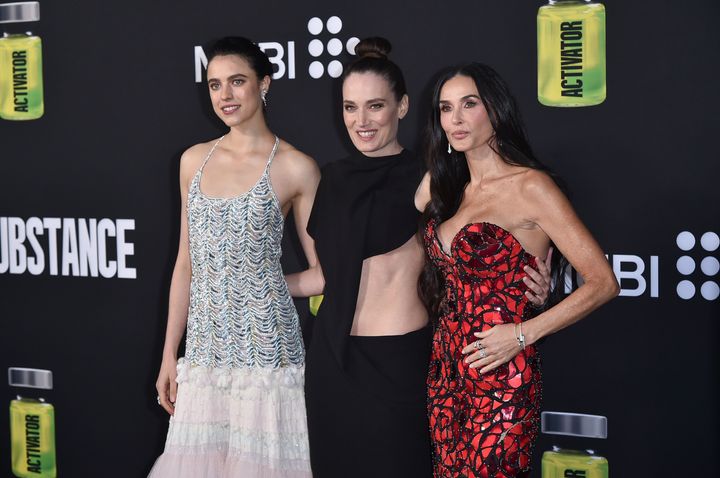
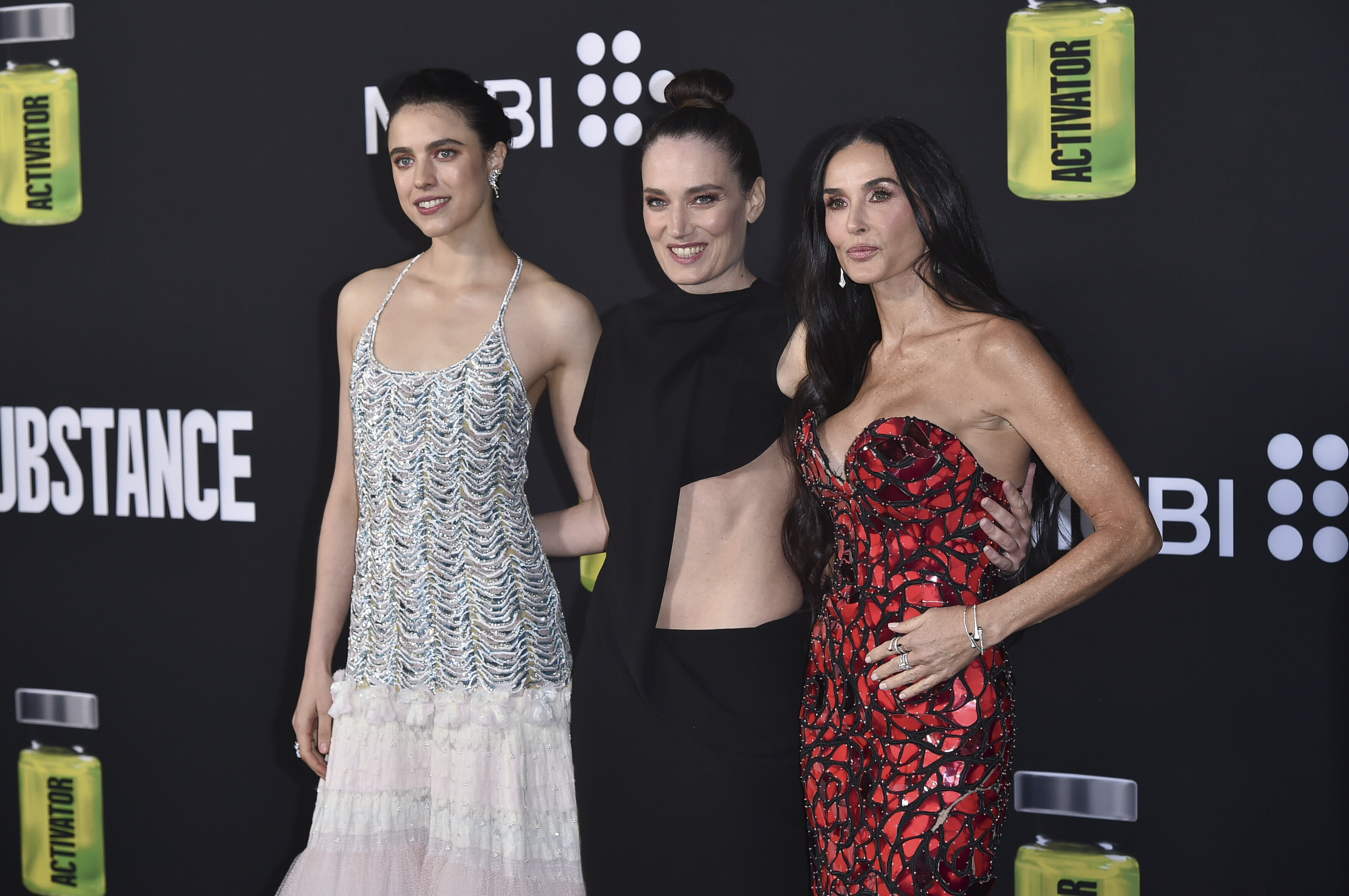
Margaret Qualley, Coralie Fargeat and Demi Moore at the premiere of The Substance last year
via Associated Press
She went on to say that The Substance uses so many bum close-ups as a way of inviting viewers to think about “how much it is the focus of so many different gazes that we have to live with, that we have to take into account, that we have to endure”.
Advertisement
“That’s something that has defined the way we can inhabit the public space,” she explained. ”[That] shapes a lot of our behaviour.”
Coralie added: “It represents the way a woman should be totally free and entitled to use her body the way she wants, to show it if she wants, to be as sexy as she wants, to be totally at ease and happy, to be whoever, however, whatever she wants.
“To get to this place with real freedom without it being an injunction, without it being something that you reproduce because you feel that it’s your only way to exist… That’s what those shots represent to me.”
As well as specific nominations for Demi Moore and its director, The Substance is also in the running for Best Picture – a rare feat for a horror flick – as well as Best Original Screenplay and Best Makeup And Hairstyling.
Boris Johnson is charging people more than £120 for a meet and greet in Scotland this September.
The former Conservative prime minister is already charging between £53.90 and £159.50 for tickets just for the public to attend “An Evening with Boris Johnson”, a live show at Edinburgh’s Usher Hall on September 2.
According to the event page, Johnson is known for “enacting the will of the British people” over Brexit and unleashing a “visionary agenda of domestic policy reform”.
Johnson also helped to “protect the union of England, Wales, Scotland and Northern Ireland,” the advert on Usher Hall’s website says – although the Brexit vote actually helped to elevate the cause of Scottish independence.
Johnson, now a columnist for the Daily Mail, is then described as a “pre-eminent global leader in the effort to support Ukraine in its fight against Russian invasion”, and “considered by the Kremlin as enemy number one”.
Advertisement
He is also praised for leading the UK “through the darkest days of the pandemic” on the event page.
The former prime minister was ousted from office halfway through his term when ministers from his own government started to resign en masse over his leadership.
Johnson was ejected in July 2022 for a number of scandals, including being fined for breaching his own government’s social distancing rules during the Covid lockdown.
He resigned as the Uxbridge and South Ruislip MP the following year, shortly before an investigation into the partygate scandal found he had deliberately misled MPs by alleging Covid rules were followed at all times in Downing Street.
Among them have been a religion-obsessed recluse in the horror film Heretic, an eccentric thespian in Paddington 2 and, infamously, an Oompa Loompa in the movie musical Wonka.
Advertisement
Throughout it all, though, Hugh says he’s been choosy about the roles that he selects, turning down anything he thinks has been “insufficient in quality or independence allowed to the filmmakers”.
And that’s why he was so bemused when one of his more recent movies underperformed at the box office.
Speaking to Vanity Fair last year to promote Heretic, Hugh was asked about Dungeons & Dragons: Honor Among Thieves, in which he played the conniving scam artist Forge Fitzwilliam.
Advertisement
Hugh Grant in 2023’s Dungeons & Dragons: Honor Among Thieves
PARAMOUNT PICTURES/Moviestore/Shutterstock
Despite largely glowing reviews (including from Hugh himself, who maintains it is “such a good film”), the adventure movie was described by some critics as a “box office bomb”, which the Bafta winner admitted he’s still perplexed by.
“It’s the biggest mystery to me,” the British star admitted, questioning: “Why didn’t anyone do market research before?”
Advertisement
Hugh continued: “I think that’s what went wrong: Basically, people just thought, I don’t want to see a film about this game. Why had no one asked the public?”
The Love Actually star can currently be seen in the new Bridget Jones sequel Mad About The Boy, reprising the role of Daniel Cleaver from the first two films.
Meeting the minimum requirement for vitamin B12, needed to make DNA, red blood cells and nerve tissue, may not actually be enough — particularly if you are older. It may even put you at risk for cognitive impairment.
A new study, led by UC San Francisco researchers, found that older, healthy volunteers, with lower concentrations of B12, but still in the normal range, showed signs of neurological and cognitive deficiency. These levels were associated with more damage to the brain’s white matter — the nerve fibers that enable communication between areas of the brain — and test scores associated with slower cognitive and visual processing speeds, compared to those with higher B12.
The study published in Annals of Neurology on Feb. 10.
The researchers led by senior author Ari J. Green, MD, of the UCSF Departments of Neurology and Ophthalmology and the Weill Institute for Neurosciences, said that the results raise questions about current B12 requirements and suggest the recommendations need updating.
“Previous studies that defined healthy amounts of B12 may have missed subtle functional manifestations of high or low levels that can affect people without causing overt symptoms,” said Green, noting that clear deficiencies of the vitamin are commonly associated with a type of anemia. “Revisiting the definition of B12 deficiency to incorporate functional biomarkers could lead to earlier intervention and prevention of cognitive decline.”
Lower B12 correlates with slower processing speeds, brain lesions
In the study, researchers enrolled 231 healthy participants without dementia or mild cognitive impairment, whose average age was 71. They were recruited through the Brain Aging Network for Cognitive Health (BrANCH) study at UCSF.
Their blood B12 amounts averaged 414.8 pmol/L, well above the U.S. minimum of 148 pmol/L. Adjusted for factors like age, sex, education and cardiovascular risks, researchers looked at the biologically active component of B12, which provides a more accurate measure of the amount of the vitamin that the body can utilize. In cognitive testing, participants with lower active B12 were found to have slower processing speed, relating to subtle cognitive decline. Its impact was amplified by older age. They also showed significant delays responding to visual stimuli, indicating slower visual processing speeds and general slower brain conductivity.
MRIs revealed a higher volume of lesions in the participants’ white matter, which may be associated with cognitive decline, dementia or stroke.
While the study volunteers were older adults, who may have a specific vulnerability to lower levels of B12, co-first author Alexandra Beaudry-Richard, MSc, said that these lower levels could “impact cognition to a greater extent than what we previously thought, and may affect a much larger proportion of the population than we realize.” Beaudry-Richard is currently completing her doctorate in research and medicine at the UCSF Department of Neurology and the Department of Microbiology and Immunology at the University of Ottawa.
“In addition to redefining B12 deficiency, clinicians should consider supplementation in older patients with neurological symptoms even if their levels are within normal limits,” she said. “Ultimately, we need to invest in more research about the underlying biology of B12 insufficiency, since it may be a preventable cause of cognitive decline.”
For years, scientific divers at a research station in the Mediterranean Sea had a problem: at some point in every field season, local fish would follow them and steal food intended as experimental rewards. Intriguingly these wild fish appeared to recognize the specific diver who had previously carried food, choosing to follow only them while ignoring other divers. To find out if that was true, a team from the Max Planck Institute of Animal Behavior (MPI-AB) in Germany conducted a series of experiments while wearing a range of diving gear, finding that fish in the wild can discriminate among humans based on external visual cues.
The experiments were designed to answer a question never before asked of wild fish: are they capable of telling people apart? Overall, little scientific evidence exists to show that fish can recognize humans at all. One captive-bred species, archerfish, was able to recognize computer-generated images of human faces in laboratory experiments. “But nobody has ever asked whether wild fish have the capacity, or indeed motivation, to recognize us when we enter their underwater world,” says Maëlan Tomasek, a doctoral student at MPI-AB and the University of Clermont Auvergne, France.
Now, a team from MPI-AB have asked; and the fish have responded. Wild fish can recognize individual humans. And, more than that, they follow specific divers they know will reward them. This finding, published in Biology Letters, lends credence to the possibility that fish can have differentiated relationships with specific humans.
The fish who volunteered
The research team conducted the study eight meters underwater at a research site in the Mediterranean Sea where populations of wild fish have become habituated to the presence of scientists. Their experiments took place in open water and fish participated in trials as “willing volunteers who could come and go as they pleased,” explains Katinka Soller, a bachelor student from MPI-AB who was co-first author on the study with Tomasek.
The first experimental phase — the training — tested if fish could learn to follow an individual diver. The training diver, Soller, started by trying to attract the attention of local fish; she wore a bright red vest and fed fish while swimming a length of 50 meters. Over time, Soller removed the conspicuous cues until she wore plain dive gear, kept the food hidden, and fed fish only after they had followed her the full 50 meters.
Of dozens of fish species inhabiting the marine station, two species of seabream in particular willingly engaged in the training sessions. Sea bream are best known to us as fish that we buy to eat, yet they surprised the scientists by their curiosity and willingness to learn.
“Once I entered the water, it was a matter of seconds before I would see them swimming towards me, seemingly coming out of nowhere,” says Soller. Not only were bream learning to follow her, but the same individuals were showing up day after day to join the lessons. Soller even took to giving them names: “There was Bernie with two shiny silver scales on the back and Alfie who had a nip out of the tail fin,” she says.
After 12 days of training, roughly 20 fish were reliably following Soller on training swims and she could recognize several of them from physical traits. By identifying individual fish participating in the experiment, the stage was set for the next experimental phase: testing if these same fish could tell Soller apart from another diver.
The two-diver test
This time Soller dived with Tomasek whose dive gear differed slightly from hers, notably in some colorful parts of the wetsuit and fins. Both divers started at the same point and then swam in different directions. On the first day, the fish followed both divers equally. “You could see them struggling to decide who to chase,” says Soller.
But Tomasek never fed the fish who followed him, so from the second day, the number of fish following Soller increased significantly. To confirm that fish were learning to recognize the correct diver, the researchers focused on six fish out of the large group to study individually, finding that four of these showed strong positive learning curves over the experiment. “This is a cool result because it shows that fish were not simply following Katinka out of habit or because other fish were there,” says Tomasek. “They were conscious of both divers, testing each one and learning that Katinka produced the reward at the end of the swim.”
But when Soller and Tomasek repeated the trials, this time wearing identical diving gear, the fish were unable to discriminate them. For the scientists, this was strong evidence that fish had associated the differences in the dive gear, most likely the colors, with each diver. “Almost all fish have color vision, so it is not surprising that the sea bream learned to associate the correct diver based on patches of color on the body,” says Tomasek.
Fish know how we look
Underwater, we do the same. “Faces are distorted by diving masks, so we usually rely on differences between wetsuits, fins, or other parts of the gear to recognize each other,” says Soller. With more time, the authors say, fish might have learned to pay attention to subtler human features, like hair or hands, to distinguish divers. “We already observed them approaching our faces and scrutinizing our bodies,” adds Soller. “It was like they were studying us, not the other way around.”
This study corroborates many anecdotal reports of animals, including fish, recognizing humans; but it goes further by performing dedicated experiments in completely natural contexts. Finding that wild fish can quickly learn to use specific cues to recognize individual human divers, it stands to reason that many other fish species, our pets included, can recognize certain patterns to identify us, the scientists say. This mechanism is the foundation for special interactions between individuals, even across species.
Senior author Alex Jordan, who leads a group at MPI-AB, says: “It doesn’t come a shock to me that these animals, which navigate a complex world and interact with myriad different species every minute, can recognize humans based on visual cues. I suppose the most surprising thing is that we would be surprised they can. It suggests we might underestimate the capacities of our underwater cousins.”
Adds Tomasek: “It might be strange to think about humans sharing a bond with an animal like a fish that sits so far from us on the evolutionary tree, that we don’t intuitively understand. But human-animal relationships can overcome millions of years of evolutionary distance if we bother to pay attention. Now we know that they see us, it’s time for us to see them.”