Families of children operated on by Yaser Jabbar say independent reports into their care are a “whitewash”.


Families of children operated on by Yaser Jabbar say independent reports into their care are a “whitewash”.
People struggling with their weight welcome the NHS rollout of Mounjaro but worry about delays.

Researchers have tested ancient DNA from corn found at archaeological sites in Arkansas, shedding new light on the dispersal of one of the world’s most important food crops.
By reconstructing the genomes of archaeological maize cobs and kernels, the study, by researchers at the University of York and the University of Copenhagen, revealed that 1,000-year-old maize from rockshelters in the Ozark region of Arkansas, US, shares a close genetic link with modern Northern Flint varieties.
These hardy varieties are cold-adapted and are the ancestors for commercially important maize grown around the world. Researchers say that understanding its origins and journey through different geographical regions could help find new ways of sustaining and improving crops today, as pressures on global food supply increases and crop health is challenged by climate change.
Researchers showed that maize underwent selection as it was transported from the US Southwest across the Great Plains, particularly through a gene, known as waxy1. Genetic variants in the waxy1 gene affect the stickiness and chewiness of maize, traits that are still valued in some traditional cuisines today.
This suggests that farmers 1,000 years ago were not just engaged in planting and harvesting, but in selecting traits that could help in breeding and producing the best quality yield for food, not too dissimilar to farmers today.
Dr Nathan Wales, from the University of York’s Department of Archaeology, said: “We know that maize was domesticated in Mexico, but it has long been debated what route it took to regions of the US to become what it is today – one of the most globally important food crops.
“We now have a clearer idea of the journey it took from Mexico, and we better appreciate how regional varieties can become more globally significant than varieties grown near the domestication centre. It is valuable information for crop breeders because they can chart the evolution of the crop, reintroduce any lost genetic diversity or develop new varieties, which could be vital to helping food shortages in the future.”
Ancient maize genomes from the Ozark rockshelters indicated that maize entered eastern North America at least twice, tracing ancestry to both the upland US Southwest and southern Texas.
Dr Jazmín Ramos-Madrigal, from the Globe Institute at the University of Copenhagen in Denmark, said: “We also showed that maize could only be introduced into eastern North America once humans bred local varieties with the genetic tools to cope with the challenging environment of the region, which goes someway to demonstrating the skills and knowledge of farmers 1,000 years ago.”
The study is published in the journal Cell.

An international team of researchers including The University of Tokyo Kavli Institute for the Physics and Mathematics of the Universe (Kavli IPMU, WPI) has found evidence showing that old elliptical galaxies in the universe can form from intense star formation within early galaxy cores. This discovery will deepen our understanding of how galaxies evolved from the early Universe, reports a new study in Nature.
Galaxies in today’s Universe are diverse in morphologies and can be roughly divided into two categories: younger, disk-like spiral galaxies, like our own Milky Way, that are still forming new stars; and older, elliptical galaxies, which are dominated by a central bulge, no longer forming stars and mostly lacking gas. These spheroidal galaxies contain very old stars, yet how they formed has remained a mystery — until now.
The discovery of the birth sites of giant, elliptical galaxies — announced in a paper published today in Nature — come from analyzing data from the Atacama Large Millimeter/submillimeter Array (ALMA) on over 100 Submillimeter Bright Galaxies (SMGs) with redshifts dating to the “Cosmic noon” era, when the universe was between around 1.6 and 5.9 billion years old and many galaxies were actively forming stars. This study provides the first solid observational evidence that spheroids can form directly through intense star formation within the cores of highly luminous starburst galaxies in the early Universe, based on a new perspective from the submillimeter band. This breakthrough will significantly impact models of galaxy evolution and deepen our understanding of how galaxies form and evolve across the Universe.
In this study, researchers led by Chinese Academy of Sciences Purple Mountain Observatory Associate Researcher Qinghua Tan, and including Kavli IPMU Professor John Silverman, Project Researcher Boris Kalita, and graduate student Zhaoxuan Liu, used statistical analysis of the surface brightness distribution of dust emission in the submillimeter band, combined with a novel analysis technique. They found that the submillimeter emission in most of sample galaxies are very compact, with surface brightness profiles deviating significantly from those of exponential disks. This suggests that the submillimeter emission typically comes from structures that are already spheroid-like. Further evidence for this spheroidal shape comes from a detailed analysis of galaxies’ 3D geometry. Modeling based on the skewed-high axis-ratio distribution shows that the ratio of the shortest to the longest of their three axes is, on average, half and increases with spatial compactness. This indicates that most of these highly star-forming galaxies are intrinsically spherical rather than disk-shaped. Supported by numerical simulations, this discovery has shown us that the main mechanism behind the formation of these tri-dimensional galaxies (spheroids) is the simultaneous action of cold gas accretion and galaxy interactions. This process is thought to have been quite common in the early Universe, during the period when most spheroids were forming. It could redefine how we understand galaxy formation.
This research was made possible thanks to the A3COSMOS and A3GOODSS archival projects, which enabled researchers to gather a large number of galaxies observed with a high enough signal-to-noise ratio for detailed analysis. Future exploration of the wealth of ALMA observations accumulated over the years, along with new submillimeter and millimeter observations with higher resolution and sensitivity, will allow us to systematically study the cold gas in galaxies. This will offer unprecedented insight into the distribution and kinematics of the raw materials fueling star formation. With the powerful capabilities of Euclid, the James Webb Space Telescope (JWST), and the China Space Station Telescope (CSST) to map the stellar components of galaxies, we will gain a more complete picture of early galaxy formation. Together, these insights will deepen our understanding of how the Universe as a whole has evolved over time.

When women are pregnant and nurse their babies, their bodies change and various organs, such as the breasts or the immune system, are adapted to ensure the health of both mother and child. This happens throughout evolution in all mammals. An international research team led by Josef Penninger and Masahiro Onji, Medical University of Vienna, now reports the surprising finding that the intestine also changes completely in pregnant and nursing females, resulting in a doubling of the intestinal surface area and a striking structural reorganisation. The researchers also provide the first genetic and mechanistic evidence of how this intestinal epithelial expansion occurs in mothers, with direct implications for the transgenerational health of the babies. The study is being published in “Nature.”
A multinational team led by Josef Penninger (MedUni Vienna, IMBA — Institute of Molecular Biotechnology, Vienna, University of British Columbia, Canada, Helmholtz Centre for Infection Research, Germany) observed that the intestinal villi reorganise during pregnancy and breastfeeding and significantly enlarge, doubling their surface area. The studies were carried out in genetically modified mice and intestinal organoids from mice and humans — self-organised three-dimensional tissues derived from stem cells in the intestine. Mechanistically, the researchers identified the RANK receptor/RANK ligand (RANK/RANKL) system as the key to the villous enlargement of the small intestine during reproduction, which is regulated by sex and lactation hormones. When mice were engineered to lack the RANK/RANKL system in the intestine, the villous expansion during pregnancy and breastfeeding was significantly impaired.
Fundamental importance for evolution
For decades, researchers have studied the RANK/RANKL system as a key facilitator of essential, evolutionarily conserved processes. The Penninger group has already identified key functions of the RANK/RANKL system in bone turnover, in the biology of the mammary gland, in breast cancer, and in immune tolerance in pregnancy, contributing to the development of drugs against bone loss used by millions of people and clinical trials for breast cancer prevention and cancer immunotherapies are underway. The researchers now discovered that these intestinal changes, which appear to be completely reversible when nursing is stopped, are important for proper feeding and nourishment of the babies. “Our study shows that the impairment of this intestinal expansion by the lack of the RANK/RANKL system during pregnancy changes the milk of the nursing mothers. This results in lower weights of the babies and transgenerational long-term metabolic consequences,” states the lead author Masahiro Onji. “Mothers need to eat for themselves and their babies. These new studies provide for the first time a molecular and structural explanation of how and why the intestine changes to adapt to enhanced nutrient demand of mothers, which is probably the case in all pregnant and nursing mammals,” adds study leader Josef Penninger.
How mothers adapt to the demands of pregnancy and breastfeeding remains a central question of evolution and human health. During this phase, female hormones influence multiple organs to control and change their structure and functions, which is crucial for the health of the mother and the development of the offspring. It was known that pregnant women have enhanced nutrient demands. However, this fundamental aspect has not been well studied until now: “By identifying the RANK/RANKL system as the driving force behind intestinal adaptation during pregnancy and lactation, our study contributes to a deeper understanding of biological processes that are of fundamental importance for evolution and human health,” says Josef Penninger, summarising the impact of the findings.
This massive expansion is controlled by sex and pregnancy hormones, which change the stem cells in the gut via the RANK/RANKL system and then give the intestinal cell a survival signal to grow much larger. This growth then leads to a near doubling of the intestinal surface area, which also increases the molecular machinery for the uptake of sugar, protein, and fat, and even leads to a profound architectural change in the intestinal villi, which probably slows down the flow of food, again maximising the uptake of nutrients. Josef Penninger: “Our team has discovered an amazing new way how mother’s bodies change to keep babies healthy. Hardly anybody knew about this, apart from a few old studies that have largely been forgotten. We have also found that this system, via stem cells, can directly affect tumours in the intestine; maybe we can learn from pregnant and nursing mothers to reversibly rewire this system to develop new treatments and a better understanding of intestinal cancer or gut regeneration.”
The study was a close collaboration between the Medical University of Vienna, the Institute of Molecular Biotechnology of the Austrian Academy of Sciences in Vienna, the Life Sciences Institute in Vancouver, the Helmholtz Centre for Infection Research, Braunschweig, the Hubrecht Institute, Utrecht, and the Kiel University. Researchers from the University of Tokyo and the University of Cambridge also participated.

Liz Truss and her mini-Budget left a “very deep and painful scar” on the Conservative Party, Mel Stride said.
The shadow Tory chancellor, who did not serve in the Truss government, made the admission during a lunch with Westminster journalists.
Advertisement
Asked by reporters if the Tories needed to publicly distance themselves from the mini-Budget by apologising and promising it will never happen again, Stride just admitted Truss’s £45bn of unfunded tax cuts severely damaged the party’s reputation.
The MP for Central Devon said: “I think it’s fair to say the-called mini-Budget – on which I had a lot to say at the time – as I was chair of the Treasury select and I was very vocal about what was going on during and after that event – it is a very deep and painful scar on the Conservative Party.”
He said: “At a stroke, it severely damaged that mantle of economic fiscal competence that our party has always [had].”
He added fiscal responsibility has to be at the centre of Conservatives’ plan to move forward.
Truss was ousted from government after serving just 49 days as the prime minister due to the chaos her mini-Budget caused.
Advertisement
She was also kicked out of her seat in the July general election when her majority of 26,195 was wiped out and Labour’s candidate Terry Jermy took her South West Norfolk constituency by 630 votes.
Stride actually managed to hang onto his own seat, although his majority dropped from 16,831 to just 61 votes.
July’s general election led to a historic defeat for the Tories who took just 121 seats in parliament, their worst defeat in terms of constituencies in history.
Asked if the Tories deserved to lose, Stride said: “If the question is – did we do everything right? And really did we deserve to win? Then I don’t think anybody could argue that we did everything right; a very, very long way from it.”
But he claimed Covid, Ukraine and inflation had all impacted the Tory reputation.
The Tory frontbencher added: “We’ve been around for 14 years. And what being around 14 years does is it deprives you the ability to readily recast yourself as an agent of change and so forth.”
Advertisement
He also expressed optimism about his party’s future, saying: “We have a long way to go in order to get back into political contention, but I believe we can do it, because I think that Labour victory last time round whilst wide is relatively shallow, and under 34% of the vote.
“We are in very volatile territory at the moment in which almost anything can happen in the future.”

NHS England medical director warns hospitals under strain after sharp rise in flu cases.

Bill Clinton said on Wednesday that you “can’t take the politics out of” presidential pardoning decisions as he weighed in on Joe Biden’s recent pardon of his son Hunter Biden.
“I wish he hadn’t said he wasn’t going to do it. I think it does weaken his case,” Clinton said of Joe Biden, who had vowed he wouldn’t pardon his son, who was found guilty in June of illegally owning a gun in 2018 and pleaded guilty in a tax case in September.
Advertisement
Clinton, in remarks to Andrew Ross Sorkin at The New York Times’ DealBook Summit, said the president had “reason to believe” his son would likely face “far stronger, adverse consequences” than the average person.
On Sunday, Biden said in a statement that his son was “unfairly” and selectively prosecuted, adding that he was “singled out” due to his ties to his father. The move by the president has led to bipartisan condemnation in the days since.
Clinton dismissed comparisons of Biden’s pardon to his own 2001 pardon of his half-brother Roger Clinton Jr, who was convicted of cocaine possession and drug trafficking in 1985.
“The real question was, would he ever be able to vote again? Would he ever be able to have normal citizenship responsibilities?” said the former president, who noted that his half-brother had already served a 14-month sentence in federal prison at the time.
Advertisement
He continued, “And I’ve been sort of upset that there’s been almost no discussion about the larger problem, which is, does the pardon system we have work?”
Bill Clinton, who urged Americans to see Biden’s move in a “larger context,” then turned to House Minority Leader Hakeem Jeffries’ (Democrat, New York) call for the president to also pardon those “in the federal prison system whose lives have been ruined by unjustly aggressive prosecutions for nonviolent offences.”
He said that Biden is “almost certainly right” that his son received “completely different treatments” than he would have otherwise.
But the issue over the pardon, he said, isn’t “way high” on his “hierarchy of things” he’s supposed to be upset about.
Sorkin later asked Clinton if Biden should pardon President-elect Donald Trump in what could be seen as a “balanced” move prior to the change in administrations.
Advertisement
“Well, I do think we should stop trying to criminalise politics,” Clinton said.
He later continued, “Both of them. … And the people like it when they are not going along with it from right to left. On the other hand, you have to ask yourself, if you do this as a blanket thing, is there anything a president could do that he or she someday would get in trouble for?”


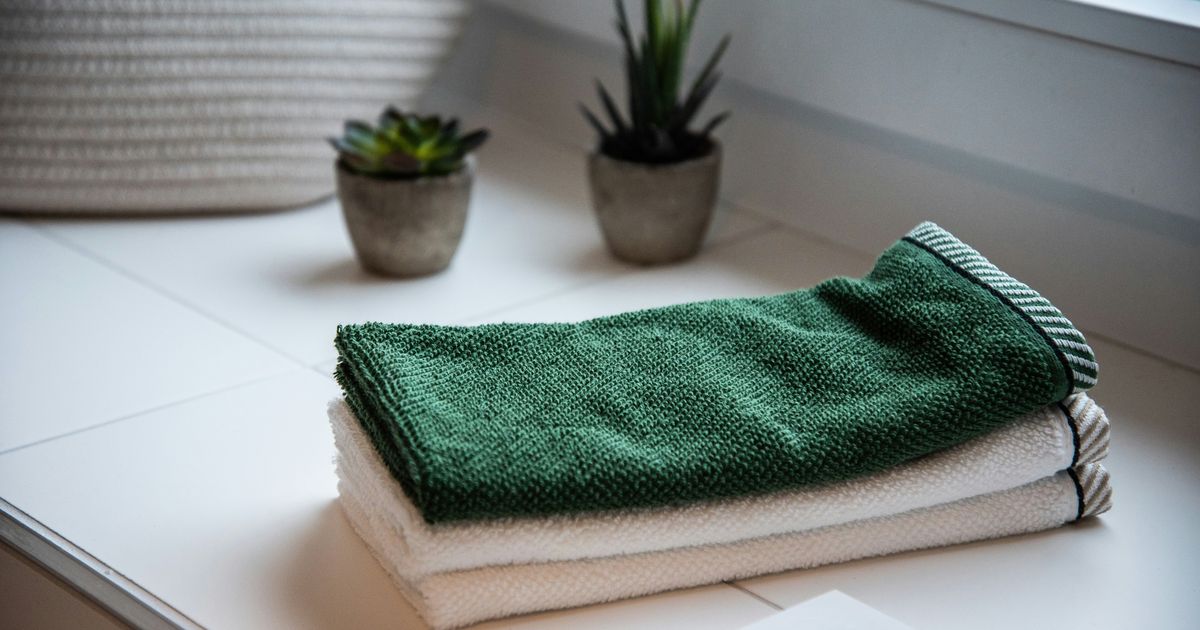
Ask yourself this: what do you think tea towels are used for?
I know, I hadn’t thought about it either and, to be honest, I use them for everything from drying the dishes to drying the kitchen countertops after cleaning them. I even use them to help me carry hot bowls of soup from time to time.
All of this being said, I’d never considered what they’re actually for and, if a Reddit thread is anything to go by, a lot of other people hadn’t considered this either.
Advertisement
In the community /r/AskUK, user psyche-illogical asked: “What is a tea towel for if not for drying dishes?”
Now, there is a story behind this that is key to understanding why the question was asked but I will warn you, it could just confuse you more…
The user said: “So, my partner and I recently moved into a flat in Glasgow. Our flatmate is American. We’re from New Zealand, and we regularly use tea towels to hand dry dishes, which I’ve always assumed is what everyone uses them for.
“In the flat, there are two tea towels hanging off the cupboard just below the sink.”
Then, they revealed a baffling conversation with their flatmate, where their flatmate asked why the tea towels in the kitchen were damp, and our Reddit user said, “Um. Oh, sorry. We just made dinner and did the dishes so they might be slightly damp but I hung them back up and they should still be clean.”
Advertisement
To which their flatmate responded: “Oh, no, that’s OK, I’ve just never seen someone use them for that before.”
While this is a very polite exchange, it left the Reddit user flummoxed and they asked: “Have I been using them wrong my whole life? Or is the American talking rubbish? What are they using them for? I’m giving myself a bit of a complex about it!”
Well, same.
Marquee-smith commented: “I dry surfaces, dry my hands and pick up hot things with them. I leave pots and glasses to air dry usually because they are not very absorbent and leave things quite smeary.”
Interesting.
However, New_Expectations5808 has a different take entirely, saying: “They’re definitely for drying dishes. Hand towels are fluffier.”
Advertisement
To which Willsagain2 responded: “Exactly. Terry towelling for hand drying, flat woven cotton/linen for drying dishes when necessary.”
I’ll be honest, I don’t think I’ve ever thought this deeply about it.
Max-Main is on my wavelength, suggesting: “They’re for the impromptu and utterly chaotic pastime of tea towel flicking which starts in the kitchen and can end in any room of the house accompanied by high pitched screaming from full grown men.”
User AwarenessHonest9030 said: “I mainly use it to dry my hands after washing up or washing my hands or I use it for getting stuff out of the oven, air fryer, microwave.”
This one was marked as the right answer.
I honestly still feel confused.

NHS experts report unprecedented demand for the new generation of obesity treatments.
