Some GP practices are struggling to access their records systems, which include online bookings.


Some GP practices are struggling to access their records systems, which include online bookings.

Creating fertilizers from organic waste can help reduce the consumption of fossil fuels and promote sustainable production. One way of doing this is through hydrothermal liquefaction (HTL), which converts biomass into biocrude oil through a high-temperature, high-pressure process. Two studies from the University of Illinois Urbana-Champaign explore the use of a fungal treatment to convert the leftover wastewater into fertilizer for agricultural crops.
“HTL uses wet biomass from organic sources such as swine manure or food waste. The process yields wastewater, called hydrothermal liquefaction aqueous phase (HTL-AP), which is usually discarded. We know it contains nutrients that can be used for fertilizer, but they are mostly in organic forms that plants can’t access. HTL-AP may also contain toxic heavy metals, depending on the type of biowaste,” said co-author Paul Davidson, an associate professor in the Department of Agricultural and Biological Engineering (ABE), part of the College of Agricultural, Consumer and Environmental Sciences and The Grainger College of Engineering at Illinois.
“We explored the use of Trametes versicolor, a white-rot fungus, to break the organic nitrogen compounds into ammonia or nitrate and potentially remove toxic components. As an eco-friendly approach, T. versicolor has been explored to treat different wastewater and seems a promising candidate to treat HTL-AP,” said Vitória Leme, lead author of the first study.
Leme, then a master’s student in ABE, developed the methods to grow the fungus and add it to the wastewater. This study demonstrated that treating a solution containing 5 % HTL-AP with T. versicolor for 3 days increased nitrate and ammonia concentrations significantly.
After Leme graduated, Karla Lopez took over. She conducted the research as an undergraduate student in Engineering Technology and Management for Agricultural Systems (ETMAS), one of two undergraduate degree paths housed in ABE.
Lopez was the lead author of the second study combining the fungal treatment with a bacterial nitrification process to further convert ammonia into nitrate. The study found that simultaneous inoculation of T. versicolor and nitrifying bacteria increased nitrate concentrations in HTL-AP 17 times.
“We looked at different factors that affected the results and found the samples had the highest increases in both nitrate and ammonia when the microorganisms were subjected to water with a pH range of 6 to 7.5,” Lopez stated. “There’s also evidence that the fungus is removing some of the potentially toxic compounds in the biowaste. We found the treatment produced an enzyme that has been shown to degrade toxins.”
Building on the promising results from the two studies, Davidson’s research team is now working on using the treated wastewater to grow hydroponic crops.
He said the treatment should ideally be done as close as possible to the HTL process, establishing a circular economy and reducing the need to transport heavy, wet biomass long distances.
“For example, if you are using swine manure as your wet feedstock, you could set up this whole system in close proximity to a swine farm, where there are thousands of pigs and lots of manure. You can collect the manure and run it through the HTL process, extract the wastewater, and have a separate system set up to treat the wastewater onsite. And if you’re near a swine farm, there’s probably crops nearby where you can use the treated wastewater as a fertilizer.”

Ever hear the old adage that time flies when you’re having fun? A new study by a team of UNLV researchers suggests that there’s a lot of truth to the trope.
Many people think of their brains as being intrinsically synced to the human-made clocks on their electronic devices, counting time in very specific, minute-by-minute increments. But the study, published this month in the latest issue of the peer-reviewed Cell Press journal Current Biology, showed that our brains don’t work that way.
By analyzing changes in brain activity patterns, the research team found that we perceive the passage of time based on the number of experiences we have — not some kind of internal clock. What’s more, increasing speed or output during an activity appears to affect how our brains perceive time.
“We tell time in our own experience by things we do, things that happen to us,” said James Hyman, a UNLV associate professor of psychology and the study’s senior author. “When we’re still and we’re bored, time goes very slowly because we’re not doing anything or nothing is happening. On the contrary, when a lot of events happen, each one of those activities is advancing our brains forward. And if this is how our brains objectively tell time, then the more that we do and the more that happens to us, the faster time goes.”
Methodology and Findings
The findings are based on analysis of activity in the anterior cingulate cortex (ACC), a portion of the brain important for monitoring activity and tracking experiences. To do this, rodents were tasked with using their noses to respond to a prompt 200 times.
Scientists already knew that brain patterns are similar, but slightly different, each time you do a repetitive motion, so they set out to answer: Is it possible to detect whether these slight differences in brain pattern changes correspond with doing the first versus 200th motion in series? And does the amount of time it takes to complete a series of motions impact brain wave activity?
By comparing pattern changes throughout the course of the task, researchers observed that there are indeed detectable changes in brain activity that occur as one moves from the beginning to middle to end of carrying out a task. And regardless of how slowly or quickly the animals moved, the brain patterns followed the same path. The patterns were consistent when researchers applied a machine learning-based mathematical model to predict the flow of brain activity, bolstering evidence that it’s experiences — not time, or a prescribed number of minutes, as you would measure it on a clock — that produce changes in our neurons’ activity patterns.
Hyman drove home the crux of the findings by sharing an anecdote of two factory workers tasked with making 100 widgets during their shift, with one worker completing the task in 30 minutes and the other in 90 minutes.
“The length of time it took to complete the task didn’t impact the brain patterns. The brain is not a clock; it acts like a counter,” Hyman explained. “Our brains register a vibe, a feeling about time. …And what that means for our workers making widgets is that you can tell the difference between making widget No. 85 and widget No. 60, but not necessarily between No. 85 and No. 88.”
But exactly “how” does the brain count? Researchers discovered that as the brain progresses through a task involving a series of motions, various small groups of firing cells begin to collaborate — essentially passing off the task to a different group of neurons every few repetitions, similar to runners passing the baton in a relay race.
“So, the cells are working together and over time randomly align to get the job done: one cell will take a few tasks and then another takes a few tasks,” Hyman said. “The cells are tracking motions and, thus, chunks of activities and time over the course of the task.”
And the study’s findings about our brains’ perception of time applies to activities-based actions other than physical motions too.
“This is the part of the brain we use for tracking something like a conversation through dinner,” Hyman said. “Think of the flow of conversation and you can recall things earlier and later in the dinner. But to pick apart one sentence from the next in your memory, it’s impossible. But you know you talked about one topic at the start, another topic during dessert, and another at the end.”
By observing the rodents who worked quickly, scientists also concluded that keeping up a good pace helps influence time perception: “The more we do, the faster time moves. They say that time flies when you’re having fun. As opposed to having fun, maybe it should be ‘time flies when you’re doing a lot’.”
Takeaways
While there’s already a wealth of information on brain processes over very short time scales of less than a second, Hyman said that the UNLV study is groundbreaking in its examination of brain patterns and perception of time over a span of just a few minutes to hours — “which is how we live much of our life: one hour at a time. “
“This is among the first studies looking at behavioral time scales in this particular part of the brain called the ACC, which we know is so important for our behavior and our emotions,” Hyman said.
The ACC is implicated in most psychiatric and neurodegenerative disorders, and is a concentration area for mood disorders, PTSD, addiction, and anxiety. ACC function is also central to various dementias including Alzheimer’s disease, which is characterized by distortions in time. The ACC has long been linked to helping humans with sequencing events or tasks such as following recipes, and the research team speculates that their findings about time perception might fall within this realm.
While the findings are a breakthrough, more research is needed. Still, Hyman said, the preliminary findings posit some potentially helpful tidbits about time perception and its likely connection to memory processes for everyday citizens’ daily lives. For example, researchers speculate that it could lend insights for navigating things like school assignments or even breakups.
“If we want to remember something, we may want to slow down by studying in short bouts and take time before engaging in the next activity. Give yourself quiet times to not move,” Hyman said. “Conversely, if you want to move on from something quickly, get involved in an activity right away.”
Hyman said there’s also a huge relationship between the ACC, emotion, and cognition. Thinking of the brain as a physical entity that one can take ownership over might help us control our subjective experiences.
“When things move faster, we tend to think it’s more fun — or sometimes overwhelming. But we don’t need to think of it as being a purely psychological experience, as fun or overwhelming; rather, if you view it as a physical process, it can be helpful,” he said. “If it’s overwhelming, slow down or if you’re bored, add activities. People already do this, but it’s empowering to know it’s a way to work your own mental health, since our brains are working like this already.”

The recent U.S. Food and Drug Administration approval of lifileucel, the first commercial tumor-infiltrating lymphocyte (TIL) therapy for advanced melanoma, marks a significant breakthrough in cancer therapy. In a new commentary published in Cancer Cell, Moffitt Cancer Center scientists provide a comprehensive overview of the therapy’s development and highlight its transformative potential.
“TIL therapy represents a major advancement in personalized cancer treatment, offering new possibilities for patients with treatment-resistant cancers,” said Amod Sarnaik, M.D., lead author and senior member of the Cutaneous Oncology Department at Moffitt.
Tumor-infiltrating lymphocyte therapy has been in development for several decades. Preclinical studies evaluating its efficacy began at the National Cancer Institute (NCI) in the early 1980s. James J. Mulé, IPh.D., a renowned immunologist and associate center director of Translational Science at Moffitt, brought TIL research to the cancer center in 2003. Since then, Moffitt has played a pivotal role in developing and validating the immunotherapy.
In 2010, Moffitt opened its first TIL trials, the first center outside of the NCI to treat patients with the investigational therapy. This initial study, treating 13 patients with advanced metastatic melanoma, yielded promising results: five responses, including two complete responses lasting beyond five years. The commentary examines Moffitt’s subsequent clinical trials, which aimed to address the high dropout rate due to disease progression during TIL manufacturing. These trials combined TIL therapy with newly approved anti-melanoma agents, significantly reducing the dropout rate from 32% to 5%.
Moffitt is also working on the next generation of TIL therapy. Shari Pilon-Thomas, Ph.D., and other immunologists at the center are investigating innovative ways to stimulate and improve TIL therapy growth and manufacturing and determine the best infusion timing to ensure optimal patient outcomes. Moffitt researchers are also expanding this therapeutic approach to treat other solid tumor cancer types, such as lung, sarcoma, cervical and bladder.
“We are at the beginning of unlocking the potential of T-cell and cell therapies for treating advanced cancers. The FDA’s approval of lifileucel is a monumental step to inspire further investment and innovation in T-cell therapies, particularly TIL therapy,” said Moffitt President and CEO Patrick Hwu, M.D. “Our pioneering research at Moffitt into next-generation TIL therapies aims to extend these lifesaving treatments to a broader range of cancer patients.”
Malaria parasites that can shrug off the effects of artemisinin are now well-established in East Africa.
Over-confidence, wasted opportunities and muddled-thinking left UK sleep-walking into Covid.
First report from Covid Inquiry says better planning would have saved lives and lessened economic costs.

Liz Truss has spoken up once again about her name appearing in an official briefing document this week, claiming this should be a “matter of deep concern to the British public”.
The former PM lodged an official complaint on Wednesday with the country’s most senior civil servant, Simon Case, after she was mentioned three times in briefing documents published for the King’s Speech.
Advertisement
Her “disastrous” mini-Budget was referenced repeatedly in the notes, which still are available on the official government website.
Case has since directed officials to remove the Truss’s name.
But less than 24 hours later, the ex-PM published yet another letter asking him to investigate further about how her name appeared in the official documents, with eight follow-up questions.
She asked: “Have you opened an investigation into how this happened?
“Who was the senior civil servant who gave final sign-off to the document?
“How many other civil servants had sight of the errant pages before they went to press?”
She also asked if there was a “breach of the Civil Service code” by mentioning her name and if any civil servants found to be responsible would be held to account.
“How many physical copies of the errant document were printed and have you made efforts to recover and pulp unissued copies of it?” Truss added.
Advertisement
She also asked if the opinion of a think tank attacking a politician could be regarded as a “key fact” in a document, and added: “Will you share the conclusions of whatever investigation you are undertaking?”
Truss said she is “very disturbing” her name made it into the Civil Service document, and “impugned my name without evidence”.
She continued: “That not a single person who drafted, edited, proofed or signed off so significant a document saw fit to challenge the slurs against me would only go to suggest that there is a settled view in Whitehall which accepts the narrative of my political opponents without challenge.
“This should be a matter of deep concern to the British public.”
All mentions of Truss in the briefing notes appear to have been pulled after she complained yesterday.
Advertisement
The online documents previously said Labour were planning on rolling out a Budget Responsibility Bill which would “ensure that the mistakes of Liz Truss min-Budget cannot repeated” with a “fiscal lock”.
Another reference said: “The fiscal lock is intended to capture and prevent those announcements that could resemble the disastrous mini-Budget.”
The final one said: “The Institute for Government have said that ’Rachel Reeves has made welcome moves to improve fiscal policy making – Liz Truss’s autumn mini-Budget is a lesson in how not to do fiscal policy.”
Truss lost her seat in the general election as part of the humiliating Tory defeat.
She has since flown to the US to endorse Donald Trump, the Republican nominee for the upcoming presidential election.


New research into revenge porn has revealed that young people are at the risk of abuse.
The report, conducted by major cybersecurity firm Kaspersky with support from the Revenge Porn Helpline, a UK charity helping adult victims of intimate image abuse, is the largest ever to understand the extent of the intimate image abuse (or ‘revenge porn’) problem globally.
While younger generations tend to think that they are more tech-savvy than their elders, the study has revealed a fundamental shift in attitudes towards online sharing of intimate images.
Advertisement
Of the poll of over 9 thousand people worldwide, a quarter admitted that they have shared images of themselves with people they are chatting to, with the number increasing to 50% amongst 25–34-year-olds.
A third of the UK respondents confirmed that they either know somebody who has survived revenge porn or have actually experienced it themselves. The report also highlighted that this form of abuse is particularly pronounced among younger generations, with 69% of 16-24 year-olds and 63% of 25-34 year-olds reporting such experiences.
David Emm, Principal Security Researcher, Kaspersky, said: “Our research highlights the increasing normalisation of a critical societal issue: the public, especially younger individuals, are sharing intimate images in increasing numbers without considering the consequences.
“Over the past 25 years, technology has made capturing and sharing such images effortless, and there have been significant shifts in behaviour and attitudes towards online dating, accelerating the trend of sharing intimate messages.”
Advertisement
Emm advised that awareness of the risks that are being taken can empower people to make more informed digital choices.
The experts urge people to follow this advice to stay safe:
If you, or someone you know, is in immediate danger, call 999 and ask for the police. If you are not in immediate danger, you can contact:


A new photo of the Labour Party has put the Tories’ electoral defeat in another, rather unflattering light.
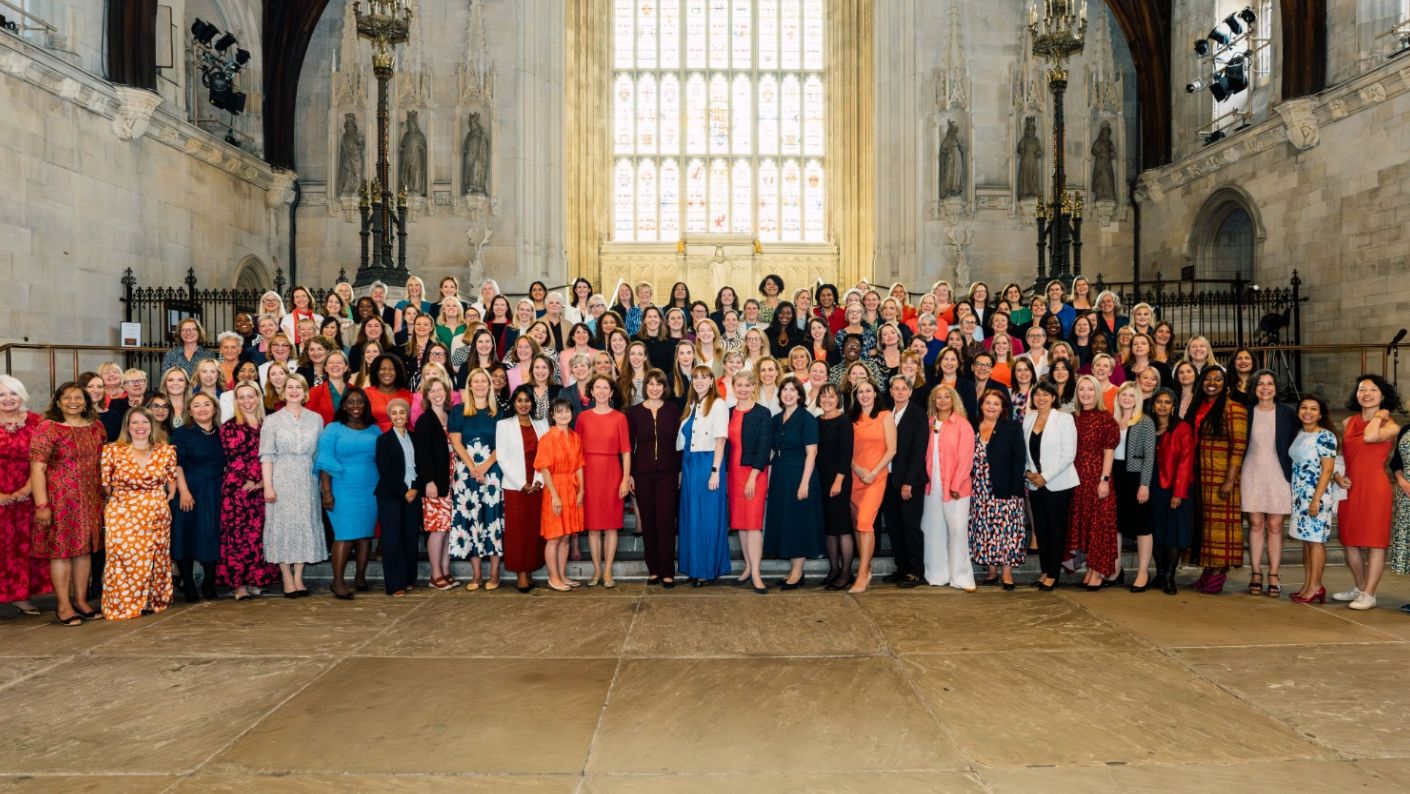
All of the female MPs elected for Labour gathered for a historic image in Westminster Hall this week, making it pretty clear for their political opponents just how many of them there are.
Advertisement
In fact, there are 189 female Labour MPs now – almost half of the total 411 seats it won in the election.
That’s more than there are Tory MPs (of any gender) in this parliament.
It’s yet another blow to the beleaguered Conservatives, who already endured their worst-ever electoral defeat.
Having secured just 121 seats in the election, the Conservatives now have 29 female MPs – that works out to less than a quarter of its total parliamentary party, a detail which did not escape Labour MPs and party supporters online.
Advertisement
This parliament is certainly one full of records in terms of its make-up, much of it related to the Labour Party.
Advertisement
Aside from creating the largest female cohort in parliament ever, with more than 40% of all MPs being women, there’s also a historic 11 female cabinet members.
In terms of educational background, the cabinet is the most diverse in history, with the majority (92%) of members having attended state school.
For comparison, just 19% of Liz Truss and Rishi Sunak’s cabinet was state-educated.
Keir Starmer also announced the first female chancellor in the Exchequer’s history, too, by putting Rachel Reeves in the top job.
Labour has even appointed the youngest cabinet minister ever, as Louise Haigh, a 36-year-old MP, is now the transport secretary.
The huge Labour majority also includes parliament’s first Chinese-born MP and a record level of Sikh representation.
Advertisement
The first three MPs born in the 21st Century to be elected are part of the Labour Party, too.