Simple thyroid check in pregnancy may lower autism risk

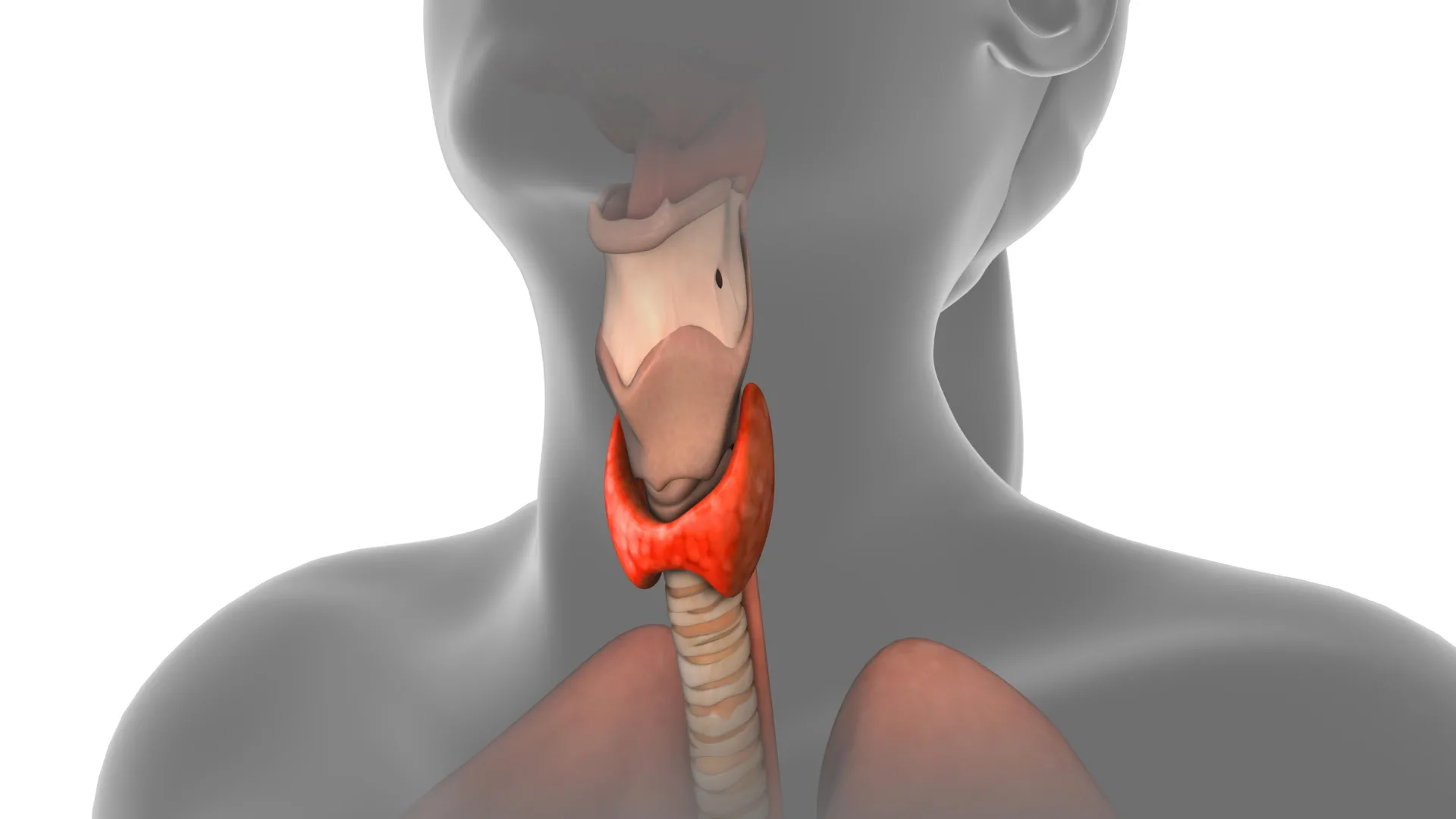
Women who experience continuing thyroid hormone irregularities throughout pregnancy may face a higher chance of having a child diagnosed with autism, according to a study released in The Journal of Clinical Endocrinology & Metabolism.

Thyroid hormones supplied by the mother play an important role in fetal neurodevelopment. When these hormones become disrupted during pregnancy, previous work has linked the imbalance to atypical brain development and a higher likelihood of autism spectrum disorder (ASD). Autism is a multifaceted condition that shapes how an individual communicates, interacts socially and interprets the world.

Untreated Multi-Trimester Imbalance Carries Higher Risk

“We found that while adequately treated chronic thyroid dysfunction was not associated with increased autism risk in offspring, ongoing imbalance across multiple trimesters was,” said Idan Menashe, Ph.D., of the Ben-Gurion University of the Negev in Beer Sheva, Israel. “These findings underscore the need for routine monitoring and timely adjustment of therapy to maintain normal thyroid hormone levels throughout pregnancy.”

Large Birth Cohort Shows Clear Pattern

The research tracked more than 51,000 births and reported that mothers with persistent thyroid hormone imbalance across pregnancy had an increased likelihood of having children with autism.

The authors also documented a dose-response pattern, meaning the risk rose as the number of affected trimesters increased.

Research Team and Publication Information

Other contributors to the study include Leena Elbedour of the Ben-Gurion University of the Negev; May Weinberg of the Meir Medical Center in Kfar Saba, Israel, and Tel Aviv University in Tel Aviv, Israel; Gal Meiri of the Soroka University Medical Center in Beer-Sheva, Israel, and the Ben-Gurion University of the Negev; and Analya Michaelovski of the Soroka University Medical Center.

No funding was received for this research.

“Maternal Thyroid Hormone Imbalance and Risk of Autism Spectrum Disorder,” was published online, ahead of print.

Share Button

Scientists may have found dark matter after 100 years of searching

In the early 1930s, Swiss astronomer Fritz Zwicky noticed that many galaxies were moving far faster than their visible mass should permit. This unusual motion led him to propose that some kind of invisible structure — dark matter — was supplying the extra gravitational pull needed to keep those galaxies intact. Nearly a century later, NASA’s Fermi Gamma-ray Space Telescope may have captured the first direct evidence of this mysterious substance, offering the possibility of finally “seeing” dark matter.

Dark matter has remained one of astronomy’s biggest unknowns since it was first suggested. Until now, scientists have only been able to study it indirectly by observing how it affects ordinary matter, such as the way it produces enough gravity to hold galaxies together. Direct detection has not been possible because dark matter particles do not interact with electromagnetic force — meaning they do not absorb, reflect or emit light.

The WIMP Hypothesis and Predicted Gamma Rays

Many researchers believe that dark matter is made of weakly interacting massive particles, or WIMPs. These particles are thought to be heavier than protons and interact so weakly with normal matter that they are extremely difficult to detect. However, theory suggests that when two WIMPs collide, they annihilate each other and release energetic particles, including gamma ray photons.

Scientists have spent years examining regions where dark matter should be concentrated, especially the center of the Milky Way, searching for these specific gamma rays. Using new data from the Fermi Gamma-ray Space Telescope, Professor Tomonori Totani of the University of Tokyo now believes he has identified the predicted gamma ray signal associated with dark matter particle annihilation.

Totani’s findings appear in the Journal of Cosmology and Astroparticle Physics.

A 20-GeV Gamma Ray Halo Near the Milky Way Center

“We detected gamma rays with a photon energy of 20 gigaelectronvolts (or 20 billion electronvolts, an extremely large amount of energy) extending in a halolike structure toward the center of the Milky Way galaxy. The gamma-ray emission component closely matches the shape expected from the dark matter halo,” said Totani.

The measured gamma ray energy spectrum, which describes how the intensity of the emission varies, closely matches model predictions for the annihilation of hypothetical WIMPs with masses roughly 500 times that of a proton. The estimated frequency of these annihilation events based on the observed gamma ray intensity also fits within expected theoretical ranges.

Evaluating the Possibility of a Major Breakthrough

Totani explains that the gamma ray pattern cannot be easily matched to other known sources or more common astrophysical processes. Because of this, he views the data as a strong candidate for long-sought gamma ray emission from dark matter.

“If this is correct, to the extent of my knowledge, it would mark the first time humanity has ‘seen’ dark matter. And it turns out that dark matter is a new particle not included in the current standard model of particle physics. This signifies a major development in astronomy and physics,” said Totani.

Next Steps and Independent Verification

Although Totani is confident in his analysis, he emphasizes that independent confirmation is essential. Other researchers will need to review the data to verify that the halolike radiation truly results from dark matter annihilation rather than another astrophysical source.

Further support could come from finding the same gamma ray signature in other regions rich in dark matter. Dwarf galaxies orbiting within the Milky Way halo are considered especially promising. “This may be achieved once more data is accumulated, and if so, it would provide even stronger evidence that the gamma rays originate from dark matter,” said Totani.

Funding: This work was supported by JSPS/MEXT KAKENHI Grant Number 18K03692.

Share Button

Millions are about to choose the wrong Medicare plan

Right now, 68 million Americans have a deadline coming up: the deadline to decide their Medicare health coverage for next year if they’re over age 65 or have major disabilities.

They must make those decisions by December 7, for coverage beginning January 1, 2026, which makes this time, known as Medicare Open Enrollment, a very important time.

And yet, University of Michigan research has shown that many people covered by Medicare don’t take key steps during Open Enrollment that could save them money, headaches and worry.

Based on that research, here are five tips for everyone who has Medicare – and the family members and friends who can help them with their choices.

Use the tools

The official Medicare website has a lot of easy-to-understand and straightforward tools to help anyone understand their Medicare coverage options, and explore the options open to them or their loved ones.

But only 33% of people with Medicare used the Internet at all to explore their options, according to a recent U-M study.

That’s even though the choices can be dizzying: many people have dozens of options. Nearly all people have more than 10 Medicare Advantage plans to choose from, as well as multiple Part D prescription drug and Medigap supplemental plans to choose from if they opt for traditional Medicare.

The Medicare Plan Compare site is the place to start, and you can start on the Your Medicare Options page.

It’s available even during the government shutdown, because the plan-navigation tools on it were built before the shutdown began.

Using the Plan Compare site, you can see which Medicare Advantage and Part D prescription drug plans serve your area, what services or drugs they cover, what they charge for monthly premiums and for copays and other costs when you get health care or fill a prescription, and what the plan’s overall star rating is.

If you have a Medicare Advantage plan now, using the Plan Compare tool will also show you if your current plan will still be available next year.

Some plans are ending or combining with others.

You can also enter your prescription drug names and doses to see what they will cost you on different Part D plans, and whether pharmacies near you are in-network.

This includes the Part D drug coverage in many Medicare Advantage plans, as well as standalone Part D plans for people who choose traditional Medicare.

U-M researchers showed that using the prescription drug tool to compare estimated costs could save people a lot of money.

They did the study before the annual cap on Medicare prescription costs took effect in 2025, but still feel it’s important for everyone with Medicare drug coverage to use the tool.

If you need help navigating the Plan Finder site, or signing up for an account that will help you get the most use out of it, don’t be afraid to ask a friend, family member or neighbor. Or use the independent help described in Tip 2, below.

“Given changing clinical circumstances and the fact that insurance plan costs and benefits are often modified from year to year, it is very important that people with Medicare coverage use the available tools during Open Enrollment to identify a plan that best meets their medical needs and fits their financial situation,” said A. Mark Fendrick, M.D., director of U-M’s center for Value Based Insurance Design.

Get independent help

Half of people with Medicare get their coverage through Medicare Advantage plans run by insurance companies.

And of the other half, who choose traditional Medicare, nearly half get Part D prescription drug plans and “Medigap” add-on plans from private insurance companies.

Those insurance companies send out a lot of mail and email at this time of year, trying to persuade people to choose their plans.

They make phone calls, pay for advertising and even hold events where participants get a free meal in exchange for listening to the sales pitch for that plan.

They do all this because they make money on enrollees who are healthier and don’t use their insurance a lot.

Then there are insurance brokers and agents – people who do one-on-one consultations, but are paid for every person they sign up for a particular company’s plan.

While all of this can inform your decision, these aren’t independent sources of information. However, there is an independent source: your State Health Insurance Assistance Program, or SHIP.

Each state has one, with paid staff and trained volunteers who don’t have a financial stake in which plan you choose.

You can find your state’s SHIP program here.

“With the overwhelming number of plans and the vast amount of information available, it’s essential to remember that free help is available,” said Lianlian Lei, Ph.D., who has studied Medicare enrollment by older adults and is an assistant professor in the U-M Medical School’s Department of Psychiatry.

“Seeking independent, unbiased assistance is crucial to making the best choice,” she added.

Because SHIP programs don’t have the marketing dollars that insurance companies and brokers do, many people don’t know about them.

In fact, a recent U-M poll showed that 75% of older adults have never heard of SHIP, and another 21% have heard of it but haven’t used it.

Only 4% of older adults had used SHIP services, even though they’re available for free to anyone eligible for Medicare.

In Michigan, anyone can reach the state SHIP program by calling 1-800-803-7174 from 8 a.m. to 8 p.m., Monday through Friday.

You’ll speak with an agent who can schedule an appointment or provide a referral to a trained, certified counselor in their community.

Not only that, the staff at this help line, called MiOptions, can also help older adults and their caregivers find out what other assistance they might qualify for.

You may also find trained SHIP volunteers offering free in-person counseling sessions at your local public library or senior center; check the events listings to see if any are coming up and how to make an appointment.

Interested in learning how to offer this kind of independent help to others as a SHIP volunteer? Visit this page.

Look at the total package, not just the monthly premiums

When choosing any insurance, a lot of people focus on the monthly premium, and not on the total package of coverage.

This is true for Medicare too.

When you use the Medicare Plan Compare tool, you can see monthly premiums for different Medicare Advantage plans side-by-side.

But you can also see things like co-pays and other costs, which can vary a lot depending on how much health care a person actually uses.

The Plan Compare tool does not allow you to compare Medicare Advantage to traditional Medicare plus any add-on plans you choose.

So, you’ll want to note these costs for traditional Medicare, and then explore the Part D prescription drug plans and Medigap plans available in your area.

And remember, even if a Medicare Advantage plan says it has a $0 premium, that’s just for the coverage it provides beyond Part B.

Unless the plan includes a Part B premium reduction, which most don’t, you will still need to pay a monthly premium of at least $185, or more if you have a higher income.

Sometimes a plan with a higher monthly premium has lower out-of-pocket costs due at the time of care, or a lower cap on total out-of-pocket costs that you could owe each year.

The National Council on Aging has a great guide to all of these kinds of costs.

When choosing a Part D prescription drug plan or a Medigap plan to go with traditional Medicare coverage, it’s also important to compare options, based on the medications you take or whether you travel a lot or live in a second location during part of the year.

But surprisingly, U-M research shows it isn’t cost but access to care providers, and dissatisfaction with quality of care, that drive most people to switch Medicare Advantage plans.

Access to care is also the biggest driver for people leaving Medicare Advantage to switch to traditional Medicare, the study found.

That’s why it’s important to look at the star ratings that Medicare Advantage and Part D prescription plans have earned from past members’ opinions of them.

It’s also important to look at the networks of hospitals, doctors and other providers that each Medicare Advantage plan will allow you to go to, or the restrictions on specific drug classes that Part D plans might impose.

This kind of information is only available on each plan’s website.

The same research team has also looked at Medicare’s “revolving door” and the patterns of switching to and from the different forms of Medicare.

One item they note: Most states do not require insurers to ensure that people have the right to purchase Medigap plans regardless of their health status, except for an initial period after they enroll in Medicare for the first time.

This can result in Medicare Advantage “lock-in” for individuals with costly care needs, meaning they are unable to obtain Medigap coverage to help offset high out-of-pocket costs in traditional Medicare.

So, if you have significant health issues and have been in a Medicare Advantage plan, but you are thinking of switching to traditional Medicare, it’s important to understand if you’ll be able to get an affordable Medigap plan to cover costs that traditional Medicare doesn’t cover.

If you have a low income, see if you’re eligible for extra assistance

For older adults and people with disabilities who have limited incomes, there are new programs and supports available for 2026, on top of the ones already in place in 2025.

Some of them are automatic, but some require you to apply for them.

You can get help understanding all of the options open to you by contacting the SHIP program for your state (see above).

But here are some major ones to be aware of:

You can find out if there’s one serving your area, and whether you might qualify, using the Plan Compare tool or by contacting your state’s SHIP program.

Don’t assume you and your spouse or partner should have the same plan

If you are married or live with a partner, your instinct might be to enroll in the same plan as them for convenience.

But that’s not always the best choice.

Your health needs, and your spouse’s or partner’s needs, may be very different. One of you might be retired, the other working.

Or maybe you have different coverage related to your past employment or military service.

If one of you has dementia, for instance, there may be special plans and programs that could cover more services.

But U-M research showed that people with and without dementia make very similar Medicare Advantage choices, which may mean they aren’t examining all their options.

No matter what your health status, and your spouse or partner’s health status, it’s still important to make individual choices when it comes to Medicare Open Enrollment.

U-M research has shown, though, that many people with Medicare Advantage coverage are making changes to their coverage in sync with their spouse or partner.

The Medicare online tools don’t have a “couples” setting, so each person should go through the process by inputting their information.

You could seek SHIP counseling together, but you may have to make two appointments depending on the program in your area.

Bonus tip about Medicare enrollment

Even if you make a choice during Medicare Open Enrollment, you may not be stuck with that choice for all of 2026.

For instance, if you choose a Medicare Advantage plan, but then realize in early 2026 that it’s not right for you, you will have until March 31 to choose a different Medicare Advantage Plan or move to traditional Medicare.

And if you have a major change in your income, employment, address, or living situation during 2026, you may become eligible for a Special Enrollment Period that will allow you to change plans.

This article contains information based on research by, and expertise from, experts who are part of the U-M Institute for Healthcare Policy and Innovation, including Lianlian Lei, Ph.D., U-M Medical School Department of Psychiatry; Geoffrey Hoffman, Ph.D., U-M School of Nursing; Kristian Stensland, M.D., M.P.H., M.S., U-M Medical School Department of Urology; and A. Mark Fendrick, M.D., and Renuka Tipirneni, M.D., M.Sc., U-M Medical School Department of Internal Medicine, Division of General Medicine. Data on awareness of SHIP comes from the National Poll on Healthy Aging, based at IHPI.

Share Button

Let’s Settle It: Are Corked Wines Really ‘Better’ Than Screw Tops?

There are some wine “rules” that I, a non-expert, always believed all experts stood by – things like never putting ice in white wine and using the exact right glass for each drink.

Luckily, Lauren Denyer, a WSET School London wine educator, previously disabused me of those notions. Speaking to HuffPost UK, she said: “There is a certain amount of pretension that can come with wine, which can be very off-putting and often incorrect”.

But does that extend to what I thought was wine’s cardinal rule? In other words, are corked bottles always better than screw-top kinds?

Here’s what Lee Issacs, a WSET Educator Development Manager who previously taught us how to read a wine bottle, had to say on the topic.

Are corked wines always better?

Seeking closure on a challenging life experience can often end with one needing a glass or two of wine,” the expert told us.

But, he explained, “Closure in wine… refers to how the bottle has been sealed”.

Wines can be closed by a variety of corks, including natural, synthetic, grainy, and even Champagne-specific types. They can also be closed with screw caps and, more rarely, crown caps.

“Thankfully,” Issacs said, “the days of people being judgmental and wary of screwcaps are almost completely behind us. The type of closure does not reflect the overall quality of the wine.”

In fact, the wine educator thinks even canned versions can hold their own these days.

“The days of canned wine just being a vehicle for any old naff alcohol” are gone, he wrote.

“As consumers globally look to moderate their alcohol intake, wine in cans are a
great option.”

Why do different wines have different closures?

I was surprised to hear from Isaacs previously that “Most wines are made to be consumed without the need for ageing, and a good rule to follow is if the wine is particularly cheap and more than a year old, it may be a bit past it”.

That’s partly why screw caps are quite common.

“Screwcap wines tend to be designed for younger, fresher drinking, with cork stoppers still the choice for wines aiming to change and develop over time in bottle,” the pro advised.

“If nothing else, a screwcap bottle is easy to reseal and stick in the fridge to keep [for] the next day… and there’s no need for a corkscrew.”

Share Button

Common Scent May Boost Your Mood, But Only In These Situations

Some experts think that, be it through the placebo effect of plain ol’ distraction, eating sour sweets may help those with anxiety through stressful smells.

And research suggests that the smell of mint can help those feeling tense, too.

A more seasonal smell, pine, has been linked to increased activity in the areas of the brain responsible for “judgment, feeling, motor activity of the frontal lobe, as well as the memory area of [the] temporal lobe,” too.

Speaking to the BBC, Baroness Kathy Willis, an Oxford University biodiversity professor, said that the smell of a pine forest can make you feel calmer in as little as 90 seconds; an effect which can last as long as 10 minutes.

But a paper from 2001 found that while the scent of pine might soothe us, it only does so in certain contexts.

Why might pine boost our mood?

A 2022 paper reads: “Unlike other senses, smells are unique in the mechanism with which they affect cognitive processes, and subsequently our emotions, memories, and perceptions of the world around us”.

That same paper said that woodland smells “affected multiple domains of wellbeing with physical wellbeing discussed most frequently, particularly in relation to relaxation, comfort, and rejuvenation” among participants.

But the 2001 paper we mentioned earlier suggests the smell of pine trees might have a different effect on us than, say, a pine-scented cleaner.

“Let’s say you have an essential oil, or a real tree or a chemical fabricated for a cleaning product. If a person is blindfolded and smells each of these samples, the perceptual experience would be the same,” neuroscientist at Brown University, Dr Rachel Herz, said she learned from the 2001 research she co-authored.

Speaking to Popular Science, she added, “Where context really comes into play is in the interpretation.

“If I’m standing in the bathroom opening a bottle of pine cleaner to clean the toilet, that pine smell is going to have a completely different connotation for me”.

She continued, “You could consciously experience that nostalgia, but what’s going to happen first is you’re going to have that mood boost, and that happy feeling… Then you might reflect on a memory of a time you went camping as a child, for example, but that is not necessary.”

In other words, the smell of pine, which Dr Herz describes as being very “psychological,” is likelier to boost your mood if you associate it with happy memories first.

As a result, pine trees, which could remind you of Christmas, may make you happier than a whiff of pine-scented floor cleaner.

Why do cleaning products smell of pine to begin with?

A 2022 BMJ article argued that though “the scent of pine in the home may now be predominantly artificial and the forest itself is absent, a strong connection remains with historical concepts that associate pine odour with health and cleanliness”.

That’s because, they suggested, “The influence of Germany as a pioneer of sanatorium treatment for tuberculosis led to mountainous and forested locations becoming seen as the ideal place for sanatoria”.

Those seeking treatment for conditions like tuberculosis in the UK, they posit, were then exposed to the “borrowed” concept of “therapeutic pine-infused air”.

And over time, doctors may have started to believe in an inherent cleanliness linked to the plant, a link that cleaning companies might have taken advantage of. Take health company Sanitas, they say, an 1879 advert from which reads: “The Health Giver; Or, the Pine Forest at Home”.

The authors added, “The continued use of pine in cleaners suggests that it has remained an indicator of cleanliness and still considered to smell ‘good’, even if it is gradually being usurped by other smells or even products that promise not to smell at all”.

Share Button

Boundaries Are Fueling A New Wave of Queer Liberation

“I feel the most empowered when I say no,” says Venus Cuffs, an alternative lifestyle expert based in New York City. Cuffs, who once worked as a dominatrix, is part of a lineage of Black femmes who have used their positions to reclaim power — a strategy we’ll unspool post haste.

Mistress Velvet, the late Black femme domme who famously made her white clients read bell hooks, understood the same thing: the queer art of sabotage isn’t about tearing things down. It’s about survival in the form of refusal, boundary and redirection.

“Me saying ‘no’ has been met with like, ‘How dare you?’ My refusal to participate is offensive to people,” Cuffs says, recalling the backlash she faced for refusing race play in predominantly white kink communities. Her words point to a familiar script: the demand that Black femmes be endlessly available, compliant or grateful. Her refusal interrupts that script.

For Cuffs, refusal is the point. Rejecting race play meant rejecting the broader cultural script insisting Black women perform whatever role is demanded of them. “Race is nothing to play about,” she says. That refusal was sabotage. But walking away from the scene allowed Cuffs to stay aligned with her integrity.

Cuffs’ “no” became the foundation for something new. Leaving the scene didn’t just protect her; it opened the door to a creative and personal realignment that became political resistance.

“I broke off from the main scene and started my own dungeon,” she recalls. “I decided I don’t need to deal with this, and neither does my community.”

She founded Spread, a 4,000-square-foot Brooklyn dungeon where queer BDSM practitioners could host sessions and hold power dynamics safely. Spread quickly gained traction. The choice to open it was a declaration as much as a business move: fuck you to exclusionary spaces, fuck yes to something better.

“Refusal means refusing to follow the path we have been told to walk when our instincts tell us otherwise,” Madison Young, a filmmaker and sex educator in the Bay Area, tells me. Queer refusal, they say, looks like “refusing to be someone more palatable in an effort to not cause a disruption. Refusing to be risk-averse.”

Where Cuffs and Velvet confront the racialised demands placed on Black femmes, Young’s dissent takes another form. As a white queer filmmaker, their refusals reject industry scripts demanding palatability and compliance. For Young, refusal has meant creating films and performances that defy neat labels — queer family-making, kink, submission — all centred on authenticity. “I think this is the inherent nature of queerness,” they say. “To exist outside of the lines and boxes drawn for us and to instead follow the path our heart, gut, soul are guiding us toward.”

If refusal is saying “no,” sabotage is building “yes.” Queer sabotage refuses harmful systems not simply for resistance, but to open space for something authentically queer and joyful to emerge.

Young does this through filmmaking. On their sets, they hire predominantly women, nonbinary, and trans crew. “It shifts the dynamic on set when it is a room full of women and queers,” they say. “I can choose whose stories I’m elevating, who I’m collaborating with.” These choices build queer community and disrupt industry norms.

For Madison Young, refusal has meant creating films and performances that defy neat labels — queer family-making, kink, submission — all centered on authenticity.

Photo: Marina Green

For Madison Young, refusal has meant creating films and performances that defy neat labels — queer family-making, kink, submission — all centered on authenticity.

For Tracy Quan, a former escort and author of Diary of a Manhattan Call Girl, sabotage operates more subtly. “I viewed my novels more as a kind of entryism,” she says. Quan smuggles radical ideas into mainstream publishing by infiltrating oppressive spaces from within.

She points to Nancy Mitford, the British novelist who wove antifascist politics into frothy social comedies. “She was a serious antifascist who made the British government pay attention to her fascist sister,” Quan says. “She wrote witty novels that looked fluffy but carried sharp politics.” For Quan, writing sexy books that secrete away radical ideas felt like inserting feminist critique into commercial publishing.

If refusal protects integrity, sabotage extends it. Refusal shuts the door on the status quo. Sabotage opens a new one and creates conditions for a new yes, a yes rooted in creativity rather than compliance.

While Cuffs and Velvet resist the racialized demands placed on Black femmes, Young’s yes shows up in the work itself. “My heart tells me to make a feature film or a TV series or start a queer art gallery, and I just can’t do anything else,” they say. “The calling is strong and defies all logic.”

Early in Young’s career, the call sounded like chaos. “Any time I would even attempt to plug into the matrix, I would sabotage the situation. I just couldn’t do it,” Young explains. What looked like self-destruction was queer self-preservation: an inability to do “normal” — not for money, not for fame.

For Quan, sabotage also meant restraint. For decades, she withheld certain details of her personal life as a deliberate constraint. Instead of confession, she leaned into omission. That discipline, she explains, sharpened her craft. “When you have limits, when you have this denial kind of situation, it can really force you to be more creative,” she told me. What others see as a restriction, she frames as power.

Creating our own boundaries is one of the ways we carve out space for queer joy in a world determined to tell us which boundaries we are allowed to have. “When we state a boundary and work with refusal, we are making room for what we want more of,” Young says.

A no to the wrong collaborator opens a yes to the right one. Setting limits is a prophylactic. “We can protect our collective joy, our queer joy, our relationships, and our connections by being clear about our expectations and needs,” Young says.

Quan echoes that sentiment, describing constraints as creative pleasure rather than deprivation. “To me, creativity is a kind of power, like that’s the kind of power that I enjoy,” she says. For her, withholding shapes a more authentic vision.

Cuffs locates joy in boundaries even more explicitly — in reclaiming time, body, and power. Saying no, walking away from money, setting terms that feel good — each is a reclamation. “I don’t have to show up for anyone when I can’t show up for myself,” she says.

In a political moment defined by rampant transphobia, book bans targeting queer literature, legislative attacks on bodily autonomy, and the ongoing criminalization of sex work, boundaries and refusals are not just private choices. They are collective, political strategies. Our joy is political.

Mistress Velvet knew this when she turned her domme sessions into lesson plans, insisting white submissives grapple with Black feminist thought to earn her attention. Cuffs, Young and Quan know it when they walk away from exploitation, infiltrate hostile industries, or reshape the spaces they inhabit. Sabotage isn’t nihilism. It’s survival. It’s creativity. It’s care.

Cuffs leaves us with a reminder: “Do what feels right for you. Don’t be influenced by the amount of money, the amount of power, what other people tell you it should look like. Slavery is over.”

Share Button

Where cannabis stores cluster, emergency visits climb

A population-based natural experiment investigated how living near cannabis retail stores relates to cannabis-related harms. The researchers found a connection between store exposure and higher rates of harm, with the largest increases appearing in neighborhoods that had many stores located close together. These results indicate that limiting the number of cannabis retailers, reducing concentrated clusters of stores, or restricting store placement in certain areas could support public health goals. The study appears in Annals of Internal Medicine.

A research team from North York General Hospital and partner institutions analyzed data from 6,140,595 people living in Ontario, Canada. Participants were between 15 and 105 years old and lived in 10,574 neighborhoods from April 2017 through December 2022. The team examined whether living near a cannabis retail store after legalization in October 2018 influenced neighborhood-level rates of cannabis-related emergency department (ED) visits.

To define exposure, the researchers used provincial records on cannabis store locations. Neighborhoods were considered exposed if they were located within 1000m of a cannabis retail store and unexposed if they were situated more than 1000m away. The main measure of health impact was the rate of cannabis-attributable ED visits per 100,000 people aged 15 years or older.

The analysis showed that exposed neighborhoods were more commonly located in major urban centers and were disproportionately represented in the lowest income quintile compared to unexposed neighborhoods. After a cannabis store opened nearby, exposed neighborhoods did not show a rise in monthly cannabis-attributable ED visits. By contrast, unexposed neighborhoods experienced a decline in monthly ED visits over the same period.

When the two groups were compared directly, exposed neighborhoods had a 12% increase (CI, 6% to 19%) in the absolute rate of cannabis-attributable ED visits relative to unexposed areas. The researchers also observed that neighborhoods with several cannabis stores located within 1000m experienced greater increases in ED visits than areas with fewer stores. According to the authors, these findings suggest that the combination of legalization and retail expansion may introduce public health risks that differ from legalization on its own.

Share Button

Prostate cancer screening should not be offered to most UK men, say experts

It recommends that only men with a confirmed genetic risk of prostate cancer should be screened for the disease.

Share Button

6 Supplements A Surgeon Warns Never To Take At The Same Time

I’m not going to lie, my morning routine has been permanently altered by learning that iron tablets may not perform as well when taken with tea or coffee.

I used to have mine with my morning cuppa, but the NHS suggested the drinks may affect how much of the mineral my body can absorb.

And according to NHS surgeon, author, and podcast host Dr Karan Rajan, “If you consume too much calcium, either in supplement form or in food, this can actually impact iron absorption” too.

In fact, he shared a few supplements that you shouldn’t take together in an Instagram Reel.

Which supplements shouldn’t you take together?

1) Calcium and iron

You already know that he doesn’t want us taking calcium and iron at the same time – he recommends consuming these supplements “at least two hours apart” for the best benefits, and says to take vitamin C alongside your iron.

In fact, the Mayo Clinic advises against taking calcium supplements alongside iron-rich meals, too.

2) Zinc and calcium

Additionally, Dr Rajan stated that “If you combine zinc with calcium, the zinc competes with calcium for absorption in the gut, so taking both together limits the effectiveness of both”.

He also recommended spacing these apart by two hours if you require both supplements.

3) Zinc and iron

Think that means you can sync your zinc and iron supplement times? Sadly, that’d be too easy, according to Dr Rajan.

“Iron at concentrations of 25mg or more can reduce zinc absorption,” he continued. If your iron tablets meet that level, take them “a few hours” apart from zinc.

4) Green tea or green tea extract and iron

Green tea or green tea extract can also impact iron absorption. Dr Rajan said not to drink either if you need to take iron supplements.

And a 2016 paper even found that excessive green tea drinking appeared to actually cause iron deficiency anaemia.

5) Vitamin C and vitamin B12

Vitamin C and vitamin B12 don’t mix well when taken together, the surgeon continued, as “vitamin C in high doses can reduce the amount of vitamin B12 that’s absorbed… take vitamin C at least two hours after vitamin B12”.

6) Zinc and magnesium

Oh, and look – our old friend zinc is back with more complications.

“If you take zinc with magnesium,” the surgeon said, “the zinc in doses above 140mg per day can compete with magnesium for absorption… so take them at different times of the day.”

However, this only seems to be the case for pretty high levels of zinc.

Share Button

Rachel Reeves Accused Of Misleading Voters Over State Of UK Economy Ahead Of Budget

Rachel Reeves has been accused of misleading voters by claiming there was a huge hole in the government’s finances which did not actually exist.

Treasury officials briefed that the chancellor needed to raise around £20 billion in the Budget to balance the nation’s books.

Reeves herself even held a highly-unusual pre-Budget press conference in Downing Street on November 9 in which she refused to rule out putting up income tax – a move which would have broken a key Labour manifesto pledge.

Later that week, she told Radio 5Live that deep cuts in public spending would be needed if she did not increase income tax rates.

But days later the Financial Times revealed that Reeves had decided not to put up income tax rise after all.

Treasury sources said that was because the Office for Budget Responsibility’s (OBR) forecasts showed the economy was in better shape than previously thought.

But figures released by the OBR on Friday showed that fully two weeks before that U-turn, their assessment was that there was no black hole at all.

Reeves hiked taxes by £26 billion in the Budget as she massively increased public spending, including on welfare.

Tory leader Kemi Badenoch said the chancellor had “lied to the public” and should be sacked.

Posting on X, she said: “Her Budget wasn’t about stability. It was about politics: bribing Labour MPs to save her own skin. Shameful.”

<div class="js-react-hydrator" data-component-name="Twitter" data-component-id="1450" data-component-props="{"itemType":"rich","index":14,"contentIndexByType":1,"contentListType":"embed","code":"

Yet more evidence, as if we needed it, that the Chancellor must be sacked. For months Reeves has lied to the public to justify record tax hikes to pay for more welfare.

Her Budget wasn’t about stability. It was about politics: bribing Labour MPs to save her own skin. Shameful. https://t.co/fR1dNgeUKp

— Kemi Badenoch (@KemiBadenoch) November 28, 2025

","type":"rich","meta":{"author":"Kemi Badenoch","author_url":"https://twitter.com/KemiBadenoch","cache_age":86400,"description":"Yet more evidence, as if we needed it, that the Chancellor must be sacked. For months Reeves has lied to the public to justify record tax hikes to pay for more welfare.Her Budget wasn’t about stability. It was about politics: bribing Labour MPs to save her own skin. Shameful. https://t.co/fR1dNgeUKp— Kemi Badenoch (@KemiBadenoch) November 28, 2025\n\n\n","options":{"_hide_media":{"label":"Hide photos, videos, and cards","value":false},"_maxwidth":{"label":"Adjust width","placeholder":"220-550, in px","value":""},"_theme":{"value":"","values":{"dark":"Use dark theme"}}},"provider_name":"Twitter","title":"Kemi Badenoch on Twitter / X","type":"rich","url":"https://twitter.com/KemiBadenoch/status/1994401356778516864","version":"1.0"},"flags":[],"enhancements":{},"fullBleed":false,"options":{"theme":"news","device":"desktop","editionInfo":{"id":"uk","name":"U.K.","link":"https://www.huffingtonpost.co.uk","locale":"en_GB"},"originalEdition":"uk","isMapi":false,"isAmp":false,"isMobile":false,"isAdsFree":false,"isVideoEntry":false,"isEntry":true,"isMt":false,"entryId":"6929aa7be4b0bf7d7e2c69ef","entryPermalink":"https://www.huffingtonpost.co.uk/entry/rachel-reeves-accused-of-misleading-voters-over-state-of-uk-economy_uk_6929aa7be4b0bf7d7e2c69ef","entryTagsList":"rachel-reeves,budget,office-for-budget-responsibility,@ai_seo_headline","sectionSlug":"politics","deptSlug":null,"sectionRedirectUrl":null,"subcategories":"","isWide":false,"isShopping":false,"headerOverride":null,"noVideoAds":false,"disableFloat":false,"isNative":false,"commercialVideo":{"provider":"custom","site_and_category":"uk.politics","package":null},"isHighline":false,"vidibleConfigValues":{"cid":"60afc140cf94592c45d7390c","disabledWithMapiEntries":false,"overrides":{"all":"60b8e525cdd90620331baaf4"},"whitelisted":["56c5f12ee4b03a39c93c9439","56c6056ee4b01f2b7e1b5f35","59bfee7f9e451049f87f550b","5acccbaac269d609ef44c529","570278d2e4b070ff77b98217","57027b4be4b070ff77b98d5c","56fe95c4e4b0041c4242016b","570279cfe4b06d08e3629954","5ba9e8821c2e65639162ccf1","5bcd9904821576674bc55ced","5d076ca127f25f504327c72e","5b35266b158f855373e28256","5ebac2e8abddfb04f877dff2","60b8e525cdd90620331baaf4","60b64354b171b7444beaff4d","60d0d8e09340d7032ad0fb1a","60d0d90f9340d7032ad0fbeb","60d0d9949340d7032ad0fed3","60d0d9f99340d7032ad10113","60d0daa69340d7032ad104cf","60d0de02b627221e9d819408"],"playlists":{"default":"57bc306888d2ff1a7f6b5579","news":"56c6dbcee4b04edee8beb49c","politics":"56c6dbcee4b04edee8beb49c","entertainment":"56c6e7f2e4b0983aa64c60fc","tech":"56c6f70ae4b043c5bdcaebf9","parents":"56cc65c2e4b0239099455b42","lifestyle":"56cc66a9e4b01f81ef94e98c"},"playerUpdates":{"56c6056ee4b01f2b7e1b5f35":"60b8e525cdd90620331baaf4","56c5f12ee4b03a39c93c9439":"60d0d8e09340d7032ad0fb1a","59bfee7f9e451049f87f550b":"60d0d90f9340d7032ad0fbeb","5acccbaac269d609ef44c529":"60d0d9949340d7032ad0fed3","5bcd9904821576674bc55ced":"60d0d9f99340d7032ad10113","5d076ca127f25f504327c72e":"60d0daa69340d7032ad104cf","5ebac2e8abddfb04f877dff2":"60d0de02b627221e9d819408"}},"connatixConfigValues":{"defaultPlayer":"16b0ecc6-802c-4120-845f-e90629812c4d","clickToPlayPlayer":"823ac03a-0f7e-4bcb-8521-a5b091ae948d","videoPagePlayer":"05041ada-93f7-4e86-9208-e03a5b19311b","defaultPlaylist":"2e062669-71b4-41df-b17a-df6b1616bc8f"},"topConnatixThumnbailSrc":"data:image/png;base64,iVBORw0KGgoAAAANSUhEUgAAAAEAAAABCAQAAAC1HAwCAAAAC0lEQVR42mNkYAAAAAYAAjCB0C8AAAAASUVORK5CYII=","customAmpComponents":[],"ampAssetsUrl":"https://amp.assets.huffpost.com","videoTraits":null,"positionInUnitCounts":{"buzz_head":{"count":0},"buzz_body":{"count":0},"buzz_bottom":{"count":0}},"positionInSubUnitCounts":{"article_body":{"count":1},"blog_summary":{"count":0},"before_you_go_content":{"count":0}},"connatixCountsHelper":{"count":0},"buzzfeedTracking":{"context_page_id":"6929aa7be4b0bf7d7e2c69ef","context_page_type":"buzz","destination":"huffpost","mode":"desktop","page_edition":"en-uk"},"tags":[{"name":"rachel reeves","slug":"rachel-reeves","links":{"relativeLink":"news/rachel-reeves","permalink":"https://www.huffingtonpost.co.uk/news/rachel-reeves","mobileWebLink":"https://www.huffingtonpost.co.uk/news/rachel-reeves"},"url":"https://www.huffingtonpost.co.uk/news/rachel-reeves/"},{"name":"budget","slug":"budget","links":{"relativeLink":"news/budget","permalink":"https://www.huffingtonpost.co.uk/news/budget","mobileWebLink":"https://www.huffingtonpost.co.uk/news/budget"},"url":"https://www.huffingtonpost.co.uk/news/budget/"},{"name":"office for budget responsibility","slug":"office-for-budget-responsibility","links":{"relativeLink":"news/office-for-budget-responsibility","permalink":"https://www.huffingtonpost.co.uk/news/office-for-budget-responsibility","mobileWebLink":"https://www.huffingtonpost.co.uk/news/office-for-budget-responsibility"},"url":"https://www.huffingtonpost.co.uk/news/office-for-budget-responsibility/"}],"isLiveblogLive":null,"isLiveblog":false,"backfillRelatedArticles":[],"signInUrl":"https://login.huffpost.com/login?dest=https%3A%2F%2Fwww.huffpost.com%2Fentry%2Frachel-reeves-accused-of-misleading-voters-over-state-of-uk-economy_uk_6929aa7be4b0bf7d7e2c69ef%3Fhp_auth_done%3D1","cetUnit":"buzz_body","enableIncontentPlayer":false,"bodyAds":["

\r\n\r\n HPGam.cmd.push(function(){\r\n\t\treturn HPGam.render(\"inline-1\", \"entry_paragraph_1\", false, false);\r\n });\r\n\r\n","

\r\n\r\n HPGam.cmd.push(function(){\r\n\t\treturn HPGam.render(\"inline\", \"entry_paragraph_2\", false, false);\r\n });\r\n\r\n","

\r\n\r\n HPGam.cmd.push(function(){\r\n\t\treturn HPGam.render(\"inline-2\", \"entry_paragraph_3\", false, false);\r\n });\r\n\r\n","

\r\n\r\n HPGam.cmd.push(function(){\r\n\t\treturn HPGam.render(\"inline-infinite\", \"repeating_dynamic_display\", false, false);\r\n });\r\n\r\n"],"adCount":0,"midArticleAdPartner":null},"isCollectionEmbed":false}”>

Yet more evidence, as if we needed it, that the Chancellor must be sacked. For months Reeves has lied to the public to justify record tax hikes to pay for more welfare.

Her Budget wasn’t about stability. It was about politics: bribing Labour MPs to save her own skin. Shameful. https://t.co/fR1dNgeUKp

— Kemi Badenoch (@KemiBadenoch) November 28, 2025

Treasury sources denied Reeves had misled the public, and said the OBR calculations had not taken account of things like the government’s decision to reinstate winter fuel payments for pensioners, and the chancellor’s decision to give herself more fiscal headroom, or spare cash.

“I don’t think anyone can suggest she was preparing the country for something that didn’t end up happening,” said one Reeves ally.

A Treasury spokesperson said: “We are not going to get into the OBR’s processes or speculate on how that relates to the internal decision‑making in the build‑up to a Budget, but the chancellor made her choices to cut the cost of living, cut hospital waiting lists and double headroom to cut the cost of our debt.

“We take Budget security extremely seriously and believe it’s important to preserve a private space for Treasury–OBR policy and forecast discussions, so we welcome the OBR’s confirmation that this will not become usual practice.”

However, social media users reacted angrily to the OBR’s figures.

<div class="js-react-hydrator" data-component-name="Twitter" data-component-id="7271" data-component-props="{"itemType":"rich","index":22,"contentIndexByType":2,"contentListType":"embed","code":"

So…the “blackhole” never existed after all.

There’s spin and then there’s flat-out deception.

Could be a long weekend in No11… https://t.co/5gQdtEpatz

— Tom Swarbrick (@TomSwarbrick1) November 28, 2025

","type":"rich","meta":{"author":"Tom Swarbrick","author_url":"https://twitter.com/TomSwarbrick1","cache_age":86400,"description":"So…the “blackhole” never existed after all.There’s spin and then there’s flat-out deception.Could be a long weekend in No11… https://t.co/5gQdtEpatz— Tom Swarbrick (@TomSwarbrick1) November 28, 2025\n\n\n","options":{"_hide_media":{"label":"Hide photos, videos, and cards","value":false},"_maxwidth":{"label":"Adjust width","placeholder":"220-550, in px","value":""},"_theme":{"value":"","values":{"dark":"Use dark theme"}}},"provider_name":"Twitter","title":"Tom Swarbrick on Twitter / X","type":"rich","url":"https://twitter.com/TomSwarbrick1/status/1994389610479362548","version":"1.0"},"flags":[],"enhancements":{},"fullBleed":false,"options":{"theme":"news","device":"desktop","editionInfo":{"id":"uk","name":"U.K.","link":"https://www.huffingtonpost.co.uk","locale":"en_GB"},"originalEdition":"uk","isMapi":false,"isAmp":false,"isMobile":false,"isAdsFree":false,"isVideoEntry":false,"isEntry":true,"isMt":false,"entryId":"6929aa7be4b0bf7d7e2c69ef","entryPermalink":"https://www.huffingtonpost.co.uk/entry/rachel-reeves-accused-of-misleading-voters-over-state-of-uk-economy_uk_6929aa7be4b0bf7d7e2c69ef","entryTagsList":"rachel-reeves,budget,office-for-budget-responsibility,@ai_seo_headline","sectionSlug":"politics","deptSlug":null,"sectionRedirectUrl":null,"subcategories":"","isWide":false,"isShopping":false,"headerOverride":null,"noVideoAds":false,"disableFloat":false,"isNative":false,"commercialVideo":{"provider":"custom","site_and_category":"uk.politics","package":null},"isHighline":false,"vidibleConfigValues":{"cid":"60afc140cf94592c45d7390c","disabledWithMapiEntries":false,"overrides":{"all":"60b8e525cdd90620331baaf4"},"whitelisted":["56c5f12ee4b03a39c93c9439","56c6056ee4b01f2b7e1b5f35","59bfee7f9e451049f87f550b","5acccbaac269d609ef44c529","570278d2e4b070ff77b98217","57027b4be4b070ff77b98d5c","56fe95c4e4b0041c4242016b","570279cfe4b06d08e3629954","5ba9e8821c2e65639162ccf1","5bcd9904821576674bc55ced","5d076ca127f25f504327c72e","5b35266b158f855373e28256","5ebac2e8abddfb04f877dff2","60b8e525cdd90620331baaf4","60b64354b171b7444beaff4d","60d0d8e09340d7032ad0fb1a","60d0d90f9340d7032ad0fbeb","60d0d9949340d7032ad0fed3","60d0d9f99340d7032ad10113","60d0daa69340d7032ad104cf","60d0de02b627221e9d819408"],"playlists":{"default":"57bc306888d2ff1a7f6b5579","news":"56c6dbcee4b04edee8beb49c","politics":"56c6dbcee4b04edee8beb49c","entertainment":"56c6e7f2e4b0983aa64c60fc","tech":"56c6f70ae4b043c5bdcaebf9","parents":"56cc65c2e4b0239099455b42","lifestyle":"56cc66a9e4b01f81ef94e98c"},"playerUpdates":{"56c6056ee4b01f2b7e1b5f35":"60b8e525cdd90620331baaf4","56c5f12ee4b03a39c93c9439":"60d0d8e09340d7032ad0fb1a","59bfee7f9e451049f87f550b":"60d0d90f9340d7032ad0fbeb","5acccbaac269d609ef44c529":"60d0d9949340d7032ad0fed3","5bcd9904821576674bc55ced":"60d0d9f99340d7032ad10113","5d076ca127f25f504327c72e":"60d0daa69340d7032ad104cf","5ebac2e8abddfb04f877dff2":"60d0de02b627221e9d819408"}},"connatixConfigValues":{"defaultPlayer":"16b0ecc6-802c-4120-845f-e90629812c4d","clickToPlayPlayer":"823ac03a-0f7e-4bcb-8521-a5b091ae948d","videoPagePlayer":"05041ada-93f7-4e86-9208-e03a5b19311b","defaultPlaylist":"2e062669-71b4-41df-b17a-df6b1616bc8f"},"topConnatixThumnbailSrc":"data:image/png;base64,iVBORw0KGgoAAAANSUhEUgAAAAEAAAABCAQAAAC1HAwCAAAAC0lEQVR42mNkYAAAAAYAAjCB0C8AAAAASUVORK5CYII=","customAmpComponents":[],"ampAssetsUrl":"https://amp.assets.huffpost.com","videoTraits":null,"positionInUnitCounts":{"buzz_head":{"count":0},"buzz_body":{"count":0},"buzz_bottom":{"count":0}},"positionInSubUnitCounts":{"article_body":{"count":1},"blog_summary":{"count":0},"before_you_go_content":{"count":0}},"connatixCountsHelper":{"count":0},"buzzfeedTracking":{"context_page_id":"6929aa7be4b0bf7d7e2c69ef","context_page_type":"buzz","destination":"huffpost","mode":"desktop","page_edition":"en-uk"},"tags":[{"name":"rachel reeves","slug":"rachel-reeves","links":{"relativeLink":"news/rachel-reeves","permalink":"https://www.huffingtonpost.co.uk/news/rachel-reeves","mobileWebLink":"https://www.huffingtonpost.co.uk/news/rachel-reeves"},"url":"https://www.huffingtonpost.co.uk/news/rachel-reeves/"},{"name":"budget","slug":"budget","links":{"relativeLink":"news/budget","permalink":"https://www.huffingtonpost.co.uk/news/budget","mobileWebLink":"https://www.huffingtonpost.co.uk/news/budget"},"url":"https://www.huffingtonpost.co.uk/news/budget/"},{"name":"office for budget responsibility","slug":"office-for-budget-responsibility","links":{"relativeLink":"news/office-for-budget-responsibility","permalink":"https://www.huffingtonpost.co.uk/news/office-for-budget-responsibility","mobileWebLink":"https://www.huffingtonpost.co.uk/news/office-for-budget-responsibility"},"url":"https://www.huffingtonpost.co.uk/news/office-for-budget-responsibility/"}],"isLiveblogLive":null,"isLiveblog":false,"backfillRelatedArticles":[],"signInUrl":"https://login.huffpost.com/login?dest=https%3A%2F%2Fwww.huffpost.com%2Fentry%2Frachel-reeves-accused-of-misleading-voters-over-state-of-uk-economy_uk_6929aa7be4b0bf7d7e2c69ef%3Fhp_auth_done%3D1","cetUnit":"buzz_body","enableIncontentPlayer":false,"bodyAds":["

\r\n\r\n HPGam.cmd.push(function(){\r\n\t\treturn HPGam.render(\"inline-1\", \"entry_paragraph_1\", false, false);\r\n });\r\n\r\n","

\r\n\r\n HPGam.cmd.push(function(){\r\n\t\treturn HPGam.render(\"inline\", \"entry_paragraph_2\", false, false);\r\n });\r\n\r\n","

\r\n\r\n HPGam.cmd.push(function(){\r\n\t\treturn HPGam.render(\"inline-2\", \"entry_paragraph_3\", false, false);\r\n });\r\n\r\n","

\r\n\r\n HPGam.cmd.push(function(){\r\n\t\treturn HPGam.render(\"inline-infinite\", \"repeating_dynamic_display\", false, false);\r\n });\r\n\r\n"],"adCount":0,"midArticleAdPartner":null},"isCollectionEmbed":false}”>

So…the “blackhole” never existed after all.

There’s spin and then there’s flat-out deception.

Could be a long weekend in No11… https://t.co/5gQdtEpatz

— Tom Swarbrick (@TomSwarbrick1) November 28, 2025