Advertising watchdog found Boots promoted infant milk formula in adverts, which is prohibited.


Advertising watchdog found Boots promoted infant milk formula in adverts, which is prohibited.

Ask any neurologist: Parkinson’s disease is a brain disorder. The conspicuous symptoms of Parkinson’s disease — uncontrollable tremors, slowed down motions, and the feeling that one’s feet are stuck to the ground — all stem from the loss of neurons in a region of the brain that helps control movement.
But many researchers believe that the neurodegenerative disorder may get started far away from the brain — in the gut — and years before the first neurological signs appear.
New findings by Columbia researchers David Sulzer, PhD, and Dritan Agalliu, PhD, and two of their graduate students are adding to evidence backing this hypothesis — and showing that what triggers initial gastrointestinal changes in Parkinson’s could be a misdirected immune attack.
“If this is the beginning of Parkinson’s in many people, we could potentially identify who has the disease before it ever reaches the brain and hopefully stop it in its tracks,” Sulzer says. The new findings were published Aug. 18 in Neuron.
Autoimmunity and the gut
The gut-first theory of Parkinson’s, originally proposed 20 years ago, started to intrigue Sulzer after his own research pointed toward the role of an autoimmune response in Parkinson’s.
In Parkinson’s, a protein called alpha-synuclein becomes misfolded, accumulates inside neurons, and slowly poisons the cells. Sulzer’s lab in collaboration with immunologists at the La Jolla Institute of Immunology has shown that small portions of the misfolded alpha-synuclein also can appear on the outside of neurons, which makes the neurons vulnerable to attack from the immune system. The immune attack could be doing more acute damage to the neurons than the internal deposits of alpha synuclein.
advertisement
“The blood of Parkinson’s patients often contains immune cells that are primed to attack the neurons,” Sulzer says, “but it’s not clear where or when they are primed.”
The gut was an intriguing possibility because it contains the same neurons and because most Parkinson’s patients experience constipation years before brain symptoms emerge and the disease is diagnosed. To pursue this hypothesis, Sulzer teamed up with Agalliu, a neuroimmunologist with expertise in mouse models of another neurological disorder (multiple sclerosis) that has autoimmune features.
Immune response to alpha synuclein leads to gut symptoms
To find out if an immune reaction to alpha-synuclein can kick-start the disease and where, Francesca Garretti and Connor Monahan, grad students directed by Agalliu and Sulzer, first created a mouse capable of displaying pieces of misfolded alpha-synuclein on cell surfaces (natural mice do not have this ability). They then injected the mice with alpha-synuclein and monitored what happened in the brain and the gut.
The researchers did not see any signs resembling Parkinson’s disease in the brain, but they did see that an immune attack on neurons in the gut produced constipation and other gastrointestinal effects resembling those seen in most Parkinson’s patients years before they are diagnosed with the disease.
“This shows that an autoimmune reaction can lead to what appears to be the early stages of Parkinson’s and is strong support that Parkinson’s is in part an autoimmune disease,” Sulzer says.
advertisement
The findings also raise the possibility that early detection — and then interruption — of an immune response in the gut could prevent a later attack on the brain’s neurons and stop Parkinson’s in its tracks.
Wanted: A mouse with Parkinson’s disease
Right now, though, it’s not clear how big a role the immune system plays in the Parkinson’s brain. The answer to that question may become clearer if the researchers find out why the brains of their mice did not develop any signs of Parkinson’s.
The team hypothesizes that the immune cells in their mouse model may not be reaching the brain because the animals are young and age has not yet weakened the blood-brain barrier sufficiently to let immune cells squeeze through. Opening the barrier or accelerating the aging process may lead to mice that develop gastrointestinal and brain symptoms.
“Our ultimate goal is to develop a model of Parkinson’s disease in mice that recreates the human disease process, which doesn’t exist right now,” Sulzer says. “That will be critical in answering questions about the disease that we can’t explore in people and eventually developing better therapies.”

Cellular solids are materials composed of many cells that have been packed together, such as a honeycomb. The shape of those cells largely determines the material’s mechanical properties, including its stiffness or strength. Bones, for instance, are filled with a natural material that enables them to be lightweight, but stiff and strong.
Inspired by bones and other cellular solids found in nature, humans have used the same concept to develop architected materials. By changing the geometry of the unit cells that make up these materials, researchers can customize the material’s mechanical, thermal, or acoustic properties. Architected materials are used in many applications, from shock-absorbing packing foam to heat-regulating radiators.
Using kirigami, the ancient Japanese art of folding and cutting paper, MIT researchers have now manufactured a type of high-performance architected material known as a plate lattice, on a much larger scale than scientists have previously been able to achieve by additive fabrication. This technique allows them to create these structures from metal or other materials with custom shapes and specifically tailored mechanical properties.
“This material is like steel cork. It is lighter than cork, but with high strength and high stiffness,” says Professor Neil Gershenfeld, who leads the Center for Bits and Atoms (CBA) at MIT and is senior author of a new paper on this approach.
The researchers developed a modular construction process in which many smaller components are formed, folded, and assembled into 3D shapes. Using this method, they fabricated ultralight and ultrastrong structures and robots that, under a specified load, can morph and hold their shape.
Because these structures are lightweight but strong, stiff, and relatively easy to mass-produce at larger scales, they could be especially useful in architectural, airplane, automotive, or aerospace components.
Joining Gershenfeld on the paper are co-lead authors Alfonso Parra Rubio, a research assistant in the CBA, and Klara Mundilova, an MIT electrical engineering and computer science graduate student; along with David Preiss, a graduate student in the CBA; and Erik D. Demaine, an MIT professor of computer science. The research will be presented at ASME’s Computers and Information in Engineering Conference.
advertisement
Fabricating by folding
Architected materials, like lattices, are often used as cores for a type of composite material known as a sandwich structure. To envision a sandwich structure, think of an airplane wing, where a series of intersecting, diagonal beams form a lattice core that is sandwiched between a top and bottom panel. This truss lattice has high stiffness and strength, yet is very lightweight.
Plate lattices are cellular structures made from three-dimensional intersections of plates, rather than beams. These high-performance structures are even stronger and stiffer than truss lattices, but their complex shape makes them challenging to fabricate using common techniques like 3D printing, especially for large-scale engineering applications.
The MIT researchers overcame these manufacturing challenges using kirigami, a technique for making 3D shapes by folding and cutting paper that traces its history to Japanese artists in the 7th century.
Kirigami has been used to produce plate lattices from partially folded zigzag creases. But to make a sandwich structure, one must attach flat plates to the top and bottom of this corrugated core onto the narrow points formed by the zigzag creases. This often requires strong adhesives or welding techniques that can make assembly slow, costly, and challenging to scale.
The MIT researchers modified a common origami crease pattern, known as a Miura-ori pattern, so the sharp points of the corrugated structure are transformed into facets. The facets, like those on a diamond, provide flat surfaces to which the plates can be attached more easily, with bolts or rivets.
advertisement
“Plate lattices outperform beam lattices in strength and stiffness while maintaining the same weight and internal structure,” says Parra Rubio. “Reaching the H-S upper bound for theoretical stiffness and strength has been demonstrated through nanoscale production using two-photon lithography. Plate lattices construction has been so difficult that there has been little research on the macro scale. We think folding is a path to easier utilization of this type of plate structure made from metals.”
Customizable properties
Moreover, the way the researchers design, fold, and cut the pattern enables them to tune certain mechanical properties, such as stiffness, strength, and flexural modulus (the tendency of a material to resist bending). They encode this information, as well as the 3D shape, into a creasing map that is used to create these kirigami corrugations.
For instance, based on the way the folds are designed, some cells can be shaped so they hold their shape when compressed while others can be modified so they bend. In this way, the researchers can precisely control how different areas of the structure will deform when compressed.
Because the flexibility of the structure can be controlled, these corrugations could be used in robots or other dynamic applications with parts that move, twist, and bend.
To craft larger structures like robots, the researchers introduced a modular assembly process. They mass produce smaller crease patterns and assemble them into ultralight and ultrastrong 3D structures. Smaller structures have fewer creases, which simplifies the manufacturing process.
Using the adapted Miura-ori pattern, the researchers create a crease pattern that will yield their desired shape and structural properties. Then they utilize a unique machine — a Zund cutting table — to score a flat, metal panel that they fold into the 3D shape.
“To make things like cars and airplanes, a huge investment goes into tooling. This manufacturing process is without tooling, like 3D printing. But unlike 3D printing, our process can set the limit for record material properties,” Gershenfeld says.
Using their method, they produced aluminum structures with a compression strength of more than 62 kilonewtons, but a weight of only 90 kilograms per square meter. (Cork weighs about 100 kilograms per square meter.) Their structures were so strong they could withstand three times as much force as a typical aluminum corrugation.
The versatile technique could be used for many materials, such as steel and composites, making it well-suited for the production lightweight, shock-absorbing components for airplanes, automobiles, or spacecraft.
However, the researchers found that their method can be difficult to model. So, in the future, they plan to develop user-friendly CAD design tools for these kirigami plate lattice structures. In addition, they want to explore methods to reduce the computational costs of simulating a design that yields desired properties.
Parra Rubio, Mundilova and other MIT graduate students also used this technique to create three large-scale, folded artworks from aluminum composite that are on display at the MIT Media Lab. Despite the fact that each artwork is several meters in length, the structures only took a few hours to fabricate.
“At the end of the day, the artistic piece is only possible because of the math and engineering contributions we are showing in our papers. But we don’t want to ignore the aesthetic power of our work,” Parra Rubio says.
This work was funded, in part, by the Center for Bits and Atoms Research Consortia, an AAUW International Fellowship, and a GWI Fay Weber Grant.
The scans pick up some cancers that would be missed by PSA blood tests alone.
Eyebrows play several crucial roles. They frame your face and help you express emotions, like surprise, happiness and anger. They also help protect your eyes from moisture and light.
But as you get older, you may notice your eyebrows start to look a little wispy.
“It is true that most people will develop sparse eyebrows as they age,” New York-based board-certified dermatologist Dr. Lian Mack told HuffPost. “With age, the eyebrow hair follicles become senescent, often producing thinner, finer hairs.”
Advertisement
Around the time you reach your 40s, your levels of the hormones estrogen or testosterone start to decline. And with that comes hair thinning and hair loss.
Along with your hair’s natural reaction to aging, several other factors can cause your eyebrows to thin. “It may be related to age, over-plucking, treatments like chemotherapy, thyroid disease, hormonal fluctuations or an unbalanced diet,” Mack said.
Dermatologists say there are several ways to deal with thinning eyebrows, including at-home remedies and doctor’s office treatments. Here’s how to handle sparse eyebrows.
The natural aging process affects the hair-growth cycle, said Dr. Ife Rodney, a board-certified dermatologist. This can decrease eyebrow density and thickness.
Advertisement
“Aging can also cause a decrease in the production of melanin, the pigment responsible for hair color, resulting in lighter and sparser eyebrows,” Rodney said.
Hormonal changes, including a drop in estrogen and testosterone, can contribute to the problem. Nutrient deficiencies, including of vitamin A, vitamin B7 (biotin), zinc and iron, can slow hair growth. Thyroid disease may lead to eyebrow hair loss and skin conditions, like eczema or psoriasis, or the autoimmune disease alopecia areata could affect your eyebrows.
Genetics play a role, too. Mack said the number of hair follicles you have and your eyebrow thickness are genetically predetermined.
“If an individual is starting out with fewer eyebrow hairs, it may simply appear as if they are losing hairs more rapidly than someone who biologically has more hairs from birth and is of a similar age,” she explained.
And if you’re prone to genetic hair loss, you might be more likely to experience thinning eyebrows, Rodney said.
Advertisement
If you’ve already noticed your eyebrows are looking thin, dermatologists say there are a few things you can try to slow the process:
There are a couple of things you can do to address eyebrow thinning and make your eyebrows look a little fuller.
Rodney said these products contain ingredients like peptides, biotin and panthenol, which promote hair growth and improve the appearance of your eyebrows. She recommends RevitaLash RevitaBrow Advanced Eyebrow Conditioner ($111) with biotin, green tea and ginseng.
Mack said one of her favorite eyebrow serums is RapidBrow Eyebrow Enhancing Serum ($39.99). “The formulation contains a number of peptides and conditioning ingredients to improve eyebrow density,” she said.
Advertisement
Eyebrow pencils, gels and powders can fill in sparse brows and create the illusion of fullness, at least temporarily, Rodney said. She recommends the Charlotte Tilbury Brow Cheat Micro Precision Brow Pencil ($40.50).
“When choosing an eyebrow pencil or powder, select a shade that closely matches your natural eyebrow color for a more natural look,” she said.
Dusan Stankovic via Getty Images
Dermatologists can offer treatments for your thinning eyebrows, depending on the cause, Mack said.
“A board-certified dermatologist can diagnose and work up the underlying cause of your eyebrow thinning,” she added. “Once the diagnosis is confirmed, he or she can create a customized treatment to target the cause of your eyebrow thinning.”
Intralesional Kenalog injections, or tiny diluted steroid injections, can help reduce inflammation around the hair follicle, Mack said. This procedure is often used when eyebrow thinning is related to an underlying autoimmune issue.
Advertisement
Platelet-rich plasma (PRP) injections can address thinning related to natural aging. Mack said this involves drawing a patient’s blood, spinning it down in a centrifuge, and then isolating the PRP, which is injected into the skin to revitalize hair follicles.
Dermatologists can also prescribe medication, like minoxidil (Rogaine), to stimulate hair growth and thickness, Rodney said. Other treatments include laser or light therapy or KeraFactor treatments.
“Remember that the effectiveness and availability of these treatments will vary from person and doctor,” Rodney noted.
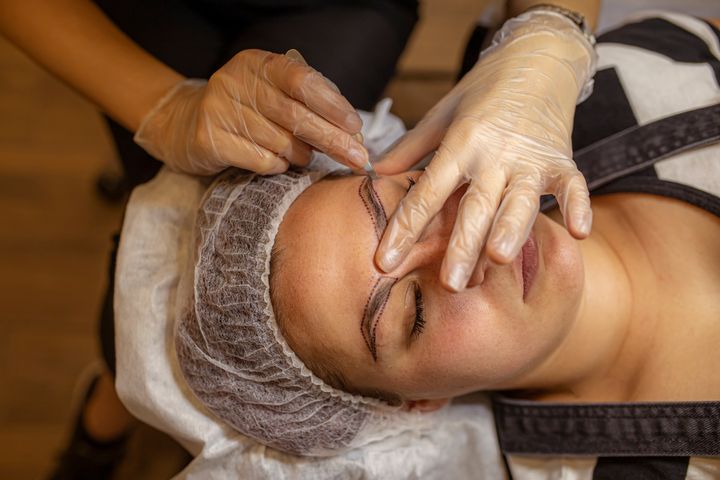
Professionally trained microblading treatments are an option that purely fixes the aesthetics, not the actual thickness of your brows. The procedure is a semi-permanent cosmetic tattoo that involves using tiny needles to create hair-like lines along your eyebrows that give the appearance of fullness, Rodney said.
“Microblading is an effective tool for semi-permanent, natural-looking enhancement,” she said, adding that her own eyebrows are microbladed. “It’s safe when done by a qualified technician, effective and long-lasting.”
Advertisement
But microblading does come with a few risks, such as allergic reactions, scarring, infections and the potential that you just might not like the results, Rodney added. You’ll likely need touch-ups every couple of years, too, Mack said.

Representative Marjorie Taylor Greene (Republican, Georgia) invited social media scorn on Sunday by making light of tropical storm Hilary to insult frequent Republican target, Hillary Clinton.
Greene retweeted a meme of the former Democratic presidential candidate’s head tracking Hilary, the first tropical storm to hit California in 84 years. The downgraded hurricane flooded parts of Southern California, generating mudslides and forcing first responders to rescue people from swollen rivers.
“Hillary downgraded to a tropical storm,” Greene wrote, using the spelling for Clinton rather than the storm. “She can’t even succeed as a hurricane but likely still deadly.. First tropical storm in 84 years, stay safe California!”
Greene’s dubious attempt at a political dig didn’t go ignored on X, the social media platform formerly known as Twitter.
Critics called her “a sick loser,” “unprofessional” and a “vile individual” who may find herself at the wrong end of “karma” for her insensitivity.


Mary Trump believes televising Donald Trump’s criminal trials might help deprogram some of his supporters ― and predicts the former president will come to regret it.
Trump is expected to appear in a Fulton County courtroom next month for his formal arraignment following his indictment on racketeering charges over an alleged conspiracy to overturn Georgia’s 2020 election results.
Advertisement
Unlike federal or Manhattan courts, where Trump appeared for his first three arraignments, cameras are permitted in Georgia courtrooms with a judge’s approval.
“I think it’s going to have an enormous impact, because even for people who are his supporters and who think that this is a miscarriage of justice, this will be must-see TV,” the former president’s niece, a clinical psychologist and author, told MSNBC’s Katie Phang on Sunday.
“And Donald has always told them not to believe their lying eyes ― only to believe him,” she added. “However, when he’s the one they’re looking at, it’s going to be very difficult for him to spin away from what’s actually happening in front of our eyes.”
One of Trump’s attorneys, John Lauro, has pushed for cameras in the courtroom in the federal case concerning Trump’s attempted coup, telling CNN earlier this month: “I personally want the public to see what’s going on in this country right now.”
Advertisement
Democratic lawmakers have called for the same thing, arguing it’s important the public sees the strength of the evidence and how the trial is conducted
“I think it’s going to be monumentally important that there be cameras, at the very least in the Fulton County courtroom,” Mary Trump said, noting that Trump’s legal team had asked for cameras in federal court.
“I also think that it’s going to be something that Donald himself is going to regret,” she added. “And I think pretty quickly they’re going to find out that that’s really not something that they wanted after all.”
Watch the interview below.


Bradley Cooper has received support from the Anti-Defamation League (ADL) amid an ongoing debate about his upcoming film.
Last week, the trailer for Bradley’s latest project Maestro – a Netflix original in which the Oscar nominee portrays the legendary composer and conductor Leonard Bernstein – was released.
Advertisement
However, soon after the teaser was posted online, many took issue with the fact the actor had worn a prosthetic nose to play the late musician, which some critics felt played into anti-Semitic stereotypes, particularly as Bradley himself is not Jewish.
On Monday, the ADL released a statement on the matter to Variety, which read: “Throughout history, Jews were often portrayed in antisemitic films and propaganda as evil caricatures with large, hooked noses.
“This film, which is a biopic on the legendary conductor Leonard Bernstein, is not that.”

Jason McDonald/Netflix
Bradley previously received support from Bernstein’s family, who released a statement reading: “Bradley Cooper included the three of us along every step of his amazing journey as he made his film about our father.
Advertisement
“We were touched to the core to witness the depth of his commitment, his loving embrace of our father’s music, and the sheer open-hearted joy he brought to his exploration. It breaks our hearts to see any misrepresentations or misunderstandings of his efforts.
“It happens to be true that Leonard Bernstein had a nice, big nose. Bradley chose to use makeup to amplify his resemblance, and we’re perfectly fine with that. We’re also certain that our dad would have been fine with it as well.
“Any strident complaints around this issue strike us above all as disingenuous attempts to bring a successful person down a notch ― a practice we observed all too often perpetrated on our own father.”

via Associated Press
As well as serving as director, producer and actor in Maestro, Bradley also penned the screenplay, having previously co-written his last directorial effort, the 2018 remake of A Star Is Born.
Advertisement
He is joined in the film by Carey Mulligan, who portrays the actor and activist Felicia Montealegre.
Maestro will receive a limited cinema release in November, before it begins streaming on Netflix on 20 December. Watch the trailer below:


Fitness influencer Stef Williams says she struggled to find help online when she was diagnosed.
Can lessons be learned from Portugal, which relaxed its drugs laws more than 20 years ago?
