A Tory MP has faced a BBC audience “laughing” at the government’s flagship levelling up plans.
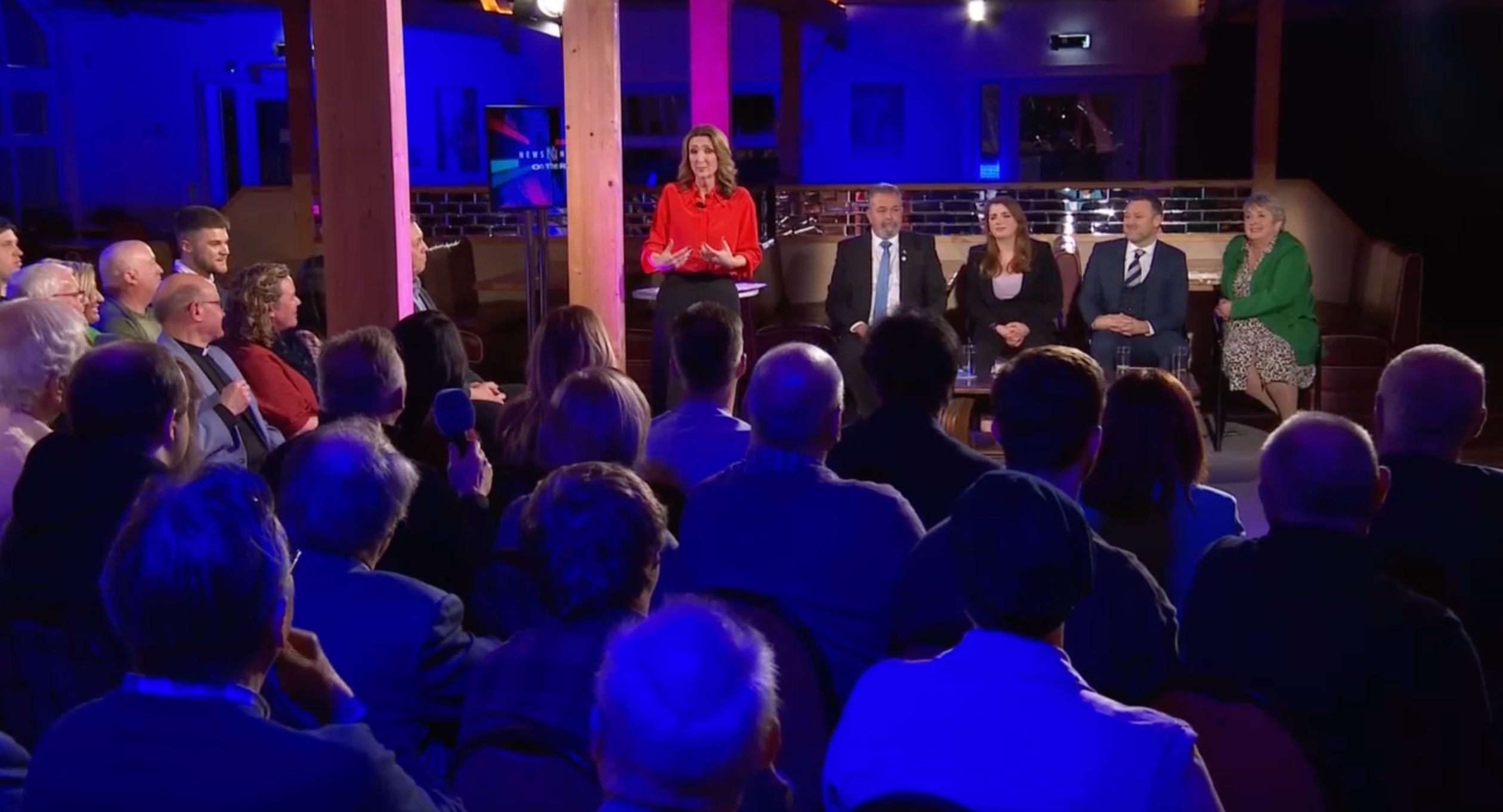
On Monday, a live episode of Newsnight was broadcast from Doncaster as part of a series of town hall-style “on the road” programmes ahead of the general election.
The city is one of the areas to receive funding as part of the agenda to reduce regional inequalities, which was championed as “levelling up” by former prime minister Boris Johnson.
Advertisement
But when an audience in the newly-created Doncaster East and Isle of Axholme constituency were asked by presenter Victoria Derbyshire whether they’d experienced any impact of the policy, she was greeted with a unanimous “no” (See video at top of story).
“[Levelling up] is a long term mission – it’s not going to happen overnight.” Conservative MP Brendan Clarke-Smith responds to a resounding ‘no’ from our live audience as to whether they’d experienced levelling up yet:#Newsnightpic.twitter.com/2BR9ouqF4E
He said: “We’re the only people who do actually have a plan, certainly in terms of how we want to invest. Now levelling up, of course, it’s something Boris Johnson made a big deal of in 2019.
Advertisement
“I think it’s not just about large cash transfers, though, it’s about pride in our communities. It’s about opportunities …”
While in full swing, Derbyshire interjected to say: “With respect, there are people here in the audience who are laughing at what you’re saying.”
Clarke-Smith, who represents a Nottinghamshire constituency, went on: “We just had a pandemic for two years. We spent £400 billion on that. That’s going to impact a lot of things. It’s impacted the NHS. It’s impacted a lot of building projects. It’s impacted all of these things together, so we are still recovering from that.”
He added: “But we’re going on the right path. We’re getting inflation down and we will see that levelling up and we will see that investment, including here in Doncaster East.”
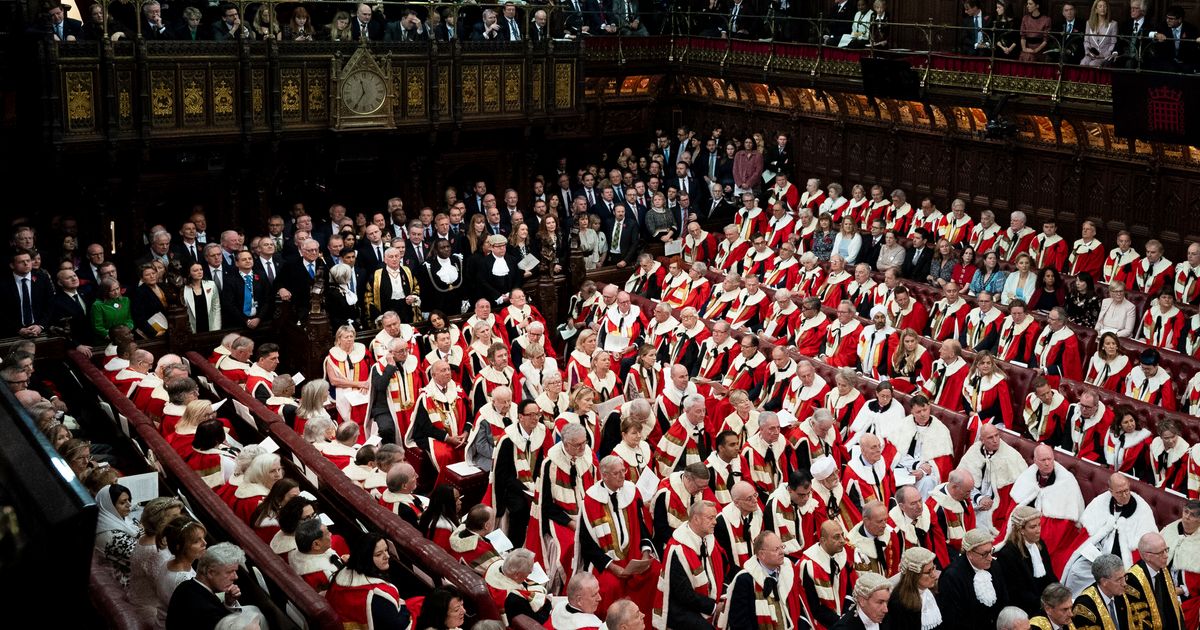
The House of Lords has inflicted five defeats on the government over its controversial Rwanda scheme.
In another headache for Rishi Sunak, the unelected upper chamber voted by a majority of 102 to back a move to ensure the proposed legislation is fully compliant with domestic and international law.
Advertisement
The first defeat on the Safety of Rwanda Bill was followed by four more – including insisting parliament cannot declare Rwanda to be a safe country until the treaty with its promised safeguards is fully implemented, and a vote in favour of establishing a monitoring mechanism for the UK-Rwanda pact.
It paves the way for a back-and-forth between the elected Commons and the Lords, which is often referred to as parliamentary “ping-pong”, meaning MPs can overturn the changes at later stages in the process.
Baron Tugendhat, “The Conservative government is behaving like the ruling party in George Orwell’s 1984”
“Normally 1984 is invoked in relation to gov behaviour, laws, events, in tyranies and dictatorships. Never-the-less in this bill it is seeking to achieve by act of Parliament… pic.twitter.com/dvRcsNqPVX
The Safety of Rwanda Bill is designed to overcome legal challenges to past attempts to send asylum seekers with a one-way ticket to the east African country.
Advertisement
The bill would compel judges to regard Rwanda as safe, and give ministers the power to ignore emergency injunctions.
The policy is central to the prime minister’s hopes of convincing voters he can “stop the boats” crossing the English channel.
The government hopes once the bill passes flights will be able to take off by the spring, but that timetable now looks in disarray.
Dick Newby, Liberal Democrat leader in the Lords, said: “For months this Conservative government has been pushing this policy that does nothing to solve the asylum backlog.
“This bill has cost hundreds of millions of pounds, and doesn’t combat dangerous Channel crossings or create safe, legal routes.
Advertisement
“By declaring Rwanda safe when it is clearly anything but, and excluding the courts, the bill also undermines the rule of law. It is the product of a morally and politically bankrupt government.”
Speaking in the Lords, Conservative grandee Lord Tugendhat, whose nephew is security minister Tom Tugendhat, accused the government of behaving like the ruling party in George Orwell’s dystopian novel 1984.
“This country is no dictatorship, it is a democracy,” he said. “If this bill goes onto the statute book in its present form, Rwanda will be a safe country regardless of reality until the statute is repealed.”
This is a breaking news story and will be updated. Follow HuffPost UK on Twitter, Facebook and Instagram.
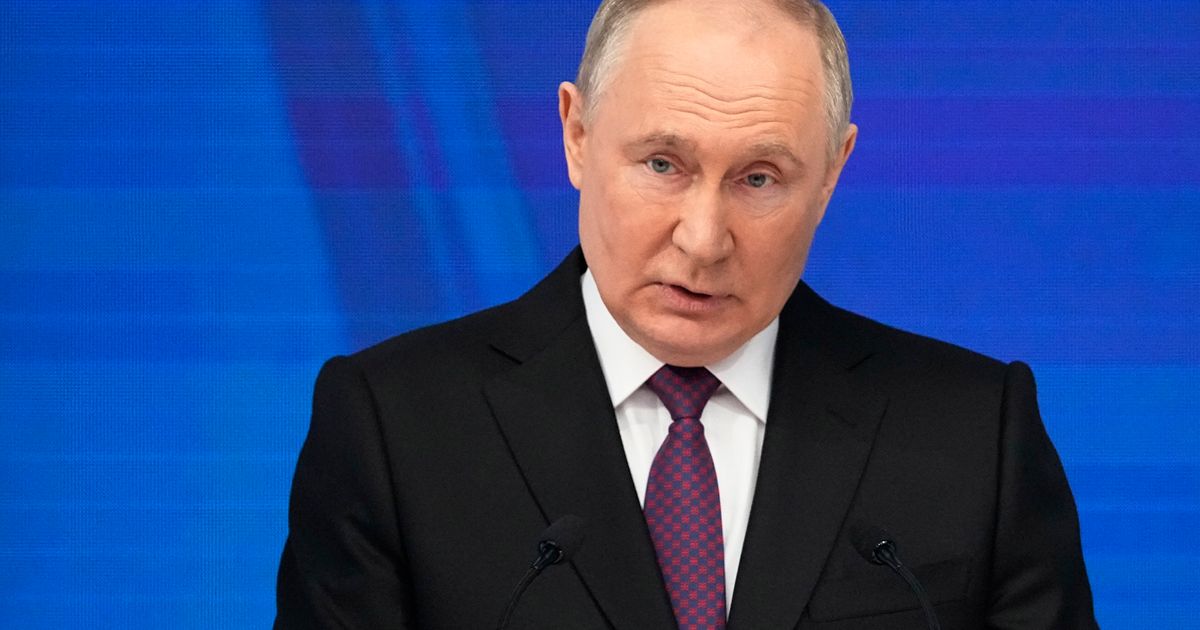
The Russian president was speaking the day after the funeral of Alexei Navalny, who died under mysterious circumstances in a Russian penal colony in the Arctic circle last month.
He was serving a lengthy sentence on charges widely seen as politically motivated at the time.
Putin has not directly addressed Navalny’s passing even though it has become an international news story.
Leaders across the West have also blamed Russian president for his critic’s death – US president Joe Biden said he has “no doubt” it was the “consequence of something that Putin and his thugs did”.
Putin claimed: “I know that these values are shared by the vast majority of the Earth’s inhabitants.
“This is why we must take care of them and defend them together, fulfil our dreams together, and help each other to make the lives of billions of people – let me stress this – billions of people better.
“This world has no place for racism, dictatorship, double standards or lies, and people are free to speak their language and follow the beliefs and traditions of their ancestors.”
Having suppressed his most vocal political opponents over the years, Putin is also a shoo-in to win the upcoming presidential election in Russia. He has already spent more than two decades in power.
Independent media and human rights defence group, OVD-Info reported that more than 400 people were detained at events across 32 Russian cities in the first few days after Navalny’s death – including journalists.
Navalny’s family also claimed they struggled to find a venue to host his funeral in Russia, with many refusing once they found out who the funeral was for.
However, thousands still turned out to show their support for Navalny on Friday, chanting “no to the war” and “Putin is a murderer”.
According to the US-based think tank, the Institute for the Study of War, the Kremlin likely allowed this unusual show of rebellion to happen to “avoid prompting wider outrage”.
The experts suggested: “The Kremlin likely did not order large crackdowns against displays of anti-war sentiment in order to avoid prompting wider outrage while also projecting confidence in public support for Russian President Vladimir Putin and his war effort in Ukraine ahead of presidential elections on March 17.”
The chancellor was speaking to journalists on Sunday ahead of the unveiling of his Spring Budget later this week, an annual event where the government outlines its plans for taxes and spending.
Hunt refused to reveal any particular policies he has lined up before his announcement on Wednesday – but he did repeatedly suggest that the public can trust the Tories with the economy.
He told Sky News: “I do want to show people in an election year that eternal truth that Labour governments spend more and tax more, Conservative governments spend more wisely and try to bring the tax burden down.”
“We’ve been very consistent, that we would only cut taxes in a way that was responsible and prudent,” he said, adding that he would not be announcing any “gimmicks” this week.
Advertisement
But, in the last four years, five different Tory chancellors have pledged to bring taxes down – only for them to rise to a historic level.
As Labour’s shadow chief secretary to the Treasury, Darren Jones, pointed out: “It is the Tories who have raised taxes to their highest level in 70 years.
“No matter what the chancellor does in the Budget this week, working people will be worse off thanks to 14 years of Tory failure.”
Jeremy Hunt’s problem is this. Tory rule supposed to be about financial prudence. All they’ve done is rack up debt, spaffed billions on Brexit and their mates, and the Tories who voted for them on the basis of tax cuts have never been taxed so much. The party has lost its USP.
Jeremy Hunt, who is on course to raise taxes in the UK to their highest level since the Second World War, tells Sky News that it is an “eternal truth” that Conservative governments “bring the tax burden down.” pic.twitter.com/DxXPgcbWmt
Left: Jeremy Hunt, “Labour govs spend more and tax more, Conservative govs spend more wisely and bring tax burden down”
Right: Sky News, “In the last four years, five chancellors says they want to cut taxes. In reality the opposite has happened. Taxes have been rising to near… pic.twitter.com/bpJOtjhV4W
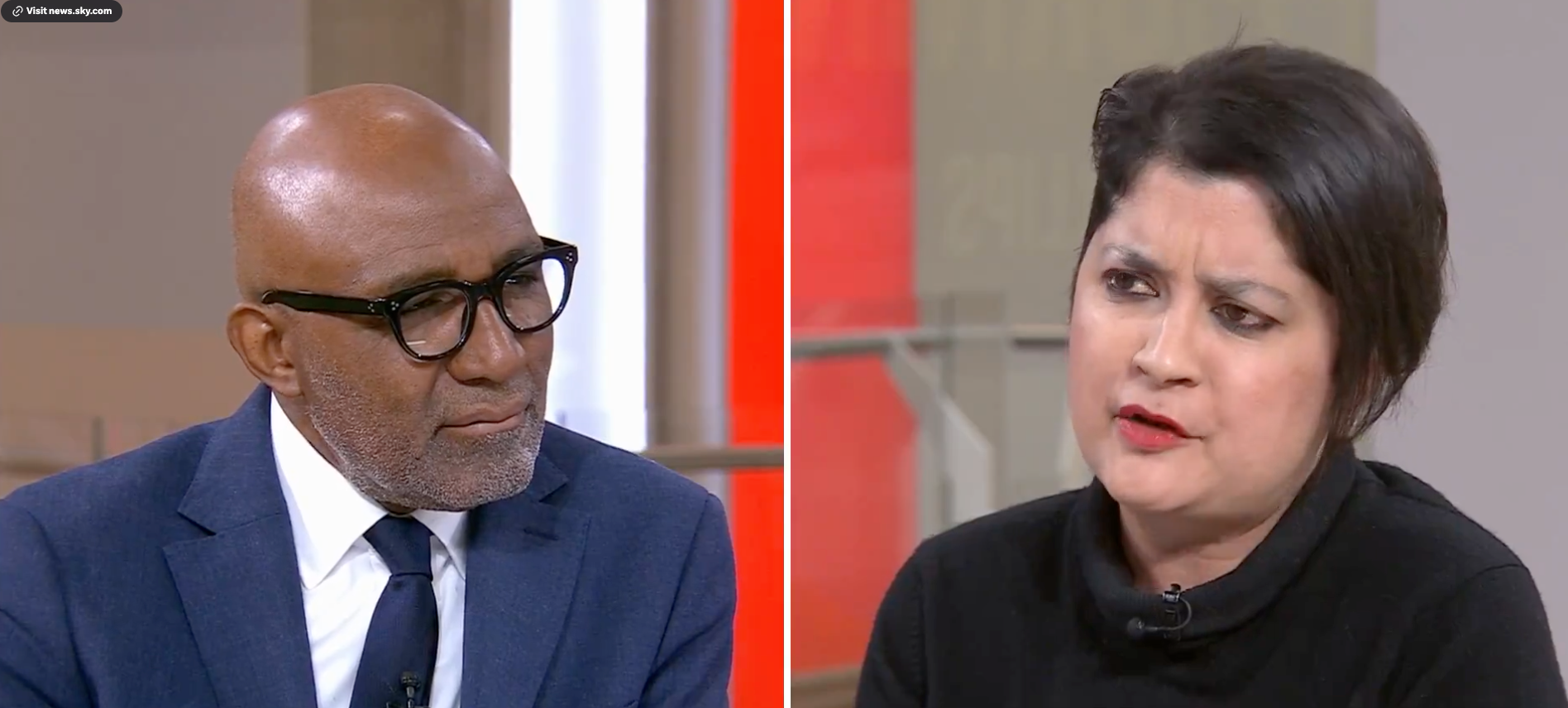
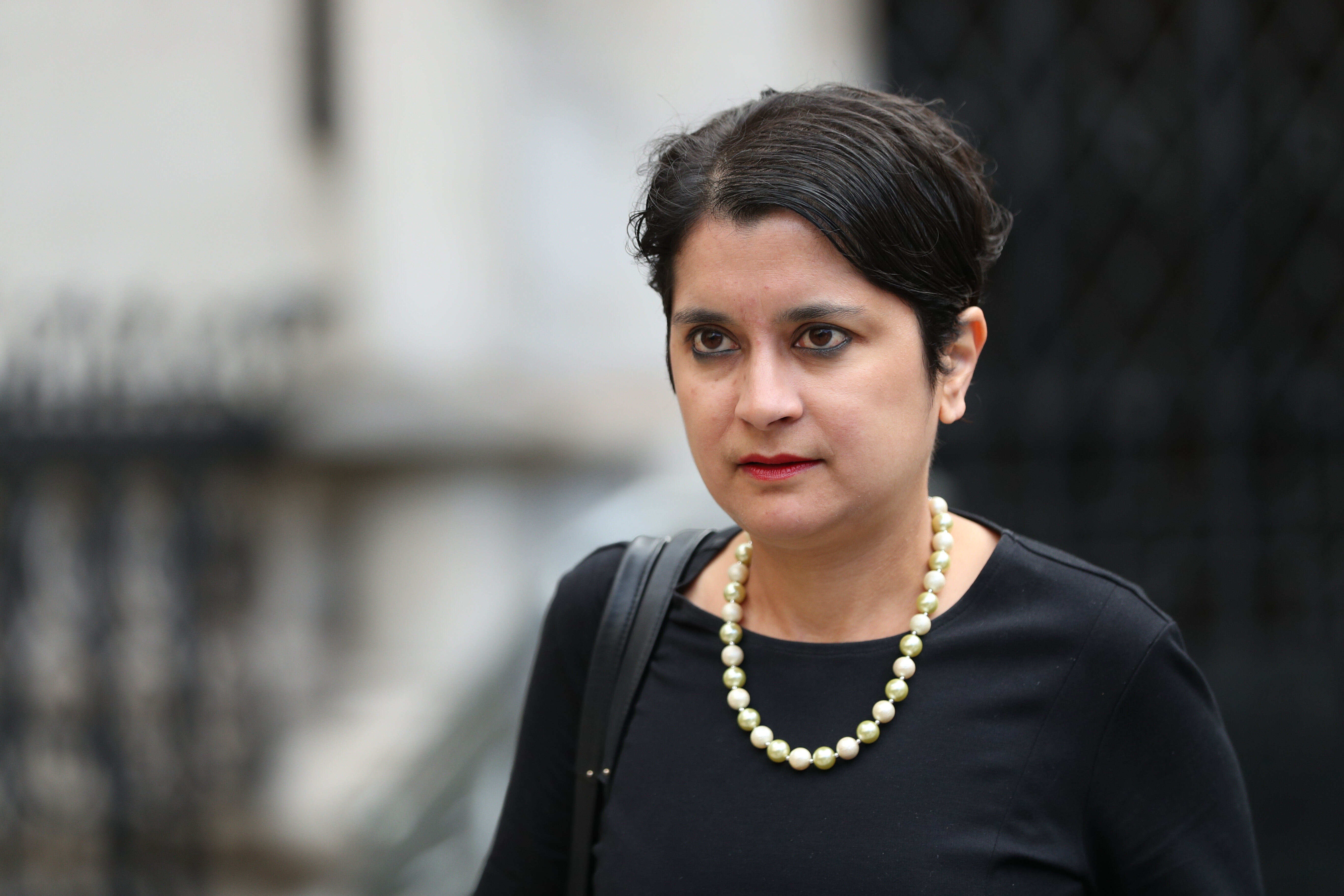
But, speaking to Sky News at the weekend, Chakrabarti said: “I don’t like his theatre, quite frankly.”
“The thing I find most sinister about it is that he’s almost suggesting that he has read the riot act to the police,” she added.
“He’s called them in, he’s told them that he wants the protests not to be managed, but to be policed.
“I think, in a liberal democracy – and he’s now claiming to be a liberal patriot, that was the language he used – we don’t have prime ministers interfering with operational policing.
Advertisement
“And this has been happening every so often under his government – there will be a summit where the police chiefs have been called to No.10,” she said. “And then there’s a press release about what they’ve been told by the prime minister or the home secretary, and I really don’t like it.
“I don’t think people in Britain want their politicians to be deciding how particular a police operation should be conducted.”
Host Trevor Phillips asked: “Sinister is quite a strong word for this, isn’t it?”
“It really is and I’m using it,” the peer said, adding: “It’s also a bit of a cheek for the prime minister to be talking about these things when so many of his ministers and senior Conservatives have been pouring fuel on the flames of polarisation, on culture war division in our country.”
Anderson, a backbench MP, lost the Tory whip after refusing to apologise for attacking London mayor Sadiq Khan, claiming the “islamists” had got “control” of the Labour politician.
Braverman, previously the home secretary and now a Tory backbencher, separately claimed “islamists” run Britain. She has not lost the party whip.
Advertisement
Chakrabarti continued: “It’s a bit of a cheek for the prime minister to then come and try and look statesmanlike with his reading the riot act to the police about how they should do their very difficult job.”
Just after 12.30 on Wednesday afternoon, Rishi Sunak will step aside from the Despatch Box and make way for Jeremy Hunt.
With the prime minister sitting just behind him on the government frontbench, the chancellor will then deliver a Budget which will make the political, as well as the economic, weather for the months leading up to the general election.
Advertisement
It is not overstating things to suggest that the contents of Hunt’s red box will determine whether or not the Tories have any chance at all of a record-breaking fifth term in office.
Many Conservative MPs already believe that the game is up, the party is heading for opposition and there is nothing the chancellor can announce to change that fundamental truth.
“I don’t think he can do anything now to change the game because the game cannot be changed,” one gloomy former Tory minister told HuffPost UK.
“The Budget won’t really make any significant difference now to our chances of winning, therefore he should do some things that are attractive to Conservative voters, like reform inheritance tax, boost home ownership and help small businesses. I don’t think cuts to income tax would make any difference.”
Advertisement
The best thing Hunt can do, some Tories believe, is produce a Budget that appeals to the Tory base and ensures that as many of their MPs as possible survive when voters deliver their verdict later this year.
One veteran MP said: “What they should be thinking about is maxing the number of Tory MPs who come back after the election so we at least have a chance of getting back into government after one parliament.
“Labour have shown you can do that with 200 MPs, but with 150 it’s impossible.”
Other Tories are more optimistic, but warn that Rishi Sunak must not allow Hunt to waste this opportunity to change the political weather.
One senior Tory MP told HuffPost UK: “Rishi needs to own this Budget, not Hunt. The prime minister has more of a political instinct than the chancellor.
“This Budget is the last chance to start to reverse Labour’s dominance in the polls. The Budget must not be hijacked by an over-cautious Treasury.
Advertisement
“Number 10 needs to make sure the Budget is politically smart – not just economically smart.”
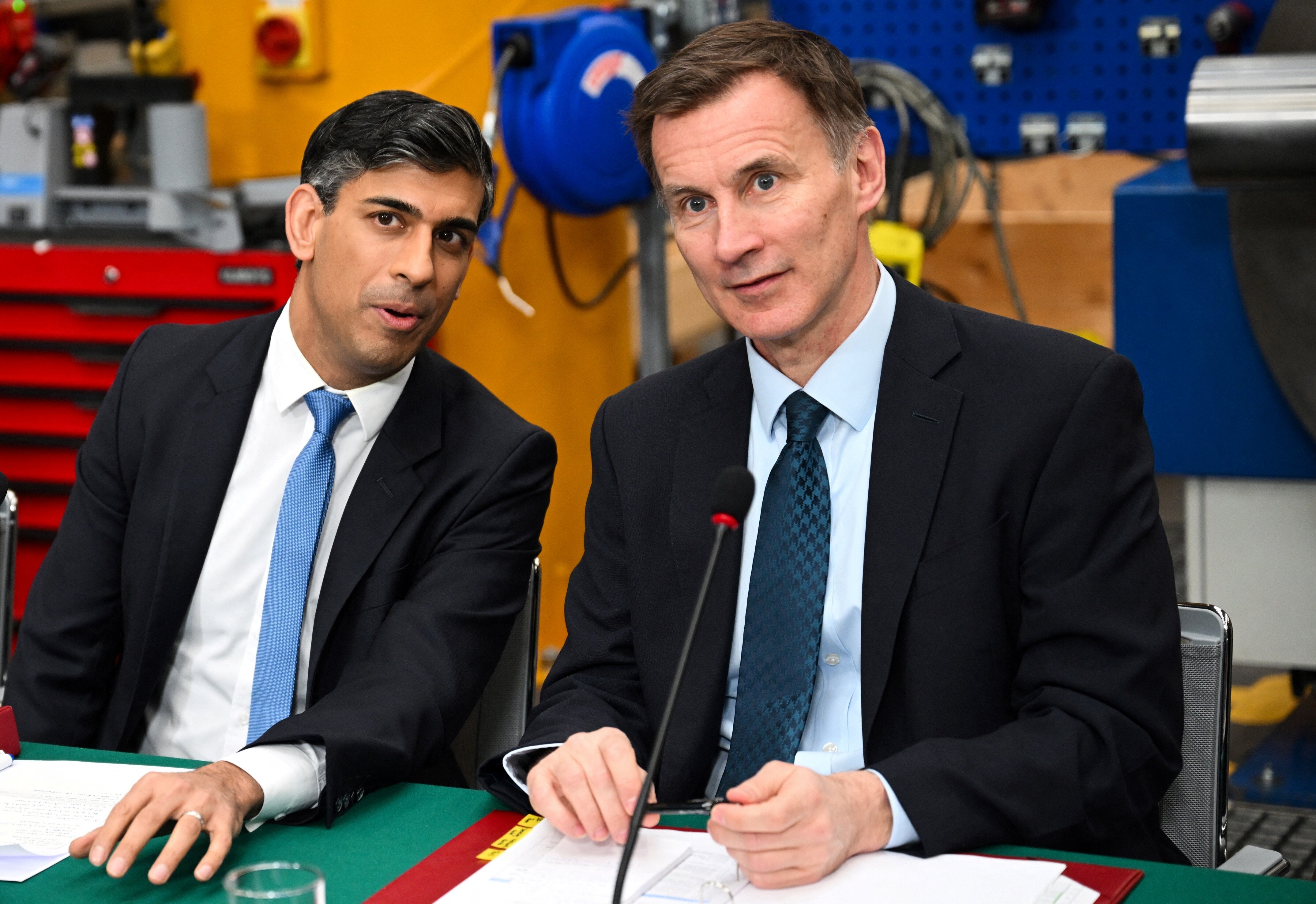
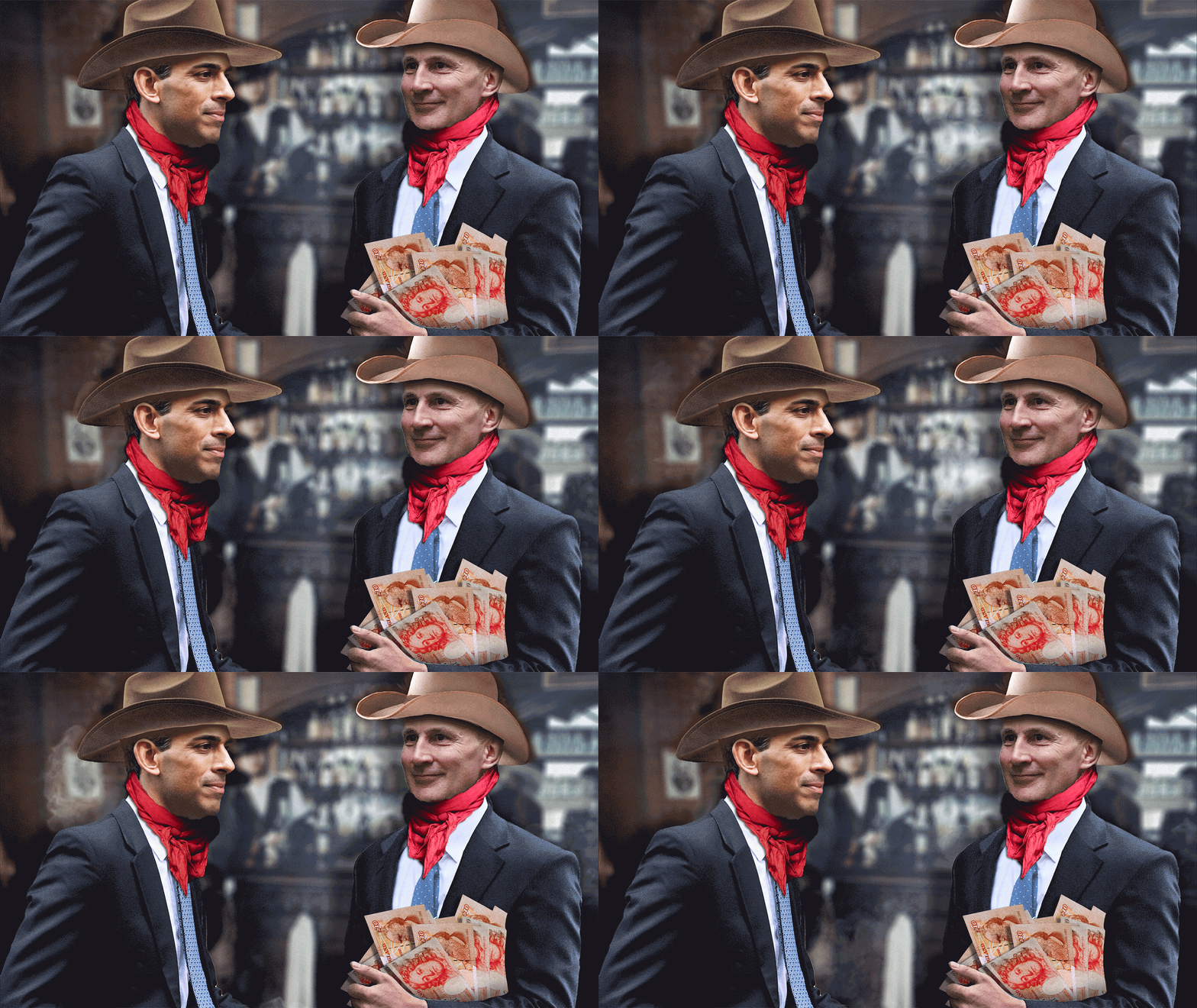
Rishi Sunak and Jeremy Hunt sre under pressure to deliver.
IAN FORSYTH via Getty Images
Former cabinet minister Damian Green, now chair of the One Nation group of moderate Tories, said: “The chancellor must seize the opportunity he has at the Budget to cut taxes, drive growth and put more money back into hardworking, ordinary people’s pockets.
“This is our chance to demonstrate to voters that we are on their side and that we are taking steps to alleviate pressures they face in all aspects of everyday lives. If we fail to do so, we risk the damaging consequences of a Labour government.”
In January, Hunt sought to compare himself with the Thatcher-era chancellor Nigel Lawson, suggesting that big tax cuts were coming.
Since then, however, the mood music coming out of the Treasury has changed, with sources confirming that there is less money available than previously hoped to pay for pre-election giveaways.
Advertisement
Hunt could even be forced to steal two of Labour’s flagship policies – scrapping non-dom tax status for wealthy foreigners and increasing the windfall tax on energy firms – to raise the money needed to cut either national insurance or income tax.
One Tory MP suggested that Hunt “cut and run” by producing a voter-friendly Budget before a May general election.
This would, though, fly in the face of Sunak’s previous declaration that the election would come in the second of the year.
Nevertheless, Labour campaign chiefs Morgan McSweeney and Pat McFadden this week gave a presentation to the shadow cabinet setting out why they believe a May poll is still “in play”.
One source said: “If they deliver a tax-cutting Budget and the economy looks like it’s starting to pick up, May could be the optimum time for the Tories to go to the country and still have some control over events.
Advertisement
“If Sunak leaves it till the end of the year it looks as if they are holding on till the bitter end, and as we saw with John Major in 1997 and Gordon Brown in 2010, that doesn’t usually end well for the government.”
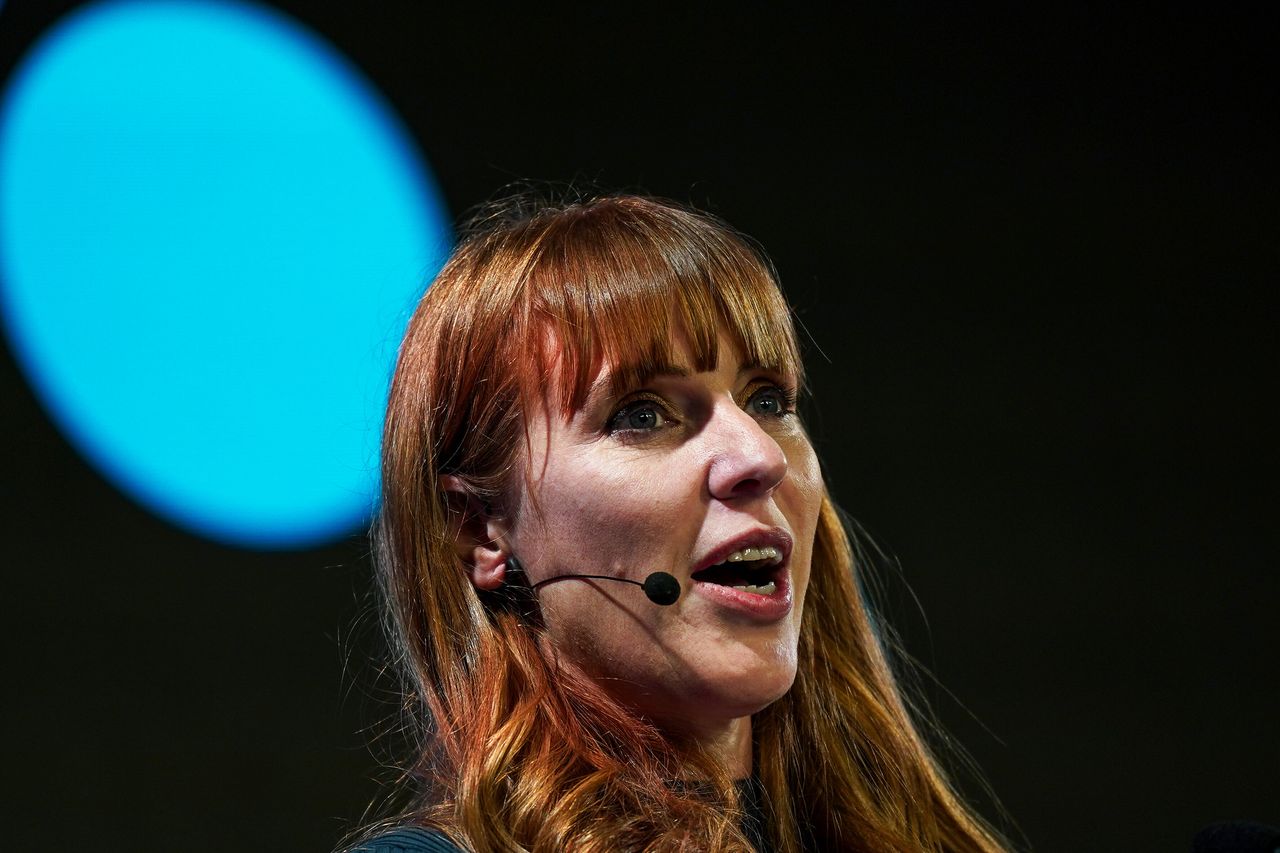
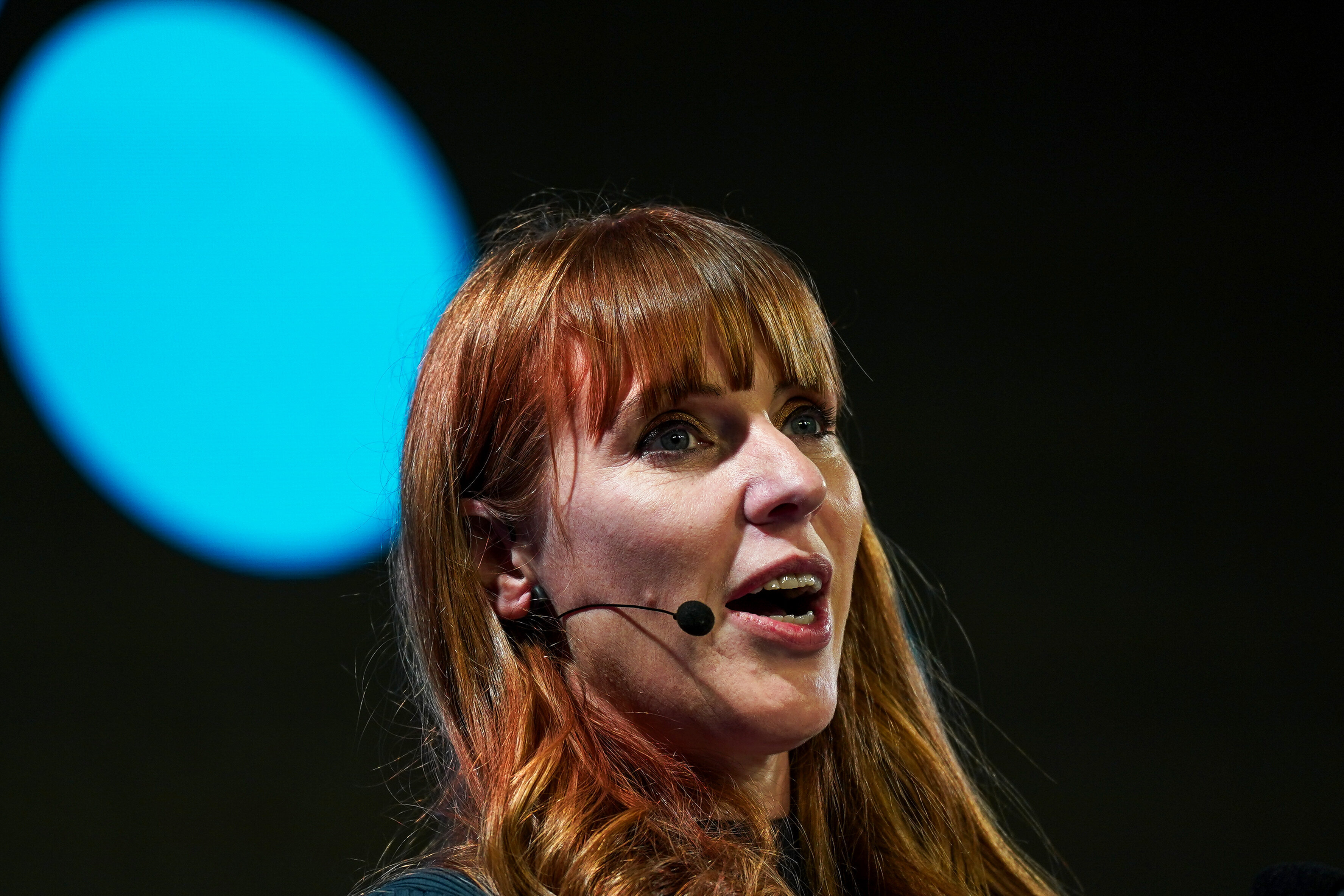
Voters will see a lot more of Angela Rayner during the election campaign.
Ian Forsyth via Getty Images
HuffPost UK has also been told that deputy leader Angela Rayner will play “a central role” in the Labour election campaign.
Relations between Rayner and Keir Starmer are professional rather than warm, with the leader being closer both personally and ideologically to shadow chancellor Rachel Reeves.
But one senior Labour insider said: “Angela appeals to certain voters in a way that Keir doesn’t, so she will be a key figure when the campaign gets underway.
Advertisement
“We want the public to see Keir, Rachel and Angela out there together making the case for a Labour government after 14 years of the Tories.”
Whenever the election takes place, next Wednesday’s Budget will go a long way to determining whether it’s nearly time to call last orders on Sunak’s time in Downing Street.
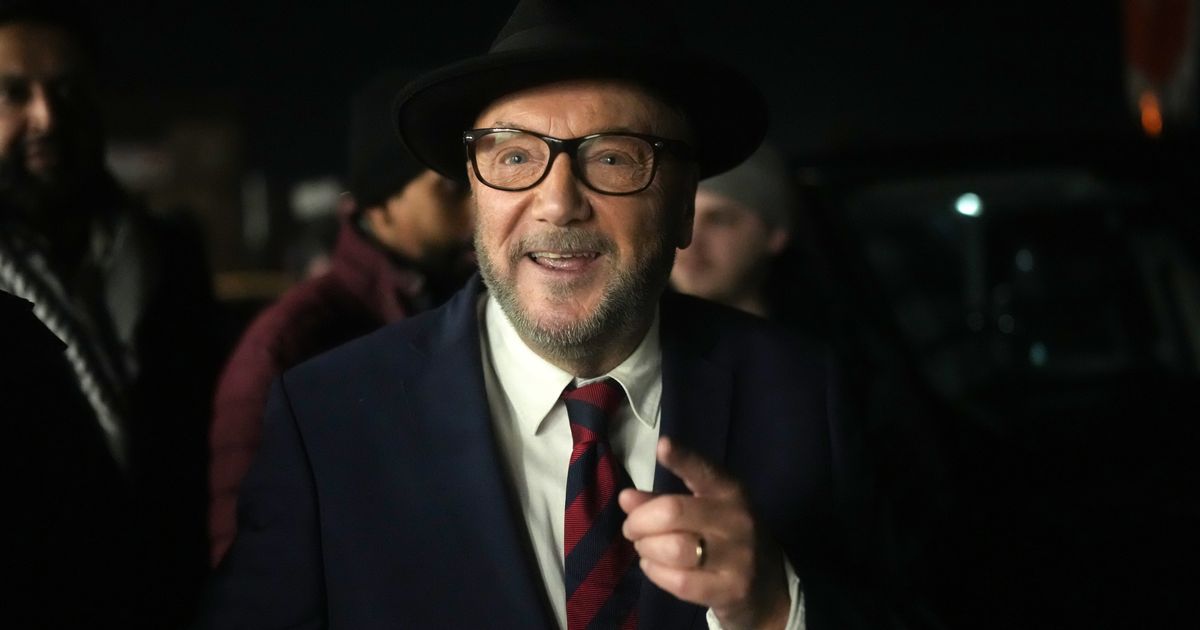
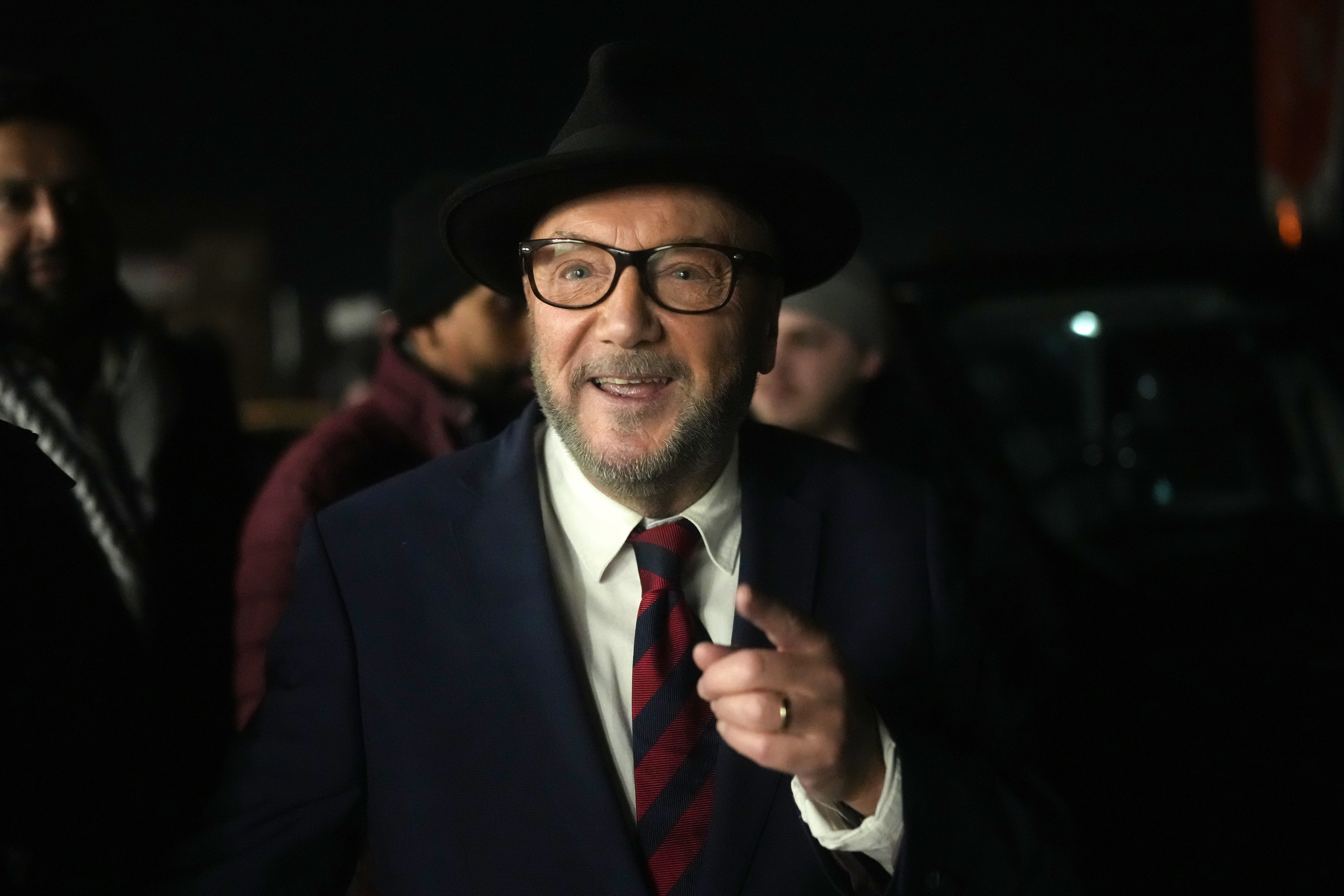
The Workers Party of Britain leader dismissed “little” Rishi Sunak’s comments, and urged Coates to “suck it up” after repeated questions about the conduct of his supporters during the campaign.
Advertisement
The journalist faced shouts of “bye-bye” and chants of “free Palestine” from Galloway activists as the interview at the new MP’s headquarters wrapped up.
Galloway ran on a pro-Palestine ticket, and pulled off a stunning victory to be elected to parliament for the fourth time, comfortably defeating Azhar Ali, the Labour candidate who was dumped by the party during the campaign.
Ali finished a lowly fourth place behind independent candidate David Tully and Paul Ellison of the Conservatives.
Galloway’s win prompted a reaction from Sunak during an unexpected address from Downing Street on Friday night. The prime minister said: “It’s beyond alarming that last night, the Rochdale by-election returned a candidate that dismisses the horror of what happened on October 7, who glorifies Hezbollah and is endorsed by Nick Griffin, the racist former leader of the BNP.”
Advertisement
When pressed by Sky News, Galloway was dismissive of the PM. “You talk as if this is God,” he said. “You’re talking about little Rishi Sunak, in the fag end of his prime ministership. Don’t talk to me as if he’s come down from the Mount with tablets of stone – the things that he says are somehow meant to awe me. They may awe you, they don’t awe me.”
The interview with Coates, the broadcaster’s deputy political editor, became increasingly edgy.
“Who won the election? Me or Rishi Sunak?,” said Galloway. “I’ve got the democratic mandate here, not Rishi Sunak. He didn’t even come second. He was lucky to come third. So don’t put to me statements made by Rishi Sunak as if I’m supposed to be impressed by them. He don’t impress me much.”
When asked if he respected Sunak, the Rochdale MP fired back: “I despise the prime minister. And guess what? Millions and millions and millions of people in this country despise the prime minister. I do not respect the prime minister at all.”
The mood intensified further as Coates asked about the conduct of Galloway’s supporters during the contest amid allegations of intimidation from rival campaigns.
Advertisement
Again dismissing Sunak’s concerns, Galloway said: “What I care about is that the returning officer, a man of unimpeachable integrity, I’m sure you’ll agree, declared it a free and fair election. And me as the winner, and Rishi Sunak as one of the crushed two big parties of the state.”
He added: “You just have to suck it up. I won the election.”
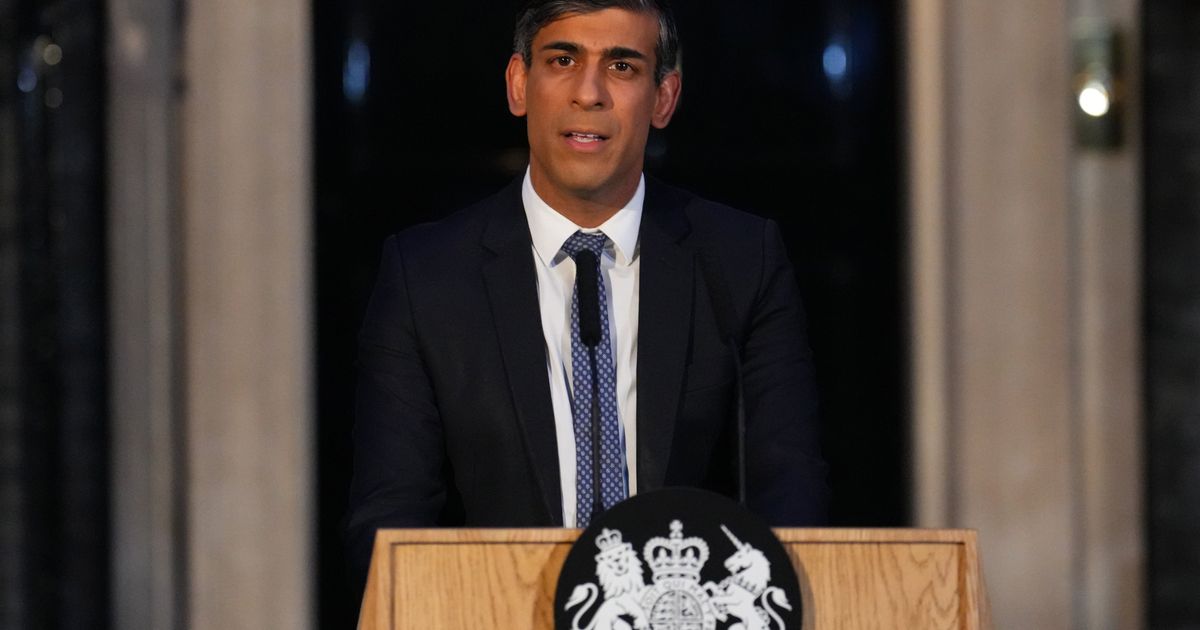
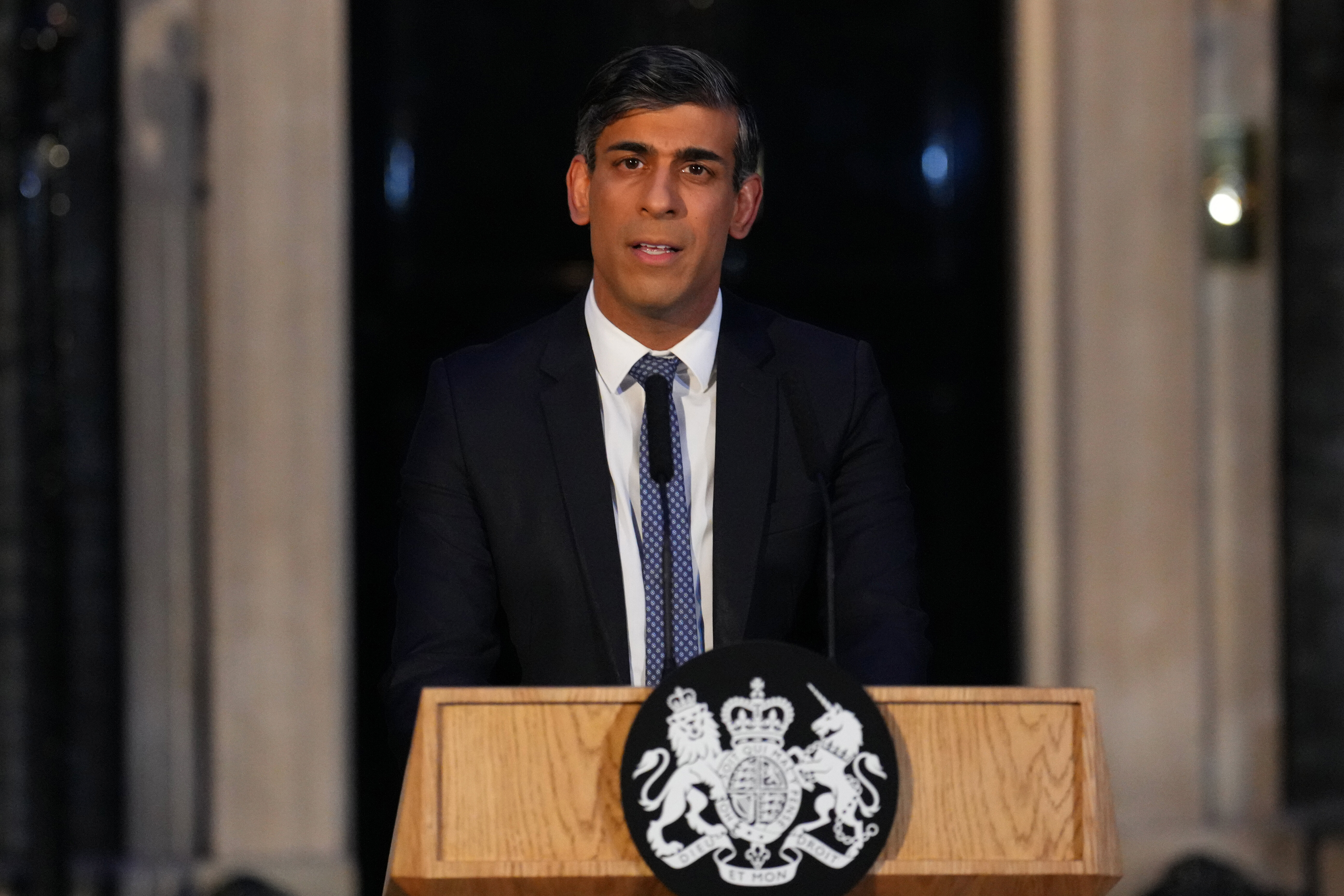
Rishi Sunak has used a “lectern speech” outside the doors of No.10 Downing Street to condemn extremists “trying to tear us apart” – but offered little by way of a policy solution.
Westminster was buzzing as the prime minister announced he would make an unexpected Friday night address – with the prospect he was about to call a general election swiftly ruled out.
Advertisement
Instead, Sunak’s addressed the nation on tackling the unrest in Britain in the aftermath of the October 7 attacks by Hamas against Israel – a situation the PM had likened to “mob rule” in a statement earlier in the week.
Against the backdrop of the No.10 front door, Sunak warned “our democracy itself is a target” for extremists.
He continued: “In recent weeks and months, we have seen a shocking increase in extremist disruption and criminality.
“What started as protests on our streets have descended into intimidation, threats and planned acts of violence.
Advertisement
“Jewish children, fearful to wear their school uniform lest it reveals their identity. Muslim women abused in the street for the actions of a terrorist group they have no connection with.
“Now our democracy itself is a target. Council meetings and local events have been stormed. MPs do not feel safe in their homes. Long-standing parliamentary conventions have been upended because of safety concerns.
“And it’s beyond alarming that last night, the Rochdale by-election returned a candidate that dismisses the horror of what happened on October 7, who glorifies Hezbollah and is endorsed by Nick Griffin, the racist former leader of the BNP.”
The latter part of the statement alludes to the victory of George Galloway in the Rochdale by-election.
Sunak was vague, however, on how his government would take action to deal with the problem, alluding only to a “new robust framework” to tackle the “root causes” of extremism and “asking more of the police”.
Advertisement
The speech came at the end of another rancorous week for British politics.
On Wednesday, Sunak claimed that there is a “growing consensus that mob rule is replacing democratic rule” in the UK, but Downing Street failed to provide any evidence for the extraordinary allegation.
In another controversy, Lee Anderson, the former Tory party chairman, claimed policing of the largely peaceful demonstrations showed that “Islamists” had “control” over London’s mayor, Sadiq Khan, who is Muslim. Anderson had the Tory whip removed last weekend after he chose not to apologise for the comments, and spent this week rowing back from his original “little bit of contrition”.
On Friday, Galloway, the former Labour MP, claimed a stunning victory in the Rochdale by-election on the back of a pro-Palestine ticket and a disastrous Labour campaign that saw the party drop support for their candidate after he made comments branded anti-Semitic.
Following the speech, Liberal Democrat leader Ed Davey said: “The British people will take no lessons from a prime minister and Conservative party who have sowed the seeds of division for years.
Advertisement
“This is the same prime minister who made Suella Braverman his home secretary and Lee Anderson his party’s deputy chairman.
“If the prime minister is serious about bringing people together, he would call a general election now, so that the British public can decide the future of our country.”
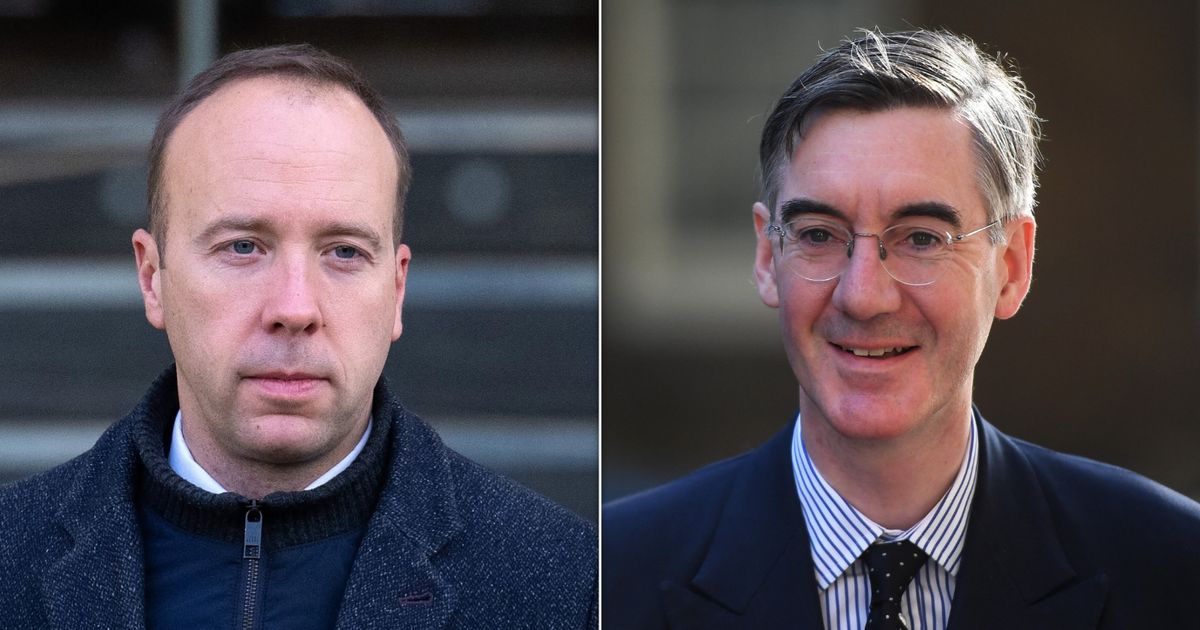
The former health secretary was giving a talk at Eton, the elite private school, when he took a jab at his Conservative colleague.
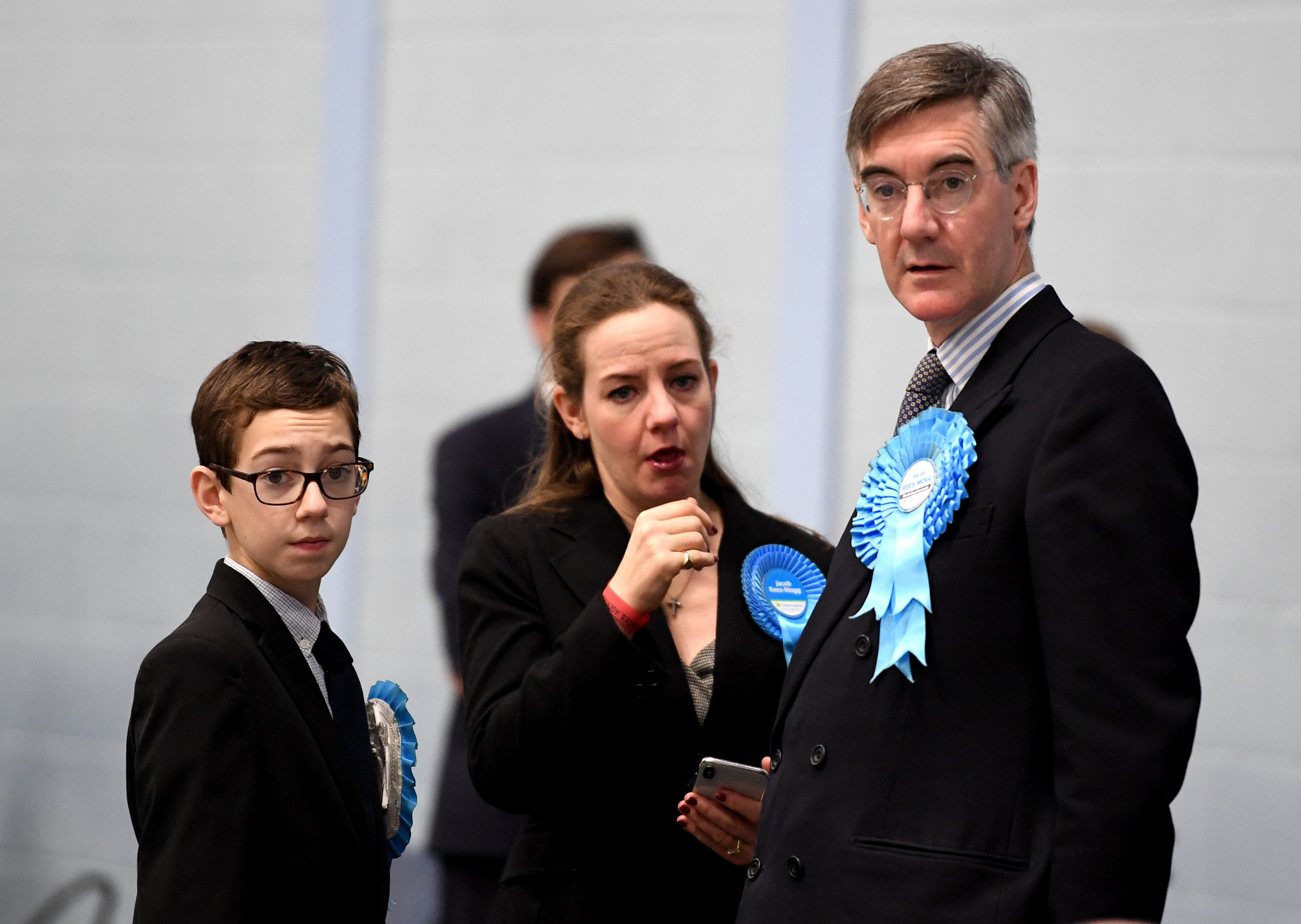
According to The Times Diary, Hancock joked about how Rees-Mogg was “not a good politician” – seemingly unaware Rees-Mogg’s son, Peter, was in the audience.
Pupils were later given the chance to ask questions, and the 16-year-old reportedly stood up and insisted his father was a great man in public and in private. He added: “Especially as he remained loyal to his wife.”
Hancock was married with three children when he embarked on an affair with aide Gina Coladangelo.
He was forced to quit as health secretary after video footage emerged of them kissing in his office in breach of the social distancing rules he had set during the Covid-19 pandemic.
Rees-Mogg senior told The Telegraph: “I think Peter was brave to stand up in front of hundreds of boys to take on a senior figure.
“It shows backbone and from my point of view admirable loyalty.”
A friend of Hancock’s told HuffPost UK: “Matt thoroughly enjoyed the evening and the sparring with some very impressive boys.”
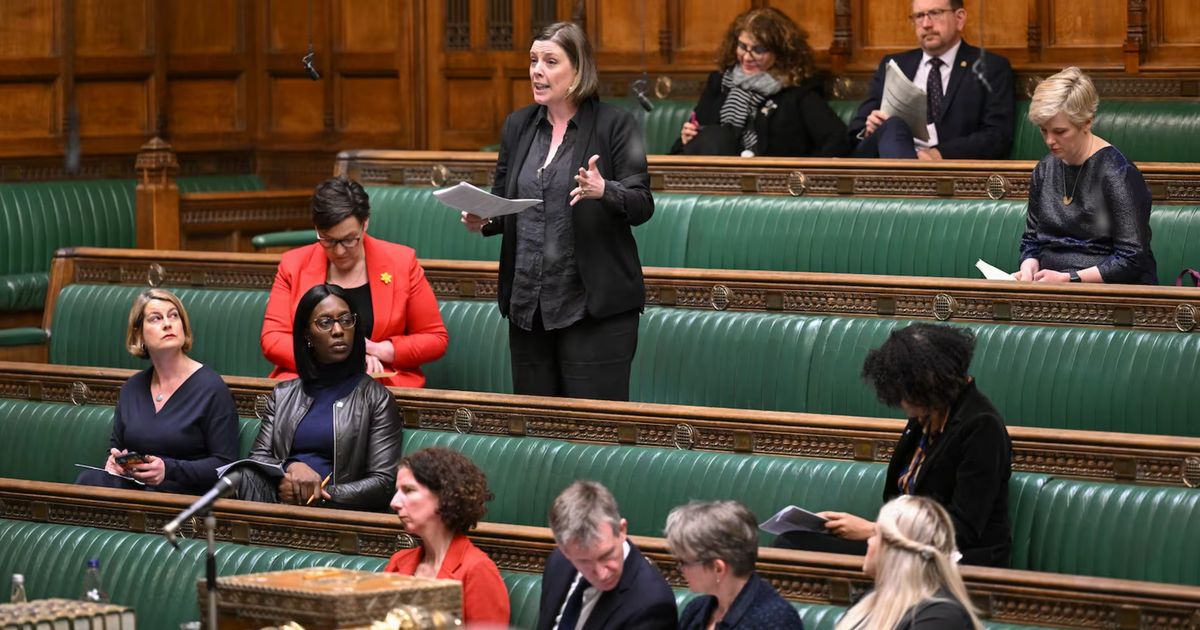
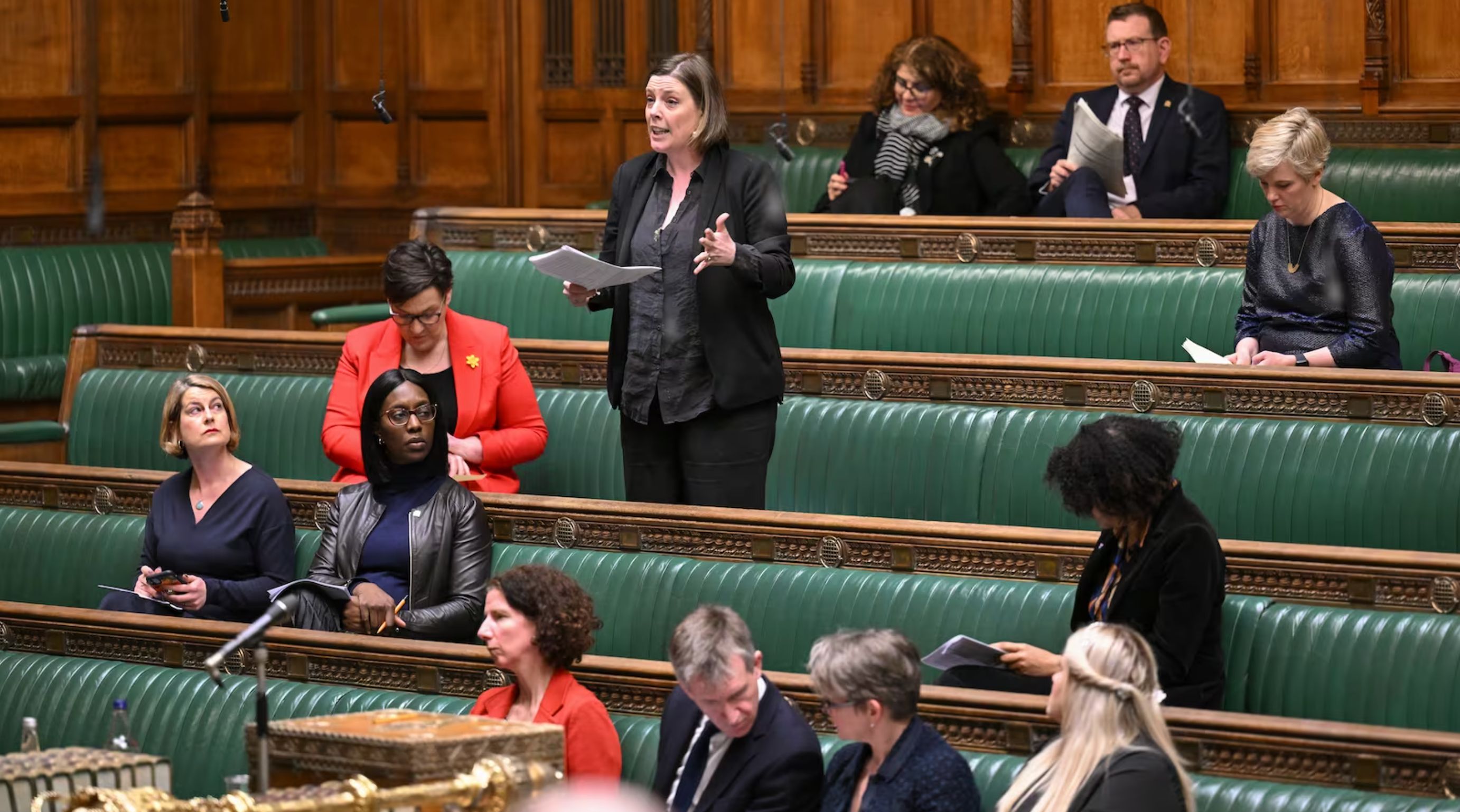
Jess Phillips has called for the UK government to take violence against women more seriously than the crackdown on small boats crossing the English Channel as she once again read out a list of names of women killed by men in the last year.
For the ninth year, the Labour MP named before parliament every woman killed in the UK in the last 12 months where the primary suspect or known killer was a man. She told the Commons the “epidemic of violence against women and girls has not abated”.
It took around five minutes to read out more than 100 names.
Before reading out the list, Phillips told MPs: “I am tired that women’s safety matters so much less in this place than small boats. I am tired of fighting for systematic change and being given table scraps.
“Never again do I want to hear a politician say that lessons will be learned from abject failure, it is not true. This list is no longer just a testament to these women’s lives, it is a testament to our collective failure.”
The backbench MP, a former shadow minister for domestic violence and safeguarding, said that at least half of the women whose names she read out could have been saved.
Phillips spoke during a debate on language in politics on International Women’s Day, and the tribute came on the day a report was published into the murder of Sarah Everard by police officer Wayne Couzens.