‘Marxism, Narcissism And Paganism’ Among Tory Fears During Bizarre Gathering

Conservatives brought a jumble of ideas to a three-day gathering in London – with one MP warning of the perils of “Marxism, narcissism and paganism” during a bizarre few hours.

As Labour leader Keir Starmer mocked the Tories for “holding a series of mad hatters’ tea parties” in the aftermath of their local elections drubbing, the National Conservatism conference opened in London – with high-profile Conservative Party figures in attendance.

The meeting brought together right-wing politicians, journalists and thinkers to discuss the potential of “national conservatism” to provide a path towards renewal for the party.

The conference is a project of the Edmund Burke Foundation, a “public affairs institute” based in Washington DC which has held conferences across Europe and America since 2019 to promote the ideas of national conservatism.

Between two separate protests, with one speech was interrupted early on by a someone warning about “fascism”, and the conference chair suggesting they’ve been “communing” with Margaret Thatcher, here are a handful of the most eye-catching comments.

“The unexamined drive towards multiculturalism” is a “recipe for communal disaster”.

Home secretary Suella Braverman was arguably the “star” turn. Despite being in charge of the UK’s immigration policy, she took a number of swings at the UK’s immigration policy.

She deployed her own background as the daughter of migrants to argue it’s “not racist for anyone, ethnic minority or otherwise, to want to control our borders”.

The cabinet minister also argued that “you cannot have immigration without integration” and “the unexamined drive towards multiculturalism” is a “recipe for communal disaster”.

Braverman said that people who come to the UK “must not commit crimes”, “need to learn English and understand British social norms” and “cannot simply turn up and say: ‘I live here now, you have to look after me’”.

Young radicalised by “Marxism, narcissism and paganism”

Tory backbencher Danny Kruger blamed the country’s problems on the “new religion” of “progressive liberalism” – which is a mix of “Marxism, narcissism and paganism” and is causing a “radicalisation of a generation”. He even hit out at the “dystopian fantasy of John Lennon”.

“As Russell Crowe says in the film Gladiator …”

Multiple speakers decried the impact of “wokeism” on British society, particularly Katharine Birbalsingh, who was once dubbed “Britain’s strictest headteacher”.

She urged conservative parents to take their children out of schools that were “too woke”, and criticised private schools for being even more “woke” than their state-funded counterparts.

In a speech that included lines from the film Gladiator, Birbalsingh bemoaned children “leading” schools, attacked private schools for being more “woke” than state providers, and claimed children at some schools are allowed to wear ears and tails because they “identify as cats”.

“Woke” teaching is “destroying our children’s souls”

Tory MP Miriam Cates identified falling birth rates as the “overarching threat” to UK and western society.

She also said society had ceased to value children and parenthood properly: “You cannot be socially liberal and economically conservative. If you think that government and society should have nothing to say about the conditions that promote strong families, don’t be surprised if you end up with a high-tax, high-spend economy, with a nation of broken people dependent on the state.”

She also criticised “woke” teaching for “destroying our children’s souls” and causing self-harm and suicide among young people.

The Conservative MP faced criticism for hitting out at “cultural Marxism”. John Mann, the government’s antisemitism tsar, said the term has its origins in a “conspiracy theory with anti-Semitism at its core”.

Share Button

Can’t find your phone? There’s a robot for that

Engineers at the University of Waterloo have discovered a new way to program robots to help people with dementia locate medicine, glasses, phones and other objects they need but have lost.

And while the initial focus is on assisting a specific group of people, the technology could someday be used by anyone who has searched high and low for something they’ve misplaced.

“The long-term impact of this is really exciting,” said Dr. Ali Ayub, a post-doctoral fellow in electrical and computer engineering. “A user can be involved not just with a companion robot but a personalized companion robot that can give them more independence.”

Ayub and three colleagues were struck by the rapidly rising number of people coping with dementia, a condition that restricts brain function, causing confusion, memory loss and disability. Many of these individuals repeatedly forget the location of everyday objects, which diminishes their quality of life and places additional burdens on caregivers.

Engineers believed a companion robot with an episodic memory of its own could be a game-changer in such situations. And they succeeded in using artificial intelligence to create a new kind of artificial memory.

The research team began with a Fetch mobile manipulator robot, which has a camera for perceiving the world around it.

Next, using an object-detection algorithm, they programmed the robot to detect, track and keep a memory log of specific objects in its camera view through stored video. With the robot capable of distinguishing one object from another, it can record the time and date objects enter or leave its view.

Researchers then developed a graphical interface to enable users to choose objects they want to be tracked and, after typing the objects’ names, search for them on a smartphone app or computer. Once that happens, the robot can indicate when and where it last observed the specific object.

Tests have shown the system is highly accurate. And while some individuals with dementia might find the technology daunting, Ayub said caregivers could readily use it.

Moving forward, researchers will conduct user studies with people without disabilities, then people with dementia.

A paper on the project, Where is my phone? Towards developing an episodic memory model for companion robots to track users’ salient objects, was presented at the recent 2023 ACM/IEEE International Conference on Human-Robot Interaction.

Share Button

Researchers discover brain circuit underlying spontaneous synchronized movement of individuals in groups

Individual fish in schools scatter in unison when a predator is in their midst.

Similar examples of precisely coordinated group movements and immobility during threats have long been observed in insects and mammals.

Now, for the first time, a brain pathway has been discovered that enables individual animals to rapidly coordinate a unified response, with no rehearsal required.

Publishing recently in the print edition of the journal Biological Psychiatry, Virginia Tech scientists with the Fralin Biomedical Research Institute at VTC described how they studied synchronized immobility in pairs of mice and identified the underlying brain circuit responsible for this behavior.

The study provides an identified target to advance research on the poorly understood brain activity that underlies coordinated group movement and, more broadly, social communication in general, which is compromised in a variety of human neuropsychiatric conditions such as attention hyperactivity disorder (ADHD), autism spectrum disorders (ASD) and social communication disorder (SCD).

“Examples of coordinated defensive responses in nature are numerous — oxen, for example, form a circle when they face a threat,” said Alexei Morozov, assistant professor of the Fralin Biomedical Research Institute and corresponding author of the study. “Synchronization under threat is an evolutionary-conserved survival mechanism and occurs across species, including humans. This type of behavior has never been measured in a lab before, but now we can now quantify this response and explore the underlying mechanisms.”

Mice were trained to associate an auditory cue to a potential threat, like a fire drill. The researchers studied parts of the brain that process and remember fear and social information, and they found that a specific connection between two parts of the brain, the ventral hippocampus and basolateral amygdala, plays an important role in coordinating behavior when faced with a threat.

The information suggests a method to investigate these brain connections in more complicated situations. Although the study began with pairs of individuals, more research is needed to determine whether the same pathway is responsible for coordinating larger group behavior, such as huddling, in larger groups.

“This gives us a way toward a deeper understanding of social behavior,” Morozov said. “At home and at work, people coordinate and exchange information with partners. Now we have a model that helps us understand the underlying brain pathway.”

“This is among the most significant discoveries made in recent years on identifying the sites and the potential underlying mechanisms in the brain that mediate these types of important social interactions,” said Michael Friedlander, Virginia Tech vice president for health sciences and technology and executive director of the Fralin Biomedical Research Institute. “While the pathologies in these behaviors are well characterized in human clinical populations, attempts at effective therapies have been hampered by a lack of understanding of which brain circuits and biological processes are impacted. Dr. Morozov and his team have designed and implemented an elegant series of experiments in mice to provide a potentially powerful base from which to advance this science and hopefully shorten the time to develop more strategically targeted therapies for humans.”

Research assistant professor Wataru Ito and research assistant Alexander Palmer, also of the Fralin Biomedical Research Institute’s Center for Neurobiology Research, participated in the research study.

Share Button

Out of this world control on Ice Age cycles

A research team, composed of climatologists and an astronomer, have used an improved computer model to reproduce the cycle of ice ages (glacial periods) 1.6 to 1.2 million years ago. The results show that the glacial cycle was driven primarily by astronomical forces in quite a different way than it works in the modern age. These results will help us to better understand the past, present, and future of ice sheets and the Earth’s climate.

Earth’s orbit around the Sun and its spin axis orientation change slowly over time, due to the pull of gravity from the Sun, the Moon, and other planets. These astronomical forces affect the environment on Earth due to changes in the distribution of sunlight and the contrast between the seasons. In particular, ice sheets are sensitive to these external forces resulting in a cycle between glacial and interglacial periods.

The present-day glacial-interglacial cycle has a period of about 100,000 years. However, the glacial cycle in the early Pleistocene (about 800,000 years ago) switched more rapidly, with a cycle of about 40,000 years. It has been believed that astronomical external forces are responsible for this change, but the details of the mechanism have not been understood. In recent years, it has become possible to investigate in more detail the role of astronomical forces through the refinement of geological data and the development of theoretical research.

A team led by Yasuto Watanabe at the University of Tokyo focused on the early Pleistocene Epoch from 1.6 to 1.2 million years ago using an improved climate computer model. Astronomical forces based on modern state-of-the-art theory are considered in these simulations. The large numerical simulations in this study reproduce well the glacial cycle of 40,000-year of the early Pleistocene as indicated by the geological record data.

From analysis of these simulation results, the team has identified three facts about the mechanisms by which astronomical forces caused changes in climate in those times. (1) The glacial cycle is determined by small differences in the amplitude of variation of the spin axis orientation and the orbit of the Earth. (2) The timing of deglaciation is determined mainly by the position of the summer solstice on its orbit, which is at perihelion, not only by the effect of periodical change of the tilt of the Earth’s axis. (3) The timing of the change in the spin axis orientation and the position of the summer solstice on its orbit determines the duration of the interglacial period.

“As geological evidence from older times comes to light, it is becoming clear that the Earth had a different climatic regime than it does today. We must have a different understanding of the role of astronomical forcing in the distant past,” says Takashi Ito from the National Astronomical Observatory of Japan, a member of this research team who led the discussion on astronomical external forces. “The numerical simulations performed in this study not only reproduce the Pleistocene glacial-interglacial cycle well, but also successfully explain the complex effects of how astronomical forcing drove the cycle at that time. We can regard this work as a starting point for the study of glacial cycles beyond the present day Earth.”

Share Button

Needle-free Covid vaccination trials taking place in Cambridge

Trials are taking place in Cambridge, where the technology was developed.

Share Button

Senior doctor strike ballot opens over pay dispute

The BMA said talks with the government were deadlocked and their final pay offer was unacceptable.

Share Button

ADHD: Private clinics exposed by BBC undercover investigation

An undercover journalist for Panorama is diagnosed and given drugs without proper checks.

Share Button

Scrap tax on sunscreen, say cancer charities

Cancer experts want VAT removed to make sun creams more affordable in the cost-of-living crisis.

Share Button

Pat Cullen: Nursing union calls for double-digit pay rise to restart talks

The union boss urges ministers to reopen pay talks in England after members rejected a lower offer.

Share Button

Sweden’s Loreen Makes Eurovision History After Her Song Tattoo Triumphs At Song Contest

Swedish singer Loreen has made Eurovision history after triumphing at this year’s contest.

Loreen famously first won the competition back in 2012 with her signature song Euphoria, and made a return to the Eurovision this year with her offering Tattoo.

With her second Eurovision win, Loreen matches former Irish competitor Johnny Logan as the only entrant to win the song contest on more than one occasion.

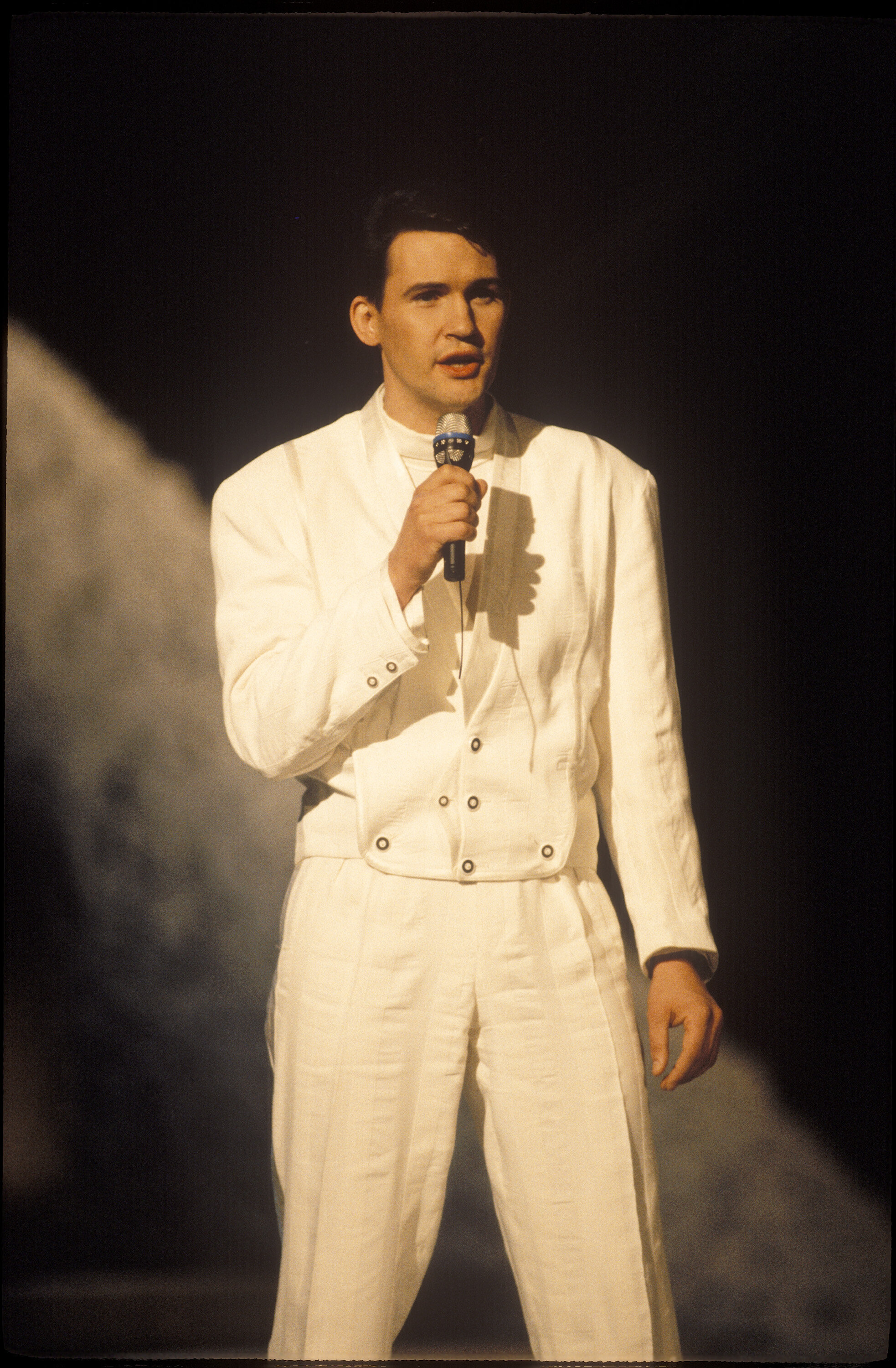
Johnny first won Eurovision in 1980 with What’s Another Year, and later repeated the feat in 1987 with Hold Me Now. Five years after that, a song he’d written called Why Me? was the winning entry for Irish singer Linda Martin.

She went into the competition a firm favourite to win, and wound up leading the way during Saturday night’s final with 583 points.

Her nearest competition was Finland, whose song Cha Cha Cha finished in second place, with 526 points.

Meanwhile, it was not the strongest night for UK entrant Mae Muller in Liverpool, where the event was held on behalf of last year’s winners Ukraine.

Mae finished in second to last place after closing the show with her rendition of her entry I Wrote A Song.

Johnny Logan in 1987

ullstein bild Dtl. via Getty Images

Loreen’s win also means Sweden now matches Ireland as the country with the most Eurovision wins, with seven each.

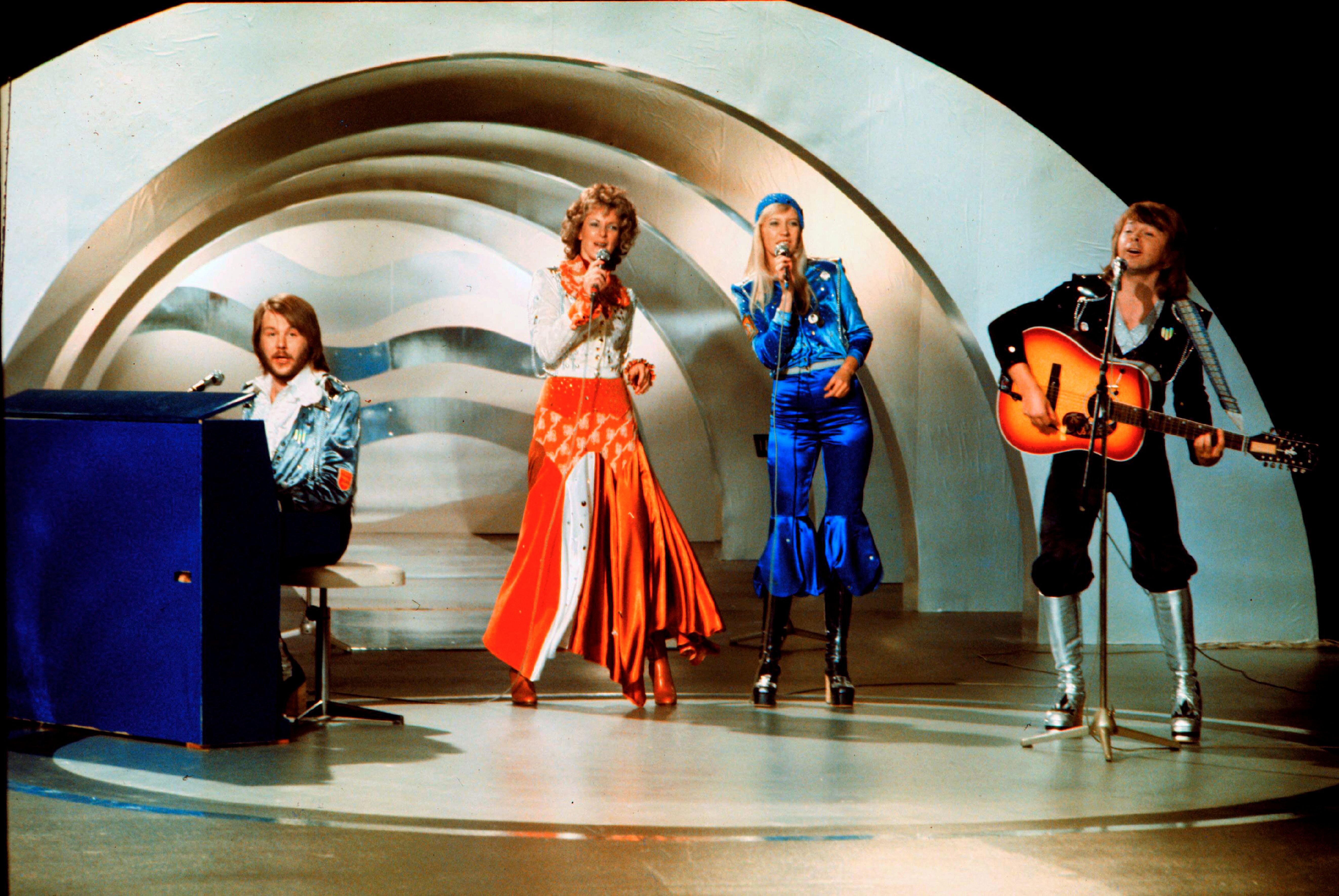
Next year’s Eurovision Song Contest will mark 50 years since Sweden’s first win, when ABBA stormed to victory with their hit Waterloo.

ABBA were Sweden's first Eurovision winners in 1974
ABBA were Sweden’s first Eurovision winners in 1974

OLLE LINDEBORG via Getty Images

Later Swedish winners included Herreys’ Diggi-Loo Diggi-Ley, Carola’s Fångad Av En Stormvind, Charlotte Perelli’s Take Me To Your Heaven.

Måns Zelmerlöw was Sweden’s most recent winner after triumphing with his song Heroes.

Share Button