Asda has launched a £1 “winter warmer” meal deal including a soup, a roll and unlimited tea or coffee for over-60s.
The deal will be available throughout November and December in any of the supermarket chain’s 205 cafes.
Advertisement
The supermarket announced the move after its latest Income Trackers showed that those aged 65 to 74 experienced a £163 drop in disposable income in August, compared to last year.
Asda is also set to provide help for community groups, with £500,000 in funding available in individual grants of up to £2,000 per organisation.
Mohsin Issa, Asda’s co-owner, said: “We know that this winter is set to be incredibly hard for thousands of pensioners as they worry about how to keep themselves warm in the face of rising living costs and a fixed income.
“We’ve already been able to serve over half a million meals through our Kids Eat for £1 initiative in our cafes and we’re hoping our new offer of soup and hot drinks for over-60s will prove just as impactful for those who need it most.
Advertisement
“Meanwhile, the cost-of-living grant programme led by Asda’s charity The Asda Foundation will support grassroots organisations who are providing a lifeline in their communities during these tough times.”
2.8m older households will still be living in fuel poverty this winter despite the Government freezing the energy price cap.
To help @ASDA have launched three new ‘winter warmer’ initiatives to support customers and community groups struggling with the cost-of-living crisis 👏👏 https://t.co/HJYB2bZKO5
It comes as the UK faces cost-of-living and energy crises this winter, with many elderly people set to face fuel poverty.
Research from Age UK estimates that 2.8 million older households will remain in fuel poverty this winter despite the energy price cap being frozen.
Meanwhile, the National Grid Electricity System Operator (ESO), the body that oversees Britain’s electricity grid, has warned that planned energy blackouts could be needed.
Advertisement
Households are being encouraged to help avoid blackouts, “save money and back Britain” by using more energy during off-peak times.
In what it called an “unlikely” scenario, the ESO said that households and businesses might face planned three-hour outages to ensure that the grid does not collapse.
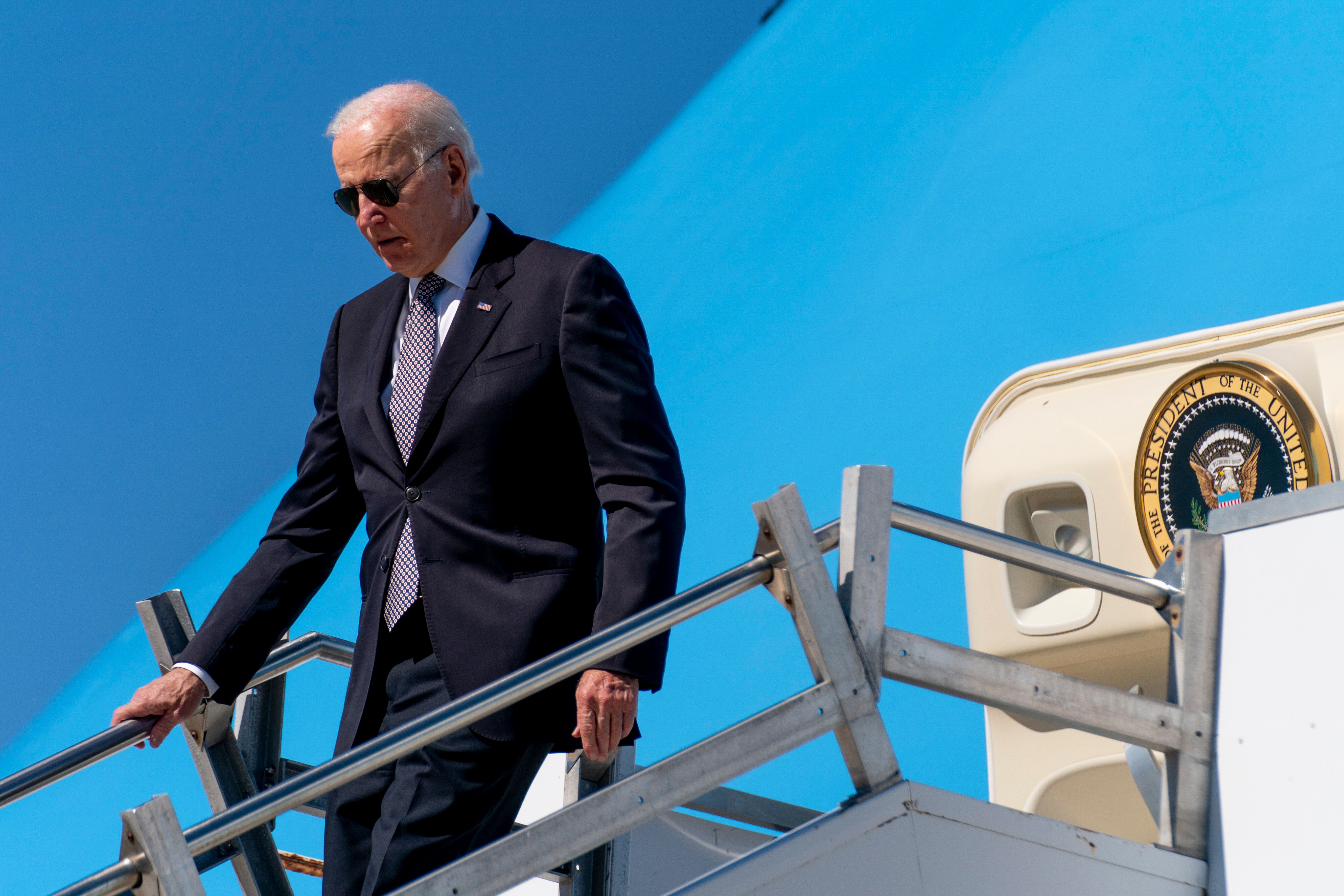
President Joe Biden will pardon all prior federal offences of simple possession of marijuana, he announced on Thursday.
The president is also calling on governors to pardon state marijuana offences. He will also ask the secretary of the Department of Health and Human Services and the attorney general to review how the drug is scheduled under current federal law.
The forthcoming pardons are set to clear the convictions of some 6,500 people who had federal charges of simple possession of marijuana from 1992 to 2021, officials said. Thousands more who were convicted in the District of Columbia will also be pardoned.
“Criminal records for marijuana possession have also imposed needless barriers to employment, housing, and educational opportunities,” Biden said in a statement. “And while white and Black and brown people use marijuana at similar rates, Black and brown people have been arrested, prosecuted, and convicted at disproportionate rates.”
The announcement still stops short of decriminalizing marijuana, even as a growing majority of Americans say the drug should be legal. The president also intends to keep the current regulations relating to trafficking, marketing and underage sales in place.
Marijuana is currently classified as a Schedule 1 drug under the Controlled Substances Act, like heroin and LSD. The Justice Department said it will work with the Department of Health and Human Services to review how marijuana is classified under federal law.
“Too many lives have been upended because of our failed approach to marijuana,” Biden said. “It’s time that we right these wrongs.”
This was meant to enlist 300,000 men with previous military experience to boost the Russian forces, although the official decree did not specify a required figure.
But just a week later, Putin announced there would be “corrections” to the call-out after there were reports that people with no experience or those beyond the draft age have been called up.
He said: “For example, I’m thinking of fathers of many children, or people suffering from chronic diseases, or those who are already past conscription age.”
Now he has deferred conscription for additional categories of students, too.
More than 200,000 people have already been drafted in, according to the Kremlin.
Meanwhile, Russians have allegedly been fleeing the country in droves to avoid being called up to war and anti-war protests have broken out all over Russia. Data shared by Bloomberg.com revealed that 400,000 Russians have escaped to nearby states.
Advertisement
According to OVD-Info, 2,418 people were detained for protesting against mobilisation between September 21 and 26.
2. And Russia still isn’t sure about its new external borders
Moscow annexed four regions of Ukraine last week, after holding sham referendums in each area – Kherson, Zaporizhzhia, Donetsk and Luhansk.
Putin has since claimed that all four regions wanted to join Russia, although almost the entire international community still believes these areas are part of Ukraine.
And, in claiming the land for Russia without Ukraine’s permission, Putin has officially broken international law.
Advertisement
However, Russia does not control any of these areas completely – many pockets are still rebelling against Moscow rule. As a result, Russia has still not entirely confirmed where it thinks its new borders are, especially as Ukraine continues to reclaim land.
Kremlin spokesperson Dmitry Peskov refused to give a solid answer about where the borders of Kherson and Zaporizhzhia regions should be following the annexations.
Asked by CNN, he said: “I will leave this question unanswered.”
He then added: “But I repeat once again: certain territories there will be returned and we will continue to consult with the population, that expresses a desire to live in Russia.”
This is only made more confusing by the decision to include these annexed areas in the Russian TV weather forecasts.
Advertisement
3. Ukraine’s counteroffensive continues
Ukraine has reclaimed astounding quantities of land in the east over the last few weeks, amid claims that Russian soldiers fled or surrendered.
President Volodymyr Zelenskyy has remained confident about Ukraine’s success, believing the whole country – including the annexed land – can be reclaimed.
But, as Zelenskyy, noted, this reclaimed land is severely damaged.
He shared images of the recently liberated city of Lyman, showing how – even where Ukrainians comfortably declared victory – there is extensive tragedy left.
Zelenskyy wrote: “Our Lyman after the occupier. All basics of life have been destroyed here. They are doing so everywhere in the territories they seize.”
Our Lyman after the occupier… All basics of life have been destroyed here. They are doing so everywhere in the territories they seize. This can be stopped in 1 way only: liberate Ukraine, life, humanity, law and truth as soon as possible. pic.twitter.com/WInSrmQxsA
The 27 states of the bloc all agreed to a sanctions package on Wednesday. This is part of the ongoing sanctions meant to reduce Putin’s ability to attack Ukraine by reducing its income and forcing it to sell its oil abroad for less.
It’s also the eighth round of sanctions from the EU since Moscow invaded in February, signed off on Wednesday.
In response, European Commission president Ursula von der Leyen wrote: “We will never accept Putin’s sham referenda nor any kind of annexation in Ukraine. We are determined to continue making the Kremlin pay.”
The West in general is also trying to reduce its reliance on exported Russian fossil fuels, so that Moscow can no longer use it for leverage.
5. Zaporizhzhia nuclear power plant concerns grow
Ukraine’s largest nuclear power plant is still in the line of fire. Russia have attempted to annexe the region, and it has been occupied since the start of the war, although the plant itself is still operated by Ukrainian technicians.
Advertisement
Head of the International Atomic Energy Agency Rafael Grossi is also expected to visit the Kremlin to discuss de-escalating the situation.
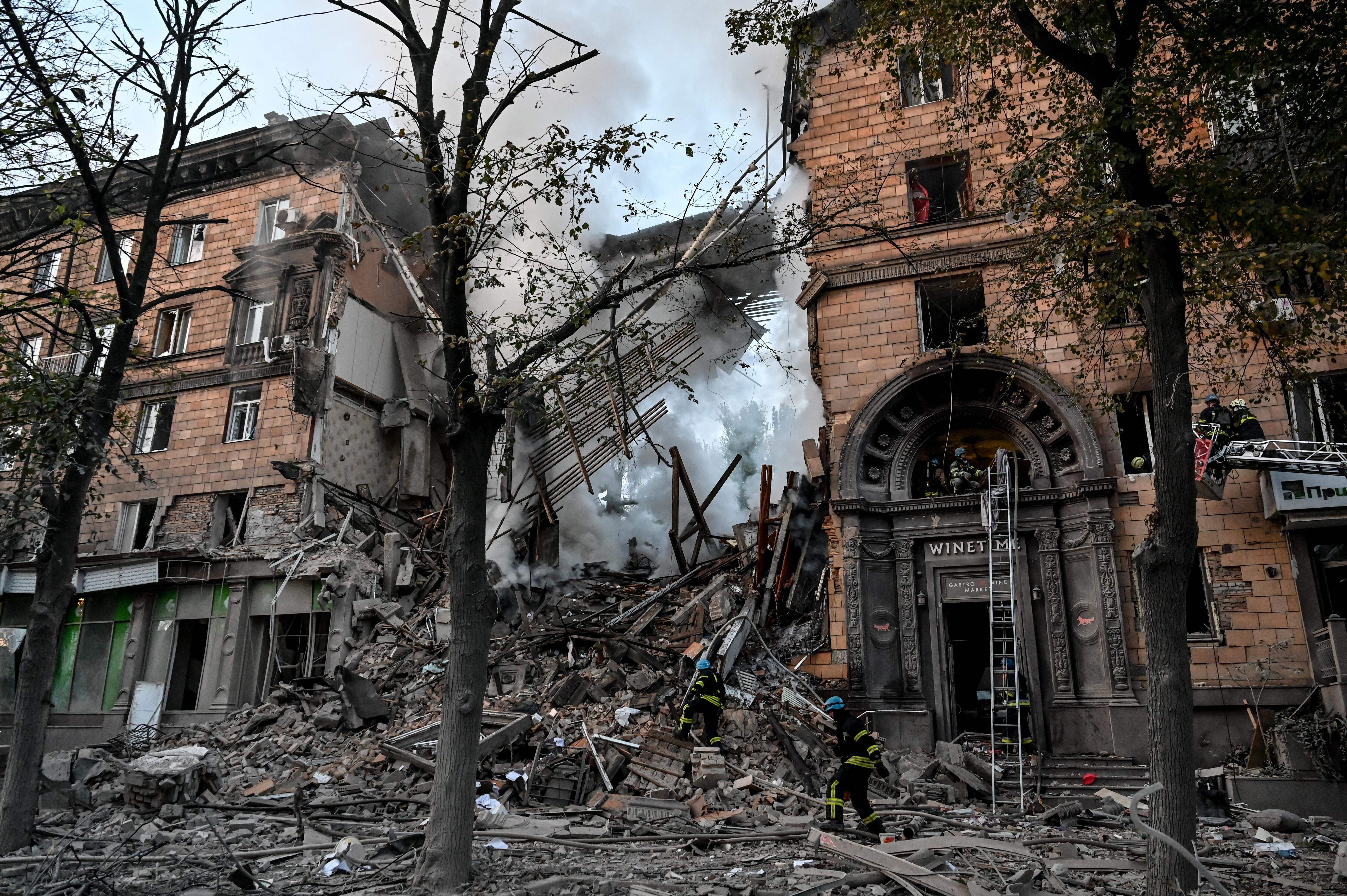
Ukraine’s government of Zaporizhzhia said this week that, “the enemy fired rockets at the regional centre and the outskirts of the city” during the night, meaning “infrastructure facilities were destroyed”.
Former RAF Air Marshal Edward Stringer told Sky News that Putin’s continued attacks on the region meant Putin was trying to “keep the world worried” about his aggression, and “employing terror against the civilian population.”
Despite these attacks near the power plant, the Kremlin has promised it is “fully committed” to not fighting a nuclear war.
It’s worth remembering, only last month Putin promised he was “not bluffing” when it came to using “all the means available to us” to win the war.
Advertisement
Ukrainian firefighters push out a fire after a strike in Zaporizhzhia on October 6, 2022, amid the Russian invasion of Ukraine.
MARINA MOISEYENKO via Getty Images
6. Russia sounds warning to the US
Russia’s ambassador to the US, Anatoly Antonov, said Washington’s attempts to send more military aid to Ukraine were only increasing military tensions between Russia and the West.
He added that this was an “immediate threat” to Moscow, adding: “We call on Washington to stop its provocative actions that could lead to the most serious consequences.”
Moscow also warned that the US is a “participant of the conflict” after Washington announced it was sending another $625 million (£547 million) in military aid to Ukraine, along with advanced US weaponry.
In total, Washington committed nearly $17 billion (£15.15 billion) in military support since the war began.
Using a new power sector model, a team of researchers, including faculty at Binghamton University, State University of New York, have proposed a method for Europe to eliminate natural gas imports from Russia.
The Russian invasion of Ukraine has highlighted the depth of Europe’s dependence on Russian natural gas imports. The REPowerEU plan, released by the European Commission, maps a European Union-wide pathway to reduce Russian natural imports by two-thirds by the end of 2022, with the complete elimination of Russian gas by 2027. Overall, there are only four main policy levers in the short term: increase pipeline gas and liquified natural gas imports from non-Russian sources, reduce gas demand in heating and industry, reduce gas-fired electricity generation and adopt flexible gas storage targets.
A research team including Binghamton University engineer Neha Patankar has created a power sector model for Europe and a gas network model to analyze multiple feasible pathways to secure full independence from Russian natural gas. Patankar is an operations research analyst with a research focus on energy system and power system modeling. Her research aims to provide insights for constructing a robust decision under parametric and structural uncertainty. Her research also includes the evaluation of low-carbon technologies and the effects of policy scenarios on energy systems.
The team modeled European natural gas and electricity systems to assess the feasibility and potential impact of a near-complete embargo on imports of Russian natural gas to Europe beginning in October.
It found that Europe can eliminate reliance on Russian natural gas by augmenting REPowerEU plans with a temporary boost in coal and recalibrated gas storage.
“All successful gas independence pathways increase reliance on coal-fired electricity generation but reduce overall greenhouse gas emissions due to offsets from lower gas demand,” said Patankar, assistant professor in Binghamton University’s Department of Systems Science and Industrial Engineering.
To be successful these actions will have to be sustained for the next two winters, Patankar said.
“Increasing renewables, electrification of heating and liquified natural gas imports will steadily replace the current policy levers and maintain Europe’s long-term energy transition,” she said.
Contributing to this research were Michael Lau, a second-year PhD student in the Department of Mechanical and Aerospace Engineering, Princeton University; Wilson Ricks, a fourth-year PhD student in the Department of Mechanical and Aerospace Engineering, Princeton University; Jesse Jenkins, an assistant professor of mechanical and aerospace engineering and the Andlinger Center for Energy and the Environment.
The commentary article, “Europe’s way out: Tools to rapidly eliminate imports of Russian natural gas,” was published in Joule.
Researchers have identified the gene TDRD7 as a key regulator against influenza A virus (IAV), which causes respiratory tract infections in 5 to 20 percent of the human population. These findings could facilitate the development of novel therapeutic interventions against influenza virus infection. The study, led by the Icahn School of Medicine at Mount Sinai in collaboration with other institutions, was published in Science Advances on October 5.
IAV is responsible for 250,000-500,000 deaths per year worldwide. When IAV infects its host, an immunological response composed of a series of molecular processes begins. IAV can infect several different species, and physiological and genetic differences among these species can contribute to different host responses, although some responses are shared.
“Identifying key defense processes and key regulators in multiple species can facilitate the development of treatments for IAV in humans,” said Bin Zhang, PhD, Director of the Center for Transformative Disease Modeling, Willard T.C. Johnson Research Professor of Neurogenetics, and Professor of Genetics and Genomic Sciences at Icahn Mount Sinai, who led the study.
The study used RNA sequencing to analyze gene expression over time in cells and tissues collected from IAV-infected humans, ferrets, and mice, identifying multiple key defense processes specific to tissues and species. One gene found to play a key role in immunological defense mechanisms against IAV across all species was TDRD7, whichencodes a Tudor domain-containing protein, a type of protein shown to be involved in epigenetic regulation. In light of this discovery, the researchers conducted subsequent experiments inhibiting the function of TDRD7, resulting in an increase of virus replication in IAV-infected models.
“Identifying both common and species-specific responses to influenza is essential in developing effective therapies for the flu and can help inform future research of other respiratory infections, such as COVID-19,” said Christian Forst, PhD, Assistant Professor of Genetics and Genomic Sciences, and Microbiology, at Icahn Mount Sinai and a first author of the study.
Co-first authors on the research team also include Laura Martin-Sancho, PhD, Staff Scientist at Scripps Research, California, and Shashank Tripathi, PhD, Assistant Professor, Microbiology and Cell Biology, Centre for Infectious Disease Research, Indian Institute of Science, Bangalore.
Senior authors on the research team also include Adolfo García-Sastre, PhD, Irene and Dr. Arthur M. Fishberg Professor of Medicine and Director of the Global Health and Emerging Pathogens Institute at Icahn Mount Sinai in New York, and Elodie Ghedin, PhD, Chief of the Systems Genomics Section and Deputy Chief of the Laboratory of Parasitic Diseases at the National Institute of Allergy and Infectious Diseases, National Institutes of Health.
This study was supported by the National Institute of Allergy and Infectious Disease (NIAID) of the National Institutes of Health (NIH) under award numbers R21AI149013, U01AI111598, U19AI106754, U19AI135972, U19AI142733, and U19AI168631 and NIAID-funded Center for Research on Influenza Pathogenesis (CRIP) and Center of Excellence for Influenza Research and Response (CEIRR, contract #75N93021C00014).
Algorithms developed in Cornell’s Laboratory for Intelligent Systems and Controls can predict the in-game actions of volleyball players with more than 80% accuracy, and now the lab is collaborating with the Big Red hockey team to expand the research project’s applications.
The algorithms are unique in that they take a holistic approach to action anticipation, combining visual data — for example, where an athlete is located on the court — with information that is more implicit, like an athlete’s specific role on the team.
“Computer vision can interpret visual information such as jersey color and a player’s position or body posture,” said Silvia Ferrari, the John Brancaccio Professor of Mechanical and Aerospace Engineering, who led the research. “We still use that real-time information, but integrate hidden variables such as team strategy and player roles, things we as humans are able to infer because we’re experts at that particular context.”
Ferrari and doctoral students Junyi Dong and Qingze Huo trained the algorithms to infer hidden variables the same way humans gain their sports knowledge — by watching games. The algorithms used machine learning to extract data from videos of volleyball games, and then used that data to help make predictions when shown a new set of games.
The results were published Sept. 22 in the journal ACM Transactions on Intelligent Systems and Technology, and show the algorithms can infer players’ roles — for example, distinguishing a defense-passer from a blocker — with an average accuracy of nearly 85%, and can predict multiple actions over a sequence of up to 44 frames with an average accuracy of more than 80%. The actions included spiking, setting, blocking, digging, running, squatting, falling, standing and jumping.
Ferrari envisions teams using the algorithms to better prepare for competition by training them with existing game footage of an opponent and using their predictive abilities to practice specific plays and game scenarios.
Ferrari has filed for a patent and is now working with the Big Red men’s hockey team to further develop the software. Using game footage provided by the team, Ferrari and her graduate students, led by Frank Kim, are designing algorithms that autonomously identify players, actions and game scenarios. One goal of the project is to help annotate game film, which is a tedious task when performed manually by team staff members.
“Our program places a major emphasis on video analysis and data technology,” said Ben Russell, director of hockey operations for the Cornell men’s team. “We are constantly looking for ways to evolve as a coaching staff in order to better serve our players. I was very impressed with the research Professor Ferrari and her students have conducted thus far. I believe that this project has the potential to dramatically influence the way teams study and prepare for competition.”
Beyond sports, the ability to anticipate human actions bears great potential for the future of human-machine interaction, according to Ferrari, who said improved software can help autonomous vehicles make better decisions, bring robots and humans closer together in warehouses, and can even make video games more enjoyable by enhancing the computer’s artificial intelligence.
“Humans are not as unpredictable as the machine learning algorithms are making them out to be right now,” said Ferrari, who is also associate dean for cross-campus engineering research, “because if you actually take into account all of the content, all of the contextual clues, and you observe a group of people, you can do a lot better at predicting what they’re going to do.”
The research was supported by the Office of Naval Research Code 311 and Code 351, and commercialization efforts are being supported by the Cornell Office of Technology Licensing.
Story Source:
Materials provided by Cornell University. Original written by Syl Kacapyr, courtesy of the Cornell Chronicle. Note: Content may be edited for style and length.