People in a trial eating nearly half their daily calories at breakfast were less hungry during the day.


People in a trial eating nearly half their daily calories at breakfast were less hungry during the day.

Tributes have poured in to former Wales captain and “iconic” rugby commentator Eddie Butler, who has died aged 65.
The 16-cap Wales number eight died in his sleep on a charity trek on the Inca Trail in Peru.
Former England hooker and Butler’s BBC colleague Brian Moore offered a touching social media farewell.
Advertisement
“I am devastated by this news,” Moore tweeted.
“Ed, I’m sorry I never told you how much I admired you as a broadcaster and as a man. Well, it wasn’t like that between us, was it.
“Condolences to Sue and your family. Sport has lost an iconic voice.
“I have lost a very dear friend. Goodbye Edward.”
Butler rose to prominence with Pontypool in the 1970s, representing Wales between 1980 and 1984.
He toured New Zealand with the British and Irish Lions in 1983, before forging a highly respected career as a commentator and broadcaster.
Advertisement
His coverage of the Olympics – specifically his distinct voiceovers of montages of the games – developed cult status.
“The Prostate Cymru charity is devastated by the passing of its much loved ambassador Eddie Butler,” read a statement announcing the news.
“Eddie was the voice of Wales and we were honoured to have him as part of our charity. We will cherish the many memories we have of him.
“Over the last week Eddie once again showed his generosity and steadfast commitment to good causes by joining 25 Prostate Cymru fundraisers, including his daughter Nell, on the Inca Trail Trek to Machu Picchu.
“In the early hours of Thursday, September 15, Ed passed away peacefully in his sleep at Ecoinka base camp in the Peruvian Andes.
Advertisement
“He leaves behind his wife Susan and six children, who are very much in our thoughts.”
Butler represented Cambridge University from 1976 to 1978 while studying French and Spanish at Fitzwilliam College.
The imposing back-row forward made his Wales debut in the 18-9 win over France in January 1980.
After rugby Butler enjoyed a short stint as a teacher, then worked for a property development company – before finding another niche in broadcasting.
Butler moved on from stints with national newspapers to excel for the BBC in commentary on rugby, but also adding colour to major sporting events.
Former Wales international Sam Warburton said: “Stunned at the news and passing of Eddie Butler. Thoughts with his family.
Advertisement
“What an amazing contribution to rugby and broadcasting. A privilege to have played and co-commentated with his voice. RIP Eddie.”
Welsh Rugby Union chairman Rob Butcher insisted his country owed Butler a sizeable debt for his contribution to the sport.
“For many Eddie was the voice of Welsh rugby and he will be sorely missed by supporters around the globe as well as his friends throughout the game and here at the WRU,” said Butcher.
Advertisement
“He proudly represented his country as a player, was a mainstay in press boxes around the world long after he retired from the game and has been prolific in the way in which he has served Welsh rugby in both the written and spoken word over decades.
“Our thoughts and prayers go to his family, who we also know well and cherish, and his close friends and colleagues at this incredibly difficult time.
“He was a unique individual on the game in Wales owes him a debt of gratitude for his contributions both on and off the pitch.”
The BBC director general Tim Davie also paid tribute to a “wonderful wordsmith” who voiced some of rugby’s most vital moments.
“Everyone at BBC Sport is shocked and saddened by this very sad news,” said Davie.
“Eddie was a brilliantly gifted commentator, writer and reporter whose passion for the game of rugby union shone through every broadcast.
Advertisement
“A wonderful wordsmith with a rich, iconic voice, he provided the definitive soundtrack to some of the greatest moments in rugby’s history.
“He will be much missed by all of us, our thoughts are with his family at this sad time.”
TV presenter Monty Don also paid tribute to Butler.
“Shocked and deeply saddened to hear of the death of Eddie Butler,” he said. “I have known Eddie since he was a gangly 18 year old star player at University.
“A wonderful rugby player, became a superb commentator and a fine man.”


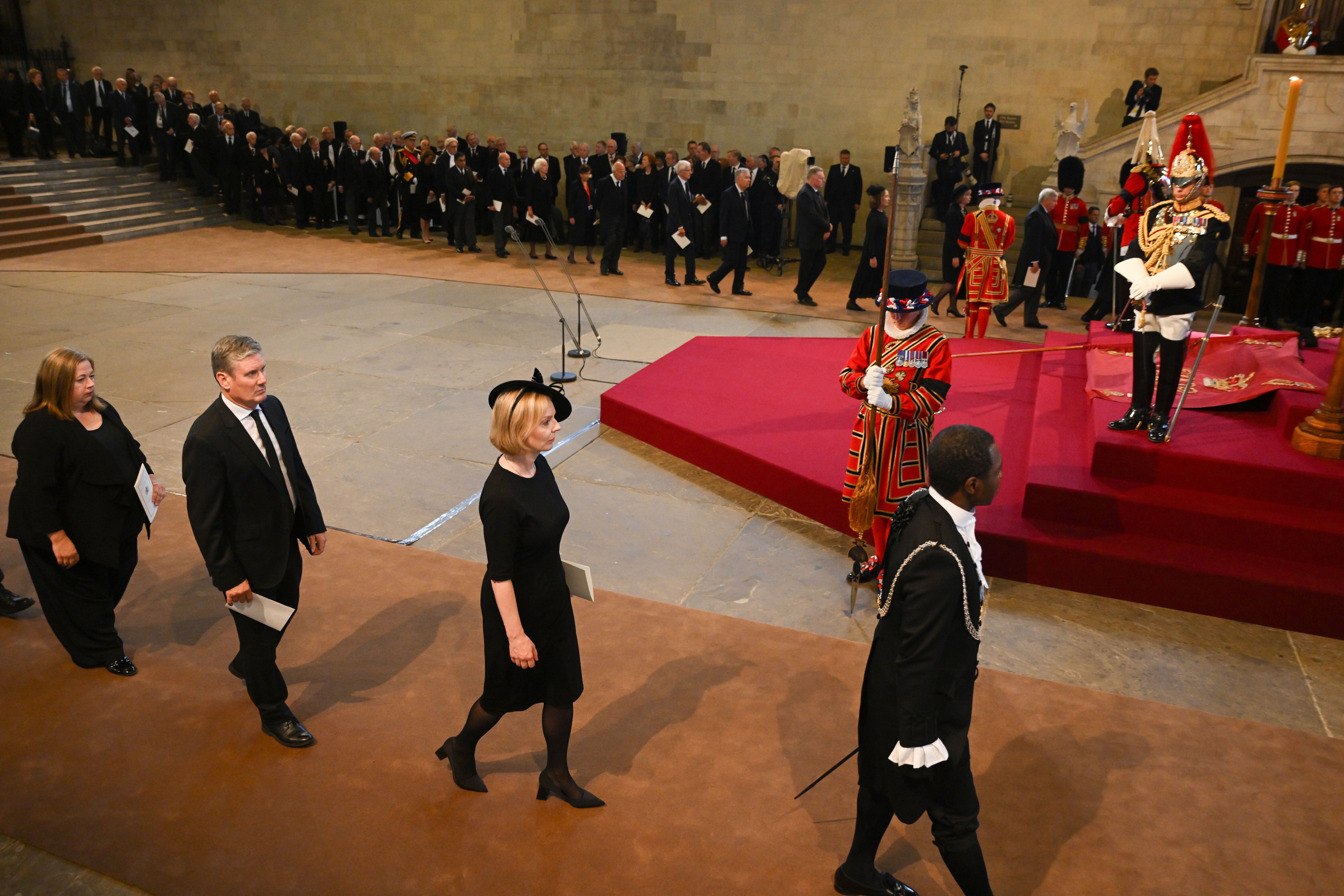
Shortly after the Queen’s coffin arrived on Wednesday at Westminster Hall, where as many as 400,000 people are expected to witness the lying in state, politicians joined the royals in a service remembering the late monarch.
But an image of prime minister Liz Truss and Labour leader Keir Starmer was quickly seized upon on social media. It’s not the first time the new Conservative leader has been mocked since the Queen’s death, with many commenting on her unusual curtsey when meeting King Charles.
A constant procession of mourners is continuing to make its way through Westminster Hall to pay their respects, with members of the public having queued for hours along the Thames.
The Queen’s state funeral on Monday will see 2,000 people including world leaders and foreign royals gather inside Westminster Abbey in London on for the final farewell to the nation’s longest reigning monarch.
Some 800 people, including members of the Queen’s Household and Windsor estate staff, will attend the committal service afterwards at 4pm in St George’s Chapel, Windsor Castle.


The availability of rapid antigen tests has significantly advanced efforts to contain the spread of COVID-19, but every new variant of concern raises questions about whether diagnostic tests will still be effective. A new study published in Cell attempts to address these questions by evaluating how rapid tests will perform when challenged with future SARS-CoV-2 variants.
The research team, led by Emory University and funded by the National Institute of Health’s (NIH) Rapid Acceleration of Diagnostics (RADx) Tech program, developed a novel method for evaluating how mutations to SARS-CoV-2 can affect recognition by antibodies used in rapid antigen tests. Because most rapid antigen tests detect the SARS-CoV-2 nucleocapsid protein (N protein), the team directly measured how mutations to the N protein impacted diagnostic antibodies’ ability to recognize their target.
“Based on our findings, none of the major past and present SARS-CoV-2 variants of concern contain mutations that would affect the capability of current rapid antigen tests to detect antibodies,” says first study author Filipp Frank, Ph.D., an assistant professor in the department of biochemistry at Emory University. “Further, these data allow us to look one step ahead and predict test performance against almost any variant that may arise.”
The study used a method called deep mutational scanning to evaluate all possible mutations in the N protein in a single, high-throughput experiment. Researchers then measured the impact of the mutations on their interaction with antibodies used in 11 commercially available rapid antigen tests and identified mutations that may allow for antibody escape.
“Accurate and efficient identification of infected individuals remains a critically important strategy for COVID-19 mitigation, and our study provides information about future SARS-CoV-2 mutations that may interfere with detection,” says senior study author Eric Ortlund, Ph.D., a professor in the department of biochemistry at Emory University. “The results outlined here can allow us to quickly adapt to the virus as new variants continue to emerge, representing an immediate clinical and public health impact.”
Findings show that it’s relatively rare for variants to have mutations to the N protein that allow them to evade diagnostic tests, but there are a small proportion of sequences that could impact detection. Researchers, public health officials, and test manufacturers can use these data to determine if a diagnostic test needs to be evaluated for its ability to detect these mutations or to inform future test design.
“Considering the endless cycle of new variants, the data from this study will be useful for years to come,” says Bruce J. Tromberg, Ph.D., director of the National Institute of Biomedical Imaging and Bioengineering (NIBIB) and lead for the RADx® Tech program at NIH.
While many variants of concern contain multiple mutations to the N protein, the study authors note that their method does not evaluate how multiple mutations could affect diagnostic antibody recognition, representing a limitation of the study.
The project was supported by NIBIB under award numbers 75N92019P00328, U54EB015408, and U54EB027690 as part of the RADx initiative, launched to speed innovation in the development, commercialization and implementation of technologies for COVID-19 testing.
Story Source:
Materials provided by Emory Health Sciences. Note: Content may be edited for style and length.

Schwann cells are known to protect and repair nerve cells. Until now, however, it was not known that they themselves take over functions of certain immune cells during nerve healing. For example, they produce signaling molecules that can activate other immune cells. In particular, however, they are able to stop inflammatory reactions in order to prevent excessive tissue damage and allow the nerve to regenerate.
“This is essential, because inflammation releases free radicals against which nerve fibers cannot protect themselves. Therefore, the inflammation must be cleared quickly, which is precisely what Schwann cells do,” explains Dr. Sabine Taschner-Mandl, who designed the study and heads a research group at St. Anna CCRI. The new results, in which the Medical University of Vienna is also significantly involved, were published in the journal Glia.
Do Schwann cells protect against malignancy?
How are these results related to tumor growth? After nerve injury, Schwann cells adopt a “repair” mode that is also found in benign infantile nerve tumors. There, it causes the tumor cells to mature and thus reach a stage where they lose their aggressive properties and no longer divide unchecked (Weiss T., Taschner-Mandl S., et al., Nat Commun 2021).
“Based on the current results, we now suspect that the immune cell functions of Schwann cells also become effective in childhood nerve tumors. This is because in cancer, there is always a kind of inflammation bubbling away that never comes to a halt. In benign nerve tumors, ganglioneuromas, the accompanying chronic inflammation could be stopped by Schwann cells similar to nerve healing, because unlike malignancies, benign nerve tumors have many Schwann cells in their microenvironment. We also see that a lot of immune cells migrate into these tumors, for which the Schwann cells could also be responsible,” says Sabine Taschner-Mandl.
Healthy Inflammation: First Activate, Then Shut Down
In particular, the current study shows that Schwann cells can influence certain immune cells, so-called T cells, which play an important role in the defense against cancer. Schwann cells — both those in nerve regeneration and those in benign tumors — carry MHC-I and MHC-II molecules on their surface that are important for T-cell regulation. Via these molecules, Schwann cells present recognition features of material they have previously taken up from their environment.
We mimicked an inflammatory response in the laboratory and detected a whole range of additional stimulatory and inhibitory surface molecules that are also necessary for T cell activation,” explains Jakob Berner, MSc, co-first author of the study and interim PhD student in Kaan Boztug’s group at St. Anna CCRI. “Our experiments show that Schwann cells are able to take up large amounts of material via phagocytosis.”
As the first immune response to a nerve cut, Schwann cells secrete substances that attract T cells, macrophages and other immune cells. Now it turned out that not only a reaction between the classical immune cells takes place, but also between Schwann cells and T cells.
While Schwann cells initially fuel the inflammatory response by releasing interferon-gamma, they can later shut it down by up-regulating the T-cell inhibitory PD-L1 molecule.
“First activate, then shut down — that’s the normal process of an inflammatory response. If this were also the case in cancer, then it could curb cancer growth,” comments Sabine Taschner-Mandl. Whether and how these findings can be used for potential cancer therapies is now being researched.

Smithsonian researchers have discovered a new extinct species of lizard-like reptile that belongs to the same ancient lineage as New Zealand’s living tuatara. A team of scientists, including the National Museum of Natural History’s curator of Dinosauria Matthew Carrano and research associate David DeMar Jr. as well as University College London and Natural History Museum, London scientific associate Marc Jones, describe the new species Opisthiamimus gregori, which once inhabited Jurassic North America about 150 million years ago alongside dinosaurs like Stegosaurus and Allosaurus, in a paper published today in the Journal of Systematic Palaeontology. In life, this prehistoric reptile would have been about 16 centimeters (about 6 inches) from nose to tail — and would fit curled up in the palm of an adult human hand — and likely survived on a diet of insects and other invertebrates.
“What’s important about the tuatara is that it represents this enormous evolutionary story that we are lucky enough to catch in what is likely its closing act,” Carrano said. “Even though it looks like a relatively simple lizard, it embodies an entire evolutionary epic going back more than 200 million years.”
The discovery comes from a handful of specimens including an extraordinarily complete and well-preserved fossil skeleton excavated from a site centered around an Allosaurus nest in northern Wyoming’s Morrison Formation. Further study of the find could help reveal why this animal’s ancient order of reptiles were winnowed down from being diverse and numerous in the Jurassic to just New Zealand’s tuatara surviving today.
The tuatara looks a bit like a particularly stout iguana, but the tuatara and its newly discovered relative are in fact not lizards at all. They are actually rhynchocephalians, an order that diverged from lizards at least 230 million years ago, Carrano said.
In their Jurassic heyday, rhynchocephalians were found nearly worldwide, came in sizes large and small, and filled ecological roles ranging from aquatic fish hunters to bulky plant munchers. But for reasons that still are not fully understood, rhynchocephalians all but disappeared as lizards and snakes grew to be the more common and more diverse reptiles across the globe.
This evolutionary chasm between lizards and rhynchocephalians helps explain the tuatara’s odd features such as teeth fused to the jaw bone, a unique chewing motion that slides the lower jaw back and forth like a saw blade, a 100-year-plus lifespan and a tolerance for colder climates.
Following O. gregori‘s formal description, Carrano said the fossil has been added to the museum’s collections where it will remain available for future study, perhaps one day helping researchers figure out why the tuatara is all that remains of the rhynchocephalians, while lizards are now found across the globe.
“These animals may have disappeared partly because of competition from lizards but perhaps also due to global shifts in climate and changing habitats,” Carrano said. “It’s fascinating when you have the dominance of one group giving way to another group over evolutionary time, and we still need more evidence to explain exactly what happened, but fossils like this one are how we will put it together.”
The researchers named the new species after museum volunteer Joseph Gregor who spent hundreds of hours meticulously scraping and chiseling the bones from a block of stone that first caught museum fossil preparator Pete Kroehler’s eye back in 2010.
“Pete is one of those people who has a kind of X-ray vision for this sort of thing,” Carrano said. “He noticed two tiny specks of bone on the side of this block and marked it to be brought back with no real idea what was in it. As it turns out, he hit the jackpot.”
The fossil is almost entirely complete, with the exception of the tail and parts of the hind legs. Carrano said that such a complete skeleton is rare for small prehistoric creatures like this because their frail bones were often destroyed either before they fossilized or as they emerge from an eroding rock formation in the present day. As a result, rhynchocephalians are mostly known to paleontologists from small fragments of their jaws and teeth.
After Kroehler, Gregor and others had freed as much of the tiny fossil from the rock as was practical given its fragility, the team, led by DeMar, set about scanning the fossil with high-resolution computerized tomography (CT), a method that uses multiple X-ray images from different angles to create a 3D representation of the specimen. The team used three separate CT scanning facilities, including one housed at the National Museum of Natural History, to capture everything they possibly could about the fossil.
Once the fossil’s bones had been digitally rendered with accuracy smaller than a millimeter, DeMar set about reassembling the digitized bones of the skull, some of which were crushed, out of place or missing on one side, using software to eventually create a nearly complete 3D reconstruction. The reconstructed 3D skull now provides researchers an unprecedented look at this Jurassic-age reptile’s head.
Given Opisthiamimus‘s diminutive size, tooth shape and rigid skull, it likely ate insects, said DeMar, adding that prey with harder shells such as beetles or water bugs might have also been on the menu. Broadly speaking, the new species looks quite a bit like a miniaturized version of its only surviving relative (tuataras are about five times longer).
“Such a complete specimen has huge potential for making comparisons with fossils collected in the future and for identifying or reclassifying specimens already sitting in a museum drawer somewhere,” DeMar said. “With the 3D models we have, at some point we could also do studies that use software to look at this critter’s jaw mechanics.”
Funding and support for this research were provided by the Smithsonian and the Australian Research Council.
The end of Queen Elizabeth II’s reign does not just mean a changeover for the UK’s head of state.
The Queen’s face or name have been put on many British (and overseas) items over the many decades of her reign, from state-owned objects – like currency – to brands you might not have realised, like Twinings, and Heinz.
Over 800 brands have lost their right to use the royal coat of arms on their packaging, and they now have to prove the royal family use their products before they can put it back.
Advertisement
Here’s what you need to know.
This is when the royal coat of arms – with the English lion on the left and the Scottish unicorn on the right of a shield, featuring different UK emblems on it – can be printed on a product’s packaging. And it doesn’t cost the brand a thing.
There is usually a statement underneath explaining which royal appointed the warrant, too. Most products previously had: “By Appointment to Her Majesty the Queen.”
The monarch can decide who is to be a “grantor” (aside from themselves), meaning the person who officially decides what products can receive the royal warrant.
Officially known as a Royal Warrant of Appointment, it allows brands to use the coat of arms if they supply goods or services to the royals “on a regular and ongoing basis to the Royal Households of Grantor/s for not less than five years of the past seven”.
Advertisement
Brands also have to prove they have policies and plans in place which show they prioritise sustainability and the environment.
Companies which sell items to souvenirs shops in various royal estate do not qualify.
Among the hundreds of brands, both British and international, which hold the royal warrant, here are just a handful of household names which received the official royal seal of approval:
Bacardi-Martini
Cadbury UK Ltd
Carluccio’s
Kellogg’s
Boots Opticians
Molten Brown
Penhaligon’s
Warrants are granted for up to five years at a time, but can be reviewed for renewed the year before it runs out.
These warrants will now be reviewed and granted by the Queen’s successor, King Charles III – although it’s worth noting that he actually approved many of the previous royal warrant holders anyway.
An estimated 875 brands have the royal coat of arms on their packaging – but now the Queen has died, it no longer means anything, according to the Royal Warrant Holders Association.
Advertisement
But, the brands are allowed to use the symbol for an additional two years as they adapt to life under the new monarch, as long as there is not a significant change within the company concerned.
Between 20 and 40 new warrants are granted and old ones cancelled each year – even if it’s cancelled, they can have a year to alter packaging.
There are a lot of different reasons – if the quality of the product is not “up to standard” anymore, it’s “no longer manufactured or available”, order numbers have fallen or the goods or services are no longer required, the royal warrant could be withdrawn.
If a company goes under, it loses the royal seal of approval too.

DANIEL LEAL via Getty Images
Yes – the most obvious thing being the UK currency. The Queen’s face is on all of British coins and bank notes right now.
Advertisement
The Bank of England says it costs around 7p or 8p to make a banknote, and there are around 4.7 billion in use in the UK at the moment – meaning it could turn out to be pretty expensive to replace them all.
But, like with the royal warrant, this change is not usually quick.
For instance, the Queen’s face did not begin to appear on coins until the year after her accession (1953), and she was not on banknotes for years – although that was because she was the first monarch to appear on such currency.
King George VI’s face was also only removed from coins 20 years after his death, during the change to the decimal system.
According to German news outlet DW, the Bank of England has clarified that notes with the Queen’s face are still legal tender, and the Bank is set to release an update after the national mourning period is closed.
Unused stamps will stay valid for use until at least the end of next year.
Postboxes always carry the insignia of the monarch reigning at the time it was put up – E (Elizabeth II) and R (for Regina). New boxes now may use the cypher CR – Charles Rex III. But the ones currently in place will not be changed.
Advertisement
Royal Mail has not revealed how much it would cost to do this anyway.
And, the organisation told DW that “in line with the King’s wishes we will minimise any waste and avoidable cost, so we will be using up stocks of postage stamps and not removing the late Queen’s cypher from vehicles and post boxes ”.
Many of our emergency services will need to be updated at some point, from the fire service ensign, to military medals with the Queen’s effigy, police helmets, and UK passports.
Some Commonwealth currency bears the Queen’s face, too.
Her image is on the currency of at least 33 countries, more than any other living monarch, including Canada, Jamaica, New Zealand, as she was head of the Commonwealth.


It means women are waiting more than three times longer than they should for results.
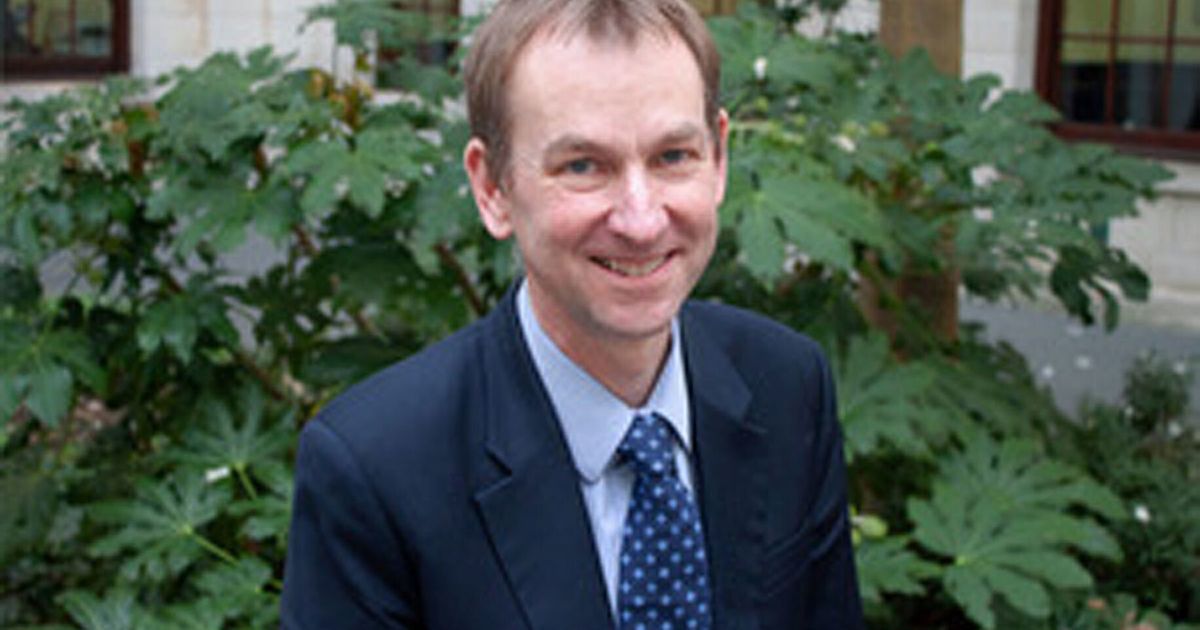
Liz Truss has been criticised for the “unwise and unconstitutional” sacking of a top civil servant.
Tom Scholar was axed as the permanent secretary at the Treasury on Kwasi Kwarteng’s first day as chancellor.
He said Kwarteng had decided it was time for “new leadership” but that he would be “cheering on from the sidelines” in future.
Advertisement
However, the move has been criticised for former senior members of the civil service.
Sir Simon McDonald, the former permanent under-secretary at the Foreign Office, said “parliament needs to act”.
He tweeted: “Cabinet ministers sacking permanent secretaries on their 1st day in office is unwise & unconstitutional but the government has discovered it can do what it wants with the civil service, which has no power to resist.
“The retired complain, but so what? Parliament needs to act.”
He was responding to a letter in The Times by Sir David Normington, who was permanent secretary at the Home Office between 2006 and 2010.
Advertisement
He said: “The sad fact is that in sacking Sir Tom Scholar, one of the ablest civil servants of his generation, the prime minister and chancellor have sent a clear message to the civil service that they are not interested in impartial advice and intend to surround themselves with ‘yes’ men and women.
“That is a sure route to bad decision-making and weak government.”
Scholar’s sacking came after Truss made clear during the Tory leadership contest that she wanted to challenge the Treasury “orthodoxy” on how to run the economy.
Kwarteng will next week use a mini-budget to unveil the government’s plan to slash taxes to boost economic growth.

Britain is doing little to defy the stereotype that people enjoy nothing more than joining a queue as the wait to pay final respects to the Queen grows.
Officials have laid on around 10 miles of “queuing infrastructure” to allow as much of the public as possible to visit the Her Majesty’s lying in state.
Advertisement
Doors at Westminster Hall – where the Queen’s coffin is on public displayed – opened at 5pm on Wednesday. The historic building on the parliamentary estate will remain open for 24-hours a day until 6.30am on September 19, the morning of the late monarch’s funeral.
Reports suggest that people have already been queuing for 15 hours, with some expectations that waits could reach 30 hours. It prompts questions about what happens if nature calls – but planners have mercifully thought ahead.
Those on the route – 6.9 miles from Victoria Tower Gardens to Southwark Park, with a further three miles within the park itself – will have access to more than 500 portable toilets.
Advertisement
Those joining the line will be given numbered wristbands so they take toilet breaks without losing their place.
With up to 400,000 people expected to queue, more than 1,000 volunteers, stewards, marshals and police officers will be on hand at any one time as people brave the wait on the banks of the Thames.
This includes 779 professional stewards per shift, assisted by 100 civil service volunteer marshals, 40 adult scouts, and 30 members of the First Aid Nursing Yeomanry charity, as well as Metropolitan Police officers.
So how long is the queue right now?
Well, the Department for Digital, Culture, Media and Sport is running a live “queue tracker” to pinpoint the end of the line.
At 4pm, the tracker showed the queue was around 2.2 miles long, stretching past Blackfriars Bridge in Southwark near Tate Modern.
Advertisement
To help avoid disappointment, it is understood that entry to the back of the queue may be closed early, although it is too early to estimate when that moment might come.
Numbers will be monitored towards the end of the lying in state period, to ensure as near as possible that those already waiting are able complete their visit.
There will be a separate accessible route running from the Tate Britain for people less able to wait for a long period of time, with timed entry slots issued for a line along Millbank to the Palace of Westminster.
PA Graphics via PA Graphics/Press Association Images
Advertisement
No proof of disability will be required to use this route, with marshals on hand to make sure people are in the correct line and two British Sign Language interpreters to help.
It is understood there will be an element of self-policing when it comes to people keeping their places in line.
Those waiting in the queue are being given a coloured and numbered wristband, specific to each person, allowing them to leave for a brief time.
It is thought people will know those around them and be supportive when others need to step out.


