Transgender parents bring child-centered perspective to parenthood, research finds

Many transgender parents with children between one-and-a-half and six years of age hesitate to label their child’s gender identity, according to new research from a team at Penn State and Guilford College. In addition, the results suggest that many children with transgender parents play in ways that conform to gendered societal expectations, while others play in more gender-expansive ways.

“Previous research has shown that misgendering, or incorrectly labeling someone’s gender identity, often harms a person’s mental and physical health,” said Samantha L. Tornello, assistant professor of human development and family studies at Penn State and principal investigator of the Gender Diverse Parents Study, who noted that gender identity is a person’s internal sense of their own gender — for example, woman, man, nonbinary, or another gender identity. “This new research suggests that transgender parents may offer their children supportive environments to explore their own gender identity and expression.”

Tornello and lead co-author Rachel G. Riskind, the Christina B. Gidynski Associate Professor of Psychology at Guilford College, also found a strong link between child age and the likelihood of labeling — the older the child, the more likely parents were to label their child’s gender identity. Transgender parents of elementary-school-aged children may be more likely than transgender parents of toddlers to label their child’s gender identity.

“This study can’t speak to whether transgender parents assign their children gendered names or pronouns, or otherwise socialize them in gendered ways,” Riskind said. “But it does suggest that transgender parents hesitate to label their child’s gender identity before their child can communicate it themselves.”

The study utilized web-based surveys of 64 nonbinary and binary transgender parents from across the United States. Binary transgender people are those who identify primarily as women, girls, men, or boys; nonbinary people are those whose gender identity is not captured by these labels.

The study measured children’s gender expression: their interest in masculinized and feminized toys (e.g., toolsets and jewelry), activities (e.g., climbing and playing house), and personality characteristics (e.g., enjoying tumble play and liking pretty things). Participants rated how often their child engaged with and enjoyed each item or activity.

The surveys also asked parents about the sex their child was assigned at birth and about their child’s current gender identity.

The team found that 41% of the participants did not report their child’s current gender identity, choosing either “unknown,” “choose not to label,” or “self-describe,” with a text field to write in their response. For “self-describe,” parents often described a gender-fluid child or a child who had not verbalized their gender identity. Several parents wrote, “I think it’s too early to know.” Although the surveys revealed that, on average, children’s play was conventionally gendered, there was a great deal of diversity within the sample. Older children of nonbinary parents, for example, may be more likely to engage in gender-expansive play.

The study published on Aug. 17 in the journal Frontiers in Psychology.

According to Tornello, “Some believe that parent gender identity has either everything, or nothing, to do with child gender expression. But this study suggests that the truth is somewhere in between.”

“This is one of the largest studies to focus on the gender of young children with transgender parents. It will further inform our understanding of gender development, parenting, and child development more broadly.”

Story Source:

Materials provided by Penn State. Original written by Mary Campbell. Note: Content may be edited for style and length.


Share Button

From wound healing to regeneration

The phenomenon of regeneration was discovered over 200 years ago in the freshwater polyp Hydra. Until now, however, it was largely unclear how the orderly regeneration of lost tissues or organs is activated after injury. In its investigations of Hydra, an interdisciplinary research team at Heidelberg University was able to show how wound healing signals released upon injury are converted into specific signals of pattern formation and cell differentiation. Essential components are the mitogen-activated protein kinases (MAPK) and the Wnt signalling pathway — molecular mechanisms that have remained relatively unchanged throughout evolution.

The ability to regenerate varies widely in animals. Most mammals and vertebrates have only limited regeneration capacity, while basal and simple animals that emerged early in evolution, like cnidarians and planarians, can regenerate their whole body. In all cases, the process of regeneration begins with wound healing. The cells at the site of injury proliferate and form an undifferentiated mass — a blastema — from which the missing structures are re-patterned. This activates genetic processes that also control embryonic development. To determine the molecular mechanisms involved, the research team led by Prof. Dr Thomas W. Holstein studied the freshwater polyp Hydra to understand the basic features of this activation of regeneration.

The core of their investigations is the doctoral thesis of Anja Tursch. She repeated the key experiment of Geneva naturalist Abraham Trembley (1710 to 1784) which led him to discover the regeneration phenomenon. The Hydra polyp is bisected, prompting the upper half to regenerate a new “head” and the lower half a new “foot” — hence totally different body parts can grow from the exact same tissue at the cut surface in the middle. Building on their previous work on Hydra regeneration, the researchers at the Centre for Organismal Studies (COS) of Heidelberg University have now shown how this is possible.

Regardless of where it occurs, any damage triggers nonspecific signals for an injury response, i.e. wound healing, via calcium ions and the production of reactive oxygen species. The signals are transmitted intracellularly by three mitogen-activated protein kinases — p38, JNKs, and ERK. Activation of these three molecules is required for both head and foot regeneration. Wnt signalling pathways are then activated that are important during embryonic development for the formation of rudimentary organs and the body axis. The generic signals of wound healing are thus transferred into position-specific signals of patterning and cell differentiation for regeneration.

“Our experiments show that the Wnt signalling pathway is a main component of the initially general injury response and, depending on signal strength, directs the tissue toward head or foot development,” explains Prof. Holstein. This is why, in the case of MAPK inhibition, the otherwise absent regeneration can be induced by artificially generated, recombinant Wnt proteins. “It was also surprising that in middle body parts that had both head and foot removed, heads can be induced at both ends in this way,” adds Dr Suat Özbek, a member of Prof. Holstein’s “Molecular Evolution and Genomics” research group at the COS.

Wnt/β-catenin, one piece of the Wnt signalling pathway, was already known to encode positional information for new head structure formation. In collaboration with mathematicians led by Prof. Dr Anna Marciniak-Czochra, the research team of Prof. Holstein and Dr Özbek developed a model that shows how basal positional information in the tissue transforms the initially undifferentiated injury response into a differential patterning process via the Wnt signalling pathway. “Because MAPKs and Wnts are highly evolutionarily conserved, this mechanism is likely deeply embedded in our genome, which is important for regenerative processes in vertebrates and mammals as well,” stresses Thomas Holstein.

Story Source:

Materials provided by Heidelberg University. Note: Content may be edited for style and length.

Share Button

Quantum materials: Entanglement of many atoms discovered

Be it magnets or superconductors: materials are known for their various properties. However, these properties may change spontaneously under extreme conditions. Researchers at the Technische Universität Dresden (TUD) and the Technische Universität München (TUM) have discovered an entirely new type of such phase transitions. They display the phenomenon of quantum entanglement involving many atoms, which previously has only been observed in the realm of few atoms. The results were recently published in the scientific journal Nature.

In physics, Schroedinger’s cat is an allegory for two of the most awe-inspiring effects of quantum mechanics: entanglement and superposition. Researchers from Dresden and Munich have now observed these behaviors on a much larger scale than that of the smallest of particles. Until now, materials that display properties like, e.g., magnetism have been known to have so-called domains — islands in which the materials properties are homogeneously either of one or a different kind (imagine them being either black or white, for example). Looking at lithium holmium fluoride (LiHoF4), the physicists have now discovered a completely new phase transition, at which the domains surprisingly exhibit quantum mechanical features, resulting in their properties becoming entangled (being black and white at the same time). “Our quantum cat now has a new fur because we’ve discovered a new quantum phase transition in LiHoF4 which has not previously been known to exist,” comments Matthias Vojta, Chair of Theoretical Solid State Physics at TUD.

Phase transitions and entanglement

We can easily observe the spontaneously changing properties of a substance if we look at water: at 100 degrees Celsius it evaporates into a gas, at zero degrees Celsius it freezes into ice. In both cases, these new states of matter form as a consequence of a phase transition where the water molecules rearrange themselves, thus changing the characteristics of the matter. Properties like magnetism or superconductivity emerge as a result of electrons undergoing phase transitions in crystals. For phase transitions at temperatures approaching the absolute zero at -273.15 degrees Celsius, quantum mechanical effects such as entanglement come into play, and one speaks of quantum phase transitions. “Even though there are more than 30 years of extensive research dedicated to phase transitions in quantum materials, we had previously assumed that the phenomenon of entanglement played a role only on a microscopic scale, where it involves only a few atoms at a time,” explains Christian Pfleiderer, Professor of Topology of Correlated Systems at the TUM.

Quantum entanglement is one of the most astonishing phenomena of physics, where the entangled quantum particles exist in a shared superposition state that allows for usually mutually exclusive properties (e.g., black and white) to occur simultaneously. As a rule, the laws of quantum mechanics only apply to microscopic particles. The research teams from Munich and Dresden have now succeeded in observing effects of quantum entanglement on a much larger scale, that of thousands of atoms. For this, they have chosen to work with the well-known compound LiHoF4.

Spherical samples enable precision measurements

At very low temperatures, LiHoF4 acts as a ferromagnet where all magnetic moments spontaneously point in the same direction. If you then apply a magnetic field exactly vertically to the preferred magnetic direction, the magnetic moments will change direction, which is known as fluctuations. The higher the magnetic field strength, the stronger these fluctuations become, until, eventually, the ferromagnetism disappears completely at a quantum phase transition. This leads to the entanglement of neighboring magnetic moments. “If you hold up a LiHoF4 sample to a very strong magnet, it suddenly ceases to be spontaneously magnetic. This has been known for 25 years,” summarizes Vojta.

What is new is what happens when you change the direction of the magnetic field. “We discovered that the quantum phase transition continues to occur, whereas it had previously been believed that even the smallest tilt of the magnetic field would immediately suppress it,” explains Pfleiderer. Under these conditions, however, it is not individual magnetic moments but rather extensive magnetic areas, so-called ferromagnetic domains, that undergo these quantum phase transitions. The domains constitute entire islands of magnetic moments pointing in the same direction. “We have used spherical samples for our precision measurements. That is what enabled us to precisely study the behavior upon small changes in the direction of the magnetic field,” adds Andreas Wendl, who conducted the experiments as part of his doctoral dissertation.

From fundamental physics to applications

“We have discovered an entirely new type of quantum phase transitions where entanglement takes place on the scale of many thousands of atoms instead of just in the microcosm of only a few,” explains Vojta. “If you imagine the magnetic domains as a black-and-white pattern, the new phase transition leads to either the white or the black areas becoming infinitesimally small, i.e., creating a quantum pattern, bevor dissolving completely.” A newly developed theoretical model successfully explains the data obtained from the experiments. “For our analysis, we generalized existing microscopic models and also took into account the feedback of the large ferromagnetic domains to the microscopic properties,” elaborates Heike Eisenlohr, who performed the calculations as part of her PhD thesis.

The discovery of the new quantum phase transitions is important as a foundation and general frame of reference for the research of quantum phenomena in materials, as well as for new applications. “Quantum entanglement is applied and used in technologies like quantum sensors and quantum computers, amongst other things,” says Vojta. Pfleiderer adds: “Our work is in the area of fundamental research, which, however, can have a direct impact on the development of practical applications, if you use the materials properties in a controlled way.”

The research has been financially supported by the Excellence Strategy of the German Federal and State Governments within the Würzburg-Dresden Cluster of Excellence Complexity and Topology in Quantum Matter (ct.qmat) and the Cluster of Excellence Munich Center for Quantum Science and Technology (MCQST). In addition, the work has been supported by the European Research Council (ERC) via the Advanced Grant ExQuiSid and by the Deutsche Forschungsgemeinschaft (DFG) within the Collaborative Research Centers (SFB) 1143 und TRR80.

Share Button

3 Things Happening This Week In The Ukraine War You Might Have Missed

The Ukraine war has just passed the six-month mark – but the last week may prove to be one of the fundamental turning points of the entire conflict.

Here are three of the major events which unfolded over the last seven days.

1. Counteroffensive

Ukraine long-awaited counterattack in the south began this week, as the Ukrainian armed forces tried to take back territories seized by Russia.

It comes after spending several weeks building up the attacks on Russia’s supply lines, weakening Vladimir Putin’s army behind the scenes.

Ukraine’s military hit out in eight directions at the same time, and claim to have broken through their opponent’s “first line of defence” and retaking small Ukrainian villages.

However, the second line of defence has been much harder to break.

Greece’s honorary consul in Kherson, Pantelis Boubouras told Al Jazeera: “The villages along the front line – these the Ukrainians broke easily. In the second line of defence, there was blood spilled. I heard 1,000 Ukrainians and 1,500 Russians [were killed].”

He added: “The second line isn’t falling easily. There are 25,000 to 30,000 soldiers, they’ve been there for five months and are very well-equipped and dug in.”

Russia has denied that any territory lost, and claims 1,200 Ukrainians died in a single day during Ukraine’s attempts to recapture some areas.

But the Ukrainian military intelligence spokesman Vadym Skibitsky said Russia is looking to mobilise 90,000 troops in the country, after losing more than 47,000 throughout the war.

These would likely be made up of volunteers, reservists, and soldiers recruited over the summer, although low morale is thought to be affecting Russian ranks.

The offensive also came after Ukrainian president Volodymyr Zelenskyy warned: “If they want to survive, it is time for the Russian military to flee.”

But, for the most part, the country is keeping its cards close to its chest when it comes to this offensive.

It’s also worth remembering that this is not the case everywhere in Ukraine.

Citizens are still under attack elsewhere – Kharkiv city, in the northeast, is facing intense shelling, particularly in residential areas.

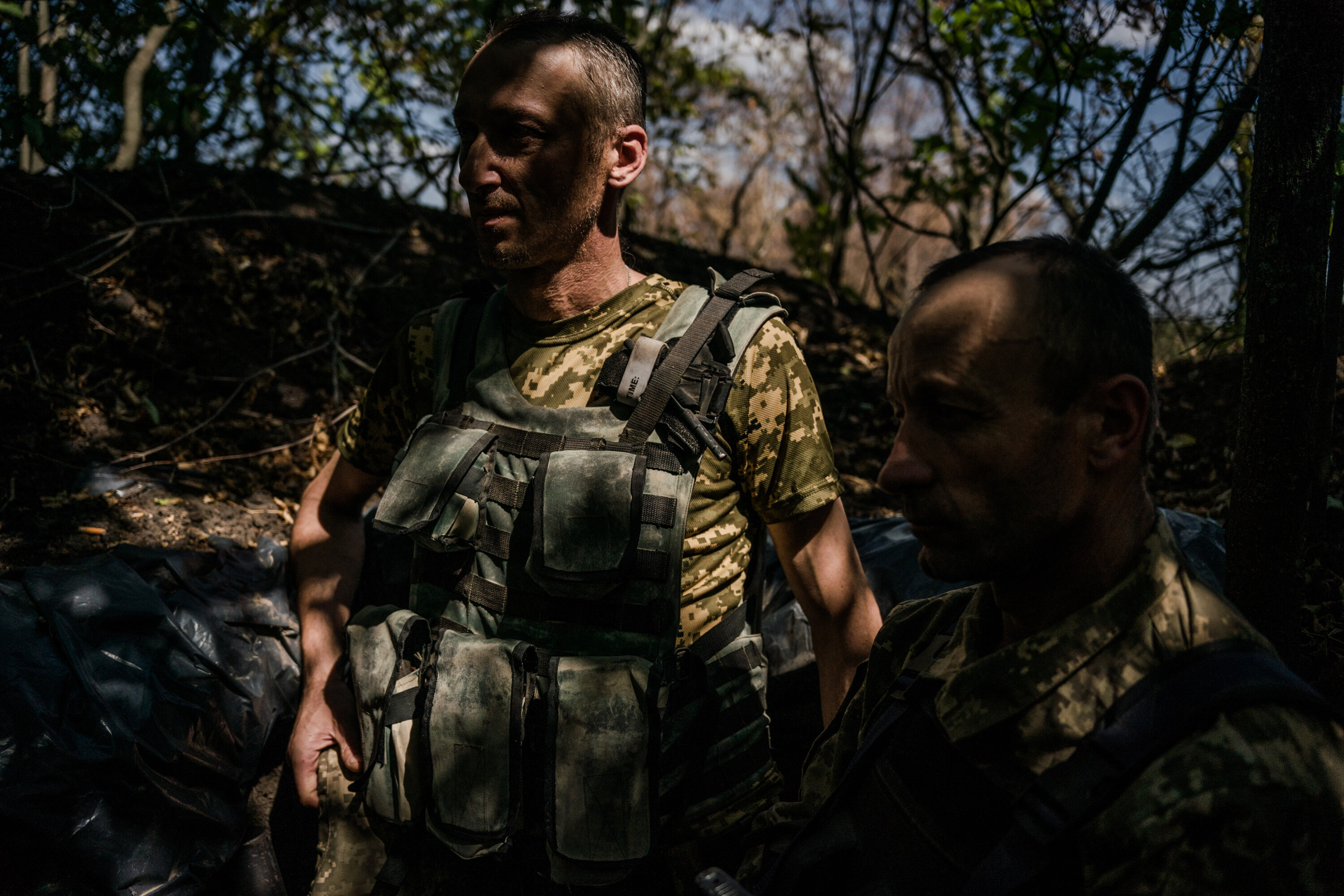
Vitali, 45, left, and Yuri 44, in the trenches on the Kherson frontline in Mykolaiv region, Ukraine, 8th of August 2022.

The Washington Post via Getty Images

2. Mysterious death

Ravil Maganov, the chair of Russia’s largest private oil company, fell to his death from a Moscow Central Clinic hospital on Thursday.

The independent news agency, Interfax, claimed he “fell from a window at Central clinical hospital,” and then “died from injuries sustained”.

As head of Lukoil, he was one of the country’s business elite.

Maganov supposedly “passed away following a severe illness” but the news agency did not say what he was being treated for.

Amid conflicting reports about his health prior to his death, it’s worth pointing out that Maganov is just one of several people with ties to the Russian energy industry who has died under unusual circumstances over the last six months.

One of the former top manages of Maganov’s company was found dead in May.

However, none of the deaths have been considered murders.

Lukoil was one of the few Russian energy companies which criticised the invasion of Ukraine, having called for a ceasefire just a week after it began.

Maganov also died on the same day Putin went to visit the same hospital to mark the death of former Soviet leader Mikhail Gorbachev.

It comes as the consequences of the war are starting to play out within Russia’s energy industry too. The Kremlin briefly cut off all Russian gas exports to Europe this week to squeeze countries which are providing financial aid to Ukraine throughout the war.

However, this does will Russia will have seen a fall in profits, on top of the extensive list of sanctions from the rest of the world imposed against it.

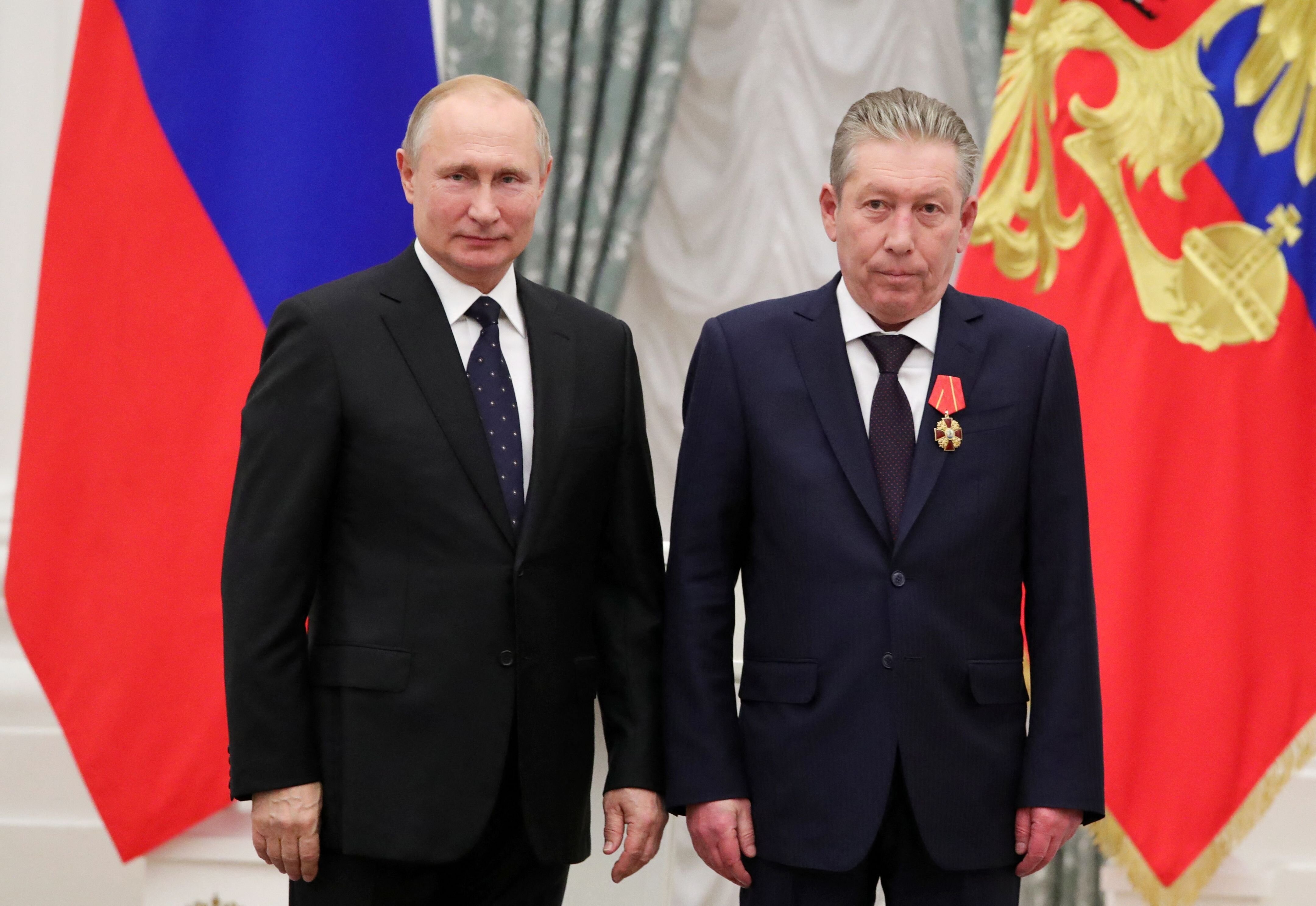
Putin with Lukoil Ravil Maganov (R)

MIKHAIL KLIMENTYEV via Getty Images

3. Memes

In true 2022 fashion, memes have become a key part of keeping morale up for many Ukrainians over the last six months.

But it was only this week that the official Twitter account for the Defence of Ukraine (the government branch) retweeted one.

It wrote: “We usually express gratitude to our internationals partners for the security assistance. But today we want to give a shoutout to a unique entity – North Atlantic Fella Organisation #NAFO.

“Thanks for your fierce fight against [the] Kremlin’s propaganda and trolls. We salute you, fellas!”

NAFO is a play on NATO, the North Atlantic Treaty Organisation. Ukraine is not part of Nato but did attempt to join.

Many believe that it was fears Ukraine was getting too close to western organisations such as Nato and the EU (for which it is now officially a candidate for membership) prompted Putin to launch his invasion. After all, the Russian president did demand that Ukraine give up its attempts to join Nato just before the war.

But NAFO is not just a parody of a defence organisation, but uses memes to mock Russia’s military performance and take down its attempts to spread misinformation about the war online.

Always using an image of a Shiba Inu dog (from an older meme), the organisation has no formal name or leadership, according to The Economist, but activists online rally together to use it.

Jeremy Fleming, the head of the GCHQ, recently claimed that Putin has already lost the information war in the West. Writing for The Economist, Shashank Joshi concluded: “The self-appointed warriors of NAFO might claim a little credit for that outcome.”

Share Button

Mystery pneumonia: Argentina investigates three deaths

Three of nine people struck with the unexplained respiratory illness in recent days have died.

Share Button

Long Covid: 11-year-old on Leeds long Covid clinic help

The clinic is one of 15 regional hubs established to help children with long Covid symptoms.

Share Button

‘My mesh horror story is now on public display’

Lisa Megginson had her transvaginal mesh tape surgically removed after years of health problems.

Share Button

Prostate cancer symptoms and treatment: What to check for

One in eight men will be diagnosed with prostate cancer in their lifetime.

Share Button

Neil Patrick Harris Reveals The Very On-Brand Name For His Modesty Pouch While Filming Uncoupled Sex Scenes

Neil Patrick Harris has opened up about what it was like to film the sex scenes in his hit Netflix series Uncoupled, revealing the very on-brand name he had for his penis pouch.

In the comedy drama, the actor plays a newly-single gay man in his late 40s whose life turned upside down when his partner walks out on him after 17 years together.

Appearing on the Armchair Expert with Dax Shephard podcast, Neil admitted he “created a little pouch and named it” to protect his modesty when shooting some of the show’s more intimate moments.

He said: “I was curious about the crown royal bag around your junk, because they just provide a bunch of options in your dressing room. Some have tape, some have drawstrings, and I was not sure and I don’t have any real modesty, so none of it really bothered me except that I didn’t know the other person.

“It was a lot of dating scenes on Grindr-style, so I would just meet the guy that I’m going to be humping, talk to the intimacy co-ordinator and then start humping.”

Neil continued: “I created a little pouch and named it – it’s the NPH, the Neil Penis Holder. It’s like a very stretchy ring that then they rip stitch that around a mesh bag so you don’t have the drawstring stuff. You just stretch the thing around your heha, like slap you in the stinkers, like the whole package and then you don’t have to worry about anything ever. You just walk around.

“The NPH is nice, I recommend it. It was very helpful and gave me some confidence.”

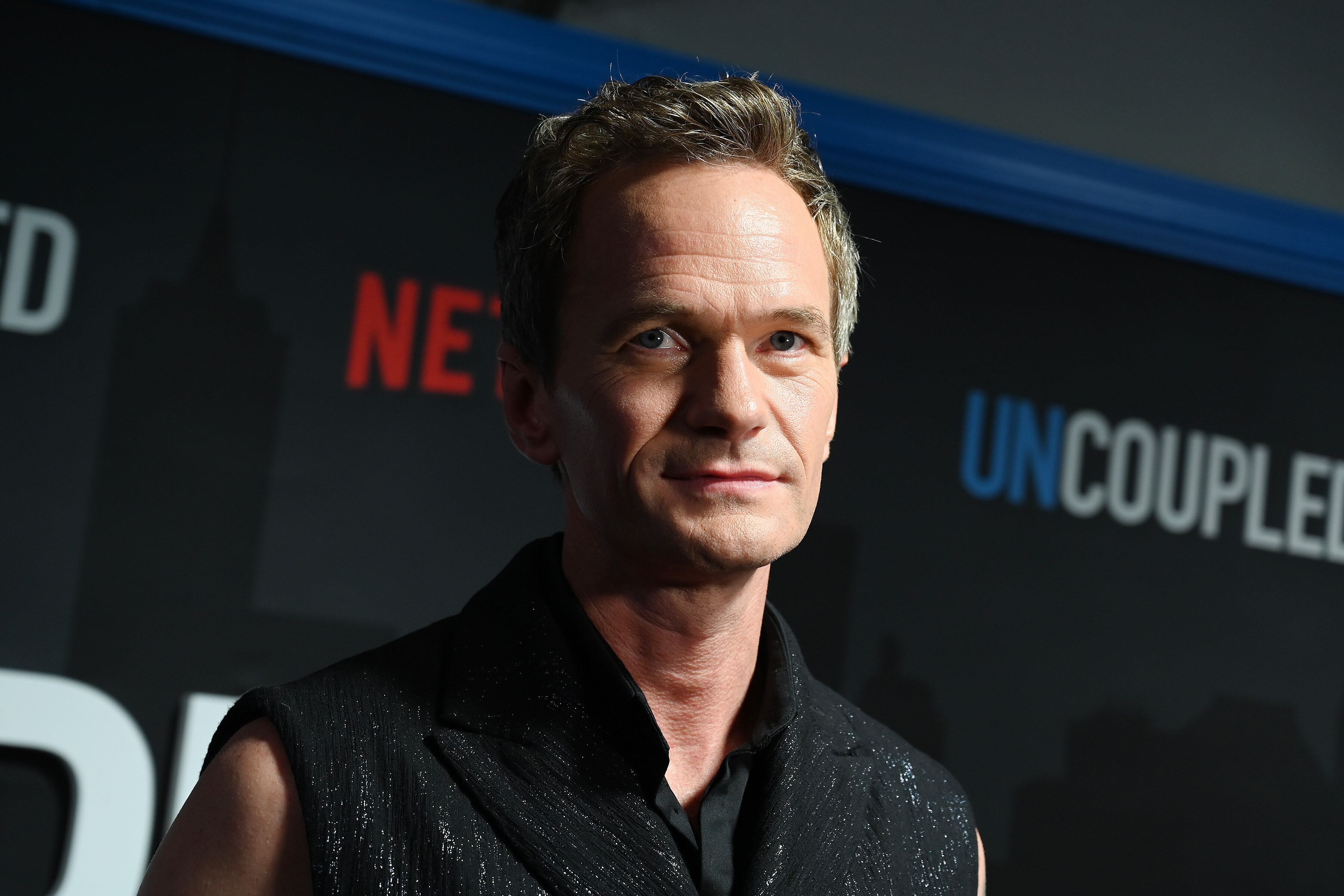
Neil at the premiere of Uncoupled

Kristina Bumphrey via Getty Images

Neil and his co-stars worked with an on-set intimacy co-ordinator prior and during the filming of the sex scenes, which while he admitted he “thought it would be very strange” initially, it turned out to be “incredibly helpful” for him.

He explained: “It requires that anything that might happen in the scene needs to be written or expressed two days before you film the scene. You don’t have to write in the script, ‘he does this and his hand goes there,’ but in the rider that you film, you say all of the things that could potentially happen so that’s above board. Because what could potentially happen – and I’m a producer on the show as well – you don’t want to be in the position where the scene ends with the script saying ‘they keep making out and start having sex’. Then you don’t know when they’re going to say cut, or know not how far you are supposed to take that…

“As an actor or producer, I can’t go to the other guy and say ‘you’re ok if I do this thing, right?’ because that is a very loaded question, because if he says no, I might not want to hire him again from his perspective, so he says yes as he wants to be a team player, but he might be uncomfortable with that.

“My least favourite thing is making someone feel unintentionally like they didn’t like something. So the intimacy co-ordinator is there to make sure everything is discussed and planned.”

He added: “I thought it would make it all very saccharine and very sterile… And you do talk it through, but you talk it through in a way that can still feel sexy.”

Uncoupled is available to stream on Netflix now, while Armchair Expert with Dax Shepard is available on podcasting platforms.

Share Button

Bill Turnbull: Former BBC Breakfast presenter dies aged 66

The presenter hosted BBC Breakfast for 15 years and more recently hosted programmes on Classic FM.

Share Button