With land grabs comes competition for water — and local farmers are likely to lose

Water from Ethiopia’s Omo River, which flows for 472 miles along the country’s southwest side, has helped sustain the livelihood of tribal populations for hundreds of years. Human rights organizations have estimated 200,000 people from various tribes in the region rely on the Omo’s water for cattle and to grow crops like sorghum and maize.

But new research shows large-scale land acquisitions (LSLAs) in the region could threaten water resources downstream to the local farmers and Indigenous populations living along the Omo — just one example of how a decades-long “global land rush” could intensify water scarcity around the world.

Researchers at the University of Notre Dame, the Polytechnic University of Milan, the University of California, Berkeley, Colorado State University, the University of Delaware and Vrije University Amsterdam studied 160 land deals made between 2005 and 2015 across Europe, South America, Africa and Asia for the study, published in Nature Communications. Hydrological models used to simulate future cultivation of those deals found close to two-thirds of those deals are unsustainable.

“The idea of this study was to quantify how many of these deals, how much of this land acquisition would cause competition and water grabbing — and how much is actually beneficial. We found that the majority of those land acquisitions actually cause competition,” said Marc Müller, assistant professor in the Department of Civil and Environmental Engineering and Earth Sciences at Notre Dame and co-author of the study. “We looked at the crops being planted and the water needed for those crops, and what we found is that if the acquisitions go as planned, if these crops and the area of irrigated land changes the way investors have said they plan to change it — there’s not enough water for everybody.”

More than 220 million acres of land in middle-income and developing countries were purchased through LSLAs to increase production of local staple crops and to produce export-bound crops such as wheat and those that could be utilized for biofuel, such as palm oil and sugar cane.

“You need a lot of water to produce these foods,” said Müller. Some of that need is met by rainfall, or green water. When green water isn’t enough to meet the needs of the crop, the next step is supplemental irrigation using blue water, or water that can be redirected or taken from one source and used elsewhere. But supplemental irrigation is unsustainable when it depletes blue water resources — leaving independently owned farmlands and local populations hurting.

“If you have blue water scarcity — if there is not enough water to irrigate after the land acquisition — that creates competition with local water users,” Müller said. “All the communities that rely on the same water — now they don’t have enough for their own crops.”

An outcome those living along the Omo River could very well face.

As part of the study, Müller and his co-authors closely examined development of two land deals, simulating the need for surface water irrigation in Western Ethiopia, and found increases in water scarcity downstream. “That was surprising,” Müller said. “If you withdraw the water from the system upstream, it clearly affects how much stream flow is available downstream. All the people along the river that rely on that water — they will feel it. There will be less water available for use. You can see the broad effects downstream. It goes way further than I actually expected.”

The study highlights how the globalization of land and food systems can put additional stress on water resources and limit water access at the local level.

“By increasing how much water is necessary at any given locations, these deals shift the balance and water becomes very limited locally,” said Müller. “One of the arguments of this project is, are these agricultural transitions from small-holder, traditional farming to large, mechanized agriculture beneficial? You want to determine when evaluating the impact of an impending deal whether the benefits are going to outweigh the costs.”

The research is part of a series of studies the team has done to examine the impact of LSLAs on a broad scale, identifying global patterns and observations. A previous study focused on the impacts on food security.

Müller is an affiliated faculty member of Notre Dame’s Environmental Change Initiative. Co-authors of the study include Gopal Penny, then a postdoctoral student at Notre Dame and currently assistant professor at the National University of Singapore; Davide Danilo Chiarelli and Maria Cristina Rulli at the Polytechnic University of Milan; Paolo D’Odorico at the University of California, Berkeley; Nathaniel D. Mueller at Colorado State University; Kyle Frankel Davis at the University of Delaware; and Jampel Dell’Angelo at Vrije University Amsterdam.

The National Science Foundation partially funded the study.

Story Source:

Materials provided by University of Notre Dame. Original written by Jessica Sieff. Note: Content may be edited for style and length.


Share Button

Harnessing the power of AI to advance knowledge of Type 1 diabetes

An interdisciplinary team of researchers from the University of Missouri, Children’s Mercy Kansas City and Texas Children’s Hospital has used a new data-driven approach to learn more about persons with Type 1 diabetes, who account for about 5-10% of all diabetes diagnoses. The team gathered its information through health informatics and applied artificial intelligence (AI) to better understand the disease.

In the study, the team analyzed publicly available, real-world data from about 16,000 participants enrolled in the T1D Exchange Clinic Registry.By applying a contrast pattern mining algorithm developed at the MU College of Engineering, the team was able to identify major differences in health outcomes among people living with Type 1 diabetes who do or do not have an immediate family history of the disease.

Chi-Ren Shyu, the director of the MU Institute for Data Science and Informatics (MUIDSI), led the AI approach used in the study, and said the technique is exploratory in nature.

“Here we let the computer do the work of connecting millions of dots in the data to identify only major contrasting patterns between individuals with and without a family history of Type 1 diabetes, and to do the statistical testing to make sure we are confident in our results,” said Shyu, the Paul K. and Dianne Shumaker Professor in the MU College of Engineering.

Erin Tallon, a graduate student in the MUIDSI and the lead author on the study, said the team’s analysis resulted in some unfamiliar findings.

“For instance, we found individuals in the registry who had an immediate family member with Type 1 diabetes were more frequently diagnosed with hypertension, as well as diabetes-related nerve disease, eye disease and kidney disease,” Tallon said. “We also found a more frequent co-occurrence of these conditions in individuals who had an immediate family history of Type 1 diabetes. Additionally, individuals who had an immediate family history of Type 1 diabetes also more frequently had certain demographic characteristics.”

Tallon’s passion for this project began with a personal connection, and quickly grew as a result of her experience working as a nurse in an intensive critical care unit (ICU). She would often see patients with Type 1 diabetes who were also dealing with other co-existing conditions such as kidney disease and high blood pressure. Knowing that a person’s Type 1 diabetes diagnosis often occurs only when the disease is already very advanced, she wanted to find better ways for prevention and diagnosis, starting with finding a way to analyze the large amounts of publicly available data already collected about the disease.

In 2019, Mark Clements, who is a pediatric endocrinologist at Children’s Mercy Kansas City, professor of pediatrics at University of Missouri-Kansas City and corresponding author on the study, was invited to speak at the Midwest Bioinformatics Conference hosted by BioNexus KC. While Tallon wasn’t able to attend Clements’ presentation, she followed up with a phone call to share her proposal for helping people better understand Type 1 diabetes. He was intrigued. Eventually, Tallon introduced Clements to Shyu, and an ongoing research collaboration was born.

Tallon said the results of the collaboration speak to the power and value of using real-world data.

“Type 1 diabetes is not a single disease that looks the same for everybody — it looks different for different people — and we’re working on the cutting-edge to address that issue,” Tallon said. “By analyzing real-world data, we can better understand risk factors that may cause someone to be at higher risk for developing poor health outcomes.”

While the results are promising, Tallon said researchers were limited by not having a population-based data set to work with.

“It is important to note here that our findings do have a limitation that we hope to address in the future by using larger, population-based data sets,” Tallon said. “We’re looking to build larger patient cohorts, analyze more data and use these algorithms to help us do that.”

Personalizing medicine

Clements hopes the approach can be adopted as a way to help develop personalized treatment options for people with diabetes.

“In order to get the right treatment to the right patient at the right time, we first need to understand how to identify the patients who are at a higher risk for the disease and its complications — by asking questions such as if there are characteristics early in someone’s life that can help identify an individual with high risk for an outcome years down the road,” Clements said. “Having all of this information could one day help us establish a more complete picture of a person’s risk, and we can use that information to develop a more personalized approach for both prevention and treatment.”

“Contrast pattern mining with the T1D Exchange Clinic Registry reveals complex phenotypic factors and comorbidity patterns associated with familial versus sporadic Type 1 diabetes,” was published in Diabetes Care, a journal of the American Diabetes Association. MU graduate students Danlu Liu and Katrina Boles, and Maria Redondo at Texas Children’s Hospital, also contributed to the study.

The study’s authors would like to thank the funding agency of the T1D Exchange Clinic Registry, the Helmsley Charitable Trust, the investigators located across the country who drove the data collection for the registry, as well as all of the registry’s participants and their families who were willing to share their medical information.

The researchers would also like to acknowledge the support provided by grants from the National Institutes of Health (5T32LM012410) and the National Science Foundation (CNS-1429294). The content is solely the responsibility of the authors and does not necessarily represent the official views of the funding agencies.

Potential conflicts of interest are also noted by two of the study’s authors — Clements and Shyu. Clements is the chief medical officer at Glooko, and receives support from Dexcom and Abbot Diabetes Care. Shyu is a consultant for Curant Health.

Share Button

Covid: Spring booster jab launches for over-75s and high risk in England

Experts say it will help keep the most vulnerable protected against severe illness amid rising infections.

Share Button

Covid trapped me at home for more than seven months

But a vaccine – the first time one has been used to treat Covid – set Ian Lester free.

Share Button

Menopause: The Bedfordshire clinic that is ‘changing lives’

Sam Price says help is available for women who are “all over the place” due to the menopause.

Share Button

Omicron vs Zero-Covid: How long can China hold on?

China’s worst outbreak in two years has got some questioning how long it can hang on to its strategy.

Share Button

Is Russia Losing The War? Putin’s Army Suffers ‘Considerable Losses’ As Invasion Stalls

Vladimir Putin’s forces in Ukraine are increasingly relying on the “indiscriminate shelling” of urban areas as they fail to capture key cities, the UK government has warned.

In its latest update on the crisis situation in Ukraine, the Ministry of Defence (MoD) said Russia had suffered “considerable losses” since launching its invasion more than three weeks ago.

As a result, Russia has “increased its indiscriminate shelling of urban areas resulting in widespread destruction and a large number of civilian casualties”, the MoD said.

“It is likely Russia will continue to use its heavy firepower to support assaults on urban areas as it look to limit its own already considerable losses, at the cost of further civilian casualties.”

The UK assessment comes as Ukraine accused Russia of further atrocities in the besieged city of Mariupol, where the city council says an art school that was sheltering around 400 people has been attacked.

The latest assault follows Russia’s bombing of a theatre earlier this week that was thought to be sheltering more than 1,000 people.

Ukrainian president Volodymyr Zelensky has condemned Russia’s relentless targeting of Mariupol, calling the bombardment a “terror that will be remembered for centuries to come”.

Pope Francis also used his Sunday address in Vatican City to call on world leaders to “stop this repugnant war”.

“The violent aggression against Ukraine is unfortunately not slowing down,” he said.

“It is a senseless massacre where every day slaughters and atrocities are being repeated.”

The MoD also warned that it was likely that Russia would continue to use heavy firepower to attack urban areas as a means to limit its own “already considerable losses”.

There were reports on Sunday that a senior Russian Navy officer had been killed.

Share Button

In Mariupol, children bear the brunt of Vladimir Putin’s war

At a children’s hospital near the besieged city, the true impact of Russia’s tactics are on display.

Share Button

Jeremy Kyle’s Manager Addresses Claims Talk TV ‘Dropped’ Pilot For His New Show

Jeremy Kyle’s manager has dismissed claims that Talk TV has “dropped” a pilot for a new show to be fronted by the presenter.

Over the weekend, The Mirror reported that Jeremy had recently filmed a pilot with the upcoming station, in which he and a panel of guests dissected the day’s headlines.

The tabloid claimed that Talk TV had decided not to move forward with this project, after some contributors allegedly expressed discomfort with sharing the screen with the divisive host, whose ITV daytime show was axed in 2019 following the death of a guest.

However, this has been denied by Jeremy’s manager, who told HuffPost UK these claims were “not true” and that the presenter was “full steam ahead with filming”.

Talk TV declined to comment, although a source close to the station said Jeremy would ”definitely be a strong part of the line-up” then the broadcaster launches later in the year.

They added: “We have been piloting lots of shows and formats for TalkTV – as is entirely normal when developing a new channel. Jeremy has been involved in several.

“Per the Mirror story’s suggestion that guest feedback led to a particular pilot being paused – the reality is that guests on shows are welcome and respected but they have absolutely no say on production decisions.”

A second source added that Jeremy had actually filmed multiple pilots with Talk TV “to see what works and what doesn’t”.

“It’s not the case of Jeremy losing a show at all,” they insisted. “This is very much what happens when a station is in its infancy, you try a lot of different stuff out.”

Jeremy Kyle on the set of his former ITV show

ITV/Shutterstock

Talk TV has so far confirmed two of its original shows, which will be fronted by Piers Morgan and Sharon Osbourne.

Last week, The Jeremy Kyle Show was the subject of a two-part Channel 4 documentary called Death On Daytime, which examined the culture surrounding the former daytime show and the suicide of 2019 guest Steve Dymond.

The doc featured interviews with former members of the production team, re-enacted by actors, some of whom claimed that vulnerable guests were deliberately goaded or manipulated by the crew to make for more salacious viewing when they went on stage.

Earlier this week, Jeremy began his show on talkRADIO – the sister channel of Talk TV – by addressing what he referred to as the “elephant in the room”.

“[I’ve had] a couple of texts already talking about a certain programme that was on television last night,” he told listeners. “Yes, I am fully aware.”

He continued: “I will say only this, my friends, to you. I have maintained a consistent approach over the last three years. I have said that I will not comment on the tragic death of Steve Dymond until the legal process is finished, and that is a position that I will maintain.

“When, and trust me there will be a time after the inquest, when it is proper for me to have my say, because there are two sides to every story. I will do it here, and I will do it to you, and that is the most important thing.”

In response to allegations made in Channel 4’s documentary, an ITV rep dismissed claims of a “bad culture” on The Jeremy Kyle Show, insisting: “ITV would never condone any of its production staff misleading or lying to guests.”

Share Button

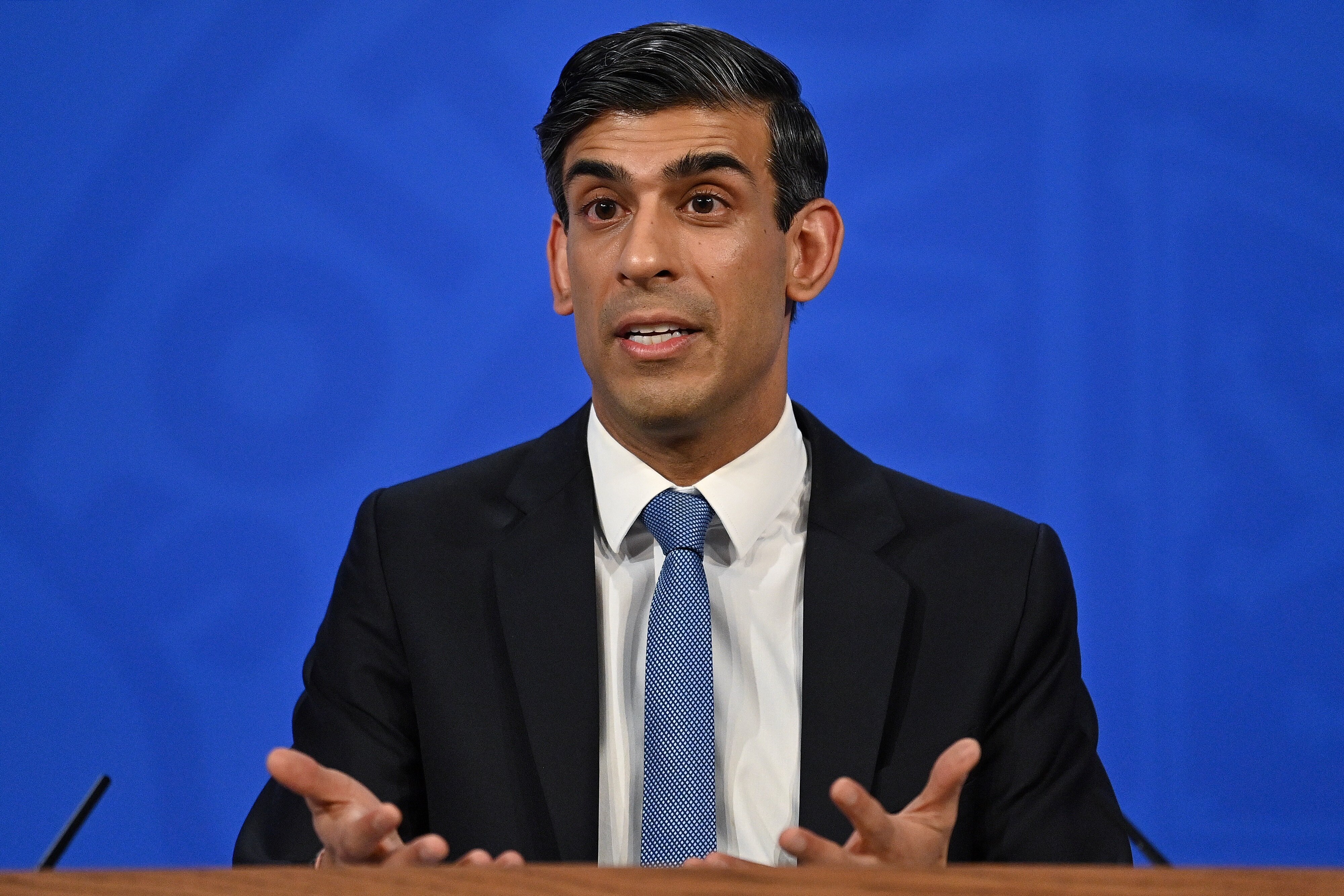
Rishi Sunak Hints At Fuel Duty Cut To Ease Cost Of Living Crisis

Rishi Sunak has dropped a heavy hint that he will announce a cut in fuel duty in Wednesday’s spring statement.

The chancellor is under pressure from his own MPs to introduce measures to help the public cope with soaring bills.

According to data firm Experian Catalist, the average cost of a litre of petrol at as of last Tuesday was £1.65, while the average cost of a litre of diesel was £1.76.

Meanwhile, energy bills are set to rocket by £693 a year for the average household from April 1, when Ofgem increases its price cap.

Inflation, interest rates and council tax bills are also going up, adding to the pressure on household budgets.

Sunak has been warned that millions of households could be forced into fuel poverty and has been urged to bring in mitigating measures in his spring statement next week.

Asked on Sky News’s Sophy Ridge on Sunday whether he could cut fuel duty, the chancellor said he understood people’s concerns.

“Obviously I can’t comment on specific things, but what I would say, I understand that, I have a rural constituency, people are incredibly reliant on their cars and this is one of the biggest bills that people face, watching it go up, right, we’re all seeing that, when we’re filling up our cars,” he said.

“I get that, that’s why we’ve frozen fuel duty already, I announced that in autumn, it’s the 11th consecutive year of fuel duty freezes and that really helps people, I know that.”

Asked on the BBC’s Sunday Morning programme whether he was considering a 5p cut in fuel duty — as some campaigners are calling for — Sunak replied: “Again, I know this is frustrating for you frustrating and for people watching, I’m not able to comment on on tax policy, particularly in advance of the fiscal event.

“We’re the party that has frozen fuel duty for over a decade because we recognise the importance of people being able to fill their cars up and it not be prohibitively expensive.

“We understand that and that’s why we’ve acted for years already on this issue.”

In response, Labour has said it would not vote against moves to cut fuel duty if the chancellor does decide to slash the tax in his spring statement.

Shadow chancellor Rachel Reeves told Sky News’ Sophy Ridge On Sunday programme that her party would “not stand in his way” if Sunak did go ahead with the measure.

But she said cutting fuel duty by 5p would only reduce filling up a car with petrol by £2.

Instead she said the government should consider Labour’s proposal to introduce a windfall tax on the profits made by North Sea oil and gas companies.

“When I first said there should be a windfall tax back in January, we thought it would raise about £1.2 billion, but since then oil and gas prices have increased substantially and that surcharge, that windfall tax would now bring in about £3.7 billion,” she said,

“Instead of carrying on down the path this chancellor is going on, he should look again at Labour’s proposals for a windfall tax and use that to keep bills low for everybody else.”

Conservative MP Robert Halfon said it was “absolutely vital” the government cut fuel duty, saying there is “real fear out there”.

“People are really terrified about the literal triple whammy that they are facing, whether it is petrol and diesel costs at the pumps, the high energy bills and also general household bills as well, and that’s why it’s absolutely vital the government cuts fuel duty or VAT on fuel because it’s unsustainable for millions of people up and down the country.”

Share Button