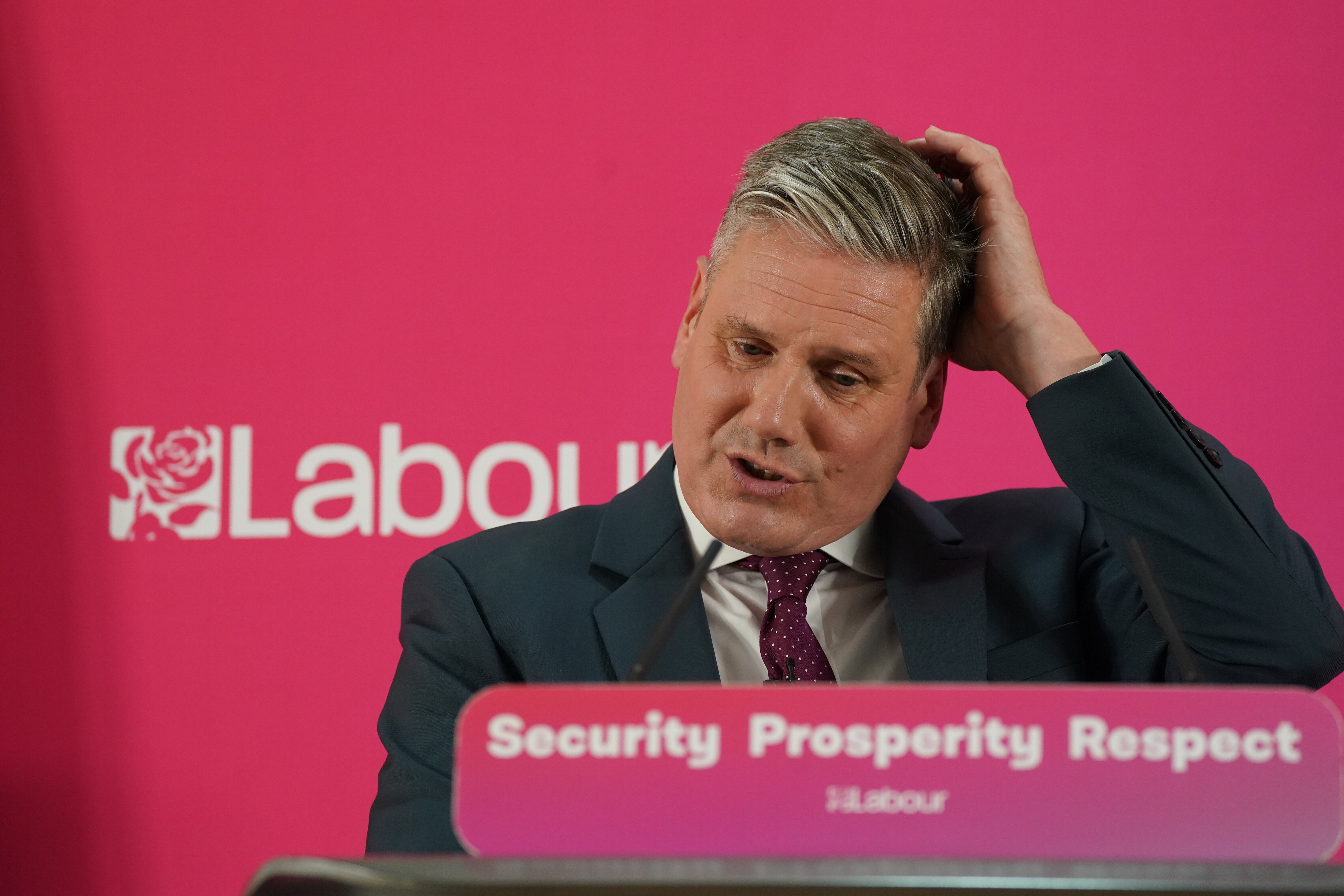
The investigation into whether Keir Starmer and Angela Rayner broke Covid laws cost taxpayers £101,000, it has emerged.
A team of nine officers from Durham Constabulary’s major crime team – who normally work on cases like serious sexual assaults and murders – worked a total of 3,203 hours on the so-called “beergate” probe.
Durham Constabularly initially dismissed claims that Starmer had breached anti-Covid laws by eating a curry and drinking beer with Labour staff in the constituency office of City of Durham MP Mary Foy on April 30, 2021.
But they re-opened their investigation earlier this year under pressure from the Conservatives.
Starmer had said he was “confident no rules were broken” and that there was “no equivalence” between the accusations levied at him and the partygate scandal that contributed to Boris Johnson’s downfall.
In a major political gamble, both he and Rayner stated that they would stand down from their posts if they received fixed penalty notices from the police.
Durham Constabulary said their investigation found that the event was “reasonably necessary work” and therefore allowed under the rules.
Advertisement
A Freedom of Information request by the NationalWorld website revealed the cost to the public purse of the police probe.
The nine officers involved in the investigation were a detective superintendent, a detective inspector, a detective sergeant and six detective constables. Two other police staff members also took part.
In a statement after he was cleared, Starmer said: “I’ve always said no rules were broken when I was in Durham.
“The police have completed their investigation and agreed: there is no case to answer.
“For me, this was always a matter of principle. Honesty and integrity matter. You will always get that from me.”
Liz Truss has been criticised for the “unwise and unconstitutional” sacking of a top civil servant.
Tom Scholar was axed as the permanent secretary at the Treasury on Kwasi Kwarteng’s first day as chancellor.
He said Kwarteng had decided it was time for “new leadership” but that he would be “cheering on from the sidelines” in future.
Advertisement
However, the move has been criticised for former senior members of the civil service.
Sir Simon McDonald, the former permanent under-secretary at the Foreign Office, said “parliament needs to act”.
He tweeted: “Cabinet ministers sacking permanent secretaries on their 1st day in office is unwise & unconstitutional but the government has discovered it can do what it wants with the civil service, which has no power to resist.
“The retired complain, but so what? Parliament needs to act.”
Cabinet ministers sacking permanent secretaries on their 1st day in office is unwise & unconstitutional but the government has discovered it can do what it wants with the civil service, which has no power to resist. The retired complain, but so what? Parliament needs to act. https://t.co/GA8kfIISzS
He was responding to a letter in The Times by Sir David Normington, who was permanent secretary at the Home Office between 2006 and 2010.
Advertisement
He said: “The sad fact is that in sacking Sir Tom Scholar, one of the ablest civil servants of his generation, the prime minister and chancellor have sent a clear message to the civil service that they are not interested in impartial advice and intend to surround themselves with ‘yes’ men and women.
“That is a sure route to bad decision-making and weak government.”
Scholar’s sacking came after Truss made clear during the Tory leadership contest that she wanted to challenge the Treasury “orthodoxy” on how to run the economy.
Kwarteng will next week use a mini-budget to unveil the government’s plan to slash taxes to boost economic growth.
When Queen Elizabeth II visited the Republic of Ireland in 2011, it was a moment of sensitivity and reconciliation, signalling the seismic shift towards longer-lasting peace between Ireland and the UK.
Beginning her speech in Irish, the Queen made every effort to unify two countries with a difficult and complex history.
Advertisement
“With the benefit of historical hindsight, we can all see things which we would wish had been done differently or not at all,” she told guests at a state dinner in Dublin Castle.
However, in this week of her death, as King Charles III ascends the British throne, the relationship between our islands, among those north and south of the Irish border, remains fractious.
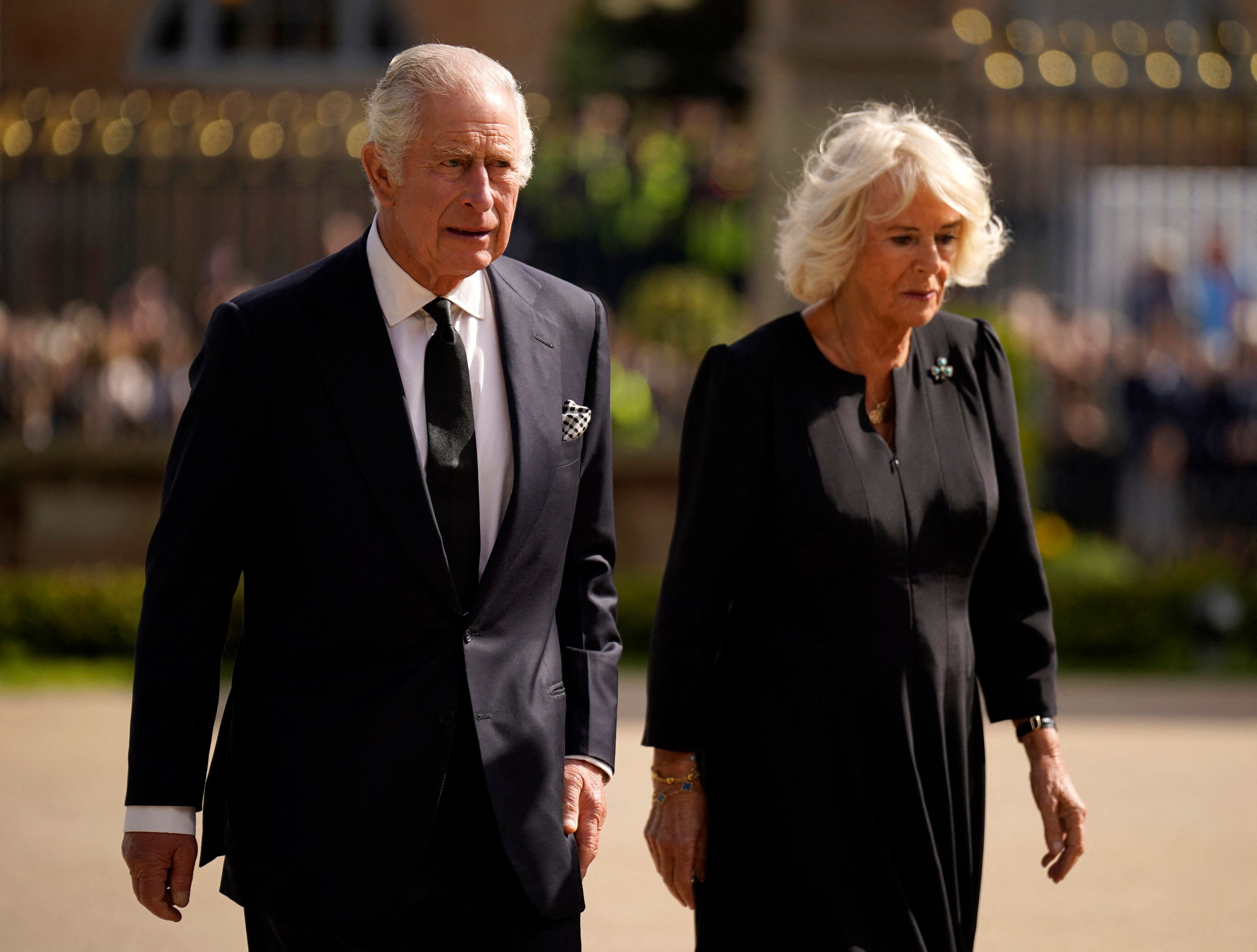
As the King arrived at his official residence of Hillsborough Castle near Belfast on Tuesday – his fortieth trip to Northern Ireland – former Irish Taoiseach John Bruton told Sky News, “in many ways, intergovernmental relations between Britain and Ireland are much, much worse now, than they were when the Queen visited in [2011], and that needs to be repaired by the two governments”.
Brexit has maimed relations across the UK, but in particular has dug up dormant hostilities between communities in Northern Ireland.
Advertisement
King Charles arrives not only mourning his mother – a uniting figure within the UK by many accounts – but in the wake of sustained political tensions between the Republic and the UK over its land border and trade impacts arising from Brexit.
Despite this, the response among political parties to the sudden passing of the Queen has been one of particular sympathy and sensitivity – for the most part.
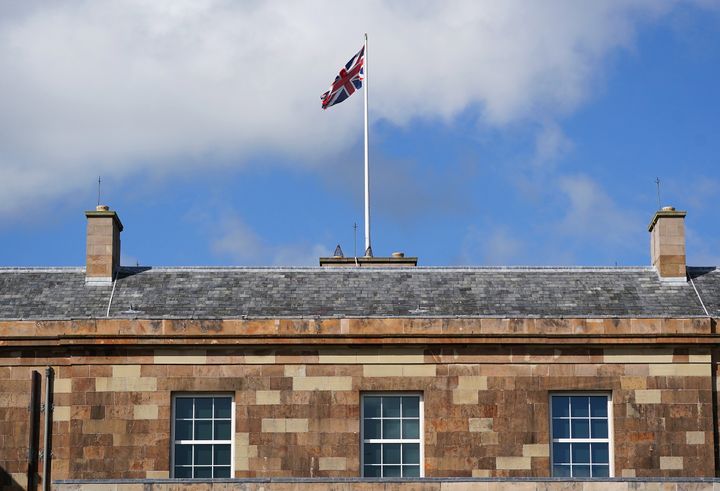
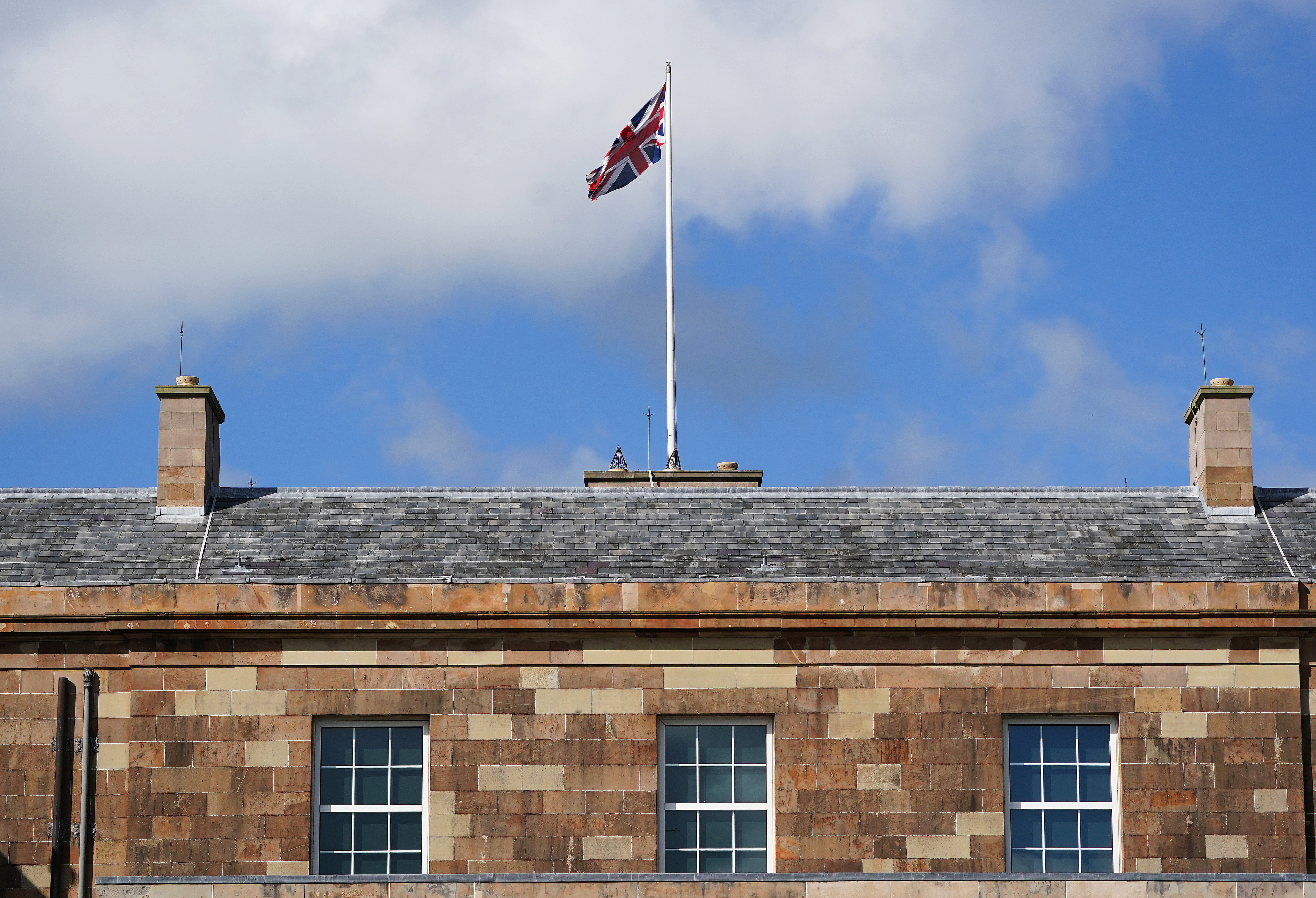
The Union Jack flies at full mast at Hillsborough Castle, Belfast, after the Proclamation of Accession of King Charles III.
Brian Lawless – PA Images via Getty Images
On the Queen’s passing, Taoiseach Micheál Martin recalled “the warmth of the welcome she received from the public in Cork during her walkabout” in 2011.
Sinn Féin, which for many years during the Troubles was considered the political wing of the Irish Republican Army, sent “sincere condolences” to the King and party figures plan to attend events during the 10 days of mourning. Party president Mary Lou McDonald said she was “a powerful advocate and ally of those who believe in peace and reconciliation”.
Advertisement
However, the party stayed clear of Hillsborough Castle on Sunday for the proclamation of the King’s accession.
Ms McDonald said she did not attend as the ceremony was “intended for those whose political allegiance is to the British Crown”, and many senior party figures in Northern Ireland attended a rally in Belfast for victims of the Troubles instead.
No surprise there, though a far cry from past hostilities.
A notable outlier in the Republic was the left-wing People Before Profit party, who waited barely a day after the Queen’s passing to call for an end to monarchy.
While that’s not an unpopular sentiment in the Republic, and certainly among Republican communities in Northern Ireland, the reaction outside the political gauntlet has been less celebratory than you might expect – despite the Fenian blood running through our veins.
Advertisement
Monarchists in the Republic are few and far between, not least while we still live in the shadow of 800 years of British oppression – but while some like to joke about the Queen’s death – football hooligans chanting “Lizzy’s in a box” come to mind – her death has undoubtedly caused some upset.
Britain’s influence – and impact – on Ireland goes much further than Brexit ruining the fun for everyone. A cultural fascination with the royals has bled through the border over the years via British media. You’re unlikely to see many a Union Jack south of the border, but there is a palpable sense of loss for the woman who has been an influential figure on the world stage for 70 years.
Are there memes? Yes, Irish Twitter has been full of them and no column has enough lines to explain why the Queen might be reincarnated in the (misreported) birth of Trisha Paytas’s baby.
But underneath this social media frenzy, and the ability of Twitter to throw up jokes on just about any tragedy, is what can only be described as ambivalence towards the monarchy – particularly among young people.
Despite a respect for the duties the Queen carried out, there’s a quiet agnosticism about the institution that leaves many bewildered by the sense of grief washing over Britons in recent days.
Advertisement
But while King Charles ascends at a time of complex feelings about the Crown across the UK, not least among the Black community, he remains fiercely popular among Unionists in Northern Ireland.
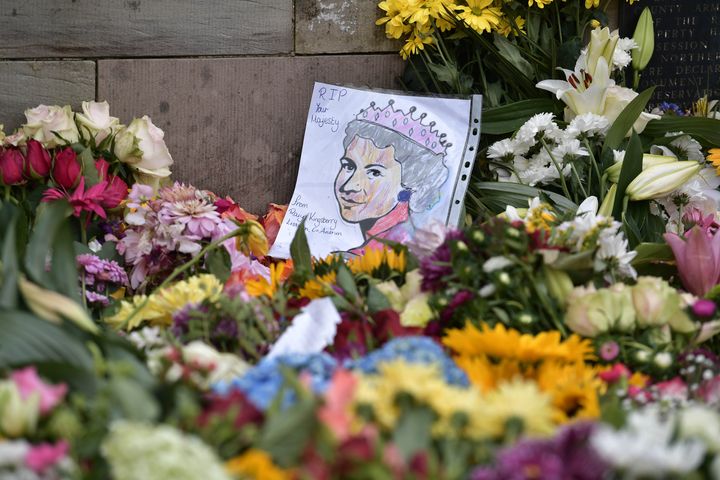
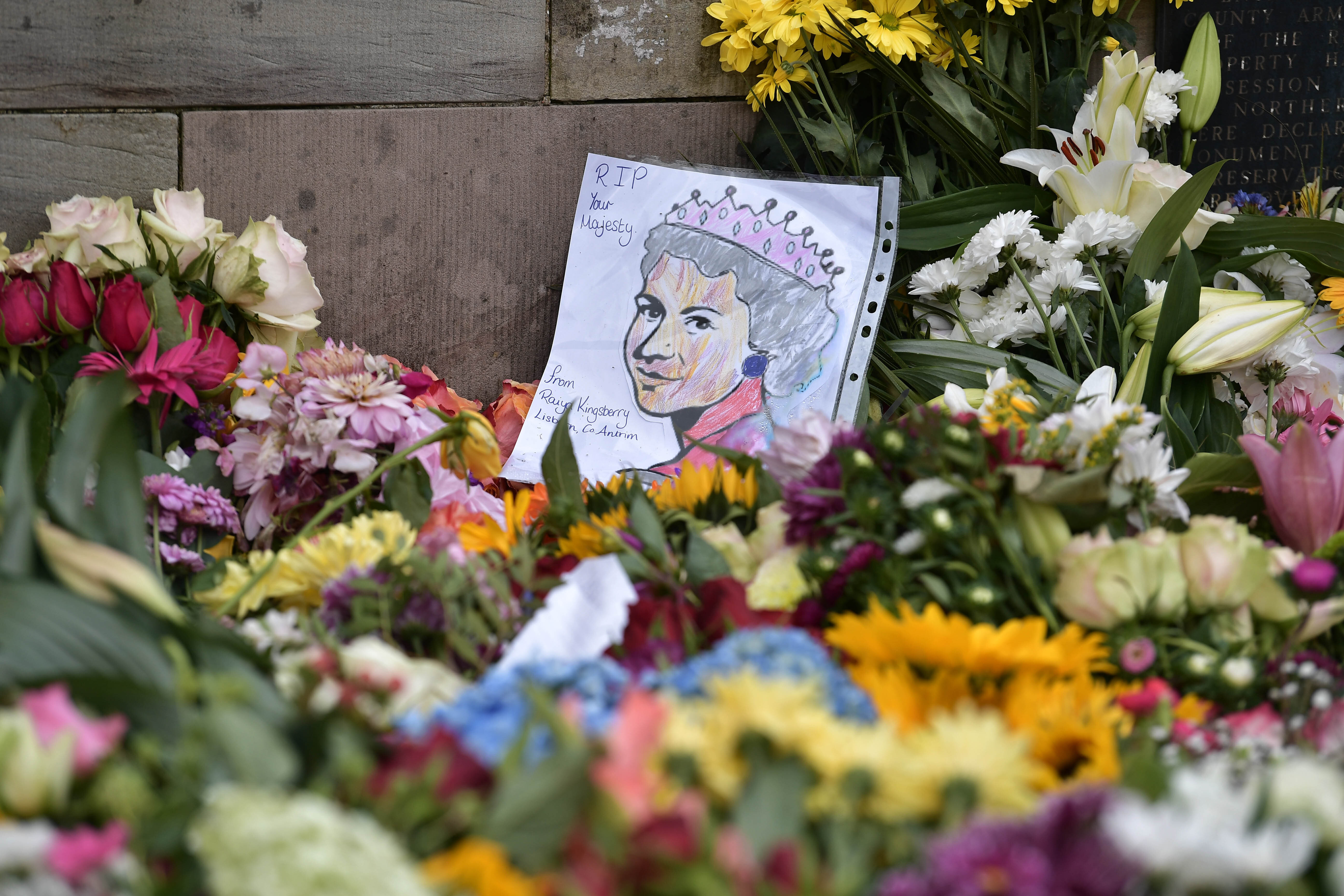
Floral tributes left for the Queen outside Hillsborough Castle during the King’s visit.
Charles McQuillan via Getty Images
The meadow of flowers that greeted his arrival at Hillsborough on Tuesday reflects the devotion many have for the Queen – and their new King. A sea of smiling spectators, many of whom arrived after dawn to get a good spot, shouted “long live the King” as he entered his official residence.
“[King Charles] is a unifying figure among Irish people in the sense he is highly regarded in the Republic of Ireland,” Mr Bruton told Sky News.
“But also, as you can see, very highly regarded in Northern Ireland. Obviously there are divides in Northern Ireland where part of the community… doesn’t have quite the same attitude towards the Union.”
Advertisement
Obviously indeed. The reaction in the Republican community seems more akin to Glaswegians after Margaret Thatcher died. No more need be said.
And while there has been political consensus through the 1998 Good Friday Agreement, there’s hasn’t been a reconciliation between the two communities, Mr Bruton said.
“There is quite a deep level of polarisation in Northern Ireland, but I think the King, personally, can help create an atmosphere in which reconciliation becomes more possible.”
And Charles himself? Speaking at Hillsborough Castle on Tuesday, the King said that with the “shining example” of his mother’s duty to Northern Ireland, and “with God’s help, I take up my new duties resolved to seek the welfare of all the inhabitants of Northern Ireland”.
Ireland waits with bated breath to see if King Charles will indeed foster unity on this island – if, that is, people are listening to him at all.
Advertisement
Conor Capplis is a journalist with the Irish Examiner based in Cork.
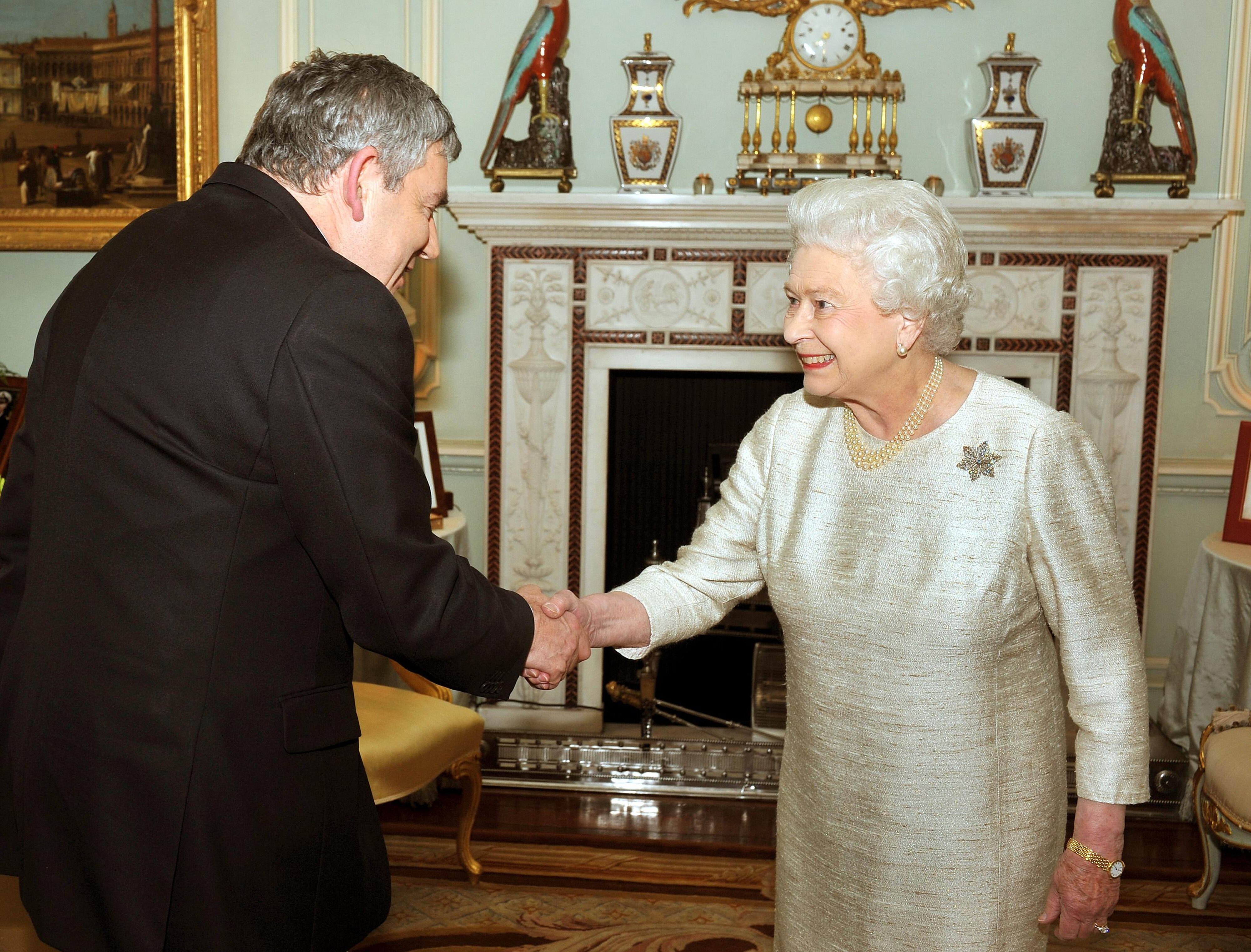
Gordon Brown has admitted he could be left “embarrassed” during meetings with the Queen.
The former prime minister revealed that Queen Elizabeth II was often better informed about current affairs than he was.
He recalled how the Queen questioned “why have these bankers got it all wrong” in 2008, when the financial crash led to the UK entering recession.
Advertisement
Brown, who was the Labour prime minister between 2007 and 2010, said the Queen “actually knew better about what was happening to the country” than he did during his time in No.10.
He told the BBC’s Sunday with Laura Kuenssberg show: “She would listen, she would ask questions. She would be endlessly knowledgeable about everything happening in the Commonwealth.
“I was very embarrassed one day because I went in to see her at six o’clock, I didn’t know that one of the Commonwealth leaders had been ousted and a new government had been formed.
“She was telling me what was happening when I was supposed to report to her.”
While he had been in the Commons all afternoon the Queen would be keeping herself up to date by watching television and “getting notes from her secretaries”.
Advertisement
He added: “She actually knew better about what was happening to the country than I was. It was quite embarrassing.
“It just showed how conscientious she was, how well up on the detail, I think right to the last.
“You could see that in the meeting she had with Liz Truss when she became prime minister and Boris Johnson when he left, she could perform the duties right up until the end.
“She listened and she asked questions. I remember famously she asked ‘why have these bankers got it all wrong?’ in 2008.”
However, he stressed that the Queen would “never impose her will” on the prime minister.
“This is the modern monarchy and I think she set the tone for what King Charles and the other monarchs will do,” he said.
Brown was among the six living former prime ministers who attended Saturday’s Accession Council meeting where Charles III was formally declared as the new King.
“I campaigned as a Conservative and I will govern as a Conservative,” she said. “We need to deliver over the next two years.”
She celebrated her victory by having lunch with her husband, Hugh O’Leary.
It was to be her last moment of relaxation for some time.
Exit Boris, Enter Liz
On Tuesday morning, Boris Johnson left 10 Downing Street for the last time as prime minister, travelling to Balmoral to hand in his resignation to the Queen.
Advertisement
Before his departure, in a speech outside the famous black door, he took one final swipe at the Tory MPs who had forced him from office less than three years after he led them to a thumping election victory.
“The baton will be handed over in what has unexpectedly turned out to be a relay race. They changed the rules halfway through, but never mind that now.”
As soon as his private plane landed at Aberdeen airport, the government jet carrying Truss north for her own audience with the 96-year-old monarch took off from RAF Northolt.
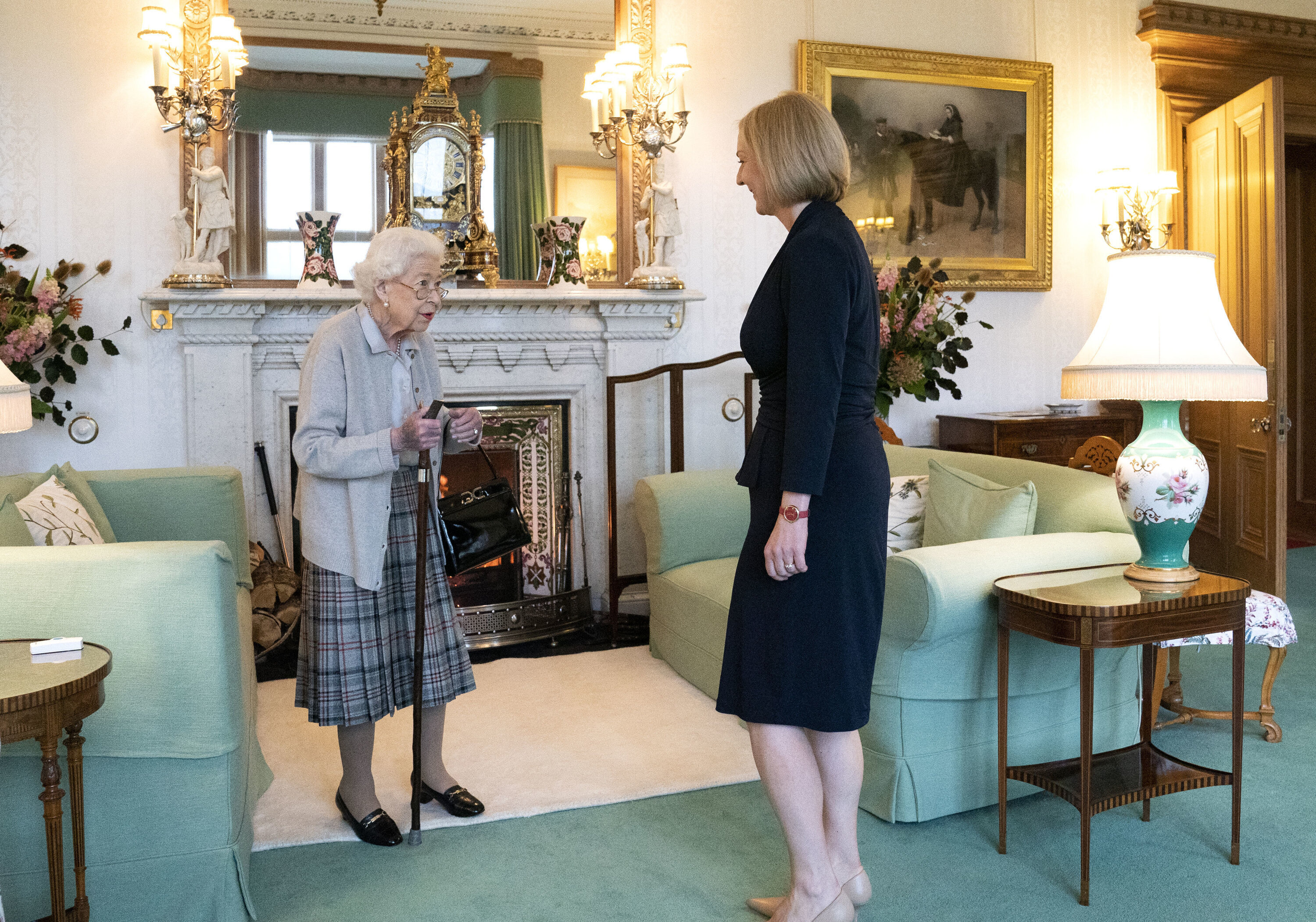
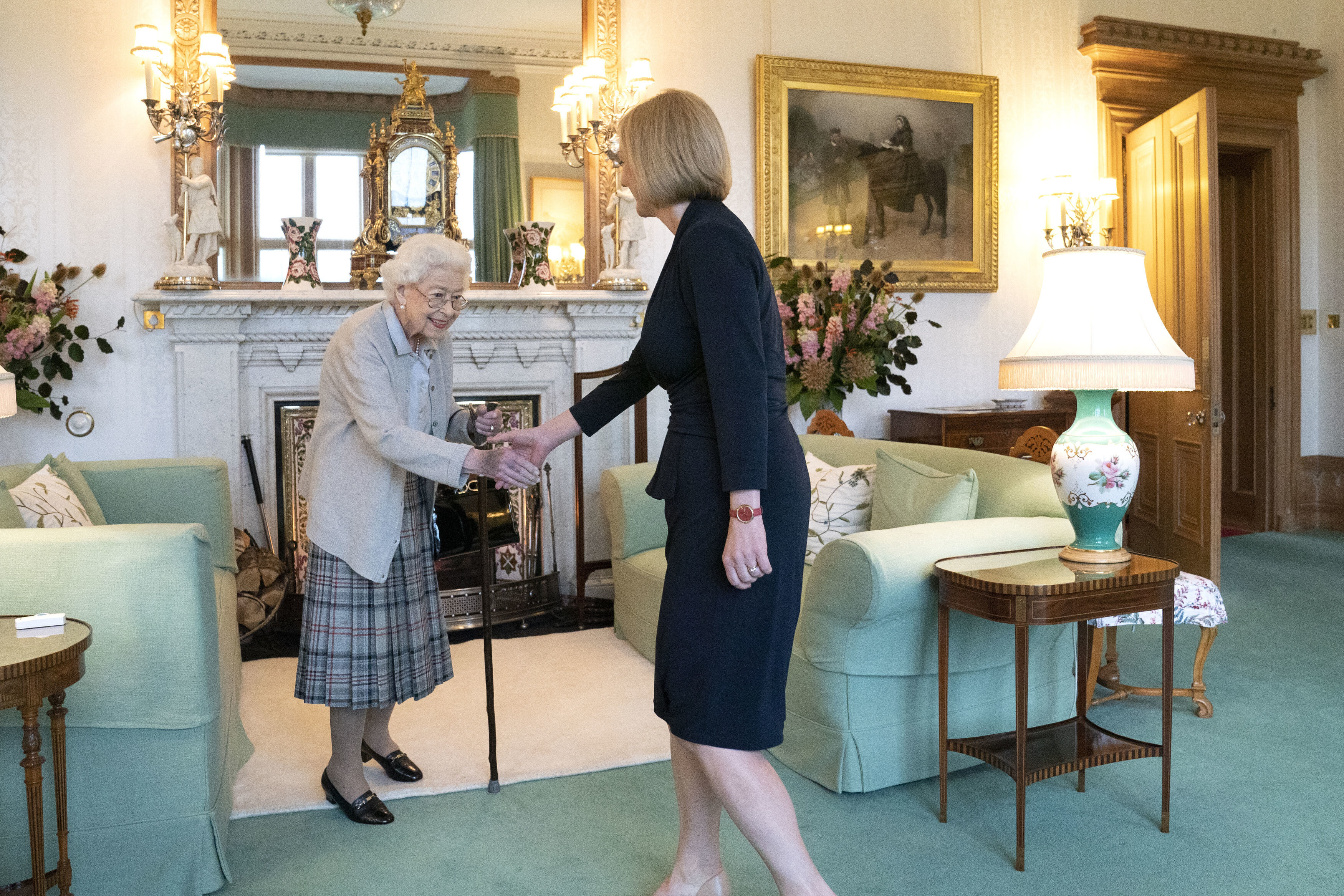
In what was to be her first and last meeting with the Queen as prime minister, Truss was invited to form a government.
Standing outside No.10 a few hours later, she echoed Winston Churchill as she vowed to take “action this day” to tackle the cost of living crisis.
Advertisement
“I am confident that together we can ride out the storm, we can rebuild our economy and we can become the modern, brilliant Britain that I know we can be,” she said.
“This is our vital mission to ensure opportunity and prosperity for all people and future generations. I am determined to deliver.”
The Queen invites Liz Truss to form a government during an audience at Balmoral.
Jane Barlow via PA Wire/PA Images
In Liz they Truss-t
By her own admission, Truss is not a great public speaker, so expectations were not high ahead of her first prime minister’s questions.
And while she did not scale the rhetorical heights of her predecessor, she more than held her own against Labour leader Keir Starmer, earning her the loud approval of her sceptical MPs.
Advertisement
She also managed to make a clean break from the Johnson era by giving straight answer to his questions, especially when he asked her whether she would bring in a new windfall tax on energy firms’ huge profits.
Truss said the UK couldn’t “tax its way to growth”, adding: “The way we will grow our economy is by attracting investment, keeping taxes low, delivering the reforms to build projects quicker.”
The bad news breaks
Rumours about the Queen’s health were already swirling at Westminster on Thursday morning ahead of the PM’s announcement that the energy price cap was being frozen at £2,500 for the next two years.
Shortly after Truss had made the announcement in the Commons, she was seen in deep conversation with Cabinet Office minister Nadhim Zahawi, while a note was also passed to Keir Starmer. The atmosphere in the chamber noticeably darkened as MPs’ thoughts turned to the monarch’s wellbeing.
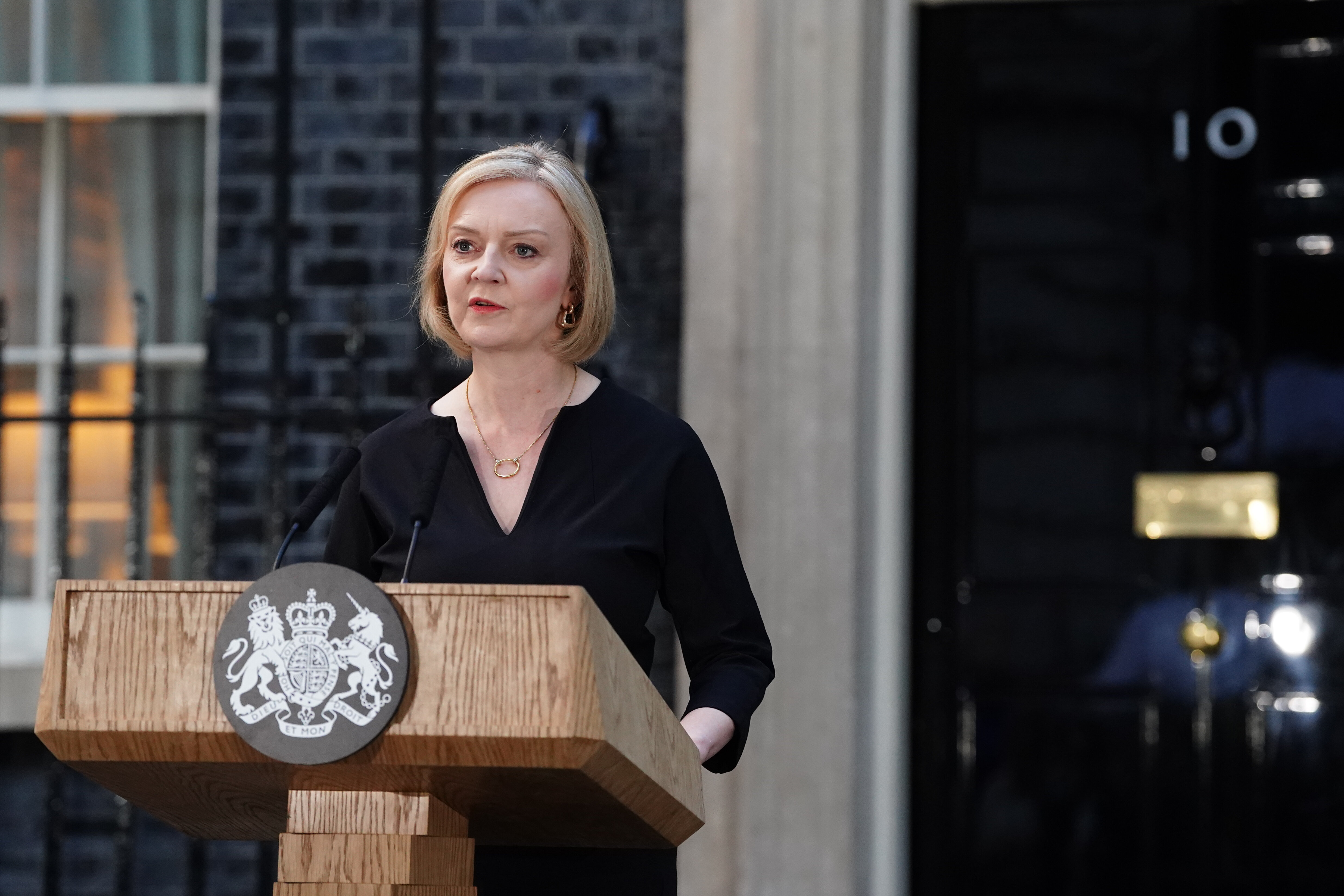
Within the hour, Truss was outside 10 Downing Street, standing at the same spot and behind the same lectern where she had addressed the nation for the first time as prime minister barely 48 hours before.
This time, she was leading the nation’s response to the news that the monarch had died after 70 years on the throne.
“Queen Elizabeth II was the rock on which modern Britain was built,” she said. “Our country has grown and flourished under her reign. Britain is the great country it is today because of her.”
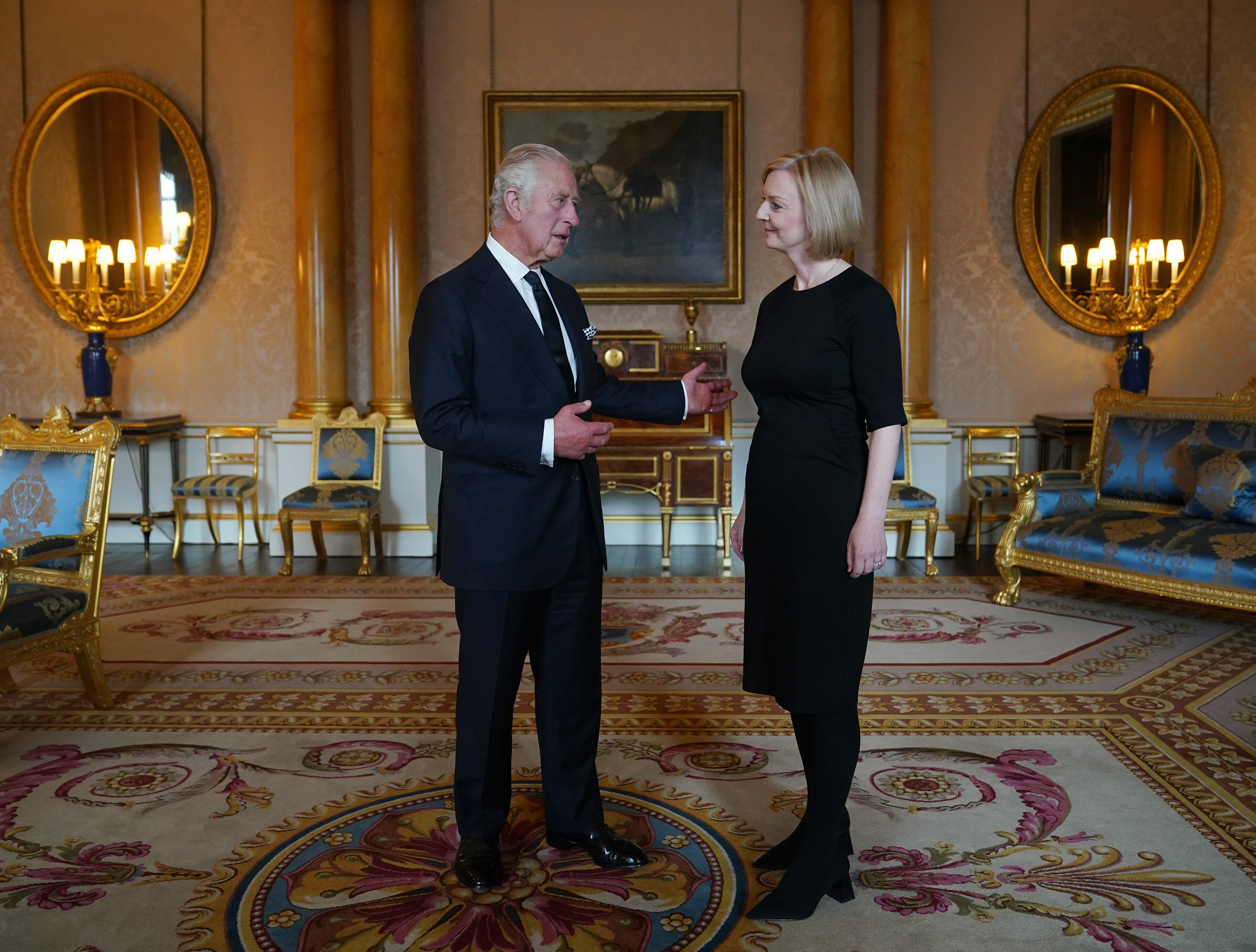
King Charles III during his first audience with Liz Truss at Buckingham Palace.
Yui Mok via PA Wire/PA Images
Advertisement
God save the King
Truss had her first audience with King Charles III this afternoon at Buckingham Palace, just three days after accepting his late mother’s invitation to form a new government.
Of his mother’s death, he said: “It’s the moment I’d been dreading, as I know a lot of people have. But, have to try and keep everything going.”
No matter what the rest of her time in office brings, it is highly unlikely that it will match the intensity and national significance of her first week as prime minister.
The Ukrainian president joined the likes of US president Joe Biden and French leader Emmanuel Macron in offering their condolences.
Advertisement
Writing on Twitter, Zelenskyy said: “It is with deep sadness that we learned of the death of Her Majesty Queen Elizabeth II.
“On behalf of the Ukrainian people, we extend sincere condolences to the entire United Kingdom and the Commonwealth over this irreparable loss. Our thoughts and prayers are with you.”
Biden said the Queen had been “a stateswoman of unmatched dignity and constancy” who “helped make our relationship special”.
He added: “In the years ahead, we look forward to continuing a close friendship with The King and The Queen Consort.
Advertisement
“Today, the thoughts and prayers of people all across the United States are with the people of the United Kingdom and the Commonwealth in their grief.
“We send our deepest condolences to the Royal Family, who are not only mourning their Queen, but their dear mother, grandmother, and great-grandmother.
“Her legacy will loom large in the pages of British history, and in the story of our world.”
French president Macron said the Queen “embodied the British nation’s continuity and unity for over 70 years”.
He added: “I remember her as a friend of France, a kind-hearted queen who has left a lasting impression on her country and her century.”
Her Majesty Queen Elizabeth II embodied the British nation’s continuity and unity for over 70 years. I remember her as a friend of France, a kind-hearted queen who has left a lasting impression on her country and her century.
Justine Trudeau, Canada’s prime minister, tweeted: “It was with the heaviest of hearts that we learned of the passing of Canada’s longest-reigning Sovereign, Her Majesty Queen Elizabeth II.
“She was a constant presence in our lives – and her service to Canadians will forever remain an important part of our country’s history.
“As we look back at her life and her reign that spanned so many decades, Canadians will always remember and cherish Her Majesty’s wisdom, compassion, and warmth.
“Our thoughts are with the members of the Royal Family during this most difficult time.”
’She was our queen for almost half of Canada’s existence’ — Listen to Canadian PM Justin Trudeau’s full statement on the death of Queen Elizabeth II pic.twitter.com/YlAaCgbJxU
Maltese leader Robert Abela said his country “joins the rest of the world in mourning the death of HM The Queen Elizabeth II”.
Advertisement
“As monarch and Head of the Commonwealth, she was loved by all. We will always remember her fondly, especially living here as a young princess. My condolences to the Royal Family.”
In a statement issued this afternoon, Buckingham Palace confirmed that the Queen died “peacefully” at Balmoral.
She has already been succeeded as monarch by her son, who will be known as King Charles III.
Speaking on the steps of Downing Street, new prime minister Liz Truss said: “We offer him our loyalty and devotion, just as his mother devoted so much, to so many, for so long.
“And with the passing of the second Elizabethan age, we usher in a new era in the magnificent history of our great country, exactly as Her Majesty would have wished, by saying the words ‘God save the King’.”
Truss said: “We are all devastated by the news we have just heard from Balmoral. The death of her Majesty the Queen is a huge shock to the nation and to the world.
“Queen Elizabeth II was the rock on which modern Britain was built. Our country has grown and flourished under her reign. Britain is the great country it is today because of her.”
Truss said the UK was now “a modern, thriving, dynamic nation” as a result of the Queen’s 70-year reign.
Advertisement
“Through thick and thin, Queen Elizabeth II provided us with the stability and the strength that we needed,” she said. “She was the very spirit of Great Britain and that spirit will endure.”
The PM said the late monarch had been “a personal inspiration to me and to many Britons – her devotion to duty is an example to us all”.
And she added: “In the difficult says ahead, we will come together with our friends across the United Kingdom, the Commonwealth and the world to celebrate her extra ordinary lifetime of service.
“It is a day of great loss, but Queen Elizabeth II leaves a great legacy.”
In his own tribute on Twitter, Johnson said: “This is our country’s saddest day,”
“We think of her deep wisdom, and historic understanding, and her seemingly inexhaustible but understated sense of duty,” he said.
“Relentless though her diary must have felt, she never once let it show, and to tens of thousands of events – great and small – she brought her smile and her warmth and her gentle humour – and for an unrivalled 70 years she spread that magic around her kingdom.
Advertisement
“This is our country’s saddest day because she had a unique and simple power to make us happy. That is why we loved her.
“That is why we grieve for Elizabeth the Great, the longest serving and in many ways the finest monarch in our history.”
Labour leader Keir Starmer said the country would mourn “the passing of a remarkable sovereign”.
He said: “We will always treasure Queen Elizabeth II’s life of service and devotion to our nation and the Commonwealth; our longest-serving and greatest monarch.”
Commons Speaker Lindsay Hoyle tweeted: “Few of us in the House of Commons have ever known a time when Her Majesty was not there, so her passing has left a huge hole in our lives.
“She was our equilibrium, our history, our guide and our Queen – and we will miss her beyond measure.”
Advertisement
Scottish first minister Nicola Sturgeon tweeted: “The death of Her Majesty Queen Elizabeth is a profoundly sad moment for the UK, the Commonwealth and the world.
“Her life was one of extraordinary dedication and service. On behalf of the people of Scotland, I convey my deepest condolences to The King and the Royal Family.”
Former prime minister Tony Blair said the Queen “was not only respected but loved”.
“Respected because of the qualities of duty, decency, integrity and fidelity which she embodied,” he said. “And loved because of the love and affection she bestowed on us.”
Lib Dem leader Ed Davey said: “We are all deeply mourning the profound loss of a great monarch, who served our country so faithfully all her life and who was loved the world over.
“For many people, including myself, The Queen was an ever-fixed mark in our lives. As the world changed around us and politicians came and went, The Queen was our nation’s constant.
Advertisement
“The Queen represented duty and courage, as well as warmth and compassion. She was a living reminder of our collective past, of the greatest generation and their sacrifices for our freedom.”
Meanwhile, RMT general secretary Mick Lynch announced that the rail strikes planned for September 15 and 17 have been suspended following the Queen’s death.
He said: “The RMT joins the whole nation in paying its respects to Queen Elizabeth.
“The planned railway strike action on 15 and 17 September is suspended. We express our deepest condolences to her family, friends and the country.”
The economic woes facing new prime minister Liz Truss have been underlined by the pound slipping to a new 37-year-low against the US dollar.
In symbolism noted by many, the last time sterling dipped this low was 1985 – when Truss’s political hero Margaret Thatcher was in power.
Advertisement
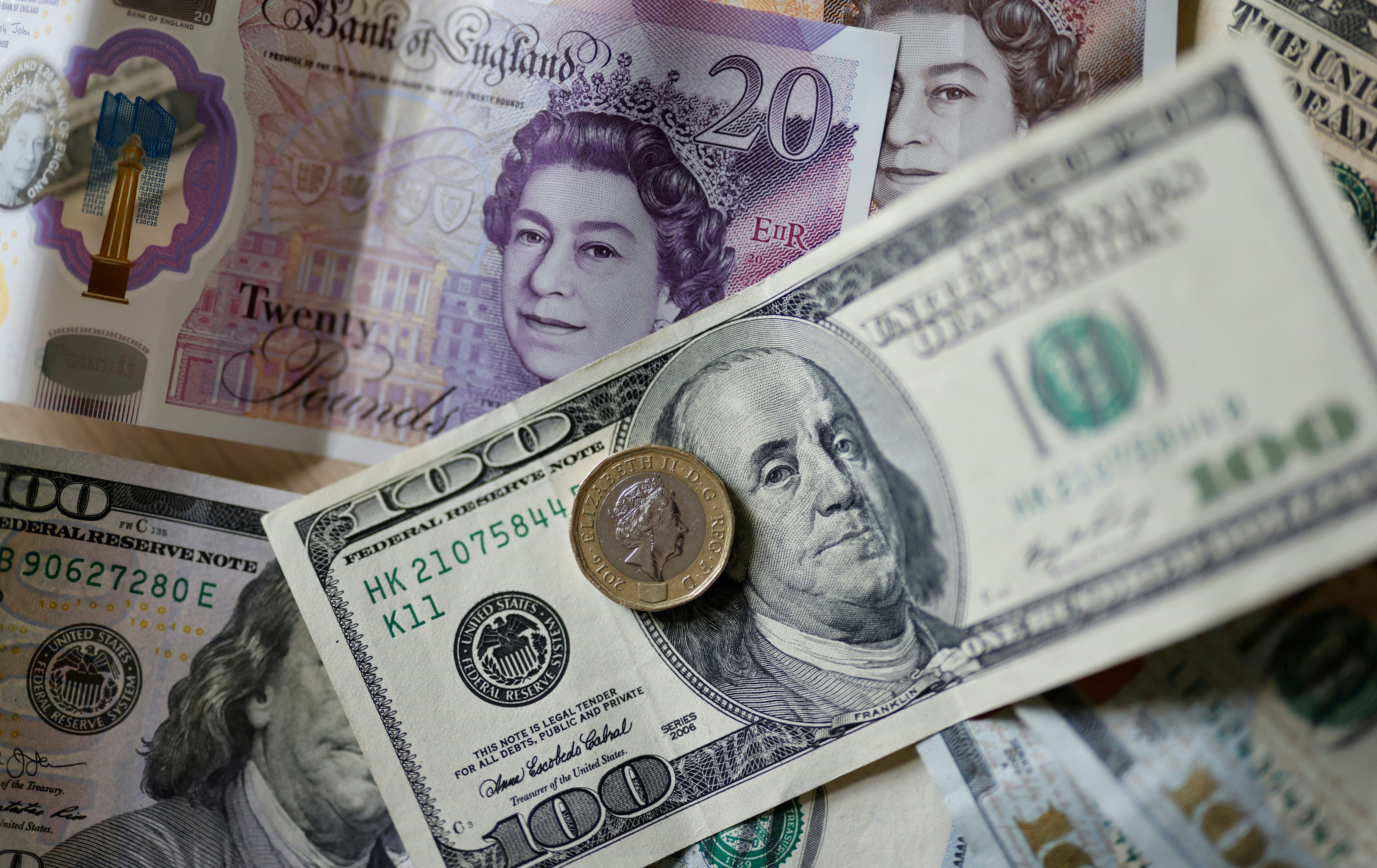
Britain’s currency dropped to as low as $1.1403 on Wednesday, surpassing the trough of $1.1412 seen at the outset of the Covid-19 pandemic in March 2020.
The currency is down more than 15% against the dollar so far this year.
Sterling hit an all-time low of $1.0545 in March 1985, just before the Group of Seven (G7) economies acted to rein in the superdollar of the Reagan era in the so-called Plaza Accord.
Why has the pound fallen so low against the US dollar?
The value of a currency invariably reflects how traders fell about the health of a country’s economy – either for better or worse.
Advertisement
The UK is suffering from a series of factors – most pressingly, soaring energy bills – but the pound’s plunging value against the dollar is also a measure of the relative strength of the American economy, where inflation is easing and strong jobs numbers continue.
Andrew Bailey, governor of the Bank of England, highlighted the strength of the US currency during a Treasury select committee meeting earlier on Wednesday, as he explained to MPs the recent weakness in the pound.
Pound hits new low against the dollar, $1.1406, lowest since 1985. That’s one more parallel between Truss and Thatcher ticked off
A sustained rally in the US dollar, referred to by traders as the “greenback”, has also seen it hit a 24-year high against the Japanese yen – reflecting how the UK is not in a unique position.
Against the euro, the pound was also down almost 1% on Wednesday, although sterling has held up far better against the euro than versus the dollar. It is down just 3% versus the single currency this year.
Advertisement
Nonetheless, investors are dumping British assets in the face of a bleak economic outlook that incudes the rising risk of a recession. The country’s surging inflation rate is also the highest among G7 powers, with the Bank of England previously predicting inflation could pass 13% in October. Concerns over tax cuts and increased public spending under the new Truss government also add to the uncertainty influencing traders.
Britain has further been hit differently by the energy crisis. While the UK only imports a small percentage of its gas from Russia, it relies more on gas than its European neighbours because it has less nuclear and renewable energy and does not have as much capacity to store gas.
“The British pound slid to its lowest level against the U.S. dollar since 1985, a reflection of the U.K.’s dire economic situation. Investors are braced for sterling to weaken even further to a nadir not seen in more than two centuries” https://t.co/PFtOkw8G1k
Analysts say the direction of the pound could now be swayed by the economic plans of the new prime minister, with Truss expected to detail her response to energy bills on Thursday, with government borrowing likely to pick up the tab for freezing bills for households and businesses.
The tumbling pound is also a headache for the Bank of England since it increases the cost of imports and can cause more imported inflation. The UK’s central bank meets next week and is expected to hike interest rates by 0.5 or even 0.75 percentage points.
Advertisement
The worst could yet come. Nordea chief analyst Jan von Gerich said: “There could be a recovery in sterling but I wouldn’t catch a falling knife for now.”
What does this mean for Brits?
The immediate impact of the falling pound is being felt by British travellers heading off for their holidays.
This means that travellers to the US – and to a lesser extent, Europe – will find their pound does not go very far, hiking up the cost of everything from accommodation to food.
Other countries use the greenback as the main currency, so even destinations such as Dubai and China are more expensive as their currencies are pegged to the US dollar.
Is it just holidaymakers who will be affected by the pound’s tumble?
All UK consumers stand to be impacted by a sustained plummet in the value of the pound, because it makes it more expensive for retailers and manufacturers to import food, goods and materials.
Advertisement
This means prices will be pushed up for goods and services, sending UK inflation rising even further and hitting Brits hard in the pocket.
Are there any benefits to a falling pound?
A weak pound can prove helpful in a number of ways, by making it cheaper for foreign companies to buy UK goods and boosting exports as a result.
It can also increase foreign investment in the UK, for example in property and in shares.
The FTSE 100 Index on London’s stock market usually rises when the pound falls as it is dominated by internationally-focused firms, which trade largely in US dollars.
A falling pound can also increase tourism to the UK, with overseas travellers looking to make the most of a better exchange rate.
This offers a boost to retailers and other sectors, such as restaurants and leisure attractions.
Kwasi Kwarteng has been appointed chancellor as Liz Truss made major changes as the new prime minister assembled her new cabinet.
He served as business secretary under Boris Johnson and is a close ally of Truss and early supporter of he leadership bid.
The appointments mean that for the first time in history none of the great offices of state are held by white men.
It follows Therese Coffey being appointed health secretary and deputy prime minister.
Truss began her cabinet reshuffle with a cull of prominent Rishi Sunak supporters, sending Dominic Raab, Grant Shapps and Steve Barclay to the backbenches swiftly after she became prime minister.
She removed the senior figures who had backed her rival in the Tory leadership race promptly after heading to her House of Commons office following her first speech in Downing Street on Tuesday.
Kwarteng, whose appointment to No 11 had been widely expected, replaces Nadhim Zahawi in the Treasury.
Liz Truss has appointed Therese Coffey deputy prime minister and health secretary during a major reshuffle of the government.
The new prime minister appointed Kwasi Kwarteng as chancellor as she also made James Cleverly the foreign secretary.
Advertisement
Former attorney general Suella Braverman was appointed home secretary, replacing Priti Patel after she pre-emptively resigned.
The appointments mean that for the first time in history none of the great offices of state are held by white men.
Truss began her cabinet reshuffle with a cull of prominent Rishi Sunak supporters, sending Dominic Raab, Grant Shapps and Steve Barclay to the backbenches swiftly after she became prime minister.
Advertisement
She removed the senior figures who had backed her rival in the Tory leadership race promptly after heading to her House of Commons office following her first speech in Downing Street on Tuesday.
Coffey, the former work and pensions secretary who is regarded as Truss’s closest friend in Westminster, replaced Raab as the second in command after he described Truss’s tax plans as an “electoral suicide note”.
Coffey has spelled out her top four priorities. She told Sky News: “I’m just about to enter the department and go to meet our great civil servants I’m going to work with.
“We’ve got priorities A, B, C, D – ambulances, backlogs, care, D – doctors and dentists. And we’re going to work through that and we’ll make sure that we’re delivering for the patients”.
Asked whether she is ready for strikes, Coffey said: “I think we’ve got to be ready for patients and that’s my top priority, and how we can make best use of our department and of course the NHS in order to achieve the best outcomes for them.”
Advertisement
Asked what her message is to potentially demoralised NHS staff, Coffey she recognised “they’ve done excellent work” and repeated her priorities.
This is a breaking news story and will be updated. Follow HuffPost UK on Twitter, Facebook and Instagram.