Trade Union Boss Criticises Unite General Secretary Over Keir Starmer Attack

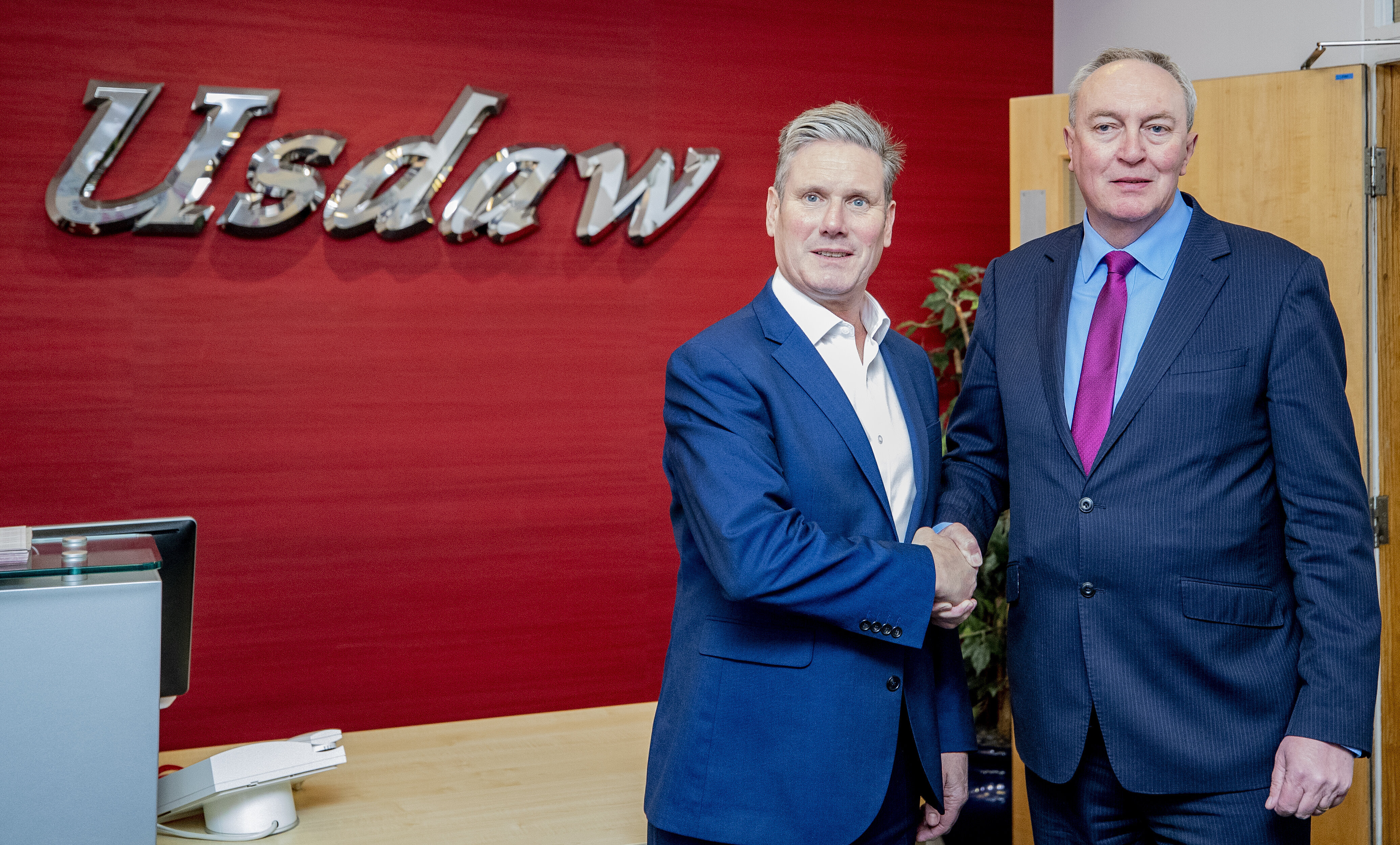
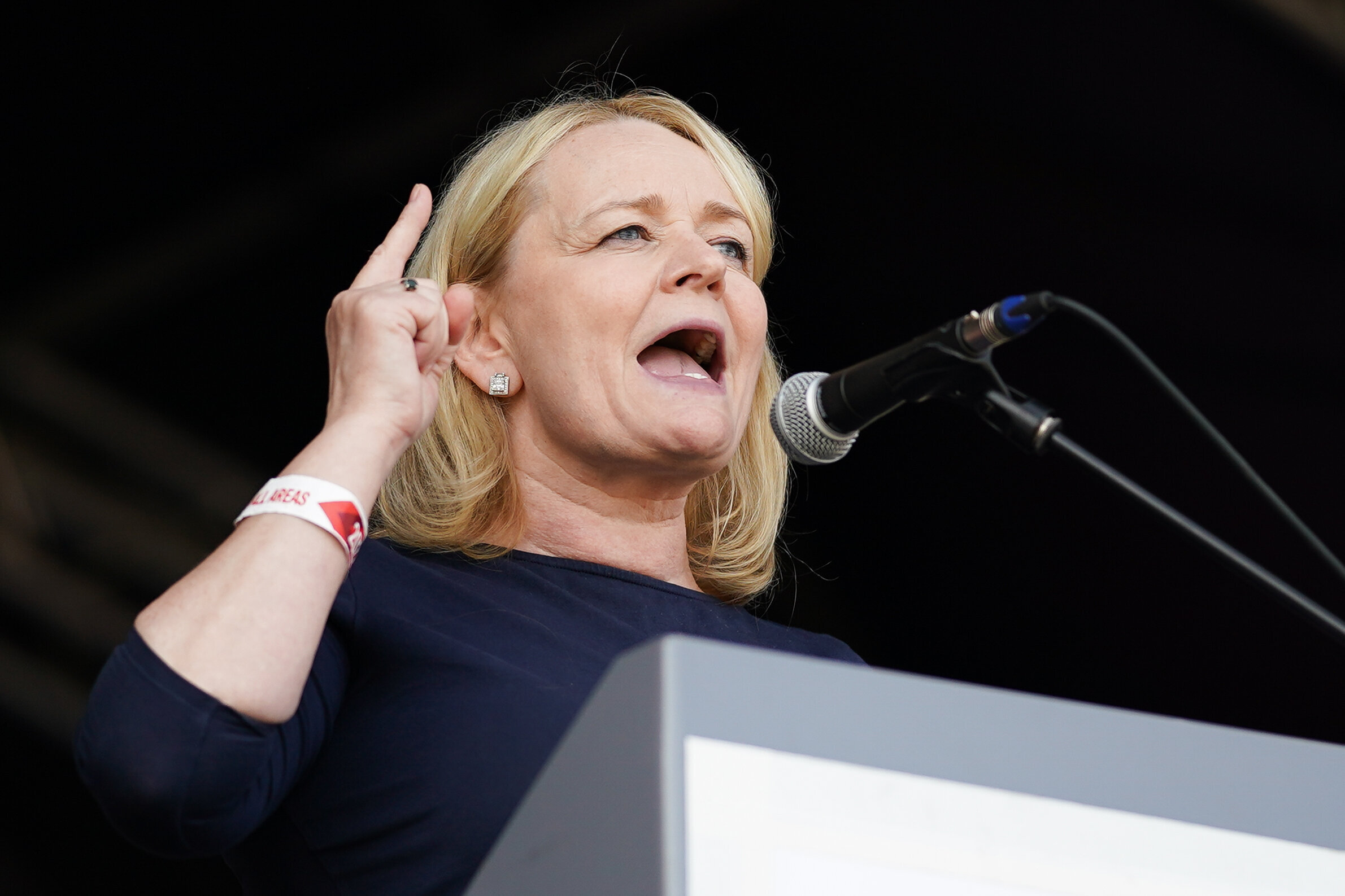
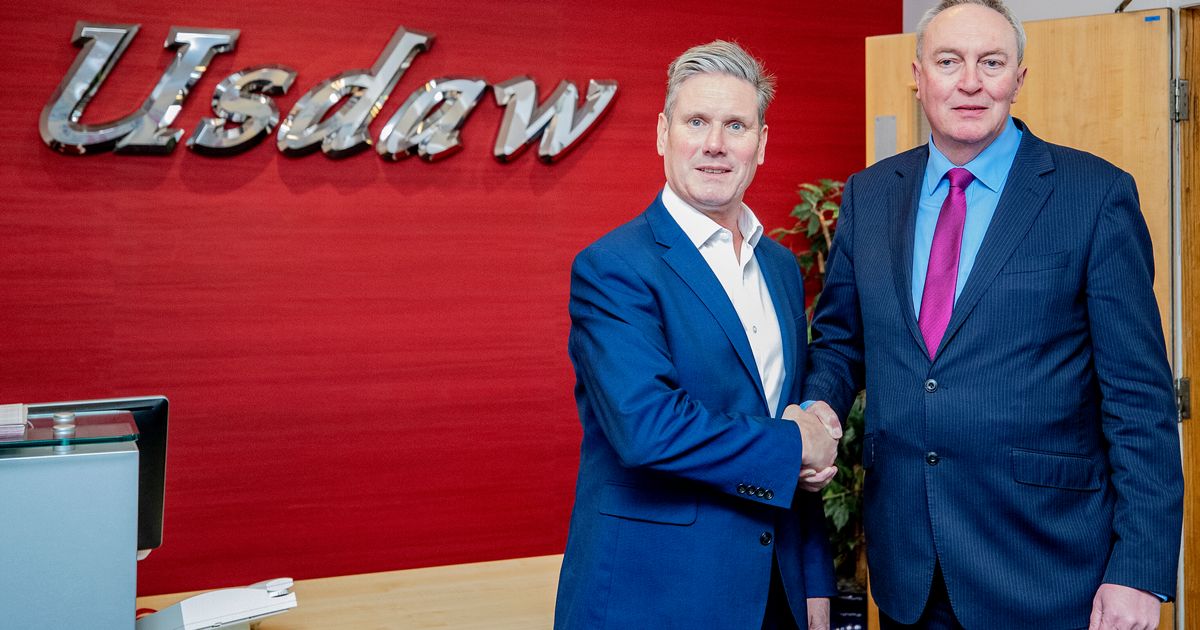
A trade union boss has hit out at the general secretary of Unite over her criticism of Keir Starmer.

Paddy Lillis, the general secretary of Usdaw, said Sharon Graham should train her fire on the Tory government rather than the Labour leader.

Graham has been an outspoken critic of Starmer, and yesterday told him to “get a spine” and “stick up for workers”.

She also previously criticised the Labour leader’s decision to sack Sam Tarry from the party’s frontbench after he appeared on a picket line.

But Lillis told Radio Four’s World At One programme that a “degree of silence” was needed from his fellow trade union boss.

Asked what he thought of her criticisms of Starmer, he said: “I don’t think it is fair, I think it’s actually unfair.

“I think Keir Starmer has demonstrated time and time again that he’s on the side of workers. He understands the industrial action that’s taking place at the minute.

“We have seen over 12/13 years now of wage stagnation across the economy from the 2008/2009 financial tsunami and we’ve seen employers squeeze employees and squeeze wages down. We need to be, as a trade union and Labour movement, putting the blame squarely where it belongs, and that’s with this Tory government, who have been missing in action.”

Lillis added: “Anyone that’s doing the Labour Party down isn’t doing us a favour.

“If you look over history, we’ve had six Labour prime ministers in our history and each time we turn on each other.

“This is a shadow cabinet that’s worked with the trade union leaders to come up with an employment rights green paper, looking at what they will introduce in power. So to turn round and say Keir Starmer’s not supportive of workers is not true.

“I think there’s a degree of silence needed sometimes and let the Labour leadership get on with taking the fight to the Tories and holding them to account for what’s wrong in this country.”

HuffPost UK revealed how Starmer has put Labour on a war footing in case the new prime minister – who will be announced in a week’s time – calls a snap election.

Share Button

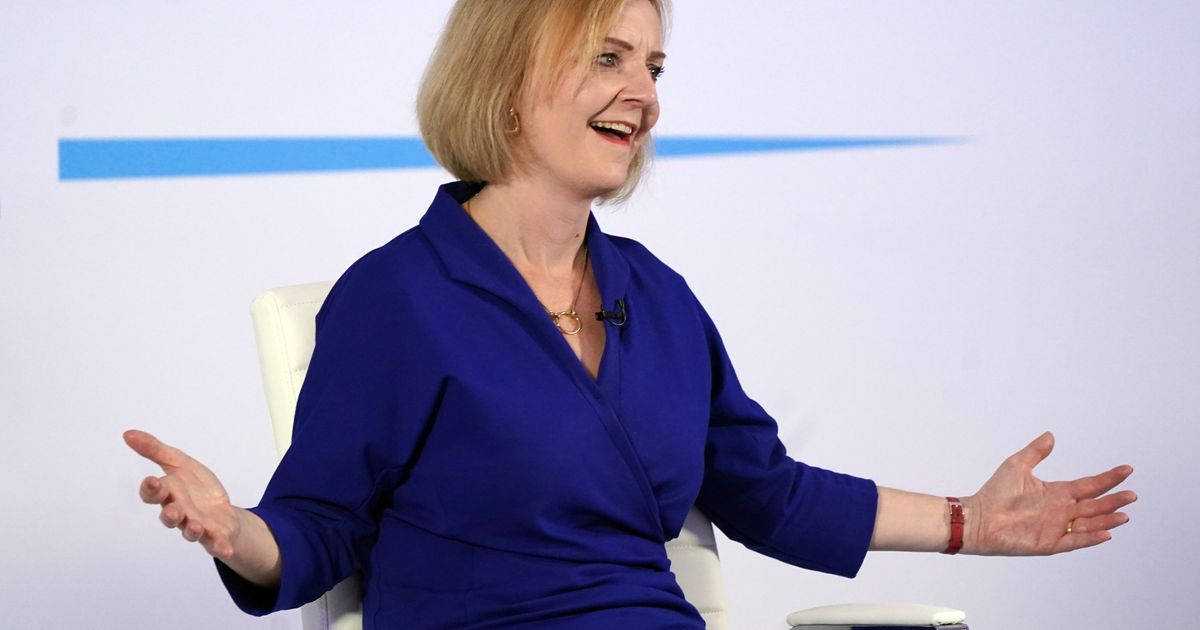
Liz Truss ‘Rules Out’ Direct Help For Everyone To Pay Soaring Energy Bills

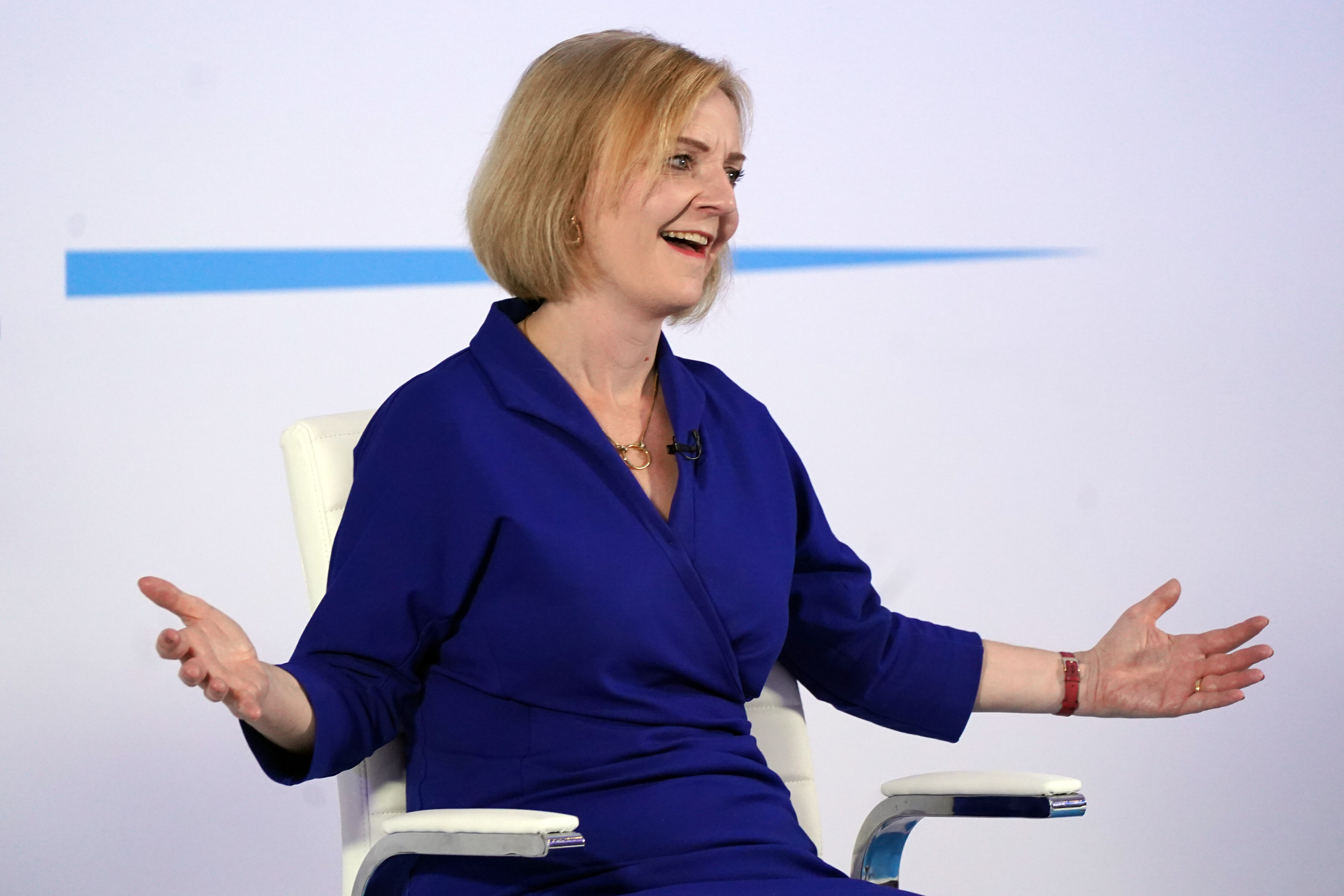
Liz Truss does not want to provide more direct help for everyone to pay energy bills if she becomes prime minister according to her allies, despite warnings millions face a “catastrophe” this winter.

The foreign secretary, who is the clear frontrunner to take over as prime minister on September 6, has promised “decisive action” to help with the cost of living crisis.

From October people will receive £400 off their energy bills in six instalments, a policy introduced by Rishi Sunak when he was chancellor.

But according to the BBC, Truss has “ruled out” building on that approach with more help that would see people receive direct assistance regardless of their wealth. Truss’ campaign did not reject the report when asked.

According to The Sunday Telegraph, Truss could instead cut 20% headline rate of VAT could by up to 5% or cut to income tax.

Sunak’s campaign has said cutting VAT would be “incredibly regressive” and help the richest more than the poorest.

Truss has not set out details of her plans, with a campaign source saying it would be wrong to make commitments before she is elected prime minister or pre-empt the so-called fiscal event – in which her proposals will be formally announced – expected in mid-September.

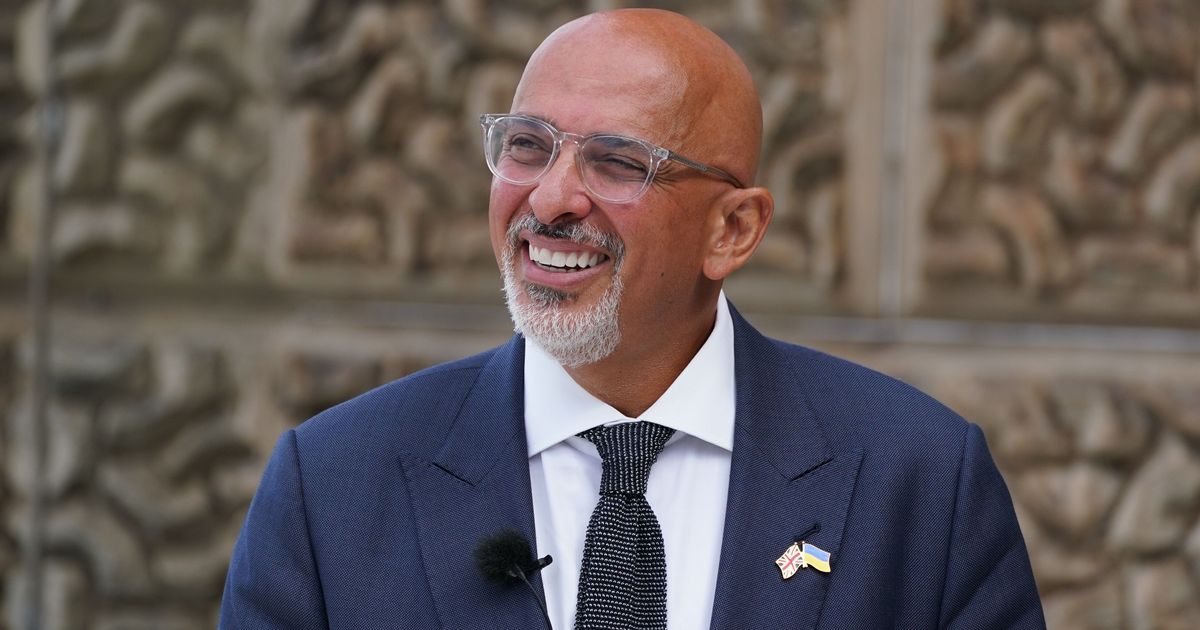
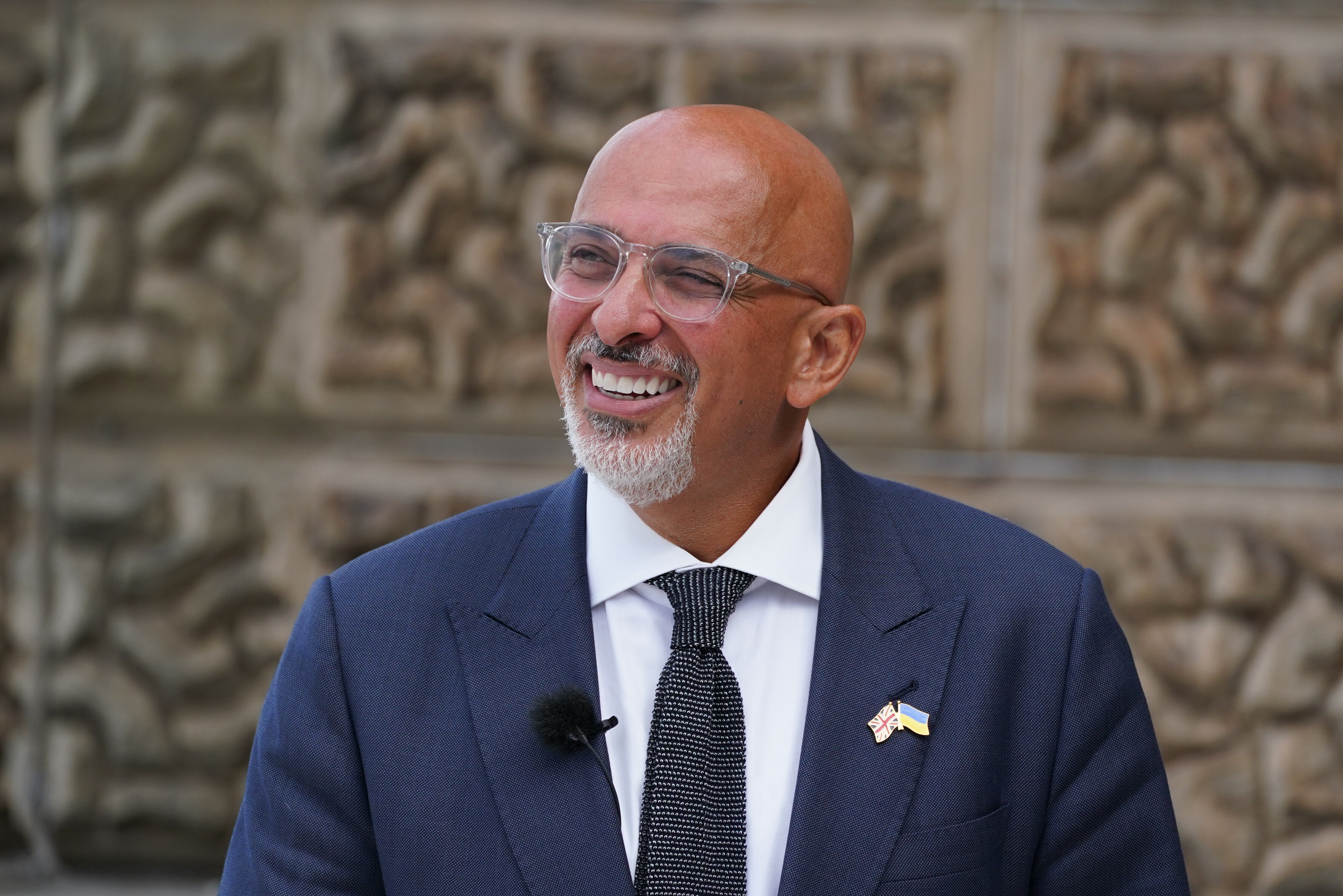
Nadhim Zahawi, the current chancellor and Truss supporter, has suggested people earning as much as £45,000 per year could be among those struggling to cope with soaring living costs.

Energy regulator Ofgem warned the government on Friday that it must act urgently to “match the scale of the crisis we have before us” as Britain faced the news that the average household’s yearly bill will rise from £1,971 to £3,549.

Martin Lewis, the well regarded consumer expert, has warned there is a “genuine social and financial catastrophe that is putting lives at risk”.

Pat McFadden, Labour’s shadow chief secretary to the Treasury, said on Sunday people faced a financial “shockwave” and repeated his party’s call for bills to be frozen for six months..

Share Button

Cutting VAT To Tackle Cost Of Living Crisis ‘Regressive’, Says Rishi Sunak’s Campaign

Cutting VAT by 5% across the board would be a “regressive” move costing tens of billions of pounds, Rishi Sunak’s campaign team has warned.

According to The Sunday Times, Liz Truss is considering slashing VAT as part of an emergency package to help households cope with rising prices if she wins the Tory leadership race.

The newspaper said the 20% headline rate of VAT could be cut by up to 5%, saving the average household more than £1,300 per year.

But Sunak’s campaign said the move would “incredibly regressive” and cost more than £30bn.

Another option reportedly being weighed up by Truss is a cut to income tax, with proposals including increasing the level above which people start paying the levy.

Truss could also raise the tipping point for the higher rate of 40% and cut the basic rate below 20%.

Boris Johnson has said whoever succeeds him in No.10 would announce “another huge package of financial support” amid soaring energy bills.

The outgoing prime minister has refused to act again himself, deciding the country must wait until a new PM is in office to provide any new help.

The Treasury has said it is making the “necessary preparations” to ensure the next government has options to deliver extra help “as quickly as possible”.

Energy regulator Ofgem warned the government on Friday that it must act urgently to “match the scale of the crisis we have before us” as Britain faced the news that the average household’s yearly bill will rise from £1,971 to £3,549.

Sunak has already said he will provide additional support targeted at the most vulnerable.

Truss has promised “decisive action” to deliver “immediate support” if she wins the contest.

But she has so far been vague about what form this assistance might take apart from slashing green levies on energy bills and reversing the controversial National Insurance hike.

In an article for Mail+, Johnson acknowledged that the next few months will be difficult – “perhaps very tough” – as “eye-watering” energy bills take their toll, but he forecast the UK will emerge “stronger and more prosperous (on) the other side”.

He said “colossal sums of taxpayers’ money” have already been committed to assisting people with their bills.

But he added: “Next month – whoever takes over from me – the government will announce another huge package of financial support.”

Share Button

Union Leader Tells Keir Starmer To ‘Get A Spine’ And ‘Stick Up For’ Workers

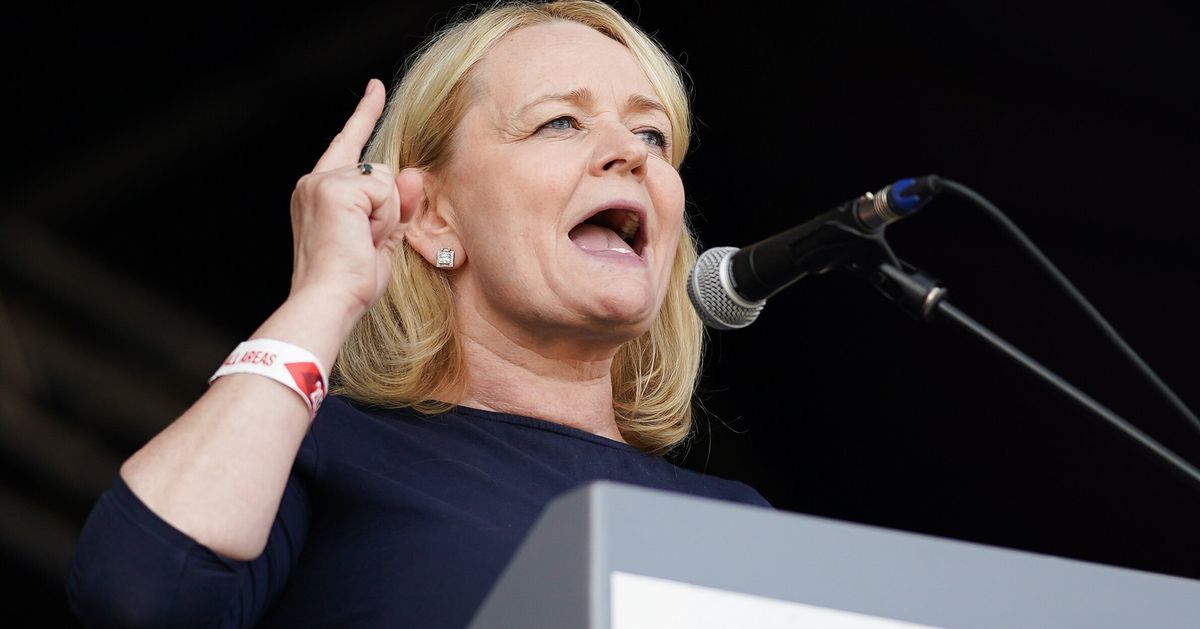
Labour needs to “get a spine” and stand up for working people, the general secretary of the Unite union has said.

Sharon Graham told Keir Starmer he is more likely to win the next election if he did more to back workers seeking pay rises as employers make big profits.

“There isn’t really a very strong voice for workers in parliament currently,” she told BBC Radio 4′s Broadcasting House on Sunday.

“It is more likely they (Labour) would get elected more if they spoke up for workers more.”

“I think that if they came out now strongly and said `hang on a second, these abhorrent profits that are going on and what’s happening with the cost of living, this is what we think should happen’ – then I think they would very much get elected.

“From my point of view, I think we are doing Labour a favour actually by saying `look, get a spine, stick up for workers’. Graham told the programme “you cannot defend workers by being silent”.

Starmer has been under pressure from unions and Labour’s left to do more to show support for striking workers across the country.

Starmer has said Labour needs to move away from being a “party of protest” and instead act like a “government in waiting” with an emphasis on negotiating with unions.

Speaking this morning, Pat McFadden, Labour’s shadow chief secretary to the Treasury, said he did not support a general strike but understands why people are pressing for pay increases.

“Our call on government ministers would be to stop being an absent government and to help resolve these disputes to ensure that people get a decent pay rise, but to do that around the negotiating table,” he told Sky News.

“Nobody wants to see industrial action but it is understandable why people at work want a decent pay rise given the inflationary pressures that they’re feeling right now.”

Share Button

People Are Taking Nadhim Zahawi’s Advice On Cutting Energy Use With A Pinch Of Salt

Nadhim Zahawi urging households to look at how they are using energy has left some people speechless – probably because he used taxpayers’ cash to heat his horse stables.

On Friday, the chancellor said everyone should “look at our energy consumption” as it was confirmed bills are set to soar by 80%.

In 2013, the Sunday Mirror revealed he claimed for electricity at the stables, as part of a wider bill, other parts of which were allowed under the rules.

At the time, Zahawi promised to repay part of a £5,822.27 expenses claim for his energy bills after it emerged taxpayers were paying for the electricity supply to his stables.

He has said it was a “deeply embarrassing” but “genuine mistake” to claim the expenses for heating stables for his horses.

Given his history, some were taking his guidance with a pinch of salt after it was after it was announced the average energy price cap will soar to a devastating £3,549 in October.

One of the wealthiest members of parliament, Zahawi founded the polling firm YouGov.

In July, he told Sky News’ Kay Burley the claim was a “genuine mistake” as he did not realise his stable heating and personal heating was coming in on a single bill.

“It was a complete error, a mistake, and of course I apologised and repaid,” he said.

Asked if he was embarrassed, Zahawi said: “Of course. Deeply embarrassing. But it was a genuine mistake. It’s much better to admit and demonstrate than to do anything else.”

Share Button

Brutal Hospital Heckle Gives Health Secretary Steve Barclay A Taste Of Public Anger

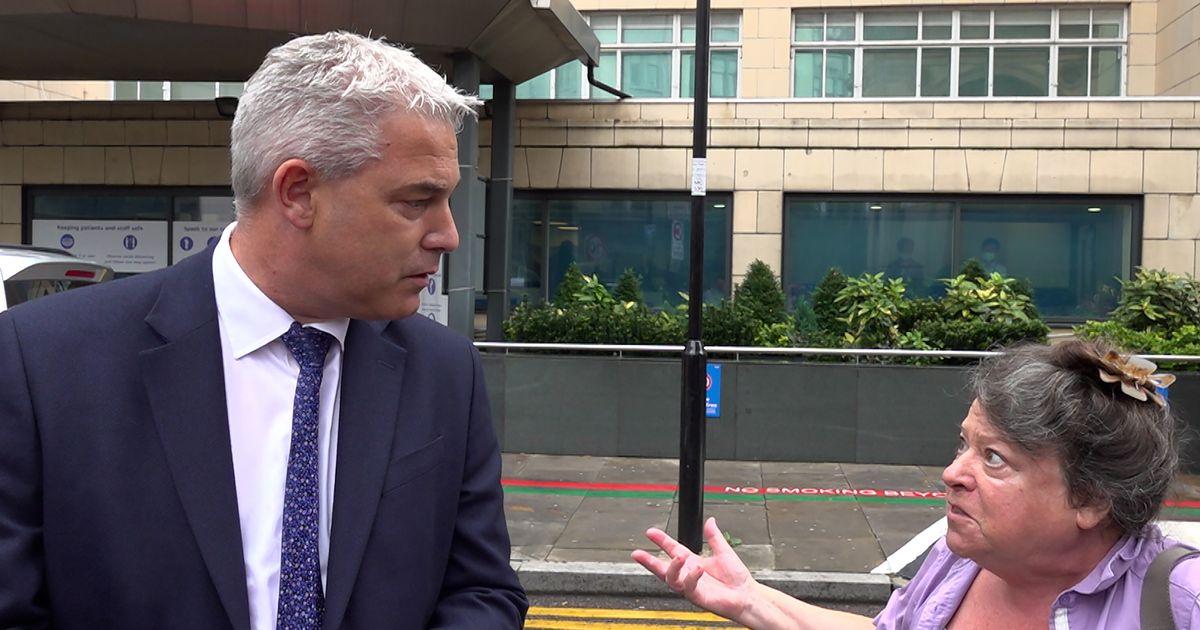
Health secretary Steve Barclay has been confronted with public fury over the crumbling NHS – as an angry member of the public heckled the minister upset about ambulance delays.

The cabinet minister was speaking to media outside Moorfields Eye Hospital in Old Street, central London, when a woman suggested the Tory government has done “bugger all” during 12 years in power.

During his interviews, a woman passing by approached Barclay and asked him: “Are you going to do anything about the ambulances waiting, and the people dying out?”

Barclay replied: “Of course we are,” but the woman continued: “Don’t you think 12 years is long enough?

“Twelve years – you’ve done bugger all about it.

“People have died, and all you’ve done is nothing.”

The incident drew comparisons to an infamous scene from BBC comedy The Thick Of It, when fictional minister Hugh Abbot is confronted by an angry worker who asks: “Do you know what it’s like to clean up your own mother’s piss?”

Last week, many were shocked after an 87-year-old man had to wait 15 hours for an ambulance in a makeshift shelter made out of a garden football goal.

A recent report by the Care Quality Commission (CQC) showed that patients were facing “frequent and prolonged” waits for ambulances.

The report exposed several cases, such as that of an elderly patient who died after waiting 14 hours for assistance from South Central Ambulance Service.

On Thursday, Barclay was given a tour of an operating theatre by surgeons at Moorfields Eye Hospital, before speaking to press on the street outside.

Following the heated interaction, Barclay said that reducing ambulance waiting times is an “absolute priority” for the government.

He told the PA news agency: “There’s a range of measures that we’re taking.

“We’re looking at conveyance rates in ambulances, we’re looking at how we address variation in performance, we’re looking at funding – an extra £150 million to the ambulance service, a further £50 million into call centres, for 111 and 999, in terms of call handling, a further £30 million into St John Ambulance around the auxiliary ambulance performance.

“We’re also then looking at what happens with the ambulance handovers, so emergency departments, how we triage those, how we look at the allocation of this within the system.

“Of course, that is all connected to delayed discharge and people being ready to leave hospital who are not doing so, and that’s about the integration of care between social care and hospitals.

“So there’s a range of issues within how we deliver on ambulances, but it’s an absolute priority both for the Government and for NHS England.”

Share Button

Emily Maitlis Has A Brutal Message For The BBC Over Its Brexit Coverage

<div class="js-react-hydrator" data-component-name="YouTube" data-component-id="3692" data-component-props="{"itemType":"video","index":0,"contentListType":"embed","code":"

","type":"video","meta":{"url":"https://www.youtube.com/watch?v=bMaDI0DOJ3s","type":"video","version":"1.0","title":"Emily Maitlis on Brexit","author":"OldQueenTV","author_url":"https://www.youtube.com/channel/UC_1mDKnRagiJYrS060VQ9ig","provider_name":"YouTube","thumbnail_url":"https://i.ytimg.com/vi/bMaDI0DOJ3s/sddefault.jpg","thumbnail_width":640,"thumbnail_height":480,"cache_age":86400,"options":{"_start":{"label":"Start from","value":"","placeholder":"ex.: 11, 1m10s"},"_end":{"label":"End on","value":"","placeholder":"ex.: 11, 1m10s"},"_cc_load_policy":{"label":"Closed captions","value":false},"click_to_play":{"label":"Hold load & play until clicked","value":false}}},"fullBleed":false,"flags":[],"enhancements":{},"options":{"theme":"news","device":"desktop","editionInfo":{"id":"uk","name":"U.K.","link":"https://www.huffingtonpost.co.uk","locale":"en_GB"},"slideshowAd":{"scriptTags":[],"otherHtml":""},"slideshowEndCard":{"scriptTags":[{"attribs":{},"scriptBody":"\r\n (function(){\r\n var c = document.getElementById(‘taboola-endslate-thumbnails’);\r\n c.id += ‘-‘ + Math.round(Math.random()*1e16);\r\n \r\n var taboolaParams = {\r\n loader: \"//cdn.taboola.com/libtrc/aol-huffingtonpost/loader.js\",\r\n mode: \"thumbnails-b\",\r\n container: c.id,\r\n placement: \"Endslate Thumbnails\",\r\n target_type: \"mix\"\r\n };\r\n \r\n if (typeof window.modulousQueue === \"function\") {\r\n \twindow.modulousQueue.add(function(){ doTaboola(taboolaParams); });\r\n } else {\r\n \tdoTaboola(taboolaParams);\r\n }\r\n }());\r\n"}],"otherHtml":"

"},"isMapi":false,"isAmp":false,"isVideoEntry":false,"isMt":false,"entryId":"63068fa2e4b00c150d6774c1","entryTagsList":"brexit,newsnight,emily-maitlis","sectionSlug":"politics","deptSlug":null,"sectionRedirectUrl":null,"subcategories":"entertainment","isWide":false,"headerOverride":null,"noVideoAds":false,"disableFloat":false,"isNative":false,"commercialVideo":{"provider":"custom","site_and_category":"uk.politics","package":null},"isHighline":false,"vidibleConfigValues":{"cid":"60afc140cf94592c45d7390c","disabledWithMapiEntries":false,"overrides":{"all":"60b8e525cdd90620331baaf4"},"whitelisted":["56c5f12ee4b03a39c93c9439","56c6056ee4b01f2b7e1b5f35","59bfee7f9e451049f87f550b","5acccbaac269d609ef44c529","570278d2e4b070ff77b98217","57027b4be4b070ff77b98d5c","56fe95c4e4b0041c4242016b","570279cfe4b06d08e3629954","5ba9e8821c2e65639162ccf1","5bcd9904821576674bc55ced","5d076ca127f25f504327c72e","5b35266b158f855373e28256","5ebac2e8abddfb04f877dff2","60b8e525cdd90620331baaf4","60b64354b171b7444beaff4d","60d0d8e09340d7032ad0fb1a","60d0d90f9340d7032ad0fbeb","60d0d9949340d7032ad0fed3","60d0d9f99340d7032ad10113","60d0daa69340d7032ad104cf","60d0de02b627221e9d819408"],"playlists":{"default":"57bc306888d2ff1a7f6b5579","news":"56c6dbcee4b04edee8beb49c","politics":"56c6dbcee4b04edee8beb49c","entertainment":"56c6e7f2e4b0983aa64c60fc","tech":"56c6f70ae4b043c5bdcaebf9","parents":"56cc65c2e4b0239099455b42","lifestyle":"56cc66a9e4b01f81ef94e98c"},"playerUpdates":{"56c6056ee4b01f2b7e1b5f35":"60b8e525cdd90620331baaf4","56c5f12ee4b03a39c93c9439":"60d0d8e09340d7032ad0fb1a","59bfee7f9e451049f87f550b":"60d0d90f9340d7032ad0fbeb","5acccbaac269d609ef44c529":"60d0d9949340d7032ad0fed3","5bcd9904821576674bc55ced":"60d0d9f99340d7032ad10113","5d076ca127f25f504327c72e":"60d0daa69340d7032ad104cf","5ebac2e8abddfb04f877dff2":"60d0de02b627221e9d819408"}},"connatixConfigValues":{"defaultPlayer":"8b034f64-513c-4987-b16f-42d6008f7feb","clickToPlayPlayer":"5a777b9b-81fe-41a6-8302-59e9953ee8a2","videoPagePlayer":"19654b65-409c-4b38-90db-80cbdea02cf4"},"customAmpComponents":[],"ampAssetsUrl":"https://amp.assets.huffpost.com","videoTraits":null,"positionInUnitCounts":{"buzz_head":{"count":0},"buzz_body":{"count":0},"buzz_bottom":{"count":0}},"positionInSubUnitCounts":{"article_body":{"count":4},"before_you_go_slideshow":{"count":0}},"connatixCountsHelper":{"count":0},"buzzfeedTracking":{"context_page_id":"63068fa2e4b00c150d6774c1","context_page_type":"buzz","destination":"huffpost","mode":"desktop","page_edition":"en-uk"},"cetUnit":"buzz_body"}}”>

Emily Maitlis has criticised the BBC for “both-sideism” in its coverage of Brexit – suggesting its attempts to hear both sides of the argument led to “superficial balance”.

The former BBC journalist also argued the BBC and other media outlets are failing to tackle the impact of leaving the EU today, saying that “sidestepping” the issue “feels like a conspiracy against the British people”.

Maitlis, who left the broadcaster this year for rival media group Global, was addressing the annual MacTaggart Lecture at the Edinburgh TV Festival on Wednesday.

In one striking passage that won praise on social media, Maitlis said: “It might take our producers five minutes to find 60 economists who feared Brexit and five hours to find a sole voice who espoused it.

“But by the time we went on air we simply had one of each; we presented this unequal effort to our audience as balance. It wasn’t.”

She added: “I’d later learn that the ungainly name for this myopic style of journalism: ‘both-sideism’, which talks to the way it reaches a superficial balance while obscuring a deeper truth.”

Not everyone agreed.

The broadcaster suggested the problems continue, and outlets including the BBC adopt an “automatic crouch position whenever the Brexit issue looms large”.

She said: “Many broadcasters fear discussing the obvious economic cause of major change in this country in case they get labelled pessimistic, anti-populist, or worse still, as above: unpatriotic.

“And yet every day that we sidestep these issues with glaring omissions feels like a conspiracy against the British people.”

Maitlis joined the BBC in 2001 and presented Newsnight from 2006.

In February, she and Jon Sopel announced they were leaving the BBC to join Global, where they are hosting a new podcast, titled The News Agents, and a radio show together on LBC.

In her speech, Maitlis also said the BBC’s board includes an “active agent of the Conservative party” as she issued a warning about her former employer’s impartiality.

Share Button