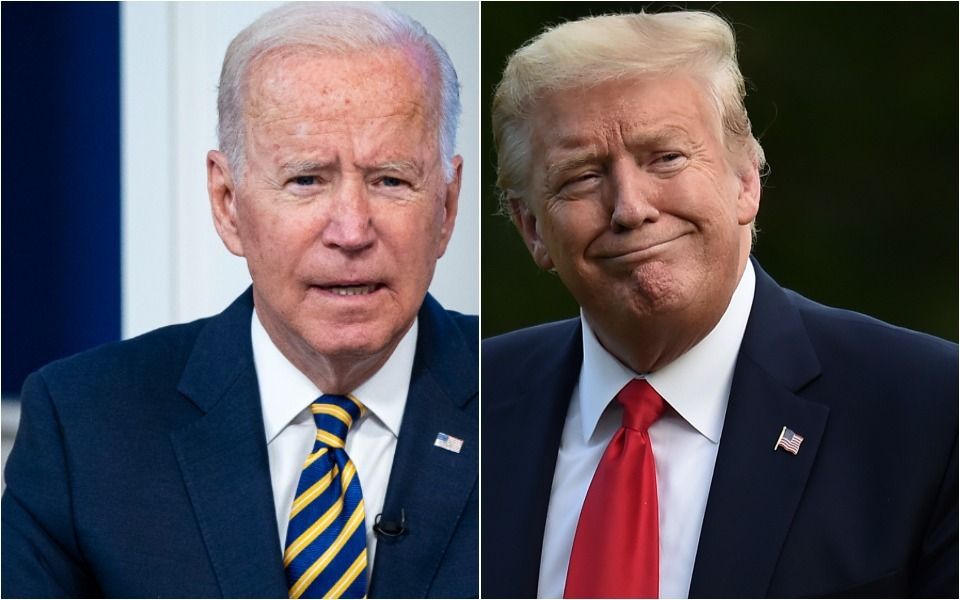
President Joe Biden wasn’t impressed by the remnants of White House life left behind by Donald Trump when he explored the residence after the inauguration, according to Peril, the new book by Washington Post journalists Bob Woodward and Robert Costa.
“Trump’s existence permeated the White House, even the residence,” they wrote, per an excerpt cited by ABC News. “One night, Biden wandered into a room where a huge video screen covered the wall. To relax, Trump used to upload programs to virtually play the world’s most famous golf courses.”
Biden’s reaction to the former president’s “toys”?
“What a fucking asshole,” he said, according to the book.
Peril also noted that Bidden and his advisers try to avoid using Trump’s name. Biden has admitted as much publicly, saying at a town hall event in February that he was “tired of talking about Donald Trump.”
“Look, for four years all that’s been in the news is Trump,” Biden said. “The next four years, I want to make sure all the news is the American people.”
Later in the event, Biden refused to use Trump’s name when it came up, referring to him only as “the former guy,” a nickname that’s stuck on social media.
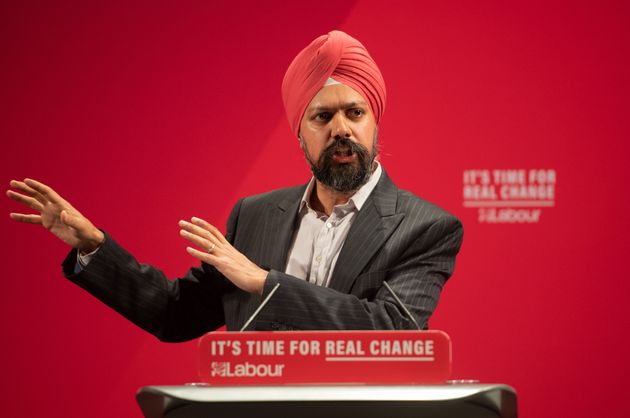
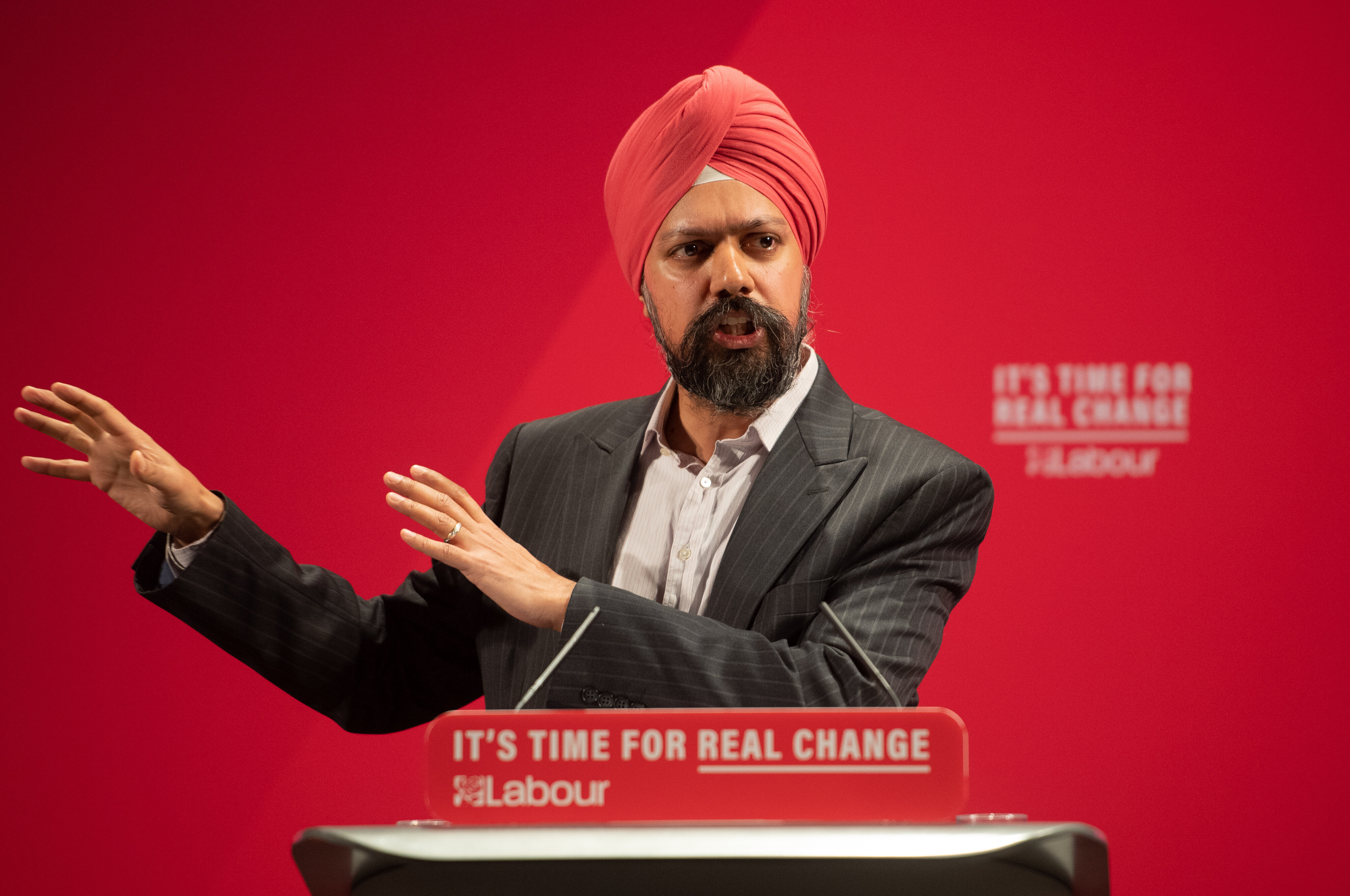
Joe Giddens – PA Images via Getty ImagesTan Dhesi, Labour Party MP for Slough
A Sikh MP has spoken out about the “Taliban” jibes he faces and how a visitor was attacked outside parliament for wearing a turban.
Tanmanjeet Dhesi, who is Britain’s first turban-wearing MP, said racism was a “common experience” for many people from ethnic minorities.
He told Gloria De Piero on GB News he had been called “Taliban” over the last couple of decades, adding: “After the 9/11 attacks – the level of racism towards people, especially with turbans like me, or with beards, that increased substantially.
“In the US – our close friend and allies – there, Sikhs were shot dead, just because they had a turban and beard.
“People made Islamophobic remarks, calling them the Taliban, and then more than one individual was shot dead, because of that hatred – which is unfortunately instilled in so many people across not only North America, but Europe too.”
He said people could not imagine the impact the Taliban and Mujahideen had on Sikhs in Afghanistan who faced “significant persecution”.
The MP for Slough added: “Don’t think that minorities like the Sikhs or Hindus see the Taliban as some sort of heroes. They have faced the persecution and discrimination from those religious extremists.”
He has previously spoken out about how children tried to tear his turban off when he was at school, but warned it was a “similar experience” for many.
Dhesi described how an Indian guest, who came to visit him in the House of Commons to discuss the climate crisis, faced the same abuse.
The Labour MP added: “As he was queueing up outside parliament – somebody, filled with so much hatred, went along and disparaging remarks to him, Islamophobic remarks to him, saying ‘go back to your country’, and so on.
“He also, unfortunately, also tried to pull off his turban. While I was trying to console him – and it was lucky the police were there, who caught it on CCTV – I just felt so shameful, that this had happened outside our parliament.
“What image is that going to make of our country, as he goes back to Punjab, as he goes back to India? And unfortunately, it made news within the Sikh media – that this had happened outside the House of Commons, for which people have a great and higher regard – thinking of it as the mother of all parliaments.”
He said the incident demonstrated how common the problem was and how we need to tackle racism “head on”.
The interview is due to be aired on Monday at 12.40pm.
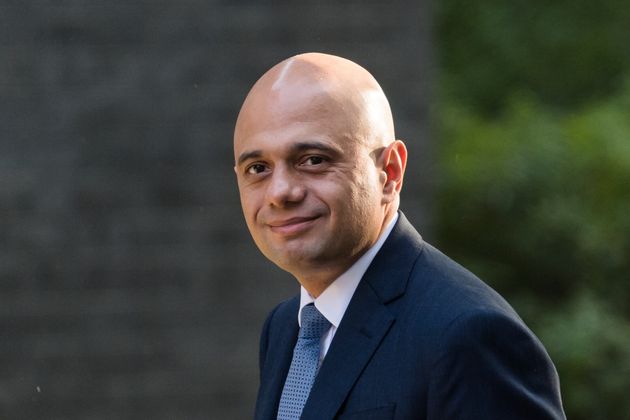
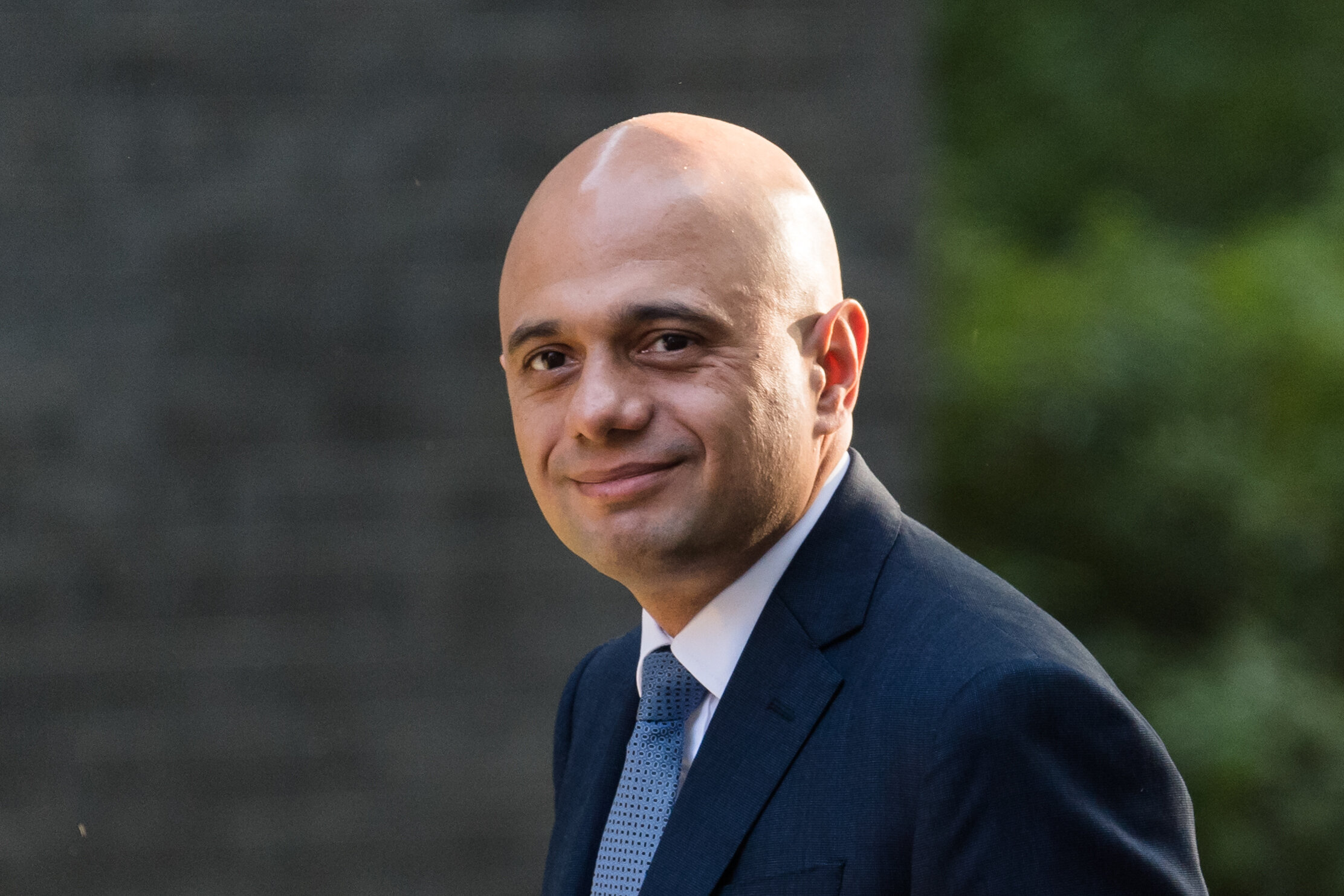
Sajid Javid has defended that government’s Covid winter plan after scientists warned of a potential new wave of hospital admissions.
Scientists advising the Scientific Advisory Group for Emergencies (Sage) warned the burden on the NHS could rise “very quickly” as people returned to their offices after working from home.
But speaking on Sky News, the health secretary said there were no “risk-free” options.
“It is right that experts are looking at what is happening and come up with their best guess of where things might go based on certain assumptions,” he said.
“We have to listen to them but eventually make what we think is the right decision. There is no risk-free decision but I think what we have announced in terms of this plan, is well thought through.”
Javid said increasing hospital admissions could trigger the government’s Plan B for tackling Covid as he refused to rule out another lockdown.
“What happens in the NHS is going to be hugely important to me, to the whole country, making sure that we don’t get to a position again where the NHS becomes unsustainable,” he said.
“If the situation – and it is an ‘if’ – gets out of control, if for example there was a new vaccine-escape variant which no-one can predict, whether it happens or not, we will of course have to act and take new measures.”
But he declined to put a number on how many cases or admissions would trigger Plan B.
Under the blueprint set out by the Government on Tuesday, Plan B includes measures such as vaccine passports, mandatory face masks and advice to work from home.
Boris Johnson was yesterday also urged by his chief scientific adviser on Tuesday to go hard and early if the pandemic significantly worsens.
Patrick Vallance said the nation is at a “pivot point” and told ministers to react swiftly if cases quickly rise, warning “you can’t wait until it’s late because you’ve got to do more”.
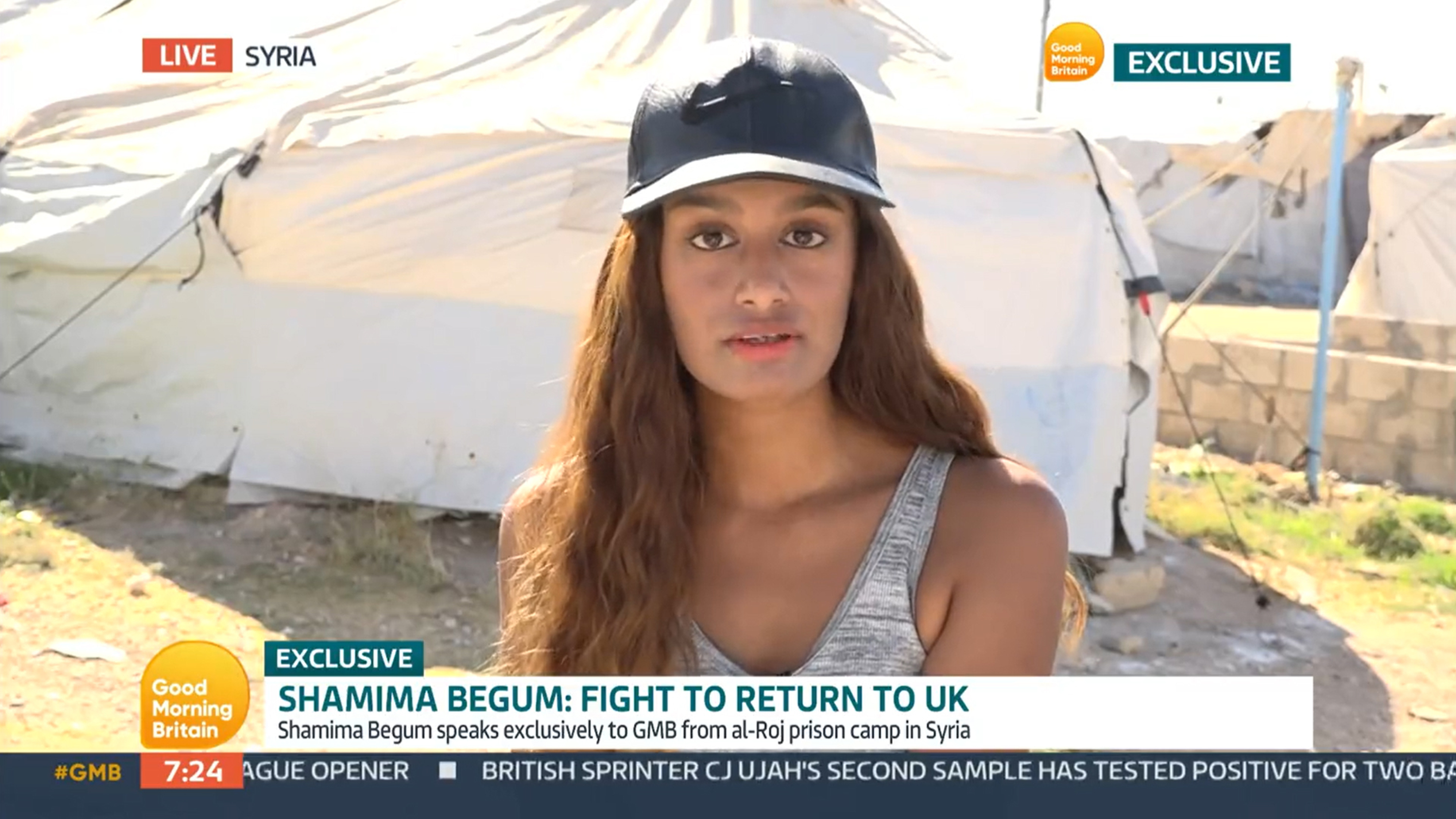
Shamima Begum explained how she thought she was “doing the right thing as a Muslim” when she first fled the UK to join Isis in Syria, supposedly unaware it was a “death cult” in an interview on Wednesday.
Begum has been trying to return to the UK, where she grew up, since 2019 but the Home Office revoked her British citizenship in 2020 and stated she should never be allowed to return.
During her first ever live interview on ITV’s Good Morning Britain, she promised to aid the authorities in its fight against Isis terrorists in the UK and vowed to face any legal consequences of her decision as long as she could return home.
Looking back to her decision to flee in 2015, Begum explained: “I did not want to hurt anyone in Syria or anywhere else in the world.
“At the time, trust me, I did not know it was a death cult, I thought it was an Islamic community that I was joining, and at the time, I had just started becoming very religious.
“I was being fed a lot of information on the internet by people in Isis telling me I need to come, I can’t be a good Muslim in the UK, and that my family will drag me down with them.”
She said she “made a mistake at a very young age” and asked for the British people to forgive her, even though it will be hard.
Begum added: “They’ve lived in fear of Isis and lost loved ones because of Isis – but I have also lived in fear of Isis and lost loved ones of Isis.”
She concluded: “I say from the bottom of my heart that I am so sorry if I ever offended anyone.”
Begum apologised for her previous interviews, where she refused to admit she had made a mistake joining Isis, and claimed she was not aware of the full extent of the terror group’s crimes at the time.
She also claimed the government “clearly don’t know what they’re doing in the fight against terrorism in the UK”, and suggested she would be able to help, having been on the inside of Isis.
But, health secretary Sajid Javid – the home secretary back in 2019– told Good Morning Britain on Wednesday that it was “absolutely the right decision to protect the British people” and not permit Begum’s UK return.
He added that the Supreme Court backed his decision.
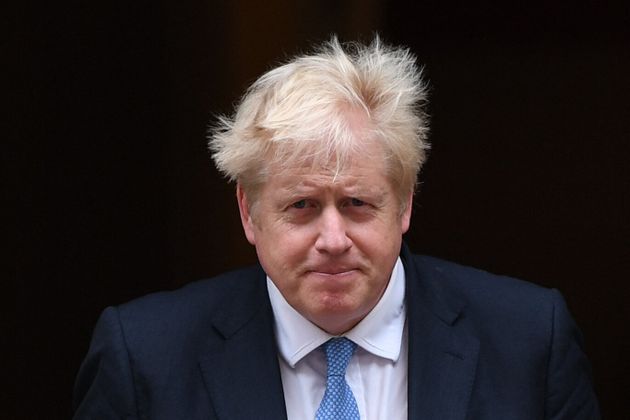
Boris Johnson is mourning the loss of his mother after she died aged 79.
Charlotte Johnson Wahl, a painter, died “suddenly and peacefully” at St Mary’s Hospital, Paddington, on Monday according to a death notice in The Times.
Johnson once described his mother as the “supreme authority” in the family and credited her with instilling in him the equal value of every human life.
The notice in the Times says she was a “Painter. Mother of Alexander, Rachel, Leo, and Joseph; grandmother of Ludovic, Lara, Charlotte, Milo, Oliver, Cassia, Theodore, Rose, Lula, William, Ruby Noor, Stephanie and Wilfred.”
Labour leader Keir Starmer was among the first politicians to offer his condolences.
“I’m very sorry to learn of the prime minister’s loss. My condolences to him and his family,” he tweeted.
Tory MP Conor Burns said: “So sad to hear of the death of Boris Johnson’s Mum. Thoughts and prayers are with him and the whole of the Johnson clan.”
Fellow Conservative Angela Richardson added: “Sad news for the PM tonight as well as the rest of the Johnson family. Thoughts with them all.”
Conservative Party co-chairman Amanda Milling tweeted: “Thinking of Boris Johnson and his family this evening. Our thoughts and prayers are with you.”
The daughter of the barrister Sir James Fawcett, who was president of the European Commission for Human Rights in the 1970s, Mrs Johnson Wahl studied English at Oxford University.
She interrupted her education to travel to America with Stanley Johnson – who she married in 1963 – before returning to complete her degree as the first married female undergraduate at her college, Lady Margaret Hall.
The couple had four children – Boris, journalist Rachel, former minister Jo and environmentalist Leo – before they divorced in 1979.
As an artist, she made her name as a portrait painter – her sitters included Joanna Lumley and Jilly Cooper – although throughout her life she painted other subjects, including landscapes.
In the years following her divorce, she refused to accept any money from her former husband, eking out a living by selling paintings. She later recalled she was “very hard up”.
In 1988, she married the American professor Nicholas Wahl and moved to New York where she began painting cityscapes – which were the subject of a sell-out exhibition in 2004 – but returned to London following his death in 1996.
At the age of 40, she was diagnosed with Parkinson’s disease but she never allowed her illness to prevent her painting, steadying herself with a walking frame as she worked.
In 2015, she was the subject of a retrospective exhibition at the Mall Galleries in London.
The leader of one of the UK’s largest trade unions has warned workers that “no politician is coming to save” them.
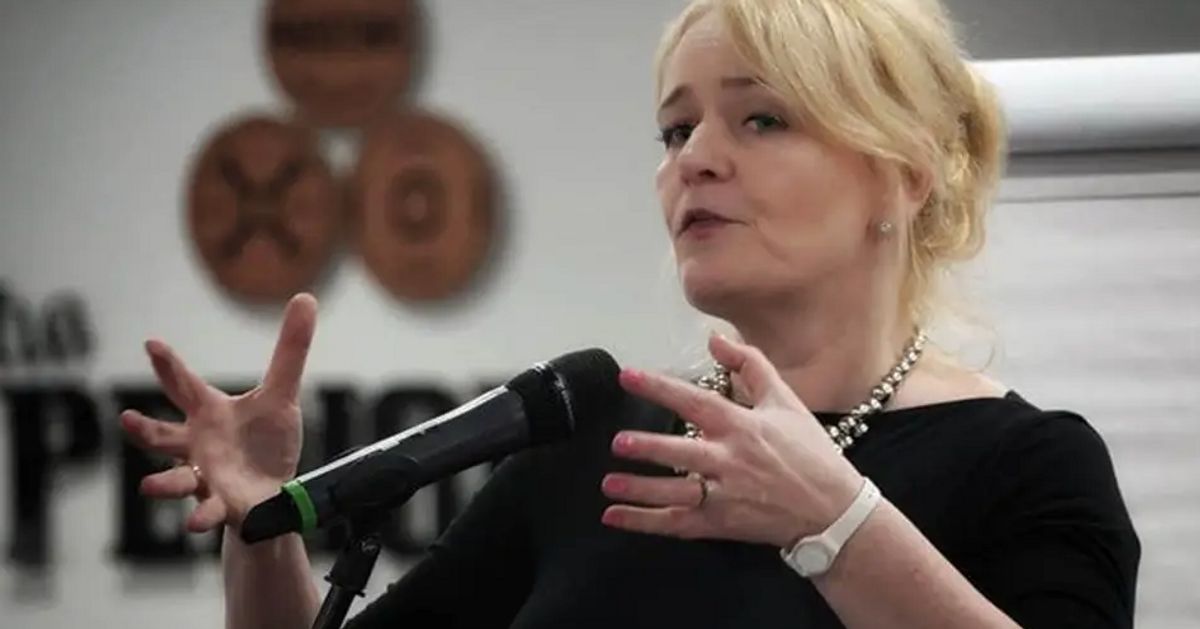
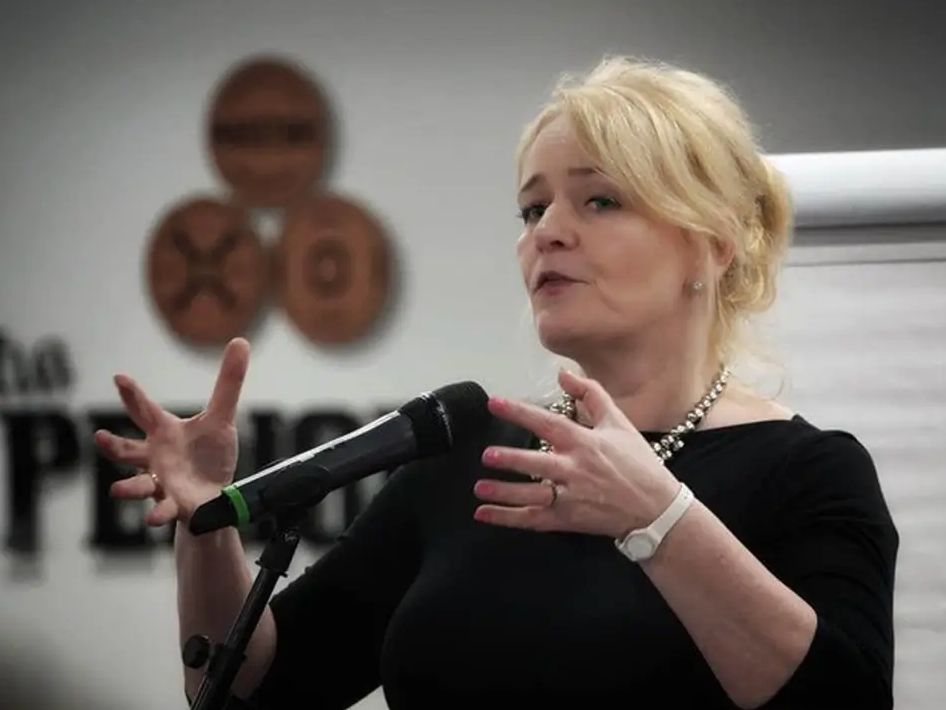
Sharon Graham, the newly-elected leader of the Unite union, will use her speech to the Trade Union Congress virtual gathering on Monday to dismiss the ability of MPs of any party, including Labour, to improve employment conditions.
“It’s time that our focus was on winning at work,” she will say. ”No politician is coming to save us.
“No Westminster project is going to deliver pay rises for our members or defend them from bad bosses.
She will tell union members: “That is our job. We need to do it ourselves.
“The set routine of policy demand, followed by rhetorical claims linked to media releases, and finished with a lobby, has not succeeded. It is time to change that. It must end. It doesn’t work. It hasn’t worked.”
Graham led Unite’s Organising and Leverage Department, which specialises in taking on hostile employers, before surprising many to win the race to succeed Len McCluskey as general secretary.
In her previous role she led disputes at British Airways and Crossrail as well as campaigning to unionise Amazon.
Leftwinger Graham had warned Labour leader Keir Starmer there would be “no blank cheque” for the party if she won the contest.
Unite, with its 1.2 million members, is a significant donor to the Labour Party.
Her campaign slogan in the union election was: “It’s Westminster versus the workplace: Back to the workplace.”
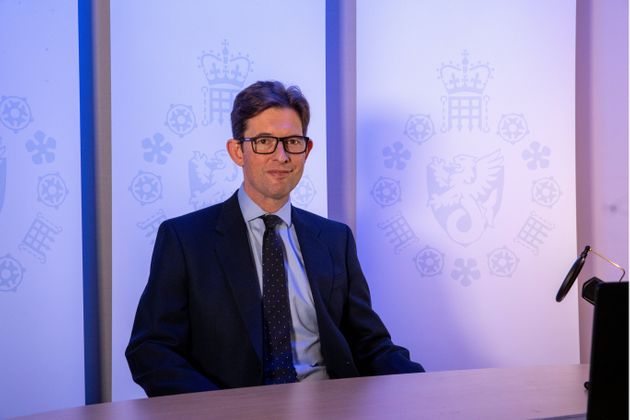
Handout . via ReutersMI5 Director General Ken McCallum has revealed details about thwarted attacks on UK soil
The head of the UK’s security service has revealed that six “late stage” terror plots were foiled during the coronavirus pandemic.
MI5′s director general Ken McCallum said in the last four years the organisation has disrupted 31 attack plots in Britain.
He told the BBC’s Today programme: “That number includes mainly Islamist attack plots but also a growing number of attack plots from right wing terrorists.”
He said the covid crisis had not diminished the threat, adding: “Even during the pandemic period which we have all been enduring for the past two years, we have had to disrupt six late-stage attack plots.
“So, the terrorist threat to the UK, I am sorry to say is a real and enduring thing.”
Asked if there will be a terror attack while he leads the organisation, he replied: “Of course there are likely to be terrorist attacks on UK soil on my watch. We wish it were not so.”
He also said the UK faces a “consistent global struggle” to defeat extremism, as part of an interview marking the 20th anniversary of the September 11 attack.
A minister was forced to defend Gavin Williamson today after he came under fire for confusing footballer Marcus Rashford with rugby player Maro Itoje.
Helen Whately said she thought it was “highly unlikely” the education secretary was racist when quizzed on LBC.
It comes after Williamson was quoted in the Evening Standard as saying he had enjoyed a Zoom discussion with England player Rashford. However, an aide later clarified he had in fact spoken to Itoje.
Asked if he was racist or incompetent, Whately initially said: “Honestly, I don’t know.
“He’s put out his explanation and there’s really nothing more that I can say about it.”
Pressed by presenter Nick Ferrari, she added: “I can’t believe for a moment that he is. I think that is highly unlikely.
“It’s not necessarily one or the other. You’ve given me a false choice – you’re trying to put me in a trap.”
Manchester United’s Rashford responded to Williamson’s comment, saying the difference in accent between him and Londoner Itoje was a possible “giveaway”.
England and Saracens star Itoje tweeted: “Due to recent speculation I thought it was necessary to confirm that I am not Marcus Rashford.
“And whilst we are here my name is not Mario either!! Just a simple Maro Itoje will do.
“Much love, Marcu… I mean Maro Itoje.”
In a statement, Williamson said: “Towards the end of a wide-ranging interview, in which I talked about both the laptops and school meals campaigns, I conflated the issues and made a genuine mistake.
“We corrected this with the journalist before publication of the story.
“I have huge respect for both Marcus Rashford and Maro Itoje, who run effective and inspiring campaigns.”
Nick Potts – PA Images via Getty ImagesRashford said he feared registrations to the government-backed food voucher scheme were ‘plateauing’
Marcus Rashford has kickstarted a drive to get more disadvantaged families signed up to a food voucher scheme – prompting calls from Labour that the footballer is having to “do the government’s work for them”.
The England and Manchester United striker urged health professional to help get more children signed up to the government’s healthy start food voucher scheme after it emerged that 40% of those eligible were still not registered.
In an open letter published in the British Medical Journal, Rashford said he was worried that after an initial good start last year, numbers were now “plateauing”.
“Since November 2020, members of the child food poverty taskforce have used their channels and platforms to communicate about the healthy start scheme and to tell people how to access it, with the hope that we will be able to reach the majority of those most in need,” he said.
“While we have seen 57,000 more parents benefit from the scheme as a result, I’m concerned we are plateauing.
“More than 40% of those eligible for the vouchers are still not registered for the scheme, and I’m confident that the majority of these parents can be found in communities just like mine, where I grew up — no internet, no high street, no word of mouth.”
Labour’s shadow child poverty secretary Wes Streeting accused the government of having “no strategy for lifting children out of poverty”, adding: “Once again we see Marcus Rashford having to do the government’s work for them.”
Rashford’s letter is not the first time the footballer-turned-campaigner has intervened to provide decent food for children.
In May he became the youngest person to top the Sunday Times giving list by raising £20 million in donations from supermarkets to tackle child food poverty.
Rashford, who has spoken movingly about his own experience growing up in poverty, said the stigma attached to receiving help from the state was “the most silly thing I’ve ever heard”.
In a letter to MPs last year urging them to back the child food poverty taskforce, Rashford recalled hearing his mum cry herself to sleep as she worried about how to make ends meet.
“I remember the sound of my mum crying herself to sleep to this day, having worked a 14-hour shift, unsure how she was going to make ends meet,” he wrote at the time.
“That was my reality and thankfully I had the talent to kick a ball around to pull us all out of that situation.
“Many can’t find that way out and aren’t being offered a helping hand to do so.”
The department for health and social care has been contacted for comment.
Ministers have tightened up the law to raise standards for Covid tests sold privately in England – but have exempted Chinese-made tests which have cost the taxpayer billions, HuffPost UK can reveal.
New regulations from the department of health and social care (DHSC) aim to stamp out “poor quality tests” that could give the public a false sense of security and allow people to spread the virus unwittingly.
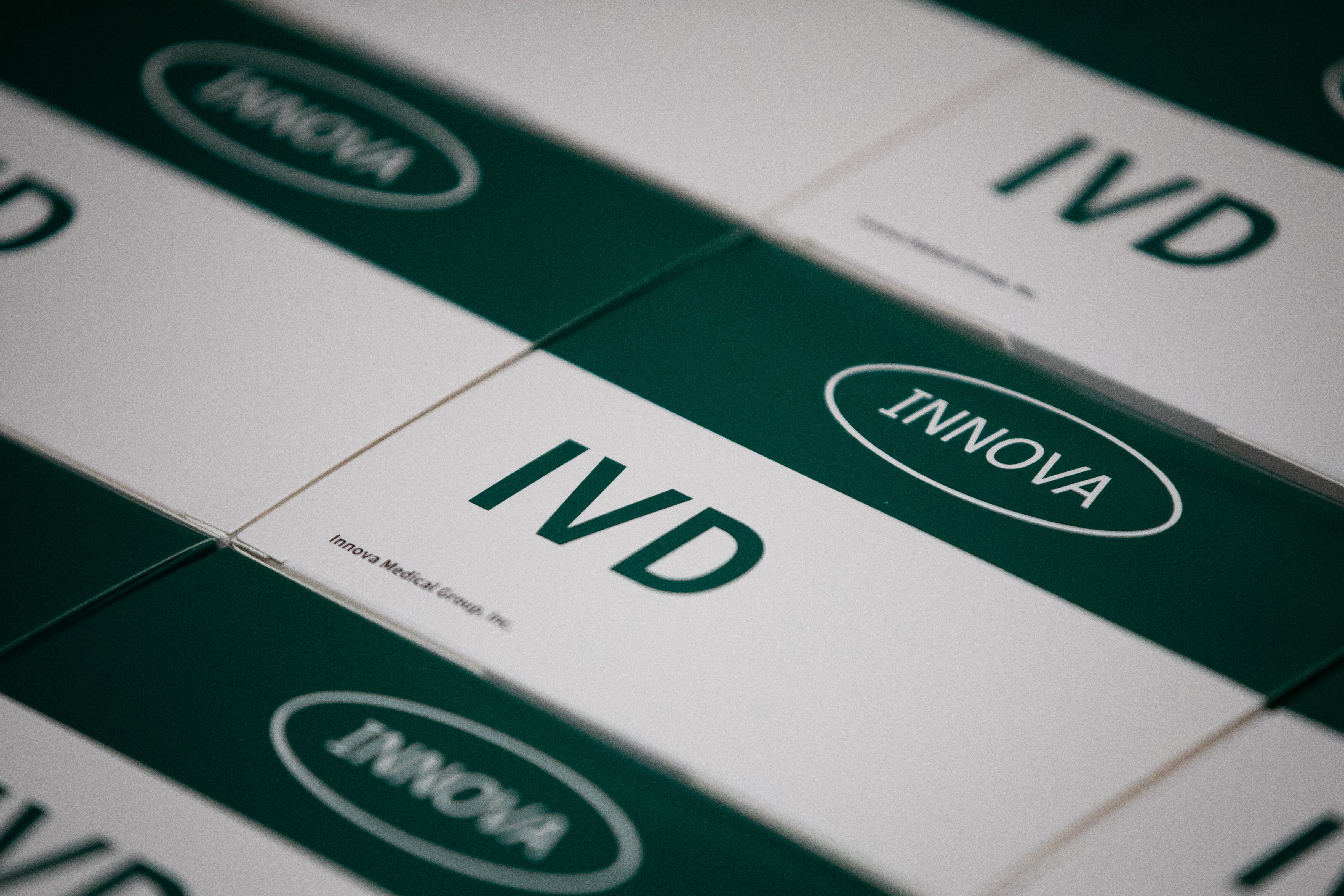
But the higher performance standards, quietly introduced this week, include a loophole that explicitly excludes lateral flow tests previously bought by the government such as those bought from Innova Medical Group at a cost of more than £3bn.
British manufacturers privately welcome the new regime as they believe their home-grown tests are cheaper and more reliable than the Innova tests.
But many in the UK bio industry question why ministers are exempting the Chinese-made devices from the same high standards.
The rules, which will kick in from September 1, have also prompted fresh suspicions that the government is moving away from giving the public and businesses free rapid tests and will instead expect them to pay for the devices commercially.
Firms will have to pay the government £14,000 for any application and any tests not deemed up to the grade will be removed from sale by law.
Retailers, distributors and manufacturers of tests that attempt to sell unvalidated tests would face sanction.
Currently, PCR or lateral flow tests can go on commercial sale in England as long as they carry a CE mark, which means they meet EU and UK requirements, but each manufacturer designs their own data collection and analysis methods to validate them.
Under the new proposals, the government will require that “all COVID-19 tests placed on the UK market undergo a mandatory validation process”, with the same standards applied equally to allow consumers to make a fair comparison.
A new DHSC document states: “It would undermine current public health goals if people used poor quality tests that give them a false sense of security.
“In the case of a false negative, this could see an infected individual unknowingly spread the virus. Conversely false positives could require business to close and people to isolate unnecessarily.”
But an explanatory memorandum to the new legislation states that “tests supplied by government will be exempt” from the new validation process.
The memo adds that contracts agreed by the government to supply NHS hospitals “can continue to be honoured by the manufacturer even if the test has failed validation”.
This has prompted anger among UK bioscience insiders, who believe that the Innova tests would compare badly with British-made rivals and who complain that ministers have done everything to favour the Chinese-manufactured products since last year.
Innova, which is based in California and funded by a private capital group by a Chinese-born businessman, uses tests produced by Chinese Biotime Biotechnology, in Xiamen city, Fujian province.
Publicly available contracts on the government’s website shows that £3.3bn has been spent to date on the company, as part of the £37bn allocated to the controversial Test and Trace service.
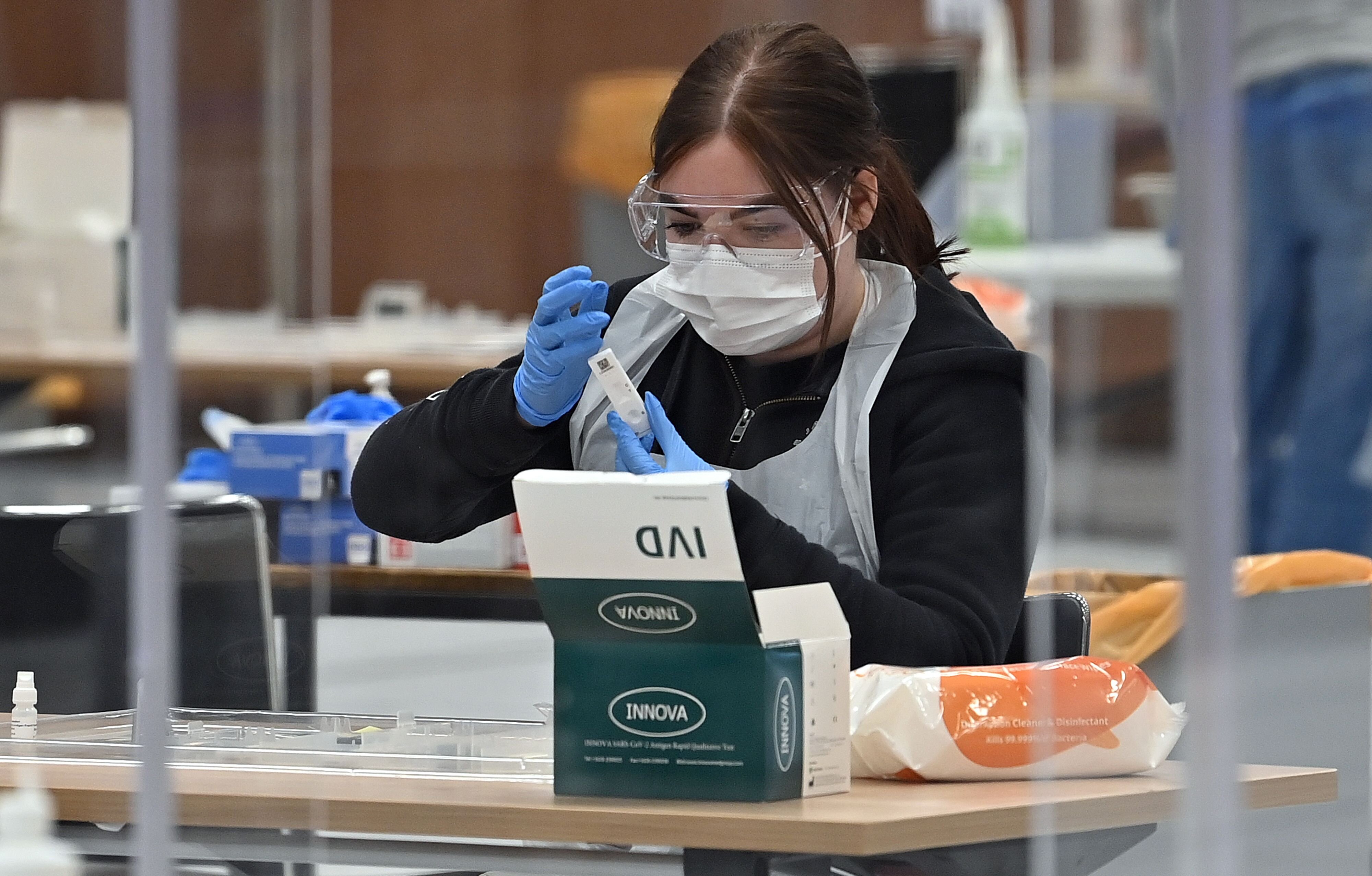
Innova’s 30-minute tests have been used for regular weekly testing of NHS and care home staff and in schools. Since April, any member of the public has also been able to order twice-a-week tests for free.
Yet concerns about cost and reliability have been raised repeatedly by critics, underscored when the US Food and Drug Administration (FDA) issued an alert about the test in June.
The FDA told Americans to “destroy the tests by placing them in the trash”, saying it had “significant concerns that the performance of the test has not been adequately established, presenting a risk to health”.
The UK’s Medicines and Healthcare products Regulatory Agency (MHRA) – which critics claim is an arm of the DHSC and not fully independent – then did its own risk assessment and found no similar action was needed here.
Aaron Chown – PA Images via Getty ImagesInnova Covid-19 testing kit
Critics further point out that Innova’s own manufacturer’s instructions make clear the tests were designed for use only in symptomatic Covid cases, but the UK government allowed them to be used in asymptomatic cases as part of its “Operation Moonshot” plan to mass test the population.
Authorisation for the Innova test to be used by asymptomatic people at home was due to expire on June 22 but has been extended until August 28, but the new regulations have sparked hope that they can gradually be replaced by British alternatives.
But controversy dogs the Innova tests and the way the UK government has effectively taken ownership of its products. Innova branding has been dropped from the boxes used to deliver tests, replacing it with NHS branding. Eyebrows were further raised when the DHSC decided to tweak the way in which the Innova test could be used.
Although the manufacturer’s “instructions for use” insist on the invasive and uncomfortable practice of taking a swab from the back of the throat, the government has quietly changed the rules to allow it to take swabs from the nose only.
Similarly, the original instructions for use made clear the tests were never intended for home use and were designed to be administered by a clinical professional.
The exemption for Innova from the new validation rules is seen by some British manufacturers as a way of avoiding the potential huge embarrassment of seeing their tests fail to match the standards of others, not least given large sums spent on them to date.
The legislation mandates a “desktop review” be undertaken of all Covid tests placed on the UK market and defines a set of minimum standards that these tests should meet.
One industry insider said the guidance document states that tests should achieve a minimum sensitivity rating of 95%, whereas the Innova test sensitivity rating achieved at Public Health England’s Porton Down lab was 57.5%.
One industry source said: “This means that the tests already selected won’t need to go through this exercise. It’s a disgrace. One rule for them…”
Another bioscience source said: “The UK industry was not totally confident with the way tests were evaluated for the NHS in the first place.”
Yet another said: “By appointing themselves ‘judge and jury’ of the Innova test, the DHSC has allowed itself to make fundamental changes to the Innova test’s characteristics, implementing them without any follow up Porton Down assessment.
“[These are] changes that would inevitably have had a significant detrimental impact on the test’s already underwhelming performance. Notably, to date, the government have not seen fit to publicly assess the impact of these wholesale changes.”
Shadow health minister Justin Madders told HuffPost UK: ”Given the concerns in the USA over the Innova tests and the fact they are only on a temporary approval here it does seem extraordinary that this legislation could allow Sajid Javid to let them carry on being used without being subject to the same approval processes as everyone else. Far more transparency is needed.
“This also seems to suggest that the government intends to move away from having Covid tests being provided free of charge. This has massive implications for public health and could seriously undermine efforts to reduce transmission of the virus. The government needs to come clean on whether they intend to introduce a charging regime for Covid test.”
The DHSC and the department for education raised suspicions that the distribution of free lateral flow tests could cease at the end of September, when a “review” will take place of their twice-weekly use in schools and to the wider public.
WPA Pool via Getty ImagesFormer health secretary Matt Hancock and Boris Johnson pushed ‘moonshot’ mass testing
Allyson Pollock, professor in public health at the University of Newcastle, said the bigger issue was that there was little evidence that testing of asymptomatic people – at home or in the workplace – was effective at all.
“This is about creating a market in tests which have questionable performance but above all, it’s still unknown despite the billions spent whether tests as part of a screening intervention actually help to prevent transmission,” she said.
“This isn’t a public health strategy, this is a commercial strategy. They want the public to get hooked on tests and employers to believe that testing is the way out. This is increasingly ridiculous given that the prevalence is low and falling now that immunity is being established.
“Secondary attack rates are low in the immunised population and infection likely to be mild and risks of transmission commensurately lower. Mass testing with lateral flow tests is an enormous waste of resources and it’s the antithesis of good public health.”
One key criticism of lateral flow tests is that their negative readings are being used as a “green light” to allow people to go about their daily lives, when in fact they were only ever designed as a “red light” test – when a positive reading tells people when they may have Covid and to get a gold-standard PCR test to check.
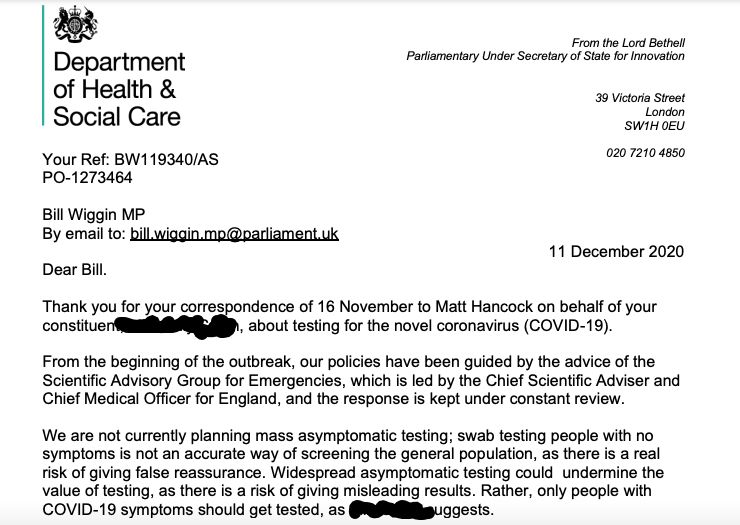
HuffPost UK has seen a letter from health minister Lord Bethell, sent last December to Tory backbencher Bill Wiggin, in which he makes clear the real risks to public health from asymptomatic mass screening.
In the letter, Bethell said: “We are not currently planning mass asymptomatic testing; swab testing people with no symptoms is not an accurate way of screening the general population, as there is a real risk of giving false reassurance.
“Widespread asymptomatic testing could undermine the value of testing, as there is a risk of giving misleading results. Rather, only people with COVID-19 symptoms should get tested.”
HuffPost UKLord Bethell letter on asymptomatic testing risks
Alba MP Neale Hanvey, who has raised the issue of Innova’s big government contracts and the failure to use rival tests made by Scottish-based firms such as Omega Diagnostics, said the letter was telling.
“This letter supports everything that I have said to [former health secretary] Matt Hancock and to other members of the department of health, that this is a grand folly. It’s giving people false reassurance and a huge cost to the public purse for no perceivable benefit.”
Hanvey added that the new mandatory guidance for commercial tests was “a fig-leaf for the government’s misdeeds”.
“What the government needs to do now is to cease supporting tests that we know are not designed for their current use, not picking up enough infectious cases and move swiftly to open the doors for the domestic market, to get access not just to private purchase, but to NHS supplied tests. Where is the global Britain and all of this mess?”
Boris Johnson has repeatedly declared that he wants home-grown rapid tests to be developed, but the UK bioscience industry has been increasingly frustrated that their tests were not approved by Porton Down labs despite other independent validation.
The UK government raised hopes earlier this year when it loaned manufacturing equipment to British companies and earmarked £1.15bn for a programme that would see rapid production. But virtually none of the money has been spent because British tests have not been approved.
One firm, Mologic, was so frustrated with the lack of validation of its tests that it threatened to sue the government. It has since been bought by the Bill & Melinda Gates Foundation and turned into a not-for-profit to help develop rapid tests to combat tropical diseases such as dengue, bilharzia, and river blindness, as well as Covid.
One UK bio industry source said: “They completely screwed the UK diagnostic industry. They invested in LFD [lateral flow device] machinery and are refusing to allow the factories to use them. Our firms are having to export world leading tests, two are in the top ten globally, while we import inferior ones.”
One bio industry source said: “I’m really unhappy that the government was signaling particularly to the UK manufacturers that we will provide you with a lot of support, and we’d like you to help us be self-sufficient in lateral flow tests by spring 2020.
“The companies all took them at their word. Then the government basically says well we didn’t actually promise we’d buy anything from you. That is a little two faced.”
A diagnostics expert said that the new commercial validation process was at least a signal that there would be a shift to getting the public to buy their own tests and that the cheaper price and better performance of British tests would mean that from the autumn “everyone will get a market share”.
“The lateral flow tests being provided to the population free of charge at the moment, at some point, people will either have to start buying themselves or employers will have to start buying them for their employees and there will be only be a certain amount that are provided free of charge.”
Dan Kitwood via Getty ImagesHealth secretary Sajid Javid now has sweeping powers over commercial tests
Industry insiders believe that firms like Mologic and Omega will submit their tests under the new system and expect to get approval. “This is all in readiness for when DHSC stop giving away free tests for a lot of use cases and reopens the private market,” one said.
Some insiders believe that the Innova test was adopted by the government early in the pandemic simply because it could be provided in mass numbers and that even though its performance is “not perfect” it was “good enough for what it does”.
Defenders of the Innova test believe it can be effective at detecting high viral loads quickly, claiming there is evidence to back this up.
The DHSC has in recent months pivoted to using another Chinese-made test produced by OrientGene, which some in Whitehall believe produces more reliable results than Innova.
Doris-Ann Williams, chief executive of the British In-Vitro Diagnostics Association (BIVDA) said one problem with the new mandatory system was that it would add needless regulation when existing systems could have been updated.
“While we appreciate the government is acting with the best of intentions by introducing this legislation, we still feel a better solution would have been to amend the existing regulation so that the MHRA, who are a world leading regulator for medicines and medical devices, could have ensured the right products are available to the British population.
“However, industry is committed to working under the legislation and alongside UKAS [UK Accreditation Service] to ensure COVID antigen tests are reliable and safe.”
The government insists that its own tests should be exempt from the new mandatory testing standards in an effort to avoid duplication of previous validations.
“This is because the market validation is based on the validation DHSC has been doing for public procurement of tests as such these two validation process are judged to be equal,” according to the explanatory memorandum accompanying the new regulations.
“As such DHSC will place tests onto to the market without undergoing the regulatory validation process conducted by DHSC to control access to the UK market.”
A spokesperson for the DHSC said: “Private testing continues to play an important role in managing COVID-19 by supplementing and supporting NHS Test & Trace as we learn to live with this virus.
““As we ease restrictions, including for travel, the role of private testing is increasing and our regulations are ensuring consumers can be confident tests they buy give accurate results and are of sufficient quality.”
They added that private testing will continue to play a role as part of the overarching strategy for managing COVID-19.
The department believes that it is important to introduce a regulatory regime to ensure those tests available on the market are validated for performance, regardless of whether the government is also providing free tests.
A spokesperson for Innova Medical Group said: “Our tests have proven by independent studies to be very effective in detecting individuals who are considered infectious regardless of symptoms.”
They said that the latest UK test had shown it “detects nearly 100% of infected asymptomatic individuals who are considered infectious to others, and there was very little difference in the specificity between self-testing (99.1%) and testing performed or observed by a professional (99.8%)”.
“We understand FDA’s health risk concern for the US market as they have not evaluated or authorised the Innova test in the US.
“In simple terms, the regulator won’t confirm a product is safe to use until it has evaluated and authorized a product itself. None of the FDA inspectional observations concern the performance of the test.”
The company said that its test had been widely used, studied, tested, scrutinised and analysed. Its point of care test had been approved in Germany, France, Netherlands, Finland, Sweden, UK, Austria, Estonia, Finland, Israel, Malaysia, and Sultanate of Oman. Its self-test kit had been approved in Austria and the UK.