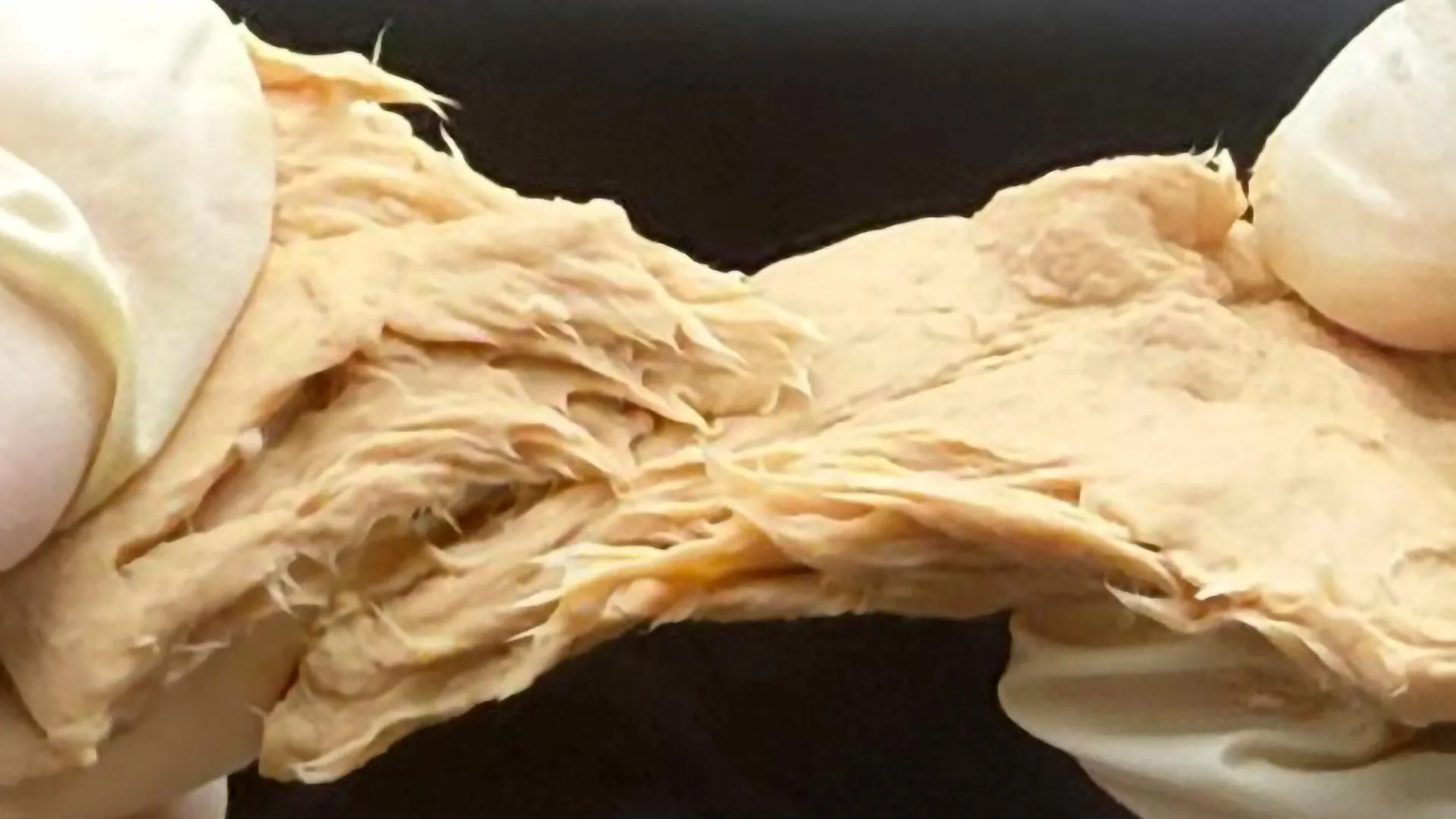
This engineered fungus cuts emissions and tastes like meat

A recent study published November 19 in Trends in Biotechnology reports that scientists used the gene-editing tool CRISPR to improve how efficiently a fungus produces protein while also lowering the environmental footprint of that production by as much as 61% — all without introducing foreign DNA. The modified fungus has a meatlike flavor and is easier for people to digest than the natural strain it originated from.

“There is a popular demand for better and more sustainable protein for food,” says corresponding author Xiao Liu of Jiangnan University in Wuxi, China. “We successfully made a fungus not only more nutritious but also more environmentally friendly by tweaking its genes.”

Sustainable Protein and the Need for Alternatives

Animal agriculture accounts for about 14% of global greenhouse gas emissions. It also requires large amounts of land and fresh water, both of which are increasingly strained by climate change and human activity. Because of these challenges, microbial proteins found in yeast and fungi have gained attention as promising alternatives to meat.

Among the many mycoprotein sources studied so far, the fungus Fusarium venenatum has become a prominent choice because its natural flavor and texture closely mimic meat. It has already been approved for consumption in several regions, including the United Kingdom, China, and the United States.

Why Fusarium venenatum Needed Improvement

Even with its advantages, Fusarium venenatum has thick cell walls that limit how well humans can digest it. Producing it is also resource intensive. Growing even modest quantities of mycoprotein requires significant inputs, and the spores must be cultivated in large metal tanks filled with sugar-rich feedstock and added nutrients such as ammonium sulfate.

Liu and his colleagues wanted to determine whether CRISPR could make this fungus easier to digest and more efficient to grow while still avoiding the introduction of foreign DNA into the organism.

Key Gene Edits That Boost Efficiency

To explore this approach, the researchers removed two genes linked to the enzymes chitin synthase and pyruvate decarboxylase. Removing the chitin synthase gene resulted in a thinner cell wall, which made the internal protein more accessible for digestion. The deletion of the pyruvate decarboxylase gene fine-tuned the fungus’s metabolism, reducing the amount of nutrients needed for protein production.

Their analyses revealed that the modified strain, named FCPD, used 44% less sugar to create the same amount of protein as the original strain and did so 88% more quickly.

“A lot of people thought growing mycoprotein was more sustainable, but no one had really considered how to reduce the environmental impact of the entire production process, especially when compared to other alternative protein products” says first author, Xiaohui Wu of Jiangnan University.

Life Cycle Footprint and Global Comparisons

The team then assessed the environmental footprint of FCPD across its entire life cycle, from laboratory spores to inactivated meat-like products, at an industrial scale. They modeled production in six countries with different energy systems, including Finland, which depends largely on renewable energy, and China, which relies more heavily on coal. In every scenario, FCPD produced lower environmental impacts than conventional Fusarium venenatum. Across its full life cycle, FCPD production reduced greenhouse gas emissions by up to 60%.

How FCPD Compares to Animal Protein

The researchers also compared the impacts of FCPD production to those associated with raising animals for food. Against chicken production in China, FCPD required 70% less land and lowered the potential for freshwater pollution by 78%.

“Gene-edited foods like this can meet growing food demands without the environmental costs of conventional farming,” says Liu.

This work was supported by the Key Research and Development Program of China, the Jiangsu Basic Research Center for Synthetic Biology, the Natural Science Foundation of Jiangsu Province, and the Postgraduate Research & Practice Innovation Program of Jiangsu Province.

Share Button

This tiny pill could change how we diagnose gut health

Move over, colonoscopies — researchers writing in ACS Sensors report that they have created tiny microspheres filled with bacteria that can sense the presence of blood, a key sign of gastrointestinal disease. These microspheres function like miniature “pills” that are swallowed and include magnetic particles so they can be easily collected from stool. After passing through mouse models with colitis, the sensors detected gastrointestinal bleeding within minutes. The team notes that the same bacterial system could eventually be engineered to identify other gut-related conditions.

“This technology provides a new paradigm for rapid and non-invasive detection of gastrointestinal diseases,” says Ying Zhou, a co-author of the study.

Why Easier, Noninvasive Gut Diagnostics Are Needed

In the U.S., millions of people live with colorectal cancer or inflammatory bowel disease, including colitis, which can lead to intestinal bleeding, diarrhea and abdominal pain. Colonoscopy remains the gold-standard diagnostic tool. It relies on an endoscope, a camera-tipped flexible device that is carefully guided through the large intestine. Although it provides valuable medical insight, many individuals hesitate to undergo the procedure because it requires extensive preparation and can feel invasive. To develop an alternative, Zhou, Bang-Ce Ye, Zhen-Ping Zou and colleagues are exploring the use of bacteria that detect biomarkers such as heme, a component of red blood cells that signals bleeding inside the gut.

Building Bacterial Sensors That Survive Digestion

The team previously designed bacteria that emit light when they encounter heme, but the early versions broke down during digestion and were difficult to retrieve afterward. In the new study, the researchers protected the bacteria by enclosing them, along with magnetic particles, inside small droplets of sodium alginate, a thickening ingredient commonly found in foods. This produced sturdy hydrogel microspheres that travel through the digestive tract and can be removed from stool with a magnet. Initial laboratory tests confirmed that the hydrogel shield allowed the bacteria to survive simulated digestive conditions while still letting heme reach the sensor and trigger a glow.

Testing the Microspheres in Mouse Models of Colitis

The researchers then gave the microspheres orally to mice with varying levels of colitis, ranging from no disease activity to severe inflammation. After the spheres moved through the gastrointestinal tract, the team retrieved them using a magnet and reported three key findings:

  • Microsphere cleanup and signal analysis required about 25 minutes.
  • The sensors produced stronger light signals as disease severity increased, indicating higher levels of heme in animals with more advanced colitis.
  • Tests in healthy mice showed that the microspheres were biocompatible and safe.

Future Potential for Human Testing and Disease Monitoring

Although the technology has not yet been evaluated in humans, the researchers suggest that encapsulated bacterial sensors could one day help diagnose gastrointestinal diseases, monitor treatment responses and track changes in disease over time.

The authors acknowledge funding from the National Natural Science Foundation of China, the National Key Research and Development Program of China, and the China Postdoctoral Science Foundation.

Share Button

Labour Calls For Probe Into Pro-Russia Links Within Reform After ‘Traitor’ Nathan Gill Jailed

Labour has called for a probe into pro-Russian links within Reform UK after the party’s former leader in Wales was sentenced to more than a decade behind bars for taking bribes to promote pro-Russian propaganda.

Nathan Gill pleaded guilty to eight counts of bribery between December 6, 2018, and July 18, 2019, back in September and was today sentenced to 10 and a half years in prison.

He admitted accepting substantial sums to make pro-Russian remarks both to the media and to the European parliament back when he was an MEP for the UK Independence Party (UKIP) and then the Brexit Party.

He served as the leader of Reform UK Wales from March to May 2021, and has been closely associated with Nigel Farage – who has served as leader of both UKIP and the Brexit Party – over the years.

Police have confirmed Farage has not been a part of this investigation and that Gill is no longer a member of Reform.

Still, Labour’s defence minister Al Carns called on the Reform UK leader to conduct a “forensic” independent investigation to root out any pro-Russian links within Reform.

He urged Farage to “leave no stone unturned” and review “every inch” of the party, including donors and membership.

Gill’s sentencing comes amid rising concerns over Russia’s interference in the UK, with the government having revealed a Russian spy ship was in UK waters only earlier this week.

Carns said: “No patriotic British political party should allow pro-Russian elements to covertly have an influence on our political system or society.

“It’s as anti-British as you can get. It’s time Nigel Farage proved he isn’t happy to parrot Kremlin talking points any longer and demonstrate to the public that Putin has no hold over his party.”

Farage himself has been accused of being pro-Putin in the past, having said in 2014 the Russian authoritarian was the leader he admired the most.

He has also been accused of aligning with some Kremlin talking points, after claiming the EU and Nato “provoked” Russia’s invasion of Ukraine in 2022 by trying to expand eastwards.

Counter-terrorism police believe Gill, motived by “greed” and possibly an element of a “pro-Russian stance”, took at least £40,000 in cash and offered to introduce other MEPs so they could also be bribed.

Officers believe some individuals involved may have even had direct links to Putin.

The Liberal Democrats also responded to Gill’s sentencing, writing on X: “Nathan Gill; A traitor who was at the very top of Reform UK, aiding and abetting Russian adversaries, has been sentenced today. Reform UK should be ashamed. Britain deserves better.”

Green Party leader Zack Polanski taunted Reform over the party’s attempts to distance themselves from Gill in recent months. He wrote on X: “Has Nigel Farage or Zia Yusuf remembered who Nathan Gill is yet?”

A Reform UK spokesman told HuffPost UK: “Mr Gill’s actions were reprehensible, treasonous and unforgivable.

“We are glad that justice has been served and fully welcome the sentence Nathan Gill has received.”

Share Button

Pillion Director Explains Decision To Cut This X-Rated Scene From BDSM Biker Romance Movie

The director of the much-hyped romance Pillion has shed some light on why one particularly X-rated scene was cut from the new movie.

Earlier this year, the BDSM-themed biker movie was a stand-out when it premiered at the Cannes Film Festival and quickly became one of the most talked-about films of the year, which its leading man Alexander Skarsgård has capitalised on with some excellent red carpet looks channeling his character Ray.

Pillion also stars Harry Melling – best known for playing Dudley Dursley in the Harry Potter movies – who plays introverted Colin, a “wallflower” who quickly gets swept up in Ray’s exciting and mysterious world when he becomes his sub.

Audiences gave the film an eight-minute standing ovation when it premiered, with critics honing in on its balance of humour, emotional vulnerability and bold sexual scenes.

Its director, Harry Lighton, previously spoke about one such sex scene that didn’t make the final cut, explaining that he axed it so the audience didn’t end up “feeling they were being deliberately shocked by an image”.

The image in question was “one close up of a dick, a hard dick … like down the barrel of the lens” which he considered a bit much when he saw it on the giant cinematic screen.

Now, the filmmaker has added more context to the cut scene in a new interview with the Guardian, getting straight to the point.

Originally, there was a closeup of Ray’s bell-end,” he said. “But it would have punctured the tension and raised a laugh.”

Despite the raunchy content, Alexander has previously insisted his dad – award-winning Swedish actor Stellan Skarsgårdgave Pillion his stamp of approval after they sat down together to watch the film.

He also thinks his mum will be a fan, insisting in the new interview: “We never wanted to pander to straight audiences but I also think my mum’s gonna like the film. We didn’t make it for her but she can enjoy it.”

Not quite Downton with a cup of tea and a digestive, but we respect it…

Pillion is due to hit UK cinemas on Friday 28 November.

Share Button

Delayed action before 2020 Christmas lockdown ‘inexcusable’

Baroness Hallet says ministers failed to take “decisive action” against an “entirely foreseeable” variant.

Share Button

Biggest prostate cancer screening trial in decades begins in UK

The study aims to find the best way to detect prostate cancer – the most common cancer in men in the UK.

Share Button

What’s in the Covid inquiry report… in 68 seconds

The report looks at whether lockdowns were timely and reasonable, and what impact rule-breaking at the heart of government had on public confidence.

Share Button

‘Toxic’ No 10 culture harmed Covid response, inquiry finds

Boris Johnson, Dominic Cummings and Matt Hanock are all criticised for contributing to poor Covid decision-making.

Share Button

UK did ‘too little, too late’, leading to thousands more Covid deaths – inquiry

Report on government decision-making says delays cost 23,000 lives in the first wave in England.

Share Button

Lockdown could have been avoided – key findings from Covid inquiry

The long-awaited report is published into how well or badly the government handled the Covid pandemic.

Share Button