Those taking part in the study will be children under 16 who are going through puberty.


Those taking part in the study will be children under 16 who are going through puberty.

Maybe you add a touch of baking powder to your tomato sauce to counterbalance the acidity, or perhaps you whack some cream in your bolognese (a la Mary Berry) for a smooth, velvety finish.
You might dust roast spuds and parsnips in semolina for a satisfying crunch, too.
But even though I write a lot about sneaky secret ingredients, I’m always on the lookout for more – especially if they don’t cost much. That’s why I was so excited to read the responses to an r/cookingforbeginners post shared by u/BlastarBanshee.
Advertisement
“What’s the one cheap ingredient that instantly makes everything taste better?” they asked.
Here are some of the best responses:
Credit: u/ShopEmpress
“This is… under-appreciated,” u/Barneyboydog agreed.
“It’s a game-changer on fried eggs.”
Credit: u/glumpoodle
“I just ordered a thing of MSG… and holy shit. It’s actually got less sodium by volume than any salt I own, and the flavour is just mind-blowing,” u/alek_hiddel replied.
Credit: u/Cold-Call-8374
“Yep… a splash (or two) of sherry vinegar at the end of a stew takes it to another level. I learned this trick a few years ago, and now I always have sherry vinegar on hand,” replied u/Dense_Willow4627.
Advertisement
″[It offers] the simple ability to add the flavour of open fire cooking back into the food we eat.”
Credit: u/STS986
“Every time I taste something new and go, ‘oh that’s good!’, I look up [its] ingredients and it’s almost always [got] paprika,” u/Rogerbva090566 responded.
Credit: u/niki2907
“As a non-Balkan… this stuff is the shit,” said u/MuddyHandprints.
Credit: u/bullsbarry
Credit: u/Cold-Call-8374
Credit: u/Untouchable-Ninja
“Basically, you know, MSG in a more natural state.”
Credit: u/BikeTough6760


Around 115 million years ago, the waters north of Australia supported a massive shark that can be viewed as an early relative of the creatures made famous by “Jaws.” Newly examined fossils show that modern sharks began developing extremely large body sizes far earlier in their evolutionary timeline than scientists once thought. These remains indicate that enormous sharks shared the top of the food chain with giant marine reptiles during the Age of Dinosaurs. The research introduces a broad, interdisciplinary effort to track how shark size changed through deep time.
Modern sharks trace their roots back more than 400 million years, yet the branches that eventually produced today’s species originated during the Age of Dinosaurs. The oldest fossils representing these modern lineages date to about 135 million years ago. These early sharks, known as lamniforms, were small and may have measured only around 1 m (~3 feet) in length. Over millions of years they evolved into much larger forms, including the enormous ‘Megalodon’, which may have exceeded 17 m (56 feet), and the modern Great White shark, an apex-predator that reaches about 6 m (20 feet).
Why Shark Fossils Are Mostly Teeth
Because sharks possess skeletons made of cartilage, their bodies rarely fossilize. As a result, most of what survives are their teeth, which are shed continuously and accumulate on ancient sea floors. These teeth commonly appear in sedimentary rocks alongside the bones and teeth of fishes and the giant marine reptiles that dominated many prehistoric ocean ecosystems.
The rocky shores near today’s city of Darwin in northern Australia were once part of the mud-covered floor of the Tethys ocean, a vast body of water that extended from Gondwana (now Australia) to the island chains of Laurasia (now Europe). Numerous remains of ancient marine life have been uncovered here, including plesiosaurs (long-necked marine reptile resembling the popular image of the Loch Ness monster), ichthyosaurs (‘fish-lizards’), and large bony fish. Among the most remarkable discoveries are several huge vertebrae that indicate the presence of a very large lamniform shark.
Revealing the Early Giant: Cardabiodontid Characteristics
Five vertebrae have been recovered, each partly mineralized, which helped preserve them. Their structure is almost identical to that of today’s Great White shark. However, while adult Great Whites have vertebrae about 8 cm wide, the vertebrae from the Darwin shark exceed 12 cm in diameter. Their features clearly link them to a cardabiodontid, a group of giant predatory sharks that inhabited the oceans around 100 million years ago. The Darwin specimen is especially notable because it is roughly 15 million years older than other known cardabiodontids and had already reached the extremely large size typical of the group.
To determine the body size of this early modern shark mega-predator, a team of researchers from multiple fields collaborated on a detailed analysis. The group included paleontologists and specialists in tomography from the U.S.A. Sweden, and Australia, as well as ichthyologists from South Africa and the U.S.A.
The findings appear in the Nature portfolio journal Communications Biology. Fossils of ancient sharks from the Age of Dinosaurs can be viewed by the public at the Swedish Museum of Natural History.
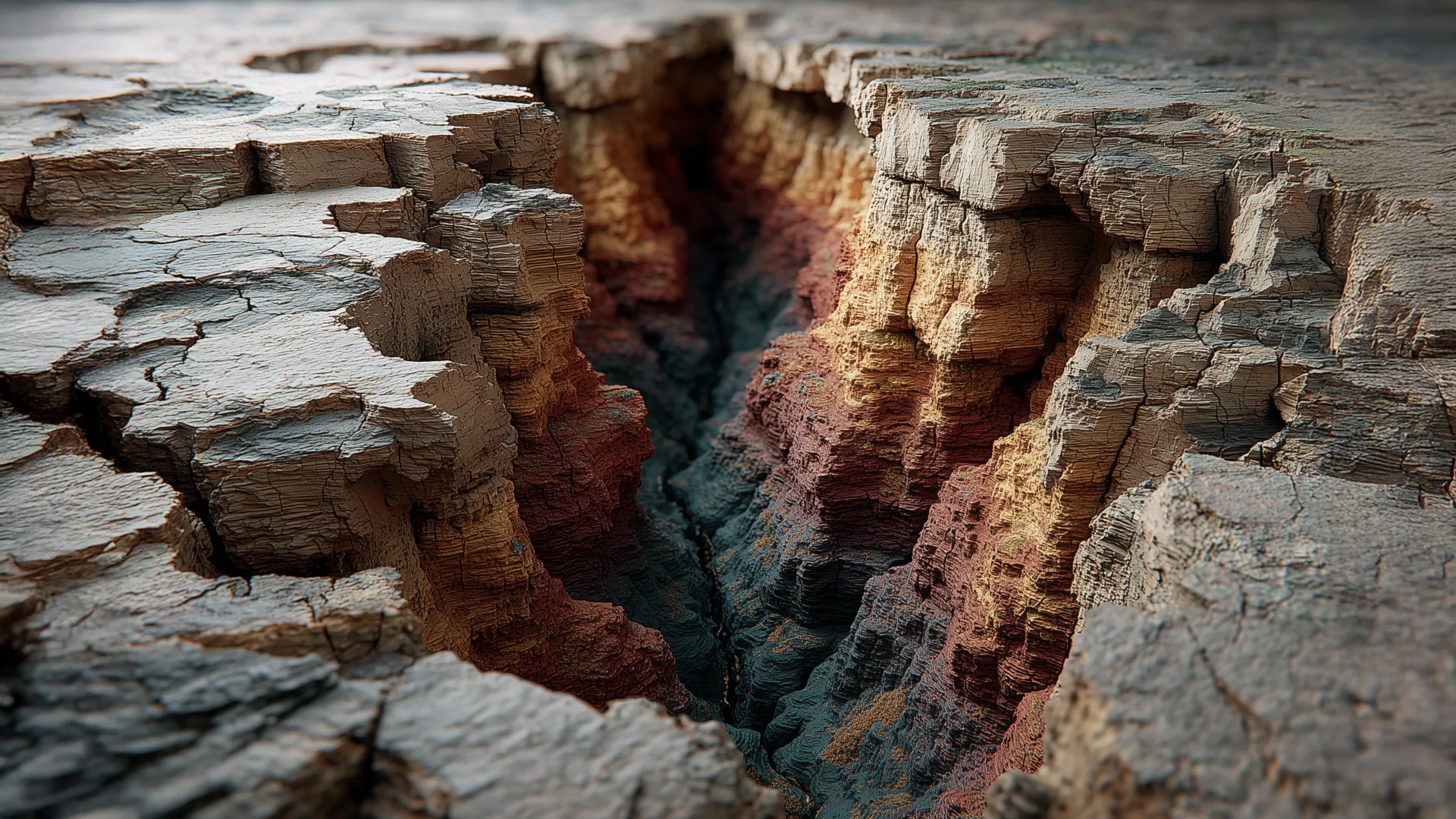
Earthquake faults located deep within the planet can reconnect after a seismic disturbance, according to new research from the University of California, Davis. The study, published Nov. 19 in Science Advances and supported by National Science Foundation grants, introduces a new factor that could reshape how scientists interpret fault behavior linked to major earthquakes.
“We discovered that deep faults can heal themselves within hours,” said Amanda Thomas, professor of earth and planetary sciences at UC Davis and corresponding author on the paper. “This prompts us to reevaluate fault rheological behavior, and if we have been neglecting something very important.”
Slow Slip Events and Shifting Stress
Thomas, UC Davis colleague Professor James Watkins and their team investigated slow slip events, or SSEs, which resemble extremely slow earthquakes.
Regular earthquakes happen when stresses that accumulate as tectonic plates grind together over centuries or millennia are suddenly released, creating intense shaking that lasts only seconds.
Around 2002, Thomas said, researchers identified a different kind of seismic activity. In a slow slip event, stresses that build for months to years are relieved in movements of only a few centimeters that occur gradually over days, weeks or months.
Repeating Slip in the Cascadia Subduction Zone
To better understand these deep events, the team examined seismic data from the Cascadia Subduction Zone in the Pacific Northwest, where the Juan de Fuca plate is sliding beneath the North American plate. Slow slip events here do not behave like typical earthquakes. The same fault segment can slip again within hours or days, which indicates the fault has partially regained strength and that stress has returned very quickly.
Thomas noted that even small tidal forces reveal how rapidly stress can rebuild. The gravitational pull of the Sun and Moon affects the Earth’s crust just as it influences ocean tides. In addition, the shifting weight of seawater also applies pressure to the rocks below.
The remaining question is how the fault manages to recover so quickly.
High-Pressure Experiments Reveal Rapid Healing
Watkins, a geochemist who specializes in the behavior of minerals at high temperature and pressure, used laboratory equipment capable of simulating the conditions found deep in the crust or beneath a volcano.
To recreate the aftermath of a slow slip event, Watkins and Thomas packed powdered quartz into a silver cylinder, sealed it, and placed it under 1 Gigapascal of pressure (10,000 times atmospheric pressure) at 500 degrees Celsius.
“We’re simulating what happens in the aftermath of a slow slip event,” Watkins said. “We cook it and look at it.”
The researchers measured the speed of soundwaves traveling through the treated quartz, then opened the cylinders and examined the samples using electron microscopy.
They found that the mineral grains had welded back together during compression.
“It’s like quick set fault glue,” Thomas said. “It’s really fast and you can get significant strength recovery.”
Cohesion May Play a Larger Role Than Expected
This ability of faults to regain strength, known as cohesion, may be significant in other tectonic environments as well, including shallower systems and regions responsible for large earthquakes.
“Cohesion is neglected in most models,” Thomas said. “Under certain conditions, cohesion may be more important than we thought.”
Thomas and Watkins recently received a new National Science Foundation grant to expand their investigation of cohesion in earthquake faults.
“It links events on the microscopic scale to major thrust earthquakes on a scale of hundreds of kilometers,” Watkins said.
Additional contributors to the study include Nicholas Beeler, U.S. Geological Survey; Melodie French, Rice University; Whitney Behr, ETH Zürich, Switzerland and Mark Reed, University of Oregon.
Baroness Hallett makes her second report into the UK’s pandemic response. With Jim Reed.

An extensive review of nearly two dozen long-term studies shows that people who smoke only a small number of cigarettes still face a much higher chance of heart disease and early death than those who have never smoked. This elevated risk remains for years after quitting. Michael Blaha of the Johns Hopkins Ciccarone Center for Prevention of Cardiovascular Disease, USA, and his team published the findings on November 18th in the open-access journal PLOS Medicine.
Previous research has already established that smoking raises the likelihood of cardiovascular disease, but the connection between smoking intensity and specific health consequences has been harder to clarify, particularly for light smokers. As more individuals smoke fewer cigarettes than in past decades, understanding both the risks tied to low-intensity smoking and the long-term benefits of quitting has become increasingly important, even for people who do not consider themselves heavy smokers.
Large Multi-Study Review Reveals Long-Term Damage
Blaha’s group examined information from more than 300,000 adults who participated in 22 longitudinal studies (which follow individuals over extended periods) for as long as 19.9 years. During that time, more than 125,000 deaths and 54,000 cardiovascular events were recorded, including heart attacks, strokes and heart failure. The results showed that smoking only two to five cigarettes per day was linked to a 50 percent higher risk of heart failure and a 60 percent higher risk of death from any cause compared with people who had never smoked. The greatest reduction in cardiovascular risk occurred within the first 10 years after quitting and continued to improve the longer a person remained smoke-free. Even so, former smokers still had higher risk levels than lifelong non-smokers for as long as three decades after they quit.
Quitting Completely Offers the Strongest Protection
Because even occasional or low-level smoking can sharply increase the chance of heart disease and premature death, the researchers emphasize that stopping entirely at a younger age is the most effective way to reduce long-term harm. Simply cutting back on the number of cigarettes smoked each day does not provide the same protective benefits. These findings support long-standing public health recommendations that encourage early and complete cessation and highlight the need for robust smoking prevention efforts.
Researchers Stress the Impact of Early Cessation
The authors add, “This is one of the largest studies of cigarette smoking to date using the highest quality data in the cardiovascular epidemiology literature. It is remarkable how harmful smoking is — even low doses of smoking confer large cardiovascular risks. As far as behavior change, it is imperative to quit smoking as early in life as possible, as the among of time passed since complete cessation from cigarettes is more important prolonged exposure to a lower quantity of cigarettes each day.”
Celebs including Charlie XCX swear by them. But what are polynucleotides and do they work?
The ex-senior minister apologises for mistakes in the pandemic, but defends some of the previous government’s actions.
Jules Fielder is using Instagram to raise awareness of lung cancer in young women.
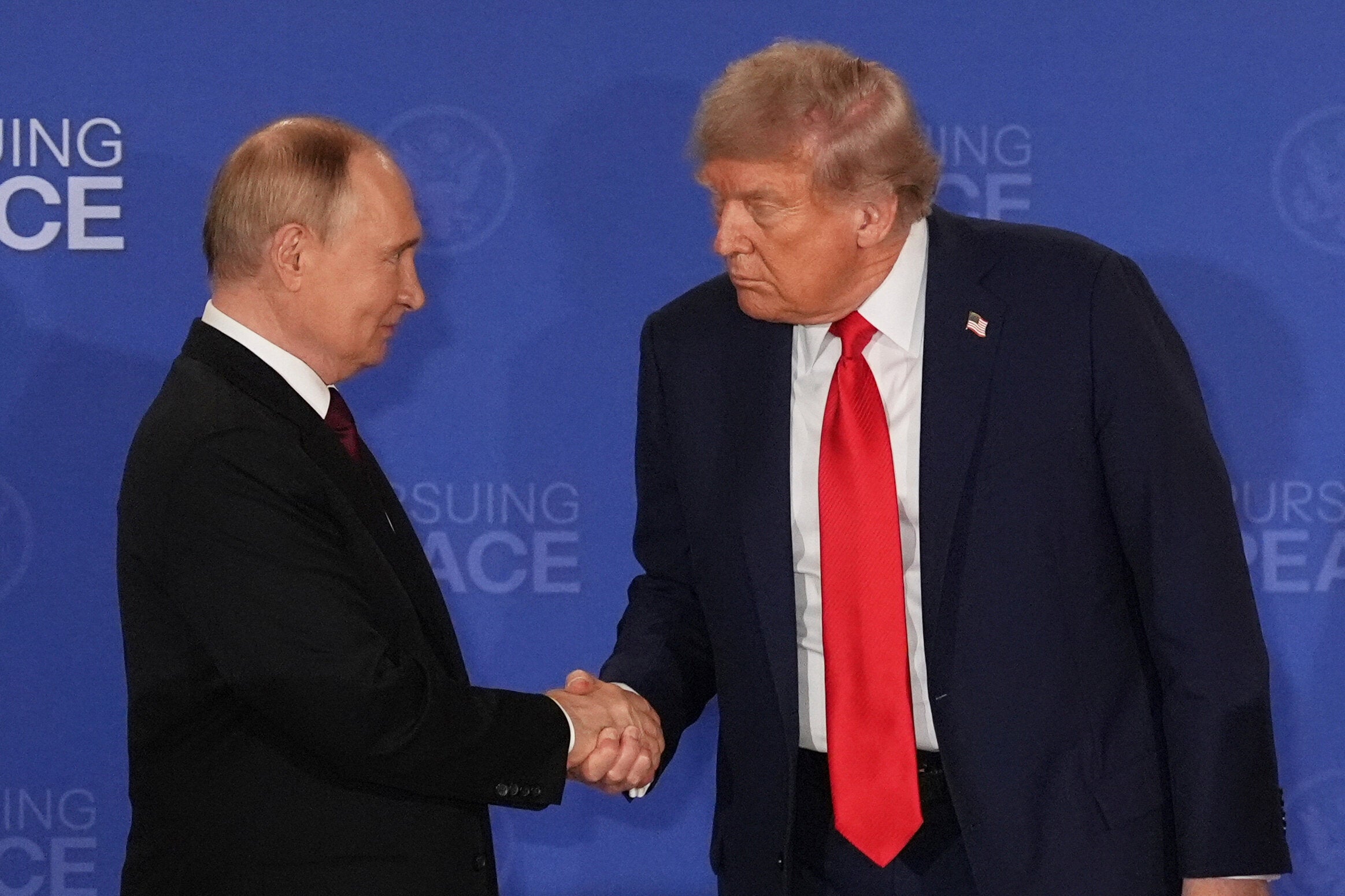
Donald Trump appears to have made yet another major U-turn by working with Russia to come up with a peace deal to end the Ukraine war – without involving Ukraine.
The 28-point plan was leaked this week, and while it is yet to be confirmed by any of the main parties, it is being discussed by international leaders.
Advertisement
But this draft framework is very favourable towards Moscow and meets many of Vladimir Putin’s pre-war demands from Ukraine – including significant territory concessions by Kyiv.
The US reportedly wants this early draft signed as soon as next Thursday – even threatening to withdraw intelligence and weapons unless it agrees to it – although Ukraine has already pushed back.
However, it was not too long ago that Trump was demanding Putin negotiate over the deal.
He even tried to corner him by putting sanctions on Russian oil, which officially came into effect on Friday.
Advertisement
So where did this deal come from – and will it even be effective?
According to reports in Axios, Reuters and the Financial Times, Ukraine is expected to give up its claim to its sovereign territory, Crimea, Luhansk and Donetsk completely – so they become de fact Russian.
Kherson and Zaporzhzhia would be frozen along the lines of contact, while Russia will “relinquish other agreed territories it controls outside the five regions”.
While the leaked draft claimed Ukraine would receive security guarantees, they were not listed. The US would then receive compensation for that guarantee, according to the plan.
Advertisement
Ukraine would also not join Nato, despite having a long-standing ambition to join the defence alliance, and no Nato troops would be stationed in Ukraine.
European fighter jets would be “stationed” in Poland – although details as to which countries would provide these jets remain unclear.
Ukraine’s armed forces would be limited to 600,000 and a Ukrainian election would be held within 100 days.
Advertisement
A joint US-Russia working group would be set up to look at the ongoing security issues, while Russia would return to the global community – and sanctions would be lifted.
Senior consulting fellow for Chatham House’s Russia and Eurasia Programme, Keir Giles, seemed unconvinced – and pointed out a clear flaw with Trump’s plan.
He told HuffPost UK the path towards peace is not as “one-sided as the US might think”, because Ukraine has to have a say for a deal to work.
Advertisement
Giles also said the US’s influence over Ukraine weakens every time the White House withdraws more of its aid.
He suggested that deal had been created so it looks like a “two-sided process” but Russia has not compromised on anything significant.
Dr Simon Bennett, director of the civil safety and security unit at Leicester University, said: “As far as Ukraine is concerned, the plan is a non-starter. Ukraine will never surrender that portion of the Donbas still under its control.
Advertisement
“The Ukrainian people would never stand for it. They have spilled too much blood and treasure to surrender their land.”
Ukrainian president Volodymyr Zelenskyy has insisted he will not betray Ukraine’s national interest while he considers Trump’s plan.
But he acknowledged that Kyiv faced losing a major partner or losing its dignity.
Advertisement
Bennett told HuffPost UK that Trump is very keen to get a deal over the line because of his own personal ambitions – and pressures.
He said: “Trump is desperate to claim that he ended the war between Ukraine and Russia, first, because he covets the Nobel Peace Prize, and secondly, because he believes this sort of foreign policy initiative will distract his MAGA base from the Epstein scandal that – depending on what we find in the files when they are released – may cripple his presidency.”
Giles seconded this notion.
The consulting fellow also questioned whether Trump’s deal was “supposed to be released in this form” or if there had been some kind of manipulation from the Russian side to release it early, in a bid to force the US’s hand.
Advertisement
Giles rebuffed claims that Putin’s top diplomat, Sergei Lavrov, had torpedoed any negotiation with the States after a frosty exchange with his American counterpart in October, saying it was clear US’s efforts for peace in Ukraine were always going to continue.
When it comes to Russia’s motives for appearing more willing to negotiate – while actually compromising on almost nothing – Bennett speculated that Putin might be more interested in a peace plan now because of an ongoing resource issue.
“Russia’s progress is painfully slow. Despite its vast resources, the Russian army is failing in the field. Which is why Putin is looking for an off-ramp. He knows his campaign is failing,” Bennett said.
Advertisement
Interestingly, Ukraine also marks the Day of Dignity and Freedom on November 21, the day Trump gave Kyiv a deadline to agree to peace.
Ukraine’s two most recent anti-Russia revolts, the Orange Revolution of 2004 and the Revolution of Dignity of 2013, began on this date.
While Ukraine weighs up how to respond, Giles predicted negotiations will go “round and round” because Trump’s deal is “meaningless and unenforceable”.
Advertisement
Zelenskyy will certainly have to be careful not to outright reject the plan, having been on the receiving end of Trump’s wrath multiple times already this year.
He will want to be seen as co-operative, while still pushing back on the strategy.
Giles also predicted that the “war might not be decided on the frontline,” if the trend of Ukraine being able to better defend itself continues.”
He added that “we should expect surprises from Ukraine” as the war continues and Kyiv is forced to become more self-reliant.
Advertisement
He pointed to the recent attacks on Russian oil refineries and said “the means by which Ukraine can deliver an effect might change the risk-benefit of war for people in the Kremlin.”
Verified images show one of Russia’s largest oil refineries was set on fire twice this week by Ukrainian attacks.
Similarly, Bennett said: “This is Kyiv’s war, not Washington’s war. Trump surrendered his leadership and moral authority when he courted Putin in Alaska.
Advertisement
“This is now Europe’s war. It is nothing to do with a perfidious United States. As I have said before, this is 1939. Europe has again been abandoned by the US. We have to fight and win this on our own.”

