
Even low levels of air pollution may quietly scar your heart, MRI study finds

Researchers using cardiac MRI have found that long-term exposure to air pollution is associated with early signs of heart damage, according to a study that was published today in Radiology, a journal of the Radiological Society of North America (RSNA). The research indicates that fine particulate matter in the air may contribute to diffuse myocardial fibrosis, a form of scarring in the heart muscle that can precede heart failure.

Cardiovascular disease is the leading cause of death worldwide. There is a large body of evidence linking poor air quality with cardiovascular disease. However, the underlying changes in the heart resulting from air pollution exposure are unclear.

“We know that if you’re exposed to air pollution, you’re at higher risk of cardiac disease, including higher risk of having a heart attack,” said the study’s senior author Kate Hanneman, M.D., M.P.H., from the Department of Medical Imaging at the Temerty Faculty of Medicine, University of Toronto and University Health Network in Toronto. “We wanted to understand what drives this increased risk at the tissue level.”

Dr. Hanneman and colleagues used cardiac MRI, a noninvasive imaging technique, to quantify myocardial fibrosis and assess its association with long-term exposure to particles known as PM2.5. At 2.5 micrometers in diameter or less, PM2.5 particles are small enough to enter the bloodstream through the lungs. Common sources include vehicle exhaust, industrial emissions and wildfire smoke.

The researchers wanted to evaluate the effects of air pollution on both healthy people and those with heart disease, so the study group included 201 healthy controls and 493 patients with dilated cardiomyopathy, a disease that makes it more difficult for the heart to pump blood.

Higher long-term exposure to fine particulate air pollution was linked with higher levels of myocardial fibrosis in both the patients with cardiomyopathy and the controls, suggesting that myocardial fibrosis may be an underlying mechanism by which air pollution leads to cardiovascular complications. The largest effects were seen in women, smokers and patients with hypertension.

The study adds to growing evidence that air pollution is a cardiovascular risk factor, contributing to residual risk not accounted for by conventional clinical predictors such as smoking or hypertension.

“Even modest increases in air pollution levels appear to have measurable effects on the heart,” Dr. Hanneman said. “Our study suggests that air quality may play a significant role in changes to heart structure, potentially setting the stage for future cardiovascular disease.”

Knowing a patient’s long-term air pollution exposure history could help refine heart disease risk assessment and address the health inequities that air pollution contributes to both in level of exposure and effect. For instance, Dr. Hanneman said, if an individual works outside in an area with poor air quality, healthcare providers could incorporate that exposure history into heart disease risk assessment.

The air pollution exposure levels of the patients in the study were below many of the global air quality guidelines, reinforcing that there are no safe exposure limits.

“Public health measures are needed to further reduce long-term air pollution exposure,” Dr. Hanneman said. “There have been improvements in air quality over the past decade, both in Canada and the United States, but we still have a long way to go.”

In addition to illuminating the links between air pollution and myocardial fibrosis, the study highlights the important role that radiologists will play in research and clinical developments going forward.

“Medical imaging can be used as a tool to understand environmental effects on a patient’s health,” Dr. Hanneman said. “As radiologists, we have a tremendous opportunity to use imaging to identify and quantify some of the health effects of environmental exposures in various organ systems.”

Share Button

Rainforest deaths are surging and scientists just found the shocking cause

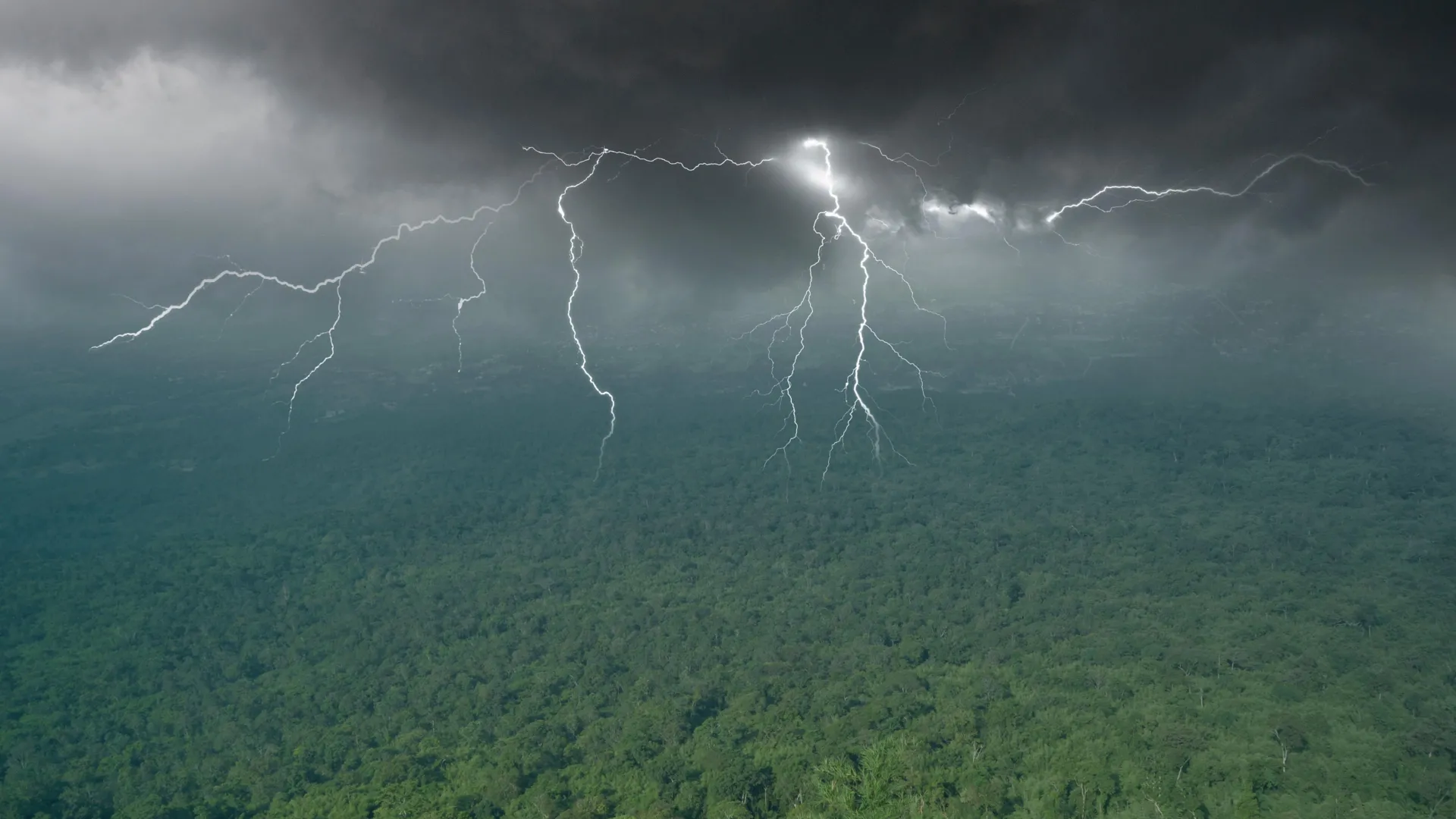
Trees in tropical forests are dying at an increased rate, with consequences for biodiversity, carbon storage, and the global climate. While deforestation is the primary cause of forest loss, intact forests are also experiencing a rise in tree death. Drought, higher temperatures, and fires have been the leading suspects, but a new paper led by Evan Gora, a forest ecologist at Cary Institute of Ecosystem Studies, identifies an underappreciated threat: thunderstorms, which are becoming more frequent with climate change.

Not to be confused with hurricanes or cyclones, these convective storms tend to be short-lived but powerful, with tree-toppling winds and lightning. In a perspective paper in Ecology Letters, Gora and colleagues lay out the case for why such storms could be a major driving force behind the rising death toll of tropical trees. As they become more common in the warming tropics, thunderstorms are a growing threat to trees and the carbon they store.

“Tropical forests have massive effects on global climate. They’re like the lungs of the Earth, and we’re seeing trees in them dying at higher rates than in the past, and the composition of forests is changing, too,” said Gora. “That could be really problematic for the future of not just tropical forests, but for the planet.”

Understanding what’s causing the trends in tree death is critical to guiding decisions about which tree species to plant or conserve in a forest, so that forest managers can ensure forests continue thriving and storing carbon long into the future.

“Being in the forest during a tropical storm is unforgettable,” said coauthor Vanessa Rubio, a forest ecologist in Gora’s lab at Cary Institute. “As the storm quickly builds, the sky darkens, humidity changes drastically, and strong winds shake the trees. Then, thunder and lightning come. Leaves and branches fall to the ground, rain pours down, and your instinct is to get back to the field station as quickly as possible.”

Despite their obvious danger to people, storms had been overlooked and understudied as a potential culprit in tree mortality trends. But when the team reanalyzed data from previous studies on tropical forest carbon stocks, they found that storms were at least as good as drought and temperature in explaining the patterns of tree mortality and forest carbon storage.

“We were surprised to find that storms may be the largest single factor causing tree death in these forests, and they’re largely overlooked by research into carbon storage in the tropics,” said Gora. “Our estimates suggest that storms are responsible for 30 to 60% of tree mortality in the past, and that number must be increasing as storm activity increases by 5 to 25% each decade.”

The team also added storms to the largest plot-based study of forest biomass carbon dynamics to date. That study had previously concluded that when temperatures go above a certain threshold, tropical forests experience a fast decline in carbon stocks. “But when you add storms, that relationship goes away,” said Gora. “It basically shows that you have to include storms, or you might not get the answers right.”

Storms and droughts are not mutually exclusive, the scientists note — the same forests can experience both high storm activity and drought stress. They found high convective storm activity across the southern Amazon, where water stress is also high and patterns of change are among the most extreme.

“During my studies on threats to tropical forests, my professors, our textbooks, and even overall climate policy never mentioned small, convective storms as a potential source of forest mortality,” said coauthor Ian McGregor, a Cary Institute forest ecologist in Gora’s lab. “I don’t remember seeing them in global climate models used to inform climate policy. Given our findings, however, it’s clear we need a more thorough understanding of these storms to have more accurate climate models, and thus more effective policy.”

There are good reasons why scientists have overlooked storms until now. Temperature and water stress can be monitored with meteorological stations and readily connected to long-term forest plot data. It is much harder to detect storms and track their highly localized damage. Mortality caused by thunderstorms is not easily detected via satellite, and it’s not practical for researchers on foot to survey large forested areas frequently enough to pinpoint the damage caused by a specific storm.

Gigante, a project led by Gora and co-author Adriane Esquivel-Muelbert from the University of Birmingham, offers one way to overcome these challenges. The project combines a lightning location system, drone scouts, and on-the-ground experts to sample large areas of tropical forest frequently. With these tools, they are starting to quantify when, where, and why tropical trees are dying, and which species are most affected.

Understanding current and future threats to tropical forests is crucial to informing long-term conservation and restoration efforts.

“If we make decisions about which species to plant or conserve based on an incorrect understanding of what’s actually killing these trees and which species are most vulnerable, those forests won’t reach their full potential,” said Gora. Storms are most deadly to mature trees, so the consequences of misguided reforestation efforts might not be known until decades after the trees are planted.

“However,” Gora continued, “if we can build a more holistic picture of what’s driving forest change, we can be a lot more confident in guiding forest management practices for long-term sustainability.”

Authors

  • Evan M. Gora — Cary Institute of Ecosystem Studies, Smithsonian Tropical Research Institute
  • Ian R. McGregor — Cary Institute of Ecosystem Studies
  • Helene C. Muller-Landau — Smithsonian Tropical Research Institute
  • Jeffrey C. Burchfield — University of Alabama, Huntsville
  • KC Cushman — Oak Ridge National Laboratory
  • Vanessa E. Rubio — Cary Institute of Ecosystem Studies
  • Gisele Biem Mori — National Institute for Amazon Research, Universidade do Estado de Mato Grosso
  • Martin J. P. Sullivan — Manchester Metropolitan University
  • Matthew W. Chmielewski — University of Louisville
  • Adriane Esquivel-Muelbert — University of Birmingham

Funding was provided in part by the National Science Foundation (NSF) grants DEB-2213245 and DEB-2241507 to EMG, and NE/W003872/1 to MS and EMG. AE-M was further funded by the Royal Society Standard Grant RGS\R1\221115 ‘MegaFlora’, the UK Research and Innovation/Natural Environment Research Council (NERC) TreeScapes NE/V021346/1 ‘MEMBRA’, the NERC/NSF Gigante NE/Y003942/1, and the Foundation for Research on Biodiversity/Centre for the Synthesis and Analysis of Biodiversity ‘Syntreesys’.

Cary Institute of Ecosystem Studies is an independent nonprofit center for environmental research. Since 1983, our scientists have been investigating the complex interactions that govern the natural world and the impacts of climate change on these systems. Our findings lead to more effective resource management, policy actions, and environmental literacy. Staff are global experts in the ecology of: cities, disease, forests, and freshwater.

Share Button

When rainforests died, the planet caught fire: New clues from Earth’s greatest extinction

The collapse of tropical forests during Earth’s most catastrophic extinction event was the primary cause of the prolonged global warming which followed, according to new research.

The Permian-Triassic Mass Extinction – sometimes referred to as the “Great Dying,” happened around 252 million years ago, leading to the massive loss of marine species and significant declines in terrestrial plants and animals.

The event has been attributed to intense global warming triggered by a period of volcanic activity in Siberia, known as the Siberian Traps, but scientists have been unable to pinpoint why super-greenhouse conditions persisted for around five million years afterwards.

Now a team of international researchers led by the University of Leeds and the China University of Geosciences in Wuhan has gathered new data which supports the theory that the demise of tropical forests, and their slow recovery, limited carbon sequestration – a process where carbon dioxide is removed from the atmosphere and held in plants, soils or minerals.

During extensive field studies, the team used a new type of analysis of fossil records as well as clues about past climate conditions found in certain rock formations to reconstruct maps of changes in plant productivity during the Permian-Triassic Mass Extinction.

Their results, which are published on July 2 in Nature Communications,show that vegetation loss during the event led to greatly reduced levels of carbon sequestration resulting in a prolonged period where there were high levels of CO2.

The paper’s lead author, Dr Zhen Xu, from the School of Earth and Environment, University of Leeds, said: “The causes of such extreme warming during this event have been long discussed, as the level of warming is far beyond any other event.

“Critically, this is the only high temperature event in Earth’s history in which the tropical forest biosphere collapses, which drove our initial hypothesis. Now, after years of fieldwork, analysis and simulations, we finally have the data which supports it.”

The researchers believe their results reinforce the idea that thresholds, or ‘tipping points’ exist in Earth’s climate-carbon system which, when reached, means that warming can be amplified.

China is home to the most complete geological record of the Permian-Triassic mass Extinction and this work leverages an incredible archive of fossil data that has been gathered over decades by three generations of Chinese geologists.

The lead author Dr Zhen Xu is the youngest of these and is continuing the work begun by Professor Hongfu Yin and Professor Jianxin Yu, who are also authors of the study. Since 2016, Zhen and her colleagues have travelled throughout China from subtropical forests to deserts, including visiting areas accessible only by boat or on horseback.

Zhen came to the University of Leeds in 2020 to work with Professor Benjamin Mills on simulating the extinction event and assessing the climate impacts of the loss of tropical vegetation which is shown by the fossil record. Their results confirm that the change in carbon sequestration suggested by the fossils is consistent with the amount of warming that occurred afterwards.

Professor Mills added: “There is a warning here about the importance of Earth’s present day tropical forests. If rapid warming causes them to collapse in a similar manner, then we should not expect our climate to cool to preindustrial levels even if we stop emitting CO2.

“Indeed, warming could continue to accelerate in this case even if we reach zero human emissions. We will have fundamentally changed the carbon cycle in a way that can take geological timescales to recover, which has happened in Earth’s past.”

Reflecting on the study’s broader mission, Professor Hongfu Yin and Professor Jianxin Yu of the China University of Geosciences, underscored the urgency of blending tradition with innovation: “Paleontology needs to embrace new techniques — from numerical modelling to interdisciplinary collaboration — to decode the past and safeguard the future,” explained Professor Yin.

Professor Yu added: “Let’s make sure our work transcends academia: it is a responsibility to all life on Earth, today and beyond. Earth’s story is still being written, and we all have a role in shaping its next chapter.”

This research is primarily funded by the UK Research and Innovation (UKRI) and the National Natural Science Foundation of China (NSFC), with additional funding for collaborators provided by UKRI, ETH+, and the Australian Research Council. The work was conducted in collaboration with the following institutions:

  • School of Earth and Environment, University of Leeds, Leeds, LS2 9JT, UK
  • State Key Laboratory of Geomicrobiology and Environmental Changes, School of Earth Sciences, China University of Geosciences, Wuhan, 430074, P.R. China
  • School of Physics, Chemistry and Earth Science, University of Adelaide, Adelaide, SA 5005, Australia
  • Birmingham Institute of Forest Research, University of Birmingham, Edgbaston, Birmingham, B15 2TT, UK
  • Department of Biosystems Science and Engineering, ETH Zürich, Basel, 4056, Switzerland
  • Computational Evolution Group, Swiss Institute of Bioinformatics, Lausanne, 1015, Switzerland
  • State Key Laboratory of Geological Processes and Mineral Resources, China University of Geosciences, Wuhan, 430074, P.R. China
  • Department of Biology, Howard University, Washington DC, USA
  • Géosciences Environnement Toulouse, CNRS-Université de Toulouse III, Toulouse, France
  • CEREGE, Aix Marseille Université, CNRS, IRD, INRA, Coll France, Aix-en-Provence, France
Share Button

Sweet-smelling molecule halts therapy-resistant pancreatic cancer

Cancer cells have the capacity to multiply rapidly. The aggressive cancer cells undergo conversion from their tightly connected epithelial state into a mesenchymal state, which lacks contact restrictions and spreads easily to other parts of the body. Such epithelial-to-mesenchymal plasticity also makes the cancer cells resistant to elimination by anticancer therapies.

The search is ongoing for newer anticancer agents that can overcome this acquired resistance to therapy and destroy the ‘rogue’ cancer cells. A group of researchers led by Dr. Hideyuki Saya, Director of the Oncology Innovation Center, Fujita Health University, Japan, has uncovered the mechanism of the anticancer activity of benzaldehyde, a compound responsible for the aroma of almonds, apricots, and figs.

Giving insights into their motivation for this study, Dr. Saya explains, “In the 1980s, researchers demonstrated the anticancer activity of benzaldehyde and its derivatives. The first author of our study, Dr. Jun Saito, is the daughter of one of the researchers involved in those early studies, and she was driven by a strong desire to uncover the mechanism behind benzaldehyde’s anticancer effects.” This study, published online in the British Journal of Cancer on May 02, 2025, shows the impact of benzaldehyde on key signaling protein interactions within the cancer cells and the resulting cytotoxicity.

Early studies reported the ability of benzaldehyde to inhibit the progressive development of mouse embryonic cells, indicating its potential in preventing rapid cell proliferation. Here, the anticancer effects of benzaldehyde were studied by using a mouse model grafted to have a growing pancreatic cancer.

In cell culture studies, benzaldehyde inhibited the growth of cancer cells resistant to radiation therapy and also those resistant to treatment with osimertinib, an agent blocking tyrosine kinases in growth factor signaling. Benzaldehyde synergized with radiation to eliminate previously radiation-resistant cancer cells.

The study findings revealed that benzaldehyde exerted its anticancer effects by preventing interactions of the signaling protein 14-3-3ζ with the Ser28-phosphorylated form of histone H3 (H3S28ph). This interaction, key to cancer cell survival, was also responsible for treatment resistance and the expression of genes related to epithelial-mesenchymal plasticity.

Here, benzaldehyde prevented 14-3-3ζ-dependent phosphorylation of the serine28 amino acid of histone H3. Consequently, benzaldehyde treatment reduced the expression of genes responsible for treatment resistance. Treatment of mice with a benzaldehyde derivative inhibited the growth of pancreatic tumors and suppressed the epithelial-to-mesenchymal plasticity, thus preventing the spread of cancer to distant organs like the lungs.

By blocking an interaction key to cancer cell survival, benzaldehyde overcomes therapy resistance and prevents metastasis. Sharing the implications of their findings, Dr. Saya concludes, “The 14-3-3ζ protein has long been considered a target for cancer therapy, but its direct inhibition is not feasible due to its important functions in normal cells. Our results suggest that inhibition of the interaction between 14-3-3ζ and its client proteins by benzaldehyde has the potential to overcome the problem.”

The present study shows benzaldehyde is effective against cancer cells that have acquired resistance to radiation and tyrosine kinase inhibitors commonly used in cancer treatment. In the long term, this study suggests its potential as a combinatorial anticancer agent, alongside molecular-targeted therapies.

Dr. Jun Saito is a researcher in the laboratory of Dr. Hideyuki Saya, Oncology Innovation Center, Fujita Health University. She obtained her Ph.D. from the Nihon University Graduate School of Medicine. Continuing the legacy of one of her parents, who pioneered the breakthrough research on the anticancer activity of benzaldehyde in the 1980s, Dr. Saito has uncovered the underlying mechanism of benzaldehyde’s anticancer effects. Her expertise includes oncology, pathophysiology, immunology, applied physics, and chemistry.

This work was supported by Grants-in-Aid for Scientific Research from the Ministry of Education, Culture, Sports, Science, and Technology of Japan (KAKENHI 19K22568).

Share Button

Women poisoned by fake Botox get apology from beautician

As the BBC names a beautician who gave illegal jabs, two victims share their story.

Share Button

Digital imaging cuts waiting times for skin cancer

A digital imaging service has reduced waiting times for patients with suspected skin cancers.

Share Button

New plan will fundamentally rewire NHS, says PM

But nurses, doctors and health experts say that more funding and extra staff are needed to make it a reality.

Share Button

Covid care home policy was ‘least worst decision’ – Hancock

Former health secretary Matt Hancock denied claims the government’s attempt to throw a protective ring around care homes in early 2020 was empty rhetoric.

Share Button

Trump White House Halts Weapon Shipments To Ukraine To ‘Put America’s Interests First’

Donald Trump’s administration has halted weapon shipments to Ukraine, sparking major concern in Kyiv – but delight in Moscow.

The White House said the move followed fears that the US is facing stockpile issues with its arsenal after a recent Department of Defence review.

The US has subsequently decided to “put America’s interests first”, according to the White House.

The Pentagon allegedly chose to halt shipments of critical US Patriot air defence systems and other precision weapons in June but the decision only came to light overnight.

The White House deputy press secretary Anna Kelly batted away suggestions this threw America’s military into question, saying: ”[The decision] was made to put America’s interests first following a DOD review of our nation’s military support and assistance to other countries across the globe.

“The strength of the United States armed forces remains unquestioned – just ask Iran.”

Ukraine said it did not receive any official notification from the US over the suspension of the military aid.

“Ukraine has not received official notices regarding the suspension or revision of the delivery schedules of agreed defense assistance,” the Ukrainian defence ministry said in a statement.

Mykhailo Podolyak, advisor to president Volodymyr Zelenskyy, even claimed on Wednesday that “deliveries continue”.

He added: “It would look very strange and inhumane to stop supplying missiles for Patriot systems that protect Ukrainian civilians.”

Ukraine’s foreign ministry has subsequently summoned the US Charge d-Affaires John Ginkel over the reported pause.

Ukraine’s deputy foreign minister Mariana Betsa also warned: “Any delay or hesitation in supporting Ukraine’s defence capabilities will only encourage Russia to continue war and terror, rather than pursue peace.”

But Russia was delighted by the news. Kremlin spokesperson Dmitry Peskov said: “The fewer weapons that are supplied to Ukraine, the closer the end of the [war].”

Russia has stepped up its attacks on Ukraine in recent months, launching a record 5,337 drones in June – the highest total since Vladimir Putin first invaded in 2022.

The Russian president also claimed “all of Ukraine is ours” just last week, suggesting his land grab is far from over.

Share Button

Bob Vylan Frontman Speaks Out After Band Is Dropped From Manchester Music Festival

The punk rap duo Bob Vylan have spoken out after it was reported that they had been dropped from a music festival in Manchester.

Over the weekend, the band caused controversy when they led the crowd at their Glastonbury set in a chant of “death to the IDF”, in reference to Israel’s army.

After facing condemnation from UK prime minister Sir Keir Starmer, the BBC – which broadcast the set live and uncensored on its iPlayer service – and Glastonbury’s organisers, it was revealed that a criminal investigation was underway following sets by both Bob Vylan and fellow performers Kneecap.

On Wednesday, BBC News reported that, in the wake of the controversy, Bob Vylan had been dropped from the line-ups of Radar Festival in Manchester, and Kave Fest in France.

Reacting to the news, frontman Bobby Vylan wrote on Instagram: “Silence is not an option. We will be fine, the people of Palestine are hurting.”

“Manchester we will be back,” he then vowed.

A screenshot of Bobby Vylan's Instagram story on Wednesday
A screenshot of Bobby Vylan’s Instagram story on Wednesday

Instagram/Bobby Vylan

He and bandmate Bobbie Vylan then released a joint statement which read: “We are not for the death of Jews, Arabs or any other race or group of people. We are for the dismantling of a violent military machine. A machine whose own soldiers were told to use ‘unnecessary lethal force’ against innocent civilians waiting for aid. A machine that has destroyed much of Gaza.”

Referring to the activist group Palestine Action and fellow Glastonbury performers Kneecap, the duo continued: “We, like those in the spotlight before us, are not the story. We are a distraction from the story. And whatever sanctions we receive will be a distraction.

“The government doesn’t want us to ask why they remain silent in the face of this atrocity. To ask why they aren’t doing more to stop the killing. To feed the starving. The more they talk about Bob Vylan, the less they spend answering for their criminal inaction.

“We are being targeted for speaking up. We are not the first. We will not be the last. And if you care for the sanctity of human life and freedom of speech, we urge you to speak up, too.”

Avon and Somerset Police said on Tuesday: “Video footage and audio from Bob Vylan and Kneecap’s performances at Glastonbury Festival on Saturday has been reviewed.

“Following the completion of that assessment process we have decided further enquiries are required and a criminal investigation is now being undertaken. A senior detective has been appointed to lead this investigation.”

Share Button