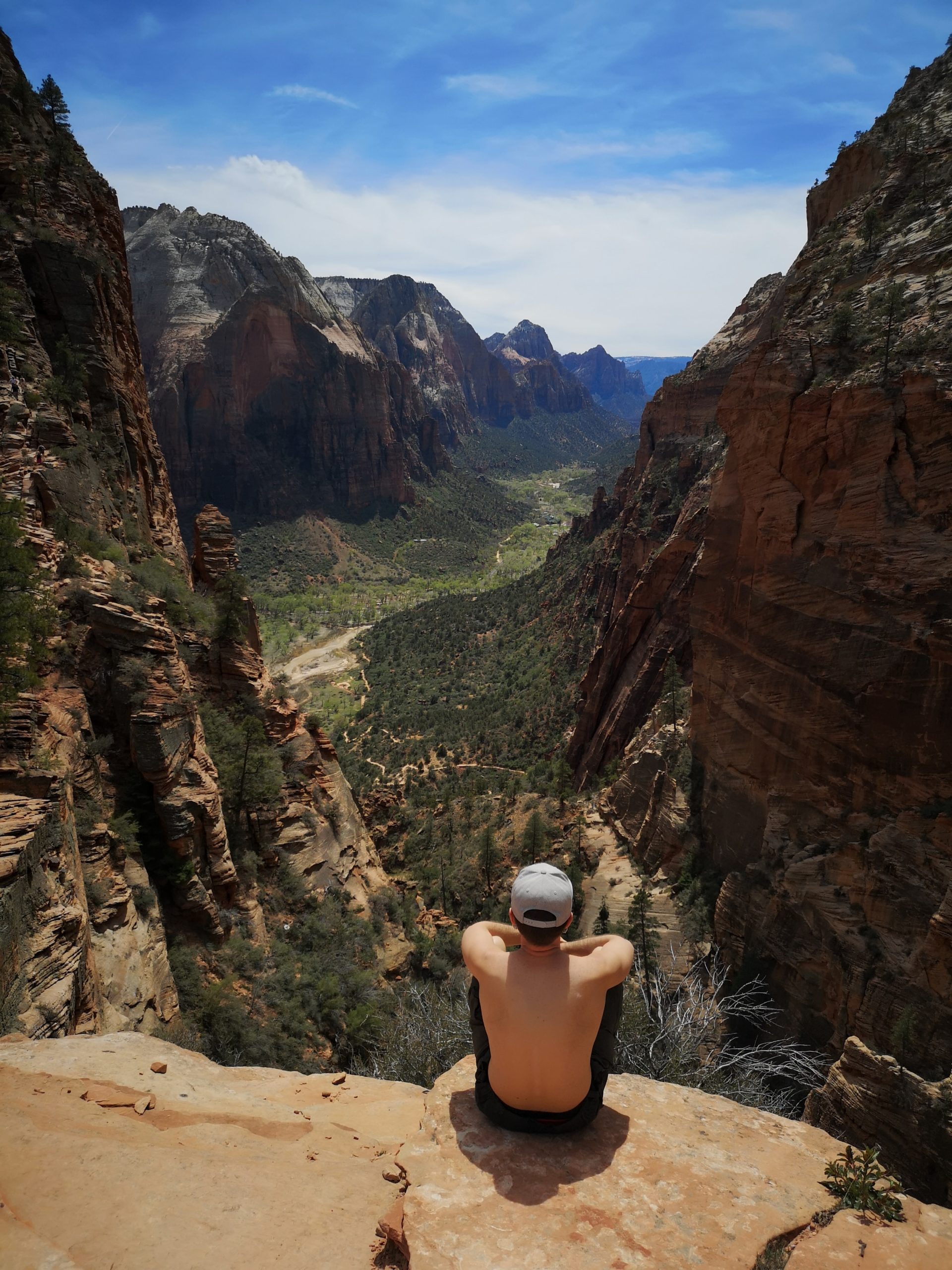
Creative Courage

I love the feeling of making a big creative commitment, knowing that I have to lean into trust, rely on my knowledge and skills, and take lots and lots of action to follow through.

It reminds me of when I used to go cliff diving on Catalina Island when I was younger, jumping off a large rock into the ocean and hoping I landed the right way.

Amplify

Once the commitment is fully made, there’s this feeling of being all-in. All doubt is shoved aside since there’s no point in entertaining such thoughts after the decision to go forward is made.

Post-commitment all of my energy flows in the same direction – towards completion. I internally switch off any modes of thinking that might create internal friction. If such thoughts try to surface, they get lasered into oblivion.

I keep a careful watch on my emotions during this time, looking for any emotional drift from solid and sustainable motivation. If I spot any issues, I move to address them immediately. I do what it takes to keep my motivation in the sweet spot for consistent creative flow.

I’m in this mode now. Today I recorded and published the 10th lesson of the Amplify course. It’s a 21-minute lesson, and it took me a good 7 hours to fully design, record, edit, and publish it, including writing a one-page summary of the course and an exercise for the Amplify Workbook. I started shortly after 5am and finished just after noon.

Daily Commitment

This will be part of my daily flow for the next 7 weeks – every day including weekends – till the course is 100% complete.

In addition to creating 60+ audio lessons, I’ll also be hosting 8 live calls for course participants, one per week, starting this Wednesday, March 10. Bringing so many creative people together to connect, share, and inspire each other will surely be a lively adventure.

Many years ago the scope and speed of a project like this would have scared me. Now I love it. It feels edgy, fun, and engaging.

This course isn’t designed in advance. I’m co-creating it with the brave souls who’ve enrolled, one lesson at a time. When I woke up this morning at 5am, I didn’t know what lesson I’d create today. By 6am I was already well immersed in designing it.

I love how this project demands that I stay focused on it for many hours each day. I have to take it one step at a time and keep driving each step forward to completion. There’s at least one new deliverable every day, and it’s not done till it’s published. I can’t just put in what feels like enough time and call it a day. I have to finish and publish, or the creative part of the day isn’t over.

With this kind of rhythm, any misaligned thoughts or feelings are not to be entertained. The mental and emotional drive can only go forward, not backwards or sideways. I find that the commitment itself takes care of that pretty well. My mind knows the daily goal.

It’s very satisfy to work in such an immersive way, to fully commit myself to one of the biggest and deepest creative projects of my life. So much stems from that commitment. By telling my mind that we are absolutely positively moving forward on this, every part of me gets on board.

This is challenging at times, but it feels like I have all the mental and emotional capacity I need. This also requires tremendous trust. I have to trust that the ideas will flow each day. I have to trust that every single day there will be abundant fresh waves of inspiration and that they’ll always be there for me.

I don’t just want to create adequate lessons for this course. I want to create lessons that are interesting, original, insightful, profound, brilliant, unique, and often playful. I want to listen to a lesson after it’s recorded and think: Damn… that was incredible… how did I do that? I want to twist and squeeze every drop of creative essence I have and pour it into this course. I want to record with great emotional energy and expressiveness. And I want to enjoy the experience, day after day. I want to be full of satisfaction and gratitude after publishing each lesson, anticipating how beautiful it will be when people get to listen to it.

Creative Courage

I feel that the key to all of this is creative courage – to finally have the guts to go all-in with a project that I feel ought to be created. This includes choosing a project that’s in my edgy zone. It’s not so easy that I already know how to do it, like plucking a piece of low-hanging fruit off a tree. It seems possible, but it’s going to require that I do my best. A half-hearted effort won’t suffice.

I feel immensely pleased with the first 10 lessons, and the feedback rolling in has been extremely positive, with some people saying they’ve already gotten their money’s worth from the course. I’m really pouring my heart and soul into this, with some lessons making me cry while I design them. This is definitely not just a mental-level experience. It’s a potent journey through creative space, and that can be emotionally intense. It’s like I’m taking all of the emotional energy that flowed through me during nearly 30 years of creative work and infusing it into this course. It’s potent!

I also like that the invitation to join the course requires creative courage to accept. This is not a course for everyone. It’s for people who hear the call to do creative work, and they have the courage to say yes to it. It takes guts to commit yourself to a major deep dive like this, knowing that you’re going to emerge from it a different person – a person who is going to create ripples in the world.

I feel like the real purpose of the Amplify course is to fill people’s hearts and minds with so much creative inspiration and motivation that they experience a major upgrade in their creative courage… and this energy must then flow forth in a powerful fountain of original creative expression.

Do you have the guts to join us?

Share Button

Being Appreciated as a Creator

If you’re a creative artist, how important is it for your work to be appreciated by the people you serve?

I’d say that it’s pretty important to be appreciated as an artist. This isn’t about needing validation from other people. This is about serving people who will receive your work with gratitude.

If you are appreciated, it’s probably because you’re providing something of value to people, something that resonates with them and that they care about. You’ve earned that appreciation. I don’t think this needs to be your main reason for creating art, but it’s healthy to incorporate this into your big picture mindset of your life of an artist. When you create and share your art, you’re inviting people to experience and appreciate what you’re sharing. So can you allow yourself to be appreciated?

If someone doesn’t appreciate my work, what sense would it make for them to visit my website or to enroll in my courses? What sense would it make for me to try to serve them? It doesn’t make sense to serve people who don’t appreciate your work. So focus your attention as an artist on people who WILL appreciate your work. Think of your audience as consistent only of the appreciative people.

Remember that you aren’t creating for everyone. You’re just creating for the appreciative people. That’s one reason you needn’t worry about critics. If a critic shows up, and they don’t appreciate your work, then clearly they’re lost. The critic showed up where they don’t belong. So you can simply nudge them out, or direct them to something they may actually appreciate.

It may take some time to calibrate yourself to the right audience, but you want to keep investing where the appreciation is. If you aren’t building an audience of appreciative people, then you’re building an audience of unappreciative people? What sense does that make?

For me appreciation is a given. If my work isn’t appreciated by someone, then that person isn’t in my audience. Maybe they’re lost and need directions elsewhere.

It’s certainly in my mind, for instance, that I’m creating the new Amplify course for the people who will appreciate it. This course is for creative people who want to be more productive since those people are very likely to appreciate how the course will help them. For those that wouldn’t appreciate it, it’s not for them.

I don’t create just to create. I always create for people, often for people that I’ve met. When I wrote my very first article five years before I started blogging, it was for a specific audience. I wrote that article for a software trade association that I was a member of, and the article was published in their newsletter. I didn’t write an article into a void and hope someone out there would read it. I’ve always written articles for real human beings that I felt would appreciate reading what I wrote.

When I started my blog in 2004, I already had a small audience for it because I’d been writing articles on the side for the five previous years. So I started my blog to share more with the people I was already writing for. The audience grew a lot from there, but I didn’t start a blog with zero readers. What would be the point in creating for no one in particular, hoping that someday people might show up? I think I would have found that demotivating.

What if you have no audience? Yeah, don’t do that. Always have an audience, even it’s just one person.

With my computer games business, I had no audience to start with before I wrote my first game, right? Wrong. My first audience was just a handful of people. This included my girlfriend, my sister, and a few friends that I’d invite to my apartment to playtest the games I was writing.

Whenever I tried to create something with no audience of real people in mind, that project would never see the light of day. That was a fantastically reliable recipe for failure.

As tempting as it can be for creative artists who are first starting out, I encourage you to drop this idea of creating into a void and hoping to find an audience later. Find your starting audience before you create anything. A one-person audience is totally fine – plenty of room to grow.

I’ll also say that the audience is more important than the projects. Serve the people who will appreciate your work, and they can encourage and support you across many different projects. They can send such an avalanche of help your way if you serve them personally. I’m still serving some people who’ve been reading my work since 1999. They appreciate me, and I appreciate them. Our long-term, trust-based relationship is way more important than any one project.

If I want a project to succeed, I know I must create it for real human beings from the start. And if I begin with this intention, my creative work will also end up serving people I didn’t know and wasn’t thinking about at the time, so the appreciation and support will grow.

Sometimes I write articles with just one person in mind. Sometimes I write articles with certain types of people in mind – still including real people that I know. On rare occasions I’ll write an article with myself as the audience in mind, but usually I reserve that kind of writing for private journaling. But the intended audience always consists of at least one real human being.

What’s definition of art? Here’s one:

art: the expression or application of human creative skill and imagination, typically in a visual form such as painting or sculpture, producing works to be appreciated primarily for their beauty or emotional power.

Note the phrase “producing works to be appreciated.” That implies that the work must be created for someone to appreciate.

So if you’re not creating work to be appreciated, are you still creating art? Nah. I don’t know what you’re creating, but it isn’t art. Art is social. Art is created for people to appreciate.

Now that doesn’t have to be the only reason for creating. You can create for a wide variety of reasons, but consider that appreciation had better be one of those reasons.

I think we can also grant you a pretty wide latitude for what you consider to be appreciation. You can create art that challenges people, that upsets people, that makes people curse aloud, and yet on some level they may still appreciate those experiences. Even for work you consider deplorable, there’s a good chance that someone actually appreciates it. So this really isn’t a very difficult standard to meet. If you simply bother to aim for it, you’ll probably meet this standard fairly easily.

But if there’s zero appreciation, then I don’t think you can claim that you’ve created art. And that usually stems from a failure to include appreciation (on a personal level, as felt by a real human being) as part of your original intention.

Don’t think that it’s vain to create for appreciation. Think instead that it’s lame and pointless to create for no appreciation. If no one appreciates what you’re creating, then you are indeed just wasting your time. But an easy way to avoid that is to create with appreciation in mind. Make appreciation part of your intention for creating. If you do that, you’ll probably receive plenty of it.

I hope you appreciated this article. I wrote it for you. 😉

Share Button

Amplify Course Is Now Open for Enrollment

Our new Amplify deep dive course on creative productivity has launched. I invite you to join if you’re interested in improving your creative flow. You can watch the invitation video to learn about the course here:

Amplify Course

The main purpose of Amplify is to help you make major improvements to your creative flow and creative output. There are 5 core transformations that we’ll be working on together:

  • Overcome creative anxiety, so creative work becomes light-hearted, free-flowing play
  • Improve creative consistency, so you can reliably finish your creative projects
  • Attract an aligned audience that appreciates, encourages, and supports you
  • Build your creative courage to make bigger and bolder contributions
  • Generate abundant and sustainable income from your creative flow

Amplify is an audio course. There are 4 lessons already published, and we’ll be building it up to at least 60 lessons in March and April, with new lessons being added each week. There will be lots of writers, artists, musicians, app developers, designers, YouTubers, and all sorts of creative people going through this experience together. So it’s going to be a fun explosion of creativity. 😊

Since many people wanted this deep dive to have a social aspect as well, I’m also going to host 8 live Zoom calls for all course participants – every Wednesday at 10am Pacific time from March 10 to April 28. These calls will include group sharing, breakout discussions, and Q&A. This gives you the flexibility to approach Amplify as a solo introspective journey, a social journey, or a mix of both. You’ll find a link to register for the calls in the Amplify portal after you enroll.

If you’d like to learn more about the course, please see the Amplify invitation page, which will give you all the details. I’d recommend watching the invitation video on that page to see if the course interests you. That should really give you a good idea of what the course is about, along with extra details about the changes we’ll be working on together.

There’s a launch discount too, which saves you 40% on your enrollment if you sign up by Friday, March 12th. So if you want the discount, you’ve got some time to decide.

I also added a sign-up counter to the top of the Amplify invitation page, so you can see how many people have joined so far (not counting Conscious Growth Club members, who also get access as part of their membership).

I hope you’ll join us for this one – it’s going to be a fun and fascinating deep dive.

Hugs! ❤️

Share Button

The 5 Major Transformations Creative People Want

Here’s an update on the new Amplify course on creative productivity that will be launching by the end of the month. I figured out the major transformations we’ll be working on together, so in this post I’ll share those with you.

First off, I appreciate all the generous feedback that people sent in response to the February 3rd email to my email list. I asked about people’s creative struggles, dreams, and desires regarding their creative flow, and the responses were super insightful.

I actually cried a few times while reading some of the emails. I felt honored by the authenticity and depth that people shared. In particular, this one line that someone shared really got to me emotionally:

The sad part is that with becoming older and having kids I quit my side project ideas earlier and earlier.

This reminds me of the saying, “Don’t die with your music still in you” that I learned from Dr. Wayne Dyer. It’s a powerful reminder of what’s at stake here.

Here’s another line that really stood out for me:

I want to be a safe space for people.

That’s such a beautiful and compact way of expressing caring for the people we serve.

It took me several days to read through all the feedback, including replying to everyone who responded. I took a ton of notes on this feedback, and my notes added up to almost 40K words – practically a book right there. Then I spent more time reviewing, pondering, and condensing the ideas to figure out the transformations that people wanted.

Initially I got it down to a list of 16 transformations, and then I was able to condense further to 5 major transformations. Would you like to know what they are? Here’s what it boiled down to:

1. Stressful resistance → Light-hearted, free-flowing play

  • Feeling pressured, nagged, stressed, frustrated, guilty, disappointed, blocked, overwhelmed → relaxed confidence; having abiding trust in yourself as a creative pro
  • Creating with stress, fear, anxiety, shame, perfectionism → creating with a light-hearted, free-flowing playfulness of spirit
  • Impostor syndrome; doubts about value → confidence and certainty in value delivery

One of the most common desires people had was to change their relationships with their creative work. People are tired of stressing out with anxiety when they try to be creative, and they recognize that a dysfunctional relationship here is counter-productive. They want to ENJOY the experience of creating from start to finish, emphasis on JOY.

Notable Quotes From Feedback

  • Long track record of creative blocks, frustrations, and procrastination
  • I put my self-esteem on the line when approaching a new project.
  • Frustrated that my productivity and creative projects are slaves to my emotional states and external circumstances
  • I’m terrified of my creativity. I don’t know why. Maybe it feels like a force that, once unleashed, will be too wild and out of control.
  • I often look at my creative work and worry that it’s complete rubbish.
  • I was so disciplined and good at (unconsciously) forcing myself to do things that I’ve pushed myself into intense anxiety.
  • These struggles are costing me my youth.
  • The struggle of me being afraid to start is costing me the progress I could have been making all these years.
  • I’ve found most projects immediately or eventually infused with anxious feelings.
  • There’s a part of me that is pretty sure that my creative inclinations are self-indulgent and can’t possibly benefit anyone.
  • Afraid of looking fake
  • There seems to be a point where my enthusiasm about the project switches to loads of resistance.
  • Scared it won’t be anything worth sharing so why begin in the first place
  • I rarely feel satisfied with what I create.
  • Feeling like whatever I create is never good enough for others to see
  • Every time I write a chapter, I doubt myself or think why the hell would anyone take my advice.
  • Change my mindset from feeling neediness, trying to be right and avoid making mistakes and being wrong to following through with the project, sense of lightness and engagement as opposed to resistance
  • Less pushing and feel more pulled
  • Less relying on accountability and more genuine excitement, satisfaction and confidence
  • I want the whole damn wall to come crashing down and I want to be filled with creative inspiration and fire.
  • Regular, sacred, and delightfully enjoyable time devoted to creative output during my week.
  • Enjoy picking my instrument up again, the way I did when I skipped school to just jam, and write music all day.
  • That level of connection, with the self, the instrument, music and the listener is the holy grail.
  • Experience a joyful and playful relationship with the creative process.
  • I want it to feel like play.
  • Integrating ease into my creative process

2. Unstable or inconsistent progress → Reliable and consistent flow of creative output

  • Not finishing what you start; fizzling out → finishing and shipping completed projects; capturing opportunities instead of letting them pass you by; a process that converges towards publishing
  • Inconsistent, haphazard, or unbalanced workflow → stable, consistent, and reliable workflow you can trust; hitting your stride; maintaining momentum
  • Low creative output → prolific output; seeing your collective work grow notably each year
  • Confusion about priorities and process → clarity in priorities and process; reliable systems
  • Insufficient time and energy → plenty of time and energy for creative projects

People are tired of piling up projects that die on the vine. One common refrain I heard was: “I have no shortage of ideas! The problem is that I’m not seeing enough of them through to completion.” People want to trust themselves to follow through and finish, but they’re clinging to approaches that degrade self-trust and build up self-doubt instead. Many could use help upgrading their systems and practices, so they can prioritize better and follow through with consistency. A lot of people struggle with dropping or switching projects partway through.

This transformation crosses between the mental and emotional space, and a lot of solutions you’ll find elsewhere don’t build this bridge very well, so the mind and heart remain in a constant tug of war. Your mind wants one thing, and your heart wants another. What we need here is to get them agreeing upon and committing to a common goal. I have a lot to share about how to do that – it has to do with choosing projects differently up front, before you begin.

Notable Quotes From Feedback

  • Started, half-finished projects litter the house
  • Subtly eroding the feelings of significance and importance I have in life
  • The sad part is that with becoming older and having kids I quit my side project ideas earlier and earlier.
  • My projects fail because I switch to other projects that are new and shiny and I quit my previous ones.
  • I end up quitting when it stops being fun.
  • Get pulled away and the pause becomes power off
  • I’m fussing about ideas.
  • I keep second guessing myself.
  • Constantly second-guessing my choice of projects
  • Hard time prioritizing and executing
  • Interrupted almost daily by other obligations
  • My energy is too limited.
  • Not to get distracted by the shiny object syndrome
  • A large part of my energy is already being used up by the discipline required to sit down and be productive.
  • I never seem to have enough time or energy in a day.
  • It’s a balancing act with everything else I have going on in my life.
  • My funnel is more of a straw.
  • Preserving the mental and physical energy to put towards creative projects when I have to devote so much time to a job
  • Create something uniquely genuine that I can be proud of.
  • Having a smooth content production mind-set and system that makes product creation pleasurable, productive, and profitable
  • Get into that flow state when I want to.
  • How to easily load and re-load my state of flow
  • Step in and out of creativity without losing momentum.
  • How best to balance making forward progress on business tasks and projects while at the same time allowing space for creative projects
  • Sustainable habit of creative self-expression
  • A creative, flowing, balanced, fun, challenging but easy-going life
  • Generate creative outputs at will.
  • I have so much light and love inside that’s been SCREAMING to GET OUT in a kind and gentle way.
  • Lungs that long to express the depths of our universe and a soul who’d like to be felt and understood by other beings surrounding me

3. Unappreciated or ignored → Appreciated, respected, loved, and encouraged

  • Feeling unappreciated; being ignored or forgotten; unsure if your art matters to people → being appreciated and valued; connecting with people’s hearts; belongingness; feeling at home here; having people encourage you to create
  • No audience or misaligned audience → aligned audience of people who appreciate, respect, and love you; people you enjoy serving and who encourage, inspire, and motivate you

Many people struggle with a lack of connection to the people they could be serving. They either don’t have an audience yet, or they have a misaligned audience that doesn’t seem to care much. Life is very different when you attract an audience that appreciates your creative work and keeps encouraging you.

Some key mindset (and heartset) shifts we’ll work on in Amplify involve the relationship you develop with your audience. There’s a big difference between creating in a void and creating for real people that you care about.

What many people don’t realize that the audience matters more than the projects in most cases. When you have a strong connection with an aligned audience, that relationship can help carry you through many inspired projects. This is very different than creating something in a void all by yourself and then hoping to surprise some random audience with your brilliance… someday… eventually.

Notable Quotes From Feedback

  • When it seems like no one notices or cares about what I’ve done, I get demotivated.
  • I feel I cannot do it by myself in silence and be successful.
  • Discouraging to think that a project I’m spending so much time on may never be seen
  • Be OK with not everyone loving what I do.
  • Have a reality that constantly inspires me.

4. Little or no impact → Bold contributions and ripples

  • Little or no impact → making a rich and meaningful contribution; creating ripples that align with your values; putting a dent in the universe; making your mark on this world in a way that no one can take away from you; summoning courage and boldness
  • No platform or outlet → stable platform that you like; ability to find or create new platforms
  • Small scale projects only → ability to follow through on larger works and see them to completion; scaling up
  • Lacking key skills → Developing, upgrading, and stretching your skills; providing value as you build your skills

Some people would really love to create more impact, especially by learning how to shift from short-form content like articles, YouTube videos, and social media updates to long-form content like books, albums, screenplays, and courses. Others want to build larger audiences, so they can positively impact the lives of more people. People recognize that it takes courage to set ambitious goals, and reliable follow-through is essential. It’s not enough to just think big and then fizzle out.

Notable Quotes From Feedback

  • My biggest creative projects have been too overwhelming, resulting in quitting before completion.
  • Easier to get into the flow while creating something but as soon as I need to market my project or share it with others, I fizzle out
  • Realizing I don’t yet have the ability to do the project in the way I envisioned
  • I feel like I just have to suck it up and grind through enough practice to become good enough at something that other people might possibly start to care.
  • How to approach a big project like writing a book or starting a new business and sustaining motivation until completion
  • Having the courage to pick a project that you feel is a little scary but you know you will figure out, and that really inspires you
  • Deliver creative output that can create ripples across humanity.
  • Trust that I can create something that can contribute to others while also helping me be the bold explorer of life that I want to be.
  • Create boatloads of value.
  • [Providing] Relief in knowing someone else out there recognizes their pain, sees them, puts their hearts longing into words on a page that they can read and feel less alone in the world
  • I want to be a safe space for people.
  • Consistently increase my skills and skill sets.
  • Bring into reality what I imagine.
  • Offering genuine value to others while at the same time clarifying my thoughts through my writing

5. Scarcity-driven income and caged lifestyle → Abundant income and enriching lifestyle

  • Little or no income from creative work → abundant income for a comfortable or wealthy lifestyle
  • Having an unwanted job or boss → making a good living as a creative pro; time freedom; location freedom; freedom to choose your own projects; knowing you can always make extra money from your creativity when you want

This one was no surprise. A lot of people want to step into a sustainable lifestyle of being a creative pro who earns an abundant living from their creative flow. Several people specifically mentioned they’d love to do something similar to what I do, either with the medium of blogging or with podcasting, videos, writing books, composing music, etc. People especially want time freedom.

Some people just want to complete some creative projects on the side, especially projects that can add supplemental income streams. They may want to write a novel or a screenplay because they feel they have an interesting story idea, but they don’t necessarily want to become a full-time writer.

Notable Quotes From Feedback

  • A day job that was killing my soul
  • The fact that I should make money from my art to keep my business afloat paralyzes me and stresses me out.
  • Afraid of being some money-grubbing wannabe who wastes people’s time and dollars
  • Costing me the amazing life I know I am capable of living
  • How to create consistent, recurring income through creative projects
  • Set up a side business to eventually turn it into my main source of income.
  • Cool if this lifestyle paid for itself
  • Publish a creative project in a way that creates lots of value for others that also allows me to be fairly/well compensated.
  • Actually making my living as a writer
  • I want to make art a foundation of my life.
  • Remove the need to have a boss or work for an employer permanently.
  • Find something that I really enjoy working on to the point that I can’t imagine doing anything else for work for the rest of my life.
  • Pick projects and really let myself go and be immersed in them, without ever worrying about money.
  • Get enough traction with my creative pursuit that I can make it my primary work.
  • Lead a life centered around my curiosities and personal growth. I’d love my life to feel like one wild, grand adventure.
  • What if I were known as an artist and creator?

So basically what people want here is: lightness, consistency, appreciation, contribution, and abundant support for their creative flow.

What do you think of these transformations?

I really like this list. It gives me tons of ideas for reframes, processes, and practices to cover in the course lessons.

Are these transformations possible? Yes, they are. They’re not easy though.

For many creative pros who are happy with their creative flow and enjoy great results, it took years or even decades to go through these transformations. For me personally it took more than a decade of full-time creative work before I really feel like I started hitting my stride – probably about 15 years if I’m honest about it. So much of this involved unlearning what I thought I knew about creativity and productivity. The models I picked up from elsewhere in society just didn’t serve me very well. I got better results from introspective analysis of my projects, results, motivations, and values. I began figuring out the patterns in my own behavior, so I could better predict which types of projects I’d finish. Then I knew when I could bet big and reliably follow through.

So don’t expect a 6-lesson mini-course that you can plow through in a day. A quickie isn’t going to get us there. There’s a lot to unpack here. We can take this journey together, but it won’t be a short one. The upside is that we can potentially shave years, maybe even decades, off your learning curve here.

I actually began compiling a list of lesson ideas as I read through the emails, and now I have 87 ideas on that list. Some of them could be condensed and combined, but it’s fair to say we can have at least 60 lessons for this course, on par with Submersion (60 lessons) and Stature (65 lessons). There are just so many juicy insights to cover here.

Format

Here’s what I can tell you regarding the course format.

Audio was the clear winner based on the feedback people shared, so we’ll go with audio for the core lessons – same as we did for the Submersion and Stature courses. Lots of people said they prefer audio lessons over video for flexibility reasons. People like to listen while walking, running, driving, cooking, cleaning, etc. It’s easier for people to immerse themselves in audio lessons, much like listening to a podcast, and the visual aspect isn’t really needed for this kind of topic.

We’ll provide text transcripts for all of the audio lessons too. Some people said they prefer reading to listening. We’ll publish the text transcripts as we go, so you’ll get a written version of the whole course too.

I’ll aim to keep the lessons fairly compact, around 15 minutes each, which is what we had for Stature. That way you can listen while having a meal or doing other tasks. A good pacing would be to listen to one lesson per day, but you can go through the course at whatever pacing works for you. Some people like to go through the courses at a slower pacing to really take the time to digest and practice the ideas in each lesson. Many people have told me they’ve gone through our courses more than once, and each time it’s a different experience. I love that feedback because I designed the courses with that intention in mind – I see them as courses for life that will still provide meaningful insights 10, 20, or 30+ years from now. They’re all anchored in timeless, universal ideas and solutions.

I’ll also provide a written Summary Guide, which will include a one-page bullet list summary of each lesson, just like we had with Stature and Submersion. I’m leaning towards including written exercises for each audio lesson (like journaling prompts) as we had with Stature too. Some people said they appreciated that extra invitation to go deeper into the ideas. I think this course would be a good fit for that as well. There are a lot of people in my audience who enjoy looking deep into themselves from different angles, which raises their self-awareness and self-understanding. This helps them to discover their own a-ha moments.

While some people only want to approach this course as a solo introspective journey (similar to Submersion and Stature), most people recognized that it would be good to have at least some kind of social element to this deep dive, so they can connect with other creatives as we go. Many people were gung-ho about that, recalling how much they enjoyed the social aspect of Deep Abundance Integration. Some people offered this suggestion while acknowledging some inner resistance to the idea, noting that it would very likely be good for them to engage with other creatives… while also admitting to a bit of anxiety about connecting in this way. I can understand that. People want to come out of their shells a bit more, but they also recognize that it may take some courage to do so.

So here’s what I’m thinking…

In addition to the audio lessons, we can provide some live Zoom calls too, perhaps one call per week for 1.5 to 2 hours each time. These calls will be optional for you. We’ll provide them for the people who see value in having a social element to this journey. So you’ll have a chance to engage with other creative types as we go through this deep dive together.

I imagine doing at least 6-8 of these calls as we go. I can keep hosting them for as long as it takes to build out the lessons.

So I won’t be using these video calls for the core lessons like we did in Deep Abundance Integration. I want the core material to be in the audio lessons. I’d like to make these calls more focused on you and the other people going through the course with you. So this could include opportunities to hear about other people’s creative journeys, how people are applying the ideas from the course, extra Q&A with me, and perhaps some breakout rooms where we can engage in smaller groups with focused sharing and discussion topics. I envision these calls as another way to engage with the material and each other.

We can co-creatively evolve how we structure these calls as we go. I also think the calls could help people improve their ability to create in a flowing and playful way without so much stress and anxiety. If you participated in Deep Abundance Integration, you could probably tell that I had fun creating the course, playfully cracking jokes with people as we went – and even growing a beard throughout the course after it was suggested. So I imagine these calls being light, fun, and playful.

I think this could be a really nice combo. We’ll have the depth, focus, and introspective nature of structured, compact audio lessons. And we’ll have the light, fun, and social engagement of the Zoom calls.

I still need to figure out the timing for the Zoom calls, but it will probably be around 10am Pacific time on a weekday.

We can record the Zoom calls and share the recordings for those who can’t make the live calls, but I do think they’ll be more beneficial to attend live for those who want a more social experience. We’ll also have open text chat on these calls, just like we did with DAI, and we’ll make the chat logs available to everyone. That way if someone shares something beneficial like a book recommendation, you’ll have a record of that. You can also keep the chat window closed if you don’t want to participate in it. Some people loved the open chat, especially the humor and playfulness of it, while others preferred not to even look at it because they found it distracting for them. You’re free to choose what sort of engagement works for you.

I might also use a different Zoom format for these calls. With the DAI course, we used the webinar format, so only Rachelle and me were on camera, and everyone else could communicate through the text chat (which was very active on every call!). I think that made sense back in 2018. But now that so many more people are familiar with Zoom, I’m leaning towards doing this new deep dive in a Zoom meeting format. That means we’ll all be able to see each other on video. People can easily hide their video if they don’t wish to be on camera, but for everyone who wants to be seen, we can all see each other. I think this would create a more social vibe. We’ll just have to be judicious about using the mute button since there could be hundreds of people on these calls. I think it could be fun though. Last month I emceed a Transformational Leadership Council event with 100+ people on the Zoom call, and it was nice to see everyone’s faces and visual reactions.

A few people suggested having a discussion forum or Facebook group. I deleted my Facebook account in January (and Instagram too), so I can rule out a Facebook group since I’m not interested in engaging more on Facebook. A lot of people in my audience are turned off by Facebook as well. A Slack channel wasn’t popular either.

We have a private forum for Conscious Growth Club, which is great for those who want to engage with the people who are most invested in this community, especially across multiple deep dives and courses. I don’t feel aligned with the idea of spinning up a new discussion group or forum for each deep dive course that we do. I leaned into that for previous deep dives, such as when someone else created a forum for DAI participants, and we had a Facebook group for Stature. In each case I don’t think it was really a great fit for the experience. There are a small number of people who always ask for something like this, but I don’t think it’s the right medium to really deliver and support the transformations we’re looking for. I prefer other approaches like live, in-person events (when we’re not in pandemic mode) and Conscious Growth Club for long-term support and engagement across multiple years. So I think we’ll skip having a forum or discussion group for this one. I think our focus will be better without it.

My aim here is to provide the ultimate creative productivity course, filled with rich and practical insights and practices that can permanently improve your creative flow. I’m putting a lot of thought into figuring out the right combination of pieces to encourage and support the transformations that people want to experience.

Pricing

This is still tentative, but I’m leaning toward $497 for the price with a launch week discount down to $297. I think for everything we can provide here, that’s pretty generous and should be nicely affordable for the majority of creatives in my audience who really want to engage with this deep dive.

I’m designing this to be a super high-value course, one that could easily warrant a $2K price. I think it will be better than most of the $2K+ courses and programs I’ve taken. Many $2K courses are no better than much less expensive courses in my opinion. The main difference is that they’re offered to different audiences, such as entrepreneurs or business owners.

I want this course to be more accessible since it can provide major benefits for people which will serve them well for life. If I price it at $2K, then I’m really targeting creative pros who will regard it as a career investment. That would be a different kind of audience than I’d like to serve with this deep dive. I’d like this course to provide strong value for established pros as well as for people who have creative leanings and want to really explore that in great depth. This includes people who feel they may have a book, a blog, a song, or a YouTube channel inside them, wanting to be expressed and shared.

I don’t want to go below $297 though. I think if we drop it below that, we’ll attract more dabblers who aren’t as serious about these transformations. More people would join for curiosity’s sake. And that won’t be as good for having quality interactions on the live calls. And for some pros the investment could begin to feel too trivial, so they’re not really bought into the experience as much.

I want there to be a high enough commitment such that most of the people engaging in this deep dive together really want to get their money’s worth. Having some positive pressure and anticipation is healthy for us. I also want to balance this with making the course highly accessible for the people who could really benefit from it, which isn’t only established creative pros but also people just starting on their creative journeys.

Offering $297 for the launch price and $497 for the long-term price just feels right to me. It seems like the right balancing point when I consider how invested people will feel. When people feel invested enough, they’re more likely to finish the course, and that’s the main key to extracting the gains.

For the first several weeks, we’ll be co-creating this course together. I like offering a substantial launch discount because we create these courses as we go, and it’s nice to have a bigger group going through the course as we build it. That benefits me too since then I get a lot of feedback and suggestions as I record new lessons each week. I also enjoy the extra social energy from knowing that people are listening to the lessons shortly after I record and publish them – I find that very motivating.

I think for someone who’s a good match for this course, $297 should be pretty irresistible. It’s hard to imagine a creatively inclined person not receiving many times that much value from this course. What is it worth to someone to finally get their books written and published, their albums created, their audiences built and expanded, and to have an enjoyable lifestyle as a creative pro if that’s their goal?

Incidentally, I also expect to record a lesson on pricing since it can be tricky to put a price on creative work.

The launch discount will be good for at least 5 days – maybe 7 or 10 days – after we invite people to start joining. I’ll let you know the sign-up deadline to get that discount when we launch.

My Feelings About the Upcoming Launch

A fellow Conscious Growth Club member recently asked me how I feel about the upcoming launch and course development since I’m clearly taking on a big creative responsibility here. She wondered if I was feeling anxious or stressed or excited about it. Here’s what I shared – to give you a glimpse of what my interior experience is like:

  • curiosity
  • intrigue
  • a sense of adventure and discovery
  • commitment
  • resolve
  • a sense of connection to the people involved
  • teamwork
  • cooperation
  • a feeling of being gifted with a big responsibility
  • willingness
  • acceptance of the work ahead
  • thinking of the laughs and tears and shifts people will have along the way
  • imagining all the new creative works that will be spawned by this: books, blogs, albums, paintings, live events, etc.
  • thinking about the people who really need this experience and how beautiful it will be for them
  • caring and compassion for all the struggles and frustrations people have been dealing with
  • appreciating this wonderful opportunity to help in a meaningful way
  • imagining the ideas flowing together in a nice modular structure
  • imagining meeting up with people in person, where they tell me about their transformations and I get to congratulate them and feel compersion for what they’ve accomplished
  • feeling proud of the people who’ll soon be going through the course and the deep inner work they’re about to do
  • feeling honored that I get to play this role and engage with such great spirits along the way

Much of the emotion I experience comes from thinking about the people who’ll be going through the course and what it will be like for them. I do get excited about that.

It’s an emotional journey for me to create a course like this. I will laugh and cry many times along the way. I’ll have a-ha moments as I figure out new pieces. And it will be fun to connect with people on live calls and see them engaging with each other. Several people mentioned that they don’t have anyone to connect with like this. I love that I can bring people together for such a noble purpose. Playing this role lights up my heart.

It’s a feeling of being called to serve a tremendous need and saying yes with an open heart and mind. It feels very right all around – right topic, right people, right timing.

I share this in case it helps you gain some extra insights on the framing that works for me when I’m engaging with a major new creative project

I think what gets a lot of creative people stuck is that they put their project first in their mind, and the people they’re serving are buried somewhere in the backs of their minds, almost like an afterthought. I find it much more productive and flowing to create with real people in mind. That’s been true for all the years I’ve been blogging. I didn’t just start writing into a void, hoping that people would show up. I actually began writing articles 5 years before I started my blog, always for specific groups of people, beginning with a group of software developers.

Helping you find the right audience is going to be a significant part of this course. I would say that this is even more important than helping you to complete any particular creative project. If you find the right audience and learn how to genuinely connect with them, those relationships can carry you across many creative projects for many years. That’s why I haven’t burned out after 16+ years of blogging. It’s not the medium or the content that keeps me going. It’s the people.

That’s why I can write a giant message on a weekend morning and enjoy the process. I know some people aren’t going to read this much. I know some people will unsubscribe at the sight of it. But the people who revel in these kinds of ideas are the ones I’m really here to serve and connect with – that’s where all the joy is.

When Is Amplify Launching?

We’ll launch the course as soon as we’re ready to go. I still need at least one more week to prepare everything. I’d like to record a few lessons up front, so people have something to listen to right away when they join. Then we’ll co-create the rest of the course as we go, adding more lessons each week till it’s done.

I follow a structured process for doing course launches, so I’m working from a detailed checklist, which converges on launching. In fact, I’m thinking of including that checklist as one of the course bonuses since it shows how I break a large project down into a step-by-step workflow that gives reliable results. I’ve been refining this process with each launch, so it’s pretty solid now. It would be relatively straightforward to adapt it to other types of projects as well.

I hope you enjoyed this update. If you’d like to share extra feedback about anything here, just send me a message to let me know. Otherwise I’ll invite you to join us in Amplify when we’re good to go, assuming you’re on the email list to get such invitations.

Also, if you know any other creative people who’d likely benefit from this course, please share this post with them, or tell them about the opportunity some other way. You could also invite them to join my email list, so they’ll be notified when the launch happens.

This will be a deep and fascinating journey for those who choose to experience it. Are you in yet? ❤️

Share Button

Driven by Curiosity

People often ask me what drives me. While there can be many motivations for taking action, I’d say that one of my biggest drivers is curiosity. I love to learn, and I find it most valuable to learn through hands-on direct experience.

In my early years of exploring personal development, I did a combination of reading books and doing experiments on my own. I almost always found direct experimentation to be a better investment. Books were mostly good for stimulating further experimentation. It was rare that I found good ideas from books that I could apply as-is. Most ideas I picked up from books were misaligned, and they often led me astray for a while. I made the mistake of trusting other authors too much and giving them too much credibility. I mistook their confidence as as reason to presume that their ideas were flawless.

Many of my best advancements and cherished experiences started with a spark of curiosity. Then I added fuel to that spark by investing in exploration.

I went vegan 24 years ago because of curiosity. I’m eating raw this year because of curiosity. I became an entrepreneur after college because I was curious about it. I moved to Las Vegas because of curiosity.

I’m especially curious about how different experiences will affect me. I can’t always predict what I like and how I’ll feel about different situations. So my curiosity is often comprised of questions like these:

  • What would it be like to do X for a month?
  • What would that experience do to me?
  • How would it affect me if I permanently added the memory of doing X?
  • What if I could learn to do X? What then?
  • What will happen if I join (or quit) this group?
  • If I eat this way instead of that way, how will it affect me?

Here are some specific versions that I actually implemented:

  • What would it be like to try going vegetarian for a month?
  • What would it be like to exercise every day for a year?
  • What would happen if I blogged every day for a year?
  • Would I enjoy training in martial arts? How would that change me?
  • How would my life change if I deleted my Facebook and Instagram accounts?
  • What would happen if Rachelle and I spent 30 days in a row going to Disneyland?
  • If I get an idea to travel somewhere, what if I just go there immediately?

While creating positive social ripples often factors into my decisions, the spark of curiosity is usually more personal. I like having an experientially rich life, and I’m very curious about how different experiences will affect me.

I think it’s similar to the motivation that gets people playing video games. You probably want to have fun, and you’re curious about what the game will be like. You know that some games are great, some okay, and others duds, and you’re willing to take the chance on an interesting experience. The more games you play, the more you learn about what you personally like.

In fact, my curiosity about video games when I was younger eventually drove me to become a game developer for 10 years. I wanted to know what it would be like to design and create games. Now I know. It’s a lot of work but can also be very rewarding. People still occasionally email me about games I wrote during the 1990s.

One thing I tend to do differently than most people is that I also use the lack of curiosity to turn down projects. I do my best to decline projects and invitations that don’t spark any curiosity. If the outcome is a foregone conclusion or if the experience doesn’t seem intriguing, what’s the point in having that experience?

When I’m not curious and I try to push myself to take action anyway, I usually fail. I failed at my first attempt at college because I tried to do it like everyone else. It was too predictable and boring. There was no spark of curiosity.

On my second attempt at college, I remedied that. Instead of taking four years, I graduated in three semesters with two degrees by taking about triple the normal course load. I was curious as to what my best effort would look like since I never felt driven to do my best academically up to that point. I was also lucky in finding some good teachers who were themselves curious about their subjects, which uplifted me after the dreadful dial-it-in teachers brought me down.

I learned that I could succeed nicely by following my curiosity, but it was critical to keep that spark of curiosity alive. I couldn’t allow my pursuits to become too dull or predictable. I’m too much of an explorer at heart.

One reason I’m happy in my marriage is that I married a woman that I’m intensely curious about. Even after 11 years together, I’m still rediscovering her anew. She’s very curious and growth-oriented as well, which I think is critical for keeping that spark in our relationship alive. It also helps that we have a lifestyle that keeps bringing in fresh experiences, even during COVID times. We’re both good at embracing the new, so we share a lot of new experiences together. I think we do a great job of balancing the familiar with the fresh, so we’re neither bored nor overwhelmed.

While curiosity can get me into trouble – and it certainly has in the past – I’ve learned to embrace it as a powerful and important form of inner guidance. I see areas of life that I’m not curious about as dead zones where I wouldn’t want to invest. I see areas of life that I’m curious about as being good investments of time and energy.

When I’m exploring a genuine curiosity, I feel like my life flows about 3x faster. I get way more done. I learn more. I’m happier too. I don’t always want to be in this mode 100% of the time, but it sure is fun to ride it while I can sustain that pacing. One thing I love about eating raw this year is that I have more energy to stick with these waves for longer. I don’t need as much downtime for rest and recovery. So that’s a really nice combo that I’m enjoying a lot.

The best areas of investment involve overlapping curiosities. Overlapping curiosities can greatly multiply the motivational effects. And this often adds feelings of deeper meaning and purpose. I’ve noticed that my life becomes very purposeful just by following enough curiosities.

For instance, my curiosity about blogging and personal development led me to create one of the first personal development blogs 16+ years ago, and that turned out pretty well. People come here every day to pick up new insights to help them improve their lives, so the result is very service-oriented. I also wove in many other curiosities along the way, like public speaking and travel.

For many years I’ve been living and working within the overlap of multiple curiosities of mine. I think that’s why I feel so naturally motivated most of the time. I don’t allow my work to become too boring or predictable. This is why I don’t pick a singular niche to cover. I need the flexibility to pursue my curiosity wherever it takes me. I’m also very curious about how to connect the dots throughout many different areas of life, such as how my diet affects my productive, relationships, and emotions. I’m not just curious about one particular niche. Hence my business has to provide me with enough room to explore. If I had a business that got in the way of my curiosity, that business would be in trouble.

When I get invited to new experiences, I try to maintain the standard that they must at least be interesting for me. I have to be curious about them. If I’m not curious, I know I should invest elsewhere.

Here are some specific examples.

Earlier this month I emcee’d the first day of an online event for the Transformational Leadership Council. I’ve been a member for many years, so this is a familiar space for me. I’ve never been an online emcee before, although I have done that role in person. I wanted to do something different by challenging myself to pack in lots of inside jokes about the members of the group by doing setups and punchlines that only the members themselves were likely to understand. I enjoyed playing that role and received lots of positive feedback about it. I was curious to see how that kind of humor would land on a Zoom call, especially when I would only see the people but wouldn’t be able hear any laughter. That had the potential for awkwardness and risk, which made it feel edgier to explore.

I also did a podcast interview about productivity this month. I’ve done a lot of productivity interviews before, so I thought about how to bring some fresh and unusual insights to the experience this time. Could I share some empowering frames on productivity that people aren’t likely to have heard before? With that in mind, I think it was one of my best interviews on the subject. The host and I got into a nice conversational flow about some unusual yet effective ways to be more personally productive. I can share a link to it when it’s published.

And lastly, I also switched web hosts this month and really got into researching the best host for my needs. My old host, Siteground, has been going downhill for a while, so I knew I needed to jump ship before their service and support got any worse. Now we’re up and running on a much faster server with Cloudways. You may notice that this website is speedier and more responsive than it was a few weeks ago. This improvement is especially nice for people going through the courses since the course portals load much more quickly now.

When determining the flow of projects through my life, I mostly like to follow my curiosity. In order to stick with projects and complete them instead of bouncing around too much, I need to find enough curiosity to sustain me through completion. Interesting goals really help since I tend to be more curious about pursuits that lead to worthwhile results. I get curious about the impact of those long-term results.

If I’m not curious enough but I still want a result, then I know I need to change my approach. I have to reframe or refactor the project to include more learning and discovery. Thinking bigger can make a real difference here. When a project becomes too easy and straightforward and there’s no risk involved, it’s really hard to feel motivated to do it. Thinking bigger is a great way to freshen up the risk profile. Edginess and curiosity go hand in hand.

In February we’ll launch and begin a new deep dive course on the topic of creative productivity called Amplify. If you want to be notified when we’re starting, just be sure to join my email list, and I’ll let you know when it’s open for enrollment. The point of this deep dive is to help you discover what really gets you into a sustainable flow of high-quality action. If you know how to get into that flow regularly, it can permanently transform your life for the better. This isn’t just about creating work output – it’s about creating a life you enjoy and appreciate as well.

What gets you into the flow of sustainable action? If you’d like some fresh insights to up-level your flow, I think you’ll really enjoy the Amplify experience next month. 🙂

Share Button

One Year of Daily Blogging: Lessons and Insights

Today officially concludes my one-year daily blogging challenge that I committed to a little over a year ago. I started on December 24, 2019 and have published a new blog post or video every day since them. So that’s 374 days in a row if you include today’s post.

As you can verify from the blog archives, I successfully completed the challenge.

I’ve been blogging every year since I started in 2004, but this is the first year that I’ve published something new every single day. This was an interesting experience, so I’ll share some thoughts about what it was like, some of which might surprise you.

I had no doubts that I could and would cross the finish line. As I’ve noted before, these kinds of challenges are won or lost in our minds before we begin Day 1. Quitting or skipping a day wasn’t a temptation at any point. I was all-in with this from the beginning.

Partly I did this as a gift to my future self. It creates a powerful new reference experience. I now know what it’s like to publish something every day for more than a year, and for the rest of my life, I’ll always know that I’m capable of at least that much. Even 20 years from now, I’ll be able to remember that in the wild year of 2020, I published something new every single day.

I’ve created and published more new material this year than in any previous year of my life. I’ve been earning a living from my creativity since 1994, so I have a lot of years of that behind me. It seems I still have a lot of years of that ahead of me too.

A New Level of Creative Output

I would estimate that I created and published around 400,000 new words of material to my blog this year, which is about 5x the length of my book Personal Development for Smart People.

Additionally, I recorded and published the new Stature course this year. That course is more than 16 hours of audio, which would be around 160,000 words (more if you count the bonuses too). So that bumps it to about 560,000 words for the year – all published.

Beyond this I wrote hundreds of Conscious Growth Club forum posts, which are privately published in our members-only forums. And there were 36 new CGC video coaching calls with educational segments plus 4 new quarterly review calls, all published for CGC members. Then there was material recorded for outside sources like interviews, which would bump it even higher. And this doesn’t count personal journal entries – I do a lot of journaling too, easily 100Ks more of words per year.

All together if you just count the new material created and published for the benefit of my blog readers, YouTube subscribers, and CGC members this year, I’d say it’s well beyond a million words of text, audio, and video. That may seem like a lot, but a million words in a year is only about 2700 words per day.

Oh yeah… in November I also wrote 55,051 words of a new novel for NaNoWriMo (currently unpublished). I’d love to work on that more in 2021.

Suffice it to say that this was my highest year of creative output ever. It adds a substantial amount to my lifetime body of published work, which was already in the millions of words. While the courses and CGC members-only materials are copyrighted, my blog posts, YouTube videos, and social media posts are uncopyrighted and donated to the public domain. So everyone is free to republish, translate, or to create derivative works (including for sale) from the new articles and YouTube videos I published this year and in all years prior.

It does feel nice to make a bigger personal contribution to the collective work of humanity this year. And it gives AI more to chew on as well.

So that’s the external side. Let me share a bit about what the personal experience was like since I know some people are curious to know about that.

The Experience of Daily Blogging for a Full Year

First off, this level of output was really no sweat. It may seem like it was a discipline challenge, but it didn’t land that way for me, and I didn’t expect that it would be particularly discipline-based before I started. I figured that I’d get into a decent rhythm early in the year, and then I’d mostly stick to that rhythm throughout the year. And that’s pretty much what happened.

I knew that this could be a miserable challenge if I resisted it at any point, so I built in enough flexibility in how I framed it before I started. There was no minimum word count, so some days I only wrote 300-500 words, which might take as little as 15-20 minutes. That gave me some nice flexibility on busier days. Most days I wrote considerably more, but it was nice to have the option to write less.

I knew that one post per day was a reasonable standard that I could trust myself to honor. I wasn’t going to write a whole year of crappy trivial posts just to meet the letter of the challenge. What would have been the point in doing that?

I also committed to daily publishing but not to daily writing. This allowed me to try batch blogging by writing extra posts in a single day and queueing them to be published one day at a time. I didn’t do a lot of batching throughout the year, but I did do this a few times, writing as many as 7-8 posts in one day or recording a batch of YouTube videos. That way I could take up to a week off from daily writing to give myself a little break here and there. For the vast majority of posts, however, I wrote them on the same day I published them.

I can say in retrospect that publishing something every day did feel meaningful. I don’t feel that not writing every single day reduced the feeling of accomplishment. In order to “earn” a day off, I had to pre-write material earlier, so that definitely didn’t feel like cheating.

The added flexibility of batch blogging was nice to have, but I didn’t lean on it as much as I thought I would. I still prefer to publish most material as soon as it’s done. It feels a bit weird to force an article to be held back for a few days once it’s ready. I feel more in sync with the flow of life when I share something immediately after creating it, and I think that syncs up better with the people who read the articles and watch the videos too.

I never created an editorial calendar or a mega-list of ideas to write about. I prefer to invite the flow of inspiration as a present-moment experience, as I shared previously in the How I Write article. So on almost all days of this challenge, I decided what I was going to write about just before I began writing each day. If you asked me an hour before I started writing what I was going to write about that day, I usually couldn’t have told you.

For the rare batch blogging days, I would generate the ideas on the same day I wrote those posts. One day I tried to pre-outline some article ideas on index cards, planning to write those articles the next day. I ended up scrapping all of those ideas because the energy behind them was too dead after 24 hours. The cards that felt lively on one day felt lifeless the next. It’s always a better experience if I give expression to ideas on the same day they show up. An idea is pretty much worthless when the inspirational energy that delivered it has receded. I have to ride the waves as they arrive. I can’t surf yesterday’s waves.

Testing the Limits of Creative Expression

One reason I wanted to do this challenge was to more deeply explore my relationship with creative expression. I gained some interesting realizations along these lines, but they didn’t come from the directions that I expected.

Before I committed to this challenge, I wondered what it would be like to demand more from the flow of inspiration. I’ve had a great connection with this flow for many years. I never get writer’s block. I was curious what would happen if I really amped up my output by demanding more from it than ever before.

It turned out that as I demanded more ideas, more ideas showed up with relative ease. I didn’t feel like I had to scrape the bottom of the barrel for more to write about. I actually feel like I did some of my best writing this year, and I received a lot of feedback to that effect as well. While I did write about some old and familiar topics, I also discovered and shared many new insights. And I stretched myself in a lot of different ways. This was a year of a lot of growth and change, and I always had plenty of ideas to explore through writing.

The coronavirus situation was a bit of a gift in that regard. This was a very different kind of year than I expected. I actually felt lucky that I picked this year for this challenge. I thought I was going to have to work around a lot of trips that I’d be taking this year, such as by writing some articles in airports, on planes, or at hotels, but I haven’t left Las Vegas since January. At least I got to visit the Panama Canal that month.

I thought the most interesting part of this challenge would be having to stretch myself to keep up with a faster creative flow. Would I need to develop new ways of accessing the flow of inspiration if my old way of interfacing proved inadequate? That part was actually pretty easy though. Demanding more ideas just invited more inspiration, and it never dried up. If there was a creative limit there, I never reached it.

That alone is a cool realization to have. It makes me feel a bit more ambitious about future creative work. I pushed myself along one creative dimension this year, and I felt connected to even more inspirational vastness.

It’s like playing the game where you fall backwards into someone else’s arms, and you have to trust that they’ll catch you. This year I fell into the arms of inspiration, and it caught me. Then it gave me a look that said, Was there ever any doubt?

I’ve long had an abundant relationship with the flow of creative expression. But this year it feels like I took that relationship to a new level of trust and depth. This is actually kind of exciting. I feel like it opens up a bigger world of possibilities. I’m not sure where I’ll take this next. I’d like to give myself some time and space after this challenge to ponder those possibilities. I still feel like I’m inside the challenge right now as I wrap it up.

I’m really looking forward to NOT doing the daily publishing in the coming year. It does take up significant creative bandwidth, and I want to see what else I can do with this bandwidth. I would like next year to have a lower volume of publishing, so I can explore this fascinating relationship in other ways.

I’m especially looking forward to creating and publishing an all new deep dive course about creative productivity in the first quarter of 2021 (most likely in the range of February / March); of course you’re invited to join me for that. Would you like to learn how to create and publish a huge volume of quality material without breaking a sweat, without worrying about criticism, and without getting writer’s block? I think there’s a lot that I can teach about this that would make for a unique and different approach.

Note that it’s also pretty easy to enjoy financial abundance if you can do the equivalent of writing and publishing several new books each year. Being able to consistently tune into the flow of creative expression is a gift that keeps on giving.

My Relationship with Other Publishing Platforms

With such frequent publishing, I was able to notice more subtleties and nuances in how I felt about various decisions along the way, like which topics I wrote about, when I did my writing, and where I published material. I feel that this helped me clarify which decisions felt most aligned and which felt semi-misaligned.

For example, it became even more obvious that the morning hours are my best time for creative work. I did most of my creative output well before noon each day, and that still feels good to me.

What probably surprised me most was getting more clarity about how I felt about different publishing platforms.

I love publishing to my blog/website and within CGC best. Those outlets always felt beautifully aligned.

While sharing in other places seems like a logically good idea – for business reasons, for reaching more people, and for creating more ripples – this year I’ve felt increasingly misaligned with that choice.

I thought I might do more YouTube videos this year, but I only created about a dozen more of them, including recording 8 videos in one day. I’m super comfortable on video, and I’ve been doing live video recordings in CGC most weeks since 2017. I have to face the truth that I just don’t like YouTube that much though. The vibe of it feels a bit off to me. I like watching other people’s videos there, but I don’t seem to mesh with using YouTube as a major publishing platform. Occasionally posting something to YouTube is okay now and then, but I don’t feel drawn to invest in that platform in a bigger way as a contributor. I just feel really blah about using it.

For a while now I’ve been toying with the idea of publishing future public videos to Vimeo only (I have a paid Vimeo account) and to my blog and not bothering with YouTube at all. Sharing on YouTube would mean more views of course, but I’m more into alignment than viewer counts. I think I might actually enjoy making more videos if I cut YouTube out of the picture. I enjoy doing the educational segments and coaching calls in CGC, and those are never published to YouTube. As soon as I weave into my thinking that I’ll be publishing a video to YouTube, my motivation to make the video actually goes down.

This doesn’t seem to have anything to do with any reactions or interactions on YouTube. By and large those are normally pleasant and positive, although I don’t engage in the comments much. People do seem to like and appreciate the videos I post there. Some have been asking for more videos too. I can’t point to anything external as being a source of problems. Logically it looks okay to me. On the inside though, my intuition keeps signaling that continuing to invest in that platform isn’t part of any meaningful path with a heart going forward. Somehow YouTube feels like yesterday’s index card.

I’d say that’s the main reason I didn’t publish much to YouTube this year. The vast majority of video that I recorded this year was published elsewhere and won’t be appearing on YouTube. I also feel that the material I share on video that isn’t published on YouTube is way better than what I have published on YouTube. It’s like there’s something about that platform that creates enough friction to make me want to keep my best video material away from it.

I share these feelings because I’m being honest, not because I fully understand them. If you’ve felt similarly towards YouTube or other publishing platforms and you have any insights or thoughts about this, I’d love to hear about it.

I also mostly shunned Instagram this year. That platform really doesn’t resonate with me. Mostly I just find it annoying and crippled, like trying to blog with only one finger. The people I’ve connected with there are mostly great. I just don’t like the platform itself. I’m not a photographer and have no desire to become one. I’m also not a heavy phone user, and I don’t want to become one either. On a scale of 1 to 10, I don’t see Instagram going higher than a 2 for me. I gave it a shot a while back. I just think it sucks. If you like it, that’s fine for you. It’s not for me though.

I shared most blog posts this year on Facebook, but I’ve mainly been on that platform to participate in a paid coaching program whose community is in a private Facebook group. That program ended a couple of weeks ago. So I’m pondering if I want to bother using Facebook going forward. It also feels pretty blah as a platform choice these days.

I think part of these issues stem from CGC. The interactions I experience in CGC have spoiled me because they’re richer and more meaningful than what I experience elsewhere. While it’s sometimes nice to connect with people on other platforms, especially old friends, those interactions are usually pretty shallow compared with what I’m accustomed to in CGC. So while I feel semi-repulsed by some external publishing platforms, I feel a more magnetic pull to engage with other CGCers. I think this feeling has amplified within the past few months.

This year has encouraged me to question other ways to frame how I think about my online business. More than 25 years ago, I adopted a try-before-you-buy business to sell computer games. I would share the free demos far and wide, and this would attract some percentage of the freebie downloaders to become customers. Some people think of this as a funnel-based model.

I can also view my current business model through this lens. I can say that my free material attracts lots of people to my website or social media accounts, and some of them become customers. My reach and conversion rate have been strong enough for many years to make this a viable business model.

But what’s the pathway to grow with this approach? You have to cast a wider net, or you have to improve the conversion rate, right? And that framing really doesn’t excite me. People aren’t fish, and I don’t see myself as reeling them in or seducing them. I’m really not interesting in sucking people into a funnel and optimizing the funnel. Blah!

If you’ve been reading my blog this year, you’ll notice that the vast majority of my posts aren’t salesy and have no links to anything paid. They really are just meant to help people, and that’s the intention I hold when I write them. I’ll link to courses and such when it seems relevant, but I don’t want to go out of my way to do that when it doesn’t fit the flow of inspiration.

So I recognize that my natural actions and behaviors aren’t really aligned with a funnel-based frame anyway. Even if I presume that such a model has been working for me all these years, I normally don’t hold this model in mind when doing creative work or serving CGC members. So it seems rather out of sync with my actual experience. It doesn’t mesh with how I normally think about my business and the creative work I do.

I actually like writing articles just to share and explore ideas and to connect with people. I don’t need anymore motivation than that. And obviously this kind of motivation works well for me. It would screw up my creative flow if I tried writing with a funnel-based framing in mind.

I am curious what would happen if I just stopped bothering to participate in other publishing platforms and focused entirely on my blog, customers, and CGC. I like to serve the people who show up, and I prefer not to worry about where they come from. When I branch out from this core, I tend to do a half-assed job of it anyway since the motivation and inspiration just aren’t there.

I also like that within a certain sphere around my work, I’m able to maintain a certain purity of intent. On other platforms I feel like I’m enmeshed in some corruption of that intent, which doesn’t feel good to me.

I like to create abundance through depth. Instead of having to do tons of outside research to capture and analyze ideas, I generate most of my creative output from within. I explore and experiment a lot. I dialogue with reality. I tune into the flow of inspiration. And it seems like I can do this indefinitely without burning out.

What does burn me out is when I try to do anything that feels misaligned for too long. My life seems to get better in direct proportion to my willingness to shun and reject misaligned approaches, even when I think I have good logical reasons for clinging to them.

So this year of daily blogging has given me a lot to think about. I’m glad I committed myself to this and followed through.

Overall I enjoyed the experience. I’m definitely not burned out by it. I still feel creatively inspired.

I don’t need to have another year of the same though. It will be very nice to channel my creative flow differently in 2021.

Happy New Year! 🙂

Share Button

Your Relationship With Text Messaging

How would you rate your current relationship with texting on a scale of 1 to 10?

A 1 means you really need to improve how you use this tool. A 10 means you’re using the tool in a way that works very well for you, and other people who text you understand and respect your boundaries.

I feel that I have a healthy relationship with text messaging. It’s generally not a distraction, I use it effectively, and my approach works well for me. Boundary issues are uncommon and easily fixed.

So let me share some tips regarding how I use it. See if any of this helps you reassess your own relationship with texting.

  • Define your desired relationship with texting in advance. Instead of addressing issues only in a reactive bottom-up matter, get clear about the role you want this tool to play in your life. What are the justifiable and intelligent use cases for it? What uses would be distracting and should be considered out of bounds? I encourage you to write up your own personal list of do’s and don’ts for the tool.
  • Look at problems behaviorally. Texting is a set of behaviors. If your behaviors are aligned with your intentions, you’ll likely have a healthy relationship with this tool. If you’re not happy with your relationship with this tool, look at your behaviors: what you typed and when. Call out the mistakes you made. Identify exactly what you should have done instead? Example:
    • I initially responded with, “Nice to hear from you.” That was a mistake. I didn’t want to get into a conversation at that time.
    • I should have replied with, “Busy with a project. No texting today please. Thanks for understanding.”
    • Better yet, I should have left notifications turned off and my phone in the other room.
  • Make permanent changes. Review some of your recently texted conversations. Which ones were worthwhile and intelligent uses of the tool, where you used it in the right way and at the right time? Which conversations were distracting or problematic in any way for you? For the problematic ones, state the problem in the most general terms. Then solve that problem permanently with a change in your commitment regarding what you consider fair use of the tool versus off limits.
  • Accept conflict. Your relationship with this tool may not align with how everyone else wants you to use this tool. Decide which is more important: satisfying someone else’s demands and expectations… or having a healthy and productive relationship with the tools and people in your life? If you want the latter, you’ll need to define and enforce boundaries. When someone can’t or won’t respect your boundaries, add them to your blocklist.
  • Finish conversations. How many perpetually open conversations are you having via text messaging? Ideally it’s zero. Open a conversation, have the conversation, and close the conversation. Every conversation that’s left open is an open loop that can distract you. Finish listening to what needs to be heard, and finish saying what needs to be said. Close the loop, and end the conversation. When you’ve closed it, say to yourself, “This is done.”
  • Build a repertoire of conversation closers. Here are a few:
    • Time to get back to work.
    • Bye for now.
    • Glad we figured this out.
    • Glad to be of help.
    • Dinner time for me.
    • Hugs!
    • Ciao!
    • ❤️❤️❤️
  • Keep your phone outside of your workspace. If your phone is your primary texting device, and if your work doesn’t primarily involve texting, leave your phone elsewhere while working. I leave mine in the kitchen while I work in my home office.
  • Respond on your schedule. If you always respond to people immediately when they text you, you’ll train them to expect that. If this works for you, great. But if not, just respond when it’s convenient. I often don’t reply to texts for a day or two.
  • Have the conversations you want. If you don’t want to be having a texting conversation, end it. Say a deliberate yes to the invitations you want. Note that you don’t need anyone’s permission to end a conversation. If you end the conversation on your side, it’s over. If the person keeps peppering you with texts afterwards, ask yourself if you ever want anyone using texting with you in that way. If not, warn them if you’d like, turn on “Do not disturb” for a few hours, and consider the blocklist as a backstop if necessary.
  • Educate people on your preferences. It’s up to you to train people to learn how and why they can text you. If you don’t make adjustments, they’ll likely assume their communication habits are okay. If anything is not okay with you, let the other person know. Don’t blame them. Just specifically share how you’d like them to modify their behaviors. Invite them to commit to that change. Some examples:
    • Don’t text me about typos in articles. Always email or use the contact form on my website for that.
    • Don’t expect an immediate reply from texting. I’m not an immediate reply kind of guy.
    • Text me when you’re about 5 minutes away.
    • Text me after you finish going through Customs.
    • Don’t text me memes.
    • Don’t text me bad jokes. Only good ones. 🙂
  • Practice better texting. For any habits you need to adjust, do a practice texting session by yourself. Use any notes app, and type predictable lines from the other person and your desired responses. Even a few minutes of solo practice can help your brain correct bad habits. Teach your brain how you want it to respond in situations where you need to adjust your behavior.
  • Play is fine, but watch for boundary issues. It’s fine to text playfully when you and the other person are in the mood for it. Same goes for sexy exchanges if they’re consensual. Just consider if you’re engaging for pleasure-based reasons or as a way of distracting yourself from something else you should be doing instead. Playfulness can build stronger relationships, but it can also damage relationships if you overdo it.
  • Trust your instincts. If something feels off to you, it’s off. Sometimes it’s good to verbalize your feelings aloud, like “I don’t want to have this conversation right now” or “I should ask if this is a good time to discuss this first.” Practice acting in alignment with your instincts.

How is your current relationship with text messaging working for you? This type of tool will probably be around for many more years, so it’s wise to make this a healthy and positive relationship. When this relationship isn’t working well, it becomes an added source of stress. When this relationship is working well, it can add meaningful value and connection to your life.

Share Button

Overcoming Digital FOMO

One reason people succumb to digital clutter like clogged inboxes and excessive browser tabs is that they’re being too clingy with digital content.

There’s an overwhelm of digital content, and you may feel the need to capture and save lots of it, hopefully to be digested later.

Having an intelligent capture system can help, but it’s also wise to reduce the flow if you’re frequently overflowing your inboxes with new ideas.

Here are some tips to help you overcome digital clinginess.

  • Test being 100% caffeine-free for at least a month. Regular caffeine consumption can make it harder to prioritize by making trivial items seem more important than they are. Caffeine is also addictive, and any addiction tends to encourage other addictive patterns, thereby weakening your self-discipline.
  • Use the OHIO rule: Only handle it once. Make each decision about what to do with digital content as soon as it comes up.
  • Make no your default. Each piece of digital content is an invitation that must be justified. Unless you can say “hell yes” to it, let it go and close it.
  • Favor immersive learning instead of chaotic learning. If a topic really interests you, do a focused deep dive into it. Read several books. Seek and out read worthwhile articles. Take a course. Then let it go completely when you feel you’ve digested enough info to satisfy you for now. When you realize that there’s something meaningful and new to explore in that same field, plan another focused deep dive. Consume content from a full glass, not a sippy cup.
  • Ignore suggestions except when you’re actively asking for them. What would you read next if you had no “to read” list? Could you invite suggestions, pick and buy several new books, and then read them till done? When you have your stack, you can ignore all other suggestions till you actually need more.
  • Consider a now or never framing when faced with a quick suggestion. Handle it now, or let it go forever. If you decline it once and it’s important enough, it will be raised again.
  • Don’t look. You can use social media without ever looking at other people’s feeds. Just interact in your own space regarding the ideas you share. Don’t subject yourself to a flurry of random ideas from other people that will clutter your mind multiple times per day.
  • Look at your goals and projects more than at other people’s input and suggestions. If your goals aren’t as interesting, set more interesting goals. If you keep turning your attention away from your goals, your goals are probably too boring.
  • Ask anti-FOMO questions. You may have a tendency to over-focus on questions like “What if I need this?” when considering whether to keep something. Develop a counter-voice that pushes back with objections like “Could this be clutter?” and “What difference will this make to my life 10 years from now?” and “Shouldn’t I be working on my goals instead?”
  • Limit subscriptions. Set a limit for how many email lists you can subscribe to, like a max of five. When you add one, drop an old one. Follow no more than 10 YouTube channels. For each subscription, ask how it’s helping you achieve your goals.
  • Practice digital minimalism. Delete apps you don’t love. Clear your desktop of clutter. Reduce your bookmarks by 80%. Remove distracting visual reminders that your brain must constantly process. If it’s on the screen in front of you, some part of your brain is processing it.
  • Delete accumulated digital clutter. Would you feel lighter if you deleted your least relevant terabyte of saved data? Of all the data you’ve piled up, what will you actually need to keep during the next decade or two of your life? Is any of that anchoring you to the past? Would you discover some extra freedom by letting much of it go? If you only kept 50 gigs, what would you keep?

Be careful with digital FOMO because this mindset can really clutter up your life if you don’t stay on top of it. When you notice that some part of your digital life is becoming bloated and unwieldy, reset your approach. Demolish the bloat and restore a sense of ease and lightness.

Share Button

Signs of a Weak Capture System

A common sign that you have a weak or under-utilized system for capturing and organizing your tasks and projects is that you’re trying to use some non-system as a substitute.

This includes bad habits such as these:

  • Leaving browser tabs open that aren’t related to the current task
  • Leaving emails sitting in your inbox after you’ve read them the first time
  • Having cluttered inboxes in other apps
  • Using any messaging app to remember some to-do items
  • Having messy and disorganized reference storage on any devices (hard drives, SSD storage, USB sticks, SD cards, cloud storage, etc)
  • Unprocessed physical clutter, especially information-based (stacks, piles, papers, sticky notes, unread books)
  • Digital or physical subscriptions that pile up unread
  • Using multiple apps to capture tasks
  • Having reminders of to-do items spread across multiple apps or physical locations
  • Not being sure which inbox to send your tasks to
  • Trying to to use a system you don’t actually like
  • Worrying about tasks falling through the cracks
  • Relying on your human memory to keep reminding yourself about tasks you need to attend to

A good system has at most two inboxes: one digital inbox and one paper inbox.

A good system has one calendar for keeping track of your time-based commitments. You can also set it to proactively remind you of appointments when necessary, so you don’t have to rely on your memory or constantly looking at the clock for that.

Your email inbox isn’t a calendar or a project management system. Nor is your web browser.

A good system has effective long-term reference storage. The structure and orderliness of it needn’t be superb, but nor should it be a sloppy mess of clutter. You can probably tell if your current reference system is good enough for you needs based on how you feel about using it.

A good system doesn’t show you reminders of your to-dos except when you need to see them. It doesn’t distract you by showing you the same unprocessed emails every time you check your inbox.

Your system can have many lists, including reading and watching lists with the appropriate links and references. Your web browser tabs aren’t “to read” and “to watch” lists, and trying to use them as such is immensely distracting.

Your subconscious mind doesn’t need to chew on browser tabs that are irrelevant to your current focus. If you still think it’s cool, cute, or justifiabe to have dozens of browser tabs open, do the one browser tab challenge and see for yourself what a different it makes.

If you need help with the basics of setting up a decent capture and task management system, I’d recommend the book Getting Things Done by David Allen. It will get you started setting up a proper system. It’s not perfect, but it’s way better than destroying your focus with dozens of browser tabs and cluttered inboxes.

I’m still using Nozbe (Mac app) for my personal task management. I shared some details about how I use it in the series on reducing mental effort. There are lots of good apps you can use, so it shouldn’t be difficult to find one that you like.

Not having a good capture system is a problem worth solving. Consider that if you don’t solve it soon, you’re punting the problem to the future, cursing your future self with more distraction and degraded focus year after year. That will absolutely drag down the results you’re able to create and the quality of life you’re able to enjoy. You can solve this problem permanently. You can leave it in the past so that it never plagues you again.

Share Button

One Browser Tab Only

It scares me when people tell me they have 10+ web browser tabs regularly open at the same time. For some it’s well into the dozens. This isn’t intelligent behavior; it will have a negative impact on your mental functioning if you make this a habit.

How is it possible to have 10+ browser tabs open regularly and not have some part of you crying out to learn single-handling?

You probably don’t even see how distracted your mind is while doing this. If you’ve been doing this long enough, it may even seem normal for you. That’s a dreadful situation to find yourself in. I suggest you break the habit.

Each tab is an open loop. Each tab is a distraction from the task you’re focused on – if you can even call a multi-tabbed life focused at all. Each tab weakens your self-discipline.

Look at all those open tabs and say to yourself, “This is NOT intelligent behavior. This is weakness. This is distraction. This is indecision. It’s time to put a STOP to this.”

Here’s a challenge for you. Do a 30-day trial of using only one browser tab. Never open a second tab during that month.

One tab is plenty.

Multiple tabs can be a useful feature in limited situations, but it’s so easy to abuse it. If you regularly have 10+ tabs open – seriously even 3+ tabs – it’s a safe bet that you’re well into abuse territory. Your focus, productivity, and discipline will almost certainly improve during a 30-day one-tab-only challenge.

Yes, you’ll make a few minor sacrifices where having multiple tabs open would be a nice feature to have, but it’s way more important to put a stop to the abusive pattern. You may be surprised to see how little you actually need multiple tabs. This challenge will make you pause and think before you act impulsively and keep opening more and more.

That isn’t to say that you can never use tabs again, but it’s wise to use them judiciously and not just keep adding open loops. Every open loop sucks part of your attention away, and this makes you less attentive to what you’re doing.

If a single tab is too boring, you’ll probably realize that you don’t need to be web browsing at all. Multiple tabs can drown you in false tasks that don’t need to be done at all. A single-tab challenge will get you turning towards more meaningful challenges. While multiple tabs may look like a form of abundance, they create scarcity in your ability to focus.

If you can’t do this challenge, then I assert that you’re addicted to distracting yourself. Lots of people are, so there’s nothing extraordinary about that. It is powerful to recognize (or to at least suspect) that this behavior is degrading your mental functioning, and challenge your brain to break the habit. At least give yourself the gift of self-awareness, so you can see the difference in what it would be like to use only one tab for a month. Then you’ll know what this is costing you.

At first this challenge will make you feel awkward and stunted. It will be tempting to open one more tab. But it’s only for 30 days. Tell yourself that you can open all the tabs you want on Day 31. See it as a new experience to raise your awareness and build more discipline and focus. Accept the awkwardness of it; it will get easier after a few days.

Don’t cheat by opening multiple browsers or by using multiple devices at the same time. Put your focus on one window and one task.

You could also extend this to using one app at a time.

This is meant to be a temporary reset. You can have a productive relationship with multiple browser tabs once again. If you have other tabs open right now that aren’t 100% needed for your current task at hand though, close them.

When I use a web browser, I normally have only one tab open. Occasionally I’ll open multiple tabs to queue up tasks in a linear progression, like multiple course lessons to go through or different articles to read. Then I go through the tabs in linear order, one by one, closing them when I’m done with them.

When I’m not actively using my web browser, I close the browser app, and any open tabs are closed automatically, but usually there’s only one tab anyway. I always open my browser to a blank slate. When I’m not active using my computer, all apps are usually closed.

As I’m writing this blog post, I have only one tab open. That’s normally the case when writing. Why would I want my visual cortex processing anything in my visual field that could distract me from writing? That would only slow me down.

If I wanted to regularly keep 10+ tabs open, I’d have to be drunk in order to silence the part of my mind that would be screaming about the damage I’d be doing to my long-term ability to focus. I think it’s healthy to develop this part of your brain – the part that will staunchly defend your focus from incursions.

There are some decent use cases for having multiple tabs open, and a few of them may apply when you’re doing certain tasks. But that isn’t a justification for abusing the tabs feature to the point of scrambling your focus every day. Look at your current open browser tabs, and name the use case that makes this intelligent behavior. Or just shake your head in disgust and admit that it’s really not intelligent to live like this. It’s not a cute habit. It’s not funny. You really are hurting yourself.

Thirty days from now, you could emerge with more self-control and self-awareness. You could know what it’s like to step back from a habit that isn’t serving you. You could free up more mental and emotional capacity. You could refactor the way you use an important tool that you’ll be using for many more years. You have little to lose and a lot to gain.

Will you do the challenge?

Share Button