Sugar taxes have been widely debated but in party manifestos, the word “sugar” barely appears. Why?


Sugar taxes have been widely debated but in party manifestos, the word “sugar” barely appears. Why?
Following President Joe Biden’s poor debate performance on Thursday night, a number of prominent Democrats are privately hoping he withdraws from the presidential race and gives the party a chance to nominate someone younger who may have a better chance of beating Donald Trump.
But the logistics of any hypothetical attempt to replace Biden are complicated.
Things are different now. At this stage, Biden has locked up enough convention delegates to clinch the nomination, and party elders have no mechanism for forcing him out. He would have to voluntarily withdraw from the presidential race.
Advertisement
Neither Biden nor his campaign has shown any sign of openness to stepping aside. He spoke with defiant exuberance at a campaign rally in Raleigh, North Carolina, on Friday. “I might not debate as well as I used to,” he said. “But what I do know is how to tell the truth.” Former President Barack Obama offered words of support in a social media post linking to Biden’s campaign website.
But if Biden were to change his mind in the coming weeks, it would be simpler if it happened before the Democratic National Convention in August, when his status as the presidential nominee will be official.
If the August 19 convention convenes in Chicago without a presumptive Democratic nominee, the nearly 4,000 pledged delegates would be free to pick a different candidate on the first ballot. And, thanks to reforms passed in 2018, if no candidate achieved a majority on the first ballot, the group of 749 unpledged delegates known as “superdelegates,” which includes all Democrats in Congress and other party dignitaries, would only be able to cast votes on the second ballot.
In the scenario of such a contested or brokered convention, rival candidates for the Democratic nomination would duke it out for the loyalties of state party officers, precinct captains, union leaders, nonprofit officials and Democratic activists.
Advertisement
“It would be very chaotic – like the Wild West out there,” said Casey Burgat, a specialist in political conventions at George Washington University.
“We have a strong party system playing out in a weak party era.”
– Casey Burgat, George Washington University
Party leaders could seek to steer the process to make it more orderly. Biden himself would likely have the biggest influence, since he could appeal to delegates on the basis that they were previously dedicated to him. Former President Barack Obama has also played a role in corralling disparate party factions in the past.
On the one hand, Obama, Biden and other party leaders lack some of the tools top Democrats wielded before reforms passed after the 1968 election democratized the nominating process.
Party elders in the pre-reform era were able to tap vast state and local-level political machines to overcome ideological and regional differences with promises of patronage jobs and other political perks.
Advertisement
“We have a strong party system playing out in a weak party era,” Burgat said. “There isn’t a strong party cabal or leader or group of leaders who can basically point to a candidate and say, ‘Everyone fall in line.’”
At the same time, the Democratic Party is, relatively speaking, less ideologically divided than it was in the era when segregationist Southern conservatives made up a major party faction.
“The policy differences that exist among Democrats today, while they seem big, are trivial compared to what they had in the past,” said Hans Noel, a presidential nomination process expert at Georgetown University. “And they all agree that they don’t want Donald Trump.”
It would ultimately be up to the individual delegates themselves, however. And in a contest where perceived electability is likely to take precedence, the choices before them would be politically thorny.

K.M. Cannon/Las Vegas Review-Journal/Getty Images
Advertisement
Biden’s logical successor is Vice President Kamala Harris, who did a capable job spinning Biden’s performance in a CNN interview last night. As the nation’s first Black, first Asian, and first female vice president, she has made history.
But many Democrats lack confidence in Harris’ ability to win a general presidential election. In 2019, when she ran her own presidential campaign before joining the Biden ticket, her candidacy failed to take off and she ultimately dropped out before any votes were cast.
Harris now rates as only nominally more popular than Biden. The number of voters who disapprove of her job performance exceeds the number of voters who approve of her job performance by 10 percentage points, according to an average of available polls.
Meanwhile, there is a bench of prospective alternatives to Harris — California Governor Gavin Newsom, Michigan Governor Gretchen Whitmer, Illinois Governor J.B. Pritzker, and Pennsylvania Governor Josh Shapiro — who each have their own strengths and weaknesses.
Rejecting Harris, though, would likely alienate Black officials and voters, who are the backbone of the Democratic base. And with the possible exception of Newsom, the other potential contenders would be new to the national stage.
Advertisement
“You’re jumping over someone who would not only be presumptively in that place, you’re jumping over a Black woman, and so that’s going to have all kinds of frustration and spawn a lot of anger among Democrats,” Noel predicted.
There are practical advantages to a Harris nomination as well. Biden would be able to transfer his campaign war chest since she is already part of his presidential ticket.
If it were another candidate, Biden would be able to transfer funds earmarked for the primary, which has concluded, but would have to offer refunds on donations earmarked for the general election. The Democratic National Committee, the joint victory fund and pro-Biden super PACs would be constrained by those limitations.
“You’re jumping over someone who would not only be presumptively in that place, you’re jumping over a Black woman, and so that’s going to have all kinds of frustration and spawn a lot of anger among Democrats.”
– Hans Noel, Georgetown University
Biden withdrawing from the race after already accepting the nomination at the Democratic National Convention would be even trickier.
Advertisement
It would be up to the Democratic National Committee to name a replacement, and it’s not clear if that responsibility would fall solely on Chair Jaime Harrison; a powerful panel within the DNC, such as the Rules and Bylaws Committee; or all 448 voting members of the party body.
Withdrawing at that late date would also make ballot access considerably harder since many states restrict presidential candidates from withdrawing after accepting the nomination. In Wisconsin, for example, a presidential nominee can only withdraw from the ballot in case of death.
The conservative Heritage Foundation’s Oversight Project issued a memorandum in April outlining the potential legal hurdles to ballot access that would face a Democratic nominee in the event of Biden’s withdrawal.
“This isn’t as easy as ‘abracadabra,’” Mike Howell, executive director of Heritage’s Oversight Project, said in a Friday call with reporters.“There is going to be a lot of litigation.”
Howell and other Heritage attorneys maintain that there could be legal challenges to a new candidate even if they are nominated in lieu of Biden at the convention.
Advertisement
But a Democratic elections attorney told HuffPost that ballot access is mainly only an issue after the formal acceptance of the party nomination.
Party officials are unlikely to allow Biden to be nominated at the convention only to have him withdraw later on, save for a reason related to his health, according to Noel.
Then again, in the absence of a consensus choice to replace Biden, Noel also suspects party elders will decide against pressuring Biden to withdraw altogether.
“There are so many people who not just want the job, but to whom Democrats want to give it, that it’s really messy,” he said. “The party is risk-averse, and I think that’s how they’re going to behave.”



CNN fact-checker Daniel Dale offered a breathless breakdown of the misleading claims and false statements that former President Donald Trump made during his first 2024 presidential debate with President Joe Biden, which the network hosted in Atlanta on Thursday.
The presumptive Republican presidential nominee’s list of false claims is “way, way longer” than the president’s, Dale noted before reeling off and then debunking the many, many falsehoods uttered by Trump.
Advertisement
Dale, during his near-3-minute segment, described Trump’s claim that Biden wants to quadruple people’s taxes as “pure fiction” and said his line about Biden only creating jobs for “illegal immigrants” was “total nonsense.”
CNN’s Jake Tapper and Dana Bash, who moderated the debate, were criticised for not fact-checking Trump’s false claims in real time for the audience’s benefit.
The network did, however, run a live fact-check on its website.
Per CNN’s analysis, Trump made more than 30 false claims during the head-to-head compared to Biden’s “at least nine false or misleading claims.”
Advertisement

“No great tryst ever started with someone being rational,” says the always-wise Kathy Bates as grandmother Leila Ford in Netflix’s newest rom-com, A Family Affair. One could argue that the same truism also applies to romantic comedies, especially the great ones.
Like all movies, rom-coms ask us to suspend our disbelief, to settle into our couch and let ourselves believe in anonymously heartfelt email exchanges and wish for bouquets of sharpened pencils. We watch them with the belief that things will work out, that a seemingly dysfunctional friendship can make two people surprisingly good wedding dates and even better lovers. From Nora Ephron classics such as You’ve Got Mail to more recent indie films such as Plus One and Rye Lane, great romantic comedies, like a life-changing love affair, offer both escape and self-discovery. And, most importantly, they remind us to hope.
Advertisement
Admittedly, this is a high bar for a genre that is so often dismissed and undervalued, but when I learned that Nicole Kidman, Zac Efron and Joey King would be starring in a romantic comedy together, I thought they just might be able to reach it. However, instead of lifting up a genre, A Family Affair reinforces the sad state of rom-coms right now.
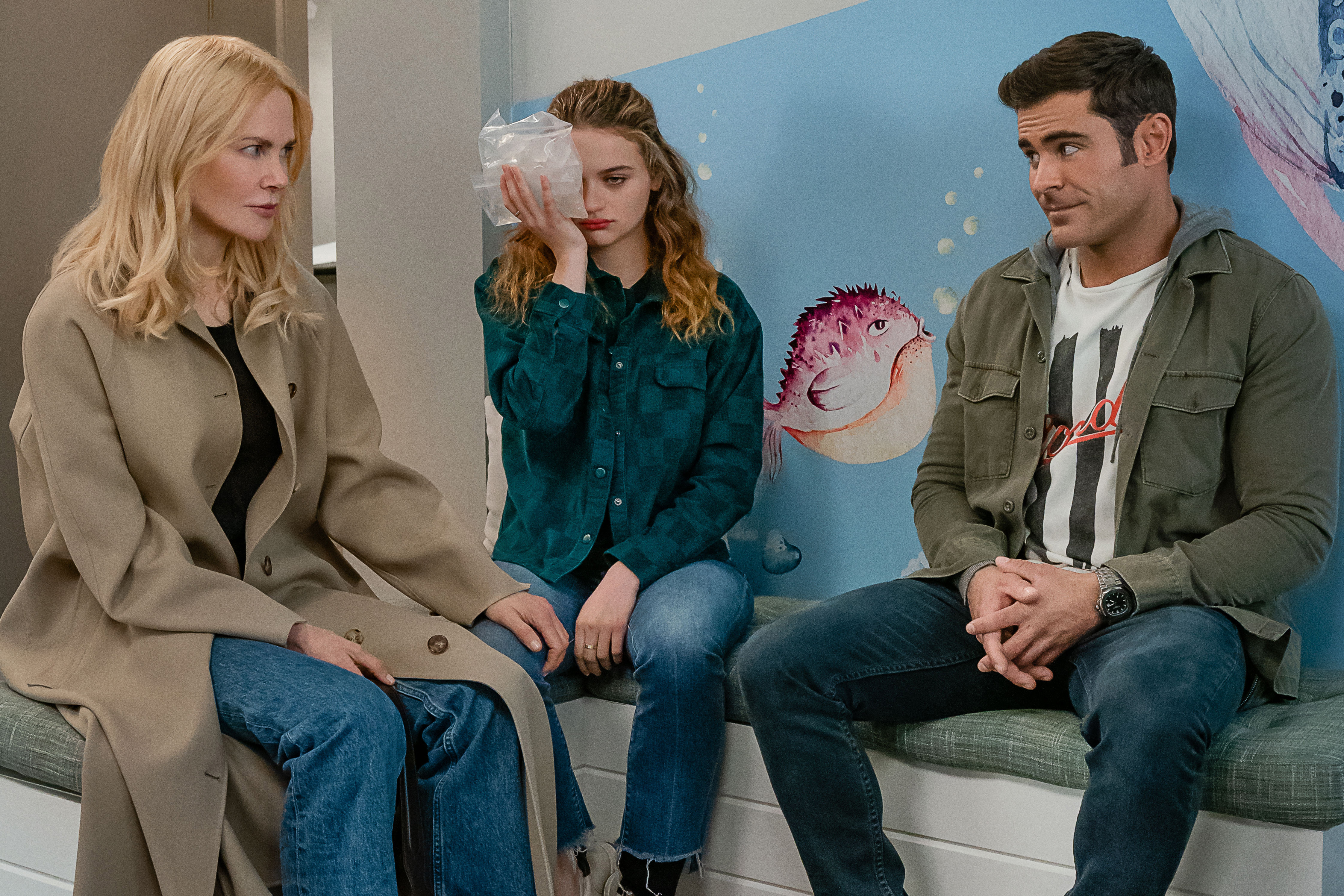
In it, Zac plays difficult movie star Chris Cole who falls for Brooke, the mother of his 24-year-old assistant, Zara. Like the cast, the premise is promising. On its surface, the film could even be touted as a mash-up of the recent age-gap romance The Idea Of You with a classic Notting Hill-esque twist (a movie star falling in love with a non-celebrity).
However, in execution, A Family Affair misses the mark and often doesn’t feel like a rom-com at all. Is the movie supposed to be a rom-com with emotional depth or a parody of one? It doesn’t know. This problem is most evident in the stark dichotomy between the characters’ trope-y personas and their sincere relationships.

Tina Rowden/Netflix
Advertisement
Zac plays a caricature of a movie star, embodying the stereotype of being an out-of-touch celebrity (he hasn’t been to a grocery store in 10 years) who has forgotten how to treat other people with respect, especially his assistant Zara. Zara is the quintessential entitled young person who is working her first job and struggling because she’s a – dare I use the term – “nepo baby” (her mum is basically Joan Didion) who feels like her producing career should begin sooner, so she can step outside of her mum’s shadow. That mum, Brooke, is suffering from writer’s block and hasn’t dated in the decade since her husband died, and she longs to remember what it feels like to be a woman, not a mother or wife to a man who was jealous of her success.
In the opening scene, Zara is cursing in standstill traffic because she’s late to deliver a pair of diamond earrings to Chris, so he can break up with the latest woman he is seeing. Simultaneously, Brooke is across Los Angeles bemoaning to Kathy Bates’ character (her former editor and mother-in-law) about her inability to write. Neither of these tropes play well.
But the actors do. The result is that Nicole, Zac and Joey’s delivery of Carrie Solomon’s unbalanced script swings the film from satire to sincerity in a disorienting way. For example, when Chris and Brooke first meet, their conversation is stilted and interesting and unobtrusively funny (he doesn’t know the myth of Icarus despite starring in a huge franchise called Icarus Rush). Their first kiss is part of a sweet exchange of dialogue that is one of the movie’s few swoon-y moments. But, as the encounter becomes steamier, the tone shifts.
Suddenly, a widow who hasn’t kissed someone in a long time is letting a man rip off her dress (but it’s OK because it was 50% off at Nordstrom) and tearing his bespoke shirt made from the wool of an endangered animal off his unbelievably toned body (but she’s worth the unethical clothing’s damage). When Joey’s character walks in on them and runs into the door, adding physical comedy to the mix, the moment becomes even more confusing. Was it supposed to be sweet, sexy, satirical or silly?
This tonal inconsistency plagues the film. It also emphasises its plot holes. For example, Chris is so famous that he’s unable to grocery shop, but he can sit in his assistant’s pediatrician office (a setting that is supposed to play as comedic) next to her and her mum who he just slept with. This is the kind of disbelief one might be able to suspend if the other components of the movie were working, but they aren’t.
Advertisement

Tina Rowden/Netflix
Ultimately, the tropes and tonal shifts overshadow the less produced moments that are fresh and interesting and could have underpinned a truly great rom-com. Most of these moments occur during conversations, especially in the second half of the movie.
Zara is struggling with the realisation that her mum’s life is about more than mothering, and she is a person who deserves happiness, but she also doesn’t want Chris to hurt her mum. Brooke is having a hard time opening herself up to a relationship that could end with hurt. This mother-daughter dynamic and depiction of coming-of-age as a lifelong process are easily the film’s highlights, and it should have leaned into them.
Instead, A Family Affair is just another iteration of an overproduced rom-com like December’s Anyone But You. And, like April’s The Idea Of You, it glosses over the complexities it presents to become a generic version of palatable and consumable.
While these rom-coms (and Anyone But You’s box office success and the resurgence of rom-coms on streaming platforms) have been lauded as proof that the genre is back, all of them have left me rubbing my eyes in disbelief, wondering if I just watched the same movie that other critics and viewers said they loved.
Advertisement
I’m not writing this to be a contrarian or detract from a viewer’s enjoyment (all art is subjective), but I do want to know what happened to the modern rom-com in its purest form? When did we lose the plot of clandestine emails and No. 2 pencils, and why is it so rare to capture that magic in movies today? Why is Plus One an aberration?
In our hyperbolic, engagement-driven world, everything is either “the greatest” or “the worst”, and A Family Affair is neither. It is mediocre, run-of-the-mill, exactly what we have come to expect from most content. And that’s the problem. It’s watchable.
When the goal is getting eyes on the small screen, rom-coms like this and The Idea Of You become successes not because they are great but because we are willing to consume them in large volumes. I still hold this up as proof that people want rom-coms, but I’m losing faith in the new movies we now qualify as “great” ones.




Hydrothermal vents are seeps on the sea floor from which hot liquids escape. “Water penetrates into the ocean floor where it is heated by magma. The overheated water then rises back to the sea floor through cracks and fissures. On its way up the fluid become enriched in minerals and materials dissolved out of the oceanic crustal rocks. These fluids often seep out again at the sea floor through tube-like chimneys called black smokers, where metal-rich minerals are then precipitated,” explains Prof. Gerhard Bohrmann of MARUM and chief scientist of the MARIA S. MERIAN (MSM 109) expedition.
At water depths greater than 3,000 meters, the remote-controlled submersible vehicle MARUM-QUEST took samples from the newly discovered hydrothermal field. Named after Jøtul, a giant in Nordic mythology, the field is located on the 500-kilometer-long Knipovich Ridge. The ridge lies within the triangle formed by Greenland, Norway and Svalbard on the boundary of the North American and European tectonic plates. This kind of plate boundary, where two plates move apart, is called a spreading ridge. The Jøtul Field is located on an extremely slow spreading ridge with a growth rate of the plates of less than two centimeters per year. Because very little is known about hydrothermal activity on slow spreading ridges, the expedition focused on obtaining an overview of the escaping fluids, as well as the size and composition of active and inactive smokers in the field.
“The Jøtul Field is a discovery of scientific interest not only because of its location in the ocean but also due to its climate significance, which was revealed by our detection of very high concentrations of methane in the fluid samples, among other things,” reports Gerhard Bohrmann. Methane emissions from hydrothermal vents indicate a vigorous interaction of magma with sediments. On its journey through the water column, a large proportion of the methane is converted into carbon dioxide, which increases the concentration of CO2 in the ocean and contributes to acidification, but it also has an impact on climate when it interacts with the atmosphere. The amount of methane from the Jøtul Field that eventually escapes directly into the atmosphere, where it then acts as a greenhouse gas, still needs to be studied in more detail. There is also little known about the organisms living chemosynthetically in the Jøtul Field. In the darkness of the deep ocean, where photosynthesis cannot occur, hydrothermal fluids form the basis for chemosynthesis, which is employed by very specific organisms in symbiosis with bacteria.
In order to significantly expand on the somewhat sparse information available on the Jøtul Field, a new expedition of the MARIA S. MERIAN will start in late summer of this year under the leadership of Gerhard Bohrmann. The focus of the expedition is the exploration and sampling of as yet unknown areas of the Jøtul Field. With extensive data from the Jøtul Field it will be possible to make comparisons with the few already known hydrothermal fields in the Arctic province, such as the Aurora Field and Loki’s Castle.

A recent discovery by NASA’s James Webb Space Telescope (JWST) confirmed that luminous, very red objects previously detected in the early universe upend conventional thinking about the origins and evolution of galaxies and their supermassive black holes.
An international team, led by Penn State researchers, using the NIRSpec instrument aboard JWST as part of the RUBIES survey identified three mysterious objects in the early universe, about 600-800 million years after the Big Bang, when the universe was only 5% of its current age. They announced the discovery today (June 27) in Astrophysical Journal Letters.
The team studied spectral measurements, or intensity of different wavelengths of light emitted from the objects. Their analysis found signatures of “old” stars, hundreds of millions of years old, far older than expected in a young universe.
The researchers said they were also surprised to discover signatures of huge supermassive black holes in the same objects, estimating that they are 100 to 1,000 times more massive than the supermassive black hole in our own Milky Way. Neither of these are expected in current models of galaxy growth and supermassive black hole formation, which expect galaxies and their black holes to grow together over billions of years of cosmic history.
“We have confirmed that these appear to be packed with ancient stars — hundreds of millions of years old — in a universe that is only 600-800 million years old. Remarkably, these objects hold the record for the earliest signatures of old starlight,” said Bingjie Wang, a postdoctoral scholar at Penn State and lead author on the paper. “It was totally unexpected to find old stars in a very young universe. The standard models of cosmology and galaxy formation have been incredibly successful, yet, these luminous objects do not quite fit comfortably into those theories.”
The researchers first spotted the massive objects in July of 2022, when the initial dataset was released from JWST. The team published a paper in Nature several months later announcing the objects’ existence.
At the time, the researchers suspected the objects were galaxies, but followed up their analysis by taking spectra to better understand the true distances of the objects, as well as the sources powering their immense light.
The researchers then used the new data to draw a clearer picture of what the galaxies looked like and what was inside of them. Not only did the team confirm that the objects were indeed galaxies near the beginning of time, but they also found evidence of surprisingly large supermassive black holes and a surprisingly old population of stars.
“It’s very confusing,” said Joel Leja, assistant professor of astronomy and astrophysics at Penn State and co-author on both papers. “You can make this uncomfortably fit in our current model of the universe, but only if we evoke some exotic, insanely rapid formation at the beginning of time. This is, without a doubt, the most peculiar and interesting set of objects I’ve seen in my career.”
The JWST is equipped with infrared-sensing instruments capable of detecting light that was emitted by the most ancient stars and galaxies. Essentially, the telescope allows scientists to see back in time roughly 13.5 billion years, near the beginning of the universe as we know it, Leja said.
One challenge to analyzing ancient light is that it can be hard to differentiate between the types of objects that could have emitted the light. In the case of these early objects, they have clear characteristics of both supermassive black holes and old stars. However, Wang explained, it’s not yet clear how much of the observed light comes from each — meaning these could be early galaxies that are unexpectedly old and more massive even than our own Milky Way, forming far earlier than models predict, or they could be more normal-mass galaxies with “overmassive” black holes, roughly 100 to 1,000 times more massive than such a galaxy would have today.
“Distinguishing between light from material falling into a black hole and light emitted from stars in these tiny, distant objects is challenging,” Wang said. “That inability to tell the difference in the current dataset leaves ample room for interpretation of these intriguing objects. Honestly, it’s thrilling to have so much of this mystery left to figure out.”
Aside from their unexplainable mass and age, if part of the light is indeed from supermassive black holes, then they also aren’t normal supermassive black holes. They produce far more ultraviolet photons than expected, and similar objects studied with other instruments lack the characteristic signatures of supermassive black holes, such as hot dust and bright X-ray emission. But maybe the most surprising thing, the researchers said, is how massive they seem to be.
“Normally supermassive black holes are paired with galaxies,” Leja said. “They grow up together and go through all their major life experiences together. But here, we have a fully formed adult black hole living inside of what should be a baby galaxy. That doesn’t really make sense, because these things should grow together, or at least that’s what we thought.”
The researchers were also perplexed by the incredibly small sizes of these systems, only a few hundred light years across, roughly 1,000 times smaller than our own Milky Way. The stars are approximately as numerous as in our own Milky Way galaxy — with somewhere between 10 billion and 1 trillion stars — but contained within a volume 1,000 times smaller than the Milky Way.
Leja explained that if you took the Milky Way and compressed it to the size of the galaxies they found, the nearest star would almost be in our solar system. The supermassive black hole in the center of the Milky Way, about 26,000 light years away, would only be about 26 light years away from Earth and visible in the sky as a giant pillar of light.
“These early galaxies would be so dense with stars — stars that must have formed in a way we’ve never seen, under conditions we would never expect during a period in which we’d never expect to see them,” Leja said. “And for whatever reason, the universe stopped making objects like these after just a couple of billion years. They are unique to the early universe.”
The researchers are hoping to follow up with more observations, which they said could help explain some of the objects’ mysteries. They plan to take deeper spectra by pointing the telescope at the objects for prolonged periods of time, which will help disentangle emission from stars and the potential supermassive black hole by identifying the specific absorption signatures that would be present in each.
“There’s another way that we could have a breakthrough, and that’s just the right idea,” Leja said. “We have all these puzzle pieces and they only fit if we ignore the fact that some of them are breaking. This problem is amenable to a stroke of genius that has so far eluded us, all of our collaborators and the entire scientific community.”
Wang and Leja received funding from NASA’s General Observers program. The research was also supported by the International Space Science Institute in Bern. The work is based in part on observations made with the NASA/ESA/CSA James Webb Space Telescope. Computations for the research were performed on Penn State’s Institute for Computational and Data Sciences’ Roar supercomputer.
Other co-authors on the paper are Anna de Graaff of the Max-Planck-Institut für Astronomie in Germany; Gabriel Brammer of the Cosmic Dawn Center and Niels Bohr Institute; Andrea Weibel and Pascal Oesch of the University of Geneva; Nikko Cleri, Michaela Hirschmann, Pieter van Dokkum and Rohan Naidu of Yale University; Ivo Labbé of Stanford University; Jorryt Matthee and Jenny Greene of Princeton University; Ian McConachie and Rachel Bezanson of the University of Pittsburgh; Josephine Baggen of Texas A&M University; Katherine Suess of the Observatoire de Sauverny in Switzerland; David Setton of Massachusetts Institute of Technology’s Kavli Institute for Astrophysics and Space Research; Erica Nelson of the University of Colorado; Christina Williams of the U.S. National Science Foundation’s National Optical-Infrared Astronomy Research Laboratory and the University of Arizona.

A team of researchers led by the University of California San Diego has developed a soft, stretchy electronic device capable of simulating the feeling of pressure or vibration when worn on the skin. This device, reported in a paper published in Science Robotics, represents a step towards creating haptic technologies that can reproduce a more varied and realistic range of touch sensations.
The device consists of a soft, stretchable electrode attached to a silicone patch. It can be worn like a sticker on either the fingertip or forearm. The electrode, in direct contact with the skin, is connected to an external power source via wires. By sending a mild electrical current through the skin, the device can produce sensations of either pressure or vibration depending on the signal’s frequency.
“Our goal is to create a wearable system that can deliver a wide gamut of touch sensations using electrical signals — without causing pain for the wearer,” said study co-first author Rachel Blau, a nano engineering postdoctoral researcher at the UC San Diego Jacobs School of Engineering.
Existing technologies that recreate a sense of touch through electrical stimulation often induce pain due to the use of rigid metal electrodes, which do not conform well to the skin. The air gaps between these electrodes and the skin can result in painful electrical currents.
To address these issues, Blau and a team of researchers led by Darren Lipomi, a professor in the Aiiso Yufeng Li Family Department of Chemical and Nano Engineering at UC San Diego, developed a soft, stretchy electrode that seamlessly conforms to the skin.
The electrode is made of a new polymer material constructed from the building blocks of two existing polymers: a conductive, rigid polymer known as PEDOT:PSS, and a soft, stretchy polymer known as PPEGMEA. “By optimizing the ratio of these [polymer building blocks], we molecularly engineered a material that is both conductive and stretchable,” said Blau.
The polymer electrode is laser-cut into a spring-shaped, concentric design and attached to a silicone substrate. “This design enhances the electrode’s stretchability and ensures that the electrical current targets a specific location on the skin, thus providing localized stimulation to prevent any pain,” said Abdulhameed Abdal, a Ph.D. student in the Department of Mechanical and Aerospace Engineering at UC San Diego and the study’s other co-first author. Abdal and Blau worked on the synthesis and fabrication of the electrode with UC San Diego nano engineering undergraduate students Yi Qie, Anthony Navarro and Jason Chin.
In tests, the electrode device was worn on the forearm by 10 participants. In collaboration with behavioral scientists and psychologists at the University of Amsterdam, the researchers first identified the lowest level of electrical current detectable. They then adjusted the frequency of the electrical stimulation, allowing participants to experience sensations categorized as either pressure or vibration.
“We found that by increasing the frequency, participants felt more vibration rather than pressure,” said Abdal. “This is interesting because biophysically, it was never known exactly how current is perceived by the skin.”
The new insights could pave the way for the development of advanced haptic devices for applications such as virtual reality, medical prosthetics and wearable technology.
This work was supported by the National Science Foundation Disability and Rehabilitation Engineering program (CBET-2223566). This work was performed in part at the San Diego Nanotechnology Infrastructure (SDNI) at UC San Diego, a member of the National Nanotechnology Coordinated Infrastructure, which is supported by the National Science Foundation (grant ECCS-1542148).

Researchers from the Icahn School of Medicine at Mount Sinai have shed valuable light on the nuanced functions and intricate regulatory methods of RNA editing, a critical mechanism underlying brain development and disease.
In a study published June 26 in Nature Communications, the team reported finding major differences between postmortem and living prefrontal cortex brain tissues as they relate to one of the most abundant RNA modifications in the brain, known as adenosine-to-inosine (A-to-I) editing. This discovery will play a significant role in shaping the development of diagnostics and therapies for brain diseases.
While DNA holds the genetic blueprint for humans, RNA actually carries out its instructions to create functional proteins that play important roles in how the body functions, including the complex functions of the central nervous system. RNA’s function and stability are controlled by many modifications, each holding a specific purpose. These modifications, known as RNA editing, are a continuous process occurring in all our cells and tissues, facilitated by enzymes known as ADAR. This process can continue to occur in individual cells for some time after the death of the person whose tissues the cells were part of.
The conversion of adenosine nucleosides to inosine (A-to-I) is a common and well-studied RNA modification and is orchestrated by proteins in the ADAR family, primarily ADAR1 and ADAR2. In the mammalian brain, thousands of highly regulated A-to-I editing sites have been discovered across anatomical regions and cell types, some by Mount Sinai researchers. These sites are known to be involved in neuronal maturation and brain development. Aberrant regulation of A-to-I editing has been linked to neurological disorders.
“Until now, the investigation of A-to-I editing and its biological significance in the mammalian brain has been restricted to the analysis of postmortem tissues. By using fresh samples from living individuals, we were able to uncover significant differences in RNA editing activity that previous studies, relying only on postmortem samples, may have overlooked,” said Michael Breen, PhD, co-senior author of the study and Assistant Professor of Psychiatry, and Genetics and Genomic Sciences, at Icahn Mount Sinai. “We were particularly surprised to find that RNA editing levels were significantly higher in postmortem brain tissue compared to living tissue, which is likely due to postmortem changes such as inflammation and hypoxia that do not occur in living brains. Additionally, we discovered that RNA editing in living tissue tends to involve evolutionarily conserved and functionally important sites that are also dysregulated in human disease, emphasizing the need to study both living and postmortem samples for a comprehensive understanding of brain biology.”
After death, the lack of oxygen quickly damages brain cells, causing an irreversible cascade of damage that can alter ADAR expression and A-to-I editing. “We hypothesized that molecular responses to postmortem-induced hypoxic and immune responses can significantly alter the landscape of A-to-I editing. This can lead to misunderstandings about RNA editing in the brain if we only study postmortem tissues,” said Miguel Rodríguez de los Santos, PhD, co-first author of the study and a postdoctoral fellow in the Department of Psychiatry at Mount Sinai. “Studying living brain tissue provides us with a clearer picture of RNA editing biology in the human brain.”
To investigate, the research team anchored their study around the Living Brain Project, in which dorsolateral prefrontal cortex (DLPFC) tissues from living people are obtained during neurosurgical procedures for deep brain stimulation, an elective treatment for neurological illness. For comparison, a cohort of postmortem DLPFC tissues across three brain banks was assembled to match the living cohort for key demographic and clinical variables. The team investigated multiple genomic data types from the Living Brain Project, including bulk tissue RNA sampling, single-nuclei RNA sequencing, and whole-genome sequencing. The generation of this data is being described in multiple forthcoming Living Brain Project manuscripts.
The researchers identified more than 72,000 locations where A-to-I editing occurs more often or differently in postmortem than in living DLPFC brain tissue. They found higher levels of the enzymes ADAR and ADARB1, which are responsible for elevated editing patterns in postmortem brain tissues. Interestingly, they also found hundreds of sites with higher levels of A-to-I editing in living brain tissue. These sites are mostly found in the connections between neurons (called synapses) and are typically conserved through evolution, suggesting they play important roles in brain activity. Some well-known A-to-I editing sites were highly edited in living brains, indicating they may be involved in critical neuronal processes like synaptic plasticity, which is essential for learning and memory. However, many other A-to-I editing sites found in living brain tissues have unclear functions, and further research is needed to understand their impact on brain health.
“Utilizing fresh brain tissue from living human donors provided us the opportunity to investigate the brain without the confounds inherent to postmortem tissue analysis,” said Alexander W. Charney, MD, PhD, co-senior author of the study and Associate Professor of Psychiatry, Genetic and Genomic Sciences, Neuroscience, and Neurosurgery at Icahn Mount Sinai and co-lead of the Living Brain Project. “In doing so, we revealed more accurate insights into the prevalence and roles of A-to-I editing in the human brain. It is critical to note that our findings do not negate but instead provide missing context for using postmortem brain tissues in researching A-to-I regulation. Understanding these differences helps improve our knowledge of brain function and disease through the lens of RNA editing modifications, which can potentially lead to better diagnostic and therapeutic approaches.”
The research team will further analyze the RNA editing data to understand its implications better and to identify potential therapeutic targets for Parkinson’s disease. They are also expanding the research to include emerging work from this cohort that focuses on gene expression, proteomics, and multi-omics of the living brain.
“By harnessing the unique, transdisciplinary nature of the Living Brain Project, we can turn a cutting edge clinical care modality like deep brain stimulation into a platform for unprecedented insight into human brain biology that will give rise to new therapeutic opportunities,” said Brian Kopell, MD, co-first author of the study, Director of the Center for Neuromodulation at Mount Sinai and co-lead of the Living Brain Project

The growing prevalence of high-speed wireless communication devices, from 5G mobile phones to sensors for autonomous vehicles, is leading to increasingly crowded airwaves. This makes the ability to block interfering signals that can hamper device performance an even more important — and more challenging — problem.
With these and other emerging applications in mind, MIT researchers demonstrated a new millimeter-wave multiple-input-multiple-output (MIMO) wireless receiver architecture that can handle stronger spatial interference than previous designs. MIMO systems have multiple antennas, enabling them to transmit and receive signals from different directions. Their wireless receiver senses and blocks spatial interference at the earliest opportunity, before unwanted signals have been amplified, which improves performance.
Key to this MIMO receiver architecture is a special circuit that can target and cancel out unwanted signals, known as a nonreciprocal phase shifter. By making a novel phase shifter structure that is reconfigurable, low-power, and compact, the researchers show how it can be used to cancel out interference earlier in the receiver chain.
Their receiver can block up to four times more interference than some similar devices. In addition, the interference-blocking components can be switched on and off as needed to conserve energy.
In a mobile phone, such a receiver could help mitigate signal quality issues that can lead to slow and choppy Zoom calling or video streaming.
“There is already a lot of utilization happening in the frequency ranges we are trying to use for new 5G and 6G systems. So, anything new we are trying to add should already have these interference-mitigation systems installed. Here, we’ve shown that using a nonreciprocal phase shifter in this new architecture gives us better performance. This is quite significant, especially since we are using the same integrated platform as everyone else,” says Negar Reiskarimian, the X-Window Consortium Career Development Assistant Professor in the Department of Electrical Engineering and Computer Science (EECS), a member of the Microsystems Technology Laboratories and Research Laboratory of Electronics (RLE), and the senior author of a paper on this receiver.
Reiskarimian wrote the paper with EECS graduate students Shahabeddin Mohin, who is the lead author, Soroush Araei, and Mohammad Barzgari, an RLE postdoc. The work was recently presented at the IEEE Radio Frequency Circuits Symposium and received the Best Student Paper Award.
Blocking interference
Digital MIMO systems have an analog and a digital portion. The analog portion uses antennas to receive signals, which are amplified, down-converted, and passed through an analog-to-digital converter before being processed in the digital domain of the device. In this case, digital beamforming is required to retrieve the desired signal.
But if a strong, interfering signal coming from a different direction hits the receiver at the same time as a desired signal, it can saturate the amplifier so the desired signal is drowned out. Digital MIMOs can filter out unwanted signals, but this filtering occurs later in the receiver chain. If the interference is amplified along with the desired signal, it is more difficult to filter out later.
“The output of the initial low-noise amplifier is the first place you can do this filtering with minimal penalty, so that is exactly what we are doing with our approach,” Reiskarimian says.
The researchers built and installed four nonreciprocal phase shifters immediately at the output of the first amplifier in each receiver chain, all connected to the same node. These phase shifters can pass signal in both directions and sense the angle of an incoming interfering signal. The devices can adjust their phase until they cancel out the interference.
The phase of these devices can be precisely tuned, so they can sense and cancel an unwanted signal before it passes to the rest of the receiver, blocking interference before it affects any other parts of the receiver. In addition, the phase shifters can follow signals to continue blocking interference if it changes location.
“If you start getting disconnected or your signal quality goes down, you can turn this on and mitigate that interference on the fly. Because ours is a parallel approach, you can turn it on and off with minimal effect on the performance of the receiver itself,” Reiskarimian adds.
A compact device
In addition to making their novel phase shifter architecture tunable, the researchers designed them to use less space on the chip and consume less power than typical nonreciprocal phase shifters.
Once the researchers had done the analysis to show their idea would work, their biggest challenge was translating the theory into a circuit that achieved their performance goals. At the same time, the receiver had to meet strict size restrictions and a tight power budget, or it wouldn’t be useful in real-world devices.
In the end, the team demonstrated a compact MIMO architecture on a 3.2-square-millimeter chip that could block signals which were up to four times stronger than what other devices could handle. Simpler than typical designs, their phase shifter architecture is also more energy efficient.
Moving forward, the researchers want to scale up their device to larger systems, as well as enable it to perform in the new frequency ranges utilized by 6G wireless devices. These frequency ranges are prone to powerful interference from satellites. In addition, they would like to adapt nonreciprocal phase shifters to other applications.
This research was supported, in part, by the MIT Center for Integrated Circuits and Systems.

The Coral Triangle, also known as the Indo-Australian Archipelago, is renowned for having the greatest marine biodiversity on our planet. Despite its importance, the detailed evolutionary history of this biodiversity hotspot has remained largely a mystery. An international research team has now shed light on this history, reconstructing how biodiversity in the region has developed over the past 40 million years.
This study, co-led by Dr Skye Yunshu TIAN from the University of Bonn, who conducted the major part of the research at The University of Hong Kong (HKU), along with Professor Moriaki YASUHARA from HKU School of Biological Sciences, the Swire Institute of Marine Science (SWIMS) and Institute for Climate and Carbon Neutrality (ICCN), as well as Dr Fabien L. CONDAMINE of Centre National de la Recherche Scientifique (CNRS), has now been published in the journal Nature.
The researchers began their investigation by examining sediment samples from the Indo-Australian Archipelago in the laboratory and identifying the fossils they contained. “We wanted to understand how the marine biodiversity of the Indo-Australian Archipelago evolved and persisted, and what factors were responsible for the disproportionately high diversity in the tropics,” said first author Skye Tian.
Their findings revealed that the archipelago had shown an increase in diversification since the early Miocene, around 20 million years ago. Approximately 2.6 million years ago, the number of species approached a plateau. Interestingly, there were no major extinction events during the entire study period. “The increase in diversity was primarily driven by the habitat factor, as tectonic collisions (movements of Earth’s plates) in Southeast Asia created extensive areas of shallow marine habitats,” Skye noted.
Around 14 million years ago, the region’s thermal stress, or excessive heat, began to moderate. “This moderation was crucial for the development of the hotspot,” Skye continued. “During the Eocene (56 to 34 million years ago), excessively high tropical temperatures in warm climate zones hindered the increase in diversity. The cooling after that allowed for a more favourable environment for biodiversity to flourish.” However, this rich biodiversity could be at risk. “Our palaeobiological results suggest that we could quickly lose the fantastic diversity of the tropical hotspot if the ongoing anthropogenic warming intensifies.” Skye added.
Professor Moriaki Yasuhara further elaborated: “This reconstruction of the long-term history of the Coral Triangle diversity hotspot enables us to better understand how diversity hotspot moved from ‘Tethys (ancient Mediterranian region)’ region to the present place of the Coral Triangle and developed there. These are what we didn’t know too clearly before. And also our results tells us why Coral Triangle diversity is much higher than that of the Caribbean Sea, that is probably because the Coral Triangle didn’t experience large extinction event by luck.”
