Steven Spielberg Insists He’d ‘Never Have Used AI’ In Disclosure Day After Emily Blunt Claims

Steven Spielberg has clarified his stance on AI in cinema after Emily Blunt recent comments about their new film, Disclosure Day.

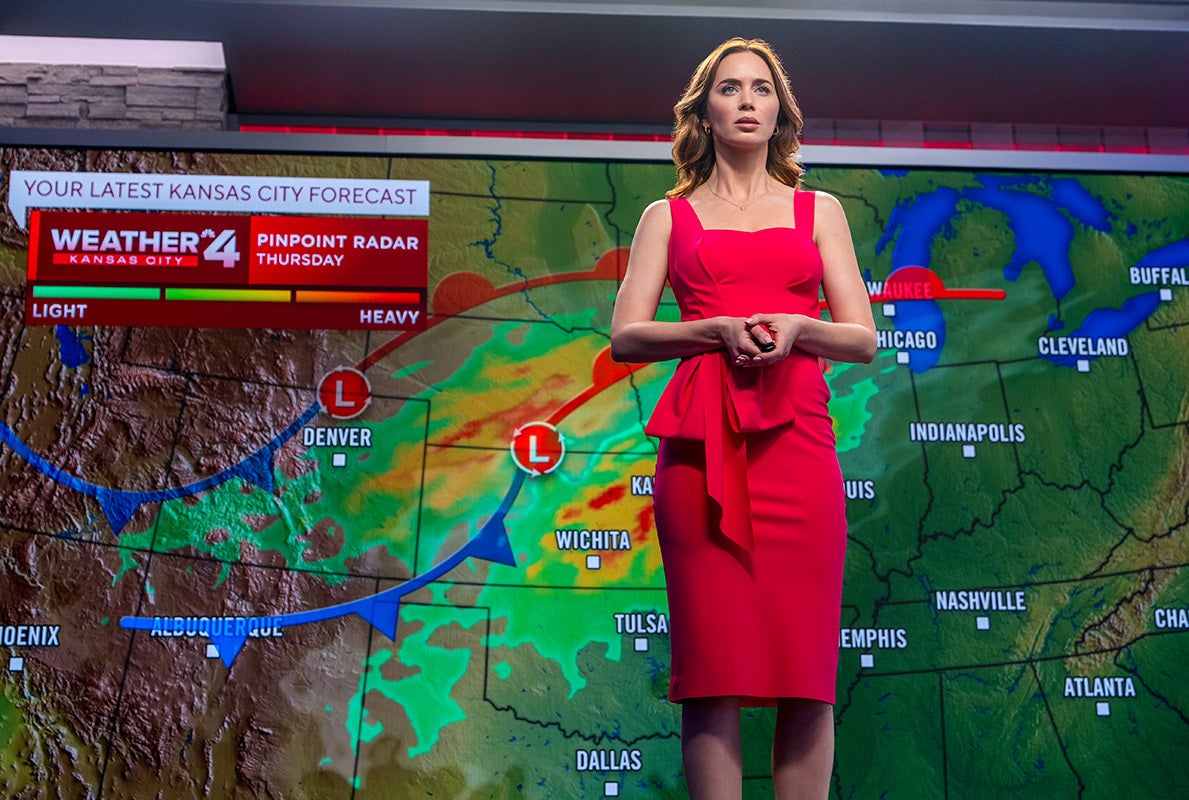
In Spielberg’s new sci-fi blockbuster, Emily plays a local weatherwoman who begins speaking in an unusual, clicking alien language mid-broadcast, for reasons that become apparent over the course of the film.

During a recent interview with Entertainment Weekly, the British star opened up about the origins of these noises, claiming that Spielberg had told her: “You know, we could do it with AI, or you could do it.”

“I was like, ‘I feel confident I can make some weird noises’,” she then quipped.

Meanwhile, she also revealed to Hot Ones host Sean Evans that AI was something she was “a bit terrified of” when it was apparently presented to her as an option for her Disclosure Day character’s alien language.

Emily Blunt in Disclosure Day

Since then, Spielberg sat down with ITV News to discuss the film, during which Emily’s comments about him supposedly offering to create these sounds with generative AI were brought up.

“I would never have used AI,” he insisted. “I would have gone the old-fashioned way, you get a dolphin, an elephant, you slow it down, you speed it up, you play it backwards.”

He added that his Oscar-winning sound designer, Gary Rydstrom, would have found an organic way to make the sounds had Emily not been able to do them herself.

Spielberg has put his foot down on using generative AI during the filmmaking process in the past.

“I’m not willing to substitute, because I don’t really believe in sentience,” he said on the IMO podcast in March. “I don’t believe there is any substitute for the soul. I don’t think that is an algorithm that is inventible.”

He claimed: “Use AI as a tool, but do not use AI as the final word on anything creative. That’s where I draw the line.”

Explaining how she settled on the sounds that eventually made it into Disclosure Day, she told Entertainment Weekly that she had sent the iconic filmmaker voice notes of herself “clicking, humming, doing weird Barry White low singing mixed with clicking mixed with Morse code sounds”.

“I just tried everything,” she added. “We sort of threw the kitchen sink at it, and I think he wanted it to sound mathematical and not too terrifying.”

The Devil Wears Prada actor shared that the final version audiences hear in Disclosure Day is a mix of layered noises she recorded in a sound booth.

Emily also expanded on Hot Ones about how she and the sound team for Disclosure Day ultimately created the chilling sounds that get broadcast across America in the film without AI.

She explained that the sound engineer had one microphone by her mouth and another by her throat to “capture it in a really weird way”.

“And then the sound designer went away and created that weird sound,” she continued. “Even kind of leading up to that moment where she starts speaking in this non-human language, it’s a four-minute oner that we shot that leads up to that moment where she’s gradually sort of disintegrating.”

Disclosure Day is out now in cinemas.

Share Button

Drag Race Winner Danny Beard To Take The Lead In New Play About Paul O’Grady’s Life

Former RuPaul’s Drag Race UK champion Danny Beard has been unveiled as the lead in a new play about the late Paul O’Grady.

On Monday morning, it was announced that Danny would be starring as Paul in Savage, named after the late TV personality’s drag alter-ego, Lily Savage.

The play was penned by screenwriter and playwright Jonathan Harvey, whose biggest credits have included Beautiful To Heaven, Closer To Heaven and the award-winning TV comedy Gimme Gimme Gimme.

Jonathan had briefly worked with Paul on the play, prior to the Bafta winner’s death in 2023 at the age of 67.

Paul O'Grady pictured in 2015
Paul O’Grady pictured in 2015

via Associated Press

Paul had previously said of the project: “I’m delighted Jonathan has agreed to write the script, I really am, as he’s perfect for this and he’s such a great writer.”

An official synopsis teases: “The show follows Paul’s journey from the streets of Merseyside to the heart of London’s club scene, where, armed with little more than his wits and a wig, he began carving out a place for himself.

“From humble roots and an unassuming start emerged Lily Savage: the fearless, foul-mouthed alter ego who would defy convention and win the hearts of millions.”

Speaking in a promotional video, recorded at London’s Royal Vauxhall Tavern, where Paul previously performed as Lily, Danny called the role a “dream come true”.

Jonathan enthused: “I was so thrilled when Paul gave me the opportunity to turn his life story into a stage show. I first saw Lily in a scuzzy gay bar in West London in the late 80s and laughed ’til I hurt, so it’s an honour indeed to bring his story and the colourful escapades of the blonde bombsite herself to life.

“This is one of those few shows that I’m involved in where I can go ‘You need to come. It’s really good’… because the zinging one-liners are all his.”

Lily Savage
Lily Savage

Fremantle Media/Shutterstock

“It’s so sad he’s not here to see it, but hopefully this will be a fitting testament to everything he achieved, and a cracking night out full of humour and heart,” he added.

Savage will premiere at Leicester’s Curve theatre in February 2027, before touring the UK and arriving in London’s West End.

Share Button

Oxford physicists just made Schrödinger’s cat even stranger

Researchers at the University of Oxford have created a new type of quantum superposition, a phenomenon often associated with the famous Schrödinger’s cat thought experiment. Unlike previous versions, these newly demonstrated states are built from highly nonclassical quantum components. The achievement could help advance quantum computing beyond traditional binary systems, improve sensing technologies, and provide new insights into the foundations of quantum physics.

One of the most surprising features of quantum mechanics is that objects can exist in multiple states simultaneously. This concept is commonly illustrated by Schrödinger’s cat, a hypothetical cat that is considered both alive and dead until it is observed.

While the thought experiment is fictional, scientists routinely create real quantum superpositions in the laboratory. Atoms, light, and even motion can be placed into multiple quantum states at once. The ability to generate and control these states is critical for technologies such as quantum computers and ultra-precise clocks.

A familiar example is a quantum bit, or qubit, which can exist in a combination of both 0 and 1 at the same time. However, quantum systems are capable of much more than two-state behavior.

Quantum harmonic oscillators, which can occupy many energy levels, offer a far richer set of possibilities. These oscillators describe a wide range of physical systems, including light, vibrations, and the motion of trapped particles. Scientists have used them to create many different kinds of quantum superpositions. One well-known example is the “cat state,” where an oscillator exists as a superposition of two wave packets moving in opposite directions. These wave packets, called coherent states, are the closest quantum equivalents to classical motion.

Building Quantum States From Nonclassical Components

The Oxford team has now demonstrated an entirely new family of quantum superpositions.

Rather than constructing cat-like states from coherent-state wave packets, the researchers developed a technique that combines a broad range of quantum components that are already highly nonclassical. In squeezed-state superpositions, for example, quantum uncertainty is distributed differently across each part of the state.

The experiment relied on the motion of a single trapped ion. A trapped ion combines two distinct quantum systems in one platform. Its internal state behaves like a qubit, while its motion acts as a quantum harmonic oscillator that can occupy many different motional states. This combination makes trapped ions especially useful for creating quantum states that extend beyond conventional qubits.

To generate the new states, the researchers first engineered interactions that entangled the ion’s internal state with different possible states of motion. They then performed a mid-circuit quantum measurement on the internal state, causing the ion’s motion to collapse into the desired superposition of nonclassical components.

“This approach gave us a tool to sculpt the quantum superposition into almost any shape,” explains lead author Dr. Sebastian Saner (Department of Physics, University of Oxford).

Programmable Control of Exotic Quantum States

The new method gave the team a high degree of control over the quantum states they produced.

By adjusting experimental parameters, they could modify the relative size, orientation, and separation of the components within the superposition. This flexibility allowed them to create a wide variety of unusual motional quantum states using the same trapped-ion system.

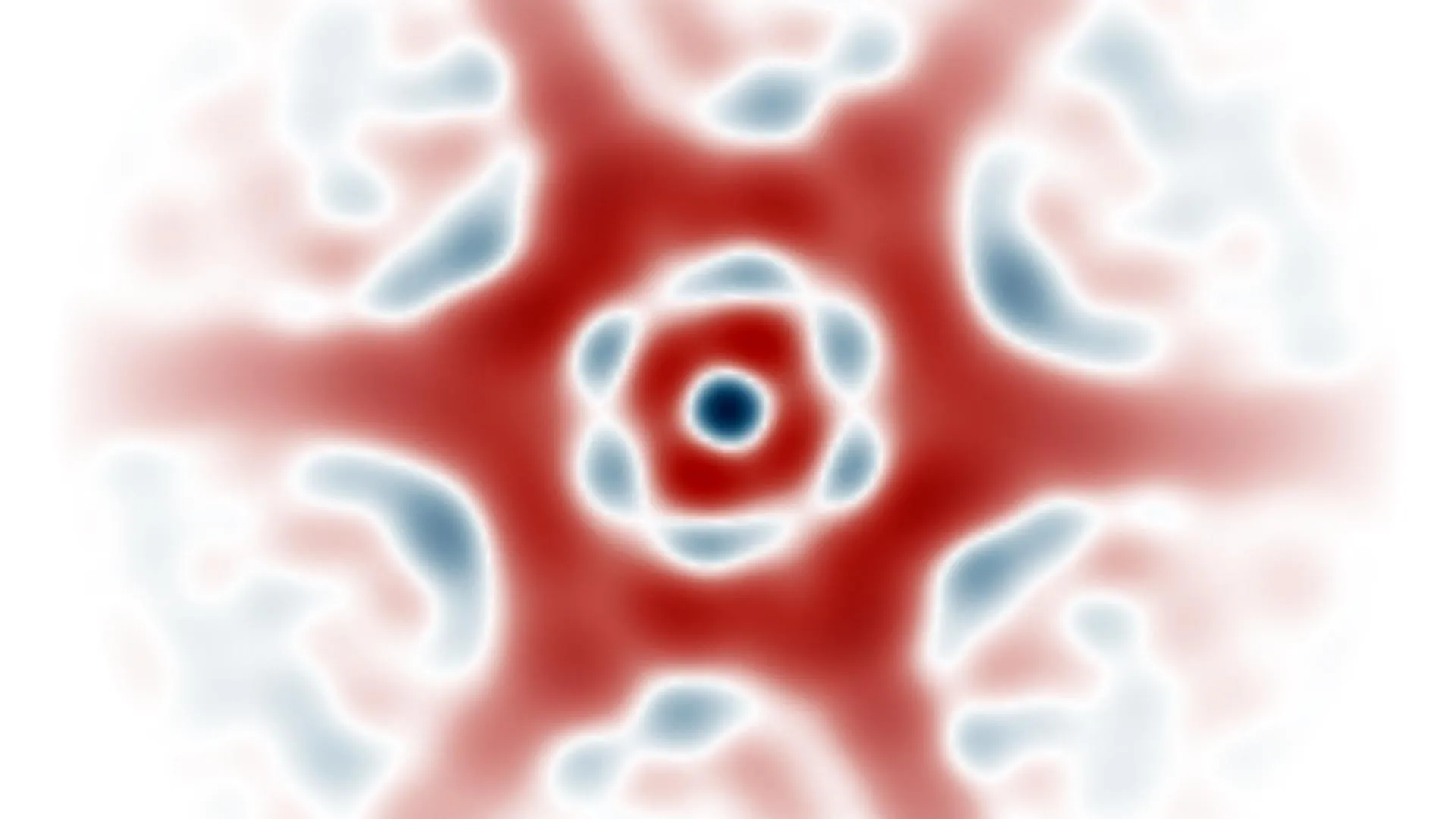
The researchers then reconstructed the quantum states directly. Their measurements revealed interference patterns and regions of Wigner negativity — clear signs that the states could not be described as ordinary classical mixtures. These observations confirmed that the experiment had successfully produced genuine quantum superpositions composed of truly nonclassical motional states.

The team is now working with theorists to better understand exactly how “quantum” these newly created states are.

“We were really encouraged by our colleagues’ reaction when we showed them what we had made. We believe we’re still scratching the surface of what’s possible, both for practical applications and for understanding these states at a more fundamental level,” says Dr. Raghavendra Srinivas (Department of Physics, University of Oxford), who supervised the work.

Potential Impact on Quantum Computing

The research points toward future quantum technologies that rely on quantum oscillators instead of only simple quantum bits.

One particularly promising application is quantum computing. These types of states may be more resistant to errors while also supporting simpler and more effective error-correction strategies. Beyond computing, they provide a new experimental platform for investigating one of physics’ biggest questions: where the boundary lies between the classical world we experience and the underlying quantum reality that governs it.

Share Button

Taboo subjects on the table at women’s health event

Three nurses behind the event say they want women to feel they can have open and honest conversations.

Share Button

‘I won’t have another baby after breastfeeding trauma’

New mothers say they did not receive enough breastfeeding support when their babies were born.

Share Button

The secret behind smoother, better-tasting protein shakes

Protein shakes may soon become easier to enjoy thanks to new research showing that changes in whey protein production can improve both taste and texture.

Scientists from the University of Reading, Aberystwyth University, and Arla Foods Ingredients have been working together to develop a whey protein (a dairy derived ingredient found in gym shakes and sports supplements) with enhanced texture qualities.

Their findings, published in the International Dairy Journal, indicate that adjusting the manufacturing process could make whey protein drinks more pleasant to drink.

Holly Giles, lead author and PhD researcher at the University of Reading, said: “Protein drinks can often have issues with taste and texture, making them hard to swallow and finish. We know this is a real problem for a lot of people, whether they are trying to build muscle or simply maintain their strength as they get older. The research findings give us clear directions to investigate to make protein drinks more palatable and nutritious, which could make a real difference to people who rely on them.”

How Whey Protein Processing Affects Flavor

The study builds on earlier research from the same team that developed a technique for selectively concentrating whey proteins. Using carefully controlled pressure, researchers pushed liquid whey through a fine membrane and achieved more than twice the typical concentration of alpha-lactalbumin, a protein that is highly valued in infant formula production.

To better understand how this protein influences taste and texture, the researchers further refined the process at the pilot-scale food processing facilities at AberInnovation. This allowed them to produce an alpha-lactalbumin-enriched sample for testing.

Minerals Found To Influence Taste and Texture

Taste tests conducted by a trained sensory panel revealed several positive changes. The enriched whey protein delivered improved texture characteristics and reduced the amount of friction experienced in the mouth, creating a smoother drinking experience.

However, the panel also detected stronger bitter and peppery flavors. Further analysis showed that these unwanted tastes were not caused by the protein itself. Instead, they were linked to minerals that became concentrated during the processing stage.

After identifying the source of the problem, the researchers modified the filtration process to remove those concentrated minerals. The result was a product that retained the texture improvements while achieving taste characteristics comparable to the original whey protein control.

Giles concluded: “We now have a much clearer picture of how both the proteins and minerals in whey affect the way it tastes and feels to drink. Further research has the potential to improve the taste and texture of protein drinks, making them a more palatable and appealing option to the many people wanting to increase their protein intake.”

Share Button

Why you might not be buying the right pain relief for period cramps

Many women are buying less effective pain medication for period cramps, supermarket data suggests.

Share Button

Honey bees have their own personal flight paths and fly them with stunning precision

Honey bees are far more precise navigators than scientists once realized. Researchers at the University of Freiburg have discovered that individual honey bees follow their own highly consistent flight routes and can repeat them with remarkable accuracy, relying on landmarks in the landscape to stay on course.

The study was led by neurobiologist and behavioral biologist Prof. Dr. Andrew Straw, whose team used a drone to monitor honey bees traveling between their hive and a food source located about 120 meters away in an agricultural setting.

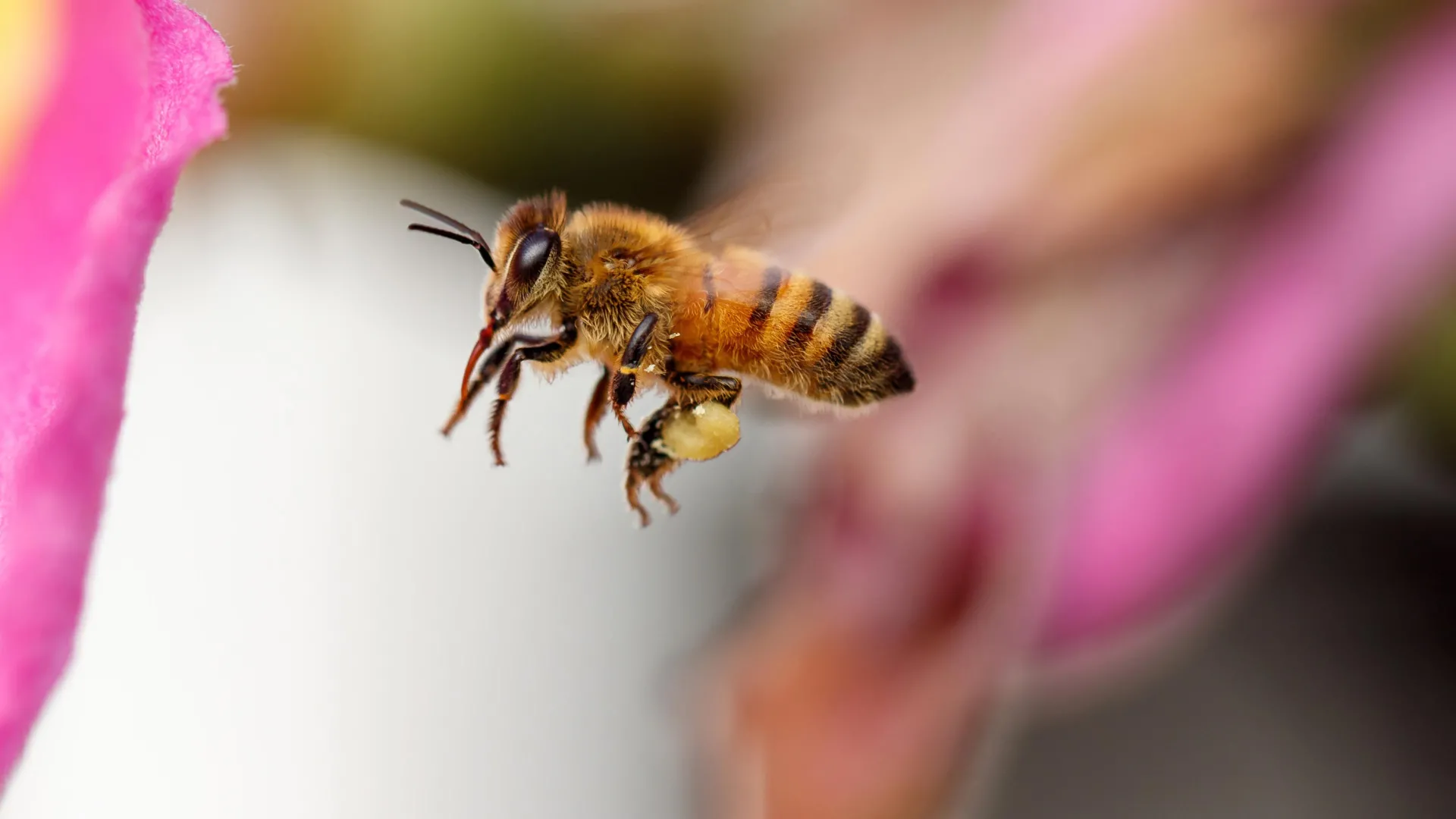
To track the insects during flight, the researchers used a technique called ‘Fast Lock-On (FLO) Tracking’, developed by Straw’s research group. The method involves attaching a tiny reflective marker to each bee. A computer mounted on the drone analyzes reflected light and can identify and track a bee within milliseconds as it flies.

The observations revealed that each honey bee follows its own preferred route and maintains that path with exceptional accuracy on both outbound and return trips. The bees also appear to use features in the surrounding landscape to help guide their journeys.

“Our tracking system makes it possible for the first time to record high-resolution 3D flight paths of honey bees in natural landscapes,” explains Straw. “Our recordings show that each bee has its own preferred route and flies it very precisely. You could almost say that each bee has its own personality.”

How Honey Bees Use Landmarks to Navigate

The researchers analyzed 255 flight paths collected near Kaiserstuhl, Germany. The study area included hedges, a cornfield, and a tree that stood between the hive and the food source, preventing a direct route.

“We found a high degree of precision in the flight paths. Individual bees repeated their individual flight paths nearly exactly on several flights. They often fly just a few centimeters away from their previous paths,” Straw emphasizes.

The most consistent flight behavior occurred near prominent landscape features, particularly the tree. The greatest variation appeared when bees flew above the cornfield, where the scenery offered fewer distinct visual cues.

“Our results suggest that visual landmarks aid the bees’ navigation and increase the precision of their flight paths,” explains Straw. In contrast, the bees’ uncertainty increases in visually monotonous environments.

Honey Bee Navigation vs. the Waggle Dance

The findings also shed new light on the famous waggle dance, the behavior honey bees use to communicate the location of food sources to other members of the colony.

“It was previously known that the directional information in the waggle dance is not entirely accurate,” explains Straw. For food sources approximately 100 meters away, the directional information in the waggle dance can deviate by around 30 degrees.

The new research suggests that this lack of precision in the dance is not the result of poor navigation skills. Instead, bees appear to be far more accurate when traveling to locations they already know.

“Our research has shown that individual bees navigate much more accurately to destinations they are familiar with. Even where their flight paths vary most, they deviate from their individual route by only a few degrees. Our results allow us to conclude that the inaccuracy of the waggle dance is not due to the bees’ limited navigational abilities. Rather, individual animals are spatially much more accurately oriented than their dance communication would suggest,” says Straw.

Share Button

A&E to remain open as doctors’ strike called off

Resident doctor strikes are now on pause while they consider a new pay offer form the government.

Share Button

Islanders’ lifestyle views could help shape future

The results could help the government plan and deliver services in the future, officials say.

Share Button