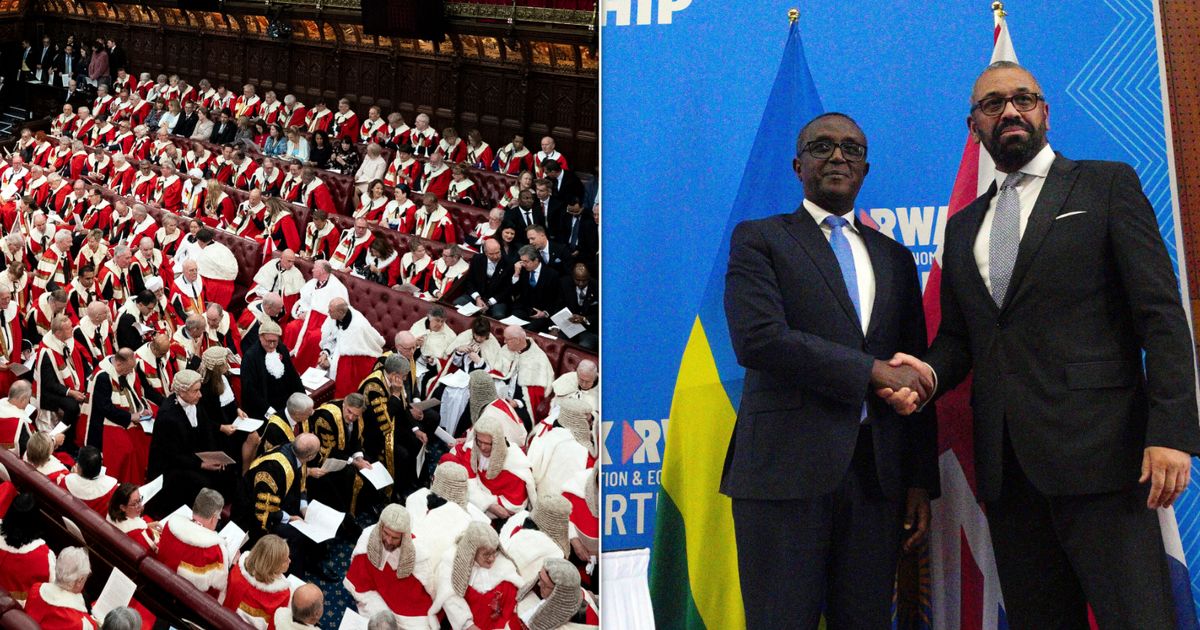
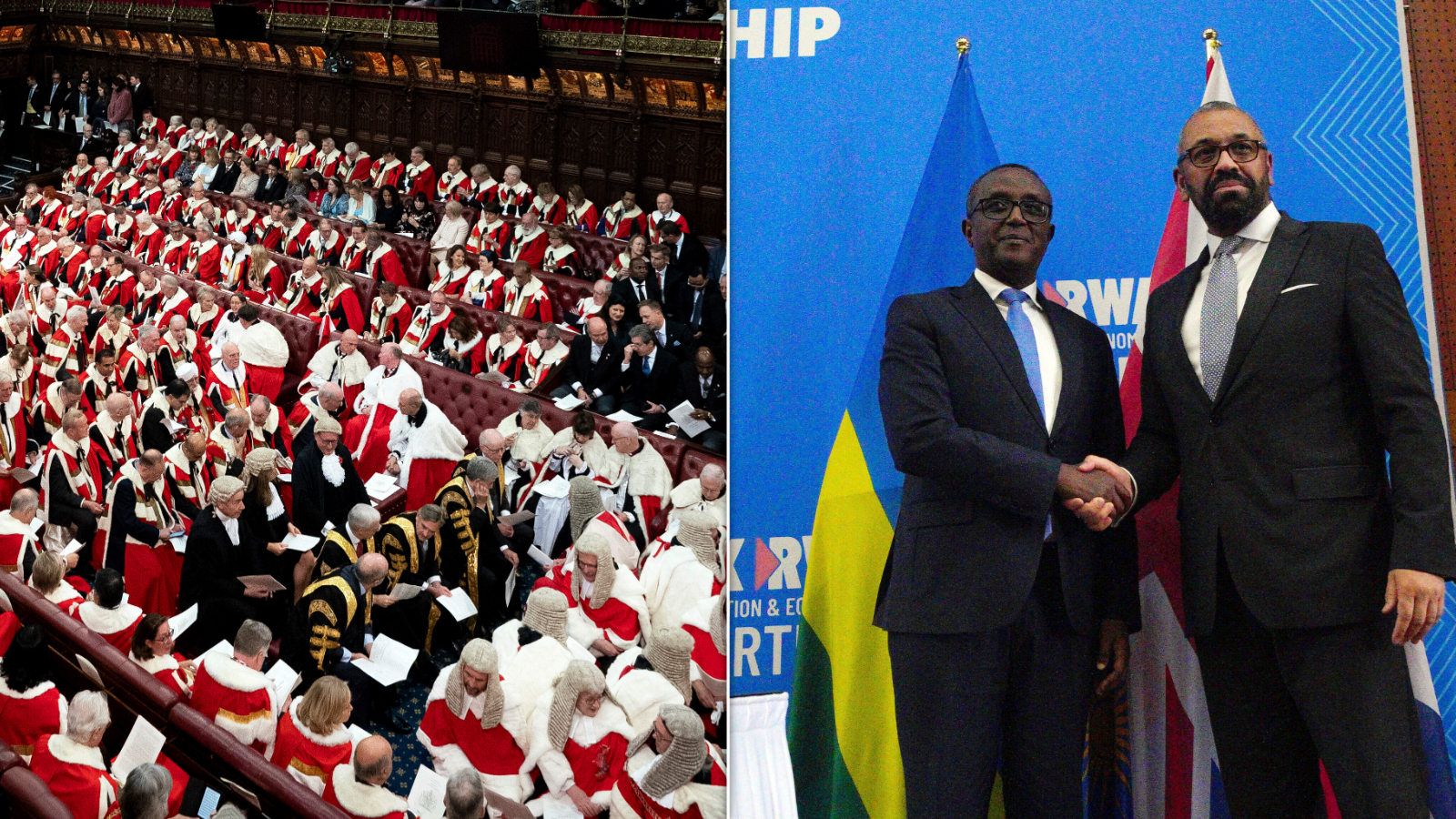
Rwanda Bill Frustration As House Of Lords Inflicts Seven Defeats On Rishi Sunak

The government is facing more frustration over its controversial plan to send asylum seekers on a one-way trip to Rwanda after the House of Lords inflicted more damage on its flagship legislation.

In the latest set of parliamentary “ping-pong”, peers on Wednesday inserted seven amendments to the Safety of Rwanda Bill in an effort to water down the policy.

It comes after MPs earlier this week removed 10 changes to the bill previously made by the Lords, undermining Rishi Sunak’s hopes to get deportation flights off the ground in the spring.

The defeats mean the legislation is now not likely to pass until after Easter.

The bill, which aims to overcome the Supreme Court’s block on the Rwanda flights, is almost certain to eventually prevail because the unelected Lords can’t overrule elected MPs. But it’s unclear how long the game of “ping-pong” will continue.

Britain and Rwanda signed a deal almost two years ago that would see migrants who cross the English Channel in small boats sent to the East African country, where they would remain permanently. So far, no migrant has been sent to Rwanda under the agreement.

The plan is key to Sunak’s pledge to “stop the boats” bringing unauthorised migrants to the UK. He argues that deporting asylum seekers will deter people from making risky journeys and break the business model of people-smuggling gangs. Just under 30,000 people arrived in Britain in small boats in 2023.

Share Button

AI can now detect COVID-19 in lung ultrasound images

Artificial intelligence can spot COVID-19 in lung ultrasound images much like facial recognition software can spot a face in a crowd, new research shows.

The findings boost AI-driven medical diagnostics and bring health care professionals closer to being able to quickly diagnose patients with COVID-19 and other pulmonary diseases with algorithms that comb through ultrasound images to identify signs of disease.

The findings, newly published in Communications Medicine, culminate an effort that started early in the pandemic when clinicians needed tools to rapidly assess legions of patients in overwhelmed emergency rooms.

“We developed this automated detection tool to help doctors in emergency settings with high caseloads of patients who need to be diagnosed quickly and accurately, such as in the earlier stages of the pandemic,” said senior author Muyinatu Bell, the John C. Malone Associate Professor of Electrical and Computer Engineering, Biomedical Engineering, and Computer Science at Johns Hopkins University. “Potentially, we want to have wireless devices that patients can use at home to monitor progression of COVID-19, too.”

The tool also holds potential for developing wearables that track such illnesses as congestive heart failure, which can lead to fluid overload in patients’ lungs, not unlike COVID-19, said co-author Tiffany Fong, an assistant professor of emergency medicine at Johns Hopkins Medicine.

“What we are doing here with AI tools is the next big frontier for point of care,” Fong said. “An ideal use case would be wearable ultrasound patches that monitor fluid buildup and let patients know when they need a medication adjustment or when they need to see a doctor.”

The AI analyzes ultrasound lung images to spot features known as B-lines, which appear as bright, vertical abnormalities and indicate inflammation in patients with pulmonary complications. It combines computer-generated images with real ultrasounds of patients — including some who sought care at Johns Hopkins.

“We had to model the physics of ultrasound and acoustic wave propagation well enough in order to get believable simulated images,” Bell said. “Then we had to take it a step further to train our computer models to use these simulated data to reliably interpret real scans from patients with affected lungs.”

Early in the pandemic, scientists struggled to use artificial intelligence to assess COVID-19 indicators in lung ultrasound images because of a lack of patient data and because they were only beginning to understand how the disease manifests in the body, Bell said.

Her team developed software that can learn from a mix of real and simulated data and then discern abnormalities in ultrasound scans that indicate a person has contracted COVID-19. The tool is a deep neural network, a type of AI designed to behave like the interconnected neurons that enable the brain to recognize patterns, understand speech, and achieve other complex tasks.

“Early in the pandemic, we didn’t have enough ultrasound images of COVID-19 patients to develop and test our algorithms, and as a result our deep neural networks never reached peak performance,” said first author Lingyi Zhao, who developed the software while a postdoctoral fellow in Bell’s lab and is now working at Novateur Research Solutions. “Now, we are proving that with computer-generated datasets we still can achieve a high degree of accuracy in evaluating and detecting these COVID-19 features.”

The team’s code and data are publicly available here: https://gitlab.com/pulselab/covid19

Share Button

Severe lung infection during COVID-19 can cause damage to the heart

SARS-CoV-2, the virus that causes COVID-19, can damage the heart even without directly infecting the heart tissue, a National Institutes of Health-supported study has found. The research, published in the journal Circulation, specifically looked at damage to the hearts of people with SARS-CoV2-associated acute respiratory distress syndrome (ARDS), a serious lung condition that can be fatal. But researchers said the findings could have relevance to organs beyond the heart and also to viruses other than SARS-CoV-2.

Scientists have long known that COVID-19 increases the risk of heart attack, stroke, and Long COVID, and prior imaging research has shown that over 50% of people who get COVID-19 experience some inflammation or damage to the heart. What scientists did not know is whether the damage occurs because the virus infects the heart tissue itself, or because of systemic inflammation triggered by the body’s well-known immune response to the virus.

“This was a critical question and finding the answer opens up a whole new understanding of the link between this serious lung injury and the kind of inflammation that can lead to cardiovascular complications,” said Michelle Olive, Ph.D., associate director of the Basic and Early Translational Research Program at the National Heart, Lung, and Blood Institute (NHLBI), part of NIH. “The research also suggests that suppressing the inflammation through treatments might help minimize these complications.”

To reach their findings, the researchers focused on immune cells known as cardiac macrophages, which normally perform a critical role in keeping the tissue healthy but can turn inflammatory in response to injury such as heart attack or heart failure. The researchers analyzed heart tissue specimens from 21 patients who died from SARS-CoV-2-associated ARDS and compared them with specimens from 33 patients who died from non-COVID-19 causes. They also infected mice with SARS-CoV-2 to follow what happened to the macrophages after infection.

In both humans and mice, they found the SARS-CoV-2 infection increased the total number of cardiac macrophages and also caused them to shift from their normal routine and become inflammatory.

When macrophages are no longer doing their normal jobs, which includes sustaining the metabolism of the heart and clearing out harmful bacteria or other foreign agents, they weaken the heart and the rest of the body, said Matthias Nahrendorf, M.D., Ph.D., professor of Radiology at Harvard Medical School and senior author on the study.

The researchers then designed a study in mice to test whether the response they observed happened because SARS-CoV-2 was infecting the heart directly, or because the SARS-CoV-2 infection in the lungs was severe enough to render the heart macrophages more inflammatory. This study mimicked the lung inflammation signals, but without the presence of the actual virus. The result: even in the absence of a virus, the mice showed immune responses strong enough to produce the same heart macrophage shift the researchers observed both in the patients who died of COVID-19 and the mice infected with SARS-CoV-2 infection.

“What this study shows is that after a COVID infection, the immune system can inflict remote damage on other organs by triggering serious inflammation throughout the body — and this is in addition to damage the virus itself has directly inflicted on the lung tissue,” said Nahrendorf. “These findings can also be applied more generally, as our results suggest that any severe infection can send shockwaves through the whole body.”

The research team also found that blocking the immune response with a neutralizing antibody in the mice stopped the flow of inflammatory cardiac macrophages and preserved cardiac function. While they have yet to test this in humans, Nahrendorf said a treatment like this could be used as a preventive measure to help COVID-19 patients with pre-existing conditions, or people who are likely to have more severe outcomes from SARS-CoV-2 associated ARDS.

Study: Grune J, Bajpai G, Ocak PT, et al. Virus-induced ARDS causes cardiomyopathy through eliciting inflammatory responses in the heart. Circulation. 2024. doi:10.1161/CIRCULATIONAHA.123.066433.

Funding: This study was supported by NHLBI grants: HL139598, HL142494, HL155097, and HL149647.

Share Button

Metformin during pregnancy affects the brain development in offspring mice, study finds

With the rise in gestational diabetes and metabolic disorders during pregnancy, metformin is also being prescribed more frequently. Although it is known that the oral antidiabetic agent can cross the placental barrier, the impacts on the brain development of the child are largely unknown. An interdisciplinary research team from the German Institute of Human Nutrition Potsdam-Rehbrücke (DIfE) have now been able to demonstrate in a mouse model that although metformin has positive effects in pregnant animals, it does not in the offspring. The results were published in the specialist journal Molecular Metabolism.

Current figures show that around one in six pregnant women worldwide are affected by a special form of diabetes known as gestational diabetes. According to the Robert Koch Institute, 63,000 women in Germany were affected by the disease in 2021, and the trend is increasing. These numbers are alarming because excessively high blood sugar levels during pregnancy are associated with negative consequences for mother and child. This increases the risk of affected women developing type 2 diabetes later on and their children have a higher risk of developing metabolic disorders and being overweight.

Long-Term Effect of Metformin on Offspring is Unclear

For several years, the placenta-crossing oral antidiabetic agent metformin has been increasingly gaining importance as an alternative to insulin administration when lifestyle changes show no success during the treatment of gestational diabetes. However, there are currently only a few studies on the long-term effects of metformin on the health of offspring. It is known that metformin has an impact on the AMPK signaling pathway, which regulates the networking of nerve cells during brain development.

The interdisciplinary team of DIfE researchers led by Junior Research Group Leader Dr. Rachel Lippert therefore grappled with two central questions: Is metformin treatment only beneficial for the mother or also the child? And does metformin treatment lead to long-term negative physiological changes in the offspring, especially in connection with the development of neuronal circuits in the hypothalamus, a critical region in the regulation of energy homeostasis?

Mouse Models Shed some Light

To answer the key questions, the researchers used two mouse models to represent the main causes of gestational diabetes:

severe obesity of the mother before pregnancy and excessive weight gain during pregnancy. These metabolic states were achieved by means of different feeding patterns, with the mice receiving either a high-fat or control diet. The antidiabetic treatment of female mice and their offspring took place during the lactation period as this corresponds to the third trimester of a human pregnancy in terms of brain development.

Treatment involved insulin, metformin, or a placebo, whereby the dosage was based on standard human treatments. The research team collected data on the body weight of the mice, analyzed various metabolic parameters and hormones, and examined molecular signaling pathways in the hypothalamus.

Maternal Metabolic State is Crucial

“As a result of antidiabetic treatment in the early postnatal period, we were able to identify alterations in the weight gain and hormonal status of the offspring, which were critically dependent on the metabolic state of the mother,” explains Lippert. Furthermore, sex-specific changes in hypothalamic AMPK signaling in response to metformin exposure were also observed. Together with the metformin-induced shift in the examined hormone levels, the results indicate that the maternal metabolic state must be taken into account before starting the treatment of gestational diabetes.

Focusing on Prevention

According to Rachel Lippert, treatment of gestational diabetes in future could entail developing a medication that is available for all and does not cross the placenta. “Given the increasing prevalence, education about gestational diabetes and preventive measures are of vital importance. If we can find a way to manage lifestyle and diet more proactively, we are in a better position to exploit the potential of gestational diabetes treatment,” says Lippert.

Share Button

What Is The Garrick Club?

A central London private members’ club has been under the spotlight after its membership list was published in the Guardian newspaper. But what is the Garrick Club, and why is it controversial?

What is the Garrick Club?

The Covent Garden club, named after eighteenth century actor David Garrick, opened in 1831, and is said to have around 1,500 members.

Last week, The Guardian revealed what it describes as “the roll call of (the) British establishment” – a membership list that reportedly includes judges, barristers, MPs, academics, actors and senior figures in the arts.

London’s private members’ clubs are world famous, with some notorious for their men-only rules and strict dress codes. The Garrick is among the best known among scores of clubs across the capital. Other legendary names include Annabel’s, The Groucho Club and the National Liberal Club, with some more political in their membership than others.

So who is actually a member of the Garrick Club?

The Guardian claimed the membership list included King Charles, deputy prime minister Oliver Dowden and Sir Richard Moore, the head of MI6.

Among other names on the members list are actors Matthew Macfadyen, Benedict Cumberbatch and Damian Lewis as well as the chief executive of the Royal Opera House, Alex Beard, and Antonio Pappano, who is now chief conductor of the London Symphony Orchestra.

Others said to be members include Succession star Brian Cox, former England men’s football manager Roy Hodgson and Dire Straits frontman Mark Knopfler. BBC broadcasters John Simpson and Melvyn Bragg are also members, according to the reports.

What’s the controversy?

The row stems from the fact the Garrick Club excludes women, and its refusal to admit female members despite efforts to change the rules. Women can only visit as a guest of a male member.

In 2015, the Garrick’s membership voted 50.5 per cent in favour of allowing female members but the club rules require a two-thirds majority for a change. This year, members will have a chance to vote again on allowing women.

Critics say they have no issue with men hanging out with other men, but have concerns over a club containing so many influential members, highly concentrated in certain professions.

On Wednesday, Simon Case, Britain’s top civil servant, quit the club just a day after being mocked for claiming he had only joined it to help women become members.

Case was asked by a Commons committee how his membership of the Garrick could be squared with his commitment to making the civil service more diverse.

He said: “My position on this one is also clear. If you believe profoundly in reform of an institution, by and large it’s easier to do if you join it to make the change from within rather than chuck rocks from the outside.

“And by the way, maths is also part of this. Every one person who leaves who is in favour of fixing this antediluvian position, every one of us that leaves means these institutions don’t change.

“I think when you want reform you have to participate.”

Meanwhile, MI6 boss Richard Moore also resigned from the club after facing criticism for being a member against the backdrop of the secret service attempting to demonstrate that it is no longer staffed exclusively by white, male Oxbridge graduates.

Share Button

MP calls for Down’s syndrome abortion law change

Rishi Sunak declines to back Sir Liam Fox’s call to outlaw the abortion after 24 weeks of foetuses diagnosed with Down’s syndrome.

Share Button

Junior doctors vote to continue strike action

Ballot results give British Medical Association another six-month mandate for walkouts in England.

Share Button

Donald Trump Argues To High Court That He Is Immune From Prosecution In January 6 Case

WASHINGTON — Donald Trump on Tuesday made his case to the US Supreme Court that his January 6, 2021, coup attempt was part of his official duties as president and is therefore immune from prosecution.

“The president cannot function, and the presidency itself cannot retain its vital independence, if the president faces criminal prosecution for official acts once he leaves office,” Trump lawyer John Sauer wrote in a 67-page brief.

Sauer repeated arguments he and other Trump lawyers had tried previously, including the notion that Trump can only be prosecuted for actions if he has previously been impeached for them by the House and convicted by the Senate.

Trump was impeached by the House over January 6, but the 57 votes to convict in the Senate were 10 shy of the supermajority necessary.

Sauer’s brief states that the lack of previous criminal prosecutions against former presidents for their conduct in office is proof that the legal authority to prosecute Trump for the same does not exist. It did not mention that Trump is the first president in the country’s history to not accept defeat after an election and to attempt to remain in office.

Sauer also repeats the previously tried claim that if Trump is not given immunity, every future president would be similarly at risk of prosecution. “A denial of criminal immunity would incapacitate every future president with de facto blackmail and extortion while in office, and condemn him to years of post-office trauma at the hands of political opponents,” he wrote.

Trump’s claims have previously been rejected by both a trial court and a federal appellate court. A rejection by the Supreme Court — which many legal observers say is likely — could force him to undergo trial on conspiracy and fraud charges in the January 6 case this autumn, just as many voters are starting to pay attention to a coming election in which Trump hopes to regain the White House.

In that scenario, a parade of onetime Trump aides, possibly including former Chief of Staff Mark Meadows, would appear on the witness stand almost daily, offering firsthand accounts to the jury and the public about Trump’s actions in the weeks leading up to and on that day, when a mob of his followers attacked the US Capitol to block congressional certification of his 2020 election loss.

Should the high court side with Trump, it would effectively end special counsel Jack Smith’s prosecution against the former president over his coup attempt.

According to Smith, US District Judge Tanya Chutkan and the three judges who heard the case on the U.S. Court of Appeals for the District of Columbia Circuit, it would also effectively allow presidents to commit all manner of crimes in office by claiming that they were carrying out official duties.

“Whatever immunities a sitting president may enjoy, the United States has only one chief executive at a time, and that position does not confer a lifelong ‘get-out-of-jail-free’ pass,” Chutkan wrote in her December 1, 2023, ruling.

“It would be a striking paradox if the president, who alone is vested with the constitutional duty to ‘take Care that the Laws be faithfully executed,’ were the sole officer capable of defying those laws with impunity,” the appeals court judges wrote in their Feb. 6 ruling.

During oral arguments in the case, one of the judges, Florence Pan, got Trump’s lawyer to acknowledge that, under his claim of immunity, a sitting president could order a political opponent to be assassinated by SEAL Team Six and never be prosecuted for it.

Smith’s response to Trump’s brief is due by April 8, and oral arguments in the case are set for April 25. A decision will almost certainly be handed down by the end of the court’s term in late June or early July.

A federal grand jury that indicted Trump last August charged him with conspiring to defraud the United States, conspiring to obstruct an official proceeding, obstructing an official proceeding and conspiring to deprive millions of Americans of having their votes counted.

It is one of four active criminal cases against the presumptive Republican presidential nominee. A second federal prosecution is based on his refusal to turn over secret documents that he took with him to his Florida country club upon leaving the White House; a Georgia state prosecution is based on his attempts to overturn his election loss in that state; and a New York indictment accuses him of falsifying business records to hide hush money payments to a porn star and a Playboy model in the weeks ahead of the 2016 election.

The New York case could go to trial as early as mid-April. If the Supreme Court rules against Trump on his immunity claim, the federal January 6 trial could begin as early as late summer.

Share Button

Emma Barnett: ‘Why I wanted a baby loss certificate’

The Woman’s Hour presenter explains why she applied for a document to recognise her pregnancy loss.

Share Button

‘He Just Can’t Do Politics’: Tory Commentator Wants Sunak Out Before Election

A leading Tory commentator has said Rishi Sunak should not lead the Conservative Party into the general election in the latest bodyblow to the prime minister.

Tim Montgomerie, founder of ConservativeHome, told the BBC’s Daily Politics show that the party was in “freefall” amid the Labour Party’s double-digit poll lead.

It comes amid speculation unsettled Tory MPs are lining up Penny Mordaunt as a replacement for Sunak if he faced a no confidence vote before the general election. On Tuesday night, a Telegraph report suggested Tom Tugendhat is also being discussed as a “unity candidate” to replace the PM.

Montgomerie cited Robert Jenrick’s resignation as immigration minister, when he said Sunak wanted to enact a Rwanda policy “that would be enough to look like he was doing something but wouldn’t actually do something to actually solve the problem”.

“That, I’m afraid, is why I’ve reluctantly taken the decision … I think Rishi Sunak has to go as prime minister before the before the general election, because he just can’t do politics.

“I think he’s a good man, a family man, a decent man in public life for the right reasons.

“I study politics incredibly closely. I don’t really know what he wants to be prime minister for, what his ambition is, what legislation he wants to pass.”

He added: “If we have any chance at the next election of minimising the scale of defeat, we need to go into the election with an agenda for the future of this country. At the moment, I don’t even know what that is.”

Chancellor Jeremy Hunt hinted the prime minister could go to the country in October, but Tory plotters may seek to oust him before then if the party’s fortunes do not improve.

Sunak will face prime minister’s Questions and then a behind-closed-doors appearance in front of the Conservative backbench 1922 Committee on Wednesday.

Share Button