Age Ratings For Films With Sex Scenes And Nudity To Be Raised

Films that feature sex scenes and nudity are due to have age ratings tightened to align with changing public opinion.

The British Board of Film Classification (BBFC) said that the guidelines for films rated 12A or 12 will be stricter going forward. It comes after the board surveyed 12,000 people as part of its largest-ever public consultation.

“People are calling for a more cautious approach to classifying sex scenes at the border of 12A/12 and 15,” the BBFC shared on its website. Participants were concerned by “the level of sexual detail, nudity and the duration of the sex scenes rated 12A/12” under the guidelines of previous research in 2019. Similar content is now more likely to be rated as a 15.

The board also said higher ratings might be necessary for films that include language with sexual or misogynistic connotations, like “son of a bitch”, “bitch” or “dick”. “The worry is that young viewers may hear and repeat such language. Language such as this may now require a higher age rating,” the BBFC shared.

A total of 33 full-length feature films, 28 trailers and 151 clips from films and TV of varying genres were shown as part of the research.

However, findings did indicate that audiences were happy for classification to be “more lenient towards some sex references at the 15/18 borderline, especially in comic contexts”.

The research also revealed that people are now “slightly more accepting of cannabis misuse” at the 12A/12 rating, so long as it is “not detailed, glamorised or frequent”.

Additionally, respondents were found to be more comfortable with a relaxing of standards in 12A/12 trailers, meaning some may now include an “isolated use of strong language”.

BBFC president Natasha Kaplinsky said in a statement: “At the BBFC, we’re dedicated to ensuring what we do is responsive to the ever-evolving world around us. Since we last asked people across the country what they thought about our standards, society has changed, and opinions have followed – it’s fascinating how this vast body of new research reflects this.

“This is the first Classification Guidelines update I have overseen as President. Not only am I proud and thrilled to launch these findings, but as someone who has always looked to the BBFC for guidance for myself and my family, seeing first-hand the level of dedication and insight that went into this process has been eye-opening and inspiring. Without a doubt, we are truly shaped by you.

Share Button

Man ‘recovering well’ after pig kidney transplant

Surgeons say using animals for organ donation could cut waiting lists and save lives.

Share Button

What is pregabalin and why can it be dangerous?

The prescription drug has been linked to a number of deaths in the UK and around the world.

Share Button

Extreme heat can double stillbirth among working women – study

Women in India are found to be twice as likely to lose babies if they are working in hot conditions.

Share Button

New hope for sisters trapped in their bodies

Neuroferritinopathy is a brain disease which traps people, mostly from one family, in their bodies.

Share Button

Letby inquiry: NHS staff want their voices heard

A group representing hundreds of clinicians wants to highlight a culture “detrimental to patient safety”.

Share Button

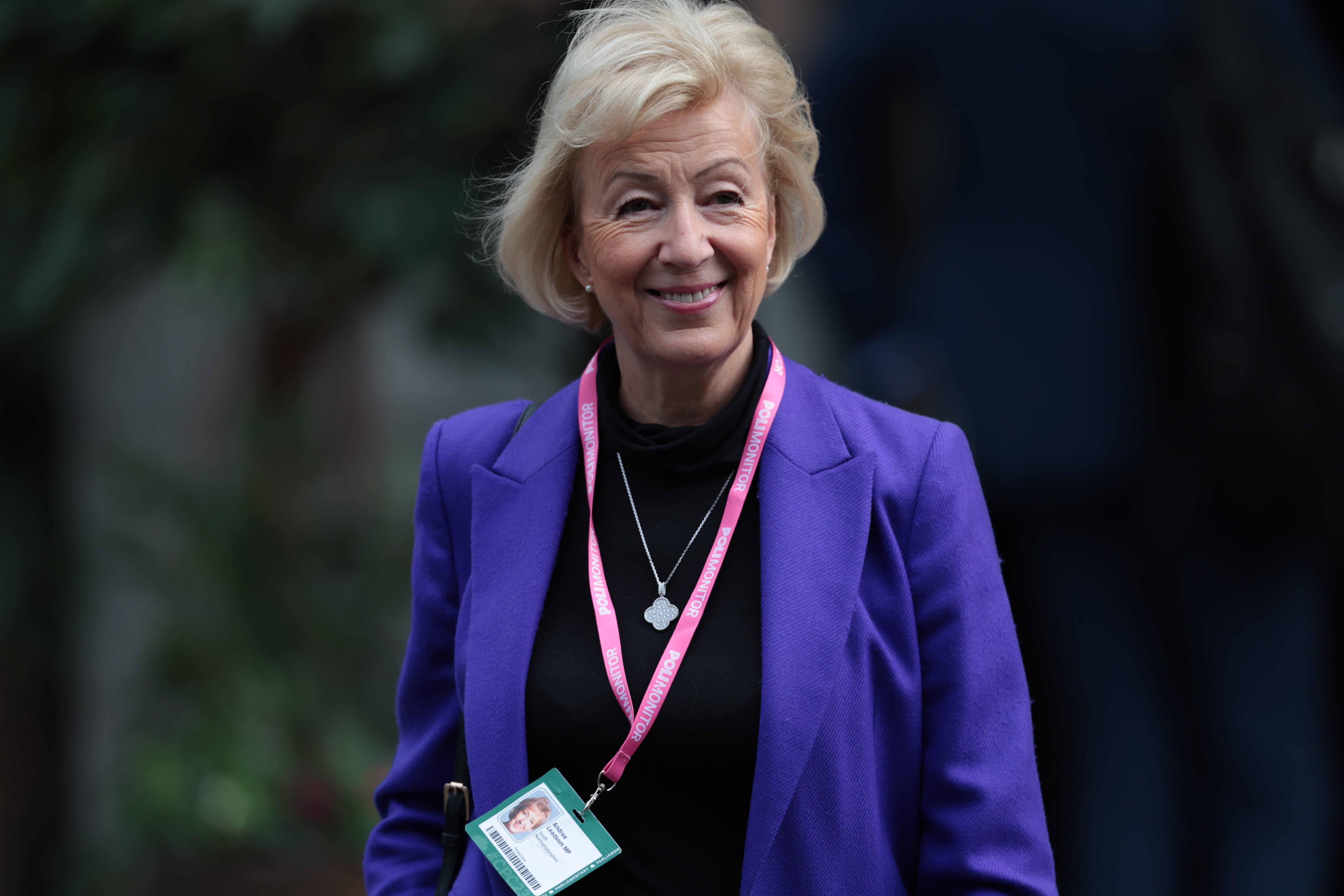
Andrea Leadsom Suggests Cost Of Living Crisis Is Over As Inflation Fall Has ‘Cheered Everyone Up’

Andrea Leadsom has suggested the cost of living crisis has “ended” after a fall in the rate of inflation “obviously cheered everyone up”.

On Wednesday, the Office for National Statistics revealed UK inflation has fallen from 4% in January to 3.4% last month, the lowest it’s been since 2021.

While the news is significant given that the measure of the growing cost of goods and services peaked at 11.1% in October 2022, a 41-year high, a decline only means prices are going up at a slower rate, they are not falling.

What’s more, the 3.4% figure is still short of the Bank of England’s target of 2%.

Nonetheless, Conservative minister Leadsom was keen to promote the downward trajectory against the backdrop of Tory unrest.

When asked on Sky News about whether the party was now united, Leadsom said instead: “I think what’s really important is we have seen a fantastic drop in inflation today. That’s what’s really important.

“That has obviously cheered everyone up, it’s what we have been working towards is seeing the cost of living crisis end … seeing people able to take more home in their pay packets or in their salaries every day. That’s the critical point.”

When Rishi Sunak became prime minister, he promised to halve inflation by the end of 2023 – and it ended up being the only one of his five pledges he managed to fulfil.

However, economists question whether government’s can sincerely take credit for getting inflation back under control, not least since central banks control the base interest rate that is the key tool to combat price growth, and ministers blamed global factors when inflation spiralled to record highs.

Share Button

Rwanda Bill Frustration As House Of Lords Inflicts Seven Defeats On Rishi Sunak

The government is facing more frustration over its controversial plan to send asylum seekers on a one-way trip to Rwanda after the House of Lords inflicted more damage on its flagship legislation.

In the latest set of parliamentary “ping-pong”, peers on Wednesday inserted seven amendments to the Safety of Rwanda Bill in an effort to water down the policy.

It comes after MPs earlier this week removed 10 changes to the bill previously made by the Lords, undermining Rishi Sunak’s hopes to get deportation flights off the ground in the spring.

The defeats mean the legislation is now not likely to pass until after Easter.

The bill, which aims to overcome the Supreme Court’s block on the Rwanda flights, is almost certain to eventually prevail because the unelected Lords can’t overrule elected MPs. But it’s unclear how long the game of “ping-pong” will continue.

Britain and Rwanda signed a deal almost two years ago that would see migrants who cross the English Channel in small boats sent to the East African country, where they would remain permanently. So far, no migrant has been sent to Rwanda under the agreement.

The plan is key to Sunak’s pledge to “stop the boats” bringing unauthorised migrants to the UK. He argues that deporting asylum seekers will deter people from making risky journeys and break the business model of people-smuggling gangs. Just under 30,000 people arrived in Britain in small boats in 2023.

Share Button

AI can now detect COVID-19 in lung ultrasound images

Artificial intelligence can spot COVID-19 in lung ultrasound images much like facial recognition software can spot a face in a crowd, new research shows.

The findings boost AI-driven medical diagnostics and bring health care professionals closer to being able to quickly diagnose patients with COVID-19 and other pulmonary diseases with algorithms that comb through ultrasound images to identify signs of disease.

The findings, newly published in Communications Medicine, culminate an effort that started early in the pandemic when clinicians needed tools to rapidly assess legions of patients in overwhelmed emergency rooms.

“We developed this automated detection tool to help doctors in emergency settings with high caseloads of patients who need to be diagnosed quickly and accurately, such as in the earlier stages of the pandemic,” said senior author Muyinatu Bell, the John C. Malone Associate Professor of Electrical and Computer Engineering, Biomedical Engineering, and Computer Science at Johns Hopkins University. “Potentially, we want to have wireless devices that patients can use at home to monitor progression of COVID-19, too.”

The tool also holds potential for developing wearables that track such illnesses as congestive heart failure, which can lead to fluid overload in patients’ lungs, not unlike COVID-19, said co-author Tiffany Fong, an assistant professor of emergency medicine at Johns Hopkins Medicine.

“What we are doing here with AI tools is the next big frontier for point of care,” Fong said. “An ideal use case would be wearable ultrasound patches that monitor fluid buildup and let patients know when they need a medication adjustment or when they need to see a doctor.”

The AI analyzes ultrasound lung images to spot features known as B-lines, which appear as bright, vertical abnormalities and indicate inflammation in patients with pulmonary complications. It combines computer-generated images with real ultrasounds of patients — including some who sought care at Johns Hopkins.

“We had to model the physics of ultrasound and acoustic wave propagation well enough in order to get believable simulated images,” Bell said. “Then we had to take it a step further to train our computer models to use these simulated data to reliably interpret real scans from patients with affected lungs.”

Early in the pandemic, scientists struggled to use artificial intelligence to assess COVID-19 indicators in lung ultrasound images because of a lack of patient data and because they were only beginning to understand how the disease manifests in the body, Bell said.

Her team developed software that can learn from a mix of real and simulated data and then discern abnormalities in ultrasound scans that indicate a person has contracted COVID-19. The tool is a deep neural network, a type of AI designed to behave like the interconnected neurons that enable the brain to recognize patterns, understand speech, and achieve other complex tasks.

“Early in the pandemic, we didn’t have enough ultrasound images of COVID-19 patients to develop and test our algorithms, and as a result our deep neural networks never reached peak performance,” said first author Lingyi Zhao, who developed the software while a postdoctoral fellow in Bell’s lab and is now working at Novateur Research Solutions. “Now, we are proving that with computer-generated datasets we still can achieve a high degree of accuracy in evaluating and detecting these COVID-19 features.”

The team’s code and data are publicly available here: https://gitlab.com/pulselab/covid19

Share Button

Severe lung infection during COVID-19 can cause damage to the heart

SARS-CoV-2, the virus that causes COVID-19, can damage the heart even without directly infecting the heart tissue, a National Institutes of Health-supported study has found. The research, published in the journal Circulation, specifically looked at damage to the hearts of people with SARS-CoV2-associated acute respiratory distress syndrome (ARDS), a serious lung condition that can be fatal. But researchers said the findings could have relevance to organs beyond the heart and also to viruses other than SARS-CoV-2.

Scientists have long known that COVID-19 increases the risk of heart attack, stroke, and Long COVID, and prior imaging research has shown that over 50% of people who get COVID-19 experience some inflammation or damage to the heart. What scientists did not know is whether the damage occurs because the virus infects the heart tissue itself, or because of systemic inflammation triggered by the body’s well-known immune response to the virus.

“This was a critical question and finding the answer opens up a whole new understanding of the link between this serious lung injury and the kind of inflammation that can lead to cardiovascular complications,” said Michelle Olive, Ph.D., associate director of the Basic and Early Translational Research Program at the National Heart, Lung, and Blood Institute (NHLBI), part of NIH. “The research also suggests that suppressing the inflammation through treatments might help minimize these complications.”

To reach their findings, the researchers focused on immune cells known as cardiac macrophages, which normally perform a critical role in keeping the tissue healthy but can turn inflammatory in response to injury such as heart attack or heart failure. The researchers analyzed heart tissue specimens from 21 patients who died from SARS-CoV-2-associated ARDS and compared them with specimens from 33 patients who died from non-COVID-19 causes. They also infected mice with SARS-CoV-2 to follow what happened to the macrophages after infection.

In both humans and mice, they found the SARS-CoV-2 infection increased the total number of cardiac macrophages and also caused them to shift from their normal routine and become inflammatory.

When macrophages are no longer doing their normal jobs, which includes sustaining the metabolism of the heart and clearing out harmful bacteria or other foreign agents, they weaken the heart and the rest of the body, said Matthias Nahrendorf, M.D., Ph.D., professor of Radiology at Harvard Medical School and senior author on the study.

The researchers then designed a study in mice to test whether the response they observed happened because SARS-CoV-2 was infecting the heart directly, or because the SARS-CoV-2 infection in the lungs was severe enough to render the heart macrophages more inflammatory. This study mimicked the lung inflammation signals, but without the presence of the actual virus. The result: even in the absence of a virus, the mice showed immune responses strong enough to produce the same heart macrophage shift the researchers observed both in the patients who died of COVID-19 and the mice infected with SARS-CoV-2 infection.

“What this study shows is that after a COVID infection, the immune system can inflict remote damage on other organs by triggering serious inflammation throughout the body — and this is in addition to damage the virus itself has directly inflicted on the lung tissue,” said Nahrendorf. “These findings can also be applied more generally, as our results suggest that any severe infection can send shockwaves through the whole body.”

The research team also found that blocking the immune response with a neutralizing antibody in the mice stopped the flow of inflammatory cardiac macrophages and preserved cardiac function. While they have yet to test this in humans, Nahrendorf said a treatment like this could be used as a preventive measure to help COVID-19 patients with pre-existing conditions, or people who are likely to have more severe outcomes from SARS-CoV-2 associated ARDS.

Study: Grune J, Bajpai G, Ocak PT, et al. Virus-induced ARDS causes cardiomyopathy through eliciting inflammatory responses in the heart. Circulation. 2024. doi:10.1161/CIRCULATIONAHA.123.066433.

Funding: This study was supported by NHLBI grants: HL139598, HL142494, HL155097, and HL149647.

Share Button