Women Over 50 Reveal The Most Toxic Beauty Trends From Back In The Day

They say trends are cyclical, but when it comes to beauty and makeup fads, some really need to be put to bed. Supersized Flock of Seagulls-esque hair and skinny eyebrows? They can go, though Gen Z seems dead set on reviving the latter, for reasons we don’t fully understand.

And we definitely need to say goodbye to tanning beds, given what we know about skin cancer.

In the spirit of letting go of legitimately bad trends, we asked ladies over 50 to share the style and beauty trends they’re glad no longer exist (or at least seem to be on the way out.) See what they had to say below.

1. Using orange juice cans as hair rollers

“In the days before blow dryers and round brushes, we made our own beauty products! We would slather our hair with Dippity-Do and roll it on repurposed frozen orange juice cans. Have you ever slept on metal rollers? There are two possible positions: face down, or with your head hanging over the side of the bed. I would take the rollers out in the early morning hours, smooth my hair down and lie on my back trying not to move, then try to sleep.” ― Jennifer Ebelhar, a 69-year-old style coach and @theStyleEquation on TikTok

2. The oil-and-foil approach to tanning

“Oil and foil is the first beauty trend I’m thrilled is gone. If you’re too young to know, this is how we used to get a tan back in the ’60s: You’d oil up your skin and put foil nearby to reflect the sun. Yes, it’s nuts.” ― Sonia Lovett, a 71-year-old who runs the fashion blog Style Beyond Age

“We used to slather baby oil all over our body when we were younger. In fact, when I was in college at UCLA, we had a tanning competition, where we would put a small sticker on our body as a baseline for comparison and then slather on the baby oil and bake all day. I nearly won the dubious event and had my damaged skin as the prize! And we’d never wear sunscreen. I was one of the few people I knew who wore 15 SPF and people thought I was nuts.” ― Cynthia Gouw, a 60-year-old broadcast journalist and beauty influencer

"We had a tanning competition, where we would put a small sticker on our body as a baseline for comparison and then slather on the baby oil and bake all day," said Cynthia Gouw, a 60-year-old broadcast journalist and a beauty influencer.

Romano Cagnoni/RETIRED via Getty Images

“We had a tanning competition, where we would put a small sticker on our body as a baseline for comparison and then slather on the baby oil and bake all day,” said Cynthia Gouw, a 60-year-old broadcast journalist and a beauty influencer.

3. Overplucking eyebrows

“Please don’t wax or pluck them yourself like I did. Like countless others, they just never grew back! In the ’90s, extremely thin and arched eyebrows were considered fashionable, and many women, myself included, resorted to excessive tweezing or waxing to achieve this look.

“I have resorted to buying so many eyebrow pencils, gels, powders, not to mention the huge amount of money I have spent on microblading, micro-feathering and any new eyebrow products I see on Instagram. I have learnt how to fill and fluff them to the best of my ability and they look OK, but if I could tell the younger me anything, it would be, ‘Leave them alone!’” ― Violet Trikilis, a model and style influencer

4. Asymmetrical hairstyles with bleached bangs

“I’m 57 years young now. But when I was in high school, Madonna was huge! We all wanted to be her with our neon pink lace skirts and ripped sweatshirts that fell off our shoulders. And we all wanted to have hair just like her, including my girlfriend and I. So, what did two idiot teenagers do? We grabbed a pair of scissors and cut each other’s hair in an asymmetrical shape. Then we found some hair bleach, took a chunk of our bangs, and bleached them. For reference, my natural hair color is dark brown. Well, we both ended up with orange bangs … not Madonna!

“My mom freaked out and brought me to get it fixed and I ended up with a pixie cut and almost jet-black hair because the bleach did so much damage. My Madonna dream hair ended that day!” ― Michele Baratta-Detwiler, a 57-year-old fashion and DIY content creator
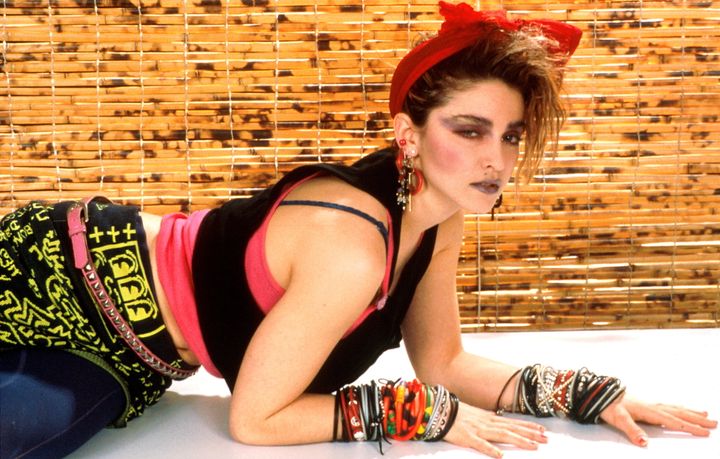
Sadly, the Madonna look really only worked on Madonna.

Michael Putland via Getty Images

Sadly, the Madonna look really only worked on Madonna.

5. Cake-like makeup

“I also haven’t seen super matte setting powder in a while. Solid cake setting powder used to be in fashion. Now I look for a balance, you have to keep a little glow and glisten when you age, at the same time you don’t want to look like the tin man… so all of these very luminous products have to be used sparingly and in strategic spots rather than everywhere as we age gracefully.” ― Carla Rockmore, a designer and style influencer

6. Helmet head hair

“The days of Aqua Net and perfectly coiffed hair are thankfully gone, especially because I have never wanted to take too much time primping. Anything too obviously done does not read modern to me. I prefer a polished yet ‘je ne sais quoi’ to my look.” ― Lovett
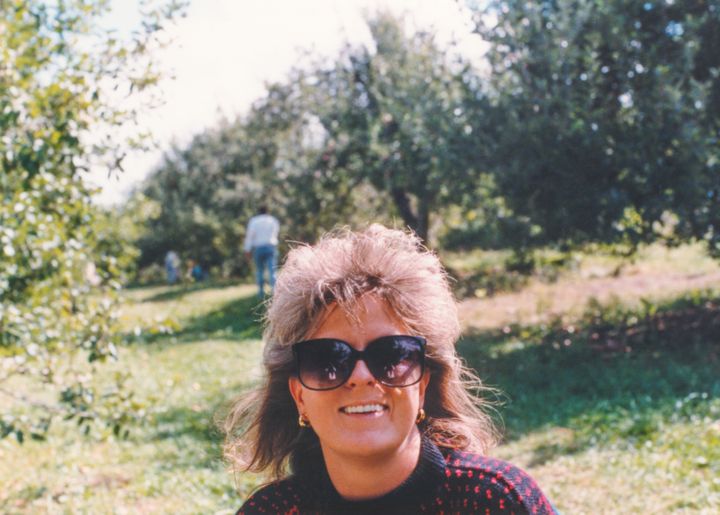
Helmet hair, pictured here in a stock photo, was definitely a thing.

Jena Ardell via Getty Images

Helmet hair, pictured here in a stock photo, was definitely a thing.

7. Using milk of magnesia on oily skin

“The one beauty trend that made me grit my teeth was using MOM (milk of magnesia) on the face to control oil. This one really got under my skin because my skin is oily. In my beginning stages of wearing makeup I struggled with learning how to control the oil while wearing makeup. I tried everything, including this so-called hack. But after learning the potential risk to the skin and seeing actual makeup clients of mine suffer from the side effects, I emptied that bottle in the toilet. Now I’m an advocate for not following every trend without due diligence. I’ve recently seen younger women using Calamine lotion for the same reason. I hope this one fades as well.” ―Dorciah Sloane, a 53-year-old makeup artist and style influencer

8. Outrageous eyeshadow shades

The ’80s was the period for the most outrageous colors in eyeshadow and one simply could not get enough glitter! The brightest blues, yellow, orange, fuchsia donned our eyelids and at times all the colors of the rainbow balanced precariously on our eyelids. At the time, I worked as a makeup consultant and spent hours on applying my makeup that was so bright you could see it from the moon! In the 80s, eyeshadow and lipstick stayed on for days, it was so long lasting it was hard to remove ― probably due to the carcinogenic ingredients that went into the products.

“These days, I am happy with a more natural look with eyeshadow that enhances not takes over your face! I prefer mineral-based makeup and treatment ― makeup that cares for your skin.” ― Jayne Dalton, a 61-year-old style influencer
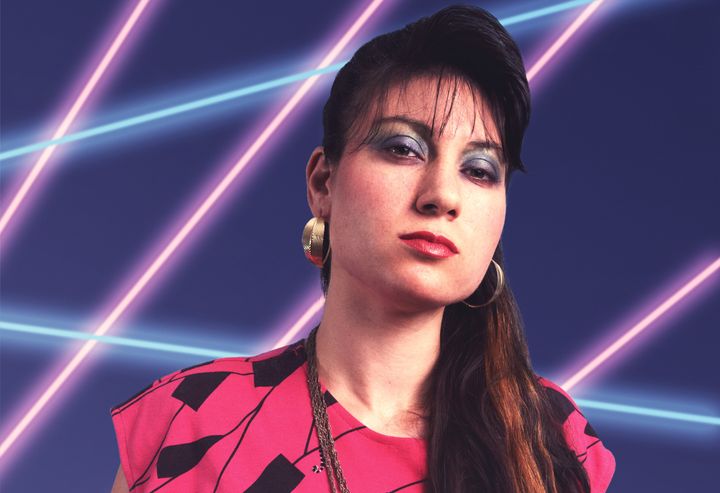
Did you really live in the '80s if you didn't have eyeshadow in every shade of the rainbow?

Rebecca Handler via Getty Images

Did you really live in the ’80s if you didn’t have eyeshadow in every shade of the rainbow?

9. Curled bangs

“You know what was awful? The ’80s curled bangs split horizontally with one half curled down toward your face and the other flowing back towards your crown made frozen by Aqua Net! As junior class president and vice president in high school, my twin sister and I were in charge of decorating the gym into a prom paradise! The night before our senior pictures we spent all night decorating and got about two hours of sleep in order to wake up at 5:30 a.m., dry our permed hair, and get our bangs just right! With tired eyes we got to school and stood in line to take pictures. The assistant to the photographer grabbed a comb and some Aqua Net and told us our hair would look better on camera if she fixed it. In a daze we agreed and took the shots! Later on between bells, we went into the bathroom and gazed in horror at the mall bangs she gave us. Granted, we did curl ours down, but never backwards, and now we sported that look in our senior pictures. To this day, we avoid bangs.” ― Tegan Higgins, a 51-year-old influencer who runs @tandttwintalk on Instagram and TikTok with her twin sister

10. Thinking makeup is a must

“I am glad that we’re starting to go more natural with our makeup trends, so we don’t see so much heavy contouring anymore. Pamela Anderson has set an example by showing up all nude. I like that. We should celebrate more natural looks and features as the new normal.” ― Mette Sørrig Andersen, a 53-year-old content creator

Share Button

Bullying ‘normal occurrence’ at Newcastle NHS trust, say CQC

Newcastle Hospitals NHS Foundation Trust’s CQC rating is downgraded to “requires improvement”.

Share Button

Footballer Michael Owen on son’s sight loss: ‘I’d swap eyes with him if I could’

The father and son on getting to grips with a degenerative eye condition.

Share Button

Millions lose access to free NHS earwax removal

Patients unable to afford private treatment are turning to “dangerous self-removal methods”, the RNID says.

Share Button

Injectable water filtration system could improve access to clean drinking water around the world

More than 2 billion people, approximately a quarter of the world’s population, lack access to clean drinking water. A new, portable and affordable water filtration solution created by researchers at The University of Texas at Austin aims to change that.

The new system collects dirty water with a syringe and injects it into a hydrogel filter that weeds out nearly all tiny particles. This device, the researchers say, offers significant advantages in cost, simplicity, effectiveness and sustainability compared existing commercial options, giving users the ability to easily decontaminate water from nearby streams and rivers and make it drinkable.

“The pressing concern of particle-polluted water, particularly in remote and underdeveloped regions where people frequently rely on contaminated water sources for consumption, demands immediate attention and recognition,” said Guihua Yu, a professor of materials science at the Cockrell School of Engineer’s Walker Department of Mechanical Engineering and Texas Materials Institute. “Our system, with its high efficiency in removing diverse types of particles, offers an attractive yet practical solution in improving freshwater availability.”

The research was published recently in Nature Sustainability.

Today’s options for portable water filtration of tiny particles mostly consist of filter paper and microporous membranes. According to the research, these devices filter out roughly 40% and 80% of particles larger than 10 nanometers, respectively. This new system catches close to 100% of these particles.

And it is made of low-cost, sustainable, readily available materials. The main innovation is an intertwined web of nanocellulose fibers that catches particles while the newly cleaned water passes through.

All the user has to do is take the syringe to the nearest water source, pull out the water and inject it through the filter. The system takes care of the rest, spitting out clean, drinkable water.

The filter system has been tested with several types of water sources, including muddy water, river water and water contaminated with microplastics. The hydrogel films are biodegradable and can be used up to 30 times before they need to be replaced.

The research team has tested the technology using syringes as large as 1.5 liters, about 40% of an individual’s daily drinking water needs. And they plan to continue developing the technology to use it at larger scales to tackle global drinking water needs.

The researchers were motivated by one of the United Nations’ Sustainable Development Goals to improve drinking water standards and sanitation worldwide. Meeting this goal, according to the U.N., will require a 6X increase in drinking water availability by 2030.

“The reality is, a large percentage of the world’s population lacks access to safe drinking water, even in places where fresh water sources are available,” said Chuxin Lei, lead author and a graduate student working in Yu’s lab, said. “There is an urgent need for simple, universal, and efficient materials and devices for purifying particle-contaminated water, which should be able to help people around the world obtain clean water.”

Team members on the project also include collaborators from Northeast Forestry University, Shanghai Tech University and Tsinghua University in China.

Share Button

Popular diabetes drug may also reduce the risk of severe liver disease

Ozempic and other GLP1 agonists are associated with a reduced risk of developing cirrhosis and liver cancer in people with type 2 diabetes and chronic liver disease, according to a nationwide study from Karolinska Institutet in Sweden published in the journal Gut.

GLP1 agonists like Ozempic reduce blood sugar levels and are mainly used to treat type 2 diabetes. However, as the drug also reduces appetite, it is now increasingly used to treat obesity and has become a popular weight-loss drug.

Reduced risk of liver damage

Results from early clinical trials also suggest that GLP1 agonists may reduce the risk of liver damage. Therefore, researchers at Karolinska Institutet included all people in Sweden with chronic liver disease and type 2 diabetes in a register-based study. They then compared the risk of severe liver damage in those who were treated with GLP1 agonists and those who were not. The results show that those who took the drug for a long period of time had a lower risk of later developing more severe forms of liver disease such as cirrhosis and liver cancer.

According to the researchers, this suggests that GLP1 agonists could be an effective treatment to avoid severe liver disease in people with concurrent type 2 diabetes.

“Fatty liver disease is estimated to affect up to one in five people in Sweden, many of whom have type 2 diabetes, and about one in twenty develop severe liver disease,” says first author Axel Wester, assistant professor at the Department of Medicine, Huddinge, Karolinska Institutet. “Our findings are interesting because there are currently no approved drugs to reduce this risk.”

Many of the people in the study stopped taking GLP1 agonists, resulting in a lack of protective effect. However, those who continued taking their medication over a ten-year period were half as likely to develop severe liver disease.

Need to be confirmed

“The results need to be confirmed in clinical trials, but it will take many years for these studies to be completed,” says Axel Wester. “Therefore, we use existing registry data to try to say something about the effect of the drugs before that.”

A limitation of the method is that it is not possible to control for factors for which there is no data, such as blood tests to describe the severity of liver disease in more detail. However, the researchers have recently built a new database called HERALD where they have access to blood samples from patients in Region Stockholm.

“As a next step, we will investigate the effect of GLP1 agonists in this database,” says the study’s last author Hannes Hagström, consultant in hepatology at the Karolinska University Hospital and adjunct professor at the Department of Medicine, Huddinge, Karolinska Institutet. “If we get similar results, it would further strengthen the hypothesis that GLP1 agonists can be used to reduce the risk of severe liver disease.”

The research was mainly funded by Region Stockholm (CIMED), the Swedish Research Council and the Swedish Cancer Society. Hannes Hagström’s research group has received funding from Astra Zeneca, EchoSens, Gilead, Intercept, MSD, Novo Nordisk and Pfizer, although no industry-supported funding was obtained for this specific study.

Share Button

Gene expression atlas captures where ovulation can go awry

An interdisciplinary collaboration used a cutting-edge form of RNA tagging to map the gene expression that occurs during follicle maturation and ovulation in mice.

The resulting atlas reveals a slew of previously unknown cellular and molecular interactions that drive ovulation, which is crucial for female fertility. The findings could prove pivotal for developing therapeutic treatments for infertility.

The research, published Jan. 22 in Proceedings of the National Academy of Sciences, was led by Iwijn De Vlaminck, associate professor of biomedical engineering in Cornell Engineering, and Yi Ren, assistant professor of animal science in the College of Agriculture and Life Sciences. The paper’s lead author is Madhav Mantri, Ph.D. ’23, now a postdoctoral researcher at Stanford University.

De Vlaminck previously used the imaging method, high-resolution spatiotemporal transcriptomics, to survey the entire spectrum of RNA in mouse tissues, which showed the role of elusive RNA in skeletal muscle regeneration and viral myocarditis. Transcriptomics essentially converts RNA into DNA copies, which are tagged with barcodes that capture their spatial location — data that can then be sequenced into an image.

In 2022, De Vlaminck gave a presentation on the myocarditis findings at the 2nd Intercampus Immunology Symposium, which Ren attended. She was intrigued by De Vlaminck’s approach and wondered if it could be applied to one of her chief interests: unraveling the cellular and molecular mechanisms that regulate ovulation.

Ovulation requires accurate coordination between female germ cells, called oocytes, and their release via the rupture of ovarian follicles, which provide the environment for oocytes to grow and mature. In mice, this rupture occurs every four to five days; in women, it’s approximately every four weeks. Oocytes expire quickly once they depart the ovary, so the timing of their release is critical.

“Ovarian follicles are like launching pads, and the ovary is like the ground control. Together they prepare the eggs for fertilization at the right time and right location,” Ren said. “All the different cell types in the ovary must work together through an amazingly complex and dynamic ‘social network’ that involves intricated communication between all cells. That’s the power of Iwijn’s technology. It combines high resolution in both time and space. So those two really capture the essence of ovulation.”

In the years since De Vlaminck’s myocarditis study, the spatial resolution of transcriptomics has significantly improved, from 100 micrometers to 10 microns per pixel — a tenfold enhancement that has resulted in near single-cell resolution. The flip side to obtaining so much data, however, is that parsing it all is daunting.

“We had about 10 images and we spent a good 10 months making sense of them,” De Vlaminck said.

For each image, the researchers sequenced hundreds of millions of DNA molecules, then translated them into a matrix of gene expression. Every pixel contained the expression level of all 22,000 protein-coding genes in the mouse genome. Multiply that by approximately 100,000 pixels. And that was only the beginning.

“You have to turn that data into biological findings, look at temporal patterns, fish out specialized cell states and so on,” De Vlaminck said. “It’s not just like a normal microscopy image where you have the image, and that’s it, you see what you see.”

Among the findings, the atlas reveals that roughly one hour before an egg is released, the follicles undergo an additional layer of selection to determine which ones will ovulate. This acute process had never been identified before, and when it goes awry, it may lead to reduced ovulation rates and could hinder fertility. The researchers were also able to detect early differentiation markers that decide the different paths cells may take in the ovary. In effect, the atlas captures dynamic cellular and molecular control programs in both the very early and very late stages of ovulation.

“This type of atlas provides so much more detail about where and when all the molecular changes happen in the ovary, details that were difficult to capture using other methodologies,” De Vlaminck said. “So that may inspire new interventions that target specific molecules we identify, for example, specific genes that are important for fertility management.”

Now De Vlaminck and Ren, who are both faculty with the Cornell Reproductive Sciences Center, plan to extend their collaboration into exploring fertility and ovulation problems associated with obesity and reproductive aging.

In the U.S. alone, more than 10% of infertility cases are caused by ovulation failure, the researchers noted, a problem that is exacerbated by increasing obesity, and maternal age.

“There is a growing interest at Cornell in these types of problems, where we can use cutting-edge engineering principles for reproductive medicine — an area where those cutting-edge tools are not used as much, or as early, as in some other fields, like cancer biology, for instance,” De Vlaminck said.

Co-authors include doctoral student Hanxue Hannah Zhang and Emmanuel Spanos ’24.

The research was supported by the Cornell Center of Vertebrate Genomics and the Eunice Kennedy Shriver National Institute of Child Health and Human Development.

Share Button

Simon Clarke Calls On Rishi Sunak To Be Ousted As Prime Minister

Simon Clarke has called on Rishi Sunak to be ousted as prime minister.

The former cabinet minister said the Tories “will be massacred” if Sunak leads them into the general election.

Clarke – a close ally of former PMs Boris Johnson and Liz Truss – is the first Conservative MP to break ranks and call for Sunak to go.

His dramatic intervention comes after a succession of opinion polls since Christmas showed Labour’s already-huge lead over the Tories getting even bigger.

Writing in the Daily Telegraph, Clarke said: “I know many MPs are afraid another change of leader would look ridiculous.

“But what could be more ridiculous than meekly sleepwalking towards an avoidable annihilation because we were not willing to listen to what the public are telling us so clearly?”

He added: “We have a clear choice. Stick with Rishi Sunak, take the inevitable electoral consequences, and give the Left a blank cheque to change Britain as they see fit.

“Or we can change leader, and give our country and party a fighting chance.”

Clarke was one of 11 Tory rebels who last week voted against Sunak’s flagship Rwanda bill, saying it would not work.

A Conservative Party spokesperson told The Sun: “This is a self-indulgent attempt to undermine the government at a critical moment for the country.

“He may claim to be helping the party but the only person he is doing any favours for is Sir Keir Starmer.”

Senior Tory MPs rallied round Sunak in the wake of Clarke’s criticism.

Former Brexit secretary David David said: “This is getting silly. The party and the country are sick and tired of MPs putting their own leadership ambitions ahead of the UK’s best interests.”

Former defence secretary Liam Fox said: “This is not the time for self indulgence and tribalism in the party.

“Those who have an agenda to destabilise the government in an election year should understand the consequences. Having been on the front bench for all 13 years in opposition, it is a miserable place. Be warned.”

Meanwhile, ex-home secretary Priti Patel said: “At this critical time for our country, with challenges at home and abroad, our party must focus on the people we serve and deliver for the country.

“Engaging in facile and divisive self indulgence only serves our opponents, it’s time to unite and get on with the job.”

Clarke’s comments come just a week after No.10 election guru Isaac Levido told Tory MPs to unite or lose the next election.

Speaking at a meeting of the backbench 1922 committeem, he said: “Let me be clear. Divided parties fail. It’s time to get serious – I am fighting to win this election, and I wouldn’t be here if I didn’t believe it was possible. We all need to be be fighting to win this election.”

Pat McFadden, Labour’s national campaign co-ordinator, said: “Labour will focus on serving the British people whilst the Tories form another circular firing squad.

“There are many good reasons for getting rid of this clapped out Conservative government and liberating the British people from endless bouts of Tory infighting is certainly one of them.”

Lib Dem deputy leader Daisy Cooper said: “It is utterly ludicrous that the Conservative Party is even discussing installing a fourth prime minister without even giving voters a say.

“The Conservatives are once again fighting like rats in a sack while families face soaring bills and an NHS crisis.

“People are sick and tired of this never ending Conservative Party soap opera. It’s time for Rishi Sunak to give voters the chance to put an end to this farce and call a general election.”

Share Button

Whooping cough cases in Wales show sharp increase

Cases of whooping cough are rising rapidly in Wales for the first time in five years.

Share Button

Here’s How The Oscar Nominees Are Actually Selected, And It’s Fascinating

2024′s Oscar nominees have just been announced, and the team behind Oppenheimer, Killers Of The Flower Moon and Poor Things all have major cause for celebration.

But how are the picks chosen?

Well, you might have heard winners thank the Academy during their speeches. But you might not have known that The Academy of Motion Picture Arts and Sciences they’re referring to boasts “nearly 11,000” members who are divided into 17 branches.

First of all, who are The Academy of Motion Picture Arts and Sciences?

They’re a massive group of experts who all work in the film industry across various disciplines. But that doesn’t mean they’re all in creative fields, like set design or acting ― some are executives or PR pros.

As president of The Academy of Motion Picture Arts and Sciences Janet Yang said at the start of the 2024 Oscar nominations, people vote in their area of expertise.

“The Oscar nominees in almost every category were voted upon by peers in the branch,” she explained. “Actors vote for actors; film editors vote for film editors; costume designers for costume designers; and so on.”

“Best Picture nominations, however, are determined by all Academy members,” she added.

Once nominees have been decided, all voting members can cast their ballot on who wins.

How do they vote once nominees have been selected?

The vote takes place online. For most categories, Academy members simply pick one favourite ― and the one with the most votes wins.

Again, though, Best Picture is different.

In this case, a system called preferential voting is used, where Academy members rank every movie on the list ― and if one movie gets over 50% first-place votes in the first round, it wins immediately.

If no movie does this, the movie with the least first-place votes is eliminated ― then the remaining movies get bumped up a spot on the ballots. So, a movie that was someone’s second choice gets moved up to their first.

This keeps happening until a winner reaches the 50% mark. Hey, nobody ever said showbiz was easy…

Share Button