Arthur, 11, was one of the first in the UK to try blinatumomab, for his type of blood cancer.


Arthur, 11, was one of the first in the UK to try blinatumomab, for his type of blood cancer.

Just like a book can’t be judged by its cover, a material can’t always be judged by its surface. But, for an elusive conjectured class of materials, physicists have now shown that the surface previously thought to be “featureless” holds an unmistakable signature that could lead to the first definitive observation.
Higher-order topological insulators, or HOTIs, have attracted attention for their ability to conduct electricity along one-dimensional lines on their surfaces, but this property is quite difficult to experimentally distinguish from other effects. By instead studying the interiors of these materials from a different perspective, a team of physicists has identified a surface signature that is unique to HOTIs that can determine how light reflects from their surfaces. As the team reports in the journal Nature Communications, this property could be used to experimentally confirm the existence of such topological states in real materials.
“The bulk or interior properties of HOTIs and other topological insulators have been discounted for a long time, but it turns out that a lot of interesting things are going on there as well,” said Barry Bradlyn, a physics professor at the University of Illinois Urbana-Champaign and a project co-lead. “When we looked at the surfaces through a more careful lens, they immediately stood out as far from trivial or featureless.”
For a long time, topological insulators have been noted for their ability to carry electrical currents on their surfaces while having insulating interiors. HOTIs, though, would restrict electrical conduction to a one-dimensional edge, or “hinge,” rather than the entire two-dimensional surface.
“Charles Kane, who discovered topological insulators, introduced a good analogy,” said Benjamin Wieder, a faculty member at the Institut de Physique Théorique, Université Paris-Saclay and project co-lead. “We can think of standard topological insulators as Hershey’s Kisses™. A conducting metal foil wrapped around an insulator that doesn’t conduct electricity, the chocolate in this case, is a pretty good way to understand them. With HOTIs, though, it’s as though someone took the foil and crumpled it into a thin ring encircling the chocolate.”
While surface conducting states have been observed in standard topological insulators, resolving the hinge in HOTIs has proven to be exceptionally difficult. Bradlyn explained that this property can only exist in material samples that have an unusually high degree of symmetry, meaning that their crystal structures must be unrealistically perfect.
Instead, Bradlyn and his collaborators turned their attention from the hinge state to the interior, where the electrons tend to “delocalize” from individual atoms and spread through the entire material. Unlike past studies that treat all electrons the same, the researchers considered differences in spin — a property of electrons that allows them to behave as miniature magnets.
“When we divided the interior electrons into their two possible spin states, up and down, we saw that each state leaves a unique surface signature,” said Kuan-Sen Lin, a physics graduate student at the U. of I. and the study’s lead author. “Even though the surface of a HOTI seems uninteresting, when you look at what each spin is separately doing on the surface, an unmistakable new behavior emerges that we hope will soon be measured in experiment.”
Because electrons with different spins behave as magnets, they respond differently when electric voltage is applied to the material, causing the two spin states to accumulate on opposite sides. This accumulation can be detected by taking advantage of the magneto-optic Kerr effect, in which the polarization, or orientation of the light, changes when it reflects from the surface of a magnet. In the case of HOTIs, the researchers calculated the polarization change from each spin state, and they found it to be exactly half the change that would result from an ordinary insulator.
“In the Kiss analogy, we might expect that, because the foil has been crumpled, the chocolate is in direct contact with the air,” said Gregory Fiete, a physics professor at Northeastern University and a corresponding author on the study. “With the spin-dependent surface behaviors we found, we can say that there is in fact a transparent layer that keeps the chocolate separate from the rest of the supermarket.”
By building on first-principles calculations with the specialized theoretical toolkit the researchers developed for this study, they identified the metal bismuth bromide as a very strong candidate for observing this effect. They are currently working with U. of I. physics professor Fahad Mahmood and U. of I. materials science & engineering professor Daniel Shoemaker to design and perform the experiments proposed in this study.
“The properties of HOTIs that we identified here would be very useful in quantum computing and spintronic devices, but we need to see them in experiment first,” Bradlyn said. Wieder added, “We hope that our work shows that the insides and surfaces of topological materials still host many mysterious and advantageous features if you know how to look for them.”
The article, “Spin-Resolved Topology and Partial Axion Angles in Three-Dimensional Insulators,” is available online.
The first principles calculations on bismuth bromide were performed by Zhaopeng Guo and Zhijun Wang of the Chinese Academy of Sciences
Additional computational support was provided by Jeremey Blackburn of Binghamton University.
Giandomenico Palumbo of the Dublin Institute for Advanced Studies and Yoonseok Hwang of the U. of I. also contributed to this work.
Support was provided by the Center for Quantum Sensing and Quantum Materials, an Energy Frontier Research Center of the U.S. Department of Energy, Office of Science, Basic Energy Sciences; the European Union and European Research Council’s Horizon Europe Research and Innovation Program; the National Science Foundation; the Alfred P. Sloan Foundation; the Air Force Office of Scientific Research; the Office of Naval Research; the National Natural Science Foundation of China; and the Strategic Priority Research Program of the Chinese Academy of Sciences.

Many cancers, including some types of breast cancer, are driven by alterations in the activity of cellular enzymes called kinases. Therapies that directly inhibit these cancer-promoting activities have proven to be effective for patients in which individual driving kinases can be diagnosed.
One major challenge to this therapeutic approach is to accurately quantify tumor kinases in human biopsy samples. Many kinases are not abundantly present and are therefore more difficult to measure accurately. Although currently there are methods to quantify small amounts of kinases, measuring multiple kinases concurrently is cumbersome and impractical in a clinical setting where rapid data return is critical. It is crucial to develop methodologies to enrich kinases present in clinical samples, an important step toward effective personalized medicine.
In a study published in Clinical Proteomics, researchers at Baylor College of Medicine and collaborating institutions report the development of a kinase inhibitor pulldown assay (KiP) that can optimally enrich and quantify the small amounts of kinases present in biopsy samples in combination with mass-spectrometry techniques.
The researchers established the coverage and quantitative fidelity of the assay for kinases in a single-shot approach, optimized a 100-kinase targeted panel and determined the effectiveness of KiP in subtyping breast cancer patient-derived animal models and two breast cancer patient sample cohorts.
“Our study represents a convergence of advanced technologies, redefining basic medical research and paving the way for future clinical applications,” said first author Dr. Alexander Saltzman, senior bioinformatics analyst at the Mass Spectrometry Proteomics Core at Baylor.
“This paper emphasizes that new methods in protein mass spectrometry hold great promise for better definition of the individual druggable landscape present in each cancer and should be more widely used for research and, ultimately, clinical care,” said co-corresponding author Dr. Matthew Ellis, faculty at Baylor’s Lester and Sue Smith Breast Center.
“This methodology’s approach to identifying key kinases in cancer may even extend beyond these enzymes and into other low-abundance and biologically relevant targets,” said co-corresponding author Dr. Beom-Jun Kim, currently an associate director at AstraZeneca and an assistant professor at Baylor at the time of research.
Doug W. Chan, Matthew V. Holt, Junkai Wang, Eric J. Jaehnig, Meenakshi Anurag, Purba Singh and Anna Malovannayaalso contributed to this work. The authors are affiliated with Baylor College of Medicine, the Lester and Sue Smith Breast Center and/or the Dan L Duncan Comprehensive Cancer Center.
This work was supported by CPTAC PTRC grant National Cancer Institute’s Specialized Programs of Research Excellence (SPORE) (U01 CA214125) and a CPTAC PGDAC Award (U24 CA210954). Ellis received support from a CPRIT Established Investigator Award (RR140033) and from Ralph and Lisa Eads. Ellis also is a McNair Medical Institute Scholar. The BCM Mass Spectrometry Proteomics Core is supported in part by a Dan L Duncan Comprehensive Cancer Center Award (P30 CA125123), CPRIT Core Facility Awards (RP170005 and RP210227) and an NIH High-End Instrumentation Award (S10 OD026804).

Mary Trump noted that Monday wasn’t all good news for her uncle Donald Trump.
In her Substack newsletter, she pointed out that one of the former president’s attorneys, Joe Tacopina, had filed notices that day seeking the withdrawal of his law firm from representing Donald Trump. Tacopina withdrew from two cases in New York: a criminal trial over alleged falsification of business records, and an appeal of the verdict in a civil lawsuit brought by writer E Jean Carroll. Donald Trump has denied wrongdoing in both cases.
Tacopina told ABC News that he had withdrawn “on all matters” but did not comment on his reasons.
“On what everyone knew was supposed to be a day of victory for Donald in Iowa, this loss will still be burning in his mind,” Mary Trump wrote in the newsletter, The Good in Us.
Advertisement
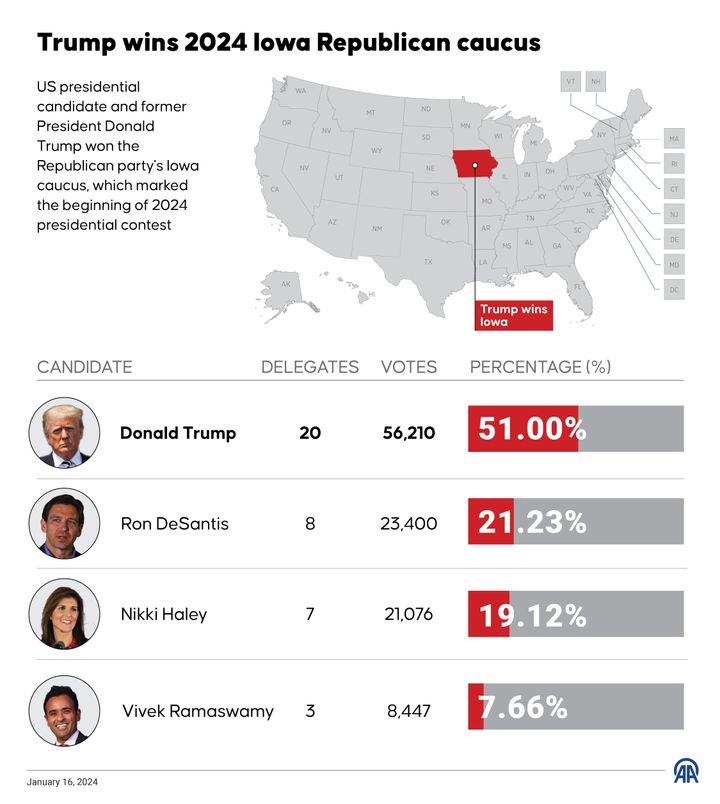
Donald Trump swept the Iowa caucuses Monday with a commanding victory, winning 98 of 99 counties and cementing his front-runner status in the race for the GOP’s presidential nomination.
“It’s not unusual for Donald to go through lawyers at an alarming rate, but Tacopina’s high profile status shows just how dysfunctional Donald’s ‘defense’ really is,” wrote Mary Trump, a clinical psychologist, author and outspoken critic of her uncle.
Tacopina’s withdrawal was announced ahead of Tuesday morning’s jury selection in a second defamation trial tied to Carroll’s allegations that Donald Trump raped her in the 1990s. A jury found him liable for defaming and sexually abusing Carroll last year, though it didn’t find that Trump had raped her.
The former president recently told The New York Times that he wished to testify in the second trial and that Tacopina, who represented him in the first, had advised him not to last time.
Advertisement
Mary Trump suggested that her uncle’s decision to speak in court last week at the end of a separate civil fraud trial, in which Trump has also denied wrongdoing, might’ve played a role in Tacopina’s departure.
“After Donald’s disastrous closing argument in his New York fraud trial, it’s no wonder that Tacopina wanted to distance himself from Donald’s penchant for self-destruction behavior,” she wrote.
“Losing just one key lawyer could have a devastating impact on a case, but not only is Tacopina dumping Donald as a client — his entire firm is leaving,” she added, calling such a move a “major set back for any defense”.
In his business records case, Donald Trump faces 34 felony charges from the Manhattan District Attorney’s Office in connection to a hush money payment made to porn actor Stormy Daniels ahead of the 2016 election.
He traveled to New York after the caucuses to attend the Carroll trial on Tuesday.
In a statement to Reuters about Tacopina’s departure, a spokesperson for the former president said that he “has the most experienced, qualified, disciplined, and overall strongest legal team ever assembled”.
Advertisement

Donald Trump’s sweeping victory in the Iowa caucus underlined his grip on the race to be the Republican presidential nomination in this year’s general election. But does his dominance in the first contest mean that he’s certain to be the Grand Old Party’s pick to take on Joe Biden in November?
On a perilously-cold day in America’s Midwest, Trump secured a roughly 30-point win over his rivals – smashing the record for a contested Iowa Republican caucus with a margin of victory exceeding Bob Dole’s nearly 13-percentage-point victory in 1988. Florida governor Ron DeSantis finished a distant second, just ahead of former UN Ambassador Nikki Haley.
Advertisement
According to the entrance polls conducted by major media organisations, he won every demographic group imaginable: the college-educated and those without a degree; men and women; urban, suburban and rural voters; and evangelical Christians. The only groups he didn’t win were moderates, who went with Haley, and voters ages 17 to 29, who backed DeSantis.
But it’s only the start of a months-long campaign across all 50 US states.
At stake was Iowa’s 40 delegates to the Republican National Convention in Milwaukee this summer, with Trump’s victory meaning he secured 20 delegates. It’s minuscule in the grand scheme of outright victory – 1,215 delegates are needed to win a simple majority and the Republican standard bearer. Primary and caucus votes continue until June, meaning there’s still a long way to go. But the win hands Trump momentum going into the next battle.q
Anadolu via Getty Images
New Hampshire will hold the first-in-the-nation primary on January 23, with the Republican field likely to have thinned out by then. Conservative entrepreneur Vivek Ramaswamy suspended his campaign after a disappointing fourth place finish in Iowa and endorsed Trump.
Advertisement
There are a number of moving parts that will help determine how much to read into the Iowa result.
The magnitude of Trump’s victory poses significant questions for both DeSantis and Haley: each took just enough of the vote to insist they were his main rival in New Hampshire, ensuring the field will remain divided against him. The picture will remain unclear until the race is whittled down to the last two.
Questions still remain about whether Trump has enough broad appeal to beat Biden. He lost to Biden in 2020 after fuelling near-constant chaos while in the White House, culminating with his supporters carrying out a deadly attack on the US Capitol. The disappointing midterm election results in 2022 saw the majority of the candidates he endorsed defeated, and he is still broadly unpopular with the national electorate.
Trump is facing four separate criminal indictments The US Supreme Court is weighing whether states have the ability to block Trump from the ballot for his role in sparking the January 6, 2021, insurrection at the Capitol. And he’s facing criminal trials in Washington and Atlanta for his efforts to overturn the 2020 election. In total, he faces 91 felony charges across four criminal cases.
But Trump’s legal challenges appear to have done little damage to his reputation. Heading to court voluntarily has been a strategy designed to portray him as a victim of a politicised legal system, boosting his “anti-hero” status.
New Hampshire, the next state to go to the polls, will be a tougher test. Some polling there shows Haley is within striking distance, and it is filled with the moderate, college-educated voters who are Trump’s weak point.
Advertisement


After nearly 20 years of blogging about self-development, this year I intend to contribute mainly through video instead of writing, which is a big change for me. I want this to be the first year that I publish more new videos than articles. I’ll still share new YouTube videos via my blog, but if you’re into YouTube, you may want to subscribe to my channel there.
In this first new video of 2024, I also reveal many other intentions; recent decisions; and updates about psychedelics explorations, Conscious Growth Club, the new Engage course, and more. I recorded this one mainly for long-term members of this community who are curious about where we’re headed next.
One reason I’m committed to investing in YouTubing is that I happen to like YouTube as a user. I’m not on Facebook, Instagram, X, or other social media platforms. I used to be active in those spaces, but I dropped them a long time ago because they all seemed too misaligned to me. I’ve been active in online communities for 30 years now, and I tend to be pretty sensitive to the overall quality, intelligence, and depth of engagements. I find it partly amusing that people have been expressing recent outrage at X (Twitter) after Elon took over because I declared it a cesspool and deleted my account in 2014. I was, however, a bit disappointed when Google Plus shut down since I happened to like that service; I liked that it attracted some pretty smart people who were a joy to connect with.
Even as I withdrew from other online spaces, I found myself using YouTube more and more each year. Today I use it pretty much daily, and I’m a YouTube Premium subscriber. I especially love it for educational videos but also for music and meditations. I think it’s one of the best learning resources the world has ever seen. And it’s so versatile too. Rachelle and I often watch Stephen Colbert and Jimmy Kimmel on YouTube while having lunch. I very much appreciate YouTube as a user, and I like the overall vibe I sense from it. I didn’t like it nearly as much in the past, but I feel that it’s been getting a lot better in recent years.
I also feel that YouTube has become a really nice place for communities these days. Many years ago YouTube comments were cesspools of trolling and spam; there was little value in them. But for most of the channels I encounter these days, the comments are civil and often interesting. I find myself engaging with other YouTubers more this way too. I have to give YouTube credit for really cleaning up their act.
Since 2017 Conscious Growth Club’s private community has been my sanctuary. I love high-trust, mutually supportive spaces where people can be honest and real with each other. Outside of CGC I’m feeling good resonance with YouTube. I’d really like to invest in YouTubing for many years going forward, and I really hope they don’t fuck it up! 😛
Partway through the new video, I mentioned building new Action Spirals. An Action Spiral is a habit or routine that you seek to improve each time you run through it. For 2024 I created a new video spiral that I want to continue evolving throughout this year and beyond. For each new video that I create, I want to do something better or different than in previous videos, so I can keep stretching myself to improve at sharing in this way.
I don’t intend to rehash old blog posts and turn them into videos because that isn’t a path with a heart for me. I’m very attuned to what motivates me, and I love to explore and share what’s fresh and new, even as I’m still figuring it out. My blog captures where I was at the time I wrote and published each article, but it doesn’t represent who I am now. I know some people still love the older content and would appreciate seeing video versions of it, but I don’t have any interest in doing that, so please adjust your expectations accordingly. I hope you understand.
As I noted in the video, there hasn’t been a whole lot of carry-over from my long-term blog readers to people who watch my YouTube videos. Typically when I share videos on my blog, it doesn’t generate many extra views on YouTube. Through blogging I’ve built an audience of readers. Some have carried over into YouTube viewers, but I’d say that mostly these are separate groups that don’t overlap a great deal.
I don’t think this is just a matter of a difference in media preference. I sense that investing in a YouTubing community is actually going to attract difference kinds of people than my blog has attracted in the past. I think the vibe of the community will be different. I also imagine that sooner or later, most of the new members flowing into CGC each year will first learn about it from YouTube, not from my blog, and I think that’s going to shift the vibe of CGC too – in a good way.
On the surface this is a bit like starting over, professionally speaking. I currently have fewer than 9K YouTube subscribers, which isn’t a lot, and I’m sure many of them aren’t engaging with my channel since I haven’t been publishing videos consistently yet. I started YouTubing in 2009 and have trickled out about 60 videos since then, but I haven’t really invested much in it since I first opened my account. Half of those videos were published during a 30-day stretch of water fasting and daily video creation in 2017, and they were all shot in single takes with bad lighting, cell phone audio, and no internal editing. Yet many people still appreciated them and kept asking me to make more videos.
You might think this would be a relatively easy transition, especially since I’ve already created dozens of videos as well as live video courses. I’ve done plenty of public speaking, interviews, and more. However, this transition has been surprisingly deep and gradual. For well over a year I’ve been leaning in this direction, but it wasn’t till recently that I really reached my internal tipping point alignment-wise.
The shift in media is just the surface aspect. I’m also wanting to explore new directions topically, especially spirituality, relationships, karma, and way more about the nature of reality. I’m a lot less interested in very objective topics like basic productivity tips or how to graduate from college faster. I am very interested, however, in spirit-level insights that can be used to create interesting changes in our human lives. In recent months I’ve been exploring and experimenting a lot more in that direction.
Exploring psychedelics has impacted me profoundly as well, especially the past five months of micro- and mini-dosing. That’s opened up a whole new world of sensory input to say the least. In all my years of blogging, I’ve never had writer’s block because I’m very attuned to idea space, but now it feels like inner antenna has extended itself much further. It’s like I’ve been gifted with a cosmic library card.
This has really changed how I think about the “self” aspect of self-development. I’m still very into learning, growth, and exploration, but my curiosity is reaching a lot more into nonphysical aspects of existence.
Recently I also read the book Autobiography of a Yogi, which was powerful, eye-opening, and even amusing at times. There are some pretty advanced yogi tales in that book, including people who could fighting tigers bare-handed, teleport to different locations, come back from the dead, create physical structures with their minds, and not eat or drink anything for 50+ years. That’s the sort of info that very objective-minded people wouldn’t likely believe, but I can see them as being possible because the more basic stories align pretty well with my own experiences and the kind of downloads I’ve been getting. I feel like my 20-year exploration of Subjective Reality was just a baby step relative to what else might be possible, and I feel like I’ve recently gone through some kind of spiritual upgrade to be able to see more truth than I was previously permitted to access. The flow of synchronicities has been off the charts in recent weeks for starters.
Next I intend to read the Bhagavad Gita for the first time ever. I got the two-volume set with Paramahansa Yogananda’s commentary (1100+ pages) – he’s the author of Autobiography of a Yogi. I liked his writing style and have long thought about reading the Gita “someday.” I have this strange sense that this book called me to finally read it when I was ready for it. We’ll see how that unfolds…
I can tell that this is going to be a very interesting – and probably very unusual – year. I totally understand that some people won’t want to continue down this path together. Since I posted the new video yesterday, I’ve already lost 11 YouTube subscribers. That is as it’s meant to be. I’ll be sharing some info on this channel that many people aren’t supposed to encounter yet (since it would mess up their human journeys), so they’re going to be diverted away from it. Let’s give them some space to vibe out – with love and appreciation – and then we’ll get into some fascinating and adventurous explorations together this year. 😄

A mouse study designed to shed light on memory loss in people who experience repeated head impacts, such as athletes, suggests the condition could potentially be reversed. The research in mice finds that amnesia and poor memory following head injury is due to inadequate reactivation of neurons involved in forming memories.
The study, conducted by researchers at Georgetown University Medical Center in collaboration with Trinity College Dublin, Ireland, is reported January 16, 2024, in the Journal of Neuroscience.
Importantly for diagnostic and treatment purposes, the researchers found that the memory loss attributed to head injury was not a permanent pathological event driven by a neurodegenerative disease. Indeed, the researchers could reverse the amnesia to allow the mice to recall the lost memory, potentially allowing cognitive impairment caused by head impact to be clinically reversed.
The Georgetown investigators had previously found that the brain adapts to repeated head impacts by changing the way the synapses in the brain operate. This can cause trouble in forming new memories and remembering existing memories. In their new study, investigators were able to trigger mice to remember memories that had been forgotten due to head impacts.
“Our research gives us hope that we can design treatments to return the head-impact brain to its normal condition and recover cognitive function in humans that have poor memory caused by repeated head impacts,” says the study’s senior investigator, Mark Burns, PhD, a professor and Vice-Chair in Georgetown’s Department of Neuroscience and director of the Laboratory for Brain Injury and Dementia.
In the new study, the scientists gave two groups of mice a new memory by training them in a test they had never seen before. One group was exposed to a high frequency of mild head impacts for one week (similar to contact sport exposure in people) and one group were controls that didn’t receive the impacts. The impacted mice were unable to recall the new memory a week later.
“Most research in this area has been in human brains with chronic traumatic encephalopathy (CTE), which is a degenerative brain disease found in people with a history of repetitive head impact,” said Burns. “By contrast, our goal was to understand how the brain changes in response to the low-level head impacts that many young football players regularly experience.”
Researchers have found that, on average, college football players receive 21 head impacts per week with defensive ends receiving 41 head impacts per week. The number of head impacts to mice in this study were designed to mimic a week of exposure for a college football player, and each single head impact by itself was extraordinarily mild.
Using genetically modified mice allowed the researchers to see the neurons involved in learning new memories, and they found that these memory neurons (the “memory engram”) were equally present in both the control mice and the experimental mice.
To understand the physiology underlying these memory changes, the study’s first author, Daniel P. Chapman, Ph.D., said, “We are good at associating memories with places, and that’s because being in a place, or seeing a photo of a place, causes a reactivation of our memory engrams. This is why we examined the engram neurons to look for the specific signature of an activated neuron. When the mice see the room where they first learned the memory, the control mice are able to activate their memory engram, but the head impact mice were not. This is what was causing the amnesia.”
The researchers were able to reverse the amnesia to allow the mice to remember the lost memory using lasers to activate the engram cells. “We used an invasive technique to reverse memory loss in our mice, and unfortunately this is not translatable to humans,” Burns adds. “We are currently studying a number of non-invasive techniques to try to communicate to the brain that it is no longer in danger, and to open a window of plasticity that can reset the brain to its former state.”
In addition to Burns and Chapman the authors include Stefano Vicini at Georgetown University and Sarah D. Power and Tomás J. Ryan at Trinity College Dublin, Ireland.
This work was supported by the Mouse Behavior Core in the Georgetown University Neuroscience Department and by the National Institutes of Health (NIH) / National Institute of Neurological Disorders and Stroke (NINDS) grants R01NS107370 & R01NS121316. NINDS also supported F30 NS122281 and the Neural Injury and Plasticity Training Grant housed in the Center for Neural Injury and Recovery at Georgetown University (T32NS041218). Seed funding is from the CTE Research Fund at Georgetown.
The authors report having no personal financial interests related to the study.
Medics issue the warning after cases in the West Midlands rose by more than 30% in less than a week.

Lee Anderson and Brendan Clarke-Smith have quit as Tory deputy chairmen to rebel over Rishi Sunak’s Rwanda bill.
The move came just minutes before the pair joined around 60 Conservative MPs in backing amendments aimed at toughening up the flagship legislation.
Advertisement
An amendment tabled by veteran Conservative backbencher Bill Cash, which would have allowed the government to defy international law, was defeated by 529 votes to 68.
A second amendment in the name of former immigration minister Robert Jenrick, which would have made it harder for those facing deportation to appeal, was also defeated by 525 votes to 58.
If only half the Tory rebels vote with the opposition parties against the full bill when it comes back to the Commons tomorrow, it will be killed and Sunak’s premiership will be in tatters.
Anderson, the controversial MP for Ashfield, was appointed deputy chairman in February last year.
Fellow Red Wall MP Clarke-Smith only took up the post two months ago.
In a joint resignation letter to the PM, they said: “We commend your work on illegal immigration so far and your commitment to implementing the will of the British people.
Advertisement
“The last thing either of us wants to do is to distract from this.”
However, they suggested that despite their support for the rebel amendments aimed a strengthening the bill, they will still vote for the legislation in its entirety when it comes back to the Commons tomorrow.
Lib Dem home affairs spokesman Alistair Carmichael said: “Sunak’s Rwanda scheme just won’t work – and even the deputy chairmen of his own party know it.
“Rishi Sunak has yet again been embarrassed by his own MPs.
“If the prime minister can’t even settle squabbles in his own party, how can he be expected to run the country?”

The BBC’s Kirsten Campbell outlines what can be expected during three weeks of evidence held in Edinburgh.
