
Boris Johnson Denies Inappropriately Touching Female Journalist
Reply

HuffPost is part of Oath. Oath and our partners need your consent to access your device and use your data (including location) to understand your interests, and provide and measure personalised ads. Oath will also provide you with personalised ads on partner products. Learn more.
Select ‘OK’ to continue and allow Oath and our partners to use your data, or select ‘Manage options’ to view your choices.
HuffPost is part of Oath. Oath and our partners need your consent to access your device and use your data (including location) to understand your interests, and provide and measure personalised ads. Oath will also provide you with personalised ads on partner products. Learn more.
Select ‘OK’ to continue and allow Oath and our partners to use your data, or select ‘Manage options’ to view your choices.
HuffPost is part of Oath. Oath and our partners need your consent to access your device and use your data (including location) to understand your interests, and provide and measure personalised ads. Oath will also provide you with personalised ads on partner products. Learn more.
Select ‘OK’ to continue and allow Oath and our partners to use your data, or select ‘Manage options’ to view your choices.
HuffPost is part of Oath. Oath and our partners need your consent to access your device and use your data (including location) to understand your interests, and provide and measure personalised ads. Oath will also provide you with personalised ads on partner products. Learn more.
Select ‘OK’ to continue and allow Oath and our partners to use your data, or select ‘Manage options’ to view your choices.
HuffPost is part of Oath. Oath and our partners need your consent to access your device and use your data (including location) to understand your interests, and provide and measure personalised ads. Oath will also provide you with personalised ads on partner products. Learn more.
Select ‘OK’ to continue and allow Oath and our partners to use your data, or select ‘Manage options’ to view your choices.
HuffPost is part of Oath. Oath and our partners need your consent to access your device and use your data (including location) to understand your interests, and provide and measure personalised ads. Oath will also provide you with personalised ads on partner products. Learn more.
Select ‘OK’ to continue and allow Oath and our partners to use your data, or select ‘Manage options’ to view your choices.

You have chosen to share the following article:
How elderberries can help you fight the flu
To proceed, simply complete the form below, and a link to the article will be sent by email on your behalf.
Note: Please don’t include any URLs in your comments, as they will be removed upon submission.
We do not store details you enter into this form. Please see our privacy policy for more information.
The details of this article have been emailed on your behalf.
Click here to return to the Medical News Today home page.

Typically, when we dream, we are not aware that we are dreaming, and the most unlikely events, characters, and environments seem real to us.
But now and again, some of us realize that we are in a dream as we are dreaming. This phenomenon is called “lucid dreaming,” and it has stirred the interest of researchers and the public alike.
Learning to control aspects of your dreams can be a great way of exploring activities you could never do in real life, facing and overcoming fears, and learning more about your subconscious.
In a previous special feature on Medical News Today, we have explained what lucid dreams are, talked about some techniques you can apply to achieve them, and looked at whether there are any risks associated with this practice.
In this article, we take that discussion a step further, looking at some of the science behind lucid dreaming.
So if you are interested in finding out how common lucid dreams are, who is more prone to having them and why, and what happens in the brain during a lucid dream, read on.
It remains unclear how many people experience lucid dreams, but researchers have provided rough estimates based on personal reports they accessed through their studies.

A 2017 study published in the journal Imagination, Cognition and Personality: Consciousness in Theory, Research, and Clinical Practice referred to estimates suggesting that in a representative population, 51% of the individuals had experienced a lucid dream at least once in their lives, and about 20% experienced lucid dreams at least once a month.
The same study notes that people are more likely to experience spontaneous lucid dreams in their childhood, starting at about 3 and 4 years old. However, the likelihood of lucid dreaming begins to decline in early adolescence.
“After the age of 25, spontaneous onset of lucid dreaming appears to be very infrequent,” the study authors write.
The researchers — who hail from the Universities of Mannheim and Heidelberg, both in Germany — investigated whether or not personality traits could help predict a person’s likelihood of experiencing lucid dreams.
The study found that openness to an experience correlates positively with lucid dreaming frequency. However, agreeableness —a personality trait that often indicates a person’s level of friendliness and tact in interpersonal relationships — does not.
The study also identified that neuroticism — a personality factor that often presents as strong moods, anxiety, and depression — had associations with a higher frequency of lucid dreams.
Denholm Aspy, Ph.D., who researches lucid dreaming, spoke to MNT and suggested that certain neurophysiological or neurochemical factors may also render a person more likely to experience spontaneous lucid dreams.

More often than not, lucid dreaming occurs during the REM (rapid eye movement) phase of sleep, which is also when many regular dreams occur. It is possible that neurochemical peculiarities may play a role in “switching on” parts of our consciousness when they would generally be “switched off.”
“I’m speculating a little bit here, but some people might just tend to produce more of the neurotransmitters that pause REM sleep, typically acetylcholine,” Aspy told us.
“You might have some random variation in neurology or neurochemistry […] I know that people with narcolepsy tend to have a lot more lucid dreams than the average person, and they’re having a lot of sleep disturbances,” he went on to say.
Some anecdotal experiences, as well as some studies, suggest that lucid dreaming may have more in common with the experience of sleep paralysis than that of regular dreaming.
In sleep paralysis, the mind awakens to a certain degree, while the body remains asleep and unable to move. When that happens, individuals usually experience very realistic hallucinations, as though the content of a dream had “leaked” into the real world.
For instance, a 2017 study — featured in the Journal of Sleep Research — found a significant positive correlation between sleep paralysis and lucid dreaming frequency in a cohort of 1,928 adult participants.
“It is […] likely that these sleep experiences are underlined by similar neurophysiology,” the study authors write.
They also note that “[d]issociative experience was the only common predictor of both sleep paralysis and lucid dreaming frequency, indicating that individuals who experience both unusual sleep experiences also experience greater dissociative experiences in daily life.”

Besides neurochemical and neurophysiological factors, Aspy told us, there may also be other unexpected contributors to whether or not a person is likely to experience lucid dreams. One factor, he explained, could simply be nutrition.
“People that are low in certain vitamins […] they tend to have poor dream recall and not have lucid dreams at all,” Aspy said, “whereas, for example, in my study that I published [in 2017], I found that giving people vitamin B-6 supplements caused them to remember more of their dreams, and that could be useful for having lucid dreams as well.”
In that study — which he previously covered on MNT — Aspy and colleagues found that individuals who took 240 milligrams (mg) of vitamin B-6 for four nights before going to bed found it much easier to remember their dreams when they woke up.
“[G]eneral dream recall is the most important predictor of lucid dreams,” Aspy told MNT. This means that certain changes to the diet might make it more likely that people not only recall their regular dreams when they wake up but also that they can turn regular dreams into lucid dreams more easily.
Another factor that may play a role in a person’s likelihood to experience lucid dreams is meditation. A 2015 study found that people who had practiced meditation for a long time tended to have more lucid dreams.
This, the researchers explain, makes sense because “[a]ttention to the present state of consciousness in wakefulness and contemplating whether the current experience might be a dream is one of the core techniques […] in modern lucid dream practice.”
But what happens in the brain when a person experiences a lucid dream? “Lucid dreaming is a hybrid state of consciousness with features of both waking and dreaming,” write Julian Mutz and Amir-Homayoun Javadi in a review they published in Neuroscience of Consciousness in 2017.

That makes this sleep experience particularly intriguing, all the more so considering that scientists are still unclear about all the brain mechanisms related to regular dreaming.
In their review, Mutz and Javadi looked at previous studies concerning brain activity during sleep and, more specifically, during periods of regular dreaming versus lucid dreaming.
The two researchers found that during lucid dreaming, there is increased activity in the dorsolateral prefrontal cortex, the bilateral frontopolar prefrontal cortex, the precuneus, the inferior parietal lobules, and the supramarginal gyrus.
These are all brain areas related to higher cognitive functions, including attention, working memory, planning, and self-consciousness.
By looking at the research on lucid dreaming and states of consciousness, the researchers also found that during a lucid dream, “levels of self-determination (i.e., the subjective experience of acting freely according to one’s will)” were similar to those that people experienced during states of wakefulness. During regular dreams, however, self-determination was significantly reduced.
Mutz and Javadi also note that by further studying lucid dreaming, scientists could learn more about different types of consciousness, which are less easy to separate and study at other times.
Tadas Stumbrys, Ph.D. — a researcher from Vilnius University in Lithuania, who specializes in the science of dreams — notes that perfecting the art of lucid dreaming is tempting for many people, who often use it for “wish fulfillment, such as flying or engaging in sex.”
While it is certainly possible to become better at lucid dreaming, lucid dreamers can only control limited aspects of their dream at once. “I’ve never heard of anyone who can control everything about a lucid dream at the same time,” Aspy told us.
Many features of lucid dreaming remain a mystery, such as details about the brain mechanisms behind it. Another unknown is why lucid dreams can sometimes turn ominous — about 7% of them are, surprisingly, lucid nightmares, according to Stumbrys.
These are avenues for future research, which is yet to understand what lucid dreams can achieve for the dreamer, and where they fit on the map of sleep experiences.
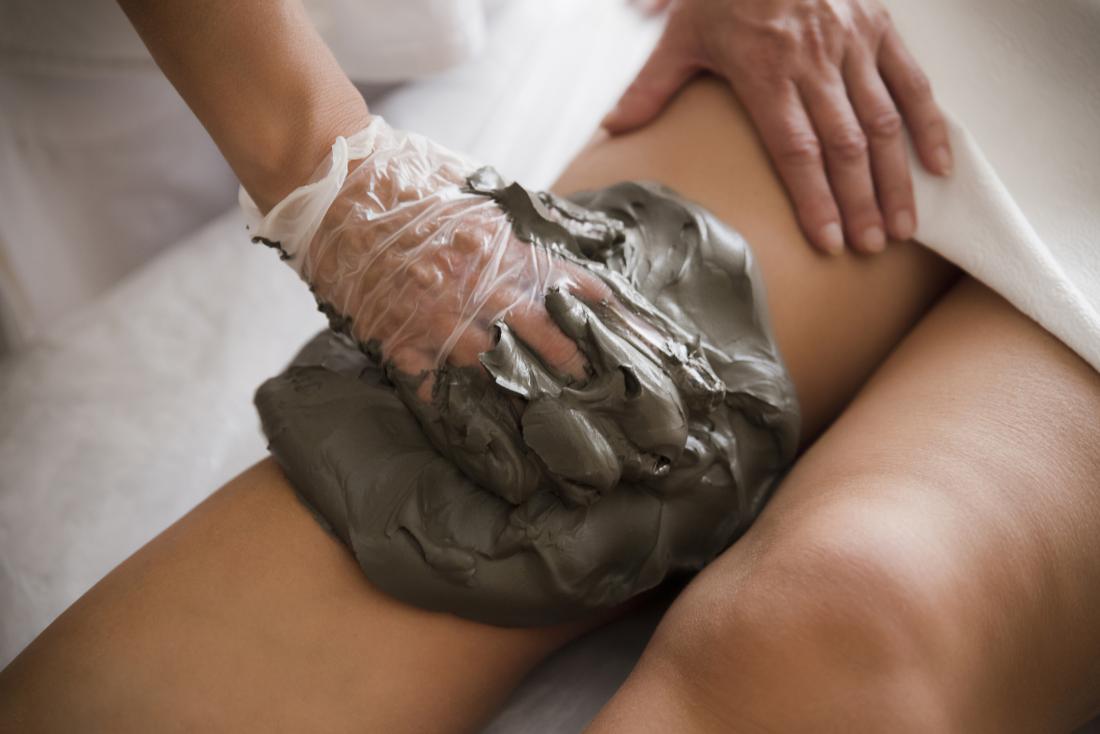
Osteoarthritis (OA) is a degenerative joint condition that causes pain and stiffness in the joints.
OA can affect most joints but is more common in those of the knees, hips, and hands.
In the United States, knee OA affects 10% of men and 13% of women aged 60 or older; this makes OA the most common joint disorder in the U.S.
Currently, doctors recommend combination therapy, which includes pain medication and non-pharmaceutical interventions, such as physiotherapy.
The aim is to relieve pain, slow the progress of OA, and help people compensate for any loss of movement.
Because OA is so prevalent and there is still no cure, scientists are keen to find cost effective, drug free ways of relieving symptoms.
Recently, a group of researchers in Lithuania decided to investigate two less well known interventions: peloid therapy and balneotherapy. They published their findings in the International Journal of Biometeorology.
Peloid therapy is the use of clay or mud to treat ailments. Balneotherapy is a traditional treatment that involves immersing the body in mineral water or mud that is rich in minerals.
For their study, the researchers recruited 92 participants with an average age of 64.6 years, and females represented 87% of the group. All individuals had grade 1–3 knee joint OA according to the Kellgren-Lawrence (KL) grading system.
The KL grading system runs from 1, the least severe, to 5, the most severe.
All three groups received standard physical therapy, which involved 30-minute sessions, carried out every other day for 1 month.
Alongside physical therapy, group 1 received peat mud applications on the waist and leg areas. The temperature of the mud was 36–42°C (97–108°F). The procedures lasted 20 minutes, and they took place every other day for the monthlong treatment period.
Group 2 received physical therapy plus 15-minute sodium chloride (salt) bath treatments. The temperature of the water was 36–38°C (97–100°F). Group 3 participants acted as controls; they only received physical therapy.
The researchers assessed a range of physical measures at the beginning and end of the study and 1 month after the interventions had ended.
These anthropometric measures included walking speed, range of motion, and how quickly the participants could sit down and stand up five times.
Immediately after the intervention and 1 month later, the authors found that groups 1 and 2 fared significantly better, across almost all of the physical measures. The team concludes:
“Anthropometric data significantly improved, pain intensity and joint stiffness decreased, [and] physical activity increased, compared to the control group.”
Each participant also completed a standardized questionnaire designed to convey how their OA impacts their life. Again, the treatment appeared to help. The authors write:
“After treatment and […] 1 month after treatment, average percentages of symptoms, stiffness, and pain of the intervention groups […] were significantly better than those of the control group.”
It is important to emphasize that the study included fewer than 100 participants and ran for only a few weeks; so, before we can conclude that these types of interventions offer benefits, scientists will need to carry out longer studies with more participants.
Some might argue that any measured benefits were not due to the minerals in the mud or water. Instead, it could have been the warmth of the mud or water on the joint, or simply the opportunity to relax for an extra 15–20 minutes every other day.
Another issue, as outlined by the authors, is that the participants had KL grades of 1–3; this means that the findings might not apply to individuals with more severe OA, with KL grades of 4 or 5.
Similarly, most of the participants were women and, therefore, the results might not be transferable to men.
To date, little high quality research has investigated these types of therapeutic techniques. However, some studies have found benefits from certain types of balneotherapy on osteoarthritis.
It must be stressed that available studies have included only small numbers of participants and run for relatively short periods.
Although these interventions have been used for centuries, there is still not adequate evidence to support their use in the treatment of OA. That said, the interventions are cost effective and unlikely to cause side effects when carried out appropriately, so further investigation is warranted.
