What are the health benefits of raw honey?

People have used raw honey in traditional medicine for hundreds of years. This sweet, natural substance may contain healthful elements that processed honey does not have.

Honey provides a range of health benefits. Raw honey, which comes straight from the beehive, contains healthful bee pollen, bee propolis, and plenty of antioxidants.

Research has not confirmed that raw honey has more health benefits than regular honey, but some people believe that the processing and pasteurization that regular honey undergoes diminishes many of the beneficial elements. Some people believe that because of this, raw honey provides more health benefits than regular honey.

In this article, we compare the health benefits of raw honey and regular honey.

What is raw honey?

Raw honey is not filtered or pasteurized.

Honey is a sweet, golden liquid made by honeybees. Honeybees store their honey in small, hexagonal cups called a honeycomb. Raw honey comes straight from the honeycomb.

Honey from the hive contains bee pollen, beeswax, and parts of dead bees. Honey manufacturers will usually pass raw honey through a filter to remove as many impurities as possible, but some generally remain. It is still safe to eat.

Unlike raw honey, regular honey undergoes a pasteurization process. This means manufacturers have heated it to kill yeast cells that can affect its taste, increase its shelf-life, and make it look more transparent and attractive. However, pasteurization may adversely affect the number of nutrients in the honey.

Some historical evidence estimates that humans have used honey for over 8,000 years. During ancient times, people would have used raw honey, but today, most people use pasteurized honey.

Honey naturally offers the following healthful properties:

  • antibacterial action
  • wound-healing effects
  • dietary antioxidants
  • anti-inflammatory effects

Raw honey also contains bee pollen and bee propolis, which is a sticky, glue-like substance bees use to hold their hive together. Regular honey may not contain the same levels of bee propolis and bee pollen as raw honey.

A 2017 review on honey and a 2015 review on bee pollen report that bee propolis and bee pollen can offer anti-inflammatory, antioxidant, antibacterial, and anticancer properties.

The following sections explore seven evidence-based health benefits of raw honey.

1. Antioxidant effects

Researchers believe that some of the main health benefits from honey come from its antioxidant content.

Natural honey contains a range of compounds that act as antioxidants, including phytochemicals, flavonoids, and ascorbic acid.

Antioxidants reduce oxidative stress in the body by mopping up free radicals. Scientists have linked oxidative stress to a range of chronic health conditions, including many cancers. By eating an antioxidant-rich diet, people can reduce their risk of chronic disease.

Some people believe that pasteurization reduces the number of antioxidants in the honey, meaning that pasteurized honey may not offer the same benefits as raw honey.

There is no specific research into how pasteurization affects the antioxidants in honey, but studies show that heating other foods can reduce their antioxidant content.

2. Nutrition

Honey contains specific nutrients that can make it a healthful addition to the diet.

The exact nutrition and chemical composition of raw honey varies between different countries and environments and depends partly upon which types of flowers the bees gather their nectar from. Regardless of these factors, honey still contains healthful compounds, such as antioxidants, amino acids, and vitamins.

One tablespoon or 21 grams (g) of raw honey contains 64 calories and 16 g of sugar. These values may vary between brands and batches.

Natural honey naturally contains small amounts of the following vitamins and minerals:

Honey naturally contains sugar. A little more than half of the sugar in honey is fructose. Research has linked fructose to various health problems.

However, even with its fructose content, honey may be a healthier option than table sugar. Some research suggests that honey may offer a protective effect against diabetes and some types of honey may help improve cholesterol levels.

People who have diabetes or who are on sugar-restricted diets may choose to eat honey in moderation to avoid significant changes in their blood sugar levels. Pure honey has a glycemic index (GI) of 58, meaning it has a medium effect on blood sugar levels. Learn about the GI scale here.

3. Antibacterial action

Raw honey in jar on wooden table
Honey can help clean wounds and prevent infection.

Honey is a natural antibacterial and antimicrobial agent. It contains hydrogen peroxide and glucose oxidase and has a low pH level, which means it can kill harmful bacteria and fungi. Also, because of its unique chemical composition, it does not help yeast or bacteria to grow.

Because of its antibacterial action, people can use it to cleanse wounds,

Research has shown that manuka honey, which is a type of raw honey, can kill common pathogens including:

  • Escherichia coli or E. coli, a bacteria that causes food poisoning and wound infections
  • Staphylococcus aureus or S. aureus, a microbe that causes skin infections
  • Helicobacter pylori or H. pylori, a bacteria that causes stomach ulcers and chronic gastritis

4. Wound healing

Numerous studies have suggested that honey works well as a wound healing dressing.

A review confirms that honey is useful in wound healing because of its antibacterial, anti-inflammatory, and antioxidant properties. Some evidence also suggests that honey has antiviral and antifungal properties.

Also, honey is acidic, which helps release oxygen from the wound and promote healing.

Apply raw honey directly to minor cuts and burns then place gauze or a bandage over the wound. Alternatively, people can purchase manuka honey products for wound care at some drug stores, or choose between brands online.

5. Relieving coughs

Several studies have suggested that honey may be as or more effective than some over-the-counter (OTC) cough medicines. Many cough medicines are not safe for younger children to take, so honey may be a good alternative for children over one year of age.

A meta-analysis suggests that honey may provide an effective way to decrease the severity and frequency of a child’s nighttime cough. One small-scale study found that a milk and one type of honey mixture relieved children’s coughs as effectively as an OTC medicine.

To relieve a cough, take a teaspoon of raw honey and avoid other liquids or foods afterward to allow the honey to coat the throat.

6. Treating diarrhea

Raw honey may have a soothing effect on digestion, helping with symptoms of diarrhea.

A study of 150 children with acute gastroenteritis found that those who received honey with an oral rehydration solution had a better recovery from diarrhea than those who did not receive honey. The children who received honey had fewer bowel movements and recovered faster from the illness.

To help treat mild diarrhea, try taking a teaspoon of raw honey or mixing honey with a drink. Avoid taking too much honey because excess sugar can make diarrhea worse.

7. Protecting the brain

Raw honey has anti-inflammatory properties.

Some evidence suggests that honey may have antioxidant and anti-inflammatory powers that can benefit the brain. An animal study found that rats that consumed honey had protection against brain damage caused by exposure to lead.

In addition, a review states that raw honey may contain ingredients that help fight inflammation in the hippocampus, a part of the brain involved in memory.

Risks

As long as a person is not allergic to bee pollen, raw honey is generally safe to use.

The Centers for Disease Control and Protection (CDC) say that people should not give honey to infants under the age of 1 because of the risk of infant botulism. Honey is safe from the age of 1 upwards. This applies to both raw and regular honey.

Choosing the right kind of honey

Raw honey will have a label that reads “raw honey.” If the label does not include the word “raw,” or does not come directly from a farmer or beekeeper who can confirm that it is raw, the manufacturer has probably pasteurized it.

The label may also describe the type of flowers that the bees pollinated to make that honey. The kind of flower determines the taste, color, and antioxidant and vitamin content of the honey.

Many types of pasteurized honey have labels that read “pure honey.” Others may say “clover honey” or may state that they come from a local area. Even products labeled as “organic honey” may not be raw, as some manufacturers do pasteurize organic honey.

Some processed honey products contain high fructose corn syrup or other additives. Check the label to make sure the honey is pure.

Raw honey has become more popular in recent years, and people can now buy it from many grocery and health food stores. Farmers’ markets also sell raw honey, sometimes directly from the beekeeper.

Online stores offer a wide range of brands of both raw honey and regular honey.

When raw honey turns to ‘sugar’

Raw honey may crystallize after a few months of storage. This means that the honey gets a grainy or sugar-like texture. Crystallized honey is safe to eat and has the same taste.

To make the honey liquid again, use a gentle heating technique:

  1. Boil a pot of water and remove it from the heat.
  2. Place the container of honey in the hot water. Do not allow the water to reach the top of the honey container to avoid contaminating it.
  3. Remove the container of honey after a few minutes. If it is still solid or crystallized, repeat the process.

Do not microwave raw honey or put it directly in boiling water or on a hot stove top, as this may destroy some of its nutrients.

Summary

Raw honey may contain nutrients that regular honey does not. This means raw honey could potentially offer more, or more powerful, health benefits. However, research has not confirmed this.

Raw honey may contain extra elements, such as bee pollen and bee propolis, which can offer additional antioxidant and antibacterial properties.

Research on the medicinal uses of raw honey is promising. The studies on its healing properties and nutrition suggest that raw honey may be a more healthful sweetener than sugar.


Share Button

Brits Work An Extra 2.5 Weeks Every Year Compared With The Rest Of The EU

HuffPost is part of Oath. Oath and our partners need your consent to access your device and use your data (including location) to understand your interests, and provide and measure personalised ads. Oath will also provide you with personalised ads on partner products. Learn more.

Select ‘OK’ to continue and allow Oath and our partners to use your data, or select ‘Manage options’ to view your choices.

Share Button

Global Warming Confirmed By Planet Earth ‘Skin Temperature Test’

HuffPost is part of Oath. Oath and our partners need your consent to access your device and use your data (including location) to understand your interests, and provide and measure personalised ads. Oath will also provide you with personalised ads on partner products. Learn more.

Select ‘OK’ to continue and allow Oath and our partners to use your data, or select ‘Manage options’ to view your choices.

Share Button

Paris Terror Attack Hero Helped Save Notre Dame’s Treasured Crown Of Thorns

HuffPost is part of Oath. Oath and our partners need your consent to access your device and use your data (including location) to understand your interests, and provide and measure personalised ads. Oath will also provide you with personalised ads on partner products. Learn more.

Select ‘OK’ to continue and allow Oath and our partners to use your data, or select ‘Manage options’ to view your choices.

Share Button

Alternative therapies for cancer: Do they do more harm than good?

New research finds that one-third of people living with cancer use complementary and alternative therapies. Medical professionals raise concerns about the safety of these practices, suggesting that they may interfere with conventional cancer treatment.
woman doing yoga
New research suggests that yoga may be one of the few nonconventional therapies that may help people living with cancer.

In 2018, the National Cancer Institute estimated that 1,735,350 people in the United States would receive a diagnosis of cancer by the end of that year and that 609,640 people would die from the condition.

Coping with the distressing news of a cancer diagnosis can be challenging.

As Dany Bell, a specialist advisor on cancer treatment and recovery at Macmillan Cancer Support in the United Kingdom, put it, “Being diagnosed with cancer can be a big shock, even if you already suspected you might have it.”

Once they receive a diagnosis, many people turn to complementary and alternative therapies in search of a cure.

But new research cautions that such an approach may be misguided. Dr. Nina Sanford, from the University of Texas Southwestern Medical Center, in Dallas, led an analysis of data from a comprehensive national survey to find out exactly how many people living with cancer also use complementary and alternative medicines.

Dr. Sanford — an assistant professor of radiation oncology — and colleagues published their findings in the journal JAMA Oncology.

One-third of patients use alternative medicines

Some have expressed concern that people who use complementary therapies — such as yoga, meditation, acupuncture, herbal medication, and supplements — do not inform their physicians.

Dr. Sanford and colleagues refer to these concerns in their paper, as well as a study suggesting that a small subgroup of people who used complementary medicines had a poorer outlook than those who did not.

In light of these worries, Dr. Sanford and the team analyzed data from the National Health Interview Survey of the Centers for Disease Control and Prevention (CDC). The researchers carried out a cross-sectional study in an attempt to estimate the proportion of people with cancer who use complementary therapies.

Dr. Sanford’s analysis revealed that one-third of people with a cancer diagnosis take complementary and alternative medicines. Herbal supplements were the most popular alternative therapy. Chiropractic and osteopathic manipulation were a close second.

Furthermore, Dr. Sanford’s analysis revealed that 29 percent of those who use complementary treatments do not tell their physicians about it. Among the reasons that participants gave were that the doctor did not ask or that they thought their physician did not need to know.

“Younger patients are more likely to use complementary and alternative medicines and women were more likely to, but I would have thought more people would tell their doctors,” comments Dr. Sanford.

Why herbal supplements may be harmful

“You don’t know what’s in them,” the lead investigator continues, referring to herbal supplements. “Some of these supplements are kind of a mishmash of different things.”

“Unless we know what’s in [the herbal supplements], I would recommend patients avoid using them during radiation because [certain supplements] could interfere with treatment.”

Dr. Nina Sanford

“With radiation specifically, there is concern that very high levels of antioxidants could make radiation less effective,” she adds.

Dr. David Gerber, a lung cancer specialist and professor of internal medicine and population and data sciences at the university — who was not involved in the study — also comments on the clinical relevance of the findings.

“[Supplements] may interact with the medicines we’re giving them, and through that interaction [they] could alter the level of the medicine in the patient,” he says, adding, “If the levels get too high, then toxicities increase, and if the levels get too low, the efficacy would drop.”

Yoga, meditation may help

Although physicians are concerned about the effects of supplements, they suggest that yoga and meditation may be beneficial for coping with a cancer diagnosis.

“We strongly advise patients to stay active and engage in exercise during treatment,” Dr. Sanford says.

“A common side effect of radiation is fatigue. I let the patients know that the patients who feel the most fatigue are the ones who are the most sedentary and that those who are doing exercise are the ones who frequently have the most energy.”

Dr. Nina Sanford

People living with cancer have also recently shared some of their experiences with yoga. One perspective comes from Belindy Sarembock, who is 53 years old, lives in Dallas, and has received a breast cancer diagnosis. She speaks of the tremendous benefits that this type of exercise has for her.

“I was one who would have laughed at yoga before breast cancer, but now it just helps me so much,” she says. “It’s just so relaxing, I just feel so good after I leave. It’s just so peaceful. For your body, I can’t think of anything better than that.”

Sarembock adds that yoga helped relieve chemo-induced neuropathy — nerve damage — almost immediately.

“I couldn’t get onto my toes. After the second time of going to yoga, I was able to go onto my toes […] I wish I would have known about the yoga earlier. It was just such a benefit and helped me so much. I highly recommend it to anyone.”

Belindy Sarembock

Share Button

Hair growth: 6 home remedies

Hair growth depends on several factors, including a person’s genetic history. However, there are some home remedies that may help.

Whether a person is trying to prevent hair loss or encourage more growth, knowing some tips on diet and how to treat the hair can help them achieve their goal.

When hair loss is due to a medical condition, however, it is best to speak to a doctor about appropriate treatments.

The following home remedies may encourage hair growth:

1. Eating more protein

home remedies for hair growth nuts
Eating high-protein foods, such as nuts, can help the body grow new hair.

The body needs protein to grow new hair. Hair loss can arise due to a protein deficiency.

Examples of healthful dietary protein sources include:

  • beans
  • eggs
  • fish
  • nuts
  • lean meats
  • seeds

A person’s daily protein needs vary based on how physically active they are and how much muscle mass they have.

2. Increasing iron intake

Iron is another nutrient the body requires to grow healthy hair. Some dietary iron sources include:

  • clams
  • lentils
  • oysters
  • pumpkin seeds
  • spinach
  • white beans
  • lean beef
  • turkey

Many manufacturers also fortify their foods with iron, which means that they have added iron to them.

People who do not eat meat have iron requirements as high as 1.8 times those of people who do eat meat. This is because the body does not absorb nonanimal sources of iron as effectively.

3. Trying aromatherapy

According to the authors of 2011 study paper, aromatherapy can help stimulate hair growth.

Examples of herbs that aromatherapy practitioners may use to promote hair growth include:

  • cedarwood
  • lavender
  • rosemary
  • thyme
  • tulsi

When using essential oils on the scalp, be sure to mix only a few drops into a carrier oil, such as coconut oil or walnut oil. The researchers also state that inhaling the scent of these oils may affect hair growth.

More research is necessary to determine whether essential oils are an effective solution for hair growth.

Some people may experience topical allergic reactions when using essential oils, so it is best to try a small test patch 24 hours before applying the mixture to the whole head.

4. Massaging the scalp

Massaging the scalp helps stimulate blood flow to the scalp, which could help encourage hair growth.

A small Japanese study found that men who massaged their scalps for 4 minutes per day with a scalp massage device had thicker hair after 6 months.

People can use the pads of their fingertips to massage the scalp in gentle circles. Devices to massage the scalp are also available in drug stores and online.

5. Using pumpkin seed oil

home remedies for hair growth pumpkin seed oil
Taking pumpkin seed oil may increase hair growth.

The authors of a 2014 study looked at whether pumpkin seed oil could help hair growth.

They discovered that men taking 400 milligrams (mg) of pumpkin seed oil for 6 months experienced a 40 percent increase in average hair count, whereas those taking a placebo only experienced a 10 percent increase.

The men all had a history of androgenic alopecia, or male pattern baldness. They were not currently taking other supplements for hair loss and were between 20 and 65 years old.

6. Taking saw palmetto

A 2-year-long study found that supplementation with saw palmetto may increase hair growth in men with male pattern baldness.

The participants took 320 mg of saw palmetto every day for the duration of the study.

After 2 years, the participants experienced hair growth primarily in the vertex, or the top and back of the scalp. This is a common site for bald spots in men.

Causes of hair loss

Many people experience aging-related hair thinning or male or female pattern balding.

Doctors tend to divide hair loss not related to age into two major categories: scarring and non-scarring hair loss. Generally speaking, scarring hair loss is permanent. Examples of scarring hair loss causes include scarring alopecia.

Non-scarring hair loss causes can include alopecia areata (hair loss in patches) or telogen effluvium.

Telogen effluvium causes hair follicles to remain in a resting state. As a result, a person’s hair does not grow as quickly or as much as it once did.

This condition can be the result of the following “shocks” to the body:

  • giving birth
  • having a fever
  • having an inadequate protein intake
  • undergoing major surgery
  • having a severe chronic illness

ïtaking certain medications, such as antidepressants, beta-blockers, calcium channel blockers, or retinoids

Prevention

home remedies for hair growth hair dryer
People can try to encourage hair growth by avoiding using blow-dryers set to a high heat.

Eating a nutritious diet and keeping stress levels low can help prevent hair loss and encourage hair growth.

In addition to these steps, other ways to encourage hair growth include:

  • not using hair accessories that can cause hair breakage, such as hairpins, clips, and rubber bands
  • avoiding styling products that can damage and break the hair, such as blow-dryers set to a high heat, straightening irons, and curling irons
  • limiting the use of bleach, relaxers, and hair dyes
  • avoiding excess shampooing or brushing
  • when the hair is wet, avoiding brushing it or applying plastic or rubber hair ties

Treating the hair as gently as possible can help preserve it and minimize the rate of hair loss.

Sometimes, however, hair loss is inevitable due to age.

When to see a doctor

Hair loss is not necessarily a condition that affects a person’s overall health, but it can greatly impact their mental well-being and self-esteem.

A person should see their doctor if they are concerned about hair loss, especially if they are taking supplements or have made dietary changes and are losing hair.

A doctor may recommend seeing a dermatologist, who can conduct additional testing if necessary to determine appropriate treatments.

Summary

Some aspects of hair growth, such as genetics, are out of a person’s control. However, a person may see improved hair growth if they follow a healthful and nutritious diet.

Using some home remedies and taking good care of the hair may help enhance thickness and growth. If a person is concerned about hair loss or growth, they should talk to a doctor.

Share Button

What to know about black earwax

Earwax is a naturally produced yellow substance that helps keep a person’s ears clean and free of debris. Black earwax can sometimes appear, but it is usually the result of an excessive buildup of earwax and is rarely a cause for concern.

Earwax protects the ear canal from things that may enter it, including:

  • water
  • shampoo and conditioner
  • dirt
  • viruses, fungi, and bacteria

Several glands in the outer part of the ear produce earwax, which is sometimes called cerumen. Earwax also includes the old skin cells of the ear canal, which shed into it. In most cases, earwax is a sticky, yellow substance. However, it occasionally has a darker color, such as brown or black.

By knowing some of the potential causes, most of which are benign, a person can take steps to prevent and treat black earwax.

Causes and risk factors

Woman having ear examined by doctor with otoscope
Earwax can build up and become black.

When earwax is in the ear for long periods, its color will start to darken. The longer the wax remains there, the darker it will appear.

Research on the effects of earwax accumulation shows that males and older adults are more likely than other people to experience buildups of earwax.

In general, as a person ages, the earwax becomes drier and does not clear the ear canal as quickly or easily. As a result, earwax can build up and change from yellow to black.

However, black earwax can affect anyone. The following are some of the most common causes of black earwax.

Excessive earwax buildup

In most people, earwax naturally and regularly exits a person’s ears. However, if this does not happen quickly enough or the glands produce too much earwax, it can build up in the ear canal and become darker.

Insertion of foreign objects

People who use earbuds, earplugs, hearing aids, or any other object that they routinely place in the ear have a higher chance of developing black earwax. These foreign objects can both push earwax back into the ear canal and block earwax from exiting the ear.

Compressed earwax

The insertion of foreign objects into the ear can also lead to compressed earwax. People who regularly clean their ears with cotton buds run the risk of pushing the earwax back into the ear and compressing it against the eardrum.

In addition to becoming darker, compressed earwax can cause various symptoms, such as earaches, hearing loss, and dizziness.

Home remedies

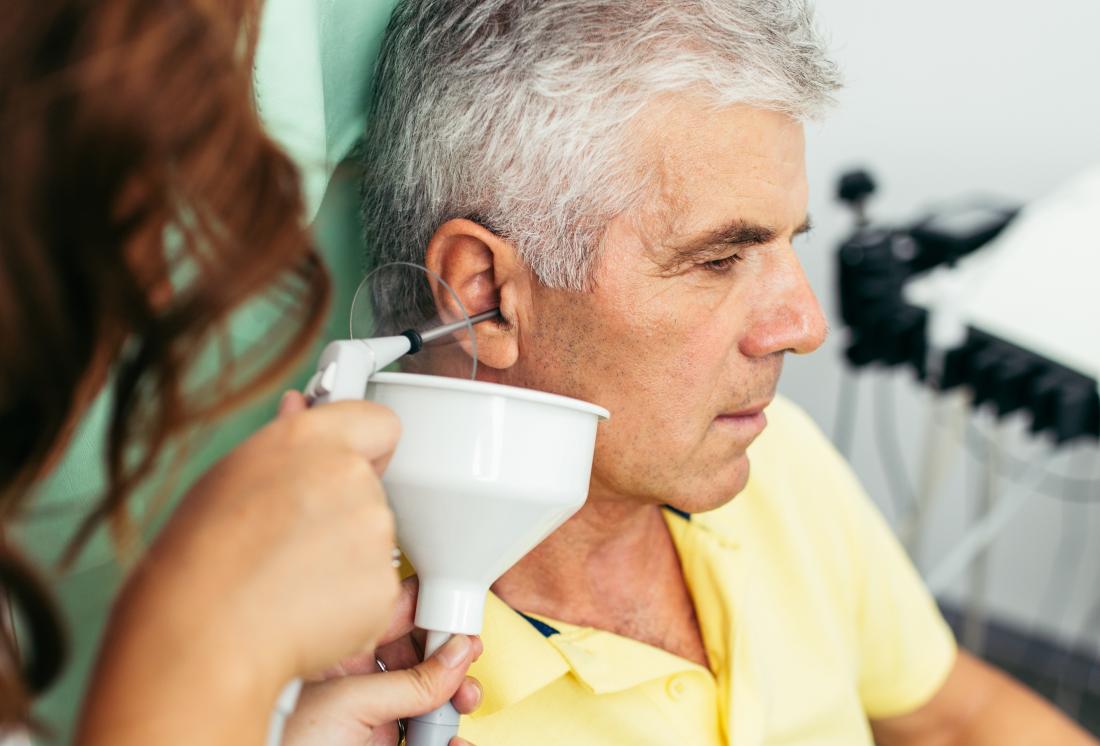
Man having ear irrigation performed
Performing ear irrigation can help dislodge black earwax.

In most cases, black earwax does not pose a health concern or risk. However, if it becomes a problem, a person can usually treat it with home remedies. Anyone who experiences additional symptoms may also wish to speak to a doctor.

People can try the following home remedies for black earwax. It is important to note that these treatments are not suitable for those who have a hole in the eardrum, including one that is due to tube placement or a tear.

Ear irrigation

Ear irrigation involves the use of warm water, sometimes with an essential oil or hydrogen peroxide.

To irrigate the ear, a person should:

  • Fill a small, rubber syringe or bulb with warm water or a mixture of warm water and a few drops of an essential oil or hydrogen peroxide.
  • Tilt the head so that the affected ear is facing toward the ceiling and place the head over the sink.
  • Insert the syringe tip just over the opening of the ear canal.
  • Gently squirt the water into the ear and let it drain out.
  • Repeat with the other ear if necessary.

A person may also want to try positioning the ear toward the sink while irrigating it to allow the water and wax to drain with gravity from the ear.

Ear irrigation is generally a safe and effective way to remove a buildup of earwax from the ears.

Ear drops

Ear drops are another at-home treatment option. The most common over-the-counter (OTC) ear drops are:

  • hydrogen peroxide
  • natural oils, such as olive oil, mineral oil, and baby oil
  • ear drop solutions

When a person drops the solution into the opening of the ear, hard and dry wax absorbs it. This absorption should soften the earwax and make it easier to clear from the ear canal. It may help to take a shower a few minutes after applying ear drops to help rinse out the softened earwax.

Earwax removal drops are available to purchase online. Some drops contain peroxide.

Medical treatments

If at-home treatments are not successful or pain accompanies the black earwax, a person should speak to their doctor about potential treatments. A doctor may check for underlying conditions if this is the person’s first visit for this symptom.

Some methods that a doctor may try include:

  • irrigation with a special tool for cleaning out earwax
  • suction using a vacuum tool
  • removing earwax with a specialized tool called a curette

Prevention

Regular showers can help loosen earwax.
Taking regular showers can help loosen earwax.

Often, simply leaving the ears alone may help prevent excess wax from building up. Most of the time, with showers and jaw movement, the ears are self-cleaning and require no interference.

People should avoid cleaning their ears with long objects. Anyone with a history of wax buildups may also want to consider avoiding or limiting the use of earbuds and other devices that require insertion into the ears.

A doctor may prescribe medication to help soften a person’s earwax over time. This medication can help prevent the accumulation of earwax that can lead to black earwax and other side effects.

When to see a doctor

A person should speak to a doctor if this is their first time experiencing black earwax. A doctor may refer a person to an ear, nose, and throat specialist or check for underlying conditions before treatment.

A person should also seek medical attention if they experience any additional symptoms, including:

  • pain in the ear
  • nausea
  • dizziness
  • a feeling of fullness in the ear
  • itchiness in the ear
  • a cough
  • discharge from the ear canal
  • ringing in the ears
  • difficulty hearing

Finally, a person should speak to their doctor before they start an at-home treatment and let them know if the treatment does not work.

Takeaway

Black earwax is rarely a cause for concern. Additional symptoms tend to be mild, and people can usually treat them with home remedies.

Most people should leave their ears alone and practice good hygiene, and they will not experience an excessive buildup of earwax.

Anyone experiencing bothersome symptoms alongside black earwax should speak to a doctor.

Share Button

11 home remedies for gout

Gout is a form of inflammatory arthritis that causes pain and discomfort, often in the toes, ankles, and knees. There is no cure for gout, so a combination of medications and home remedies can help keep gout in remission.

Gout occurs when the body builds up too much uric acid. This acid is a by-product from when the body breaks down purines found in foods.

Making some dietary changes can help a person reduce their purine levels and the likelihood of having a gout flare.

Home remedies for gout include:

1. Drinking plenty of water

Woman drinking water which is a home remedy for gout
A person with gout can reduce swelling by drinking plenty of water.

When a person has gout, they can experience significant swelling and inflammation. One of the ways to reduce swelling is by drinking more water.

Increasing fluid consumption can kick-start a person’s kidneys to release excess fluid, which can reduce swelling in a person with gout.

Water is best, but other clear fluids, such as broths and herbal teas are also good choices. People should avoid alcohol and sodas, which are high in purines.

However, anyone with congestive heart failure or kidney disease should talk to their doctor before increasing their fluid intake.

2. Applying ice to affected joints

Applying a cloth-covered ice pack to the joint can help reduce gout-related inflammation.

Try applying an ice pack wrapped in a thin towel for 10–15 minutes at a time to help relieve pain.

If gout is affecting the feet, a person can also use a pack of frozen vegetables covered with a washcloth, as this may drape more easily over the feet.

3. Reducing stress

Heightened stress can worsen a person’s gout symptoms. While it is not always possible to eliminate all sources of stress, the following tips might help:

  • exercising, such as taking a brief walk, if the pain does not limit movement
  • asking for time off from work
  • journaling or reading a favorite book
  • listening to music
  • meditating

Getting enough rest can also help a person feel less stressed.

4. Elevating the affected joints

Gout can cause pain and swelling, especially in the feet, hands, knees, and ankles.

One way to reduce swelling is by elevating the affected joints. This encourages blood and fluid to move away from the joint and back toward the heart.

A person can also use an ice-pack in combination with elevation to reduce their gout symptoms.

5. Increasing your fish intake

Tuna steak
Including some fish in the diet could help reduce serum uric acid levels.

Fish contain anti-inflammatory compounds that help to enhance health overall. Some research has found some fish especially helpful in reducing uric acid levels.

Authors of a 2016 study found that taking tuna extract helped to reduce participants’ serum uric acid levels. However, the participants did not have gout, so more research is necessary to confirm these results.

However, some nutrition websites list tuna as a high-purine food, so some people may find eating tuna worsens their symptoms.

In addition, the Arthritis Foundation list a number of other fish that contain high levels of purines, including anchovies, sardines, and cod.

6. Taking over-the-counter pain relievers

While over-the-counter (OTC) anti-inflammatory medications, such as ibuprofen (Advil) and naproxen sodium (Aleve), may not be “natural,” they are excellent options for treating pain and discomfort due to gout.

People should never take more than the recommended dose and always ask a doctor about whether OTC medicines might interfere with their other medications.

If OTC pain-relievers do not help, ask a doctor about stronger prescription medications.

7. Drinking coffee

Some people think drinking coffee may decrease the risk of experiencing gout.

A 2016 review and meta-analysis showed that those who drank more coffee were less likely to have gout. This may be because coffee can lower uric acid levels.

However, just because the study showed a correlation between higher coffee consumption and lower risk of gout, this does not mean that coffee caused the lower risk.

8. Eating more cherries

cherries in a bowl on a table
Eating more cherries is a recommended home remedy for gout.

A research study published in the journal Arthritis and Rheumatology found increasing cherry intake over 2-days decreased the risk for gout attacks by 35 percent in those with previously diagnosed gout.

Cherries contain high levels of anthocyanins, which are anti-inflammatory compounds. The researchers found there were symptom-reducing benefits for those eating whole cherries or cherry juice, as well as people taking cherry extract supplements.

They also discovered a 75 percent risk reduction for gout attacks when a person consumed cherries in addition to taking a gout medication.

Cherries and cherry juice are available in many supermarkets. People can also buy cherry extract supplements in health food stores and online.

9. Drinking lemon water

The authors of a 2015 study found that adding the juice of two freshly squeezed lemons to 2 liters of water each day reduced uric acid in people with gout.

The researchers concluded that lemon water helps to neutralize uric acid in the body, thus helping to reduce levels.

10. Limiting alcohol intake

According to the Arthritis Foundation, drinking more than two liquor drinks or two beers per day increases a person’s risk for gout.

Beer is high in purines, so avoiding it can benefit a person with gout.

11. Avoiding high-purine meats

Some meats also contain high amounts of purines. Avoiding meats that contain high levels of purine might help to reduce a person’s gout symptoms.

Meats and fish that are high in purines include:

  • bacon
  • turkey
  • veal
  • venison
  • organ meats, such as liver
  • anchovies
  • sardines
  • mussels
  • herring
  • cod
  • haddock
  • trout
  • scallops

Talk to a doctor about medications

Some medications, such as diuretics, can increase the risks of a uric acid buildup and gout flare.

It is essential that people do not stop taking their medication before speaking to a doctor about possible alternatives. In some cases, the benefits of the medication outweigh the side effects.

A doctor can also discuss which medications are available to help reduce gout symptoms.

Summary

Gout flare-ups can be painful and exhausting. Treatments, including home remedies, can reduce symptoms and help prevent future flare-ups.

Maintaining a healthy weight and exercising regularly can also help a person manage their condition.

If a person’s flare-ups do not start to improve after 48 hours, they should call their doctor to determine if they need further medical treatments.

Share Button

People With Crohn’s And Colitis Face Abuse For Using Accessible Toilets, Survey Reveals

HuffPost is part of Oath. Oath and our partners need your consent to access your device and use your data (including location) to understand your interests, and provide and measure personalised ads. Oath will also provide you with personalised ads on partner products. Learn more.

Select ‘OK’ to continue and allow Oath and our partners to use your data, or select ‘Manage options’ to view your choices.

Share Button

Girls At Primary Schools Will Soon Have Access To Free Tampons And Sanitary Towels

HuffPost is part of Oath. Oath and our partners need your consent to access your device and use your data (including location) to understand your interests, and provide and measure personalised ads. Oath will also provide you with personalised ads on partner products. Learn more.

Select ‘OK’ to continue and allow Oath and our partners to use your data, or select ‘Manage options’ to view your choices.

Share Button