The difficulties faced by patients trying to access NHS care in Telford reflects UK-wide problems.


The difficulties faced by patients trying to access NHS care in Telford reflects UK-wide problems.
Michael Mosley’s simple and accessible health hacks made him a household name. Remember these?

Fewer than 1 in 4 people in the United States have received last year’s updated COVID-19 vaccine, despite a death toll of more than 23,000 Americans this year.
One of the most common reasons for bypassing the COVID vaccine is concern about side effects like tiredness, muscle and joint pain, chills, headache, fever, nausea and feeling generally unwell. But a new study, led by UC San Francisco, has found that the symptoms indicate a robust immune response that is likely to lessen the chances of infection.
The study, which appears online June 10 in Annals of Internal Medicine, is based on symptom reports and antibody responses from 363 people, who had the Pfizer-BioNTech or Moderna mRNA vaccines when they were first introduced.
After the second dose of the vaccine, the researchers found that those with seven or more symptoms had nearly double the antibody levels of those who did not have symptoms. The participants were mainly in their forties to sixties and had not had the virus.
About 40% of the people in the study also wore a device to monitor their temperature, breathing and heart rate. The researchers found that those whose skin temperature increased by 1 degree Celsius after the second dose had three times the antibody levels six months later, compared to those whose temperature did not increase.
An absence of side effects does not mean the vaccine is not working
“Generally, we found that the higher the number of side effects, the higher the level of antibodies,” said first author Ethan Dutcher, MD, PhD, a postdoctoral researcher in the UCSF Department of Psychiatry and Behavioral Sciences, and the Weill Institute for Neurosciences. “But this wasn’t a hard rule: some people without side effects had better antibodies than some people with side effects.”
As the virus has evolved and fatality rates have fallen, many people are underestimating its impact. “The toll of COVID is still high for some — sickness, lost work, lasting fatigue and the dreaded long COVID,” said co-senior author Elissa Epel, PhD, a vice chair in the UCSF Department of Psychiatry and Behavioral Sciences. “While the symptoms from vaccination can be very unpleasant, it’s important to remember that they don’t come close to the disease’s potential complications,” she said.
“With COVID-19 vaccines likely here to stay, identifying what predicts a strong antibody response will remain important,” said co-senior author Aric Prather, PhD, professor in the UCSF Department of Psychiatry and Behavioral Sciences.
The latest recommendations from the Centers for Disease Control and Prevention are that everyone 6 months and older should receive the updated vaccine, and those 65 and older should receive an additional dose.
Co-Authors: Ashley Mason, PhD, and Frederick Hecht, MD, of UCSF; James E. Robinson, MD, of Tulane University; and Stacy Drury, MD, PhD, of Tulane University and Boston Children’s Hospital.
Funding: National Institutes of Health (R24AG048024, 5U24AG066528 and U54CA260581).
Disclosures: Epel is on the scientific advisory boards of Meru Health and Oura Health. Mason has receiving consultancy fees from Oura Health. Prather is an advisor to NeuroGeneces and L-New Co.

It may seem like the Sun is stationary while the planets in its orbit are moving, but the Sun is actually orbiting around the Milky Way galaxy at an impressive rate of about 220 kilometers per second — almost half a million miles per hour. As fast as that may seem, when a faint red star was discovered crossing the sky at a noticeably quick pace, scientists took notice.
Thanks to the efforts of a citizen science project called Backyard Worlds: Planet 9 and a team of astronomers from around the country, a rare hypervelocity L subdwarf star has been found racing through the Milky Way. More remarkably, this star may be on a trajectory that causes it to leave the Milky Way altogether. The research, led by University of California San Diego Professor of Astronomy and Astrophysics Adam Burgasser, was presented today at a press conference during the 244th national meeting of the American Astronomical Society (AAS) in Madison, Wisconsin.
The star, charmingly named CWISE J124909+362116.0 (“J1249+36”), was first noticed by some of the over 80,000 citizen science volunteers participating in the Backyard Worlds: Planet 9 project, who comb through enormous reams of data collected over the past 14 years by NASA’s Wide-field Infrared Survey Explorer (WISE) mission. This project capitalizes on the keen ability of humans, who are evolutionarily programmed to look for patterns and spot anomalies in a way that is unmatched by computer technology. Volunteers tag moving objects in data files and when enough volunteers tag the same object, astronomers investigate.
J1249+36 immediately stood out because of the speed at which it is moving across the sky, initially estimated at about 600 kilometers per second (1.3 million miles per hour). At this speed, the star is fast enough to escape the gravity of the Milky Way, making it a potential “hypervelocity” star.
To better understand the nature of this object, Burgasser turned to the W.M. Keck Observatory in Maunakea, Hawaii to measure its infrared spectrum. These data revealed that the object was a rare L subdwarf — a class of stars with very low mass and temperature. Subdwarfs represent the oldest stars in the Milky Way.
The insight into J1249+36’s composition was made possible by a new set of atmosphere models created by UC San Diego alumnus Roman Gerasimov, who worked with UC LEADS scholar Efrain Alvarado III to generate models specifically tuned to study L subdwarfs. “It was exciting to see that our models were able to accurately match the observed spectrum,” said Alvarado, who is presenting his modeling work at the AAS meeting.
The spectral data, along with imaging data from several ground-based telescopes, allowed the team to accurately measure J1249+36’s position and velocity in space, and thereby predict its orbit through the Milky Way. “This is where the source became very interesting, as its speed and trajectory showed that it was moving fast enough to potentially escape the Milky Way,” stated Burgasser.
What gave this star a kick?
Researchers focused on two possible scenarios to explain J1249+36’s unusual trajectory. In the first scenario, J1249+36 was originally the low-mass companion of a white dwarf. White dwarfs are the remnant cores of stars that have depleted their nuclear fuel and died out. When a stellar companion is in a very close orbit with a white dwarf, it can transfer mass, resulting in periodic outbursts called novae. If the white dwarf collects too much mass, it can collapse and explode as a supernova.
“In this kind of supernova, the white dwarf is completely destroyed, so its companion is released and flies off at whatever orbital speed it was originally moving, plus a little bit of a kick from the supernova explosion as well,” said Burgasser. “Our calculations show this scenario works. However, the white dwarf isn’t there anymore and the remnants of the explosion, which likely happened several million years ago, have already dissipated, so we don’t have definitive proof that this is its origin.”
In the second scenario, J1249+36 was originally a member of a globular cluster, a tightly bound cluster of stars, immediately recognizable by its distinct spherical shape. The centers of these clusters are predicted to contain black holes of a wide range of masses. These black holes can also form binaries, and such systems turn out to be great catapults for any stars that happen to wander too close to them.
“When a star encounters a black hole binary, the complex dynamics of this three-body interaction can toss that star right out of the globular cluster,” explained Kyle Kremer, an incoming Assistant Professor in UC San Diego’s Department of Astronomy and Astrophysics. Kremer ran a series of simulations and found that on rare occasions these kinds of interactions can kick a low-mass subdwarf out of a globular cluster and on a trajectory similar to that observed for J1249+36.
“It demonstrates a proof of concept,” said Kremer, “but we don’t actually know what globular cluster this star is from.” Tracing J1249+36 back in time puts it in a very crowded part of the sky that may hide undiscovered clusters.
To determine whether either of these scenarios, or some other mechanism, can explain J1249+36’s trajectory, Burgasser said the team hopes to look more closely at its elemental composition. For example, when a white dwarf explodes, it creates heavy elements that could have “polluted” the atmosphere of J1249+36 as it was escaping. The stars in globular clusters and satellite galaxies of the Milky Way also have distinct abundance patterns that may reveal the origin of J1249+36.
“We’re essentially looking for a chemical fingerprint that would pinpoint what system this star is from,” said Gerasimov, whose modeling work has enabled him to measure the element abundances of cool stars in several globular clusters, work he is also presenting at the AAS meeting.
Whether J1249+36’s speedy journey was because of a supernova, a chance encounter with a black hole binary, or some other scenario, its discovery provides a new opportunity for astronomers to learn more about the history and dynamics of the Milky Way.

Peering deeply into the cosmos, NASA’s James Webb Space Telescope is giving scientists their first detailed glimpse of supernovae from a time when our universe was just a small fraction of its current age. A team using Webb data has identified 10 times more supernovae in the early universe than were previously known. A few of the newfound exploding stars are the most distant examples of their type, including those used to measure the universe’s expansion rate.
“Webb is a supernova discovery machine,” said Christa DeCoursey, a third-year graduate student at the Steward Observatory and the University of Arizona in Tucson. “The sheer number of detections plus the great distances to these supernovae are the two most exciting outcomes from our survey.”
DeCoursey presented these findings at the 244th meeting of the American Astronomical Society in Madison, Wisconsin.
‘A Supernova Discovery Machine’
To make these discoveries, the team analyzed imaging data obtained as part of the JWST Advanced Deep Extragalactic Survey (JADES) program. Webb is ideal for finding extremely distant supernovae because their light is stretched into longer wavelengths — a phenomenon known as cosmological redshift.
Prior to Webb’s launch, only a handful of supernovae had been found above a redshift of 2, which corresponds to when the universe was only 3.3 billion years old — just 25% of its current age. The JADES sample contains many supernovae that exploded even further in the past, when the universe was less than 2 billion years old.
Previously, researchers used NASA’s Hubble Space Telescope to view supernovae from when the universe was in the “young adult” stage. With JADES, scientists are seeing supernovae when the universe was in its “teens” or “pre-teens.” In the future, they hope to look back to the “toddler” or “infant” phase of the universe.
To discover the supernovae, the team compared multiple images taken up to one year apart and looked for sources that disappeared or appeared in those images. These objects that vary in observed brightness over time are called transients, and supernovae are a type of transient. In all, the JADES Transient Survey Sample team uncovered about 80 supernovae in a patch of sky only about the thickness of a grain of rice held at arm’s length.
“This is really our first sample of what the high-redshift universe looks like for transient science,” said teammate Justin Pierel, a NASA Einstein Fellow at the Space Telescope Science Institute (STScI) in Baltimore, Maryland. “We are trying to identify whether distant supernovae are fundamentally different from or very much like what we see in the nearby universe.”
Pierel and other STScI researchers provided expert analysis to determine which transients were actually supernovae and which were not, because often they looked very similar.
The team identified a number of high-redshift supernovae, including the farthest one ever spectroscopically confirmed, at a redshift of 3.6. Its progenitor star exploded when the universe was only 1.8 billion years old. It is a so-called core-collapse supernova, an explosion of a massive star.
Uncovering Distant Type Ia Supernovae
Of particular interest to astrophysicists are Type Ia supernovae. These exploding stars are so predictably bright that they are used to measure far-off cosmic distances and help scientists to calculate the universe’s expansion rate. The team identified at least one Type Ia supernova at a redshift of 2.9. The light from this explosion began traveling to us 11.5 billion years ago when the universe was just 2.3 billion years old. The previous distance record for a spectroscopically confirmed Type Ia supernova was a redshift of 1.95, when the universe was 3.4 billion years old.
Scientists are eager to analyze Type Ia supernovae at high redshifts to see if they all have the same intrinsic brightness, regardless of distance. This is critically important, because if their brightness varies with redshift, they would not be reliable markers for measuring the expansion rate of the universe.
Pierel analyzed this Type Ia supernova found at redshift 2.9 to determine if its intrinsic brightness was different than expected. While this is just the first such object, the results indicate no evidence that Type Ia brightness changes with redshift. More data is needed, but for now, Type Ia supernova-based theories about the universe’s expansion rate and its ultimate fate remain intact. Pierel also presented his findings at the 244th meeting of the American Astronomical Society.
Looking Toward the Future
The early universe was a very different place with extreme environments. Scientists expect to see ancient supernovae that come from stars that contain far fewer heavy chemical elements than stars like our Sun. Comparing these supernovae with those in the local universe will help astrophysicists understand star formation and supernova explosion mechanisms at these early times.
“We’re essentially opening a new window on the transient universe,” said STScI Fellow Matthew Siebert, who is leading the spectroscopic analysis of the JADES supernovae. “Historically, whenever we’ve done that, we’ve found extremely exciting things — things that we didn’t expect.”
“Because Webb is so sensitive, it’s finding supernovae and other transients almost everywhere it’s pointed,” said JADES team member Eiichi Egami, a research professor at the University of Arizona in Tucson. “This is the first significant step toward more extensive surveys of supernovae with Webb.”
The James Webb Space Telescope is the world’s premier space science observatory. Webb is solving mysteries in our solar system, looking beyond to distant worlds around other stars, and probing the mysterious structures and origins of our universe and our place in it. Webb is an international program led by NASA with its partners, ESA (European Space Agency) and CSA (Canadian Space Agency).
The NHS says last week’s cyber-attack means blood cannot be sorted at the same frequency.
The trial suggests the jab arms the body with protective antibodies as effectively as separate shots.
The dye makes cancer cells which are invisible to the naked eye show up so they can be removed.
A closer look at the tiny, disease-carrying pests that are becoming more common in the UK.
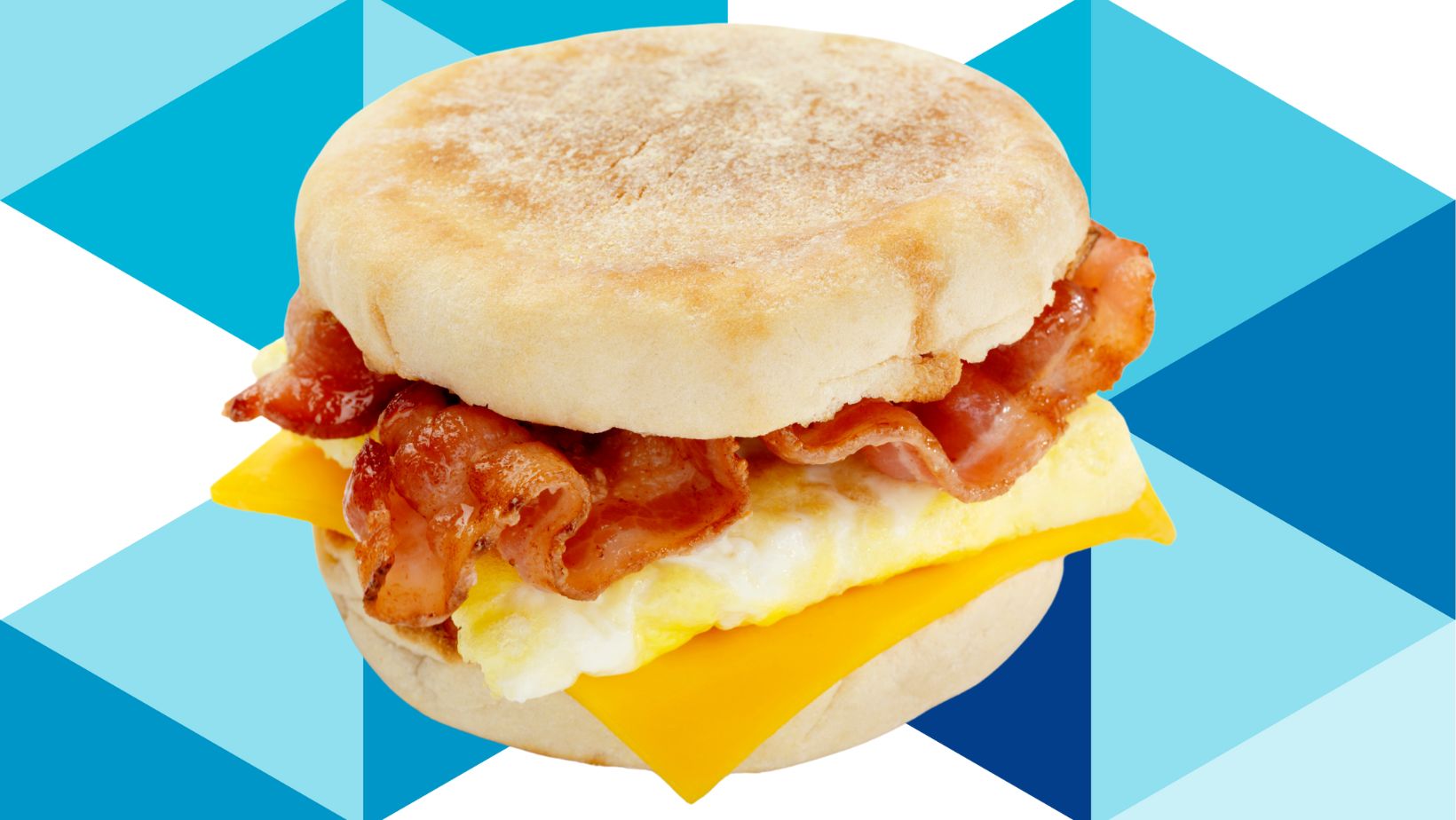
Breakfast is the most important meal of the day. You’ve heard it, I’ve heard it, my stomach’s heard it, too. But my stomach doesn’t care, and I’m not alone. According to the American Journal of Clinical Nutrition, a quarter of Americans skip breakfast.
So what are we doing to ourselves? Well, it depends on whom you ask.
According to Dr. Emily Cooper of Cooper Center for Metabolism, you aren’t doing yourself any favors by skipping breakfast. “When people skip breakfast, a good percent will start disruption in insulin secretion,” Cooper said. In other words, low blood sugar, which can cause fatigue, brain fog and “exaggerated emotional response,” also known as a crappy mood. Having a meltdown? Maybe you just need a smoothie, according to Cooper’s thinking.
Advertisement
People have many reasons for skipping breakfast — they’re rushing to get out the door in the morning, they don’t have reliable food access or maybe, like me, their circadian rhythm is such that their ghrelin — that’s the hunger hormone — doesn’t kick in till later. Cooper doesn’t care. Skipping breakfast is a deal-breaker for her patients.
She practices what she preaches. She’d already had “two pieces of good local bakery sourdough whole grain toast with tahini and apricot jam” and was enjoying a bowl of raisins before 7 a.m. when I spoke to her. That’s complex carbs, protein, iron and healthy fats.
But not every breakfast choice wears that kind of halo. Sugary cereal and processed meats, for example, deliver calories but few nutrients. Even so, Cooper says bad breakfast beats no breakfast.
“If you don’t get enough to eat early in the day, ghrelin levels rise later. Your body is trying to make up for all the stuff you’ve missed,” she explained.
Advertisement
You’re hungry, even hangry, which can lead to making poor choices. You’re liable to grab something that gives you the immediate lift you need, maybe an iced Frappucino, extra whip. So here you are mid-morning, loaded with calories, fizzing with caffeine and sugar, but without enough nutrients to sustain you. You’re a hot mess for your 3 p.m. Teams meeting.
Keep that roller-coaster pattern up, and, studies indicate, including one from Cleveland Clinic, you’re looking at potential weight gain and diabesity — obesity-caused diabetes. That morning toast sounding better to you?

Iryna Veklich via Getty Images
Dr. Jonathan Rosand has seen those studies, too. As co-founder of Massachusetts General’s McCance Brain Care Center and professor of neurology at Harvard Medical School, it’s his business to understand factors that may lead to depression, stroke and dementia. Does skipping breakfast make the list?
When I spoke to Rosand, he had eaten his oats this morning but said it’s OK that I hadn’t. He said, “I don’t know. There’s a lot of evidence” between missing breakfast and cognition. In other words, skipping breakfast won’t make me stupid. Unlike Cooper, he focuses not on the when but the what: “Getting more stuff that’s good for you — a diet rich in vegetables and leafy greens,” as well as other foods linked to brain health, including fatty fish, berries and walnuts, which are rich in omega-3s and — caffeine fans, rejoice! — coffee and tea.
Advertisement
Check in with yourself, Rosand advises. “How do you feel? Are you cloudy? Clear?” If you’re feeling fine, don’t worry.
But Rosand suggests that breakfast isn’t a bad idea for children, teens and anyone with health issues. Science backs him up on this. The American Academy of Pediatrics has found that kids who eat breakfast typically learn better at school, have fewer behaviour issues and buck the teen obesity trend by maintaining a healthy weight.
Despite that, many of Yasi Ansari’s younger patients regularly skip breakfast. For Ansari, a registered dietitian nutritionist in Los Angeles, it’s a concern. “The problem with not getting our needs met, especially in the adolescent years, is that it can lead to unhealthy eating habits, unhealthy relationships with food,” she said. “Not getting their needs met during this time period can also put individuals at risk of stunting their growth and not being able to perform their best in the classroom or out on the field.”
But, she admitted, the data is inconclusive. When working with patients, she considers other factors: “Are they meeting enough of their nutrition needs throughout the rest of the day? Do they make time for movement in their day? Are they getting enough sleep? Is there a work-life balance? What do foods at lunch and dinner look like?” Ansari advises eating “at regular intervals,” but just as important is to “listen to what your body needs.”
Rosand agrees. “Listening to your appetite — that’s helpful,” he said. “Much of what you’re inclined to do for your body is probably OK.”
Advertisement
And now the big IF is intermittent fasting. This eating trend du jour indicates fasting, skipping meals or stretching out the time between them forces your body to work more efficiently, so you’re running on ketones and fatty acids for energy, not glucose (sugar). Most people choose to stop eating around 8 p.m. and not eat again until noon the following day, meaning they skip breakfast.
Intermittent fasting isn’t proven for weight loss, but studies like one in the New England Journal of Medicine show it can benefit the body. It decreases the risk of major diseases, including diabetes, reduces inflammation, and potentially leads to living healthier and longer.

JGI/Jamie Grill via Getty Images
Does skipping breakfast mean you’re in the ketone-burning club? Quite possibly. And it’s the most common way to practice intermittent fasting. Just don’t tell Cooper. “I’ve never been a fan. All these kinds of trends people get into — nothing good comes of it. It doesn’t make metabolic sense.”
If you’re a member of the breakfast-skipping tribe, you’re in good company.
St. Thomas Aquinas wasn’t a morning meal fan either. He believed breakfast led to gluttony, one of your seven deadly sins, and was immoral. Pete Wells, the New York Times restaurant critic, doesn’t think breakfast is immoral, but he just doesn’t eat it. Stands to reason. He tastes food — a lot of it — for a living. It’s not what he wants to do on his time off.
Advertisement
If you’re expecting a lecture from nutrition and public health expert Marion Nestle, guess again. Nestle doesn’t do breakfast, either. “I prefer eating when I’m hungry, and I rarely get hungry before 10:30 or later,” she said.
As for all those studies talking about breakfast being the most important meal of the day, Nestle advises reading the fine print. Who’s funding the study? Money for The International Breakfast Research Initiative, an exhaustive database of breakfast patterns and outcomes, came from Cereal Partners Worldwide in the U.S. and Canada by General Mills.
To eat breakfast or not to eat breakfast?
“One of the challenges when counselling people on a diet is our all-or-nothing culture,” Rosand said. “That’s not how we live.”
Do you want to start eating breakfast? Great! “Make small changes over the course of weeks, months,” Rosand added. “Look for ways to improve.”
Still not sold on the benefits of breakfast? That’s fine, too. “The goal is to feel comfortable, take better care of ourselves,” Rosand said. “Let’s give ourselves a break.”
Advertisement