Ketanji Brown Jackson Makes History As First Black Woman On US Supreme Court

The Senate confirmed Ketanji Brown Jackson to the Supreme Court on Thursday, making her the first-ever Black woman and former public defender to serve on the nation’s highest court.

Jackson, 51, was confirmed in a 53-47 vote. Every Democrat voted for her, along with three Republicans: Sens. Lisa Murkowski (Alaska), Susan Collins (Maine) and Mitt Romney (Utah). When the vote was over, the Senate chamber erupted with cheers and applause from the balcony.

Jackson’s confirmation seals a promise by President Joe Biden, who vowed as a candidate to pick a Black woman for the Supreme Court.

With Jackson on the court, white men will not be a majority of justices for the first time ever.

It’s hard to overemphasize how total the control white men have had on the court for essentially all of U.S. history. Since the Supreme Court was established in 1789, 108 of 115 justices have been white men.

Justice Sonia Sotomayor, who is the first Hispanic member of the court, has talked about the benefit of diversity on the bench, saying that a “different perspective can permit you to more fully understand the arguments that are before you and help you articulate your position in a way that everyone will understand.”

“In the 233-year history of the Supreme Court, never — never — has a Black woman held the title of ‘Justice,’” Senate Majority Leader Chuck Schumer (D-N.Y.) said ahead of Jackson’s vote. “This milestone should have happened generations ago — generations ago — but we are always trotting on a path towards a more perfect union. Nevertheless, America today is taking a giant step towards making our union more perfect.”

In yet another historic moment, Vice President Kamala Harris, the first Black woman to serve in this post, presided over Jackson’s confirmation vote.
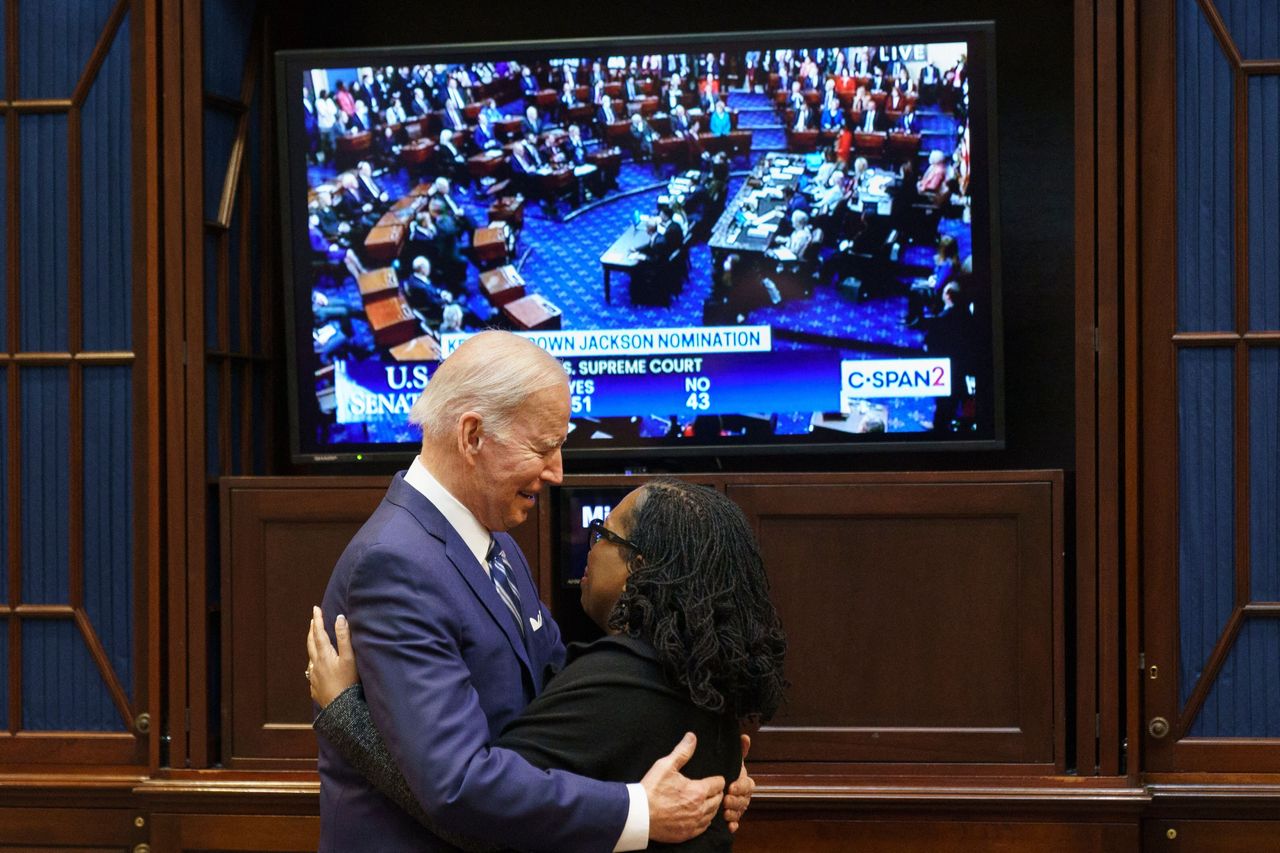
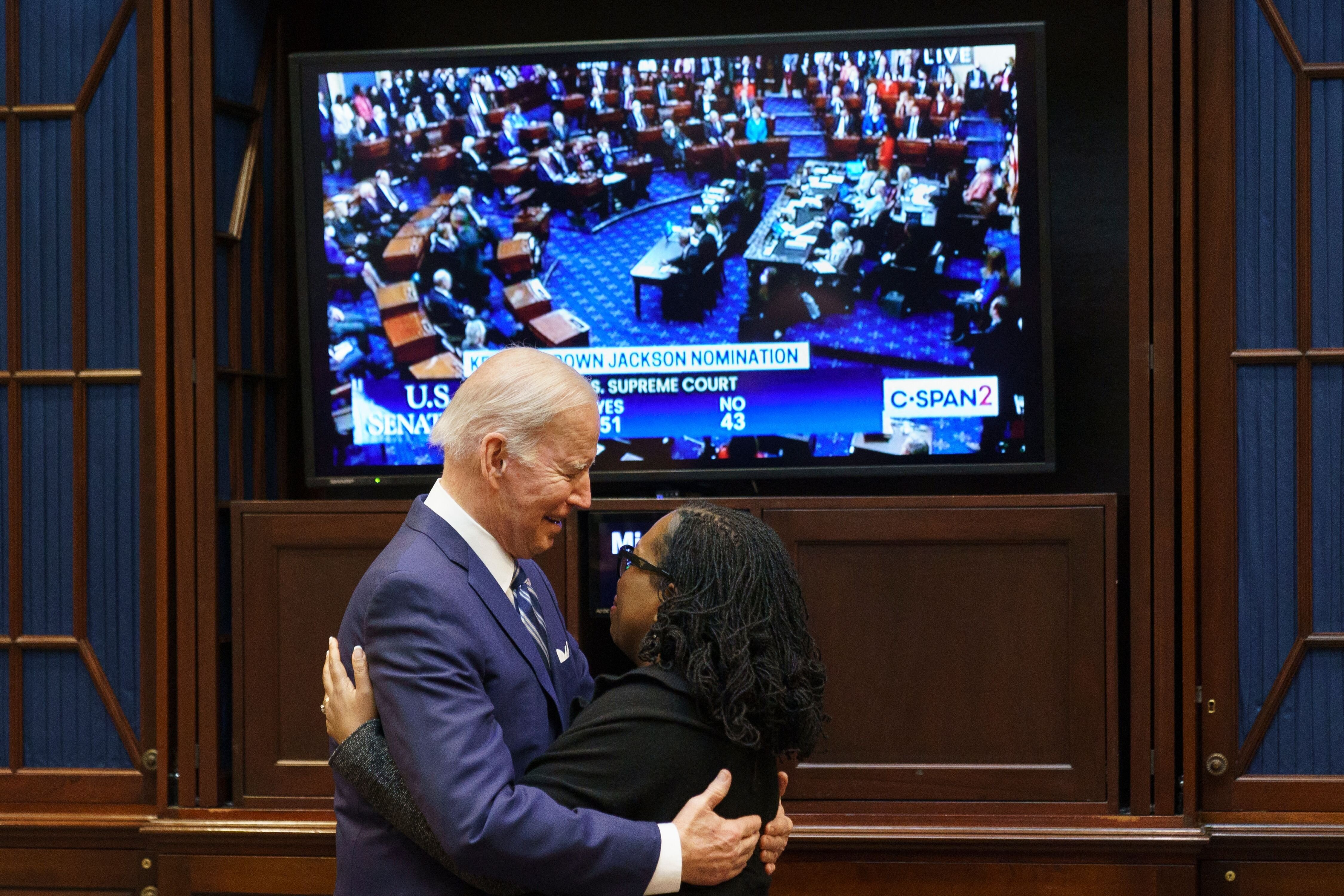
President Joe Biden and Judge Ketanji Brown Jackson watch her Senate confirmation vote together at the White House.

MANDEL NGAN via Getty Images

Jackson, who has been a federal judge for nearly a decade and comes in with an exceptional resume, endured ridiculous and ugly attacks by Republicans during her confirmation process — despite the fact that most of those GOP senators had previously voted to confirm her one, two or even three previous times to other judgeships or the U.S. Sentencing Commission.

Several falsely accused her of being lenient on child sex offenders as a judge, even though they know her record is well within the mainstream. They mocked her for declining to define a “woman” during her confirmation hearing — an attempt to bait her into a contentious debate about transgender people — even though those same Republicans flailed when asked by HuffPost how they would define “a woman.”

Sen. Tom Cotton (R-Ark.) falsely claimed that Jackson likes to help terrorists, and said she would have defended Nazis at Nuremberg. His absurd leap echoes a GOP theme dwelling on Jackson’s stint as a public defender representing Guantanamo Bay detainees accused of terrorism. As a public defender, Jackson did not pick her clients.

Sen. Ted Cruz (R-Texas) made a show of grilling Jackson on whether she thinks “babies are racist,” waving an anti-racism children’s book in the air as he tried to tie her to the GOP’s misleading attacks on an academic discipline known as critical race theory. (Cruz’s effort to smear that book ended up making it a No. 1 bestseller on Amazon.)

But Jackson navigated her hearing with grace and composure, with even some of her toughest GOP critics admitting they were impressed by her. She had staunch defenders around the country who were glued to the hearings and even went to the Supreme Court to rally in support.

By the end of Jackson’s two full days of being grilled by the Senate Judiciary Committee, Sen. Cory Booker (D-N.J.), the only Black member of the panel, delivered an incredible speech that brought her to tears as he talked about the “joy” that her critics can’t take from him as he watches Jackson make history on the court.

“I’m not letting anybody in the Senate steal my joy,” Booker said emphatically.

“You’re a person who is so much more than your race and gender,” he told Jackson. “You have earned this spot. You are worthy. You are a great American … You’re here. And I know what it’s taken for you to sit in that seat.”

Booker said Harriet Tubman has long been his “harbinger of hope,” and now, Jackson is, too.

“This country is getting better and better and better,” he said, becoming emotional. “When that final vote happens, and you ascend onto the highest court in the land, I’m going to rejoice. And I’m going to tell you right now: The greatest country in the world, the United States of America, will be better because of you.”

Share Button

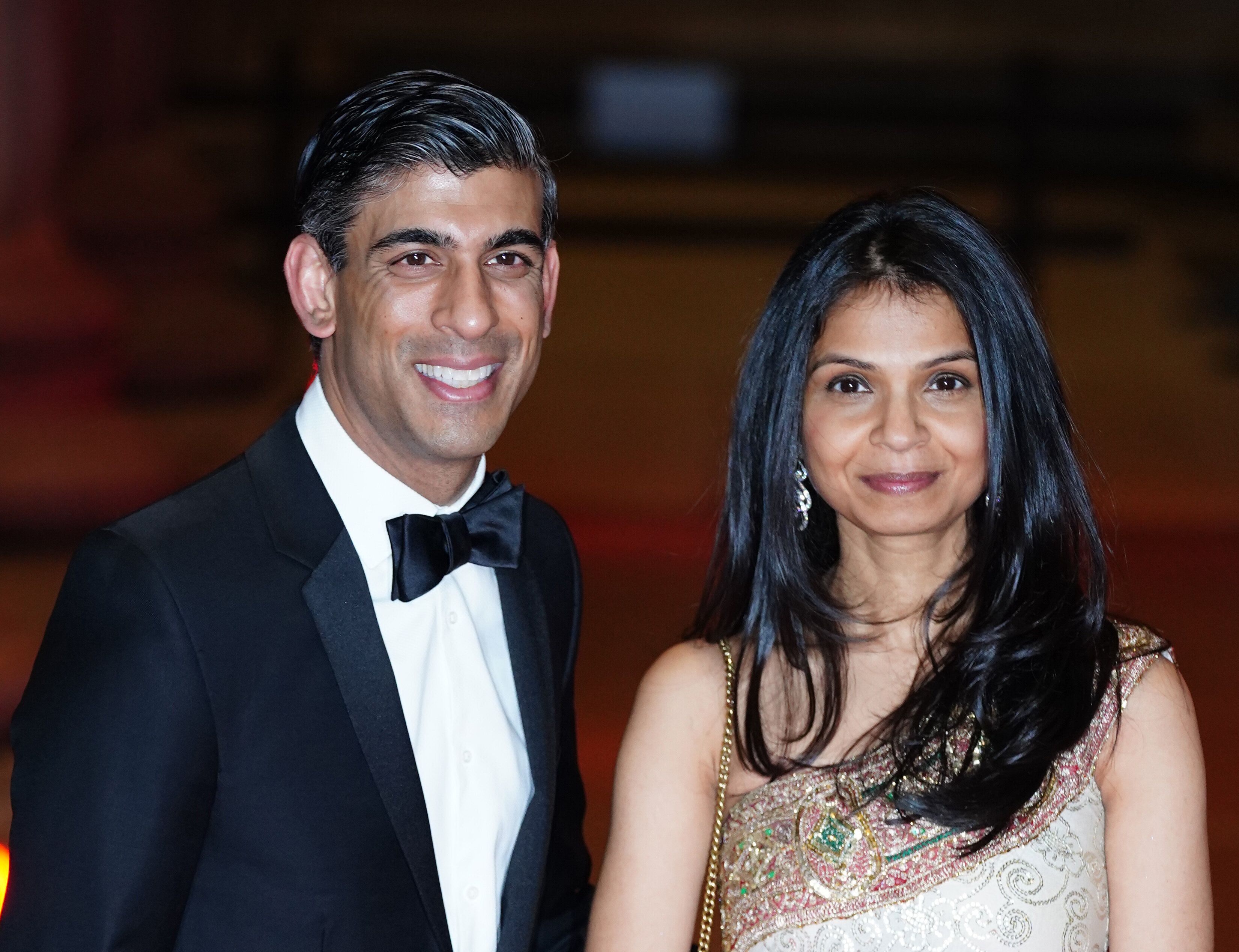
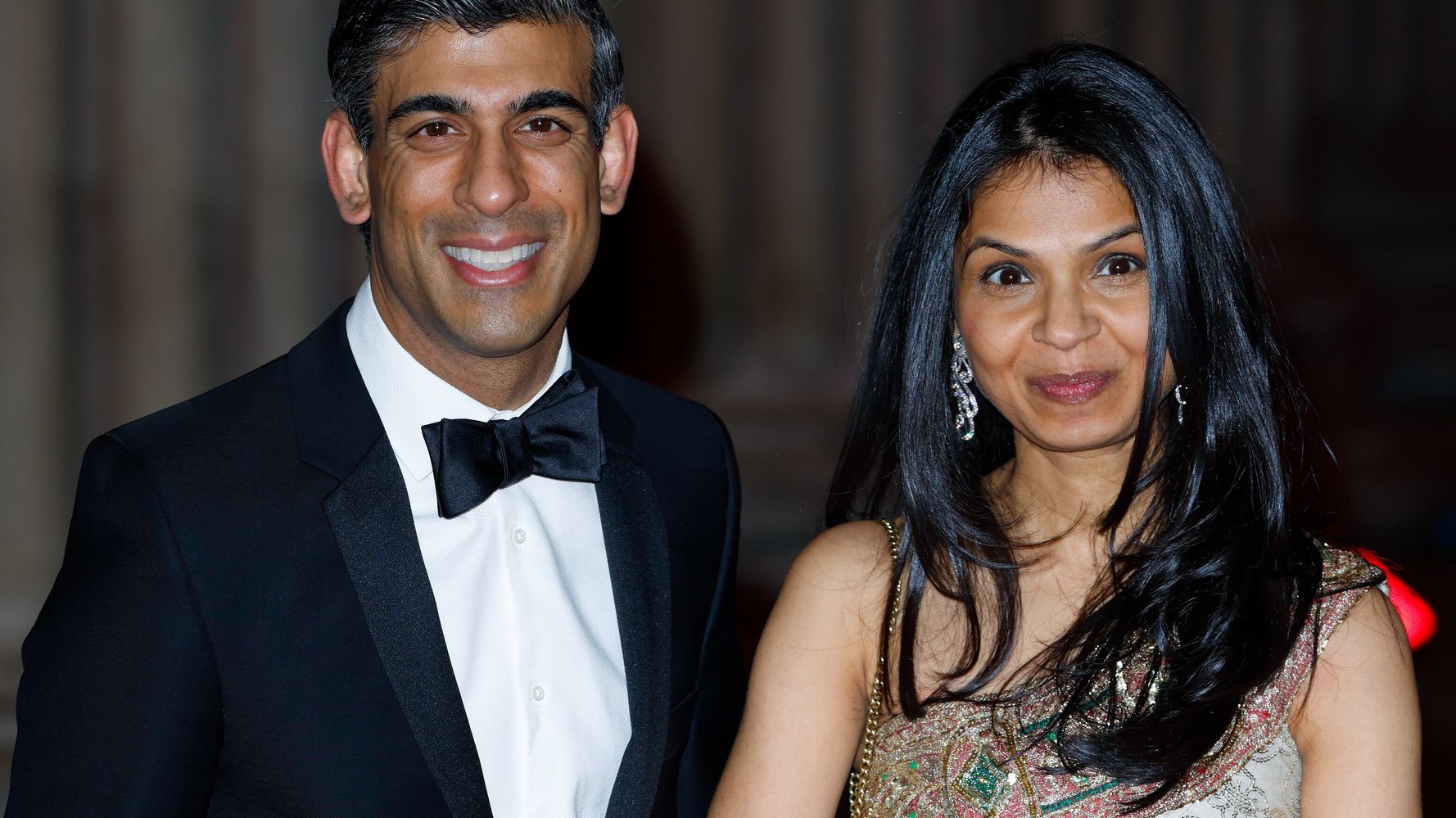
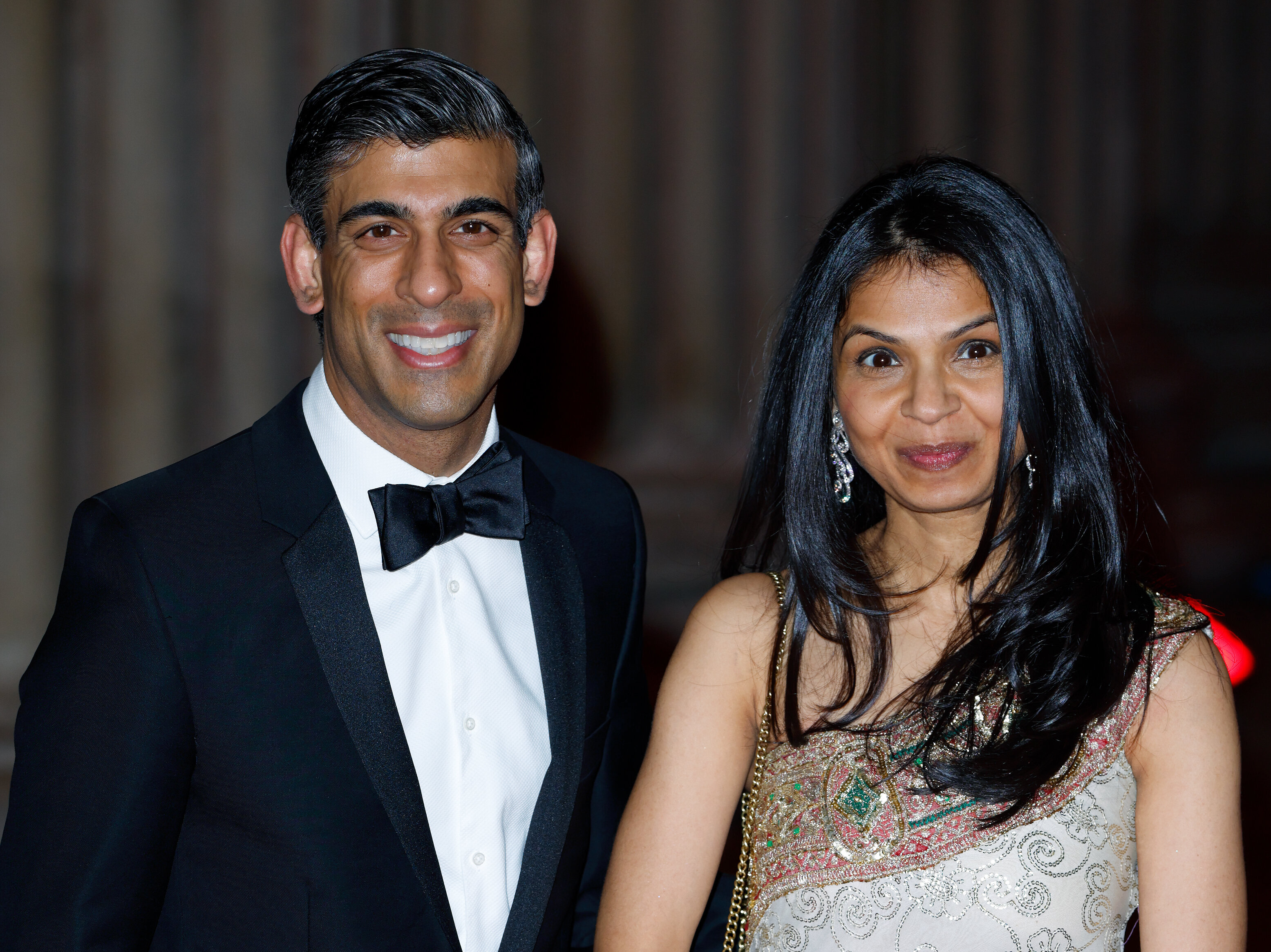
12 Key Questions For Rishi Sunak Over His Wife’s Non-Dom Status

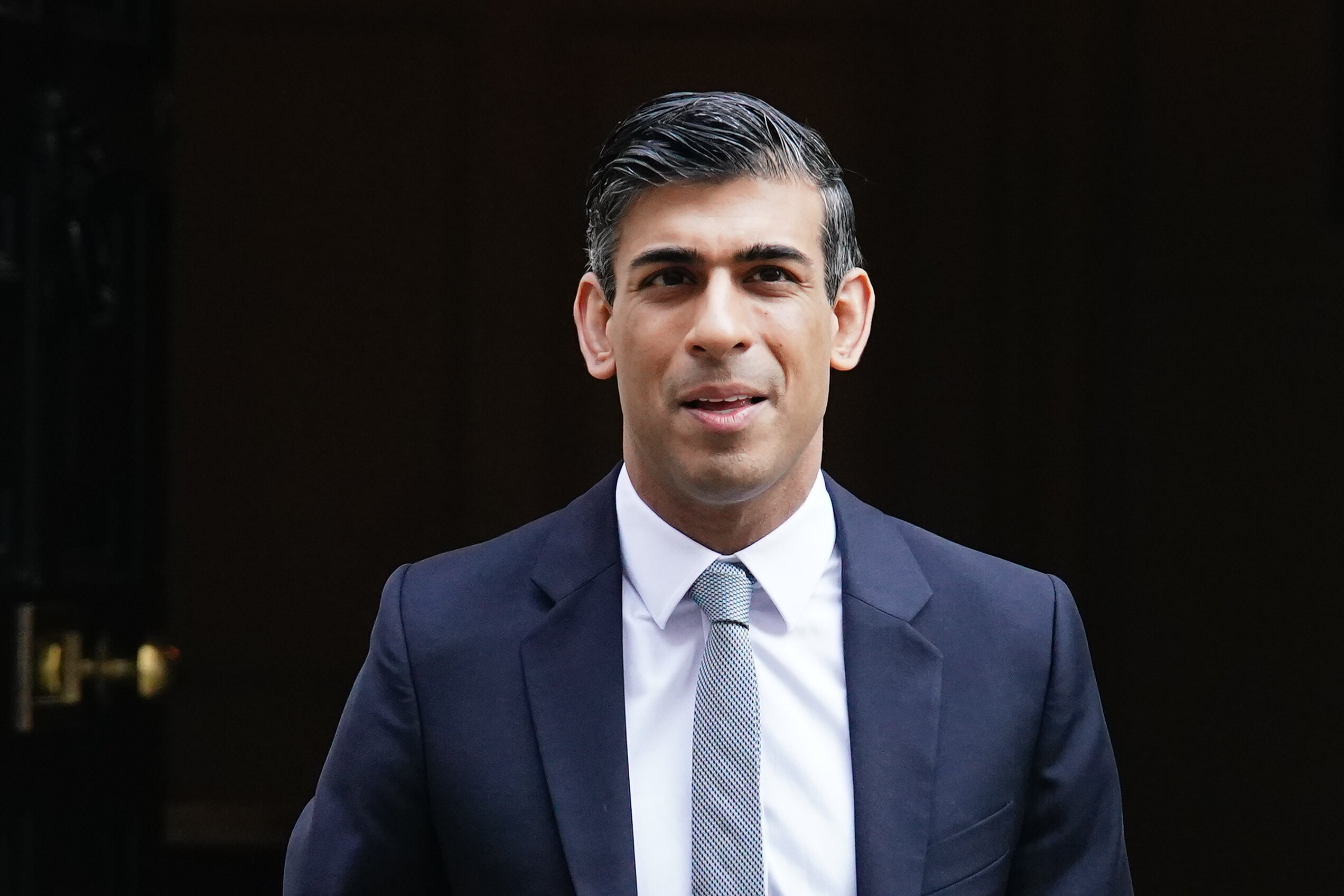
Chancellor Rishi Sunak is under fire after it was revealed his wife has “non-dom” status.

It means Akshata Murthy, daughter of an Indian billionaire, can earn money from abroad free of UK tax.

A non-domiciled tax status is designed for individuals whose permanent home is not the UK.

Murthy, who lives in Downing Street with her husband, said she has the status because of her Indian citizenship as the country does not allow its citizens to hold dual nationality.

However, some experts argue there are ways she can remain an Indian citizen while ending her non-dom status.

There is no suggestion any laws or rules have been broken, however Labour leader Sir Keir Starmer has described the arrangement as appearing to represent “breathtaking hypocrisy”.

A Treasury spokesman has insisted that Sunak has “followed the ministerial code to the letter in his declaration of interests”.

The code states that, on appointment to each new office, ministers must provide their permanent secretary with a full list of all interests which might be thought to give rise to a conflict – including the interests of their spouse, partner or close family.

Labour is arguing that her non-domicile status is a matter of public interest because the chancellor may have directly benefitted from it.

They have written to Sunak with 12 questions, they include:

1. How much have you benefited from Murthy’s tax status as a ‘non-dom’?

2. Has Murthy ever claimed the remittance basis?

3. Do you accept that claiming the remittance basis was an active choice by Murthy, and not [as her spokesperson claimed yesterday] something that followed automatically from her citizenship?

4. What is Murthy’s claimed domicile?

5. On what basis is it not the UK, given her life suggests she intends to permanently remain in the UK?

6. For how long has Murthy been claiming the remittance basis? Companies House filings say Murthy has been living in the UK since at least 2013.

7. How much tax has been saved by claiming the remittance basis?

8. Where are all of Murthy’s non-UK income and gains fully taxed?

9. Does Murthy hold investments/property through trusts or companies in offshore jurisdictions?

10. When Murthy hits 15 years of being in the UK, she will cease to be entitled to claim the remittance basis. Often the wealthy avoid the resultant tax by putting their assets into trusts before the expiry of the 15 years. Will she commit not to do that?

11. Do you as chancellor support the claim of Murthy’s spokesperson that her Indian citizenship means she must be treated as non-domiciled for UK tax purposes?

12. What measures have you as chancellor put in place to ensure that you are not involved in Treasury discussions around potential amendments to the non-domicile status rules?

A Treasury spokesperson has not responded to a HuffPost UK request for a response to the questions.

Share Button

UK Energy Strategy: Boris Johnson Puts Faith In Nuclear And Offshore Wind

Nuclear and offshore wind power are at the heart of the government’s long-awaited energy strategy that has been given added weight by the cost of living crisis and the war in Ukraine.

Ministers are promising “cleaner and more affordable energy” – but the plan has been criticised for being cool on the expansion of onshore wind given its unpopularity in rural Tory heartlands.

Central to the thinking behind the plan is to reduce the UK’s dependence on foreign sources of energy – an issue that has been brought into sharp focus by the reliance on Russian oil and gas since the Kremlin’s invasion of Ukraine.

Rocketing energy bills faced by families, caused in part by a post-pandemic rise in demand for gas and lower levels of production, has also put Boris Johnson under pressure to respond decisively.

Under the government’s fresh plans, a new body, Great British Nuclear, will be launched to bolster the UK’s nuclear capacity with the hope of up to 24 gigawatts (GW) of electricity by 2050 coming from the source of power. That would represent 25% of the projected electricity demand.

It is hoped the focus on nuclear will deliver up to eight reactors – equivalent to one reactor a year instead of one a decade.

The strategy also confirmed the intention to push ahead with a nuclear project at the Wylfa sites in Anglesey.

On offshore wind, the plan outlines the ambition of producing up to 50GW of energy by 2030, which the Department for Business, Energy and Industrial Strategy said would be more than enough to power every home in the UK.

Some 5GW should come from floating offshore wind in deeper seas and planning reforms will slash approval times for new wind farms from four years to one year.

It is thought a major crunch point in the strategy, and one of the reasons its launch has been delayed, is wrangling over onshore wind farms.

Several ministers have aired views backing the development of new oil and gas, but not onshore wind, which is one of the cheapest forms of electricity.

The government said it would be “consulting on developing partnerships with a limited number of supportive communities who wish to host new onshore wind infrastructure in return for guaranteed lower energy bills”.

The cautious wording squares with comments made by Tory ministers in recent days. Transport secretary Grant Shapps said he did not favour a vast increase in onshore wind farms as he said they “can create something of an eyesore”.

Labour said the prime minister had “caved to his own backbenchers” and that the plan would do nothing to help the rising energy costs faced by households.

Johnson said: “We’re setting out bold plans to scale up and accelerate affordable, clean and secure energy made in Britain, for Britain, from new nuclear to offshore wind, in the decade ahead.

“This will reduce our dependence on power sources exposed to volatile international prices we cannot control, so we can enjoy greater energy self-sufficiency with cheaper bills.”

The government has already commissioned a review into the science around fracking, which could pave the way to lifting the moratorium on the controversial process, imposed over the tremors it caused.

A £30m competition to manufacture heat pumps is also to be launched, and there are ambitions to increase solar capacity with a consultation of the rules for solar projects.

Meanwhile, on oil and gas, a new licensing round for new North Sea oil and gas projects is planned for the autumn to cover the “nearer term”.

The plan was welcomed by offshore wind firm Orsted, trade association Hydrogen UK, Shell and EDF, among others.

But Ed Miliband, Labour’s shadow climate change and net-zero secretary, said: “The government’s energy relaunch is in disarray.

“Boris Johnson has completely caved to his own backbenchers and now, ludicrously, his own energy strategy has failed on the sprint we needed on onshore wind and solar, the cheapest, cleanest forms of homegrown power.

“This relaunch will do nothing for the millions of families now facing an energy bills crisis.

“No reversal of the ban on onshore wind and not a penny more on energy efficiency.

“These decisions will force households to pay hundreds of pounds more for their energy bills and keep the UK dependent on imported gas for longer.”

Liberal Democrat leader Sir Ed Davey said the plans were “utterly hopeless”.

Climate think tank E3G said the announced plans had “failed to support the action needed to either get off Russian gas this year or bring down energy bills”.

Ed Matthew, campaigns director at E3G said: “With no new support to save energy and by holding back on solar power and onshore wind, this strategy will do nothing to help the UK get off Russian gas this year.

“Instead, the government has prioritised policies that will keep us dependent on high-cost fossil fuels and nuclear power.

“This isn’t an energy security strategy and will do nothing to bring down energy bills.

“It is a national security threat and the person who will be happiest with it is Vladimir Putin.”

Share Button

Embarrassment For Rishi Sunak As Wife’s Non-Dom Tax Status Is Revealed

Rishi Sunak’s wife has non-domicile status, allowing her to avoid paying UK taxes on her overseas earnings.

In a major embarrassment for the chancellor, a spokesperson for Akshata Murty confirmed the arrangement, saying it was a result of her Indian citizenship.

“India does not allow its citizens to hold the citizenship of another country simultaneously,” the spokesperson said.

“So, according to British law, Ms Murty is treated as non-domiciled for UK tax purposes. She has always and will continue to pay UK taxes on all her UK income.”

She has a stake in her billionaire father’s IT services company Infosys, from which she receives a multi-million pound annual dividend.

Labour called on Sunak to reveal how much UK tax Murty’s non-dom status has allowed her to avoid, amid reports that it could run into the millions of pounds.

Tulip Siddiq, shadow economic secretary to the Treasury, said: “The chancellor has imposed tax hike after tax hike on the British people. It is staggering that – at the same time – his family may have been benefitting from tax reduction schemes.

“This is yet another example of the Tories thinking it is one rule for them, another for everyone else.

“Rishi Sunak must now urgently explain how much he and his family have saved on their own tax bill at the same time he was putting taxes up for millions of working families and choosing to leave them £2,620 a year worse off.”

It is understood Sunak declared his wife’s tax status to the Cabinet Office when he first became a minister in 2018.

It is not the first time that Murty’s financial arrangements have been called into question in recent days.

Last week, Keir Starmer urged the chancellor to “come clean” about any links his wife’s family business has with Vladimir Putin.

The Labour leader said it would be wrong for the chancellor’s household to be “benefiting” from any money coming from Russia while the government is imposing sanctions on its regime.

Sunak, who has urged companies to pull out of the country in order to squeeze the Russian economy, has said his wife should not be subjected to political attacks.

The chancellor’s personal popularity has taken a nosedive in recent weeks as the cost of living crisis bites.

Although he cut fuel duty by 5p and raised the threshold at which workers start paying national insurance, he has been accused of failing to do enough to tackle soaring energy bills.

Meanwhile, millions of workers and their employers are braced for a 1.25 percentage point hike in the national insurance bills.

Share Button

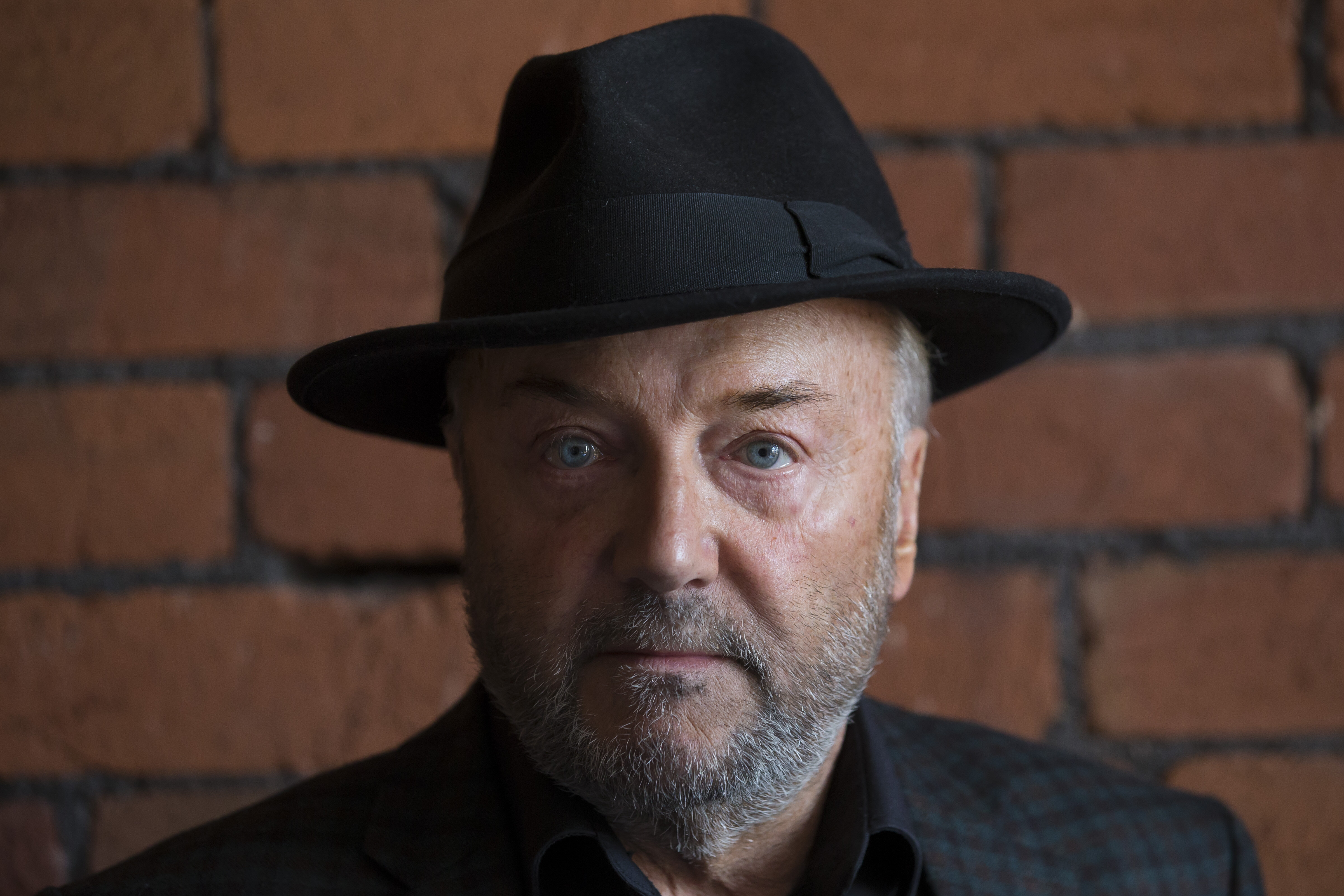
George Galloway’s Twitter Account Labelled ‘Russian State-Affiliated Media’ – And Ex-MP Threatens To Sue

The Twitter account of George Galloway has been labelled “Russia state-affiliated media” – and the former Labour MP is furious about it.

Galloway, who presented the Mother of All Talk Shows on Radio Sputnik, which is owned by the Kremlin, said he would sue the social media giant over the marking.

In an angry message, the politician-turned-commentator urged Twitter to take down the message which was applied to his account.

“I am not ‘Russia state affiliated media’,” he complained.

“I work for NO #Russian media. I have 400,000 followers. I’m the leader of a British political party and spent nearly 30 years in the British parliament.

“If you do not remove this designation I will take legal action.”

Galloway has been a contributor for RT, formerly known as Russia Today, which recently had its licence revoked in the UK by regulator Ofcom.

He has presented The Mother of All Talk Shows on Radio Sputnik since 2019.

Galloway – a Labour MP until he was expelled in 2003, and most recently MP until 2015 for the Respect party – also presented Sputnik: Orbiting The World With George Galloway each week with his wife Gayatri.

When it was pointed out references to the Russian-backed media had been removed from his Twitter profile page, Galloway responded: “I deleted it because it no longer exists. The show, the channel, are closed by government edict.”

Galloway later tweeted with reference to new Twitter shareholder Elon Musk: “It’s Kafkaesque really. When I did present on #Russian state media I had NO Twitter designation. Now that I don’t can’t and would be committing a crime if I did I have been given the designation. Shome mishtake shurely @elonmusk.”

On Tuesday, Twitter announced that the platform would no longer “amplify or recommend government accounts belonging to states that limit access to free information and are engaged in armed interstate conflict”.

In a statement last month, broadcasting watchdog Ofcom said RT was not “fit and proper”, given its close links to the Russian state.

The move followed accusations that the channel was promoting pro-Putin propaganda about the war in Ukraine.

It has been unavailable to British viewers since earlier in the month as a result of a ban imposed by the European Union.

Ofcom chief executive Dame Melanie Dawes said: “Freedom of expression is something we guard fiercely in this country, and the bar for action on broadcasters is rightly set very high.

“Following an independent regulatory process, we have today found that RT is not fit and proper to hold a licence in the UK. As a result we have revoked RT’s UK broadcasting licence.”

Share Button

Government’s Landmark LGBT+ Conference Cancelled After Conversion Therapy Ban Backlash

The UK government’s international LGBT+ conference has been cancelled amid the row over partially banning conversion therapy, multiple reports have suggested.

It comes after more than 100 organisations, including Stonewall, boycotted the landmark Safe To Be Me event, to be held in in London in June, over plans to exclude trans people from the legislation.

Earlier on Tuesday, the government’s LGBT business champion resigned in protest at the decision to water down the ban.

Boris Johnson last week changed the government’s policy twice within a matter of hours.

First, the administration said it was abandoning plans to ban the practice, with the cost of living crisis and war in Ukraine cited as reasons to “rationalise our legislative programme”.

However within hours of the announcement, it was revealed legislation would be included in the Queen’s Speech in May – but trans conversion therapy would be excluded.

Conservative MP Dehenna Davison expressed dismay at the decision to cancel the conference.

“We had such a huge opportunity to prove the UK (and the Conservative Party) is a defender of freedom,” she posted on Twitter.

“As a Conservative member of the LGBT+ community, it is so wrong it has come to this.”

The Times reported a senior Downing Street figure is said to have claimed that “the majority of people won’t care” that the event is not going ahead.

More than 80 LGBT+ groups and more than 20 HIV groups said they will not take part in the global, UK-hosted conference unless Johnson would revert to his promise for a trans-inclusive ban on conversion therapy.

Iain Anderson, the UK’s LGBT+ business champion, quit the role as he accused the government of engaging in a “woke war”.

He said ministers are trying to “drive a wedge” between the community.

Anderson added that it was “profoundly shocking” that the government had backtracked on protection for trans people during the same week that the first trans MP felt able to share his journey.

A government spokeswoman said: “We thank Iain for his contributions as LGBT business champion.

“The government has a proud record on LGBT rights and we remain committed to building upon that work with sensitivity and care.”

On Monday, the UK’s first openly trans MP has said he is “bitterly disappointed” by his own government’s decision to scrap the ban on trans conversion therapy.

Jamie Wallis, who came out last week in a heartfelt post shared on Twitter, said pressing ahead with outlawing conversion therapy – but not for trans people – would be a “broken promise”.

This is a breaking news story and will be updated. Follow HuffPost UK on Twitter, Facebook and Instagram.

Share Button

Boris Johnson Urges Russians To Sidestep State Media To Find Out About Putin’s ‘War Crimes’

Boris Johnson has urged Russian people to use alternative forms of news to find out about Vladamir Putin’s alleged war crimes, arguing they would not support the invasion and crimes that are a “stain on the honour of Russia”.

In a video message directed to the Russian population, the UK prime minister said they only needed an online VPN connection to sidestep state-controlled media and gain access to independent information from around the world.

“Your president knows that if you could see what was happening, you would not support his war,” he said.

“He knows that these crimes betray the trust of every Russian mother who proudly waves goodbye to her son as he heads off to join the military.

“And he knows they are a stain on the honour of Russia itself.”

Speaking in Russian, he added: “Your president stands accused of committing war crimes. But I cannot believe he’s acting in your name.”

His comments follow global outrage at the massacre uncovered at Bucha, a Ukrainian town, that was targeted by the Russian forces on their way to conquer Kyiv in March.

Volodymyr Zelenskyy accused Russia of committing the “most terrible war crimes” since the Second World War as he called for trials akin to those held after the defeat of the Nazis.

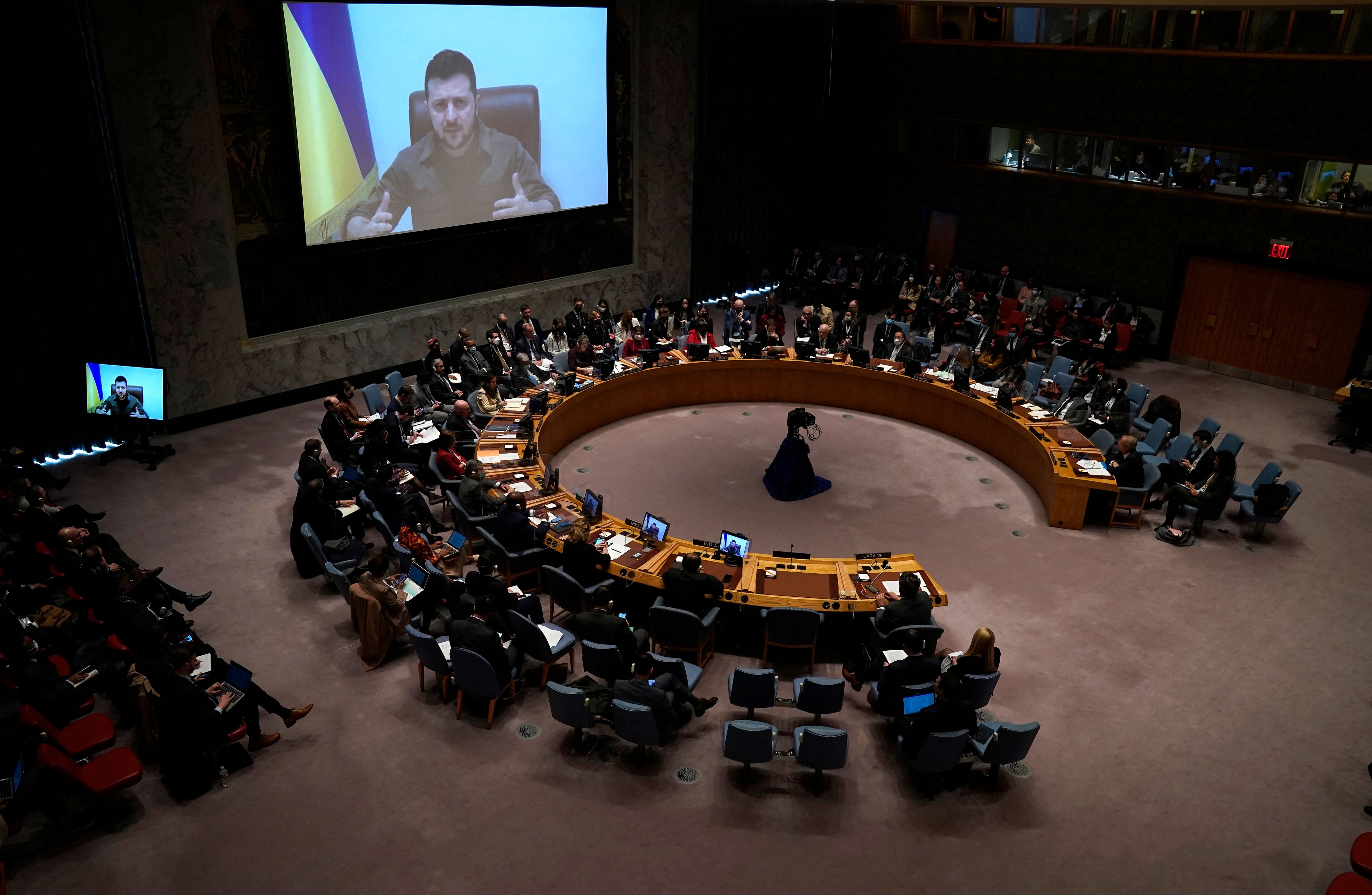
The Ukrainian president accused Putin’s forces of creating “mass starvation” and shooting and raping civilians, during a graphic address to the United Nations Security Council on Tuesday.

Russian forces then began to withdraw from the region around March 30, reportedly due to a shortage of resources, meaning journalists have been able to access to beleaguered Bucha once again.

The Associated Press released images from the town showing bodies on the Bucha streets, with their hands tied behind their backs and wounds to the back of their heads.

According to the news agency, at least 21 bodies were found, with at least nine of them in civilian clothing.

Anatoly Fedoruk, Bucha’s mayor, said more than 300 residents in the town had been killed, while Ukrainian prosecutors allege Russian forces used the basement of one house as a torture chamber.

Satellite images showed a 45ft-long mass grave in the town too.

Russia has denied any involvement and suggested the bodies were placed their strategically by the Ukrainians.

Moscow has dismissed any accusations of war crimes too, and claims “Ukrainian radicals” are responsible for the massacre in Bucha as “not a single civilian” faced violent military action from Russian forces.

<img class="img-sized__img landscape" loading="lazy" alt="President Volodymyr Zelensky, of Ukraine, addresses a meeting of the United Nations Security Council in New York City.” width=”720″ height=”469″ src=”https://www.wellnessmaster.com/wp-content/uploads/2022/04/boris-johnson-urges-russians-to-sidestep-state-media-to-find-out-about-putins-war-crimes-2.jpg”>
President Volodymyr Zelensky, of Ukraine, addresses a meeting of the United Nations Security Council in New York City.

TIMOTHY A. CLARY via Getty Images

In his message, Johnson said the reports were so shocking that Putin had deliberately sought to hide the truth from his people.

Johnson said that people only needed a VPN connection to access independent information from around the world.

“When you find the truth, share it,” he said.

“Those responsible will be held to account. And history will remember who looked the other way.”

During the UK-convened meeting of the UN’s most powerful body, whose membership includes Russia, Zelenskyy called for those responsible to be “brought to justice” in a tribunal similar to the Nuremberg trials.

He warned the world is yet to see the acts committed by the Kremlin’s troops in other regions after evidence of atrocities was unearthed after their withdrawal from Bucha, near Kyiv.

“Today, as a result of Russia’s actions in our country, in Ukraine, the most terrible war crimes we’ve seen since the end of World War Two are being committed,” he said in the virtual address.

“Russian troops are deliberately destroying Ukrainian cities to ashes with artillery and air strikes. They are deliberately blocking cities, creating mass starvation. They deliberately shoot columns of civilians on the road trying to escape from the hostilities.

“They even deliberately blow up shelters where civilians hide from air strikes.

“The massacre in our city of Bucha is unfortunately only one of many examples of what the occupiers have been doing on our land for the past 41 days.”

Share Button

What Is An NFT? Rishi Sunak Asks Royal Mint To Create A Non-Fungible Token

Chancellor Rishi Sunak has asked the Royal Mint to create a non-fungible token (NFT) which is to be issued by the summer, the Treasury said on Monday.

Critics immediately seized on the move towards a UK state-backed NFT as an example of the government being “out of touch” as the cost of living crisis puts the squeeze on households.

So what is an NFT, and why are they so controversial?

What is an NFT?

NFT stands for non-fungible token.

Things that are fungible can be swapped for an asset of the exact same type and value – traditional currencies such as the pound work like this.

When something is non-fungible, it cannot be changed this way because it is unique. Think of it like a famous painting – there will only be one original, no matter how many copies are made.

An NFT is a distinct cryptographic token that cannot be replicated, which acts as a certificate of ownership for virtual items.

What is the point?

Supporters view NFTs as the next phase in art collection, and they have exploded in popularity in recent years – with NFT artworks selling for millions of dollars.

Physical works of art and other rare memorabilia have long been sold for large sums of money but if you create something digitally it is hard to make gains.

So NFT offers a chance for artists in the internet age to make some money by selling ownership to anyone who wants it.

Selling a digital asset does not mean the original creator loses copyright either, unless it is explicitly stated as part of the sale.

Of course, this does not stop the image being easily copied by anyone online, but an NFT provides someone the honour of knowing they “own” the original image.

An NFT exists on a blockchain – a record of transactions kept on networked computers that serves as a public record allowing anyone to verify its authenticity and who owns it.

As with any blockchain system, records cannot be forged or divided, as they are logged on computers around the world that are part of the network.

What kind of NFTs exist?

All kinds of digital objects – images, videos, music, text and even tweets – can be bought and sold as NFTs.

Digital art has seen some of the most high-profile sales, while in sport, fans can collect and trade NFTs relating to a particular player or team.

NFTs can also be patches of land in virtual world environments, digital clothing, or exclusive use of a cryptocurrency wallet name.

Christie’s became the first major auction house to offer a purely digital work with NFT, selling artist Beeple’s creations for £50.5 million worth of Ether cryptocurrency.

The first tweet from Twitter boss Jack Dorsey – “just setting up my twttr” – sold for $2.9 million (£2.2 million) as an NFT in March last year.

Last month, Liverpool FC became the latest high-profile sports team to get involved with digital assets – announcing the “LFC Heroes Club” will give fans the opportunity to purchase animated, cartoon-style digital artwork of 23 players and manager Jurgen Klopp. All 20 clubs in the Premier League are reportedly exploring the possibility of launching NFTs.

<img class="img-sized__img landscape" loading="lazy" alt="Undated digital artwork issued by Liverpool Football Club of The LFC Heroes Club collection, featuring llustrations of 24 of the male squad, bringing their "individual and superhero characteristics to life".” width=”720″ height=”405″ src=”https://www.wellnessmaster.com/wp-content/uploads/2022/04/what-is-an-nft-rishi-sunak-asks-royal-mint-to-create-a-non-fungible-token-2.jpg”>
Undated digital artwork issued by Liverpool Football Club of The LFC Heroes Club collection, featuring llustrations of 24 of the male squad, bringing their “individual and superhero characteristics to life”.

LFC via PA Media

Why have NFTs surged?

Some attribute the frenzy to lockdowns, which forced people to spend more time at home on the internet.

NFTs are seen as a way to have possessions in online and virtual environments, which can communicate social status and personal taste. For some people, it is the digital equivalent of buying an expensive pair of sneakers.

For others, the lure lies in rapidly rising prices and the prospect of big returns. Some buyers “flip” NFTs, selling them on within a few days or even hours for profit.

What do critics make of it?

Like cryptocurrencies, NFTs are largely unregulated. Anybody can create and sell an NFT and there is no guarantee of its value. Losses can stack up if the hype dies down.

In a market where many participants use pseudonyms, fraud and scams are also a risk.

Given the huge number of computers needed to continuously run for a blockchain to function, there is also the environmental cost to consider.

Share Button

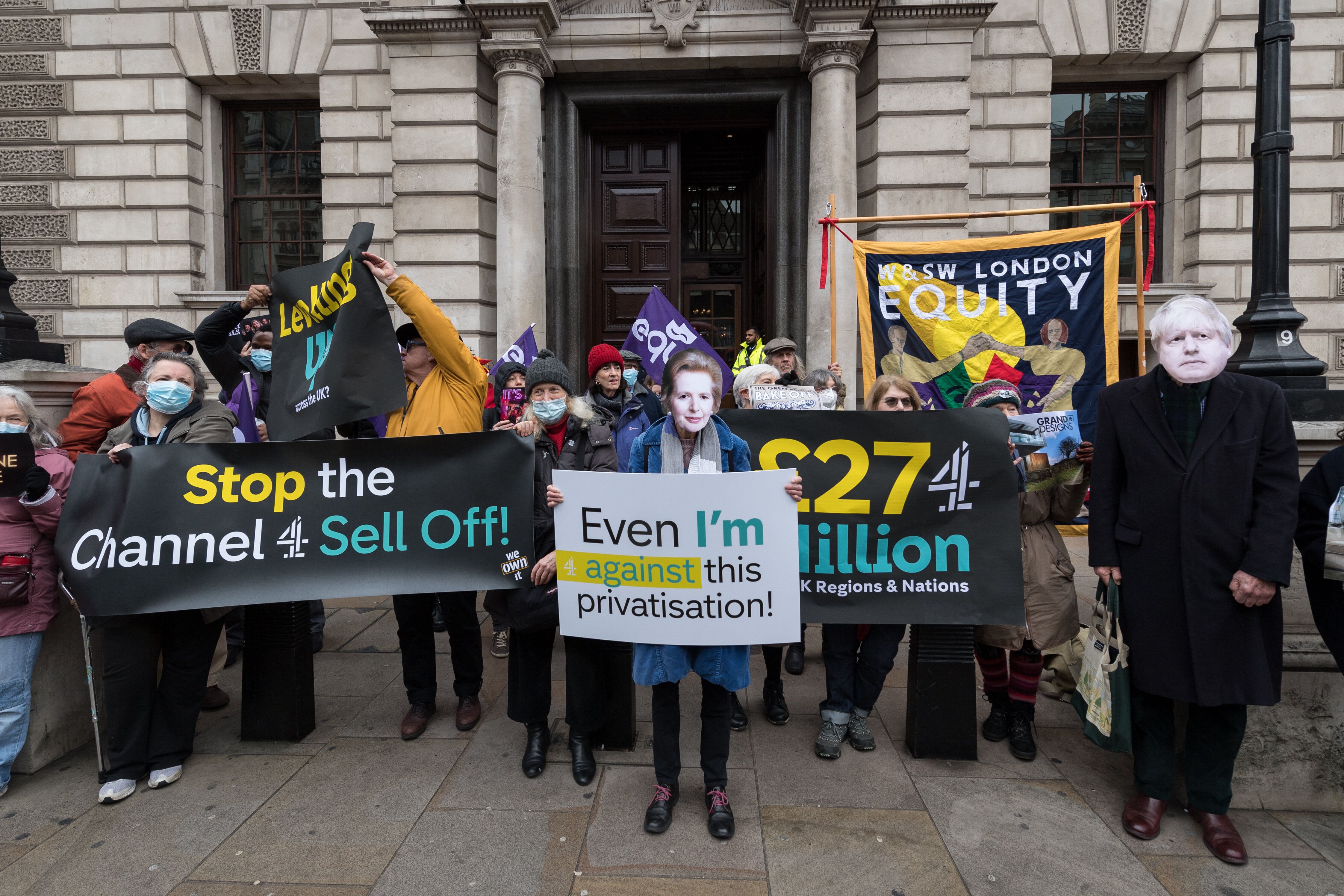
‘Cultural Vandalism’: Government Condemned As Channel 4 To Be Privatised

The government’s decision to press ahead with plans to privatise Channel 4 has been condemned as “very unconservative” by a senior Tory MP.

The channel was launched in 1982 as a publicly-owned, commercially-funded public service broadcaster with a remit to deliver content to under-served audiences.

It does not receive public funding but is ultimately owned by the government, with all money going back into the broadcaster, which commissions all of its programmes from independent producers.

On Monday, a statement by the Department for Digital, Culture, Media & Sport said the sell-off would allow the channel to “thrive in the face of a rapidly-changing media landscape” while a government source said the move would “remove Channel 4’s straitjacket”.

A spokesperson for Channel 4 said it was “disappointed” with the decision, but would “continue to engage” with ministers on the process to “ensure that Channel 4 continues to play its unique part in Britain’s creative ecology and national life”.

The move represents Boris Johnson’s government’s latest broadcasting shake-up after signalling it wants to find a new funding model for the BBC after the licence fee funding deal expires in 2027. Ministers have previously indicated Channel 4 could be sold off by the end of the current parliament in 2024.

The announcement faced an immediate backlash, with Labour calling it a “shameful decision” and even Conservative MPs joining the criticism.

Damian Green, Tory MP and a former Cabinet minister, said: “The sale of Channel 4 is politicians and civil servants thinking they know more about how to run a business than the people who run it. Very unconservative. Mrs Thatcher, who created it, never made that mistake.”

Conservative MP Sir Peter Bottomley said he opposes the privatisation as he feels it is “bad for the diversity of television, bad for viewers and bad for independent producers”.

Labour’s shadow culture secretary Lucy Powell described the move as “cultural vandalism”.

She said: “Selling off Channel 4, which doesn’t cost the tax-payer a penny anyway, to what is likely to be a foreign company, is cultural vandalism. It will cost jobs and opportunities in the North and Yorkshire, and hit the wider British creative economy.

“This shows that the Conservatives have run out of ideas and run out of road. Of all the issues the public wants action on, the governance of Channel 4 isn’t one.”

No price tag has been set by the government yet, but reports suggest the channel could be sold for as much as £1 billion in a process that could take several months, with the proposals needing to pass through both the House of Commons and Lords.

The government has been consulting on plans to privatise the broadcaster following concerns for its survival in the streaming era.

Culture secretary Nadine Dorries said in a tweet that she wanted the broadcaster to remain a “cherished place in British life”, but felt that government ownership was “holding Channel 4 back from competing against streaming giants like Netflix and Amazon”.

She added: “I will seek to reinvest the proceeds of the sale into levelling up the creative sector, putting money into independent production and creative skills in priority parts of the country – delivering a creative dividend for all.”

Channel 4 chief executive Alex Mahon has previously questioned the “logic” behind such a move and whether privatising the broadcaster would help with efforts to “level up” outside of London.

In an internal email to staff on Monday, Mahon said her priority was to “look after all of you and the wonderful Channel 4 spirit” following the announcement.

A spokesperson for Channel 4 said: “With over 60,000 submissions to the government’s public consultation, it is disappointing that today’s announcement has been made without formally recognising the significant public interest concerns which have been raised.

“Channel 4 has engaged in good faith with the government throughout the consultation process, demonstrating how it can continue to commission much-loved programmes from the independent sector across the UK that represent and celebrate every aspect of British life as well as increase its contribution to society, while maintaining ownership by the public.

“Recently, Channel 4 presented DCMS (the Department for Digital, Culture, Media & Sport) a real alternative to privatisation that would safeguard its future financial stability, allowing it to do significantly more for the British public, the creative industries and the economy, particularly outside London.

“This is particularly important given that the organisation is only two years into a significant commitment to drive up its impact in the UK’s nations and regions.”

The statement continued: “Channel 4 remains legally committed to its unique public service remit. The focus for the organisation will be on how we can ensure we deliver the remit to both our viewers and the British creative economy across the whole of the UK.

“The proposal to privatise Channel 4 will require a lengthy legislative process and political debate. We will of course continue to engage with DCMS, government and parliament, and do everything we can to ensure that Channel 4 continues to play its unique part in Britain’s creative ecology and national life.”

Share Button

Rishi Sunak Faces Backlash For Dabbling In Fashionable NFTs During Cost Of Living Crisis

Chancellor Rishi Sunak has faced criticism for joining the controversial NFT trend as the UK faces the biggest cost of living crisis in generations.

On Monday, the Treasury announced the Royal Mint had been asked to create an NFT – a non-fungible token – by the summer as part of a drive to make the UK a “global crypto asset hub”.

An NFT is a digital asset that exists on a blockchain – a record of transactions kept on networked computers that serves as a public record allowing anyone to verify its authenticity and who owns it.

While most digital items can be endlessly reproduced, each NFT has a unique digital signature – meaning it is one of a kind.

Anyone can view the NFT, but only the buyer has the status of being the official owner – a kind of digital bragging rights.

EXPLAINED: WHAT IS AN NFT?

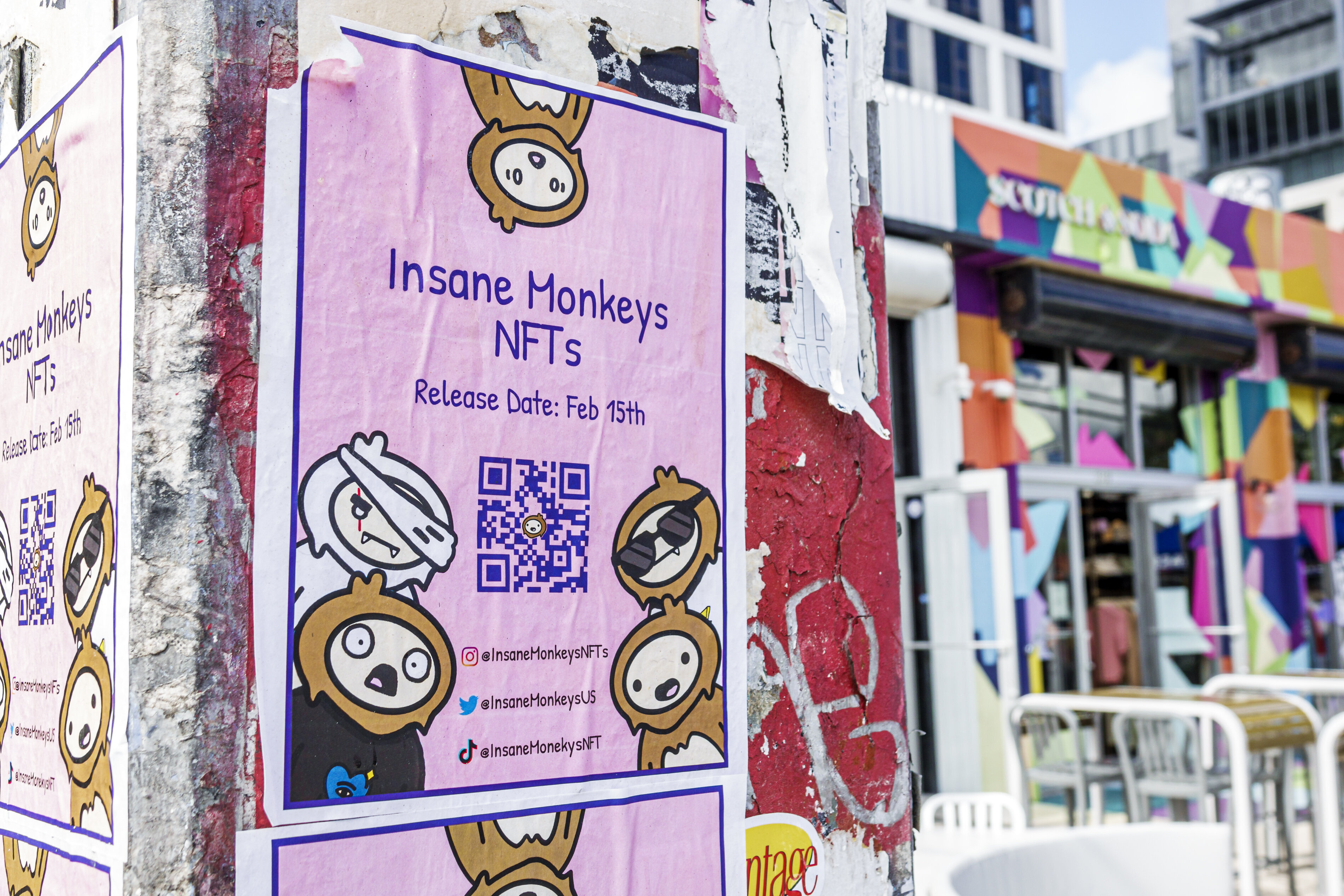
The “Bored Ape” collection of digital images is perhaps the most well-known, having been bought and traded by celebrities for tens of thousands of dollars.

Critics point to the lack of regulation of the NFT market, where many participants use pseudonyms and fraud and scams are a big risk.

The move into state-backed NFTs comes as Sunak is facing criticism for not doing enough to help British households who are facing the biggest fall in living standards since the 1950s, and spiralling energy bills that mean many people are having to choose between heating and eating.

Sunak’s reputation – a Tory leadership favourite when handing out furlough cash, now flagging amid questions about, among other things, his wife’s business links to Russia – has also been tarnished by reports he is set to spend the easter parliamentary recess in California.

Unsurprisingly, the reaction on social media was not especially positive.

Share Button