Young Brits Groomed And Killed Because System Fails Them – Damning Report Finds

Thousands of young people are being groomed, harmed and “even killed” because systems are failing them, a scathing report has found.

Primary school children are running drugs for gangs and teenagers are heading up county lines operations, according to the former children’s commissioner.

Anne Longfield is now calling on the government to create “Sure Start Plus” – a national plan to stop teenagers getting involved in gangs and violence.

Her report, Hidden In Plain Sight, warns of a crisis putting hundreds of thousands of children at risk in England.

Younger children are being targeted by gangs as well as children from typically middle class backgrounds, with social media used to lure them.
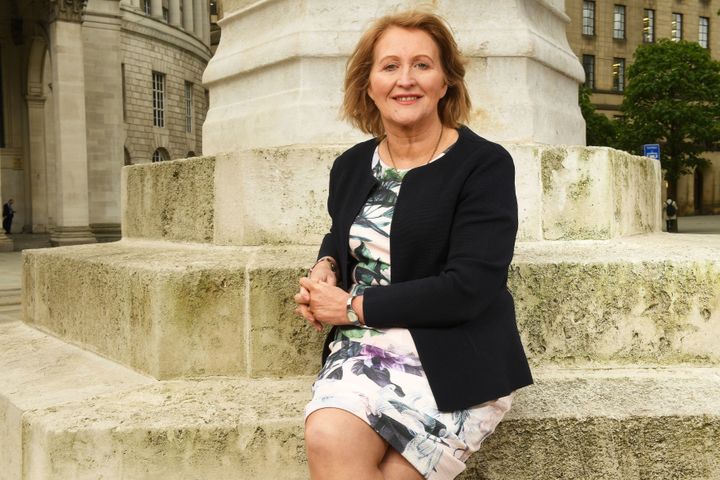
Former children's commissioner for England Anne Longfield.
Former children’s commissioner for England Anne Longfield.

Russell Sach/Children’s Commissioner for England via PA Media

The report said a combination of Covid, a cost-of-living crisis, and any return to austerity would be a “gift” to those who exploit children.

Longfield, who heads up the Commission on Young Lives, said: “There are parts of our country where the state is completely failing in its duty to protect vulnerable children from the ongoing epidemic of county lines, criminal exploitation, and serious violence.”

She described a housing estate where residents were being “terrorised” by a gang of drug dealing 14 year olds who wear balaclavas and “dish out acts of violence”.

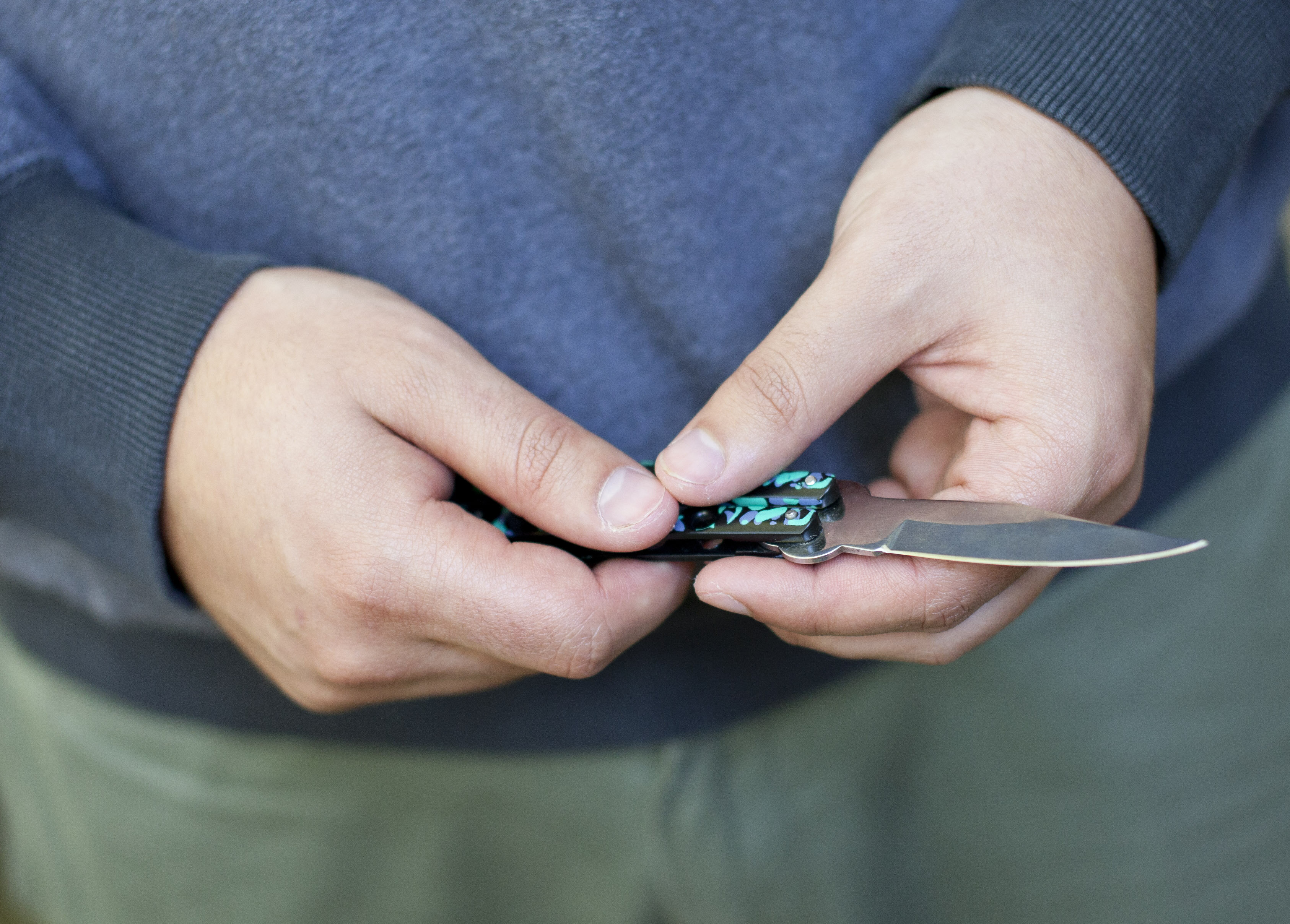
“They carried knives and other weapons, which in turn was encouraging other young people in the area to carry knives for protection,” her foreword said.

“What is happening on this estate may sound like an extreme example, but it is far from unique.

“Speak to youth workers in our towns and cities and they will tell you their own horror stories: of young people being chased in broad daylight by other teenagers waving machetes, of homes where the young people involved in the drugs trade are the main breadwinner in the family, of communities where organised criminals seek out and groom very vulnerable children who have fallen through gaps in the care, health, or education systems, almost with impunity.”

She said there were parts of the country where the state was “completely failing” in its duty to protect vulnerable children.

“So often these are already the most marginalised families. So often they are black, brown and minority ethnic. So often they are poor.”

However, she said the epidemic of country lines was not limited to inner cities, adding: “I have heard countless examples of children from suburban, middle-class England being groomed by criminals.”

Government figures covering 2021-22 show there were 11,600 instances where gangs were a factor and 10,140 instances where child criminal exploitation was a factor in assessments of children in need – which the commission believes is the tip of the iceberg.

Estimates suggest there could be as many as 200,000 children in England aged 11 to 17 who are vulnerable to serious violence.

Those most at risk are teenagers growing up in poverty, in deprived areas, and they are disproportionately from black, brown and minority ethnic backgrounds.

The commission warned that social care, education, family support, and children’s mental health systems were failing thousands of vulnerable teenagers and costing billions.

They said Sure Start Plus programmes could be partly financed by the millions of pounds recovered from the proceeds of crime every year.

They would initially be placed in the areas of greatest need and bring local services together to provide bespoke services for families and children who need it.

They are named after the New Labour “Sure Start” programme aimed at giving children the best start in life that was then scrapped by the Tory government.

The Commission suggested a one off £1 billion children and young people’s mental health recovery programme, part-financed by a levy on social media companies and mobile phone providers.

And they also called for the government to hold regular Cobra meetings to tackle the scourge of serious violence.

Labour’s shadow education secretary, Bridget Phillipson, said the Conservatives were failing children.

“12 years of Conservative neglect has eroded the systems that keep children safe and that put young people on the path to fulfilling futures, blighting lives and costing taxpayers in the process,” she said.

HuffPost UK contacted the department for education for comment.
Share Button

5 Biggest Moments From The Day As The UK Gets Its Third PM In Less Than Two Months

History was made on several accounts on Tuesday, with both Liz Truss and Rishi Sunak breaking records – albeit for very different things.

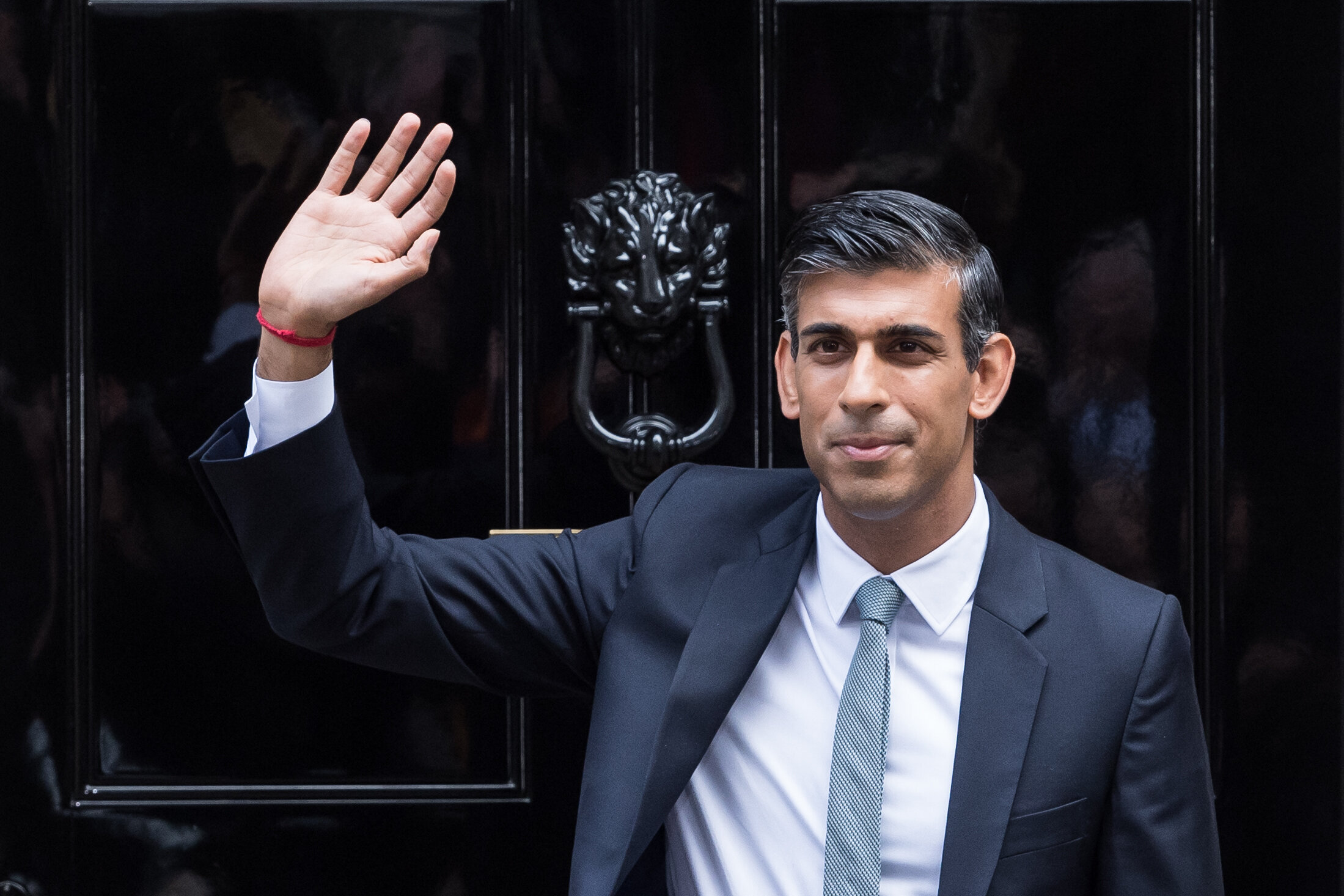
As the prime minister with the shortest time in office officially left Downing Street while the first British Asian PM took her place, this was a momentous day in politics.

On top of that, there was a dramatic reshuffle, as Sunak seeks to separate himself from the premierships of the last two prime ministers.

Here’s everything you need to know about the day.

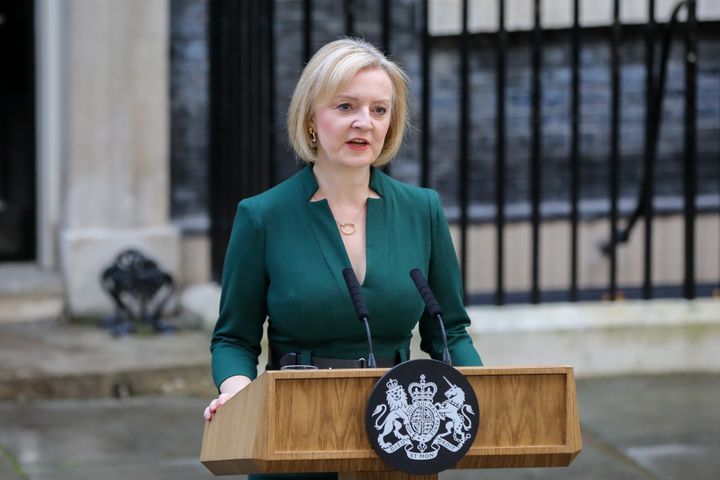
1. Liz Truss says farewell

The prime minister with the shortest tenure in UK history said goodbye to Downing Street at 10.15am.

She urged her successor to be “bold” and stick to her tax-cutting agenda, despite the economic chaos it caused and the widespread criticism it evoked.

She offered no apology in her speech and urged Sunak to focus on “growth” by cutting taxes and reducing public spending, maintaining: “I am more convinced than ever we need to be bold and confront the challenges that we face.”

Truss said: “We simply cannot afford to be a low growth country where the government takes up an increasing share of our national wealth and where there are huge divides between different parts of our country.

“We need to take advantage of our Brexit freedoms to do things differently.”

She also tried to champion her policies which the government did not U-turn on, such as assistance with energy bills, and reversing the National Insurance increase.

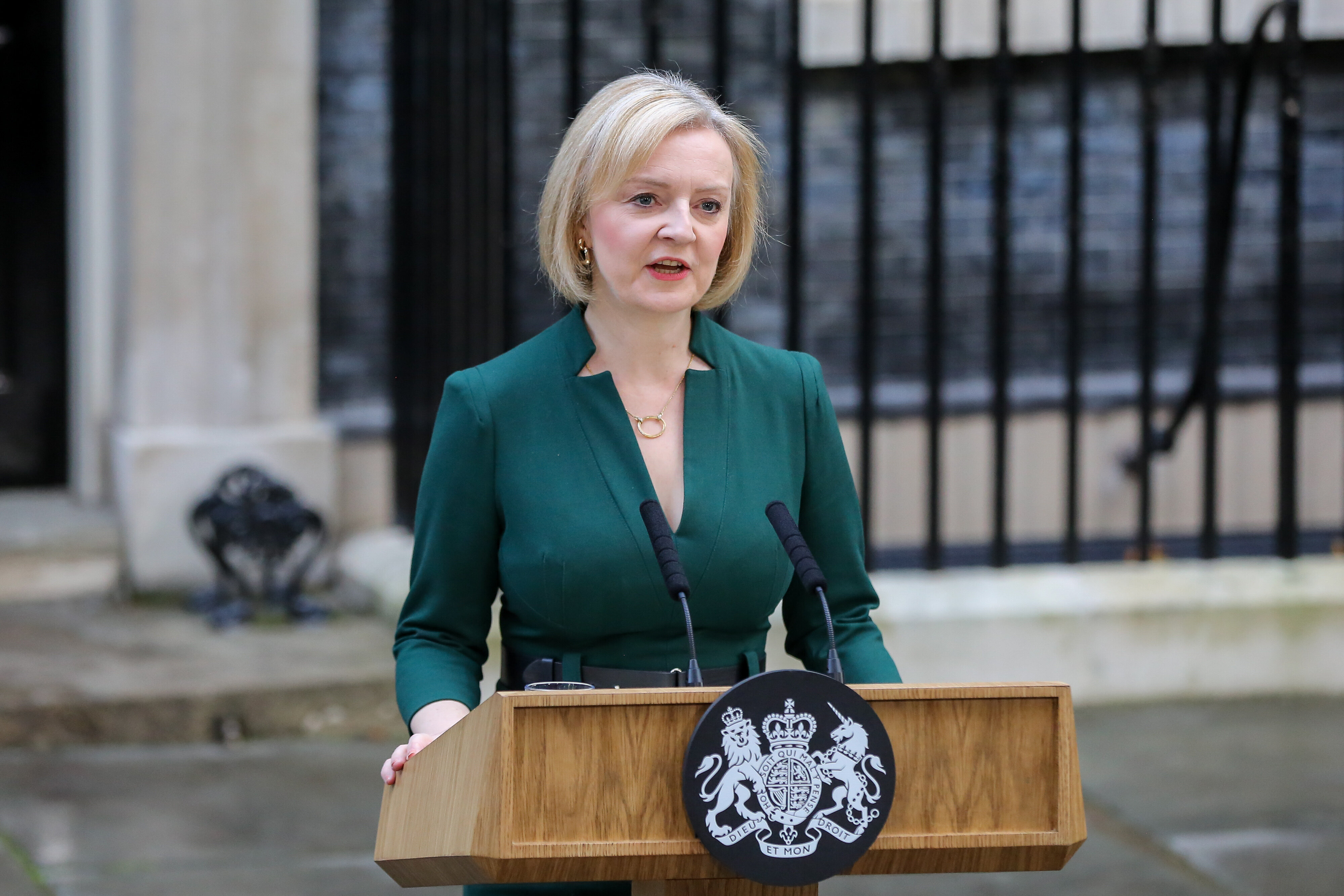
Liz Truss making her farewell speech on Tuesday morning

Anadolu Agency via Getty Images

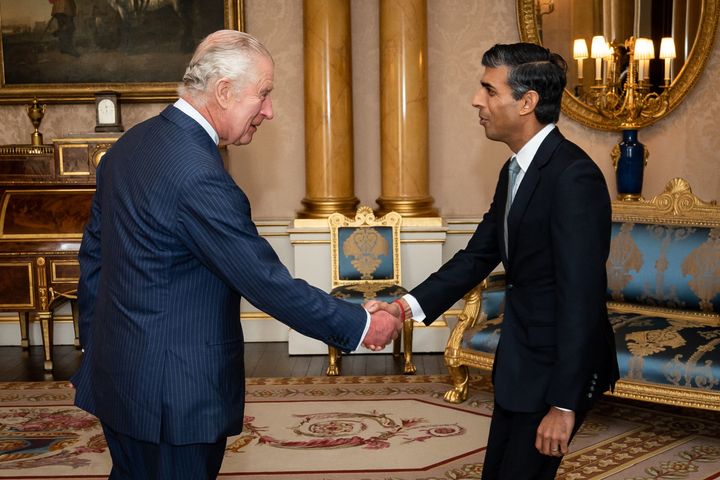
2. Sunak meets the King

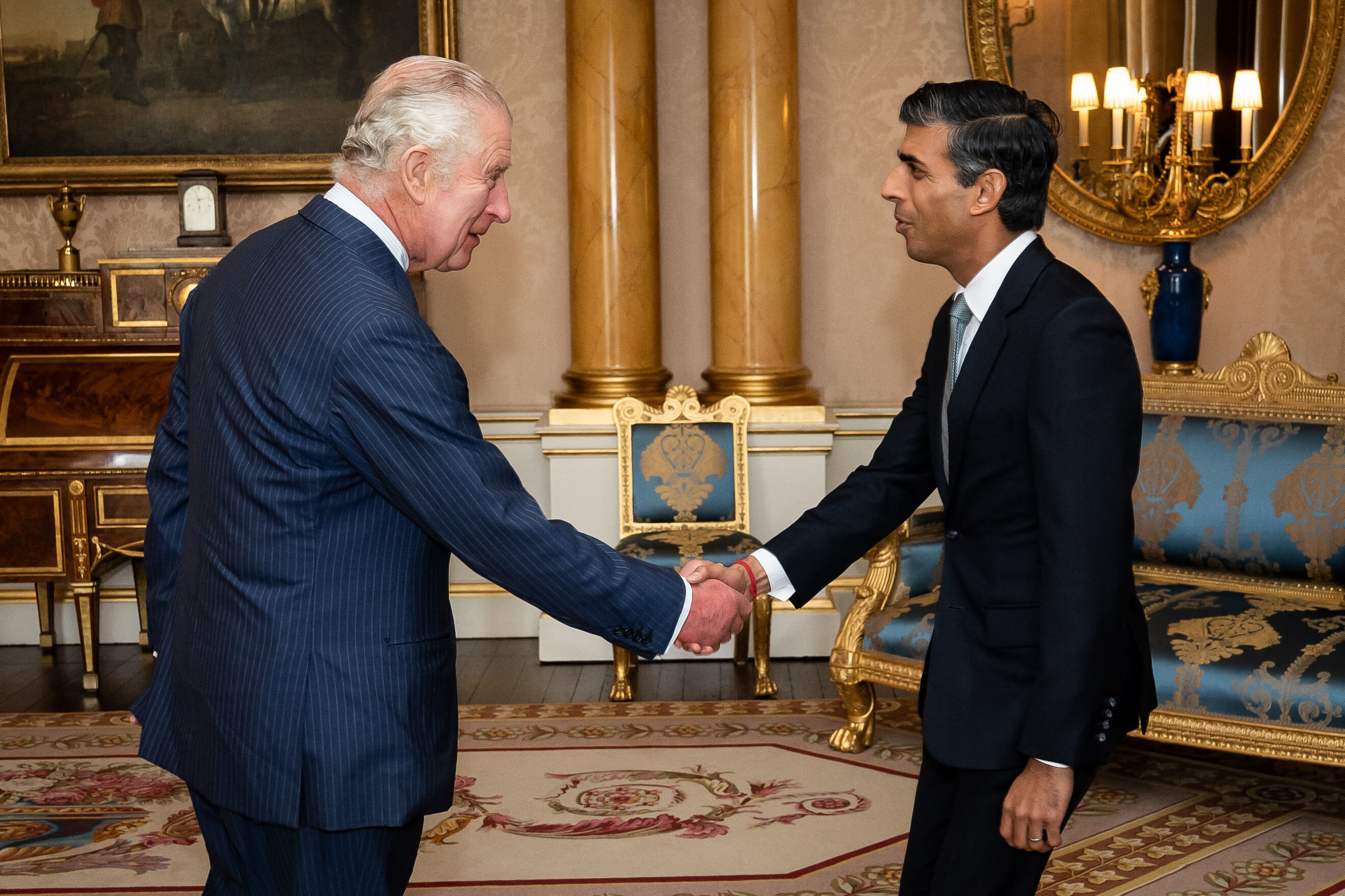
Shortly after Truss met with the King to resign, her successor filed into Buckingham Palace so he could officially be confirmed as the next prime minister.

This was a historic moment, marking the beginning of the first UK premiership led by a Hindu and British Asian. It’s also only the second time a prime minister from an ethnic minority has taken the country’s reins, too.

At 42, Sunak is also the youngest prime minister in more than 200 years.

King Charles III meeting Sunak in Buckingham Palace

AARON CHOWN via Getty Images

3. Sunak’s welcome speech

Sunak started his premiership with a bang, by immediately addressing the “mistakes” of his predecessor in a speech before midday.

He said: “Some mistakes were made – not born of ill will, or bad intentions. But mistakes nonetheless.

“And I have been elected as leader of my party and your prime minister in part to fix them.

“And that work begins immediately.”

Sunak also used the opportunity to address former prime minister Boris Johnson’s claim that he was “uniquely” positioned to lead the Tories – despite withdrawing from the race.

The new prime minister said while he was “grateful” to Johnson for his “incredible achievements”, “the mandate my party earned in 2019 is not the sole property of any one individual”.

He suggested that he would continue to work on the goals the Tories set out when they won the general election almost three years ago.

4. An exodus of ministers

Business secretary Jacob Rees-Mogg led a wave of resignations from the cabinet. A prominent ally to both Johnson and Truss, he has not spoken favourably of Sunak in the past, declaring him a “socialist” during the Tory leadership election in the summer.

Chair of the Conservative Party Jake Berry, levelling up secretary Simon Clarke, justice secretary Brandon Lewis, education secretary Kit Malthouse and work and pensions secretary Chloe Smith all followed him out the door.

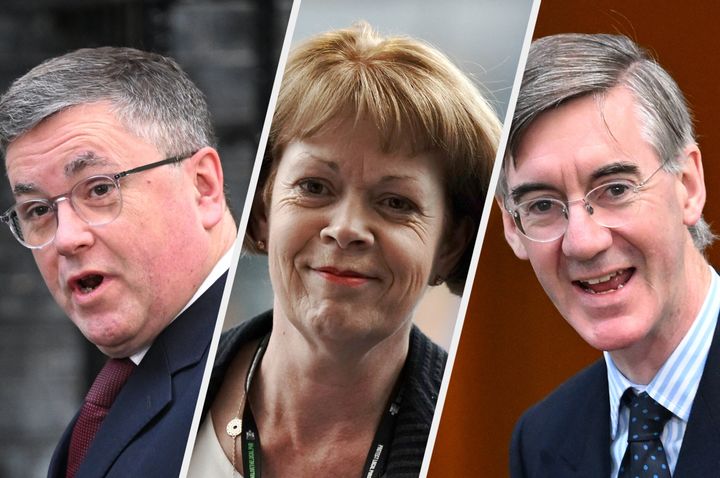
Robert Buckland also stood down as Welsh secretary as did Wendy Morton, the chief whip during Truss’s time in office, environment secretary Ranil Jayawardena and the minister for development Vicky Ford.

Alok Sharma was removed from the cabinet too, but remains as Cop26 president, meaning he will negotiate on the UK’s behalf at Cop27, but won’t attend cabinet or be known as a minister.

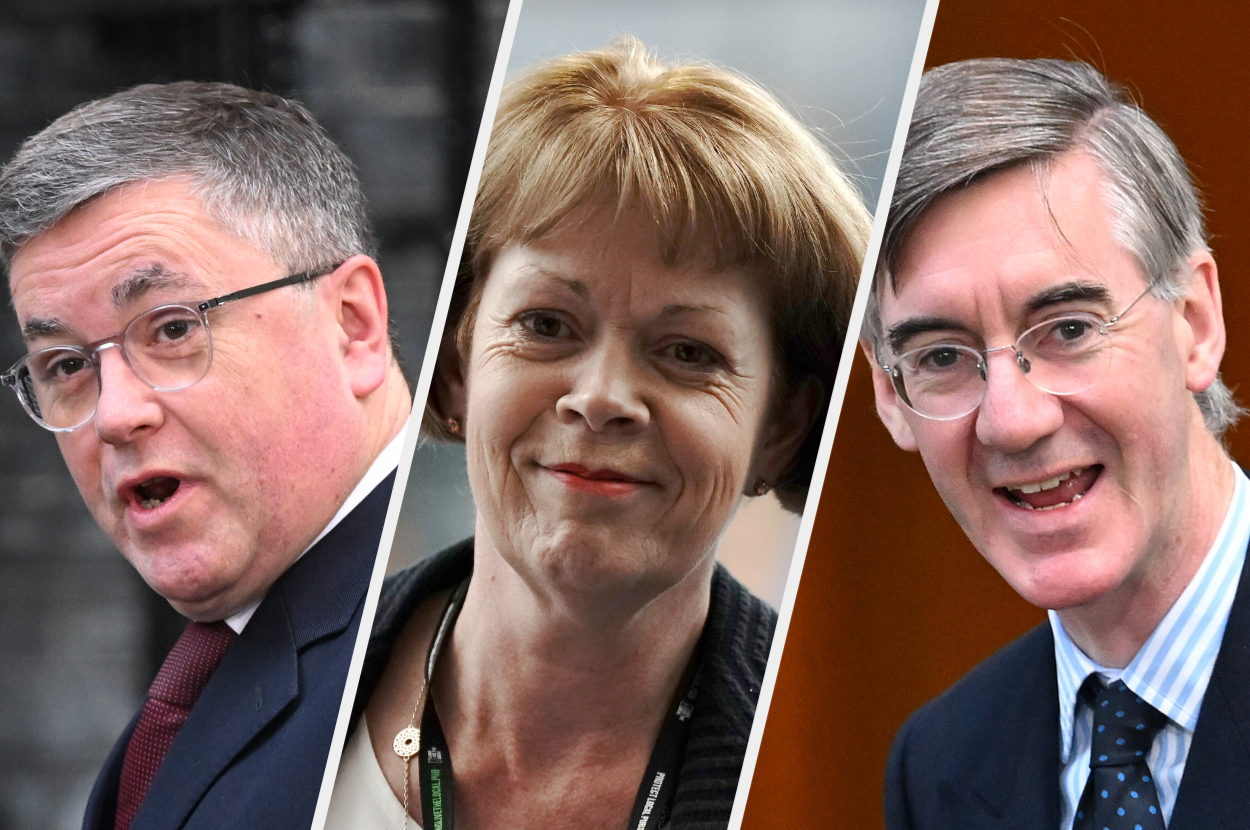
Robert Buckland, Wendy Morton and Jacob Rees-Mogg all left cabinet on Tuesday

5. A new cabinet emerges

Sunak is under pressure to unite the fractured Conservative Party through his leadership by appointing MPs from all its factions to government positions.

Jeremy Hunt, who replaced Kwasi Kwarteng as chancellor after the mini-budget imploded, is remaining at the top of the Treasury.

Sunak’s loyal ally, former deputy PM and former justice secretary Dominic Raab was rewarded, and handed his old two titles again.

Michael Gove returns to cabinet as levelling up secretary, just two months after he said he was quitting frontline politics.

A few more old faces returned to cabinet amid the reshuffle.

Former Welsh secretary Simon Hart has become the new chief whip while James Cleverly is keeping his job as the foreign secretary and Ben Wallace is staying as defence secretary.

Suella Braverman, who resigned as home secretary a week ago over breaching security rules, returns to that same job.

Oliver Dowden has been appointed as the chancellor of the Duchy of Lancaster, while Nadhim Zahawi has been appointed Conservative Party chair.

Share Button

Boris Johnson Pulls Out Of Race To Be Prime Minister

Boris Johnson has ruled himself out of running for the Tory leadership, despite claiming he had the support required to do so.

The former prime minister said he had “much to offer” but that now was “simply not the right time”.

Johnson said he was “well placed” to deliver a Tory win at the next general election but suggested it would be hard to govern a disunited party.

“You can’t govern effectively unless you have a united party in parliament,” he said.

He also confirmed that he had appealed to the other two candidates – Rishi Sunak and Penny Mordaunt – but they had not been able to work out a deal.

Johnson pulled out just a few hours after his campaign team told supporters they had secured the 100 nominations needed from MPs to get on the ballot paper.

A number of cabinet ministers, including Jacob Rees-Mogg and Nadhim Zahawi, had backed their former boss.

One reason why the former PM may have decided not to run is that he is facing an inquiry into whether he lied to the Commons over the partygate scandal.

If found guilty by the Commons Privileges Committee, he could face recall proceedings that would leave him battling for his seat in the Commons if he receives a suspension of 10 days or more.

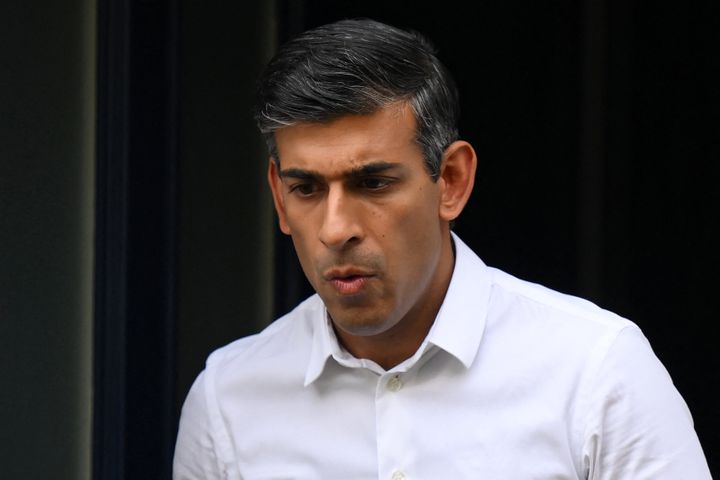
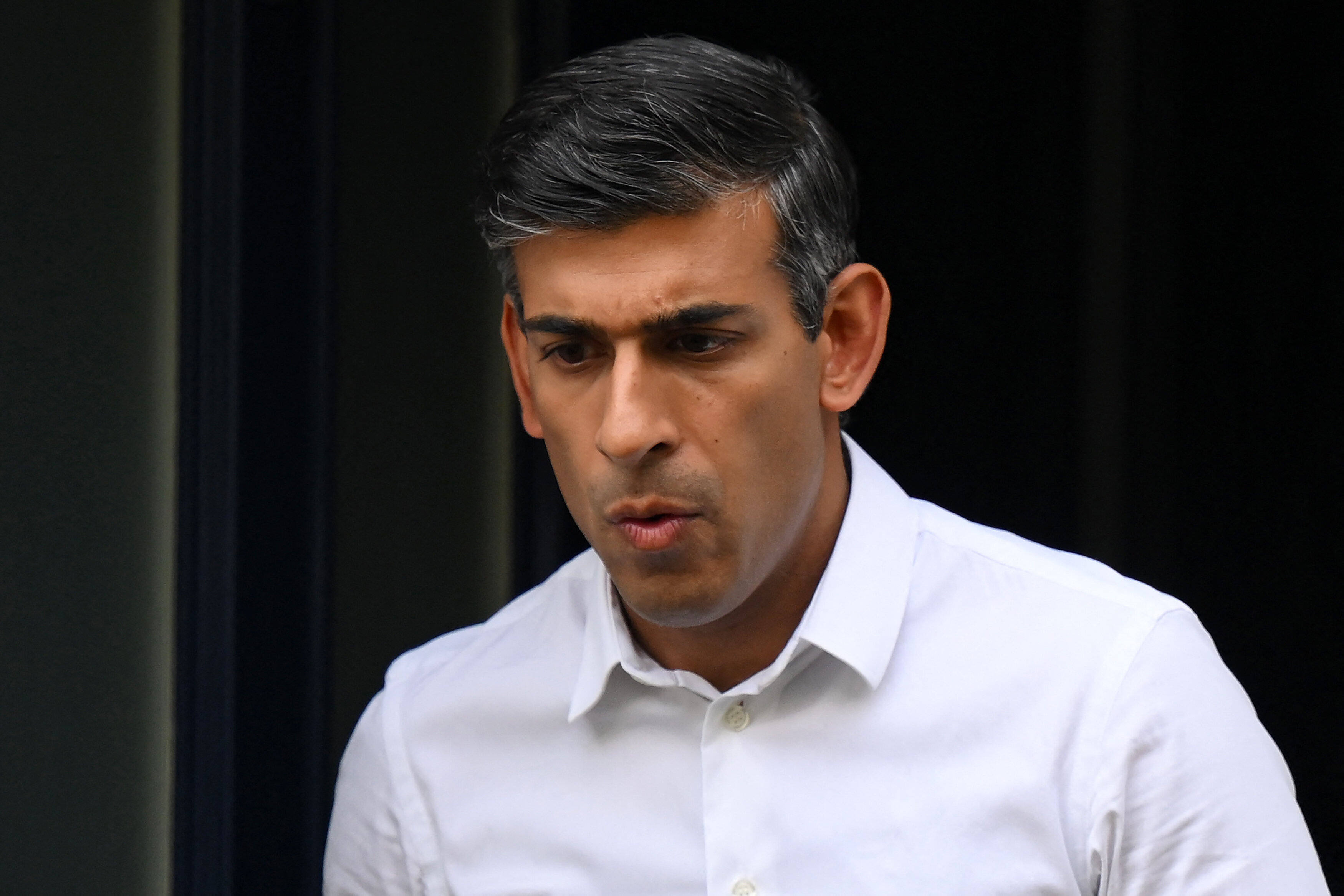
Former Chancellor of the Exchequer Rishi Sunak.

DANIEL LEAL via Getty Images

It now looks increasingly likely that former chancellor Sunak is heading for No.10 and will be Britain’s next prime minister.

In a statement, Johnson said: “In the last few days I have been overwhelmed by the number of people who suggested that I should once again contest the Conservative Party leadership, both among the public and among friends and colleagues in Parliament.

“I have been attracted because I led our party into a massive election victory less than three years ago – and I believe I am therefore uniquely placed to avert a general election now.

“A general election would be a further disastrous distraction just when the government must focus on the economic pressures faced by families across the country.

“I believe I am well placed to deliver a Conservative victory in 2024 – and tonight I can confirm that I have cleared the very high hurdle of 102 nominations, including a proposer and a seconder, and I could put my nomination in tomorrow.

“There is a very good chance that I would be successful in the election with Conservative Party members – and that I could indeed be back in Downing Street on Friday.

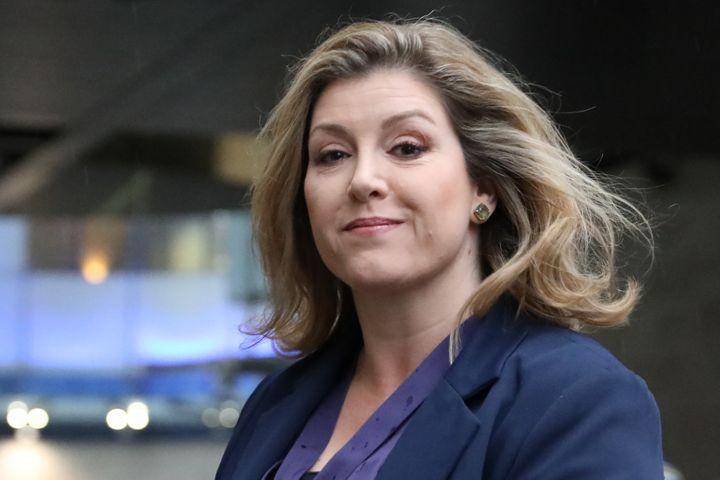
Penny Mordaunt.
Penny Mordaunt.

ISABEL INFANTES via Getty Images

“But in the course of the last days I have sadly come to the conclusion that this would simply not be the right thing to do. You can’t govern effectively unless you have a united party in parliament.

“And though I have reached out to both Rishi and Penny – because I hoped that we could come together in the national interest – we have sadly not been able to work out a way of doing this.

“Therefore I am afraid the best thing is that I do not allow my nomination to go forward and commit my support to whoever succeeds. I believe I have much to offer but I am afraid that this is simply not the right time.”

A source close to Rishi Sunak said: “We are not taking anything for granted. Rishi will be continuing to talk to colleagues tomorrow morning before nomination papers go in, and discussing how best to unite the party and take the country forward.”

A Mordaunt campaign source said: “Penny is still running to be the leader of the Conservative Party.

“Penny is the unifying candidate who is most likely to keep the wings of the Conservative Party together and polling shows that she is the most likely candidate to hold onto the seats the Conservative Party gained in 2019.

“Ed Balls, shadow cabinet ministers and Labour advisers have all said Penny is the candidate Keir Starmer fears the most.”

Share Button

How Likely Is A General Election Now?

As the largest party in the Commons, this leader will also become the prime minister – despite not being elected by the general public, but by Tory MPs and the approximately 160,000 Tory members.

Liz Truss will remain in place until her successor is announced, hopefully by Friday, October 28.

But, as the Tories go through yet another change of hands, many are calling for the vote to go back to the public via a general election, while online petitions for the cause are growing.

But just how likely is it that the electorate can go back to the polling stations early?

When would the next election be, without intervention?

Unless an announcement is made, the next general election is not set to happen for a while. That’s because Boris Johnson called the last snap general election in December 2019 and each term is five years’ long.

This is counted from the day the new parliament first met, so parliament would next be automatically dissolved on Tuesday, December 17, 2024.

Twenty-five days of polling would follow, meaning the last possible date for people to hit the ballot boxes would be Tuesday, January 24, 2025.

Elections are typically held on a Thursday so the public can find out who won on the Friday and a cabinet can be appointed over the weekend, but this is not a fixed rule.

Why do people want another general election?

Having another leader of the Conservative party – and potentially a third person standing leading the Tories in one term – is not a constitutional issue, and has happened before.

A prime minister was replaced twice without a general election being called in the 20th Century. Winston Churchill became prime minister after two other PMs resigned – there was no general election for him until 1945, due to the Second World War.

A similar situation occurred between 1900 and 1906.

Gordon Brown also did not call an early election when he took over from Labour PM Tony Blair in 2007, waiting until 2010 to call the public to vote. Theresa May entered Downing Street in 2016, but didn’t call an election until the following year and Johnson waited around six months before he dissolved parliament.

This is because each one of them wanted to shore up their mandate from the public, but were keen to establish themselves in office first.

But now, the leading party have been in power for 12 years and, with another leader entering No.10, many of the public feel disenfranchised.

How do you call a general election?

A prime minister usually has to call an early election.

While the power was handed to the House of Commons between 2011 and 2019, the Tories gave it back to the PM with a new law called the Dissolution and Calling of Parliament Act 2022.

The prime minister would have to make a “request” to the King to dissolve parliament (and as a constitutional monarch, the King could not reject it) and a polling day would be organised for 25 working days later.

All MPs lose their status once parliament is closed and have to campaign for re-election.

Labour cannot force a general election.

As the main party of the opposition, it can call a no-confidence vote against the government. But, some members of the Conservatives – as the majority party – would then have to vote against their own government, so it’s pretty unlikely to actually happen. The Tories currently have a majority of 71 seats, and probably wouldn’t want to lose it.

The King could technically invite somebody else to form a government, someone who would win a vote of confidence in the Commons. However, that hasn’t happened since King George V asked Ramsay MacDonald to create a government in January 1924, after Stanley Baldwin lost a vote in January 1924.

Who wants an early election?

Many on the opposition benches want to call a general election early, especially as an Opinium poll found voters have swung in the Labour Party’s favour, with a 39-point lead – adding up to a whopping 411 seats.

The Conservatives have dropped to a historic low in the opinion polls with Truss’s favourability dropping to -70 among the public according to YouGov.

The same data company also found that 63% of respondents want an early general election.

Labour leader Sir Keir Starmer said shortly after the resignation of Truss that his party have a manifesto ready “whenever an election is called”.

He said: “This is not just a soap opera at the top of the Tory party – it’s doing huge damage to the reputation of our country.

“We need a general election so the public can have their say on this utter chaos.

“There’s a manifesto that is going to be ready whenever an election is called,”

Lib Dem leader Sir Ed Davey spoke to BBC Breakfast on Friday and said the Conservatives have shown “they’re unfit to govern”, and that “we need to get rid of them”.

“I think the Conservative MPs now need to do their patriotic duty and work with the opposition parties to get that general election so that British people can have their say,” he continued.

SNP leader and Scotland’s First Minister Nicola Sturgeon has also said it was a “democratic imperative” for the next PM to call a general election.

Welsh party, Plaid Cymru, and the Green Party have called for an immediate general election too.

According to YouGov, just 19% of voters would back the Conservatives if a general election was held right now.

Share Button

How Will The Tory Leadership Race To Replace Liz Truss Work?

Westminster collapsed into chaos on Thursday as Liz Truss announced she was resigning as Tory leader.

Truss lasted just 44 days in office, making her the shortest serving prime minister in history.

The government’s death spiral means there must be another leadership contest to select the next Tory party leader and prime minister.

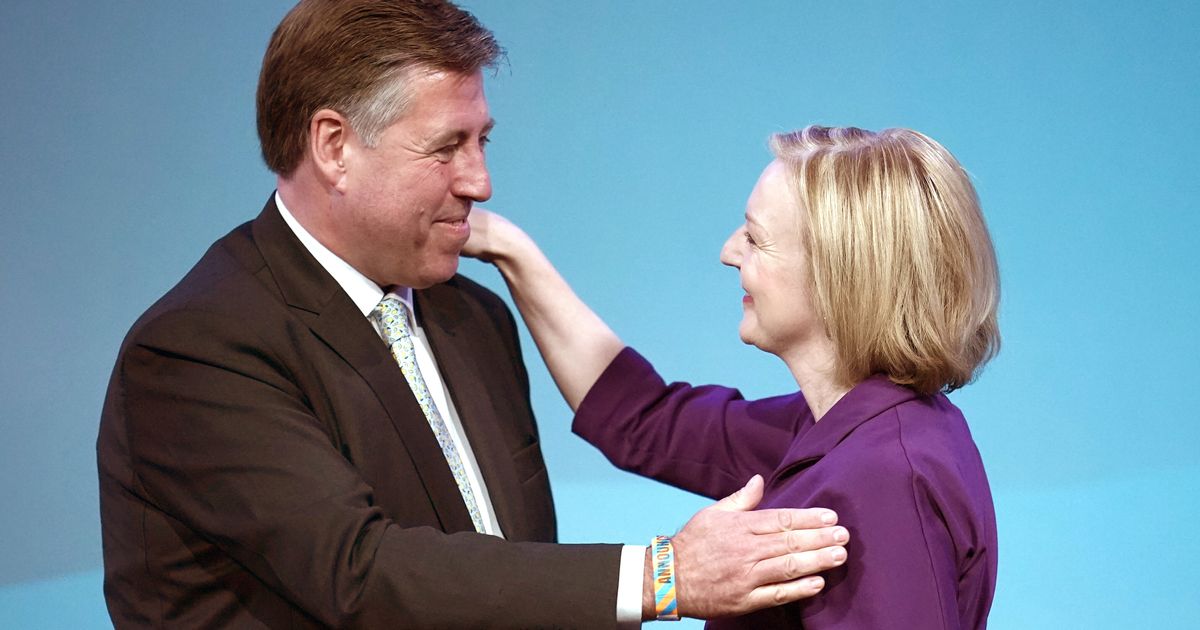
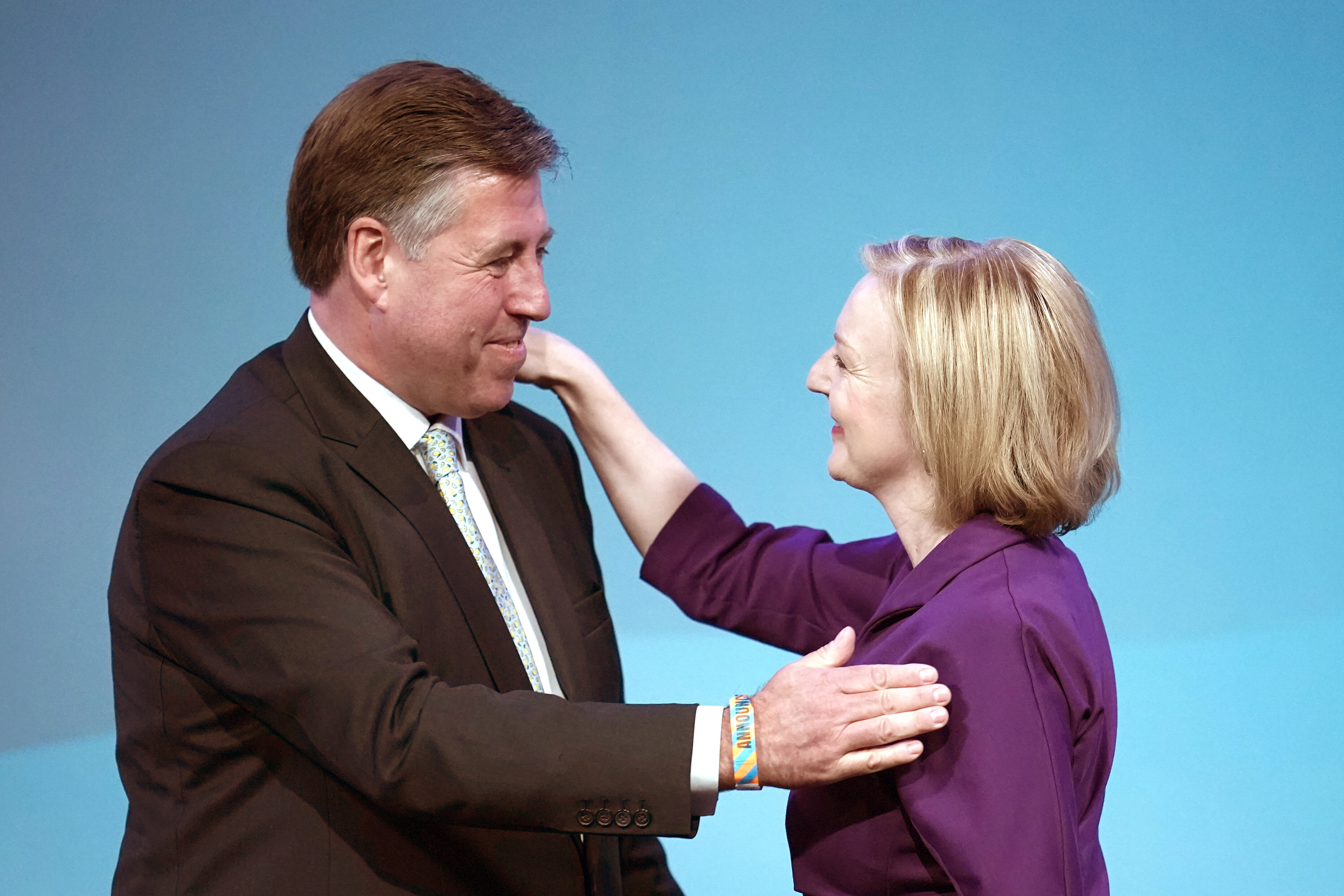
Just minutes after her resignation, chairman of the backbench 1922 Committee Sir Graham Brady announced the party would hold a contest to replace her within a week.

It follows complaints that the two-month contest to replace Boris Johnson over the summer paralysed government for too long.

Truss’s replacement will become their third leader in just two months. Brady held two brief press conferences on Thursday to explain how they would elect the next PM.

How It Will Work

Brady said the process should be concluded by Friday, October 28.

The hope is that a new prime minister would be in place in time for an important financial statement on October 31.

That crucial statement – on the following Monday – is intended to reassure the City that the government has a plan to repair the nation’s finances.

Truss will remain acting leader of the party until a successor is appointed.

Candidates to replace her will need at least 100 nominations from Conservative MPs – a considerably higher threshold than the start of the last election.

Nominations open Thursday night and will close at 2pm on Monday, October 24. There will be an indicative vote of MPs once there are two candidates.

The first ballot of MPs will then be held between 3.30pm and 5.30pm on Monday 24.

If there are three candidates, the candidate with the fewest number of votes will be eliminated.

The result will be announced at 6pm. If a second indicative vote is needed, this will be held between 6.30pm and 8.30pm on Monday. The result will be announced at 9pm.

Once the parliamentary process is completed, Conservative Campaign Headquarters will begin balloting the party membership – as long as two candidates remain.

The ballot of members will be conducted via secure online voting that will close at 11am on Friday 28 – the result will be announced later that day.

Only qualifying members, who have been a member for at least three months, can vote.

Brady told reporters that hustings for MPs would be held behind closed doors on Monday.

He said: “We’ve fixed a high threshold, but one that can be achievable by any serious candidate.

“We have no knowledge of who those candidates will be at the moment.”

Behind the scenes, Tory MPs have already started the horse trading ahead of the election.

For a run-through of who might throw their hat in the ring, follow our list of runners and riders.

Share Button

Tory MP Says Children Are Too ‘Coddled’ Nowadays In Debate On Free Speech

A Conservative MP has said that children are too “coddled” nowadays, during a panel on free speech.

Miriam Cates said that young people are sheltered from emotional distress which means they find it hard to hear opposing or offensive ideas.

The MP for Penistone and Stocksbridge said that her young children needed to have a risk as assessment before visiting the park with school.

Free speech is a hot topic at Tory party conference in Birmingham and at a separate panel a professor claimed the country was facing a cultural “Cold War”.

Cates told a debate hosted by the Young Conservatives that young people did not have a “good reputation” in terms of welcoming free speech.

She added: “I want to say it’s not your fault and I blame the parents.

“I think one of the things that your generation has been subjected to is this kind of coddling.

“I’m getting most of my ideas from a fantastic book called The Coddling of the American Mind, which I very much recommend to you. But the premise is that from a very young age, young people have been coddled physically.

“My grandfather, who’s 90 next week, when he was four he and his twin brother would be kicked out of the house every day from breakfast time, told to have some fun and come home for tea.

“So that was in the 1930s. When I grew up in the 1980s, we didn’t have anywhere near that amount of freedom.

“But, for example, I went on a school trip to France when I was 11, we got kicked out on the coach at 8 o’clock in the morning and none of us spoke a word of French and we were told to come back to 6 o’clock and our teachers went down the pub. That was just a normal school trip.

“Now my children – who are in primary school – have to have a risk assessment and I have to sign permission for them to go to the local park.

“That involves crossing one road on a zebra crossing with the teacher.

“So you’ve been coddled physically and not exposed to physical risk. And that has hampered your ability to face challenge, to make decisions and to face defeat or failure and to rise back from that.”

Cates said there had been a “mission creep” from physical safety into emotional safety. She said we protected children from emotional distress, which meant young people find it difficult to hear opposing or offensive ideas, adding: “So I think the future of free speech is not necessarily strong.”

In another debate on the first day of Tory conference, panellists were asked: “Is the UK a safe space for free speech?”

Eric Kaufmann, professor of politics at Birkbeck College, claimed that the country was in a cultural “Cold War”.

He told a panel, organised by the Institute of Economic Affairs and TaxPayers’ Alliance, that “wokeness” and “cultural socialism” was becoming a dominant theme among young people, especially younger women.

“We are in a fight for the future of Western civilisation, for British civilisation,” he claimed.

Winston Marshall, former Mumford & Sons’ banjoist, also took part in the panel. He quit the band last year amid a storm after he tweeted his admiration for a book by controversial right-wing US journalist Andy Ngo.

Marshall told the panel: “It seems to me in the arts industry, where I am, there is a serious problem which is completely paradoxical because it’s an industry of people who rely on being able to express themselves and they are censoring themselves and it’s almost every week.”

Share Button

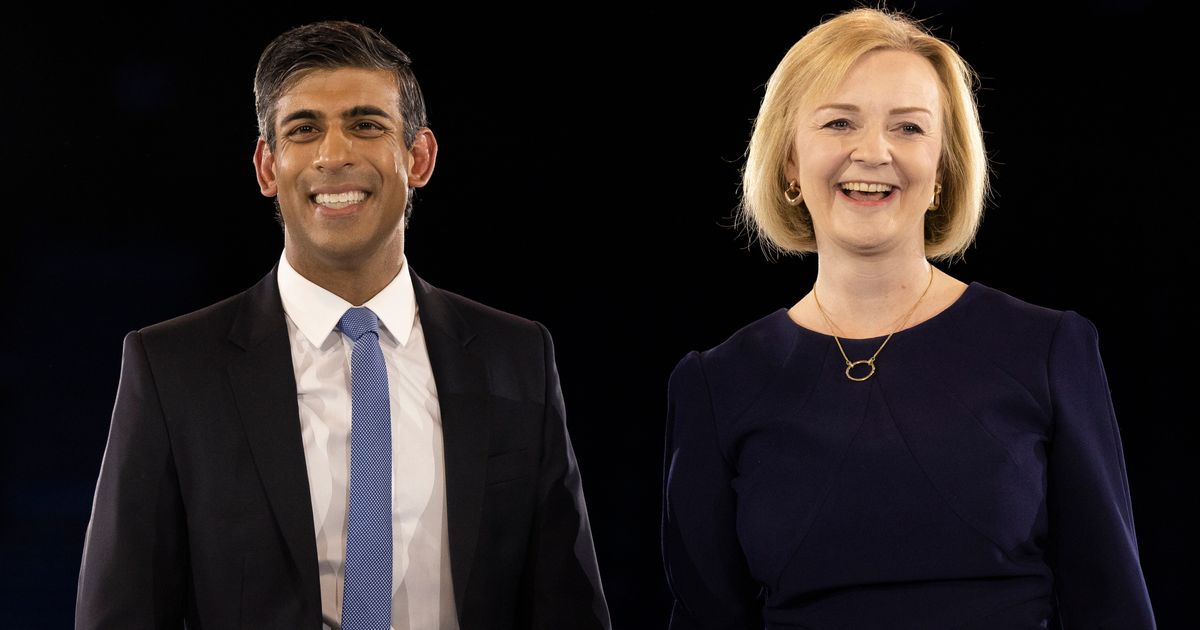
How, When And Where The New Prime Minister Will Be Announced

After a bitter eight week long campaign, the Conservative Party will announce its new leader – who will become prime minister – on Monday.

This is how the next 72 hours are roughly due to play out.

Monday

At 12.30pm the winner of the leadership race will be revealed at an event at the Queen Elizabeth II Conference Centre in Westminster.

Liz Truss or Rishi Sunak will learn who has won – widely expected to be Truss – a few minutes before the result is made public.

The venue, a short walk from parliament and Downing Street, was also where Jeremy Corbyn was announced as Labour leader in 2015.

But the new Tory leader will not take over as prime minister immediately.

Tuesday

This will be Boris Johnson’s last day in office as PM. In the early morning, around 8.30am, he will deliver a farewell speech in Downing Street.

Johnson will then fly from London to Aberdeen and make his way to Balmoral to see the Queen and resign.

The Queen will then meet with the new Tory leader and appoint them prime minister.

Truss – or Sunak if he pulls off a spectacular upset – will then fly to London and deliver their first speech as PM outside No.10 at about 4pm.

It is then expected the that the new cabinet will be formed over the course of the next few hours.

Wednesday

Parliament returns from its long summer recess this week, which means the new PM will face Labour leader Keir Starmer at PMQs after about only 24-hours in the job.

Later in the week

Truss has promised to reveal within one week of taking office how she will deal with rising energy bills.

But the likely incoming PM has not said what form any help will take or given a precise date when she will unveil any plan.

Share Button

Cutting VAT To Tackle Cost Of Living Crisis ‘Regressive’, Says Rishi Sunak’s Campaign

Cutting VAT by 5% across the board would be a “regressive” move costing tens of billions of pounds, Rishi Sunak’s campaign team has warned.

According to The Sunday Times, Liz Truss is considering slashing VAT as part of an emergency package to help households cope with rising prices if she wins the Tory leadership race.

The newspaper said the 20% headline rate of VAT could be cut by up to 5%, saving the average household more than £1,300 per year.

But Sunak’s campaign said the move would “incredibly regressive” and cost more than £30bn.

Another option reportedly being weighed up by Truss is a cut to income tax, with proposals including increasing the level above which people start paying the levy.

Truss could also raise the tipping point for the higher rate of 40% and cut the basic rate below 20%.

Boris Johnson has said whoever succeeds him in No.10 would announce “another huge package of financial support” amid soaring energy bills.

The outgoing prime minister has refused to act again himself, deciding the country must wait until a new PM is in office to provide any new help.

The Treasury has said it is making the “necessary preparations” to ensure the next government has options to deliver extra help “as quickly as possible”.

Energy regulator Ofgem warned the government on Friday that it must act urgently to “match the scale of the crisis we have before us” as Britain faced the news that the average household’s yearly bill will rise from £1,971 to £3,549.

Sunak has already said he will provide additional support targeted at the most vulnerable.

Truss has promised “decisive action” to deliver “immediate support” if she wins the contest.

But she has so far been vague about what form this assistance might take apart from slashing green levies on energy bills and reversing the controversial National Insurance hike.

In an article for Mail+, Johnson acknowledged that the next few months will be difficult – “perhaps very tough” – as “eye-watering” energy bills take their toll, but he forecast the UK will emerge “stronger and more prosperous (on) the other side”.

He said “colossal sums of taxpayers’ money” have already been committed to assisting people with their bills.

But he added: “Next month – whoever takes over from me – the government will announce another huge package of financial support.”

Share Button

3 Things You Ought To Question About How Tories Vote For The Next PM

There are just two weeks left in the race to be the next Conservative Party leader – and the next prime minister.

Liz Truss, the current foreign secretary, is the frontrunner to replace Boris Johnson, but former chancellor Rishi Sunak remains optimistic that he might have a chance of securing that seat in No.10.

Either way, the country will have a new leader by September 6.

As the Tories remain the party with the majority of seats in the House of Commons and this is not a general election, only Conservative Party members get to choose who leads them (and the rest of the UK) until the next election.

Understandably, this has thrown up some questions about this process.

1. What do we really know about Tory Party members?

The Conservative Party will not reveal how many members it has, although the most common estimate is 160,000. A briefing paper from the House of Commons library in 2019 suggests there are 180,000 members – still a tiny fraction of the general population.

According to news outlet Tortoise, the party’s headquarters will not give away details of their membership for “GDPR reasons”, although the news organisation later sent a letter to CCHQ pointing out that knowing the membership make-up was an essential part of the UK democracy.

The news outlet is still waiting for a response from the party about just who is an official member.

2. Are there any restrictions over who can vote?

People cannot vote unless they’ve been a member of the Conservative Party for three months prior to September 2, when the election closes.

But, foreign nationals can vote if they’re a member. They do not have to have a British citizenship, or any link with the UK, to vote in this race.

Those under 18 who cannot legally vote in a general election are also permitted to cast a vote in the Tory leadership election.

3. How secure are the votes?

Members can vote via post or online, but security worries did actually force the party to drop preliminary plans which would have allowed members to change their cast votes at the start of August.

Now, if a duplicate vote is recorded, the second one will be counted.

The original plan was dropped after the National Cyber Security Centre announced: “As you would expect from the UK’s national cybersecurity authority we provided advice to the Conservative party on security considerations for online leadership voting.”

Lord Cruddas, who led the campaign to put Johnson back on the ballot paper, suggested that hacking fears mean the Conservatives “should reject the resignation of the prime minister and ask him to stay on board whilst the board fixes any cyber issues and the leadership campaign can be revisited”.

Sky News also revealed at the start of August that the Conservatives were posting out the leadership ballots “a little later than we originally said” because they had to add some extra security measures to the process.

At the moment, voting more than once in the process is also considered an “offence” and anyone found doing so would have their membership withdrawn.

However, according to Tortoise’s reporting, there are few checks that voters are who they say they are.

Share Button

Rishi Sunak Promises To Keep ‘Brexit Safe’ In Mysterious New Promo Video

Rishi Sunak’s latest PR efforts have once again been ripped apart, this time because he has promised to “keep Brexit safe”.

The Tory leadership hopeful is currently behind Liz Truss in the polls among Conservative Party members.

He has therefore felt the need to bolster his pro-Brexit credentials – despite being a Brexiteer and his opponent originally campaigning for Remain.

On Monday, he released a new campaign video – significantly less slick than his previous PR work – which follows a person around as they dump huge stacks of paper into one small room with a paper sign on the door saying: “Brexit Delivery Department.”

The papers are labelled “EU red tape”, and for half of the one-minute video, the person moving the documents around can be seen gathering all of the documents together (although their face is never shown).

Then, they crack their fingers and start shredding the papers.

It is part of Sunak’s promise to build a new Brexit delivery unit which “in his first 100 days as prime minister” would see him review or repeal post-Brexit EU laws. There are 2,400 at the moment.

It is worth noting that there is already a Brexit opportunities and government efficiency department, headed up by Jacob Rees-Mogg.

The words “Keep Brexit safe, vote Rishi Sunak today” appear across the screen in the last 10 seconds, as triumphant orchestral music plays.

It is an especially bold claim as Brexit has been under more criticism than ever in recent months due to delays at the Dover port for passengers going to France, problems with the Northern Ireland protocol and questions over exactly what Brexit advantages the UK is able to enjoy right now.

The video also comes two and a half years after Boris Johnson, the outgoing Tory prime minister, promised that he “got Brexit done” by securing a deal with the EU.

With the cost of living crisis worsening, a second summer heatwave around the corner and increasingly worrying reports emerging about the state of the NHS, Sunak’s new video was not an instant success.

Here’s how people responded to his efforts:

Share Button