Elon Musk Should Be Treated As ‘A National Enemy’ Of The UK, Says Former Labour Leader

Elon Musk should be “regarded as a national enemy” of the UK over his attacks on Keir Starmer, a former Labour leader has declared.

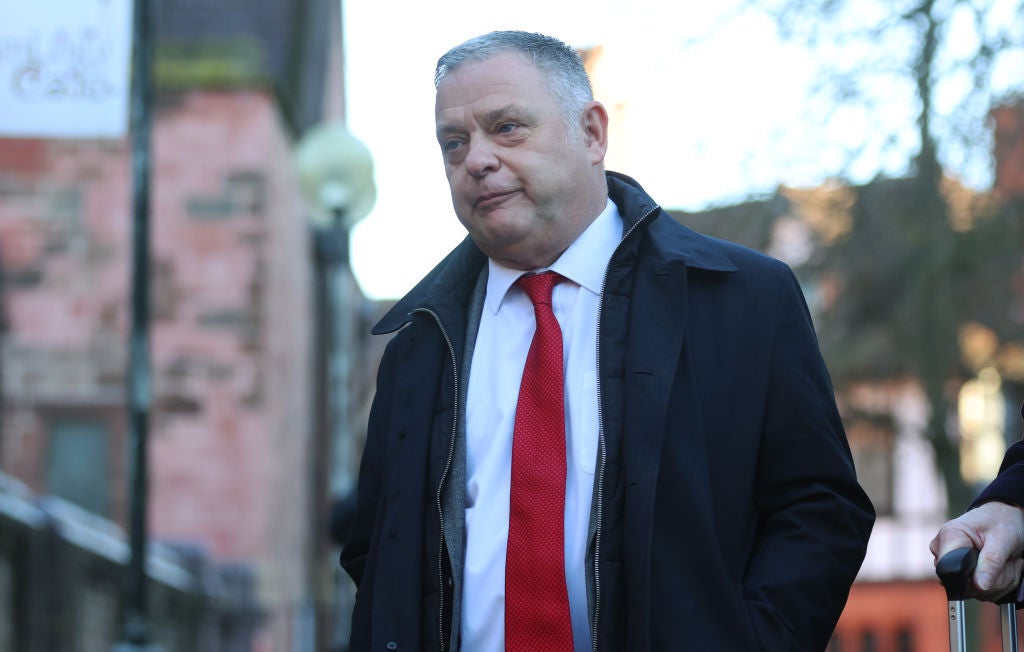
Neil Kinnock said supporters of all parties should oppose the tech billionaire, who is set to be a major figure in the incoming Donald Trump administration.

Musk, the world’s richest man and owner of the X social media platform, has spent months lambasting the prime minister over his response to last summer’s riots, the state of the UK economy and, most recently, the child grooming gangs scandal.

He accused Starmer of being “complicit” and of failing to prosecute those involved when he was head of the Crown Prosecution Service.

Starmer hit out at Musk last week, saying he had “crossed a line” by personally attacking safeguarding minister Jess Phillips and saying that she should be jailed.

On Radio 4′s Broadcasting House programme on Sunday, Kinnock – who led Labour from 1983 until 1992 – said politicians should unite against Musk.

He said: “Trump has given Musk official status. He is going to be in charge, together with another guy, of a federal government department, and that’s on top of being the most powerful private individual in human history, as well as being the world’s richest man.

“He’s gunning for Keir and he’s got to be resisted, and I don’t think that should be limited to Labour supporters.

“I think that when somebody has very clearly declared antagonism on this level to the prime minister of the United Kingdom, he should be regarded as a national enemy.”

Kinnock’s comments came as Dan Carden became the first Labour MP to echo Tory and Reform UK calls for a national inquiry into the grooming scandal.

He said: “The public call for justice must be heeded. It is shocking that people in positions of power could have covered up and refused to act to avoid confronting racial for cultural issues or because victims were poor or working-class.

“We must question and challenge the orthodoxy of progressive liberal multiculturalism that led to authorities failing to act. We need a new doctrine to take our multi-ethnic society into the future.”

Share Button

Major Blow To Keir Starmer As Poll Finds 1 In 4 Brits Regret Voting For Labour

One in four voters who backed Keir Starmer at the general election now regret it, according to a new poll.

Research by think tank More in Common and published by LBC found 56% of voters now have a lower opinion of the government after six months in power.

It seems that three policies drove this frustrated response to Labour – the government’s decision to reduce the number of pensioners eligible for the winter fuel allowance, cut inheritance tax relief for farmers and its refusal to compensate WASPI women over pension changes.

Some voters said these choices were more damaging to the governing party than partygate – the repeated breach of their own lockdown rules which helped oust Boris Johnson from No.10 – was to the Conservatives.

To make matters even worse for the prime minister, 54% of respondents said they were pessimistic Labour can deliver the change they promised in the election.

A quarter of participants also said they regret voting for Starmer – and that fraction creeps up to two in five (41%) among the 65 to 74 year olds.

Starmer did secure a landslide victory in July’s general election, taking a staggering 411 seats, but, while his success was widespread, it was shallow. Many Labour MPs won their constituencies on relatively narrow majorities.

Asked how the government would win the electorate back after this devastating poll, health minister Karin Smyth told LBC: “We have to deliver.

“That’s disappointing to hear, but we’re just six months in, we know the awful inheritance that we have to deal with.

“Things like today, delivering on those [NHS] waiting lists, getting more money in people’s pockets, better lives, better education for their children, getting those waiting lists down and crucially being able to see a GP – we know that delivery is what matters.

“That’s why Keir Starmer is out today, setting out, in the start of this new year, our plan for reducing those waiting lists, we’re very conscious of that.”

The prime minister has pledged today to introduce half a million more appointments as part of the government’s plan to cut maximum waiting times from 18 months to 18 weeks by the next election.

Starmer announced his plans to reform the country at the end of 2024 with his six milestones, including putting more police officers on the street, building 1.5 million homes and putting more money in people’s pockets.

Share Button

Keir Starmer Says Labour Will ‘Rebuild’ Britain As It Did After The War

Keir Starmer has vowed that Labour will “rebuild” Britain just as it did after the Second World War.

The prime minister used his New Year message to the country to draw comparisons between the challenges facing the UK in 2025 and the country’s plight exactly 80 years ago.

It comes amid gloomy warnings about Britain’s economic prospects in the next 12 months, and growing pessimism among voters.

A YouGov poll for The Times found most people saw Starmer’s government as “incompetent”, “dishonest” and “unsuccessful”, and believe it will fail to achieve the six milestones unveiled by the PM in his “plan for change” last month.

But in his New Year message, Starmer insisted that better days lie ahead for the UK.

He said: “I know there is still so much more to do. And that for many people it’s hard to think about the future when you spend all of your time fighting to get through the week.

“So I want to be clear. Until you can look forward and believe in the promise and the prosperity of Britain again, then this Government will fight for you.

“A fight for change that will define this year, next year, and indeed – every waking hour of this government.”

The PM added: “That is what we will be focusing on. A year of rebuilding. But also – rediscovering the great nation that we are. A nation that gets things done. No matter how hard or tough the circumstances.

“We will have time to reflect on that this year. A chance, with the 80th anniversary of VE [Victory in Europe] and VJ [Victory in Japan} day. To cherish the greatest victories of this country. And the greatest generation that achieved it.

“But that victory – and indeed the peace and the prosperity that followed all rested on that same foundation we must rebuild today.

“The security of working people. That is the purpose of this Government. The goal of our plan for change. And we will push it forward in 2025.”

Share Button

‘They Are Shameless’: Labour Ministers Accused Of ‘Betrayal’ For Refusing To Compensate Waspi Women

Labour ministers have been accused of “betrayal” after ruling out compensation for women who lost out when the rules over when they received their state pension were changed.

Keir Starmer was among those who gave their support to the Women Against State Pension Inequality (Waspi) campaign when the party was in opposition.

Work and pensions secretary Liz Kendall told MPs on Tuesday that it would not be “a fair or proportionate use of taxpayers’ money” to pay up to £10.5 billion to those affected.

That was despite the parliamentary and health service ombudsman ruling that the women should be compensated due to mistakes made in the way the changes to their pension age were communicated to them.

Women’s state pension age was increased from 60 to 65 so it was equal with men’s between 2010 and 2018.

But the campaigners insisted they were not adequately informed about the change.

Speaking in 2022, Starmer said the Waspi women were the victims of “a real injustice”, adding: “We need to do something about it.”

Kendall herself was also pictured with a sign saying: “I will work with Waspi to identify and deliver a fair solution for all women affected.”

Stephen Flynn, the SNP’s leader at Westminster, re-posted the picture on X and said: “The Labour secretary of state is currently stating that her government will not provide any financial compensation to the Waspi women. They are shameless.”

Waspi chairwoman Angela Madden said: “The government has today made an unprecedented political choice to ignore the clear recommendations of an independent watchdog which ordered ministers urgently to compensate Waspi women nine months ago.

“This is a bizarre and totally unjustified move which will leave everyone asking what the point of an ombudsman is if ministers can simply ignore their decisions.

“It feels like a decision that would make the likes of Boris Johnson and Donald Trump blush.”

Share Button

No 10 Tells Protesting Farmers Controversial Inheritance Tax Policy Will Not Be Changed

The government will not U-turn on controversial changes to inheritance tax rules for farmers, No.10 has confirmed.

Keir Starmer’s official spokesman ruled out any climbdown as thousands of farmers, many of them driving tractors, once again descended on Westminster to protest against the policy.

Some of the placards on display read “No farmers, no food” and “Starmer Farmer Harmer”.

Rachel Reeves announced in the Budget that farms worth more than £1 million will become liable for the charge, albeit at the reduced rate of 20%.

Farmers’ leaders have warned that the move – which ministers say is necessary to help fill a £22 billion financial black hole left by the Tories – will put many farms out of business.

But asked if there could be a re-think on the inheritance tax changes, the PM’s spokesman said: “No. We have been clear that we understand the strength of feeling about the changes, but we are clear that this will only affect a small number of estates.

“Three-quarters of estates will be unaffected by these changes. But the government’s commitment to farmers is steadfast.”

He said the Budget had also seen the government pledge £5 billion-worth of support for farmers “which is already starting to land in farmers’ pockets”.

The spokesman added: “We recognise the strength of feeling, but we are committed to supporting our farmers, delivering rural economic growth and boosting Britain’s food security.”

Tom Bradshaw, the head of the National Farmers Union, had earlier told MPs that he feared some elderly farmers could commit suicide as a result of the policy.

If a farm is passed on to another family member, it is not subject to inheritance tax if the original owner lives for another seven years.

But giving evidence to the rural affairs committee, Bradshaw broke down in tears as he said: “Those people who are either in ill health or don’t believe they are going to be able to live for seven years may well decide that they shouldn’t be here on April 26.

“No policy should ever be published that has that unintended side-effect.”

Share Button

Exclusive: Ministers Try To Rebuild Bridges With Whitehall After Starmer’s ‘Trumpian’ Attack On Civil Servants

Ministers are trying to restore relations with their civil servants after comments by Keir Starmer caused fury last week, HuffPost UK can reveal.

He said they had “forgotten, to paraphrase JFK, that you choose change, not because it’s easy, but because it’s hard”.

That prompted Dave Penman, general secretary of civil servants’ union the FDA, to write to the PM accusing him of a “Trumpian” attack on his members.

A Whitehall source told HuffPost UK that senior ministers are “doing the rounds to show love” in their departments in an attempt to repair the damage caused by the prime minister’s comments.

One civil service source said: “We’re tired of being criticised in public and thanked in private – that’s what happened with the last government.”

In a further attempt at improving relations with officials, Starmer today wrote a letter to civil servants thanking them for their efforts.

He said: “From my time as Director of Public Prosecutions, I know first-hand just how fortunate this country is to have a civil service that is admired across the world.

“I saw it every day, I depended on it every day, I was proud to be part of it every day. And from all I have seen during my first five months as prime minister, my appreciation for your service to this country has only grown.”

But responding to the PM’s letter, Dave Penman said it did not go far enough.

He said: “I’m sure civil servants will welcome the message from the prime minister, recognising the challenges the civil service faces as it strives to deliver the government’s agenda and their shared desire to deliver better public services.

“But he needs to to go further. As minister for the civil service, the prime minister should not underestimate the damage his remarks last week made.

“If he is to deliver his vision for change, he needs to inspire, not denigrate the civil service.”

Share Button

Government Appoints Anti-Corruption Champion For The First Time Since 2022

The government has just appointed a former Labour MP to be the anti-corruption champion.

Baroness Margaret Hodge, who now sits in the Lords, will fill the position which has been vacant since June 2022.

Her predecessor, John Penrose, resigned over Boris Johnson’s role in the partygate scandal after a series of gatherings in Downing Street were found to have breached Covid lockdown rules.

Hodge “will work with parliament, the private sector and civil society to help drive delivery of the government’s priorities to clamp down on corruption and the organised criminals who benefit from it, helping to deliver safer streets and secure borders”, according to the Foreign Office.

Hodge has spent much of her career in the Commons campaigning against both domestic and international corruption.

News of her appointment comes as part of a new crackdown from foreign secretary David Lammy.

He has just announced up to £36m in support for the National Crime Agency’s international corruption unit over the next five years, and sanctions to hit the illicit gold trade.

Lammy said: “This government will make the UK a hostile environment for the corrupt and their ill-gotten gains as we put national security as a foundation of our Plan for Change and decade of national renewal.”

Hodge said: “After years of campaigning on the issue, I feel privileged and delighted to be able to work as the Government’s champion, combatting corruption and the illicit finance that flows from it, both at home and abroad.

“The time has now come to put an end to dither and delay. We must take determined and effective action and I look forward to playing my part in that work.”

Labour MP Joe Powell, chair of anti-corruption and responsible tax all party parliamentary group, said he “warmly welcomes” Hodge’s appointment today.

He added: “Oligarchs, kleptocrats, and those exploiting tax havens will sleep less easily tonight.

“This role is pivotal in the fight against corruption, and Margaret’s decades of tireless work exposing corruption and dirty money bring immense credibility to this effort.”

Neither Liz Truss nor Rishi Sunak appointed a new figure to replace Penrose after his dramatic resignation as the anti-corruption tsar more than two years ago.

In a scathing letter to Johnson, Penrose called on the then-PM to quit after the civil service’s partygate probe concluded that “senior leadership” at the top of government was to blame for the scandal.

The-then Tory MP said: “You have breached a fundamental principle of the ministerial code – a clear resigning matter.

“But your letter to your independent adviser on the ministerial code ignores this absolutely central, non-negotiable issue completely.”

He added: “As a result, I’m afraid it wouldn’t be honourable or right for me to remain as your anti-corruption champion after reaching this conclusion, nor for you to remain as prime minister either.”

Johnson resigned the following month.

Share Button

Keir Starmer Warned Labour’s Mandate For Change Is Based On A ‘Time Bomb’

Labour’s majority in parliament is a ticking “time bomb”, according to a brutal new report – and not because a threat from the right.

Keir Starmer’s party may have won by a landslide in July, taking 411 seats while the Tories languish on just 121, but new findings from Labour-linked think tank Compass claims it still offers a weak mandate for change.

After all, it was a shallow victory as Labour actually won just a third of the popular vote, and that poses a major threat further down the line.

On Thursday, pollsters at Find Out Now put Nigel Farage’s populist Reform Party in second place behind the Tories with Labour in third – just five months after voters hit the ballot box.

But, Compass’s new findings, first reported in the Guardian, have found Labour should be more concerned about their lack of voter loyalty – just two in five who backed Labour in July said they would consider themselves to be Labour supporters – than pressure from the right.

That’s because around 48% of Labour’s voters in July said they would be likely to vote Green or Lib Dem in the future, compared to 23% who said they were more likely to go to Reform or the Tories.

Compass’s report Thin Ice claimed: “They won [in Red Wall seats] because they were not the Tories, because Tory voters stayed at home and because Reform split the regressive vote.

“The 2024 general election was a one-off event in which unprecedented Tory ineptitude met almost unparalleled Labour discipline, but without any deep expression of what, if any, change Labour was offering.”

The pollsters said: “The timidity of this strategy, resting on ‘not being the Tories’, is a time bomb.”

Compass’s director Neal Lawson told the Guardian Starmer should look to base a coalition on the progressive majority to bolster support.

Otherwise, he warned, “if Labour fails to deliver in government, its huge but fragile majority will crumble, sending us on a bullet train to the populist right.”

The report comes after a tumultuous first few months in office for Labour, including backlash to cost-cutting policies like changing winter fuel payments for pensions.

Starmer attempted to “relaunch” his government with six new missions last week.

He wanted to turn the focus onto pursuing clean energy, building more homes, recruiting more police officers, putting a greater emphasis on early years education, introducing higher living standards and reducing NHS waiting lists.

But, it looks like it will be a steep hill for Starmer to climb to get back on top, seeing as his net approval ratings are now on -29, according to pollsters at Ipsos.

Share Button

UK Welcomes Fall Of ‘Barbaric Regime’ In Syria, Keir Starmer Says

The UK welcomes the fall of Bashar al-Assad’s “barbaric regime” in Syria, Keir Starmer said.

The prime minister spoke on Sunday, after rebel forces ousted the country’s authoritarian leader by seizing the capital, Damascus.

Starmer also called for civilians to be protected – the UK had been evacuating its own citizens in the days leading up to peak of the rebellion.

According to PA news agency, he said: “The developments in Syria in recent hours and days are unprecedented, and we are speaking to our partners in the region and monitoring the situation closely.

“The Syrian people have suffered under Assad’s barbaric regime for too long and we welcome his departure.

“Our focus is now on ensuring a political solution prevails, and peace and stability is restored.

“We call on all sides to protect civilians and minorities, and ensure essential aid can reach the most vulnerable in the coming hours and days.”

His remarks echo the comments from deputy prime minister Angela Rayner this morning.

Speaking to Sunday Morning with Trevor Phillips, she said: “Well, the situation looks very serious and if the Assad regime has fallen, then I welcome that news.

“But what we need to say is a political resolution in line with the UN resolutions. And we need to see civilians and infrastructure protected.

“Far too many people have lost their lives – we need stability in that region.”

She continued: “If Assad has fallen and that regime is over, I welcome that.

“He wasn’t exactly good to the Syrian people.

“So we want to see a political resolution so that we can get that stability for Syrians and make sure that they have their infrastructure so that they have a political government there that is working in the interest of the Syrian people.”

Assad has fled Damascus but his exact whereabouts remain uncertain.

Some reports suggest he may try to flee to Russia as Vladimir Putin is a key ally and his regime was propped up by the Kremlin until this latest rebellion.

It’s also not clear who will fill the power vacuum now, although one of the leading rebel groups originated in Al-Qaeda.

Starmer is set to travel to the Middle East this week to meet with the UAE and Saudi Arabia, although his trip was planned before Assad’s regime collapsed.

Share Button

Has Keir Starmer’s ‘Plan For Change’ Sown The Seeds For His Own Downfall?

It is just six months since Keir Starmer told HuffPost UK that he wanted politics “to tread more lightly on people’s lives”.

After years of constitutional referendums, scandals, rows and a seemingly never-ending parade of Tory prime ministers, the then opposition leader believed that the government should quietly get on with the job and leave voters in peace.

It is becoming increasingly difficult to reconcile that reasonable aim with the reality of Starmer’s first five months in power.

Since July, the public have witnessed a blizzard of policy announcements, the biggest tax-raising Budget in more than 30 years, high-profile sackings, a No.10 reorganisation and a cabinet minister forced to resign in disgrace.

This hyperactivity culminated in the prime minister unveiling his “plan for change” on Thursday, setting out the six key policies he wants voters to judge Labour on between now and the next election.

Labour will, he said, make people better off, build 1.5 million homes, get more children ready to start school, bring down hospital waits, recruit thousands more neighbourhood police and de-carbonise the electricity grid by 2030.

These promises are definitely not to be confused with Labour’s five missions for government, which Starmer launched nearly two years ago, or indeed the six pledges he made during the general election campaign.

While Downing Street officials were at pains to deny it, it looked and felt like a much-needed reset for a government which has been on the back foot almost from the day it was elected.

Keiran Pedley, director of politics at pollsters Ipsos, said: “It’s not surprising that they’re trying to reassert themselves because, as we’ve seen over the summer and more recently, Starmer’s personal ratings have fallen.

“In July his approval ratings were still net positive, but now he’s on minus 29. We also had polling which showed 53% of voters are disappointed with how Labour have done so far.”

Pedley blamed “a perception that they’ve broken their promises”, ongoing concerns about the state of the economy and unhappiness with policies like removing winter fuel payments from 10 million pensioners for the precipitous fall in the government’s popularity.

“There’s definitely a feeling that it hasn’t started well for Labour, which is reflected in the polling,” he said.

“They’re trying to take charge of the agenda, but the risk is that people don’t actually pay that much attention.

“People voted Labour for a change and to fix the economy and that ultimately is what they will be judged by.”

Pedley also warned that Starmer’s avalanche of promises could end up being counter-productive.

“The problem is you say too much about what your priorities are to the point where it all gets a bit lost,” he said.

“A few weeks ago the PM said illegal migration was one of his top two priorities, but then it wasn’t even one of the six milestones. If you’re going to tell the public ‘judge me on this thing’ you need to be consistent about what those things are.

“You can have six milestones, five missions and a partridge in a pear tree, but the fundamental things they need to do is fix the NHS and turn the economy around.”

The main drivers behind the plan for change have been Morgan McSweeney, the PM’s chief of staff, and Pat McFadden, the chancellor of the Duchy of Lancaster.

Those close to the process insist it has been in the pipeline since shortly after the election, rather than a response to the government’s ongoing woes.

“I get why people are saying it’s a relaunch or a reset, and sometimes that is a valid criticism, but on this occasion it genuinely isn’t,” said one senior No.10 source.

Chris Hopkins, political research director at Savanta, said Starmer’s speech may actually do him some good with the electorate.

He told HuffPost UK: “For regular political watchers, having another technical list to keep track of isn’t ideal, but the public won’t likely care about much of that anyway.

“Labour promised change, and the UK public are utterly clear that means improvement to living standards and public services.

“If Starmer got an opportunity to communicate that to voters, then it will have been seen as a good day in No.10.”

Senior Labour figures are less sympathetic, however.

One said: “Since being PM, Keir’s had four big moments – outside No.10 on day one, the King’s Speech, party conference and now the plan for change. And people still have no idea what he stands for or what the government wants to achieve.”

Others are scathing about the No.10 operation, which only recently underwent a huge shake-up following the sacking of Sue Gray, McSweeney’s predecessor as chief of staff.

A party insider described the prime minister’s speech as “pretty incoherent”, while another said: “I’m afraid Morgan can’t blame Sue forever.”

Even new Labour MPs have started criticising Starmer’s performance, with one asking a colleague: “How do we put him out of our misery?”

But the PM’s supporters insist he and the government are on the right track, and that Labour will eventually reap the reward for decisions being taken now.

One ally told HuffPost UK: “The original five missions were about the long-term direction of a Labour government, but there’s now a real keenness to make them a bit more tangible so that people can see as the parliament goes on what it is we’re trying to achieve. It’s a way of holding ourselves to account.

“Look at the housebuilding pledge, for example. That’s really challenging because over the last couple of years the number of new homes being built has fallen off a cliff.

“But we want to send out a really strong signal to the public and to the civil service that these are our aims.

“We’re hoping that by setting these targets very high it will drive us on and, by the time of the next election, people will feel the difference a Labour government can make.

“If you push yourself hard you can achieve more. And what’s government for if it isn’t that?”

On the same day as the PM’s speech, a shock poll put Reform UK ahead of Labour for the first time.

It remains to be seen whether that was an outlier or a sign of things to come. Starmer had better hope his new targets have the desired effect on those around him, or the next four years will be even more difficult than the last five months.

Share Button