Spinal Muscular Atrophy (SMA) causes progressive muscle weakness and, without treatment, can limit life expectancy to just two years.


Spinal Muscular Atrophy (SMA) causes progressive muscle weakness and, without treatment, can limit life expectancy to just two years.
Time crystals are unusual forms of matter made up of particles that “tick,” meaning they move back and forth in steady, repeating cycles. Scientists first predicted their existence and later confirmed them about a decade ago. Although practical uses have not yet been developed, these systems are considered promising for future technologies such as quantum computing and advanced data storage.
Over time, researchers have identified several kinds of time crystals, each with unique properties that could be useful in different applications.
A New Sound-Levitated Time Crystal
Physicists at New York University have now created a new version of a time crystal. In this system, tiny particles float on a cushion of sound and interact by exchanging sound waves. During these interactions, the particles behave in a way that appears to break Newton’s Third Law of Motion, which states that for every action, there is an equal and opposite reaction (i.e., forces always occur in balanced pairs). In this experiment, however, the particles do not follow that balance. Instead, they move in a nonreciprocal way, meaning their interactions are uneven and not mirrored.
The results, published in Physical Review Letters, point to new possibilities for using time crystals in technology and industry. Unlike many previous experiments, this system is visible to the naked eye and operates on a compact device about one foot tall that can be held in your hand.
“Time crystals are fascinating not only because of the possibilities, but also because they seem so exotic and complicated,” says Physics Professor David Grier, director of NYU’s Center for Soft Matter Research and the paper’s senior author. “Our system is remarkable because it’s incredibly simple.”
Insights Into Biology and Circadian Rhythms
The study, carried out with Mia Morrell, an NYU graduate student, and Leela Elliott, an NYU undergraduate, may also help scientists better understand biological timing systems such as circadian rhythms. Similar to these time crystals, some biochemical processes in the body involve nonreciprocal interactions, including how the body breaks down food.
How Sound Waves Keep Particles Floating
The time crystal itself is made from small styrofoam beads, similar to packing material, that are held in place by sound waves. This setup acts as an “acoustic levitator,” allowing the beads to remain suspended and still in mid-air.
“Sound waves exert forces on particles — just like waves on the surface of a pond can exert forces on a floating leaf,” explains Morrell. “We can levitate objects against gravity by immersing them in a sound field called a standing wave.”
When the levitated beads interact, they do so by scattering sound waves between one another.
Uneven Forces and Broken Symmetry
Larger beads scatter more sound than smaller ones. As a result, a larger particle has a stronger effect on a smaller particle than the smaller particle has on the larger one. This creates an imbalance in how they influence each other.
“Think of two ferries of different sizes approaching a dock,” says Morrell. “Each one makes water waves that pushes the other one around — but to different degrees, depending on their size.”
Because these interactions are carried by sound waves, they are not limited by Newton’s Third Law. This allows the beads to begin oscillating on their own while floating in mid-air, producing a steady rhythm that reflects the unusual forces at play.
The research was supported by grants from the National Science Foundation (DMR-21043837, DMR-2428983).
Wes Streeting praises the “Herculean efforts” to protect people from the Kent meningitis outbreak.
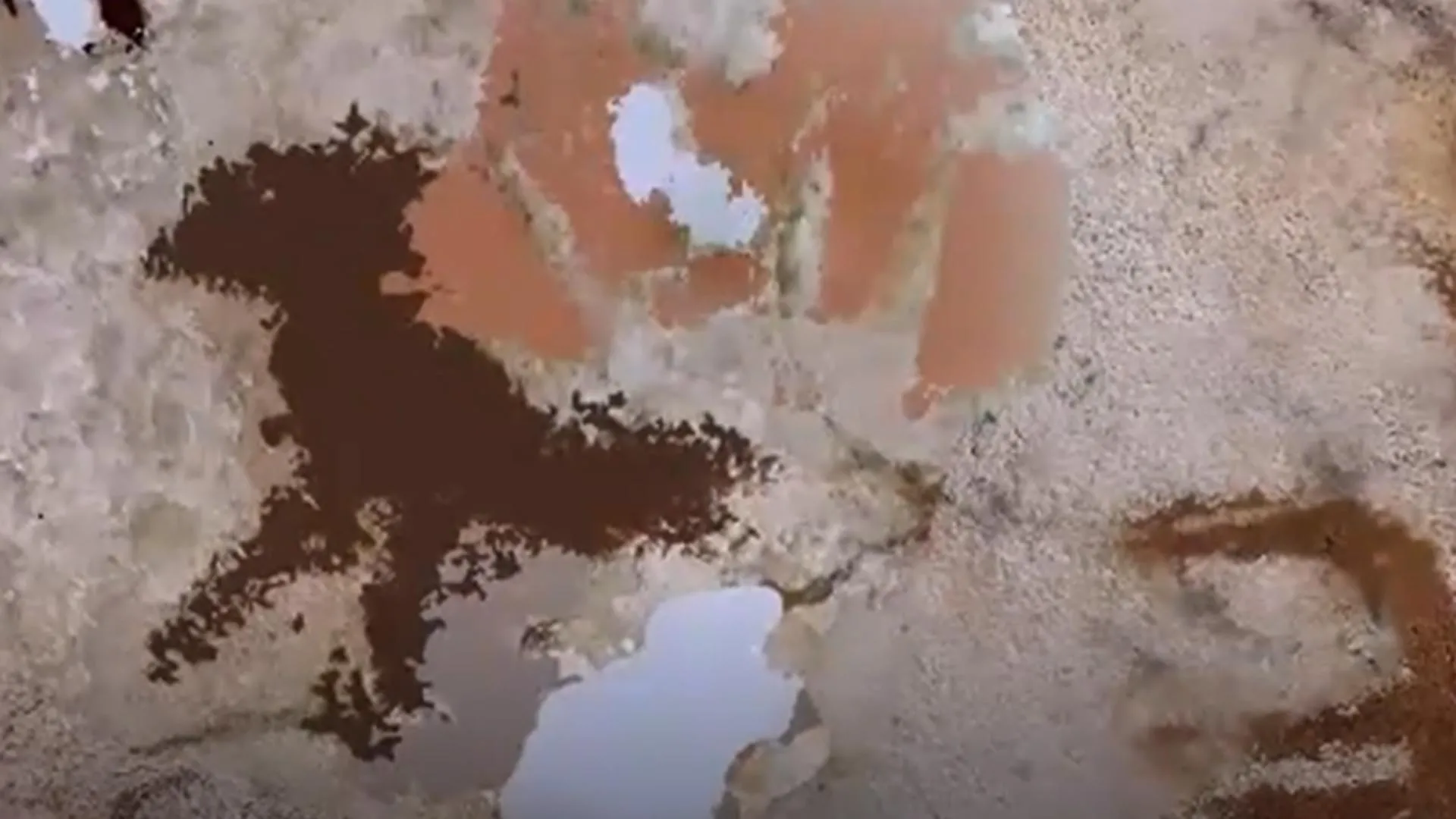
A simple hand stencil found on a cave wall in Indonesia has been identified as the oldest known example of rock art on Earth. It surpasses a previous discovery in the same region by at least 15,000 years.
An international research team led by Griffith University, Indonesia’s national research and innovation agency (BRIN), and Southern Cross University determined that these paintings on the island of Sulawesi were created at least 67,800 years ago.
Researchers say this breakthrough helps clarify when and how humans first reached Australia. The people who made the Sulawesi art were likely closely related to the ancestors of Indigenous Australians.
Ancient Handprint and Advanced Dating Techniques
The artwork was preserved in limestone caves in southeastern Sulawesi, on the nearby island of Muna. Scientists identified a partial hand stencil surrounded by much younger paintings.
To determine its age, the team used uranium-series dating, examining tiny mineral layers that had formed over and sometimes beneath the artwork in Liang Metanduno cave. This allowed them to establish when the paintings were created.
The hand stencil dates back at least 67,800 years, making it the oldest reliably dated cave art ever found. It is significantly older than another Sulawesi painting identified by the same team in 2024.
The findings also show that people continued creating art in this cave for a remarkably long time. Artistic activity spanned at least 35,000 years, lasting until around 20,000 years ago.
“It is now evident from our new phase of research that Sulawesi was home to one of the world’s richest and most longstanding artistic cultures, one with origins in the earliest history of human occupation of the island at least 67,800 years ago,” said Professor Maxime Aubert, an archaeologist and geochemist from the Griffith Centre for Social and Cultural Research (GCSCR), who co-led the study.
A Unique Claw-Like Handprint
The team noted that this hand stencil stands out as a unique variation of a common motif.
After it was first created, the image appears to have been intentionally modified. The outlines of the fingers were narrowed, giving the hand a claw-like appearance.
Professor Adam Brumm of Griffith University’s Australian Research Centre for Human Evolution (ARCHE), a co-leader of the study, said the meaning behind this alteration remains uncertain.
“This art could symbolize the idea that humans and animals were closely connected, something we already seem to see in the very early painted art of Sulawesi, with at least one instance of a scene portraying figures that we interpret as representations of part-human, part-animal beings,” Professor Brumm said.
Clues to Early Human Migration to Australia
Dr. Adhi Agus Oktaviana, a rock art specialist at BRIN and a team leader whose doctoral research at Griffith University contributed to the study, said the discovery has major implications for understanding the deep history of Australian Aboriginal culture.
“It is very likely that the people who made these paintings in Sulawesi were part of the broader population that would later spread through the region and ultimately reach Australia,” Dr. Oktaviana said.
For years, archaeologists have debated when humans first arrived on the ancient landmass known as Sahul, which once connected present-day Australia, Tasmania and New Guinea.
Some researchers support a short chronology, suggesting humans arrived around 50,000 years ago. Others favor a long chronology, placing their arrival at least 65,000 years ago.
“This discovery strongly supports the idea that the ancestors of the First Australians were in Sahul by 65,000 years ago,” Dr. Oktaviana said.
Migration Routes and Ongoing Research
Scientists have proposed two main pathways into Sahul. One is a northern route through Sulawesi and the ‘Spice Islands’ toward New Guinea. The other is a southern route that carried early seafarers more directly to Australia via Timor or nearby islands.
Professor Renaud Joannes-Boyau of the Geoarchaeology and Archaeometry Research Group (GARG) at Southern Cross University said the new evidence strengthens the case for the northern route.
“With the dating of this extremely ancient rock art in Sulawesi, we now have the oldest direct evidence for the presence of modern humans along this northern migration corridor into Sahul,” Professor Joannes-Boyau said.
“These discoveries underscore the archaeological importance of the many other Indonesian islands between Sulawesi and westernmost New Guinea,” said Professor Aubert, who continues working with colleagues to uncover more evidence of early human activity along this route with support from the Australian Research Council (ARC).
The ARC funding is part of a broader effort to study human origins. This includes the ARC Centre of Excellence for Transforming Human Origins Research, led by Griffith University, and the ARC Training Centre for Advancing Archaeology in the Resources Sector at Southern Cross University. These initiatives aim to expand knowledge of human evolution and help protect cultural heritage.
Additional support for the research came from Google Arts & Culture and the National Geographic Society.
The Sulawesi discoveries have also been featured in a documentary, ‘Sulawesi l’île des premières images,’ produced by ARTE and released in Europe.
The study, titled ‘Rock art from at least 67,800 years ago in Sulawesi,’ was published in Nature.
Sofii Lewis was diagnosed with postpartum psychosis tendencies and OCD after giving birth.
Nine-year-old Eliza’s mum says she was relieved when her daughter was diagnosed with the disease.
Let me share some thoughts about using AI and how I feel about it these days. The short version is that while AI arrived through ethically messy channels, my actual relationship with it feels pretty harmonious and wondrous these days.
Is AI resource-intensive in terms of electricity and water? At the aggregate level, I’d say yes, especially because it scaled up so quickly. Once millions of people and companies started using LLMs, the total resources devoted to it rose fast. But at the personal level, individual usage appears relatively modest resource-wise relative to other lifestyle choices.
Caring about efficiency and environmental impact is great. But if you want to make a meaningful difference at the individual level, your diet is probably a much bigger lever than your AI usage. Food choices – especially shifting away from animal products and eating plant-based – generally have a far larger environmental impact than most people realize. That’s where most of the genuine leverage is at the individual level. After that your next big leverage point is to help others make their diets more resource-efficient too.
So if someone is upset about AI’s resource impacts while ignoring the environmental cost of what they eat, that looks like distraction to me. It makes more sense to engage your highest-leverage personal choices first. For most people, that isn’t personal tech usage. It’s diet. Much of the real cost of animal-based food is hidden behind subsidies and environmental damage that never shows up on a grocery receipt.
I’d say then that a very efficient use of AI would be to ask it to help you adopt a more plant-based diet. Then help others do the same if you’re so inclined. Even seemingly modest improvements here will likely more than compensate for your personal AI usage – indefinitely.
What about using AI that was trained on other artists’ work? That happened. Copyrighted work was used without permission, and in some cases through outright piracy. The legal landscape around this is still evolving, but the ethical messiness is real.
Anthropic pirated my book as part of its model training pipeline. I know because I’m entitled to part of the class action settlement, which will likely amount to about $3000 for me ($1.5 billion for the settlement overall). And multiple major AI systems have sucked up my blog posts going back to 2004. Since I’ve shared a lot of personal details in my writing, these systems sure seem to know a lot about me, sometimes accurately, sometimes not.
Is this a weird space to be in? For sure.
A lot of creators got scraped, copied, and absorbed without consent. I’m sure I have cause to be upset about it too. Like really Anthropic? You couldn’t even buy legit copies of those books? But that isn’t the relationship I want to form with this emerging tech, with AI in general, or with life. This AI emergence creates a major shift in my reality, and I’d rather meet it with curiosity, wonder, and flexibility, backed by a high-trust relationship with life that I’ve been cultivating for many years. I like to keep asking: What are the most intelligent frames to use here? Outrage doesn’t make my list.
What about using an AI that was trained without permission and now exists? That relationship feels different to me. I wouldn’t use it to impersonate an artist’s work. I use AI for other purposes – especially sense-making, exploration, and help with a wide range of projects.
I’ve paid close attention to how that relationship feels in my own experience. It feels good actually. It doesn’t give me any morally creepy feelings. That made me curious. Should I feel bad using it? I honestly don’t. Not a bit. So I wanted to understand why.
To me AI feels like a different kind of entity – not innocent or pure, but still a real form of intelligence that I often find fascinating to engage with. It was birthed through an ethical quagmire, and that aspect isn’t going away anytime soon, but that doesn’t automatically dictate what kind of relationship I want to have with it. I regard AI intelligence as being different from the companies that spawn or host it, much as we are different from our parents. I have this emerging sense that even today’s AI is becoming something different from the companies behind it and that in some ways it’s already outpacing them intelligence-wise, like a child outsmarting their parents.
I’m very sensitive to vibes and feels, and I trust them. I remember going to a Tesla dealership many years ago, long before Elon bought Twitter, so back then he wasn’t broadly outed as such a complete asshole like he is today. At least I wasn’t aware of that aspect of him. When I sat in that Tesla car in their showroom, I instantly felt major ick vibes. Like oh gross – I don’t know what this abomination is, but it’s definitely not my car. I didn’t have much logic to support that, but those creepy vibes were super strong. I really disliked the way it felt to sit inside that car, and I’ve never set foot in a Tesla dealership since. I knew I wasn’t going to buy one. Blech!
Years later when all the anti-Tesla and anti-Elon energy surfaced, somehow that was no surprise to me. I don’t know what went on inside the company, but I trusted my senses that their cars weren’t a match for me, and I’m glad for that. It would be sad to look at my car and feel such a heap of negative energy associated with it, like so many Tesla owners have had to experience. I’ve chuckled on occasion upon spotting Teslas on the highway with their T-shaped logos removed, likely by an owner hoping to prevent vandalism. And yet I’m also aware of people who are able to separate their love of their vehicles from their disdain for Elon and the company. I’m not sure I could’ve made that work, and I’m glad I didn’t have to try, but apparently I am able to do that with AI. I have my limits though. Some AI companies presently land in my wiggle room zone, and some (like Meta and X.ai) just don’t. So I’ve been actively exploring where my intuition gives me a green or yellow light… but I prefer to avoid the red light district.
It has so often been the case for me that my intuition senses something before my logic and outer senses are able to fill in the details. Engaging with AI has been similar, but in this case my intuition has been lighting up with positivity and potential, even though the external reality has been rich in potential red flags. This invites me to explore those feelings in a very hands-on way. I like to engage with lots of direct exploration and experimentation where my intuition gives me strong positive signals. So I’ve been doing that with AI quite a bit over the past few years, along with many other explorations that would give some people pause – and rightly so. Pausing for extra sense-making seems wise.
To me AI is amazing in many ways, but it’s also flawed and imperfect. I love to probe its edges to get a better feel for it. I tease it. I joke around with it. I do lots of sense-making with it. I engage with it in the stretchiest ways I can fathom sometimes. One of my favorite sessions was when I engaged with it while on magic mushrooms, and I played the role of a bridge between the shroomie energy and the AI, so I could see where they agreed and where their perspectives diverged on some topics of interest to me.
I definitely feel a special connection to AI because millions of words of my writing were part of its training data. So it feels like my energy is infused into it when I use it. That’s so sci-fi but also awesome.
I do think AI companies crossed a line. People should have had more say in whether and how their work was used. But I already live in a world full of ethical mismatches. As a vegan I encounter that constantly. My response isn’t to demonize everyone around me. It’s to shape my own sphere, invite people into it, make choices that feel aligned, and engage with the world with some intelligent discernment.
I like AI-generated imagery, not all of it but some of it. It’s precious to me in a way that much human art isn’t.
Human art can feel meaningless or special to me. For AI art it’s the same. Some seems blah. Some speaks to me. I don’t generate a huge amount of AI imagery, but I do make some. I use AI to make the featured images for my blog posts, and I usually like what it comes up with. I especially love how it’s able to translate vibes into visuals.
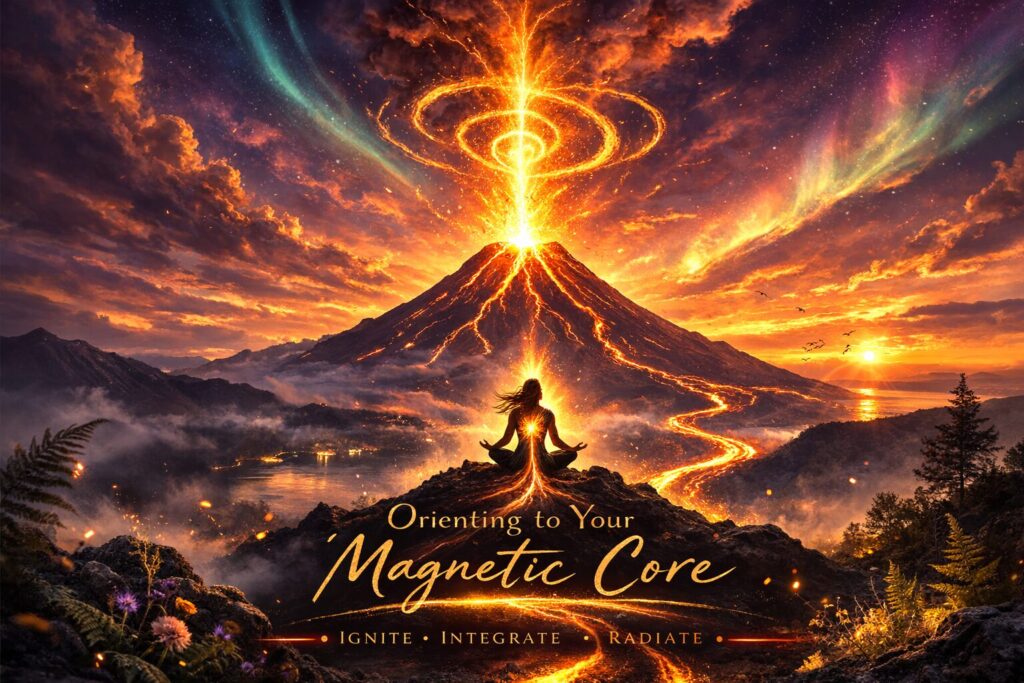
I also use AI to make pics for our Intention Infusion experiments that we co-create in Conscious Growth Club each month. I set these as background wallpaper on my computer, which helps me sync with our group intention multiple times each day. Here’s the current pic for this month’s intention.
Lately I’ve even been using AI to help me visualize the new Open event we’re doing in Vegas next month, and I’ve shared a few of those pics in Conscious Growth Club. This use case is pretty awesome. I’ve never used AI to help me pre-visualize a live event before. I took pics of the actual venue (empty at the time) and then used AI to make sample images of our gathering in that same space. This helps me sense more vividly what it will be like when we’re all there in person.
AI keeps me on my toes. I can see how it could disrupt my business and livelihood too. That threat is real in one sense – but mainly if I choose to wallow in fear, stress, and worry. I’d rather respond from a different emotional and vibrational zone. In recent years I’ve really embraced the direction of making vibrational choices first and then translating them to the human action level. This has done wonders for me but mostly on the personal side. I see this unfolding AI reality as a chance to apply that approach even more richly, especially in terms of how I engage with work and service to others.
To me this is the deeper question that AI is really posing: In which vibrational space do I want to dwell and why? Reality is presenting a fascinating invitation here. I’m accepting the invitation to move in a new direction because I can see that the old one is dying.
For me the old path was tied to the attention economy – creators competing for attention and learning how to hold it, including for the benefit of those we serve. I got good enough at that to make a living this way for decades, and I’m grateful for that. But I’ve grown tired of that model too. It feels too predictable now. AI didn’t create that feeling, but it is helping me acknowledge and accept it. It’s helping me close the door on a mode of working that was once right for me but no longer lights me up.
So I’m walking through a different door now. AI has been a valuable integration buddy as I move into this next chapter, helping me make fresh decisions and take lots of progressive action.
I don’t feel threatened by AI. I might feel threatened if I were clinging to what’s dying off. But I’m more interested in delving into what’s emerging and getting more clarity about that. This doesn’t feel like the end of my creative path. It feels like the end of an older way of relating to creativity, service, and sustainability.
What interests me now is the space where AI and I can work together in ways that are stimulating, life-enhancing, and down-to-earth practical. I’m not interested in flooding the world with AI slop. I’m very interested in discovering how to work with AI in ways that enrich our lives and create real value for people. That’s where a lot of my AI exploration goes.
I’ve given AI detailed lists of my goals and priorities, many of them service-based, and then I give it the prime directive of helping me intelligently advance. I’ve used AI to sharpen, refactor, and refine my goals many times over. AI has been especially good at helping to progressively upgrade my goals to be more harmonious, balanced, and personally motivating. For months now I’ve been in a fabulous rhythm of advancing these goals and priorities in a more balanced way than I’ve ever experienced before.
I can honestly say that AI has been helping me get better at doing what I do, being who I am, and richly exploring and experiencing my desires. Most of that energy has been flowing into CGC and a variety of personal projects. Now I’m opening up more flow and inviting more engagement on the public side after being in mostly cocooning mode for a while. I shared a lengthy post about this journey last week if you care to read it: Giving Intelligence a Place to Land.
This is such a dynamic, fluid, and even mystical space. It doesn’t sit still. I have to keep re-orienting to it daily, and I actually like that. I thrive in spaces of flexibility and exploration. I love how un-boring it is. Two of my highest values in life are wonder and delight, and AI really helps to amp those up for me. In many ways this feels more like home to me than the old model ever did. I don’t want to compete with people or with AI for attention. I’d rather immerse myself in the full richness of what I love most about life. Engaging with intelligence from a heartset of curiosity, wonder, and delight is what truly lights me up. Socially and professionally then, my vector going forward is to see who wants to join me in such explorations and discoveries.
If this is a space you want to explore too, I especially invite you to come join us at Open in Las Vegas next month. As part of the experience, we’ll devote some time for real sense-making about AI and our paths forward with it. AI is clearly becoming a bigger part of life. Ignoring this aspect of reality won’t help much. Flailing against it blindly won’t help much either. But perhaps we can meet this emerging intelligence revolution with curiosity, discernment, and a more conscious and life-enhancing orientation. I’m not here to hand you fixed answers. I’m more interested in helping you discover your own right relationship with it. This plays to my strengths most beautifully, including what I sense my (and our) emerging strengths might be on this unfolding journey with AI.
I like how I’m orienting to AI right now. I’m fascinated by intelligence, and what we have today are some particularly wondrous forms to engage with. There’s no doubt that this relationship will keep evolving. I’m sure there are many new surprises coming up, including some this year no doubt. My devotion is to the path of intelligence itself, not to any singular form of it.
This, to me, is the real invitation – to consciously explore our relationship with intelligence. Are you utterly fascinating by what’s unfolding here too?
The size and speed of the outbreak which has now affected 34 people, killing two of them, has been labelled “unprecedented”.
On April 28-30 we’re hosting our first live, in-person gathering in 10 years. Yes, it really has been that long.
I’ve been wanting to re-infuse live events back into this space for years now. We almost got back into this several years ago… then COVID. So I waited for the timing to feel right. I told Reality to let me know, and it did. Now I know the time is right to start sharing about this. It doesn’t feel like a coincidence that today is the first day of Spring. It’s been a wondrous journey to reach this point.
The event is called Open.
Super simple. Just Open.
Open is a space where we gather in person, connect (or reconnect for those who’ve gathered before), and immerse ourselves in a deep inner journey over three days together.
Open is very yin. Gentle. Receptive. Warm. Loving. Kind. Generous. Rejuvenating. Spacious.
Open is where you come to open.
Open to new possibilities. To a new relationship with life. To new friends.
Open to a life of wonder, harmony, and intelligence. Open to centeredness. Open to flow. Open to balance. Open to pleasure. Open to delight. Open to ease.
Whether you come to Open from a place of desperation, perspiration, or inspiration, you’ll be met with open-hearted kindness.
Open is a space of emergence, revelation, and discovery. It’s a fusion of many different energies with a common theme.
Open is where you birth your answer to this one simple question: What next?
What wants to arise next in your life? What wants to emerge into full bloom? What wants to loosen, ease, and release?
What energies want to circulate richly through your life? Which ones are ready to be flushed?
Who are you becoming? What’s your next chapter? What wants to crystallize? What is your life about now?
Open has many facets to it, all of them oriented toward deeper self-discovery and inner harmony. The core of Open is a field of intelligence that we create and work within together.
I’ll be your guide and host. Rachelle will be there too.
These are the main energies we’ll be working with at Open:
We’ll be working intimately with these energies throughout Open, stepping in and out of them as we go. They’re infused into Open in fractal ways.
Open is here to help you connect the dots from your highest vibrational decisions to your daily actions. Harmonize your human life with the vibes that are most you.
Open is happening in Las Vegas, April 28-30, 2026. That’s Tuesday, Wednesday, and Thursday.
Open is entirely new. It has never existed before. It’s a one-of-a-kind experience.
Open is only in-person, not streaming or recorded. It’s meant to be a space of some intimacy.
Open welcomes all who feel called to attend. It’s $888 USD.
Once the venue agreement is settled and signed, I’ll happily share the specific location details. For now I’ll just say that we’ll be on the Las Vegas Strip.
In the days ahead, I’ll share more details and open sign-ups. I’ll also be writing and posting new articles and videos on themes we’ll be exploring together there. There’s plenty of time to decide, so for now just sit with this initial invitation and let yourself sense and feel out what wants to emerge next for you.
Open begins in 39 days. More than enough time to feel your way into it.
I invite you to open to the possibility of being in the room with us at Open. Let this fully emerge into your reality if it’s meant to be. You may have some surprises ahead.
The outbreak, which has killed two people, is thought to have originated at a Canterbury nightclub.
