Diet and lifestyle during pregnancy linked to modifications in infants’ DNA

A new study has shown pregnant women with obesity could reduce the health risks for their infants through improved diet and more physical activity.

Research published today in the journal PLosMed investigates the impact of high glucose in mothers with gestational diabetes mellitus (GDM) and changes to infants DNA.

GDM is becoming more frequent around the world alongside a rise in obesity and can increase the risk of complications during pregnancy and childbirth as well as increasing the risk of metabolic disease in the child in later life. High levels of glucose in mothers with GDM have been suggested to trigger epigenetic changes in the developing fetus (chemical modifications to the genetic blueprint of the fetus that function of genes activity) resulting in adverse health outcomes for the child.

Researchers from the University of Southampton and King’s College London studied data from over 550 pregnant women with obesity and their children, from the UK Pregnancies Better Eating and Activity Trial (UPBEAT). The trial aims to improve the diet and physical activity of obese pregnant women across the UK. Compared to women in a control group, who made no changes to their lifestyle during pregnancy, women who were supported in changing their diet to lower glycemic index foods that are broken down less quickly by the body, a reduced fat intake and increasing their physical activity put on less weight and were metabolically healthier.

In this new study, researchers compared the level and pattern of DNA methylation, a major epigenetic mechanism which controls gene activity, in the newborn infants from mothers who developed GDM with those that did not. They then looked at whether a dietary and physical activity intervention during pregnancy altered these modifications in infants born to mothers who developed GDM.

The results showed that GDM and high glucose levels in mothers were linked to changes in the level and pattern of functional modification to the infants DNA. Moreover, they found that the dietary and exercise intervention significantly reduced these methylation changes in the infant associated with GDM in the mothers.

Karen Lillycrop, Professor of Epigenetics at the University of Southampton said, “These findings suggest that improvements to diet and physical activity can have an impact on the development of their children.

“These are very encouraging finding and further studies are now needed to establish whether reducing these epigenetic changes through a healthier lifestyle during pregnancy are accompanied by improved health outcomes for the children in later life.”

Professor Lucilla Poston, Tommy’s Chair of Maternal & Fetal Health and lead investigator of the UPBEAT trial at King’s College London, said: “we have known for some time that children of mothers who had gestational diabetes are a greater risk of obesity and poor control of glucose; this new research implies that epigenetic pathways could be involved.”

Tommy’s chief executive Jane Brewin said: “Obesity during pregnancy can have lifelong negative impacts on mother and baby — so one of the best things mums can do is to improve their health, including their weight, before embarking on a pregnancy. However, this study shows that mums who are overweight and their babies can still benefit from adopting a healthy diet while pregnant. All mums-to-be need access to healthy eating advice, and those who are overweight should be given non-judgemental practical support and encouragement to eat healthily during pregnancy.”

Story Source:

Materials provided by University of Southampton. Note: Content may be edited for style and length.

Share Button

New insight into a placental gene pathway and its association with vitamin D

According to the World Health Organization, preeclampsia affects between 2% to 8% of pregnancies. It can cause serious, sometimes fatal, complications in the mother and child. Among other risk factors, such as obesity and diabetes, vitamin D deficiency during pregnancy has been associated with an increased risk of preeclampsia.

In an article in Pregnancy Hypertension, a team of researchers at the Medical University of South Carolina (MUSC) found that expression of a set of genes previously studied in the setting of early onset and severe preeclampsia is significantly affected by vitamin D status during late-stage pregnancy.

Exactly how preeclampsia develops is unclear. Recent evidence points to poor development of blood vessels in the placenta — the organ that nourishes the fetus throughout pregnancy. This leads to hypertension and several other complications in the mother. The only cure for preeclampsia is to deliver the fetus, which can be dangerous if done too early.

In a previous study that was supported by pilot funding from the South Carolina Clinical & Translational Research Institute (SCTR), the research team led by Kyu-Ho Lee, M.D., Ph.D., assistant professor in the departments of Pediatrics and Obstetrics and Gynecology at MUSC found that the expression of three genes — NKX2-5, SAM68, and sFLT1 — are highly correlated in the setting of early-onset and severe preeclampsia (EOSPE), with sFLT1 being an identified marker for preeclampsia risk. In the current study, which also received SCTR support, the authors examined the expression of these genes in healthy pregnant women.

“Having observed the correlated expression of these genes in preeclampsia, we wanted to see the pattern of expression of these genes in normal pregnancy,” said Lee. “We had a secondary goal of seeing whether vitamin D status affected the expression of these genes.”

The sFLT1 protein interferes with the activity of vascular endothelial growth factor (VEGF), which is an important regulator of blood vessel development. This reduces vascular growth in the placenta. The amount of sFLT1 in the placenta is regulated in part by SAM68 and NKX2-5, also known as the tinman gene. This hypothesized NKX2-5/SAM68/sFLT1 gene “axis” may contribute to the development of preeclampsia.

“NKX2-5 might be controlling the regulation of sFLT1 and SAM68 in such a way that in preeclampsia, the expression levels of those genes go awry and tilt the vascular development in a direction that might trigger preeclampsia,” said Lee.

Vitamin D affects many aspects of the mother’s health during pregnancy. To investigate how the gene axis is affected by maternal vitamin D status, Lee’s team studied placental samples from 43 pregnant women enrolled in a clinical trial at MUSC organized by their collaborator, MUSC Health neonatologist Carol L. Wagner, M.D., a professor in the Department of Pediatrics. Half of the women received a high dose of vitamin D3 (4,000 IU/day), and the other half received a placebo. The study group included African American, Hispanic American and Caucasian American women.

In contrast to their previous study, the team did not detect significant levels of NKX2-5 in placental tissue samples before a healthy delivery. This finding suggests that NKX2-5 expression is important in early at-risk pregnancies but not healthy pregnancies. However, the team did observe a strong positive correlation between SAM68 and sFLT1 in all study participants.

“The tight correlation between SAM68 and sFLT1 makes us think that there’s a functional relationship between these genes,” said Lee.

Interestingly, when assessed at the last visit before delivery, women who were vitamin D deficient (<100 nmol/L of the vitamin D metabolite 25[OH]D) had significantly higher expression of sFLT1 and lower expression of VEGF in the placenta than women who were vitamin D sufficient.

This study provides novel insight into the activity of the NKX2-5/SAM68/sFLT1 gene axis during healthy pregnancies in a diverse group of women and how it may be affected by the vitamin D status of the mother.

“These results raise the possibility that vitamin D somehow directly regulates sFLT1 and/or SAM68 expression at some level,” said Lee. “However, at this point, we haven’t addressed the exact molecular relationship.”

Future studies might investigate the relationship between vitamin D status and the expression of sFLT1 and SAM68 in mothers diagnosed with preeclampsia.

“Ideally, you would want a study with an equal number of diseased versus control pregnancies that had differential levels of vitamin D,” said Lee. “Then we could look at the incidence of disease in correlation to the levels of vitamin D they achieved and the amount of gene expression that we had observed.”

The team’s current findings contribute to a basic biological understanding of the development of pregnancy and preeclampsia. Lee believes that this understanding will improve the standard of care for treating preeclampsia.

“We can begin to develop clinical markers that would help us gauge the health of a pregnancy during its course,” said Lee. “This could provide warning signs for an increasing risk of pregnancy complication.”

Share Button

Why do bats fly into walls?

Bats excel in acoustic perception and detect objects as tiny as mosquitoes using sound waves. Echolocation permits them to calculate the three-dimensional location of both small and large objects, perceiving their shape, size and texture. To this end, a bat’s brain processes various acoustic dimensions from the echoes returning from the object such as frequency, spectrum and intensity.

But sometimes bats collide with large walls even though they detect these walls with their sonar system. Researchers from Tel Aviv University (TAU) have concluded that these collisions do not result from a sensory limitation but rather from an error in acoustic perception.

The study was led by Dr. Sasha Danilovich, a former PhD student in the lab of Prof. Yossi Yovel, Head of the Sagol School for Neuroscience and faculty member at the School of Zoology at the George S. Wise Faculty of Life Sciences. Other participants included Dr. Arian Bonman and students Gal Shalev and Aya Goldstein of the Sensory Perception and Cognition Laboratory at the School of Zoology and the Sagol School of Neuroscience. The paper was published on October 26, 2020, in PNAS.

The TAU researchers released dozens of bats in a corridor blocked by objects of different sizes and made of different materials. To their surprise, the researchers discovered that the bats collided with large sponge walls that produce a weak echo as if they did not exist. The bats’ behavior suggested that they did this even though they had detected the wall with their sonar system, indicating that the collision did not result from a sensory limitation, but rather from an acoustic misperception.

The researchers hypothesize that the unnatural combination of a large object and a weak echo disrupts the bats’ sensory perception and causes them to ignore the obstacle, much like people who bump into transparent walls.

The researchers then methodically changed the features of the objects along the corridor, varying their size, texture and echo intensity. They concluded that the bats’ acoustic perception depends on a coherent, typical correlation of the dimensions with objects in nature — that a large object should produce a strong echo and a small object a weak echo.

“By presenting the bats with objects whose acoustic dimensions are not coherent, we were able to mislead them, creating a misconception that caused them to repeatedly try to fly into a wall even though they had identified it with their sonar,” Danilovich explains. “The experiment gives us a peek into how the world is perceived by these creatures, whose senses are so unique and different from ours.”

Story Source:

Materials provided by American Friends of Tel Aviv University. Note: Content may be edited for style and length.

Share Button

Covid: Who will have the Pfizer vaccine first and when can I get it?

A vaccine for Covid-19 is set to be put forward for emergency approval.

Share Button

Sensitivity to Lying

Some people have a high tolerance for lying and falsehood. They can hang out around others who frequently share false information, deliberately or from ignorance, and it doesn’t seem to bother them. Either they don’t notice the falsehoods, or they aren’t much affected when they do notice.

I’m not one of those people. I used to be though. When I was younger I could hang around people who spewed nonsense left and right and be okay with it. That’s basically how I grew up, being taught lots of false religious ideas about how the world worked, only later to realize it was a pack of lies.

But just growing up in that kind of bubble didn’t make me sensitive to lying. If anything I think it made me less sensitive. Somewhere along the way, I developed numbness to lying. I could be in the presence of lying and falsehood, and it didn’t affect me much at all emotionally.

Going vegan, experimenting with raw foods, and doing lots of health-related detox significantly raised the sensitivity levels over time. I’ve written before about the many internal changes that going vegan caused, especially with respect to the heart-brain connection. Many senses and impressions became more sensitive as I made efforts to clean up my body.

I think fasting helped a little too – I’ve done a 17-day and a 40-day water fast – but that was late in the game for me. Fasting probably would have had a bigger impact if I’d done it much earlier, like during my 20s instead of my 40s.

Sensitivity Advantages

There are some nice advantages to this heightened sensitivity. I never get writer’s block because I’m sensitive enough to always tune into an abundant flow of ideas. I’ve published something new to my blog every day this year, and it’s not even difficult. The ideas mostly share themselves, and I take dictation.

I’m also super happy in my relationship with Rachelle. I adore and appreciate her so much. Each day we spend together is just delightful. I can’t help but smile when I see her. It’s wonderful being extra sensitive to feelings of love and gratitude and getting to feel those at full volume. It makes it so much easier to enjoy a beautiful relationship, especially with another sensitive person. Because we’re so sensitive to our feelings and each other, we’re really good at caring for each other.

So I wouldn’t trade this sensitivity for the world. It has added so much beauty to my life. I don’t think it’s the sort of thing you appreciate till you experience it though.

These benefits make me watch my diet and health habits and not let myself stray too far. If I eat a lot of heavier foods for a while – which for me is too many grains and beans (and foods derived from them like tofu) and not enough fruits and veggies – I can feel the sensitivity declining. But at least I know how to get back on track.

Eating more raw foods always brings the sensitivity back up again. Yesterday I had two large green smoothies and some other raw foods. This included bananas, cherries, blueberries, clementines, spinach, kale, mixed greens, celery, and cucumber. I can feel the difference this morning. I feel happier than usual. Writing feels even easier than it normally does. The simpler and cleaner my diet is, even on a day to day basis, the less friction I experience mentally and emotionally.

Sensitivity to Lying

Here’s a potential downside though. I’ve become a lot more sensitive to lying, falsehood, and deceit than I was 30 years ago. Watching, listening to, or reading lies and false statements causes a palpable reaction in my body. I’m not in control of that reaction when it happens, except that I can prevent or disrupt it by sabotaging my body itself, like by eating lots of heavier foods.

Many people joked about drinking lots of alcohol during the election, which is an effective way to suppress emotions for those who are more sensitive. Of course if you overdo it, you may just be swapping some negative reactions for others.

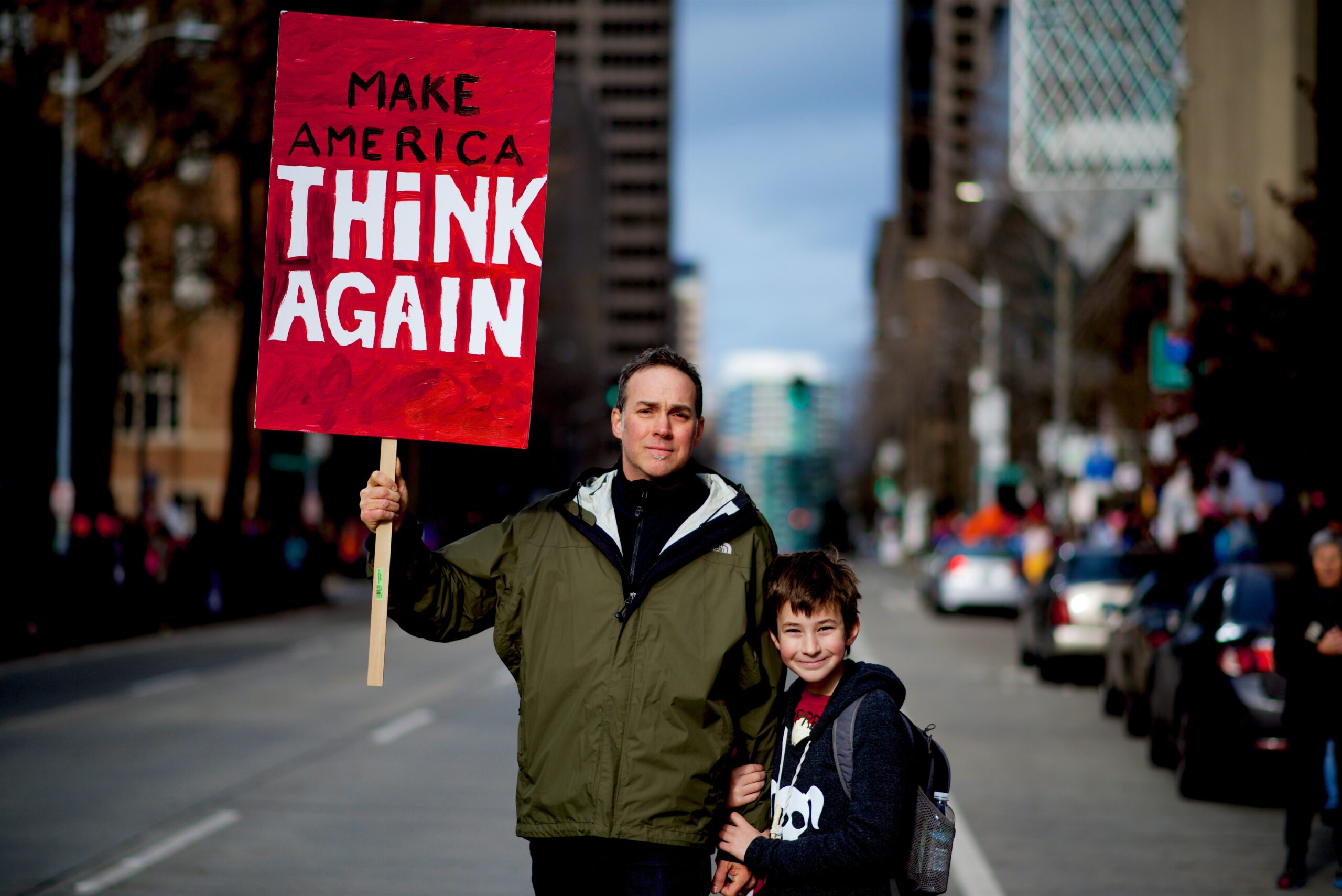
I have a strong negative internal reaction every time I watch Donald Trump speak. The reason is simple. He lies constantly.

I don’t exactly know why my body reacts the way it does, but it does react. I feel emotionally disgusted. Sometimes I feel a bit nauseous. It’s like I just had a spell cast on me that’s about to make me vomit up some slugs.

My body reacts similarly in the presence of Trump supporters when they talk about him. Whether intentional or not, they always resort to sharing lies and falsehoods to justify their support. There’s just such a huge abandonment of truth in that space.

I like being around people who speak the truth, and Trump and his supporters just don’t. At least I’ve never encountered one who does. Trumpism and falsehood always seem to go hand in hand, along with insensitivity to lying.

Interestingly I didn’t have this reaction to seeing Trump speak before he got into politics. Erin and I would sometimes watch The Apprentice when we were together, and while Trump was often a bit of a jerk on that show, it just seemed like ego-based entertainment and posturing. It’s different when the lying is sociopathic and directly harmful.

Trusting Your Inner Senses

At first I did my best to tolerate these feelings. And then I questioned why I should keep doing that. Is that really a wise approach? The feelings weren’t going down. They grew stronger and louder as the consequences of such lying grew even stronger, like lots of people dying unnecessarily.

In addition to being sensitive to my own feelings and senses, I also feel sensitive to other people’s feelings, and those have been especially loud this year. I could feel a lot of stress in the air.

The majority of people that I connect with regularly are also disgusted by Trump and his rampant lying, especially friends who live outside the USA. There are a lot of other sensitive people out there too, and I think many of them are good at broadcasting their feelings without always realizing it.

I opted to start trusting my body more. Otherwise I’m too tempted to disrupt my health to tone down those inner signals, and I don’t like doing that. I trust that this sensitivity exists for a good reason, especially since it produces so many other benefits that I don’t want to sabotage.

When I say that Trump supporters make me nauseous, I’m being literal about that. I recognize that it may sound like an exaggeration to someone who isn’t familiar with this kind of sensitivity due to lack of personal experience. I think many vegans and raw foodists will likely have an easier time recognizing that I’m speaking the truth here if they’ve experienced similar changes in sensitivity from dietary improvements. This effect is described in detail in some books too, such as Raw Emotions by Angela Stokes.

If you know that eating heavier foods and drinking alcohol can dull your senses and emotions, is it such a stretch to consider that eating cleaner can swing you the opposite way? How would you feel after drinking six shots of liquor? Now imagine how you could feel if you could somehow remove six shots worth of disruption from your body, starting from what you think is sober and normal. So many other aspects of life become easier, but then you have to live in a world where a lot more people seem like they’re drunk – mentally foggy, confused about their lives and purpose, and emotionally numb. It’s always tempting to want to return to the fold, but you can’t unsee what you’ve seen.

When you’re very in tune with your emotions and your inner senses, it’s hard to act against them – sometimes a LOT harder. The question then becomes: How much are you willing to trust these signals?

Trusting the Sensitivity

I do feel it was the right choice to honor those feelings, which led me to do some extra social purging during the past few years. That felt better than the alternative of engaging with bullshit again and again.

Last week I joked that I had to pay extra to upgrade my Facebook block list to 2TB. While I can look back and appreciate some of those connections for what they were, I also honor my body’s signal when it’s time to move on.

I don’t regret it. It was the right choice for me.

What I didn’t realize was that I can’t fully honor these sensitive signals while also trying to numb myself to them in some areas. If I put loyalty to friends first, I always lose something of much greater value. I have to honor the truth first and let my social circle align with that. And plenty of people do. I’ve grown closer this year to some good friends who are very sensitive too, and there’s so much more depth and beauty in relationships with sensitive people than with relatively insensitive ones.

So this has never been about politics for me. Nor is it about character either. It’s actually about trust – trusting the sensitivity that can be challenging to hear but keeps bestowing surprising gifts.

Moving on is a big part of personal growth, and it’s often difficult. I notice that when I do this intelligently, it’s a move into greater trust – trust in myself, trust in reality, or trust in the universe.

This kind of trust is hard. It’s so easy to doubt yourself. It’s easy to doubt your inner signals. It’s easy to want to numb yourself. It’s hard to let yourself sense what you’re sensing, feel what you’re feeling, and let that guide you.

Share Button

Covid vaccine: First ‘milestone’ vaccine offers 90% protection

The vaccine is a “significant step” forward for getting life back to normal, but challenges remain.

Share Button

Covid-19: Global coronavirus cases pass 50 million

More than 1.25 million coronavirus-related deaths have been reported, Johns Hopkins university says.

Share Button

Coronavirus: Hauliers included in Denmark restrictions

Rules for travel from Denmark were tightened after a coronavirus strain spread from mink to humans.

Share Button

Does the USA Need to Heal Now?

In my extended social circle, some people are calling for unity and healing now that Joe Biden will be the next President. Others aren’t so sure that healing is really what’s needed.

The offer basically sounds like this:

It’s time to repair the wounded relationships between the people who supported a lying, racist sociopath path for President and those who wanted to replace him.

That’s a crappy offer. It doesn’t land well. The most airy-fairy people I know seem to be swallowing it and trying to invite people into some awkward reconciliation phase, but most seem to be declining this offer and searching for a better one, at least for now.

There’s some stress and sadness too because people aren’t sure if there is a better offer on the table right now.

The problem with this offer is that this election wasn’t really about the usual politics where otherwise good people may have different views about certain subjects. This election went into much darker territory.

Even though Biden won, which caused great relief, lots of people around the world (and in the USA too) were still shocked and dismayed to see that more than 70 million Americans cast their ballots for Trump – voting against racial justice, against global cooperation, against the environment, against human decency, against science, against health, and against so much more that people care about. How can they not see this as being so, so backwards in this day and age?

And it is truly backwards. My international friends are right in their assessment.

While some blame the media, Trump has been one of the most communicative Presidents ever. Anyone can watch his speeches or read his tweets. Even when there’s a Twitter warning label attached, you still get to see the original messages. There’s an over-abundance of primary source material for all the world to see. Fox News may add fuel the fire, but there’s more than enough coming from the White House itself, direct and unfiltered.

More people voted from Trump in this election than voted for Obama each times Obama won. Fortunately a lot more people voted overall, which pushed Biden into record territory, gaining more than 75 million votes.

So what do people of good conscience do about this?

Some people are starting with a bit of celebrating. People have been dancing and cheering in the streets in some cities. But it’s a bit of a black celebration. Even if you do celebrate, what comes next?

Do we now offer hugs and handshakes and say, “Oh well, your guy lost the election… better luck next time”?

Are we suppose to pretend that people who voted for Trump are just good people who slightly lost their way or just voted for their party or for financial reasons? And now that he’s on his way out, they should be fine in a month or two?

I think a lot of people realize that there’s no going back. The cat is out of the bag. Too many Americans scared the hell out of the world, first by voting for Trump in 2016 and then again this year. Now the world and the rest of the country want answers – why did this happen, and what will be done to prevent this from happening again?

Patching things up with delusional friends and family members isn’t going to cut it. That would only be a temporary bandage, and too many people would still be left with a feeling of lingering dread that we could be right back here again in 2024.

There are complex issues to be unwound and resolved regarding causes and solutions. I’m not going to get into that now, but at this point I will say that I think a first good step is to decline the healing offer. It’s a phony offer, tantamount to sweeping these issues under the rug. We can’t do that. This was a wake-up call, so stay woke about it.

I for one won’t be reaching out to ex-friends who went nutter and became Trump supporters. This has nothing to do with politics. And it’s not really even about values or beliefs, however delusional those beliefs may be. It’s about their behaviors and the effects of their behaviors. I hold them accountable for their actions. To offer some form of healing is just foolish at this point.

Such people didn’t wound me. They just caused me to lower my assessments of them. They violated my boundaries for friendship, and so they got tossed out of my social circle. I’m not going to invite them back in if the boundary violations would remain unresolved.

This isn’t about holding a grudge, and it’s not about forgiveness. It’s about the importance of maintaining healthy boundaries and intelligent standards. I’m not going to reach out just to be re-exposed to such people’s misaligned behaviors and fanciful conspiracy theories. They’ve shown me how low they’re willing to go, and I accept that as their choice.

It’s not even really accurate to say that I don’t trust them. I do trust them to continue behaving as they’ve been behaving. I trust that they’ll continue promoting conspiracy theories, being okay with lying, promoting racist ideas, voting in support of racist policies, and taking irresponsible actions that will result in more infections and deaths. I trust that what they’ve shown me is likely to continue in some form, and I’d rather remain aware of this instead of pretending that it isn’t there.

I will not be an enabler for such people, so I won’t invest in relationships with them. There is nothing to heal because this isn’t a wound. It’s simply part of reality to be accepted.

Truth alignment is empowering. Start by looking at the USA and acknowledge that yes, a whole lot of Americans really have gone full-tilt nutter. Let that sink in. There’s no need to resist this realization.

Even though it may seem otherwise, my relationship with such people is still rooted in compassion. That’s because I was raised as a religious nutter myself. I can look at the Trump supporting nutters today and still recognize something of myself in them. I don’t feel like it’s impossible to understand them. But that doesn’t mean I’ll let them drag me into the nutter abyss with them, and it doesn’t mean I want to invest in listening to their daily nonsense; I’ve done enough of that to last a lifetime.

When I was a religious nutter (and a different kind of nutter a bit later, like a shoplifting nutter), it didn’t serve me when non-nutters swept my nuttiness under the rug and still tried to relate to me based on our commonalities. That just empowered me to remain in nutter land. They might have thought they were being tolerant, but they were just being short-sighted and foolish. They weren’t doing what was best for me.

What really helped was when I encountered people who stood firm in non-nutter land, and they made it clear where I was standing. Their certainty (which was really truth alignment) nudged me to start having doubts, which led to reconsideration of my beliefs, which led to a whole lot of growth and transformation. This in turn eventually led to helping more people escape nutter land, people who expressed gratitude for this afterwards.

Nutters don’t need hugs and handshakes to patch things up. They need constant and unwavering reminders that they’re standing in nutter land. They need truth, not denial and pretending.

Being a Trump supporter is stupid, plain as day. The reasons people use to justify such behavior are irrelevant. Voting for Trump is a stupid action, no matter the reason. We can assess its stupidity based on the results alone, which are measurably dreadful.

Being a Trump supporter was stupid four years ago. It was stupid a week ago. And it’s stupid today. If you are a Trump supporter, your behavior is stupid, no doubt about it. You don’t have to remain in nutter land though. There is an exit door. Walk through it when you’re ready.

I’m here to support, encourage, and serve the non-nutters of the world. The only service I offer to the nutters is to doggedly remind you that you’re still in nutter land, but you must choose to leave. That’s the gateway that shifts you from unconscious growth to conscious growth.

If you choose to stay in nutter land or if you pretend you’re not there when it’s pretty damned clear that you are, then I’ll just keep reminding you how dreadfully stupid you’re being. And if you don’t banish me from your life for good – if you keep that door open just a tad – then we both know you’re eventually going to leave nutter land and come play with the smart people. It’s only a matter of time.

Personally I don’t think nutter land should be abolished. I think it serves a worthwhile purpose. Its presence can be healthy for us, especially as a reminder. The presence of nutter land raises the stakes and helps us gain clarity about what we’d like to create and experience instead. If supporting Trump is ridiculously stupid, where is the ridiculously smart path? I think it’s good to be aware that nutter land is always nipping at our heals, challenging us to dream bigger and bolder and to not get complacent.

Nutter land woke me up too during the past four years. The sheer lunacy of that last four years got me feeling more engaged in the game of life. It got me to finally register to vote for the first time ever. And I must say that it was fun casting one of the votes that kept Nevada blue. I picked a good time to start voting. It really did feel like my vote mattered. I loved being part of the team that said to the nutters, “You shall not pass!”

They also helped me see the importance of being anti-racist (not a passive non-racist), including participating in a diversity committee in an organization I belong to, which is still ongoing.

The nutters reminded me of the importance of full engagement with life. And for that I actually feel grateful. I’m still going to stand firm against their various insanities though.

So I don’t think polarization is a problem. I think it’s good and healthy. The more extreme the nutters become, the more their behavior encourages me to sculpt my character in different ways – if only to counter-balance their nuttiness. The more they assert their insanities, the more they encourage me to grow in ways I may have been overlooking.

So the healing offer is declined. There’s nothing to heal. There is a lot of work to be done, but the nutters can’t stop us from doing it. They’re just going to make everyone else stronger, more attentive, and more resolved. And many nutters will soon leave nutter land because nutter land is becoming a dreadful place to stay.


Share Button

One-Minute Relationship Challenges

While you can do lots of different 30-day challenges solo, consider that you can also do them with a relationship partner.

Rachelle and I often do 30-day challenges together, especially with other Conscious Growth Club members. This month we’re doing NaNoWriMo together, so we’re each writing novels by chipping away at the word count day by day.

For another type of partner challenge, consider doing one specifically to connect with your partner in some pleasant way – emotionally, physically, romantically, etc. I suggest that you make it a super easy commitment – just one minute per day.

Anyone can find the time to connect for an extra minute. Here are some examples for what you can do as a daily couples challenge for a month:

  • Share a one-minute hug.
  • Kiss each other for one minute, and surrender to the sensuality of the experience.
  • Lovingly gaze into each other’s eyes for one minute.
  • Set an intention for your day together.
  • Share one thing you like, love, or appreciate about your partner.
  • Share one idea for a trip or experience you’d like to have together someday.
  • Give your partner a one-minute neck massage or head scratching.
  • Cuddle or caress each other for one minute.
  • Send each other one supportive, loving, or sexy text message.
  • Write one supportive, loving, or sexy sentence on a sticky note, and post it where your partner will see it.
  • Take a romantic, playful, or silly photo together.
  • Do one simple act of kindness for your partner.

Of course you can do more. One minute is such a nice minimum though. It’s long enough that you can do something meaningful in that time, yet it’s so short as to offer little resistance. Even if it’s the end of the day and you’re getting tired, you can still do your one-minute commitment.

Since it’s only a minute, how can your partner resist doing it with you if you make the invitation? Better yet just command your partner to do one of these with you. 😉

Even if you’d normally do some of these anyway, committing to one specific action as a daily challenge somehow makes it feel a bit different, adding a twist of specialness to the familiar.

This month Rachelle and I are sharing a one-minute kiss each day. We kiss often anyway, but not always for a minute or more straight. We’re both playfully enjoying this little challenge, which is hardly a challenge at all – just a nice shared experience to have each day. This has added an extra sparkle to our connection this past week, which has been especially nice given how crazy this week has been for the country and the world.

Sometimes a simple one-minute action becomes a catalyst for more. Usually we end up kissing well beyond a minute, and we don’t necessarily stop at just kissing. It’s easy to frame the action commitment as a minute of kissing though, knowing that it will often lead to more.

This is similar to the idea of micro-habits shared by James Clear in his excellent book Atomic Habits. When you start with a one-minute habit, you won’t likely feel much resistance, and once you do the first 60 seconds, you’ll often feel like doing more.

Share Button