Moral illusions may alter our behavior

Just as optical illusions can fool the eye to present a distorted image of reality, moral illusions can fool our decision-making ability, making us more selfish. This is the conclusion of a newly presented doctoral thesis from Linköping University. But the results also show that we are more likely to vote for the good of all when taking part in democratic decisions.

“We tend to use what we can call a ‘moral wiggle room’ to justify selfish decisions. This means that we can act selfishly in certain situations, without feeling that our actions are morally wrong,” says Kajsa Hansson, newly promoted doctor in economics at Linköping University, with a thesis entitled Moral Illusions.

In the thesis, she examines several aspects of what she terms ‘moral illusions’, and compares them to optical illusions. She concludes that we can tweak our morals in some situations to increase self-benefit.

“Fairness is in the eye of the beholder. But I have used a broad definition of morality, and I don’t judge whether a certain type of fairness is good or bad. Instead, I use the idea of whether a person experiences that they are not living up to their own notion of good morality,” says Kajsa Hansson.

Moral illusions mainly arise in competitive situations when many people compete for the same rewards. This is a consequence of psychological mechanisms that cause us to assess fairness differently, depending on whether we are successful or not. This is particularly the case when we lack information about the fairness of the situation. When the brain attempts to fill in missing information, it may create an image that does not match reality — in the same way as occurs for an optical illusion.

One example is how we view losing. If we lose, we tend to blame it on that the playing field was not level, or that the game was rigged. When we win, in contrast, we explain this by our excellent playing skills. This tendency may describe why successful people believe that the world is a meritocracy, and that economic inequalities are thus fair.

Kajsa Hansson has also investigated how we react to decisions when we can avoid information that may encourage unselfish behaviour. In this case, again, our morality can be tweaked, since we are reluctant to seek out more information that risks giving us a bad conscience. Such information may force us to act unselfishly.

There is, however, one situation in which moral illusions do not play a role — when decisions are taken democratically. This may be the case for decisions taken by the national parliament, but it also applies in the committees of clubs, companies, etc., where several people are involved and take decisions collectively. This result contradicts the currently accepted theory, which says that we become less moral when the responsibility for a decision is shared among several people. This phenomenon is known as the “diffusion of responsibility.”

“When decisions are taken democratically, there is always someone else we can blame, and previous studies have shown that we become more selfish when the responsibility for a decision is spread among several people. However, our results do not support the idea that people become less moral when taking such decisions. In fact, quite the opposite,” says Kajsa Hansson.

In the study, Kajsa Hansson and her colleagues carried out three experiments in which the participants must choose whether to donate or claim money. In some experiments, the decision was a democratic one between several participants; in others the participants acted individually. The results showed that it was not possible to see any selfish behaviour. Indeed, they showed that people tend to become more generous in this scenario.

“Our results are actually very good news. They suggest that we possess the insight that we take decisions for others, and we act collectively. We can speculate that people realise that we can contribute more to the common good when everyone contributes,” says Kajsa Hansson.

The thesis considers decision-making in a broad perspective, and looks at how morality affects it. Kajsa Hansson believes that it can help us understand each other better.

“We may not always agree with everyone’s interpretations of reality, but we can understand where they come from.”

The thesis has been funded by the Lars Hierta Memorial Foundation and the Helge Ax:son Johnson Foundation.

Story Source:

Materials provided by Linköping University. Original written by Anders Törneholm. Note: Content may be edited for style and length.

Share Button

Queen’s funeral: Routine hospital care being postponed

Appointments, including for surgery and outpatient clinics, rescheduled because of Queen’s funeral.

Share Button

Current vaccine approach not enough to eradicate measles

Current vaccination strategies are unlikely to eliminate measles, according to a new study led by faculty at the University of Georgia. 

The paper, which published today in The Lancet Global Health, explores the feasibility of eliminating measles and rubella using predominant vaccination strategies in 93 countries with the highest disease burden.

Despite marked reductions in the number of new measles and rubella cases worldwide, gaps remain between current levels of transmission and disease elimination. 

“Measles is one of the most contagious respiratory infections out there, and it moves quickly, so it’s hard to control,” said lead author Amy Winter, an assistant professor of epidemiology and biostatistics at UGA’s College of Public Health. 

The basic reproduction number (R0) for measles, which represents the number of people that one infected person is likely to transmit that disease to in a fully susceptible population, is roughly 18. By comparison the R0 for the original SARS-CoV-2 virus is estimated to be around three.

In 2017, the World Health Organization director general requested a report on the feasibility of measles and rubella eradication. One component of this report was to use transmission models to evaluate the theoretical feasibility of eradication of the two viruses given different vaccination strategies.

The assessment was a collaboration with the WHO Strategic Advisory Group of Experts Measles and Rubella Working Group, the World Health Organization, the U.S. Centers for Disease Control and Prevention, and five modeling groups.

Using four national disease transmission models and one sub-national model, the modeling groups projected the annual case rates for measles and rubella for two vaccination scenarios.

Both vaccination scenarios use the two predominant vaccination approaches of routine vaccination as part of childhood immunization schedules and nationwide vaccination campaigns.

The first “business as usual” vaccination scenario continues vaccination coverage and campaigns into the future. The second “intensified investment” vaccination scenario optimally improved vaccination coverage over time. This scenario also included vaccination campaign cessation criteria – a stopping point for when campaigns are no longer deemed necessary because a large enough proportion of the population has been inoculated.

The models show that current vaccine strategies could eliminate rubella and congenital rubella syndrome in all 93 counties, but not measles. 

“The current strategy that we use, which is focused on improving routine vaccination coverage and supplementing it with nationwide vaccination campaigns until routine vaccination is high enough, that alone is not going to be sufficient to reach measles elimination. We need novel approaches,” said Winter. 

The authors evaluated two strategies that could help move a country to elimination faster and reduce the probability of measles outbreaks: One, improve how supplemental vaccine campaigns are delivered to ensure they are reaching children who are not receiving routine vaccinations.

Two, improve vaccine coverage equity by focusing routine and supplemental vaccination on sub-regions with the lowest vaccination coverage first to get them up to par.

“A world that is permanently free of measles and rubella would be an incredible achievement for humanity. Our work suggests that to reach this goal, we need to make vaccine coverage much more equal,” said co-author Mark Jit, professor of vaccine epidemiology at the London School of Hygiene & Tropical Medicine.

“In other words, we need to work even harder to bring measles and rubella vaccination to the most underserved people around the world.”

The final strategy the authors present is a reconsideration of cessation criteria. Currently, most countries stop supplementing routine vaccines with vaccination campaigns once they reach elimination status, said Winter, but the models suggest that outbreaks are still likely to occur if countries rely on routine vaccines alone.

It’s critical, Winter warns, to remain vigilant to surveil for rubella and measles cases and rapidly respond to potential outbreaks even after elimination is achieved.

“We have a globally connected world, so there’s this constant pressure of importations of the viruses in places where it’s already eliminated,” she said. “That’s why keeping vaccination coverage high and continuing to improve surveillance for these diseases is important.”

Share Button

Cowbird chicks do best with two warbler nest mates — not four, not zero, study finds

Brown-headed cowbirds are generalist brood parasites, laying their eggs in the nests of many other bird species and letting the host parents raise their young. A new study seeks to understand the strategies cowbird chicks use to survive in prothonotary warbler nests when they hatch with different numbers of warbler nestlings. The study reveals that a cowbird chick does better with two than with four or zero warbler nest mates.

The researchers report their findings in the Proceedings of the Royal Society B.

If a cowbird ends up in a prothonotary warbler nest with four host chicks, the cowbird either perishes or the number of warbler chicks drops, usually to two, the study found. This suggests that cowbirds engage in what the naturalist Charles Darwin called “niche construction,” modifying their environment to enhance their own survival, the researchers said.

“Brood parasites like brown-headed cowbirds lay their eggs in the nests of so many different species, we wanted to know about one really important aspect of how they make a go of it in a world that, when they hatch, could be any one of 200 different scenarios,” said Nicholas Antonson, a Ph.D. candidate at the University of Illinois Urbana-Champaign who led the study with Mark Hauber, a U. of I. professor of evolution, ecology and behavior. “We focused on what happens when a cowbird hatches into a nest with different numbers of host nestlings.”

Cowbird chicks never eject eggs from host nests or directly kill host young. This differentiates them from another brood parasite, the common cuckoo, which will kill all other chicks in the nest and claim all the food the foster parents can provide, Antonson said. A previous study from Hauber’s own postdoctoral research showed that this strategy does not work for cowbirds in the nests of another host bird: the Eastern phoebe. In that study, cowbirds actually got less food from host parents when there were no nest mates than when there were two host chicks.

“Cowbirds have adapted to live with host nest mates,” Hauber said. “They outcompete them, they raise their heads higher, and they beg more loudly and for longer periods of time, but they do not actively displace the host nest mates.”

To better understand these dynamics, the team deployed nest boxes that were attractive to warblers and cowbirds in a southern Illinois swamp forest. The boxes were designed to exclude ground predators like snakes and raccoons, and aerial predation by hawks and owls. By changing out the bedding in the boxes four days after the eggs hatched, the team also reduced the threat from invertebrate parasites like blowflies.

The team followed nests with and without cowbird parasites and manipulated the number of host chicks in the nests by moving warbler eggs or chicks between nests. All the nests parasitized by cowbirds had either zero, two or four warbler nest mates. Control nests containing only warbler chicks were matched for the total number of young.

Previous studies had quantified the amount of food the host parents brought into the nest and what proportion of the food the cowbird nestling received. In general, cowbirds hatch earlier than their nest mates. They tend to be bigger and more aggressive than warbler chicks and extract more than their fair share of food from the host parents, Antonson said. Cowbirds need more food because they grow two-to-three times larger in the nest than the warbler chicks.

“One of the unique aspects of our study is that we also quantified how many cowbirds survived to fledging in each of these different scenarios,” Antonson said. “We found that cowbirds survive best in the nests where they hatch with two host nestlings. That’s better than when they hatch with four host nestlings or with zero host nestlings. Cowbirds raised with more than that optimal number of two host nestlings appear to reduce the host brood sizes down to two.”

The reduction seen in host nestling numbers when cowbirds are present doesn’t occur in the control warbler nests with no cowbird nestlings, the researchers found.

“We think that the cowbirds are manipulating the host numbers to reduce them to the optimal so that they can grow best,” Hauber said. Stealing food meant for the other nestlings is the likely means by which they do that. Further studies will be needed to confirm that hypothesis.

The Animal Behavior Society, Humboldt Foundation and National Science Foundation supported this research.

Share Button

Do you know your blood pressure?

Reprint Permissions

A single copy of these materials may be reprinted for noncommercial personal use only. “Mayo,” “Mayo Clinic,” “MayoClinic.org,” “Mayo Clinic Healthy Living,” and the triple-shield Mayo Clinic logo are trademarks of Mayo Foundation for Medical Education and Research.

Share Button

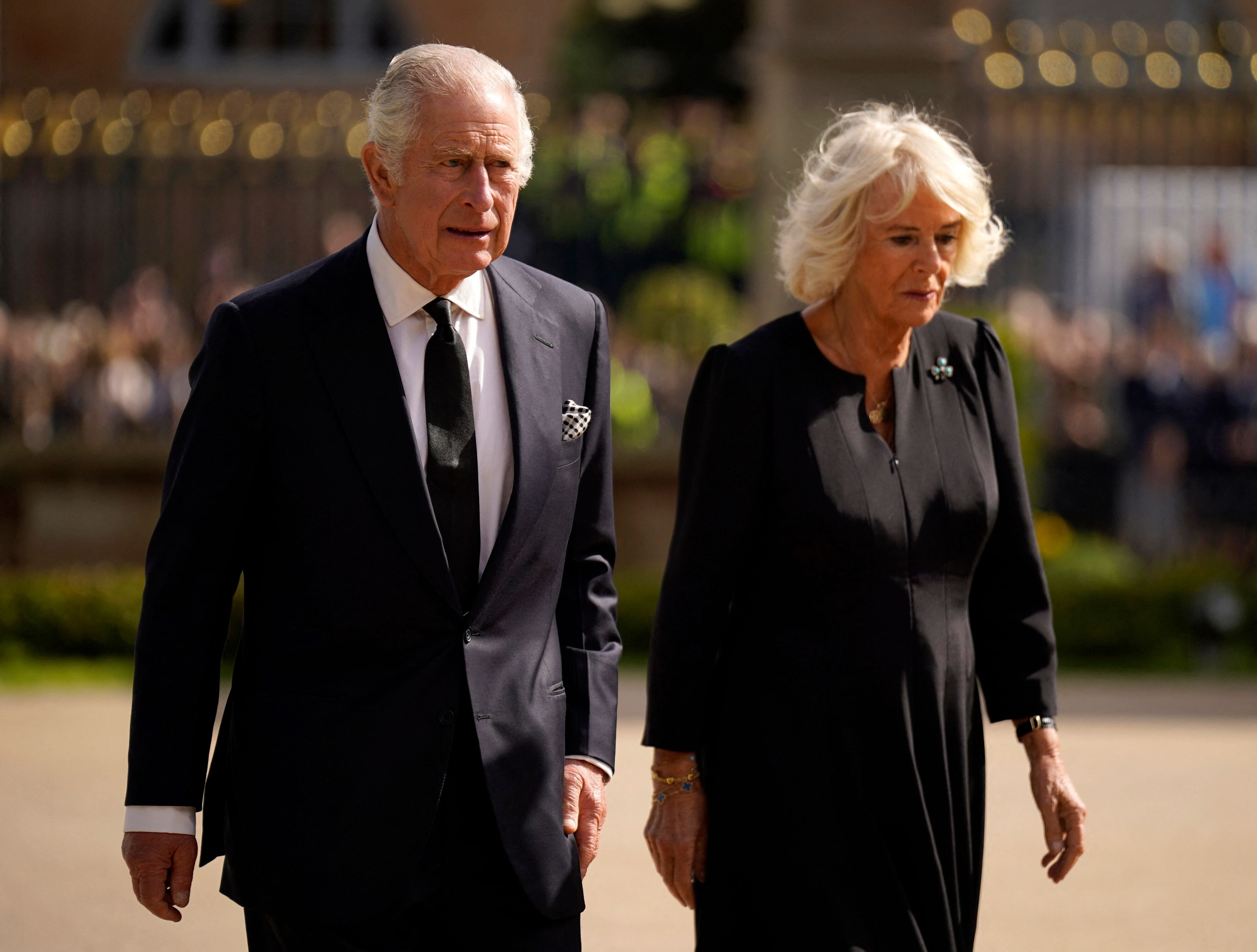
King Charles Frustrated After Another Pen Mishap

King Charles was visibly frustrated during a signing ceremony in Northern Ireland as the new monarch had his second mishap in recent days involving a pen.

The King was visiting Hillsborough Castle, Northern Ireland’s only royal residence, where he was filmed signing the estate’s visitors’ book as part of a tour of the UK following the death of his mother, Queen Elizabeth.

But his pen leaked, much to the new King Charles’s annoyance.

Turning to his wife Camilla, the Queen Consort, he says: “Oh God, I hate this (pen).”

Camilla quickly pointed out the pen’s ink had leaked over the book, saying: “Oh look, it’s going everywhere.”

Wiping his fingers, King Charles continued: “I can’t bear this bloody thing. What they do, every stinking time.”

The King is known to carry his own fountain pen for when he is frequently called on to sign visitors’ books during royal visits.

In the much-shared clip, the King also forgot the date.

“Is it September the 12th?,” he asked an aide.

When told it was the 13th, he said, “Oh god, I’ve put the wrong date down.”

Camilla then said to him rather sharply: “You signed the 12th earlier.”

On Saturday, the new monarch went viral after a clip showed him shooing staff to clear his desk while he signed his accession proclamation.

In the footage, the King fans his hand dismissively at an aide to direct the moving of an ink pot.

The King’s tetchy response comes less than a week after his mother’s death, and during a marathon series of events to marks an official period of mourning,

The emergence of the clips reflect the unprecedented access granted to the cameras under the UK’s new head of state.

Last week, the King told Liz Truss that the Queen’s death was a “moment I’ve been dreading” as the new prime minister had her first audience with the monarch at Buckingham Palace. The meeting is usually private.

Share Button

Northern Ireland Receives King Charles III With Grief And Bated Breath

When Queen Elizabeth II visited the Republic of Ireland in 2011, it was a moment of sensitivity and reconciliation, signalling the seismic shift towards longer-lasting peace between Ireland and the UK.

Beginning her speech in Irish, the Queen made every effort to unify two countries with a difficult and complex history.

“With the benefit of historical hindsight, we can all see things which we would wish had been done differently or not at all,” she told guests at a state dinner in Dublin Castle.

However, in this week of her death, as King Charles III ascends the British throne, the relationship between our islands, among those north and south of the Irish border, remains fractious.

As the King arrived at his official residence of Hillsborough Castle near Belfast on Tuesday – his fortieth trip to Northern Ireland – former Irish Taoiseach John Bruton told Sky News, “in many ways, intergovernmental relations between Britain and Ireland are much, much worse now, than they were when the Queen visited in [2011], and that needs to be repaired by the two governments”.

Brexit has maimed relations across the UK, but in particular has dug up dormant hostilities between communities in Northern Ireland.

King Charles arrives not only mourning his mother – a uniting figure within the UK by many accounts – but in the wake of sustained political tensions between the Republic and the UK over its land border and trade impacts arising from Brexit.

Despite this, the response among political parties to the sudden passing of the Queen has been one of particular sympathy and sensitivity – for the most part.

The Union Jack flies at full mast at Hillsborough Castle, Belfast, after the Proclamation of Accession of King Charles III.

Brian Lawless – PA Images via Getty Images

On the Queen’s passing, Taoiseach Micheál Martin recalled “the warmth of the welcome she received from the public in Cork during her walkabout” in 2011.

Sinn Féin, which for many years during the Troubles was considered the political wing of the Irish Republican Army, sent “sincere condolences” to the King and party figures plan to attend events during the 10 days of mourning. Party president Mary Lou McDonald said she was “a powerful advocate and ally of those who believe in peace and reconciliation”.

However, the party stayed clear of Hillsborough Castle on Sunday for the proclamation of the King’s accession.

Ms McDonald said she did not attend as the ceremony was “intended for those whose political allegiance is to the British Crown”, and many senior party figures in Northern Ireland attended a rally in Belfast for victims of the Troubles instead.

No surprise there, though a far cry from past hostilities.

A notable outlier in the Republic was the left-wing People Before Profit party, who waited barely a day after the Queen’s passing to call for an end to monarchy.

While that’s not an unpopular sentiment in the Republic, and certainly among Republican communities in Northern Ireland, the reaction outside the political gauntlet has been less celebratory than you might expect – despite the Fenian blood running through our veins.

Monarchists in the Republic are few and far between, not least while we still live in the shadow of 800 years of British oppression – but while some like to joke about the Queen’s death – football hooligans chanting “Lizzy’s in a box” come to mind – her death has undoubtedly caused some upset.

Britain’s influence – and impact – on Ireland goes much further than Brexit ruining the fun for everyone. A cultural fascination with the royals has bled through the border over the years via British media. You’re unlikely to see many a Union Jack south of the border, but there is a palpable sense of loss for the woman who has been an influential figure on the world stage for 70 years.

Are there memes? Yes, Irish Twitter has been full of them and no column has enough lines to explain why the Queen might be reincarnated in the (misreported) birth of Trisha Paytas’s baby.

But underneath this social media frenzy, and the ability of Twitter to throw up jokes on just about any tragedy, is what can only be described as ambivalence towards the monarchy – particularly among young people.

Despite a respect for the duties the Queen carried out, there’s a quiet agnosticism about the institution that leaves many bewildered by the sense of grief washing over Britons in recent days.

But while King Charles ascends at a time of complex feelings about the Crown across the UK, not least among the Black community, he remains fiercely popular among Unionists in Northern Ireland.

Floral tributes left for the Queen outside Hillsborough Castle during the King's visit.
Floral tributes left for the Queen outside Hillsborough Castle during the King’s visit.

Charles McQuillan via Getty Images

The meadow of flowers that greeted his arrival at Hillsborough on Tuesday reflects the devotion many have for the Queen – and their new King. A sea of smiling spectators, many of whom arrived after dawn to get a good spot, shouted “long live the King” as he entered his official residence.

“[King Charles] is a unifying figure among Irish people in the sense he is highly regarded in the Republic of Ireland,” Mr Bruton told Sky News.

“But also, as you can see, very highly regarded in Northern Ireland. Obviously there are divides in Northern Ireland where part of the community… doesn’t have quite the same attitude towards the Union.”

Obviously indeed. The reaction in the Republican community seems more akin to Glaswegians after Margaret Thatcher died. No more need be said.

And while there has been political consensus through the 1998 Good Friday Agreement, there’s hasn’t been a reconciliation between the two communities, Mr Bruton said.

“There is quite a deep level of polarisation in Northern Ireland, but I think the King, personally, can help create an atmosphere in which reconciliation becomes more possible.”

And Charles himself? Speaking at Hillsborough Castle on Tuesday, the King said that with the “shining example” of his mother’s duty to Northern Ireland, and “with God’s help, I take up my new duties resolved to seek the welfare of all the inhabitants of Northern Ireland”.

Ireland waits with bated breath to see if King Charles will indeed foster unity on this island – if, that is, people are listening to him at all.

Conor Capplis is a journalist with the Irish Examiner based in Cork.

Share Button

Researchers identify a drug that mimics the effects of exercise on muscle and bone in mice

Maintaining a regular workout routine can help you look and feel great — but did you know that exercise also helps maintain your muscles and bones? People who are unable to engage in physical activity experience weakening of the muscles and bones, a condition known as locomotor frailty. Recently, researchers in Japan have identified a new drug that may aid in the treatment of locomotor frailty by inducing similar effects as exercise.

Physical inactivity can result in a weakening of the muscles (known as sarcopenia) and bones (known as osteoporosis). Exercise dispels this frailty, increasing muscle strength and promoting bone formation while suppressing bone resorption. However, exercise therapy cannot be applied to all clinical cases. Drug therapy may be helpful in treating sarcopenia and osteoporosis, especially when patients have cerebrovascular disease, dementia, or when they have already become bedridden. However, there is no single drug that addresses both tissues simultaneously.

In a new study published in Bone Research, researchers from Tokyo Medical and Dental University(TMDU) developed a novel drug screening system to identify a compound that mimics the changes in muscle and bone that occur as a result of exercise. Using the screening system, the researchers identified the aminoindazole derivative locamidazole (LAMZ). LAMZ was capable of stimulating the growth of muscle cells and bone-forming cells, osteoblasts, while suppressing the growth of bone-resorbing cells, osteoclasts.

When LAMZ was administrated to mice orally, it was successfully transmitted into the blood, with no obvious side effects. “We were pleased to find that LAMZ-treated mice exhibited larger muscle fiber width, greater maximal muscle strength, a higher rate of bone formation, and lower bone resorption activity,” says lead author of the study Takehito Ono.

The research team further addressed the mode of function of LAMZ and found that LAMZ mimics calcium and PGC-1α signaling pathways. These pathways are activated during exercise and stimulate expression of downstream molecules that are involved in the maintenance of muscle and bone.

To investigate whether LAMZ can treat locomotor frailty, LAMZ was administrated to an animal model of sarcopenia and osteoporosis. “Both oral and subcutaneous administration of the drug improved the muscle and bone of mice with locomotor frailty,” says senior author Tomoki Nakashima.

Taken together, the research team’s findings show that LAMZ represents a potential therapeutic method for the treatment of locomotor frailty by mimicking exercise.

Story Source:

Materials provided by Tokyo Medical and Dental University. Note: Content may be edited for style and length.

Share Button

Scientists discover how air pollution may trigger lung cancer in never-smokers

A new mechanism has been identified through which very small pollutant particles in the air may trigger lung cancer in people who have never smoked, paving the way to new prevention approaches and development of therapies, according to late-breaking data [to be] reported at the ESMO Congress 2022 by scientists of the Francis Crick Institute and University College London, funded by Cancer Research UK (1). The particles, which are typically found in vehicle exhaust and smoke from fossil fuels, are associated with non-small cell lung cancer (NSCLC) risk, accounting for over 250,000 lung cancer deaths globally per year (2,3).

“The same particles in the air that derive from the combustion of fossil fuels, exacerbating climate change, are directly impacting human health via an important and previously overlooked cancer-causing mechanism in lung cells. The risk of lung cancer from air pollution is lower than from smoking, but we have no control over what we all breathe. Globally, more people are exposed to unsafe levels of air pollution than to toxic chemicals in cigarette smoke, and these new data link the importance of addressing climate health to improving human health,” said Charles Swanton, the Francis Crick Institute and Cancer Research UK Chief Clinician, London, UK, who will present the research results at the ESMO 2022 Presidential Symposium on Saturday, 10 September.

The new findings are based on human and laboratory research on mutations in a gene called EGFR which are seen in about half of people with lung cancer who have never smoked. In a study of nearly half a million people living in England, South Korea and Taiwan, exposure to increasing concentrations of airborne particulate matter (PM) 2.5 micrometres (μm) in diameter was linked to increased risk of NSCLC with EGFR mutations.

In the laboratory studies, the Francis Crick Institute scientists showed that the same pollutant particles (PM2.5) promoted rapid changes in airway cells which had mutations in EGFR and in another gene linked to lung cancer called KRAS, driving them towards a cancer stem cell like state. They also found that air pollution drives the influx of macrophages which release the inflammatory mediator, interleukin-1β, driving the expansion of cells with the EGFR mutations in response to exposure to PM2.5, and that blockade of interleukin-1β inhibited lung cancer initiation. These findings were consistent with data from a previous large clinical trial showing a dose dependent reduction in lung cancer incidence when people were treated with the anti-IL1β antibody, canakinumab (4).

In a final series of experiments, the Francis Crick team used state-of-the-art, ultradeep mutational profiling of small samples of normal lung tissue and found EGFR and KRAS driver mutations in 18% and 33% of normal lung samples, respectively.

“We found that driver mutations in EGFR and KRAS genes, commonly found in lung cancers, are actually present in normal lung tissue and are a likely consequence of ageing. In our research, these mutations alone only weakly potentiated cancer in laboratory models. However, when lung cells with these mutations were exposed to air pollutants, we saw more cancers and these occurred more quickly than when lung cells with these mutations were not exposed to pollutants, suggesting that air pollution promotes the initiation of lung cancer in cells harbouring driver gene mutations. The next step is to discover why some lung cells with mutations become cancerous when exposed to pollutants while others don’t,” said Swanton.

Commenting on the results, Tony Mok, Chinese University of Hong Kong, not involved in the study, said: “This research is intriguing and exciting as it means that we can ask whether, in the future, it will be possible to use lung scans to look for pre-cancerous lesions in the lungs and try to reverse them with medicines such as interleukin-1β inhibitors. We don’t yet know whether it will be possible to use highly sensitive EGFR profiling on blood or other samples to find non-smokers who are predisposed to lung cancer and may benefit from lung scanning, so discussions are still very speculative.”

Like Swanton, he stresses the importance of reducing air pollution to lower the risk of lung diseases, including cancer. “We have known about the link between pollution and lung cancer for a long time, and we now have a possible explanation for it. As consumption of fossil fuels goes hand in hand with pollution and carbon emissions, we have a strong mandate for tackling these issues — for both environmental and health reasons,” Mok concluded.A new mechanism has been identified through which very small pollutant particles in the air may trigger lung cancer in people who have never smoked, paving the way to new prevention approaches and development of therapies, according to late-breaking data [to be] reported at the ESMO Congress 2022 by scientists of the Francis Crick Institute and University College London, funded by Cancer Research UK (1). The particles, which are typically found in vehicle exhaust and smoke from fossil fuels, are associated with non-small cell lung cancer (NSCLC) risk, accounting for over 250,000 lung cancer deaths globally per year (2,3).

“The same particles in the air that derive from the combustion of fossil fuels, exacerbating climate change, are directly impacting human health via an important and previously overlooked cancer-causing mechanism in lung cells. The risk of lung cancer from air pollution is lower than from smoking, but we have no control over what we all breathe. Globally, more people are exposed to unsafe levels of air pollution than to toxic chemicals in cigarette smoke, and these new data link the importance of addressing climate health to improving human health,” said Charles Swanton, the Francis Crick Institute and Cancer Research UK Chief Clinician, London, UK, who will present the research results at the ESMO 2022 Presidential Symposium on Saturday, 10 September.

The new findings are based on human and laboratory research on mutations in a gene called EGFR which are seen in about half of people with lung cancer who have never smoked. In a study of nearly half a million people living in England, South Korea and Taiwan, exposure to increasing concentrations of airborne particulate matter (PM) 2.5 micrometres (μm) in diameter was linked to increased risk of NSCLC with EGFR mutations.

In the laboratory studies, the Francis Crick Institute scientists showed that the same pollutant particles (PM2.5) promoted rapid changes in airway cells which had mutations in EGFR and in another gene linked to lung cancer called KRAS, driving them towards a cancer stem cell like state. They also found that air pollution drives the influx of macrophages which release the inflammatory mediator, interleukin-1β, driving the expansion of cells with the EGFR mutations in response to exposure to PM2.5, and that blockade of interleukin-1β inhibited lung cancer initiation. These findings were consistent with data from a previous large clinical trial showing a dose dependent reduction in lung cancer incidence when people were treated with the anti-IL1β antibody, canakinumab (4).

In a final series of experiments, the Francis Crick team used state-of-the-art, ultradeep mutational profiling of small samples of normal lung tissue and found EGFR and KRAS driver mutations in 18% and 33% of normal lung samples, respectively.

“We found that driver mutations in EGFR and KRAS genes, commonly found in lung cancers, are actually present in normal lung tissue and are a likely consequence of ageing. In our research, these mutations alone only weakly potentiated cancer in laboratory models. However, when lung cells with these mutations were exposed to air pollutants, we saw more cancers and these occurred more quickly than when lung cells with these mutations were not exposed to pollutants, suggesting that air pollution promotes the initiation of lung cancer in cells harbouring driver gene mutations. The next step is to discover why some lung cells with mutations become cancerous when exposed to pollutants while others don’t,” said Swanton.

Commenting on the results, Tony Mok, Chinese University of Hong Kong, not involved in the study, said: “This research is intriguing and exciting as it means that we can ask whether, in the future, it will be possible to use lung scans to look for pre-cancerous lesions in the lungs and try to reverse them with medicines such as interleukin-1β inhibitors. We don’t yet know whether it will be possible to use highly sensitive EGFR profiling on blood or other samples to find non-smokers who are predisposed to lung cancer and may benefit from lung scanning, so discussions are still very speculative.”

Like Swanton, he stresses the importance of reducing air pollution to lower the risk of lung diseases, including cancer.

“We have known about the link between pollution and lung cancer for a long time, and we now have a possible explanation for it. As consumption of fossil fuels goes hand in hand with pollution and carbon emissions, we have a strong mandate for tackling these issues — for both environmental and health reasons,” Mok concluded.

References

  1. LBA1 ‘Mechanism of action and an actionable inflammatory axis for air pollution induced non-small cell lung cancer in never smokers’ will be presented by Charles Swanton during Presidential Symposium 1 on 10 September. Annals of Oncology, Volume 33 Supplement 7, September 2022
  2. Liu X, Mubarik S, Wang S. Lung Cancer Death Attributable to Long-Term Ambient Particulate Matter (PM2.5) Exposure in East Asian Countries During 1990-2019. Frontiers in Medicine 2021 Oct 15;8:742076
  3. Turner MC, Andersen ZJ, Baccarelli A et al. Outdoor Air Pollution and Cancer: An Overview of the Current Evidence and Public Health Recommendations. CA: Cancer J Clin 2020; 70: 460-479
  4. Ridker PM, MacFadyen JG, Thuren T et al. Effect of interleukin-1β inhibition with canakinumab on incident lung cancer in patients with atherosclerosis: exploratory results from a randomised, double-blind, placebo-controlled trial. Lancet 2017 Oct 21; 390 (10105): 1833-1842

Share Button

Healthcare researchers must be wary of misusing AI

An international team of researchers, writing in the journal Nature Medicine, advises that strong care needs to be taken not to misuse or overuse machine learning (ML) in healthcare research.

“I absolutely believe in the power of ML but it has to be a relevant addition,” said neurosurgeon-in-training and statistics editor Dr Victor Volovici, first author of the comment, from Erasmus MC University Medical Center, The Netherlands. “Sometimes ML algorithms do not perform better than traditional statistical methods, leading to the publication of papers that lack clinical or scientific value.”

Real world examples have shown that the misuse of algorithms in healthcare could perpetuate human prejudices or inadvertently cause harm when the machines are trained on biased datasets.

“Many believe ML will revolutionise healthcare because machines make choices more objectively than humans. But without proper oversight, ML models may do more harm than good,” said Associate Professor Nan Liu, senior author of the comment, from the Centre for Quantitative Medicine and Health Services & Systems Research Programme at Duke-NUS Medical School, Singapore.

“If, through ML, we uncover patterns that we otherwise would not see — like in radiology and pathology images — we should be able to explain how the algorithms got there, to allow for checks and balances.”

Together with a group of scientists from the UK and Singapore, the researchers highlight that although guidelines have been formulated to regulate the use of ML in clinical research, these guidelines are only applicable once a decision to use ML has been made and do not ask whether or when its use is appropriate in the first place.

For example, companies have successfully trained ML algorithms to recognise faces and road objects using billions of images and videos. But when it comes to their use in healthcare settings, they are often trained on data in the tens, hundreds or thousands. “This underscores the relative poverty of big data in healthcare and the importance of working towards achieving sample sizes that have been attained in other industries, as well as the importance of a concerted, international big data sharing effort for health data,” the researchers write.

Another issue is that most ML and deep learning algorithms (that do not receive explicit instructions regarding the outcome) are often still regarded as a ‘black box’. For example, at the start of the COVID-19 pandemic, scientists published an algorithm that could predict coronavirus infections from lung photos. Afterwards, it turned out that the algorithm had drawn conclusions based on the imprint of the letter ‘R’ (for ‘Right Lung’) in the photos, which was always found in a slightly different spot on the scans.

“We have to get rid of the idea that ML can discover patterns in data that we cannot understand,” said Dr Volovici about the incident. “ML can very well discover patterns that we cannot see directly, but then you have to be able to explain how you came to that conclusion. In order to do that, the algorithm has to be able to show what steps it took, and that requires innovation.”

The researchers advise that ML algorithms should be evaluated against traditional statistical approaches (when applicable) before they are used in clinical research. And when deemed appropriate, they should complement clinician decision-making, rather than replace it. “ML researchers should recognise the limits of their algorithms and models in order to prevent their overuse and misuse, which could otherwise sow distrust and cause patient harm,” the researchers write.

The team is working on organising an international effort to provide guidance on the use of ML and traditional statistics, and also to set up a large database of anonymised clinical data that can harness the power of ML algorithms.

Story Source:

Materials provided by Duke-NUS Medical School. Note: Content may be edited for style and length.

Share Button