Physicists announce first results from The Daya Bay Neutrino Experiment’s final dataset

Over nearly nine years, the Daya Bay Reactor Neutrino Experiment captured an unprecedented five and a half million interactions from subatomic particles called neutrinos. Now, the international team of physicists of the Daya Bay collaboration has reported the first result from the experiment’s full dataset — the most precise measurement yet of theta13, a key parameter for understanding how neutrinos change their “flavor.” The result, announced today at the Neutrino 2022 conference in Seoul, South Korea, will help physicists explore some of the biggest mysteries surrounding the nature of matter and the universe.

Neutrinos are subatomic particles that are both famously elusive and tremendously abundant. They endlessly bombard every inch of Earth’s surface at nearly the speed of light, but rarely interact with matter. They can travel through a lightyear’s worth of lead without ever disturbing a single atom.

One of the defining characteristics of these ghost-like particles is their ability to oscillate between three distinct “flavors”: muon neutrino, tau neutrino, and electron neutrino. The Daya Bay Reactor Neutrino Experiment was designed to investigate the properties that dictate the probability of those oscillations, or what are known as mixing angles and mass splittings.

Only one of the three mixing angles remained unknown at the time Daya Bay was designed in 2007: theta13. So, Daya Bay was built to measure theta13* with higher sensitivity than any other experiment.

Operating in Guangdong, China, the Daya Bay Reactor Neutrino Experiment consists of large, cylindrical particle detectors immersed in pools of water in three underground caverns. The eight detectors pick up light signals generated by antineutrinos streaming from nearby nuclear power plants. Antineutrinos are the antiparticles of neutrinos, and they are produced in abundance by nuclear reactors. Daya Bay was built through an international effort and a first-of-its-kind partnership for a major physics project between China and the United States. The Beijing-based Institute of High Energy Physics (IHEP) of the Chinese Academy of Sciences leads China’s role in the collaboration, while the U.S. Department of Energy’s (DOE) Lawrence Berkeley National Laboratory and Brookhaven National Laboratory co-lead U.S. participation.

To determine the value of theta13, Daya Bay scientists detected neutrinos of a specific flavor — in this case, electron antineutrinos — in each of the underground caverns. Two caverns are near the nuclear reactors and the third cavern is farther away, providing ample distance for the antineutrinos to oscillate. By comparing the number of electron antineutrinos picked up by the near and far detectors, physicists calculated how many changed flavors and, consequently, the value of theta13.

Daya Bay physicists made the world’s first conclusive measurement of theta13 in 2012 and subsequently improved upon the measurement’s precision as the experiment continued taking data. Now, after nine years of operation and the end of data collection in December 2020, excellent detector performance, and dedicated data analysis, Daya Bay has far exceeded expectations. Working with the complete dataset, physicists have now measured the value of theta13 with a precision two and a half times greater than the experiment’s design goal. No other existing or planned experiment is expected to reach such an exquisite level of precision.

“We had multiple analysis teams that painstakingly scrutinized the entire dataset, carefully taking into account the evolution of detector performance over the nine years of operation,” said Daya Bay co-spokesperson Jun Cao of IHEP. “The teams took advantage of the large dataset not only to refine the selection of antineutrino events but also to improve the determination of backgrounds. This dedicated effort allowed us to reach an unrivaled level of precision.”

The precision measurement of theta13 will enable physicists to more easily measure other parameters in neutrino physics, as well as develop more accurate models of subatomic particles and how they interact.

By investigating the properties and interactions of antineutrinos, physicists may gain insight into the imbalance of matter and antimatter in the universe. Physicists believe that matter and antimatter were created in equal amounts at the time of the Big Bang. But if that were the case, these two opposites should have annihilated, leaving behind only light. Some difference between the two must have tipped the balance to explain the preponderance of matter (and lack of antimatter) in the universe today.

“We expect there might be some difference between neutrinos and antineutrinos,” said Berkeley physicist and Daya Bay co-spokesperson Kam-Biu Luk. “We’ve never detected differences between particles and antiparticles for leptons, the type of particles that includes neutrinos. We’ve only detected differences between particles and antiparticles for quarks. But the differences we see with the quarks aren’t enough to explain why there’s more matter than antimatter in the universe. It’s possible that neutrinos might be the smoking gun.”

The latest analysis of Daya Bay’s final dataset also provided physicists with a precise measurement of the mass splitting. This property dictates the frequency of neutrino oscillations.

“The measurement of mass splitting was not one of Daya Bay’s original design goals, but it became accessible thanks to the relatively large value of theta13,” Luk said. “We measured the mass splitting to 2.3% with the final Daya Bay dataset, an improvement over the 2.8% precision of the previous Daya Bay measurement.”

Moving forward, the international Daya Bay collaboration expects to report additional findings from the final dataset, including updates to previous measurements.

Next-generation neutrino experiments, such as the Deep Underground Neutrino Experiment (DUNE), will leverage the Daya Bay results to precisely measure and compare properties of neutrinos and antineutrinos. Currently under construction, DUNE will provide physicists with the world’s most intense neutrino beam, underground detectors separated by 800 miles, and the opportunity to study the behavior of neutrinos like never before.

“As one of many physics goals, DUNE expects to eventually measure theta13 almost as precisely as Daya Bay,” said Brookhaven experimental physicist and Daya Bay collaborator Elizabeth Worcester. “This is exciting because we will then have precise theta13 measurements from different oscillation channels, which will rigorously test the three-neutrino model. Until DUNE reaches that high precision, we can use Daya Bay’s precise theta13 measurement as a constraint to enable the search for differences between neutrino and antineutrino properties.”

Scientists will also leverage the large theta13 value and reactor neutrinos to determine which of the three neutrinos is the lightest. “The precise theta13 measurement of Daya Bay improves the mass-ordering sensitivity of the Jiangmen Underground Neutrino Observatory (JUNO), which will complete construction in China next year,” said Yifang Wang, JUNO spokesperson and IHEP director. “Furthermore, JUNO will achieve sub-percent level precision on the mass splitting measured by Daya Bay in several years.”

The Daya Bay Reactor Neutrino experiment is supported by the Ministry of Science and Technology of China, the DOE Office of Science High Energy Physics program, the Chinese Academy of Sciences, the National Natural Science Foundation of China, and other funding agencies. The Daya Bay collaboration has 237 participants at 42 institutions in Asia, Europe, and North America.

*Physicists measure theta13 in terms of its oscillation amplitude, or what is mathematically written as sin22θ13.


Share Button

Monkeypox outbreak mostly in young men in London

UK health officials say no one factor linking all the cases has been identified so far.

Share Button

Scientists Find World’s Largest Plant In Australia And It’s 4,500 Years Old

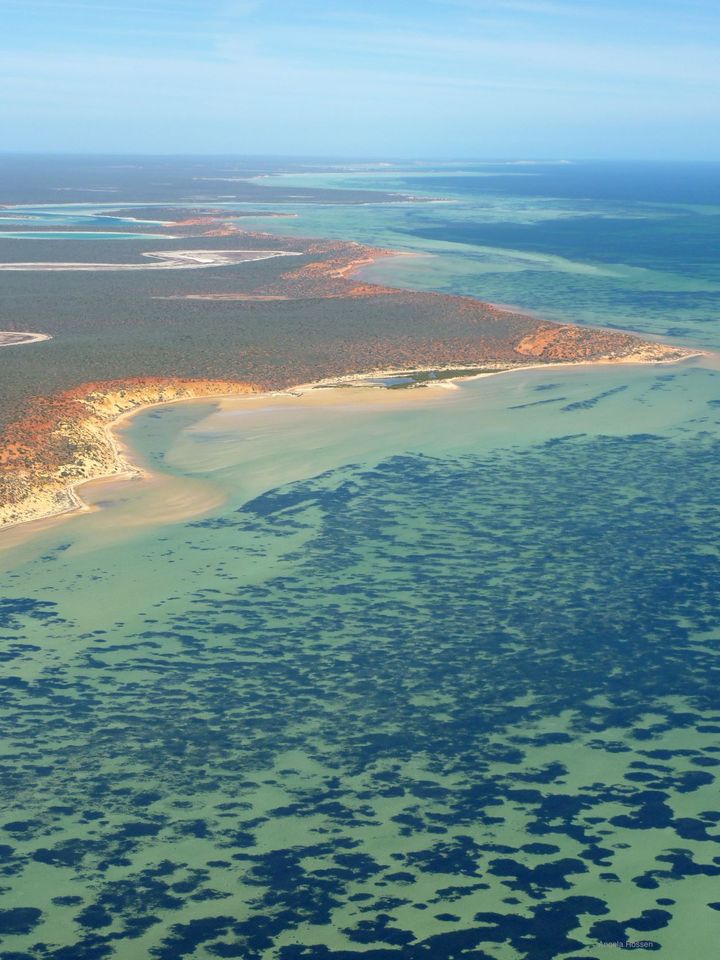
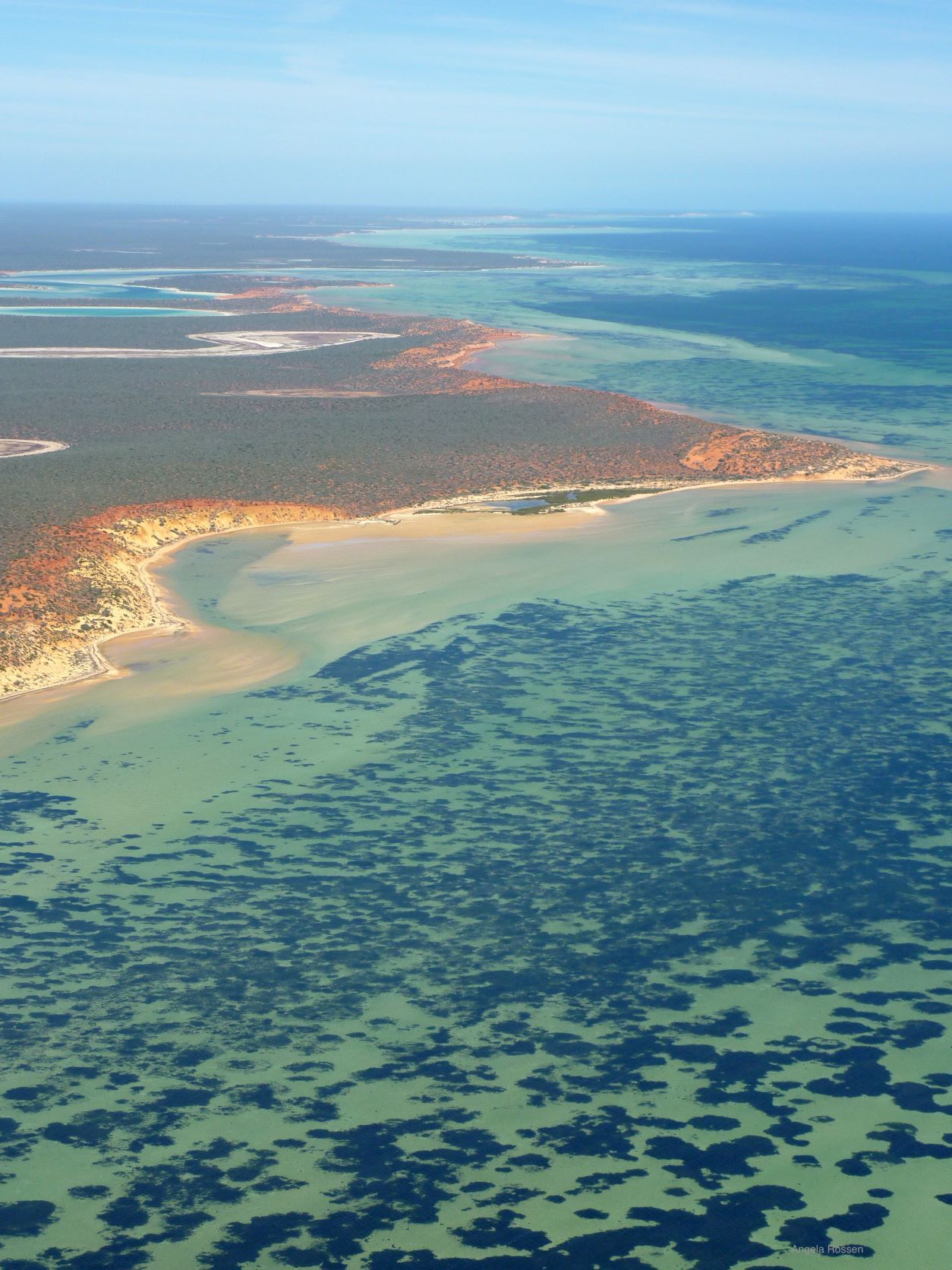
Researchers have made a startling discovery beneath the waters off Western Australia. A meadow of sea grass stretching more than 110 miles long was actually a single plant that had spent the past 4,500 years cloning itself to carpet an area three times larger than Manhattan.

The findings, published Wednesday in the Proceedings of the Royal Society B, make the colony of Posidonia australis, or ribbon weed, the largest known plant on Earth, scientists said.

Elizabeth Sinclair, a senior research fellow at the University of Western Australia and a lead author of the study, said her team has been testing seagrass meadows around Australia for genetic diversity for years to see how they respond to climate change. When her team visited an area known as Shark Bay, a relatively pristine landscape untouched by development, they went beneath the waves to collect samples of seagrass to see what types of plants were growing across the ocean floor.

The answer was one.

“It’s quite bizarre when you think about it, there’s this plant in one end of the bay and then you move 100 kilometres down to the other end and it’s the same plant,” Sinclair said.

Scientists say the meadow of ribbon weed is all genetically identical after cloning itself to cover an area three times larger than Manhattan.

Rachel Austin/University of Western Australia

Her team hypothesised that thousands of years ago, a single seagrass seedling landed in the bay. It was particularly suited to survive in different oceanic environments due to its unusual genome.

Most comparable plant offspring contain 50% of each parent’s genes. But Posidonia australis has 100% from each parent, making it a polyploid, meaning it has double the usual number of chromosomes.

“Polyploid plants often reside in places with extreme environmental conditions, are often sterile, but can continue to grow if left undisturbed, and this giant seagrass has done just that,” Sinclair said in a statement. “Even without successful flowering and seed production, it appears to be really resilient, experiencing a wide range of temperatures and salinities plus extreme high light conditions, which together would typically be highly stressful for most plants.”

The ribbon weed has slowly grown through a series of runners — like a normal turf lawn — to stretch nearly 80 square miles. The researchers estimate its age at about 4,500 years, based on the species’ size and growth rate.

Like other delicate oceanic structures, namely corals, seagrass meadows are susceptible to climate change. A severe heat wave in 2010 and 2011 sparked widespread damage to the Shark Bay meadows, killing about a third of the seagrasses. Underwater meadows are also home to many different species and serve a key role in an area’s biodiversity.

An aerial view of the seagrass meadow in Shark Bay.

Angela Rossen // University of Western Australia

“You lose a plant that creates this whole environment and you lose all the biodiversity that goes with it,” Sinclair said, adding that the 2010-2011 event had calamitous effects. “The turtles were going hungry, the dolphins weren’t getting enough fish, the whole network is connected.”

Although the ribbon weed has already begun to recover and spread since that event, Sinclair cautioned that climate change still poses a threat to region.

She also noted that it was “scary” how researchers had only just discovered the remarkable colony hiding beneath the waves, noting climate change could rip such species away before humans had a chance to discover them.

“It’s scary because we might lose it before we find out about it,” Sinclair said. “It might be gone before we even know.”

Share Button

Star Wars Defends Moses Ingram Against Racist Attacks From Obi-Wan Kenobi Viewers

After Obi-Wan Kenobi actor Moses Ingram revealed on social media the onslaught of racist harassment she’s received since the Disney+ series premiered last week, the Star Wars franchise stepped up Monday to show support for Ingram.

Moses plays Reva Sevander, also known as the Third Sister, who is hunting Obi-Wan Kenobi for Darth Vader in the new series.

The Emmy-nominated actor shared on her Instagram the hateful messages fired at her from fans of the series, including atrocious messages using the N-word and claims that she’s part of the show only as a “diversity hire.”

“There’s nothing anybody can do about this. There’s nothing anybody can do to stop this hate,” Ingram said in a video posted to her Instagram story. “I question my purposes in even being here in front of you saying that this is happening. I don’t really know.”

She spoke on the pain of being targeted by racist harassment and thanked supporters who have stuck by her: “The thing that bothers me is this feeling inside of myself, that no one has told me, but this feeling that I have to shut up and take it, that I have to grin and bear it. And I’m not built like that. So, I wanted to come on and say thank you to the people who show up for me in the comments and the places that I’m not going to put myself. And to the rest of y’all, y’all weird.”

The official social media accounts for Star Wars issued a statement late on Monday backing Moses against the abominable online attacks.

“We are proud to welcome Moses Ingram to the Star Wars family and excited for Reva’s story to unfold. If anyone intends to make her feel in any way unwelcome, we have only one thing to say: we resist,” the statement said.

“There are more than 20 million sentient species in the Star Wars galaxy, don’t choose to be a racist,” the message concluded.

Other actors of colour in the franchise, including Kelly Marie Train and John Boyega, also experienced toxic and racist backlash from fans when they joined the cast.

Before Obi-Wan aired on Disney+, the Baltimore actor told The Independent that executives on the show cautioned her that racist “Star Wars” trolls could be on the horizon.

“It was something that Lucasfilm actually got in front of and said, ‘This is a thing that, unfortunately, likely will happen. But we are here to help you; you can let us know when it happens,’” Moses said at the time.

She added: “‘Obi-Wan’ is going to bring the most diversity I think we’ve ever seen in the galaxy before. To me, it’s long overdue. If you’ve got talking droids and aliens but no people of color, it doesn’t make any sense. It’s 2022, you know. So we’re just at the beginning of that change. But I think to start that change is better than never having started it.”

Star Trek: Strange New Worlds actor Anson Mount also headed to social media on Tuesday to share his support for Ingram.

“This is Moses Ingram. She is a singular talent and a recent addition to the @starwars universe. She has also been targeted by racists pretending to be fans because her mere existence threatens a skewed, dystopian fantasy that selectively omits the likes of @therealbillydee and others. We, the Trek Family, have her back,” he wrote.

New episodes of Obi-Wan Kenobi stream on Wednesdays on Disney+.

<div class="js-react-hydrator" data-component-name="YouTube" data-component-id="5918" data-component-props="{"itemType":"video","index":23,"contentListType":"embed","code":"

","type":"video","meta":{"url":"https://www.youtube.com/watch?v=3Yh_6_zItPU","type":"video","version":"1.0","title":"Obi-Wan Kenobi | Official Trailer | Disney+","author":"Star Wars","author_url":"https://www.youtube.com/channel/UCZGYJFUizSax-yElQaFDp5Q","provider_name":"YouTube","description":"The story begins 10 years after the dramatic events of “Star Wars: Revenge of the Sith” where Obi-Wan Kenobi faced his greatest defeat—the downfall and corruption of his best friend and Jedi apprentice, Anakin Skywalker, who turned to the dark side as evil Sith Lord Darth Vader.\nThe series stars Ewan McGregor, reprising his role as the iconic Jedi Master, and also marks the return of Hayden Christensen in the role of Darth Vader. Joining the cast are Moses Ingram, Joel Edgerton, Bonnie Piesse, Kumail Nanjiani, Indira Varma, Rupert Friend, O’Shea Jackson Jr., Sung Kang, Simone Kessell and Benny Safdie.\n“Obi-Wan Kenobi” is directed by Deborah Chow and executive-produced by Kathleen Kennedy, Michelle Rejwan, Deborah Chow, Ewan McGregor and Joby Harold.","thumbnail_url":"https://i.ytimg.com/vi/3Yh_6_zItPU/hqdefault.jpg","thumbnail_width":480,"thumbnail_height":360,"cache_age":86400,"options":{"_start":{"label":"Start from","value":"","placeholder":"ex.: 11, 1m10s"},"_end":{"label":"End on","value":"","placeholder":"ex.: 11, 1m10s"},"_cc_load_policy":{"label":"Closed captions","value":false},"click_to_play":{"label":"Hold load & play until clicked","value":false}}},"fullBleed":false,"flags":[],"enhancements":{},"options":{"theme":"news","device":"desktop","editionInfo":{"id":"uk","name":"U.K.","link":"https://www.huffingtonpost.co.uk","locale":"en_GB"},"slideshowAd":{"scriptTags":[],"otherHtml":""},"slideshowEndCard":{"scriptTags":[{"attribs":{},"scriptBody":"\r\n (function(){\r\n var c = document.getElementById(‘taboola-endslate-thumbnails’);\r\n c.id += ‘-‘ + Math.round(Math.random()*1e16);\r\n \r\n var taboolaParams = {\r\n loader: \"//cdn.taboola.com/libtrc/aol-huffingtonpost/loader.js\",\r\n mode: \"thumbnails-b\",\r\n container: c.id,\r\n placement: \"Endslate Thumbnails\",\r\n target_type: \"mix\"\r\n };\r\n \r\n if (typeof window.modulousQueue === \"function\") {\r\n \twindow.modulousQueue.add(function(){ doTaboola(taboolaParams); });\r\n } else {\r\n \tdoTaboola(taboolaParams);\r\n }\r\n }());\r\n"}],"otherHtml":"

"},"isMapi":false,"isAmp":false,"isVideoEntry":false,"isMt":false,"entryId":"62972426e4b090b53b7f0a42","entryTagsList":"uktv,star-wars,moses-ingram,@widget-imported","sectionSlug":"entertainment","deptSlug":null,"sectionRedirectUrl":null,"subcategories":"","isWide":false,"headerOverride":null,"noVideoAds":false,"disableFloat":false,"isNative":false,"commercialVideo":{"provider":"custom","site_and_category":"uk.entertainment","package":null},"isHighline":false,"vidibleConfigValues":{"cid":"60afc140cf94592c45d7390c","disabledWithMapiEntries":false,"overrides":{"all":"60b8e525cdd90620331baaf4"},"whitelisted":["56c5f12ee4b03a39c93c9439","56c6056ee4b01f2b7e1b5f35","59bfee7f9e451049f87f550b","5acccbaac269d609ef44c529","570278d2e4b070ff77b98217","57027b4be4b070ff77b98d5c","56fe95c4e4b0041c4242016b","570279cfe4b06d08e3629954","5ba9e8821c2e65639162ccf1","5bcd9904821576674bc55ced","5d076ca127f25f504327c72e","5b35266b158f855373e28256","5ebac2e8abddfb04f877dff2","60b8e525cdd90620331baaf4","60b64354b171b7444beaff4d","60d0d8e09340d7032ad0fb1a","60d0d90f9340d7032ad0fbeb","60d0d9949340d7032ad0fed3","60d0d9f99340d7032ad10113","60d0daa69340d7032ad104cf","60d0de02b627221e9d819408"],"playlists":{"default":"57bc306888d2ff1a7f6b5579","news":"56c6dbcee4b04edee8beb49c","politics":"56c6dbcee4b04edee8beb49c","entertainment":"56c6e7f2e4b0983aa64c60fc","tech":"56c6f70ae4b043c5bdcaebf9","parents":"56cc65c2e4b0239099455b42","lifestyle":"56cc66a9e4b01f81ef94e98c"},"playerUpdates":{"56c6056ee4b01f2b7e1b5f35":"60b8e525cdd90620331baaf4","56c5f12ee4b03a39c93c9439":"60d0d8e09340d7032ad0fb1a","59bfee7f9e451049f87f550b":"60d0d90f9340d7032ad0fbeb","5acccbaac269d609ef44c529":"60d0d9949340d7032ad0fed3","5bcd9904821576674bc55ced":"60d0d9f99340d7032ad10113","5d076ca127f25f504327c72e":"60d0daa69340d7032ad104cf","5ebac2e8abddfb04f877dff2":"60d0de02b627221e9d819408"}},"connatixConfigValues":{"videoPagePlayer":"19654b65-409c-4b38-90db-80cbdea02cf4"},"customAmpComponents":[],"ampAssetsUrl":"https://amp.assets.huffpost.com","videoTraits":null,"positionInUnitCounts":{"buzz_head":{"count":0},"buzz_body":{"count":0},"buzz_bottom":{"count":0}},"positionInSubUnitCounts":{"article_body":{"count":5},"before_you_go_slideshow":{"count":0}},"connatixCountsHelper":{"count":0},"buzzfeedTracking":{"context_page_id":"62972426e4b090b53b7f0a42","context_page_type":"buzz","destination":"huffpost","mode":"desktop","page_edition":"en-uk"},"cetUnit":"buzz_body"}}”>

[embedded content]

Share Button