My heart will go on: Patient-derived heart cells mimic disease in vitro

How can you mend a broken heart? According to researchers from Japan, in some cases gene replacement therapy just might do the trick.

In a study published in January in Stem Cell Reports, researchers from Osaka University report that heart cells from a patient with an inherited heart disease called arrhythmogenic cardiomyopathy do not contract correctly when grown in the laboratory, and that replacing the mutated gene responsible for this effect fixes this defect.

Arrhythmogenic cardiomyopathy occurs due to mutations in genes involved in desmosomes, which form ‘welds’ between cells that help them communicate and move in a coordinated way. One of these genes, PKP2, encodes a protein known as plakophilin-2 that is crucial to maintaining heart cell structure.

“Previous studies carried out in cardiomyocytes have shown that mutations in PKP2 play a pathological role in arrhythmogenic cardiomyopathy,” says lead author of the study Hiroyuki Inoue. “However, the cells used in those experiments were derived from healthy individuals and were not assessed for contractile function.”

To investigate how cells derived from patients behave in the laboratory, the researchers first took a blood sample from a young patient with arrhythmogenic cardiomyopathy, induced some of the blood cells to become stem cells, and then differentiated these stem cells into heart cells. They then modified this original batch of heart cells into three different cell lines with precisely adjusted PKP2 expression based on how many mutated or intact copies of the gene were present.

“The cells with two mutated copies of PKP2 clearly exhibited reduced contractility and impaired desmosome assembly due to plakophilin-2 deficiency,” explains Shuichiro Higo, senior author. “These effects were also observed in cells with only one mutated copy of PKP2, although they were less severe.”

Replacing the mutated PKP2 with an intact copy of the gene repaired the defects in both cell contraction and desmosome assembly, which the researchers were able to observe using a time-lapse approach and fluorescently labeled desmosomes.

“These findings suggest that our cardiomyocyte cell lines recapitulate the pathology of arrhythmogenic cardiomyopathy and provide a rapid and convenient platform for developing gene-based therapies for this disease,” says Higo.

Given that PKP2 is the most common gene associated with arrhythmogenic cardiomyopathy, and that PKP2 mutations can lead to severe disease, new therapeutic approaches could help halt disease progression. The findings from this study suggest that gene replacement therapy could be a valuable way of treating patients with this condition and the cell lines created in this study are a viable model to test new therapies for arrhythmogenic cardiomyopathy on.

Story Source:

Materials provided by Osaka University. Note: Content may be edited for style and length.

Share Button

Social media use tied to poor physical health

Social media use has been linked to biological and psychological indicators associated with poor physical health among college students, according to the results of a new study by a University at Buffalo researcher.

Research participants who used social media excessively were found to have higher levels of C-reactive protein (CRP), a biological marker of chronic inflammation that predicts serious illnesses, such as diabetes, certain cancers and cardiovascular disease. In addition to elevated CRP levels, results suggest higher social media use was also related to somatic symptoms, like headaches, chest and back pains, and more frequent visits to doctors and health centers for the treatment of illness.

“Social media use has become an integral part of many young adults’ daily lives,” said David Lee, PhD, the paper’s first author and assistant professor of communication in the UB College of Arts and Sciences. “It’s critical that we understand how engagement across these platforms contributes to physical health.”

The findings appear in the journal Cyberpsychology, Behavior, and Social Networking.

For decades, researchers have devoted attention to how social media engagement relates to users’ mental health, but its effects on physical health have not been thoroughly investigated. Recent surveys indicate social media usage is particularly high for people in their late teens and early 20s, a population that spends about six hours a day texting, online or using social media. And though a few studies have found links between social media usage and physical health, that research relied largely on self-reporting or the effects of usage with exclusively one platform.

“Our goal was to extend prior work by examining how social media use across several platforms is associated with physical health outcomes measured with biological, behavioral and self-report measures,” said Lee, an expert on health outcomes related to social interactions.

Researchers recruited a diverse sample of 251 undergraduate students between the ages of 18 and 24 for the study. Blood samples were collected through finger sticks, and participants also completed questionnaires on physical health and social media usage on Facebook, Twitter, Snapchat, and Instagram, the most popular platforms at the time the data were collected in 2017. Those responses were crosschecked with another survey that measured validity by determining the degree to which participants took their role in the study seriously.

“We were able to establish a correlation between the amount of social media use and these physical health indicators,” said Lee. “The more participants used social media, the more somatic symptoms they experienced and visits to the doctor they reported. They also showed higher levels of chronic inflammation.”

Lee says this study is just the beginning of understanding the relationship between social media and physical health.

“By looking at a biological marker in the blood, we were able to find a relatively more objective association between social media usage and physical health, but this correlational finding can’t rule out the possibility that poor health impacts social media usage,” said Lee.

Lee says the aphorism could hold true with social media use and physical health: The rich get richer while the poor get poorer. “In our previous research, we found those high in self-esteem benefited from using social media, but people low in self-esteem did not. So, the effect may be more nuanced.”

“There’s still work to be done,” said Lee. “But right now, I wanted to get the word out there that social media use may have a link to important physical health outcomes.”

Lee’s research team for the current study included colleagues from The Ohio State University: Tao Jiang, a graduate student; Jennifer Crocker, PhD, professor of social psychology; and Baldwin Way, PhD, associate professor of psychology.

Story Source:

Materials provided by University at Buffalo. Original written by Bert Gambini. Note: Content may be edited for style and length.

Share Button

Living environment affects child’s weight development from birth to school age

A new study shows that living in a neighbourhood socioeconomic disadvantage is a risk factor for adverse weight development in children under school age. Researchers studied the connection between neighbourhoods’ socioeconomic status and children’s weight development from data covering over 11,000 Finnish children.

A new study conducted at the University of Turku, Finland, examined the association between the neighbourhood socioeconomic disadvantage and the development of children’s body mass index and the risk of overweight from birth to school age. The children’s growth data was acquired from a national register of well-baby clinics.

Information on the socioeconomic status of the neighbourhood was linked to the participants with address coordinates using the national grid database of Statistics Finland. The database contains information that is based on all Finnish residents on social and economic characteristics at the level of 250 m x 250 m grids.

– The socioeconomic status of the neighbourhood was measured with education level, household income, and unemployment rate. The results were independent of the education level, economic situation, marital status and health of the children’s parents, says lead author, Docent Hanna Lagström from the Department of Public Health of the University of Turku.

Living in a less prosperous neighbourhood posed a major risk for children to develop overweight by school age in the population-based data, even when the researchers considered factors that can increase the risk of overweight in childhood. These included e.g. mother’s type 2 diabetes, mother’s smoking, and child’s high birth weight. In neighbourhoods with a higher socioeconomic status, children weighted more at birth, but their weight development stabilised already by the age of four.

– This could implicate that neighbourhoods can offer very different types of development environments for children, and that the risk of overweight grows before school age in neighbourhoods with lower socio-economic status. The results of our research are an important factor to take into consideration in e.g. city planning to ensure that inequality is stopped right from the childhood, says Lagström.

The study is based on 2008-2010 data from the Southwest Finland Birth Cohort (SFBC). The Birth Cohort consists of all children born in the Hospital District of Southwest Finland during those three years. In this study, the participants consisted of the first children born to the mothers during this this time.

The research was funded by the Academy of Finland and Juho Vainio Foundation as well as the Hospital District of Southwest Finland.

Story Source:

Materials provided by University of Turku. Note: Content may be edited for style and length.

Share Button

Covid: PM faces crucial week and nightclubs reopen in Scotland

Five things you need to know about the coronavirus pandemic this Monday morning.

Share Button

Heart surgery Wales: Calls for child operations to resume

Children have had to travel across the border for heart surgery since 1998.

Share Button

Covid: Wales could recruit non-jabbed English NHS staff

Covid vaccines are not compulsory for NHS staff in Wales but are being mandated in England.

Share Button

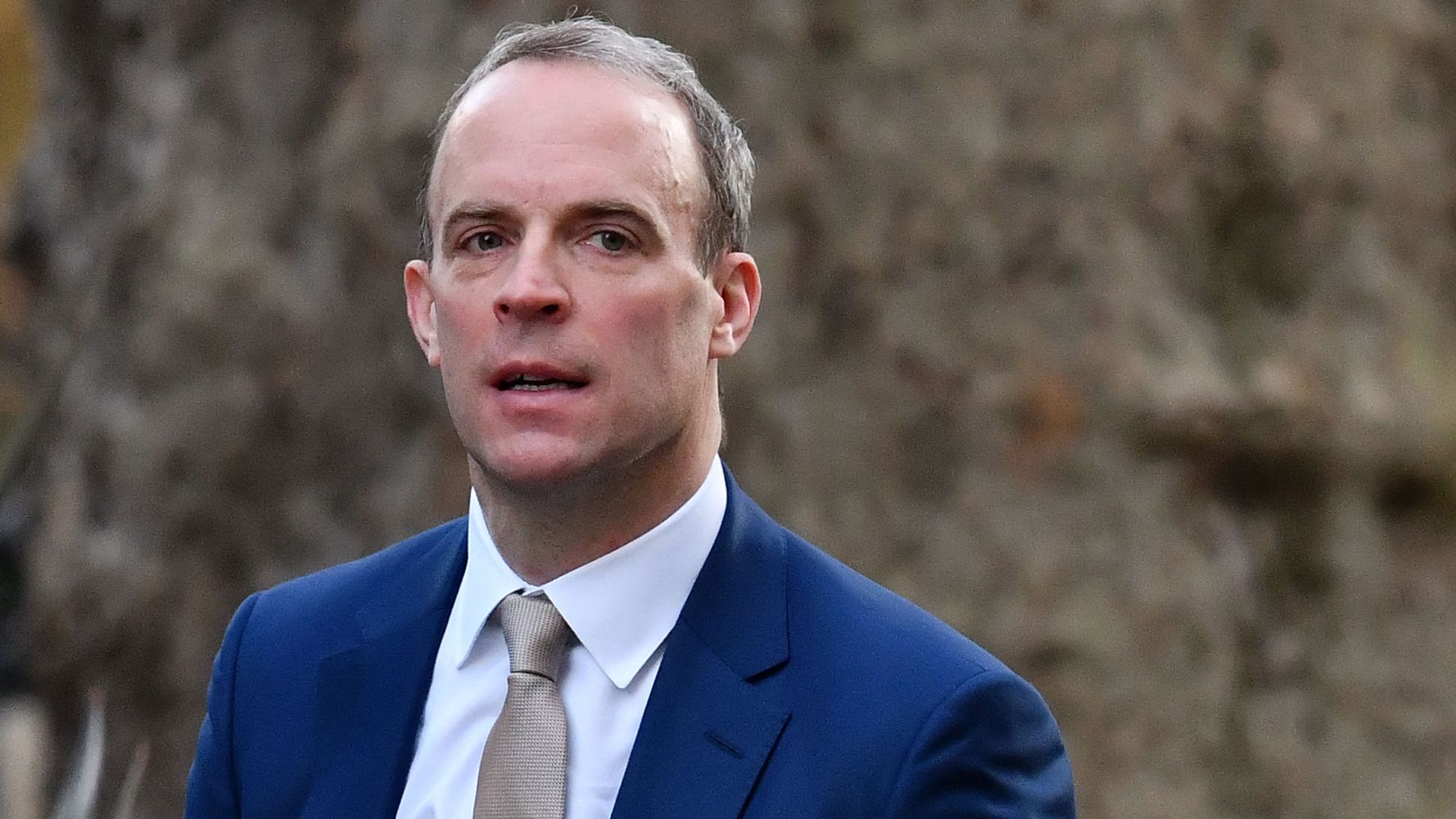
‘Very Significant Risk’ Russia Will Invade Ukraine, Says Dominic Raab

There is a “very significant” risk that Russia will mount an invasion of Ukraine, deputy prime minister Dominic Raab has warned.

Raab, the former foreign secretary, said the UK would stand “shoulder to shoulder” with Ukraine in the event of a Russian invasion, but said it was “extremely unlikely” the UK would send out troops to assist with any fightback.

Raab said the UK would instead levy economic and financial sanctions on Moscow as punishment.

“We will support them in defending themselves,” Raab told Sky News’ Trevor Phillips on Sunday.

“But also, to the international community, to Nato allies in the West, we’re standing shoulder to shoulder saying there will be very serious consequences if Russia takes this move to try and invade and also install a puppet regime.”

Raab, who is also justice secretary, said it was “very clear there is a concerted not just military buildup on the border but a threat to the democracy, the integrity of Ukraine”.

Asked if the UK would send troops to help in the event of an invasion, Raab said: “It’s extremely unlikely we would do that but what we can say is we’re already willing and engaging in training programmes to support Ukrainians defending themselves, that’s absolutely right.”

Tensions between Russia and Ukraine have been high since Moscow annexed the Ukrainian peninsula of the Crimea in 2014.

There are currently 100,000 Russian troops amassed at the border with Ukraine, a former Soviet state. Moscow claims it has no intentions to invade and that they are there purely for military training purposes — but Ukraine is fearful of an incursion.

Russia has been locked in talks with the US to ease tensions but so far they have not found agreement.

Vladimir Putin’s list of demands — including a guarantee that Ukraine will never become a member of Nato, that Nato ends its security alliance with Ukraine and that numbers of Nato troops in eastern Europe are reduced — have been rejected as unreasonable by the West.

Asked by the BBC’s Sunday Morning programme if he thought Russia would invade, Raab said: “I think there is a very significant risk of it.”

He added: “The world needs to keep its eye on this and be very clear with President Putin that it would not do this cost-free, that there would be a price.”

In a statement on Saturday, the UK’s Foreign Office said it had “information” to suggest the Kremlin “was looking to install a pro-Russian leader in Kyiv as it considers whether to invade and occupy Ukraine”, citing former Ukrainian MP Yevhen Murayev as a potential candidate.

According to Reuters, the Russian foreign ministry dismissed the claims as “disinformation” and accused Britain and Nato of “escalating tensions” over Ukraine.

Asked by Sky what the UK would do if its fears of a puppet regime in Ukraine materialised, Raab said: “We wouldn’t telegraph all of the measures that we would take, but it’s important that this very clear message not just from the UK, but from all Nato and other interested countries around the world who want to uphold the rule of law, that there’ll be very serious economic consequences.”

Vadym Prystaiko, Ukraine’s ambassador to the UK, said he believed Britain’s accusation that Putin is plotting to install a pro-Moscow leader as head of the government in Ukraine.

He told Sky News: “I do believe that. It’s not the first time they’re trying to do so, historically, and in recent times.”

Asked if he and the Ukrainian government genuinely feared an invasion from Putin, Prystaiko pointed out there has been a Russian presence for almost eight years.

He said the issue was whether thee would be a a “full-scale invasion” or “smaller things just to annoy us and the rest of the world to show his [Putin’s] strength”.

Share Button

Giovanni Pernice Unveils Tattoo To Mark Strictly Win With Rose Ayling-Ellis

The professional dancer unveiled a new tattoo in celebration of lifting the Glitterball trophy with the EastEnders star last month.

Giovanni shared picture of his latest inking on Instagram over the weekend, which revealed he has had a mirrorball and stars etched on the inside of his wrist.

It is accompanied by the letters ‘SCD’ and the date of last year’s final, which saw him and Rose triumph over John Whaite and Johannes Radebe.

Giovanni's Strictly tattoo
Giovanni’s Strictly tattoo

The pair are currently back dancing together on this year’s Strictly Come Dancing live tour, which is travelling to various cities across the UK.

Speaking to Birmingham Mail following the tour’s launch last week, Giovanni revealed how he hopes to keep dancing with Rose once it is over.

“I hope we can find time to dance together away from Strictly. I enjoy spending time with Rose. She is really special,” he said.

“I may be the dance teacher, but I have learnt so much from Rose. Meeting her has changed my life.

“We clicked from the very beginning. We understood each other perfectly. We have such as fantastic connection. She is amazing. So positive and energetic.”

The winning couple are currently taking part in the Strictly Come Dancing live tour

Jacob King via PA Wire/PA Images

Following their win in December, Giovanni revealed his Strictly victory had been every bit worth the wait, after seven years having not previously won the BBC show since joining in 2015.

A short clip on his Instagram story showed him lying in bed looking longingly while Christina Perri’s romantic ballad A Thousand Years played… only for it to be revealed he had the Glitterball trophy on the pillow next to him.

Share Button

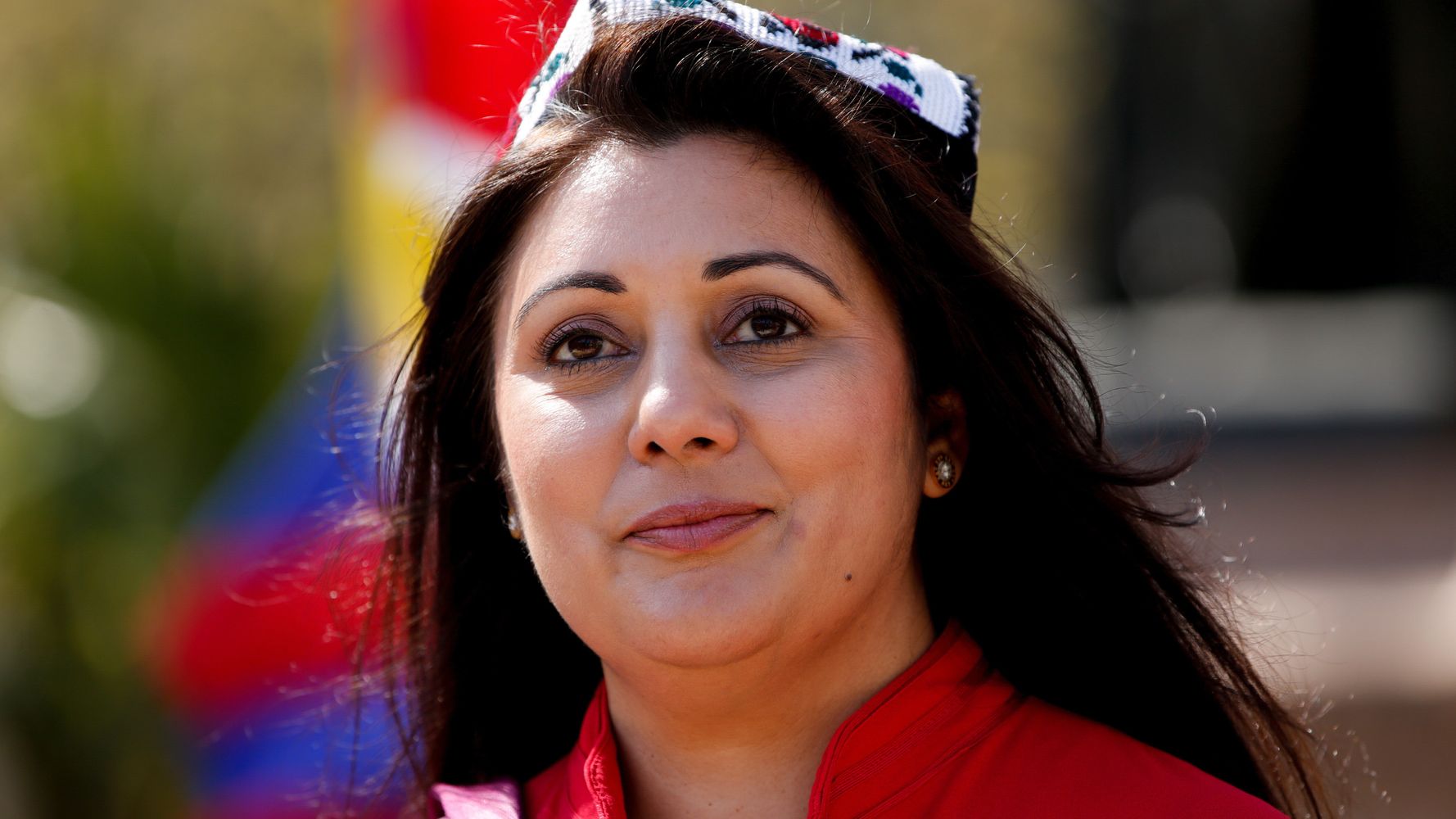
Ex-Minister Who Claims She Lost Job Over Muslim Faith Told To Make Formal Complaint

A former Tory minister who claims she lost her job because of her Muslim faith has been urged to submit a formal complaint.

Dominic Raab, the deputy prime minister, said that while Nusrat Ghani’s allegations were “incredibly serious” the party could not investigate them because she had not entered a formal complaint.

Ghani, the Conservative MP for Wealden and transport minister until a Cabinet reshuffle in early 2020, claims she had a conversation with a whip in which they said her “Muslimness was raised as an issue” and that her “Muslim woman minister status was making colleagues feel uncomfortable”.

In an unusual move, chief whip Mark Spencer identified himself on Twitter as the colleague in question and said the accusations were “completely false” and “defamatory”.

A No.10 spokesman said on Sunday that Boris Johnson met with Ghani to discuss her “extremely serious claims” and that he invited her to make a formal complaint, but she did not do so.

“The Conservative Party does not tolerate prejudice or discrimination of any kind,” the spokesman added.

In response, Ghani hit back, claiming Johnson told her he could not get involved, instead referring her to the Conservative party complaints process.

“When I told the prime minister in June 2020 what had been said to me in the government Whips’ office I urged him to take it seriously as a government matter and instigate an inquiry,” she said.

“He wrote to me that he could not get involved and suggested I use the internal Conservative Party complaint process.

“This, as I had already pointed out, was very clearly not appropriate for something that happened on government business – I do not even know if the words that were conveyed to me about what was said in reshuffle meetings at Downing Street were by members of the Conservative Party.”

She added: “Not a day has gone by without thinking about what I was told and wondering why I was in politics, while hoping for the government to take this seriously.

“Those that have not had their identity and faith questioned cannot fully appreciate what it does to you.”

A number of Ghani’s colleagues have rallied behind her since the allegations emerged.

Education secretary Nadhim Zahawi said Ghani was a “friend, a colleague and a brilliant parliamentarian” and that her claims had to be “investigated properly and racism routed out”. Caroline Noakes, chair of the women and equalities select committee, said she was “absolutely appalled”.

Asked by Sky News’ Trevor Phillips whether he believed Spencer of Ghani, Raab said: “I think if there’s any claim like this, a formal complaint should be made and as the chief whip has said, Nus was invited to make a formal complaint, she still is able to do so, and she hasn’t yet done so.

“So I’m not going to start getting into impugning anyone’s integrity.”

On the BBC’ Sunday Morning programme, Raab was asked why Ghani would “make up” the accusations.

“I can’t answer that, all I’m trying to give you a very clear account of what the chief whip said in response…I would say if Nus wishes to do so, she should make a formal complaint so it can be properly investigated.”

In her interview with the Sunday Times, Ghani described the impact the alleged interaction had had on her.

“It was like being punched in the stomach,” she said. “I felt humiliated and powerless.”

Ghani went on to say that she was warned that if she continued to raise the matter she would be “ostracised by colleagues” and her “career and reputation would be destroyed”.

“The feeling of isolation and powerlessness after this episode would not leave me, and I raised it several more times through official party channels and with some colleagues,” she told the newspaper.

“However, after the threats from whips, I was extremely careful to follow procedure, and when the procedure ran out of road I had no choice but to get on with my career and make a difference for my constituents and for the issues I care about from the back benches.”

Ghani’s claims are likely to lead to a further deterioration of relations between some backbenchers and the government following a dramatic week in which the whips were accused of using threatening and intimidating behaviour against MPs who were minded to vote against the government.

Christian Wakeford, the MP for Bury South who defected from the Tories to Labour, claimed he was threatened with having a new secondary school blocked in his constituency if he voted against the government on an issue.

He has since said former chief whip Gavin Williamson was behind the threat.

In response, Williamson has said he does not have “any recollection of the conversation as described but what I do remember is working tirelessly with Christian and others in order to be able to deliver this school, which I did”.

William Wragg, chair of the Public Administration and Constitutional Affairs Committee, is reportedly meeting with the police this week over allegations the whips tried to “blackmail” MPs who have been critical of Johnson’s leadership in the wake of the Downing Street party scandal.

At the beginning of a committee session, Wragg said: “Members of staff at No.10, special advisers, government ministers and others encouraging the publication of stories in the press seeking to embarrass those who they suspect of lacking confidence in the PM is unacceptable.”

Asked about claims earlier this week, Johnson said he had “seen no evidence to support any of those allegations” and Downing Street has said it will not launch an investigation because it had not seen proof.

This week all eyes will be on a report into the alleged Downing Street parties by senior civil servant Sue Gray.

A number of Conservative MPs have indicated they will wait for the outcome of the report before deciding whether to move against Johnson, making its publication a critical moment for his leadership.

In a further blow to the PM, the Sunday Times reported that Gray will also look at allegations that parties were held in his private Downing Street flat.

Share Button

Janet Street-Porter Launches Fresh Attack On Adele Over ‘Snivelling’ Vegas Residency Apology

The Loose Women panellist branded the Easy On Me star “self-obsessed” and said Adele’s apology to fans after cancelling her shows was “snivelling”, accusing her of treating them “appallingly”.

In an emotional video she posted on Friday, Adele tearfully announced that her show at the Colosseum at Caesars Palace “ain’t ready”, just 24 hours before she was due to take to the stage for the first time.

Writing in her column for MailOnline, Janet – who has previously turned on Adele – blasted her, writing: “I don’t know which was more jaw-dropping; Snivelling Adele’s feeble attempts at an apology to the camera with perfect nails on display, addressing us ordinary folk as if we were queuing for a bag of fish and chips (her actual words ‘My show ain’t ready’) – or the bare-faced cheek of coming to that decision just two days before kick-off.

“This carefully stage-managed attempt at sympathy doesn’t seem believable. Anyone might think she’s been studying footage of the Master of Non Apologies Boris Johnson,” she wrote.

“She’s been on a journey from wealthy woman to incredibly rich and self-obsessed global star. That doesn’t grant you the right to treat fans so appallingly, hoping that a snivelling apology will soften the blow.”

Janet added: “She’s got all the staying power of a soggy tissue.”

The former tabloid editor previously branded Adele “deeply shallow” in the lead up to the release of her latest album 30, accusing the star of “fake misery”, having “gushing tears on tap every hour” and speaking about her personal life “to shift product”.

Janet Street-Porter is known for her forthright opinions on Loose Women

Ken McKay/ITV/Shutterstock

The Weekends With Adele series was announced last November, with the singer scheduled to perform two shows every weekend until April.

Tickets ranged from $85 (£60) to $685 (£500), and Adele was reportedly set to make more than £500,000 per performance.

The residency would have marked the first time Adele had performed live shows in five years.

The 33-year-old singer said she had been “awake for 30 hours” trying to rescue the production, but had simply “run out of time”.

Adele also apologised to fans who had already arrived in Las Vegas for the opening weekend.

“I’m sorry, it’s last minute. I’m so upset and I’m really embarrassed and I’m so sorry to everyone that’s travelled again.”

The residency is set to be rescheduled, with dates announced in due course.

Share Button