Experts say there is no evidence of onward spread and the risk to the public is very low.


Experts say there is no evidence of onward spread and the risk to the public is very low.
Noth recently reprised his role as Carrie Bradshaw’s husband Mr Big in the first episode of And Just Like That…, which saw his character suffering a heart attack and dying.
Advertisement
On Wednesday, TVLine reported that Big had originally been supposed to appear in a fantasy sequence, which he and Sarah Jessica Parker were snapped filming on location last year, in the series finale,
However, the outlet claimed that after multiple accusations of sexual assault were made against Noth – which he denies – producers decided that his final scenes would no longer be included in the episode.
Advertisement
Variety has now confirmed this to be the case. HBO Max had no comment when contacted by HuffPost UK.

James Devaney via Getty Images
Noth played Mr Big in all six series of Sex And The City, later reprising the role for two spin-off films.
Advertisement
Last month, he was accused of sexually assaulting two women in alleged incidents more than 10 years apart.
Two more women have since come forward with allegations of sexual assault.
Noth has denied the allegations, insisting: “The accusations against me made by individuals I met years, even decades, ago are categorically false.
“These stories could’ve been from 30 years ago or 30 days ago — no always means no — that is a line I did not cross.
Advertisement
“The encounters were consensual. It’s difficult not to question the timing of these stories coming out. I don’t know for certain why they are surfacing now, but I do know this: I did not assault these women.”
Since the first allegations were published in The Hollywood Reporter, Noth has been dropped by his talent agency and removed from the drama The Equalizer.
An ad for Peloton featuring Noth – which poked fun at his character’s death in And Just Like That… – was also pulled by the fitness brand.


The government needs to wake up to the scale of the problem, says a report from a committee of MPs.
Mayo Clinic does not endorse companies or products. Advertising revenue supports our not-for-profit mission.
Advertising & Sponsorship
Check out these best-sellers and special offers on books and newsletters from Mayo Clinic Press.
Hospital admissions are rising, says the PM – as figures show one in 15 people had Covid on New Year’s Eve.

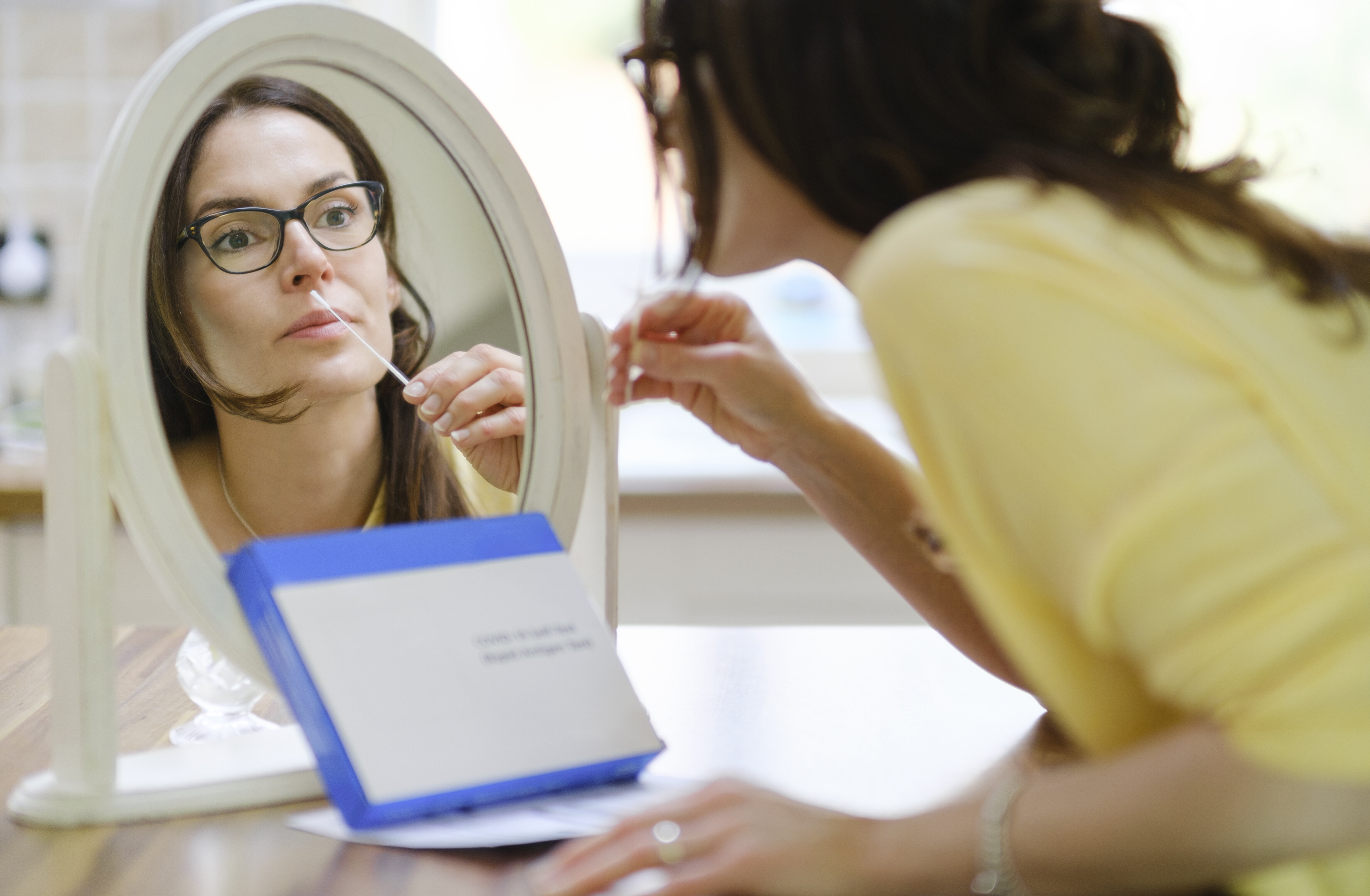
Lateral flow tests are accurate in tracking how infectious someone is, according to an epidemiologist.
Prime minister Boris Johnson has announced from the January 11 the rules around PCR tests and Lateral Flow tests (LFTs) will be changing.
Advertisement
Asymptomatic people who test positive on LFTs no longer need to take follow-up PCR tests. Instead, they have to start their self-isolation period immediately, rather than waiting for another test result.
Symptomatic people are advised to continue taking PCRs.
Advertisement
LFTs are an increasingly important part of the UK’s response to Covid even though they have been criticised in the past for not consistently detecting the virus.
US epidemiologist and immunologist Dr Michael Mina explained how they work on Twitter amid concerns LFTs were not going to pick up the new highly-transmissible variant, Omicron.
Advertisement
Responding to questions about why some people stay negative on LFTs the first few days they have symptoms, he explained: “This is expected. Symptoms don’t [equal] contagious virus.
“This is literally a reflection of the fact that vaccines are doing their job!”
He tweeted again: “Rapid tests work with Omicron.
“Omicron is mutated mostly in spike [protein].
Advertisement
“Rapid tests don’t detect the spike.”
Dr Mina added that newly symptomatic people who are coming up negative on LFTs are “probably not infectious” but it’s advisable to test again the next day.
“I am primarily trying here to explain that it is expected for people to show symptoms earlier than before, as a result of vaccination and developed of acquired immunity.
“My point was that symptoms SHOULD be expected to arise early now that people’s immune systems don’t have to spend 5+ days realising someone is infected with a new virus. Now our immunity kicks in fast, and with it, symptoms do too.”
He also shared a series of photos of LFTs each day during someone’s isolation period.
These images clearly show the positive line on each test strengthening during the first part of the self-isolation before fading out again by day 10.
This demonstrates that the individual who was taking the tests was at their most infectious during the middle of their isolation.
Another graph from the BBC was also circulating online, emphasising how LFTs pick up high levels of infection compared to PCRs.

An emotional MP has raised fears that she will be separated from her mother “indefinitely” after she was diagnosed with dementia.
Liz Saville Roberts, the Plaid Cymru leader at Westminster, revealed her mother was diagnosed with the disease just before Christmas.
Advertisement
She told Boris Johnson she fears being separated from her because of covid restrictions on visiting.
The MP for Dwyfor Meirionnydd was visibly upset and at points struggled to speak.
Advertisement
Her question silenced the Commons after a particularly rambunctious prime minister’s questions in which Johnson went toe to toe with Labour’s Angela Rayner.
Saville Roberts told the Commons: “My mother, Dr Nancy Saville, was diagnosed with dementia just before Christmas, she had a stroke a year ago.
Advertisement
“I was called to sit with her in hospital on Monday because of the Covid staff shortage, but I fear that myself like many constituents in similar circumstances are likely to be separated indefinitely when she is moved into an EMI nursing home.
“John’s Campaign has successfully campaigned in every UK nation that people disabled by dementia have a special need for person-centred care – and that’s under the Equality Act 2010.
“But, in reality, there remain many care homes and hospitals [where] even the most minimal visits can be denied – leading to isolation and separation which cause irreversible damage to wellbeing.
“Does he agree with me that the human rights of disabled people, sick people and the elderly are not fair-weather luxuries and that everyone with dementia, wherever they live has the right to family life.”
Advertisement
The prime minister extended his sympathies to Saville Roberts and added: “I’m sure that the whole house and everybody who’s listened will have shared her feelings and simply wish to extend their condolences in view of her mother’s current condition.
“I know how her feelings must be exacerbated by the difficulties that so many people up and down the country are facing because of the restrictions we’re having to put on care homes and I sympathise deeply.”
He said they have to try “strike a balance” while keeping care home residents safe from the pandemic.
“We continue to allow three nominated visitors to care homes and there should be no limit to the duration of those visits,” he added.
“But I understand the particular distress and anxiety that [Saville Roberts’] circumstances are causing and can I suggest that she has a meeting as soon as it can be arranged with the secretary of state for Health.”


The first comprehensive analysis of viral horizontal gene transfer (HGT) illustrates the extent to which viruses pick up genes from their hosts to hone their infection process, while at the same time hosts also co-opt useful viral genes.
HGT is the movement of genetic material between disparate groups of organisms, rather than by the “vertical” transmission of DNA from parent to offspring. Previous studies have looked at HGT between bacteria and their viruses and have shown that it plays a major role in the movement of genes between bacterial species. However the new study, published in Nature Microbiology, looks at interactions between viruses and eukaryotes, which include animals, plants, fungi, protists and most algae.
“We knew from individual examples that viral genes have played a role in the evolution of eukaryotes. Even humans have viral genes, which are important for our development and brain function,” said the study’s lead author, Dr. Nicholas Irwin, a Junior Research Fellow at Merton College, University of Oxford, and former PhD student at the University of British Columbia (UBC). “We wanted to understand more broadly how HGT has affected viruses and eukaryotes from across the tree of life.”
To tackle this problem, the authors examined viral-eukaryotic gene transfer in the genomes of hundreds of eukaryotic species and thousands of viruses. They identified many genes that had been transferred and found that HGT from eukaryotes to viruses was twice as frequent as the reverse direction.
“We were interested to find that certain groups of viruses, especially those that infect single-celled eukaryotes, acquire a lot of genes from their hosts,” said the study’s senior author, Dr. Patrick Keeling, a professor in the Department of Botany at UBC. “By studying the function of these genes we were able to make predictions about how these viruses affect their hosts during infection.”
In contrast to viruses, eukaryotic organisms retained fewer viral genes, although the ones that were kept appear to have had a major impact on host biology over evolutionary time.
“Many of these viral-derived genes appear to have repeatedly affected the structure and form of different organisms, from the cell walls of algae to the tissues of animals,” said Dr. Irwin. “This suggests that host-virus interactions may have played an important role in driving the diversity of life we see today.”
“These transfers not only have evolutionary consequences for both virus and host, but could have important health implications,” Dr. Keeling said.
HGT allows genes to jump between species including viruses and their hosts. If the gene does something useful, it can sweep through the population and become a feature of that species. This can lead to a rapid emergence of new abilities, as opposed to the more incremental changes that result from smaller mutations.
Although viruses such as Zika and coronaviruses do not appear to participate in these gene transfers, they often manipulate similar genes in their hosts through complex mechanisms. Future research into these transferred genes may therefore provide a novel approach for understanding the infection processes of these and other viruses which could be important for drug discovery.
“The past two years have clearly demonstrated the destructive potential of viruses, but we think that this work serves as an interesting reminder that viruses have also contributed to the evolution of life on Earth,” said Dr. Irwin.
Story Source:
Materials provided by University of British Columbia. Note: Content may be edited for style and length.
The rule change will take effect across the UK within days, the UK Health Security Agency says.

Before the solar system had planets, the sun had rings — bands of dust and gas similar to Saturn’s rings — that likely played a role in Earth’s formation, according to a new study.
“In the solar system, something happened to prevent the Earth from growing to become a much larger type of terrestrial planet called a super-Earth,” said Rice University astrophysicist André Izidoro, referring to the massive rocky planets seen around at least 30% of sun-like stars in our galaxy.
Izidoro and colleagues used a supercomputer to simulate the solar system’s formation hundreds of times. Their model, which is described in a study published online in Nature Astronomy, produced rings like those seen around many distant, young stars. It also faithfully reproduced several features of the solar system missed by many previous models, including:
The study by astronomers, astrophysicists and planetary scientists from Rice, the University of Bordeaux, Southwest Research Institute in Boulder, Colorado, and the Max Planck Institute for Astronomy in Heidelberg, Germany, draws on the latest astronomical research on infant star systems.
Their model assumes three bands of high pressure arose within the young sun’s disk of gas and dust. Such “pressure bumps” have been observed in ringed stellar disks around distant stars, and the study explains how pressure bumps and rings could account for the solar system’s architecture, said lead author Izidoro, a Rice postdoctoral researchers who received his Ph.D. training at Sao Paulo State University in Brazil.
“If super-Earths are super-common, why don’t we have one in the solar system?” Izidoro said. “We propose that pressure bumps produced disconnected reservoirs of disk material in the inner and outer solar system and regulated how much material was available to grow planets in the inner solar system.”
Pressure bumps
For decades, scientists believed gas and dust in protoplanetary disks gradually became less dense, dropping smoothly as a function of distance from the star. But computer simulations show planets are unlikely to form in smooth-disk scenarios.
“In a smooth disk, all solid particles — dust grains or boulders — should be drawn inward very quickly and lost in the star,” said astronomer and study co-author Andrea Isella, an associate professor of physics and astronomy at Rice. “One needs something to stop them in order to give them time to grow into planets.”
When particles move faster than the gas around them, they “feel a headwind and drift very quickly toward the star,” Izidoro explained. At pressure bumps, gas pressure increases, gas molecules move faster and solid particles stop feeling the headwind. “That’s what allows dust particles to accumulate at pressure bumps,” he said.
Isella said astronomers have observed pressure bumps and protoplanetary disk rings with the Atacama Large Millimeter/submillimeter Array, or ALMA, an enormous 66-dish radio telescope that came online in Chile in 2013.
“ALMA is capable of taking very sharp images of young planetary systems that are still forming, and we have discovered that a lot of the protoplanetary disks in these systems are characterized by rings,” Isella said. “The effect of the pressure bump is that it collects dust particles, and that’s why we see rings. These rings are regions where you have more dust particles than in the gaps between rings.”
Ring formation
The model by Izidoro and colleagues assumed pressure bumps formed in the early solar system at three places where sunward-falling particles would have released large amounts of vaporized gas.
“It’s just a function of distance from the star, because temperature is going up as you get closer to the star,” said geochemist and study co-author Rajdeep Dasgupta, the Maurice Ewing Professor of Earth Systems Science at Rice. “The point where the temperature is high enough for ice to be vaporized, for example, is a sublimation line we call the snow line.”
In the Rice simulations, pressure bumps at the sublimation lines of silicate, water and carbon monoxide produced three distinct rings. At the silicate line, the basic ingredient of sand and glass, silicon dioxide, became vapor. This produced the sun’s nearest ring, where Mercury, Venus, Earth and Mars would later form. The middle ring appeared at the snow line and the farthest ring at the carbon monoxide line.
Rings birth planetesimals and planets
Protoplanetary disks cool with age, so sublimation lines would have migrated toward the sun. The study showed this process could allow dust to accumulate into asteroid-sized objects called planetesimals, which could then come together to form planets. Izidoro said previous studies assumed planetesimals could form if dust were sufficiently concentrated, but no model offered a convincing theoretical explanation of how dust might accumulate.
“Our model shows pressure bumps can concentrate dust, and moving pressure bumps can act as planetesimal factories,” Izidoro said. “We simulate planet formation starting with grains of dust and covering many different stages, from small millimeter-sized grains to planetesimals and then planets.”
Accounting for cosmochemical signatures, Mars’ mass and the asteroid belt
Many previous solar system simulations produced versions of Mars as much as 10 times more massive than Earth. The model correctly predicts Mars having about 10% of Earth’s mass because “Mars was born in a low-mass region of the disk,” Izidoro said.
Dasgupta said the model also provides a compelling explanation for two of the solar system’s cosmochemical mysteries: the marked difference between the chemical compositions of inner- and outer-solar system objects, and the presence of each of those objects in the asteroid belt between Mars and Jupiter.
Izidoro’s simulations showed the middle ring could account for the chemical dichotomy by preventing outer-system material from entering the inner system. The simulations also produced the asteroid belt in its correct location, and showed it was fed objects from both the inner and outer regions.
“The most common type of meteorites we get from the asteroid belt are isotopically similar to Mars,” Dasgupta said. “Andre explains why Mars and these ordinary meteorites should have a similar composition. He’s provided a nuanced answer to this question.”
Pressure-bump timing and super-Earths
Izidoro said the delayed appearance of the sun’s middle ring in some simulations led to the formation of super-Earths, which points to the importance of pressure-bump timing.
“By the time the pressure bump formed in those cases, a lot of mass had already invaded the inner system and was available to make super-Earths,” he said. “So the time when this middle pressure bump formed might be a key aspect of the solar system.”
Izidoro is a postdoctoral research associate in Rice’s Department of Earth, Environment and Planetary Sciences. Additional co-authors include Sean Raymond of the University of Bordeaux, Rogerio Deienno of Southwest Research Institute and Bertram Bitsch of the Max Planck Institute for Astronomy. The research was supported by NASA (80NSSC18K0828, 80NSSC21K0387), the European Research Council (757448-PAMDORA), the Brazilian Federal Agency for Support and Evaluation of Graduate Education (88887.310463/2018-00), the Welch Foundation (C-2035) and the French National Centre for Scientific Research’s National Planetology Program.
