How moles change into melanoma

Moles and melanomas are both skin tumors that come from the same cell called melanocytes. The difference is that moles are usually harmless, while melanomas are cancerous and often deadly without treatment. In a study published today in eLife Magazine, Robert Judson-Torres, PhD, Huntsman Cancer Institute (HCI) researcher and University of Utah (U of U) assistant professor of dermatology and oncological sciences, explains how common moles and melanomas form and why moles can change into melanoma.

Melanocytes are cells that give color to the skin to protect it from the sun’s rays. Specific changes to the DNA sequence of melanocytes, called BRAF gene mutations, are found in over 75% of moles. The same change is also found in 50% of melanomas and is common in cancers like colon and lung. It was thought that when melanocytes only have the BRAFV600E mutation the cell stops dividing, resulting in a mole. When melanocytes have other mutations with BRAFV600E, they divide uncontrollably, turning into melanoma. This model is called “oncogene-induced senescence.”

“A number of studies have challenged this model in recent years,” says Judson-Torres. “These studies have provided excellent data to suggest that the oncogene-induced senescence model does not explain mole formation but what they have all lacked is an alternative explanation — which has remained elusive.”

With help from collaborators across HCI and the University of California San Francisco, the study team took moles and melanomas donated by patients and used transcriptomic profiling and digital holographic cytometry. Transcriptomic profiling lets researchers determine molecular differences between moles and melanomas. Digital holographic cytometry helps researchers track changes in human cells.

“We discovered a new molecular mechanism that explains how moles form, how melanomas form, and why moles sometimes become melanomas,” says Judson-Torres.

The study shows melanocytes that turn into melanoma do not need to have additional mutations but are actually affected by environmental signaling, when cells receive signals from the environment in the skin around them that give them direction. Melanocytes express genes in different environments, telling them to either divide uncontrollably or stop dividing altogether.

“Origins of melanoma being dependent on environmental signals gives a new outlook in prevention and treatment,” says Judson-Torres. “It also plays a role in trying to combat melanoma by preventing and targeting genetic mutations. We might also be able to combat melanoma by changing the environment.”

These findings create a foundation for researching potential melanoma biomarkers, allowing doctors to detect cancerous changes in the blood at earlier stages. The researchers are also interested in using these data to better understand potential topical agents to reduce the risk of melanoma, delay development, or stop recurrence, and to detect melanoma early.

The study was funded by National Institutes of Health/National Cancer Institute including P30 CA042014, 5 For The Fight, and Huntsman Cancer Foundation. Judson-Torres recognizes critical contributions by other HCI scientists, including Rachel Belote, PhD; Sheri Holmen, PhD; Matthew VanBrocklin, PhD; David Lum, PhD; Doug Grossman, MD, PhD; and University of California San Francisco scientists Andrew McNeal, PhD; Maria Wei, MD, PhD; and Ursula Lang, MD, PhD.

Story Source:

Materials provided by Huntsman Cancer Institute. Note: Content may be edited for style and length.

Share Button

Microbes can provide sustainable hydrocarbons for the petrochemical industry

If the petrochemical industry is ever to wean itself off oil and gas, it has to find sustainably-sourced chemicals that slip effortlessly into existing processes for making products such as fuels, lubricants and plastics.

Making those chemicals biologically is the obvious option, but microbial products are different from fossil fuel hydrocarbons in two key ways: They contain too much oxygen, and they have too many other atoms hanging off the carbons. In order for microbial hydrocarbons to work in existing synthetic processes, they often have to be de-oxygenated — in chemical parlance, reduced — and stripped of extraneous chemical groups, all of which takes energy.

A team of chemists from the University of California, Berkeley, and the University of Minnesota has now engineered microbes to make hydrocarbon chains that can be deoxygenated more easily and using less energy — basically just the sugar glucose that the bacteria eat, plus a little heat.

The process allows microbial production of a broad range of chemicals currently made from oil and gas — in particular, products like lubricants made from medium-chain hydrocarbons, which contain between eight and 10 carbon atoms in the chain.

“Part of the issue with trying to move to something like glucose as a feedstock for making molecules or to drive the chemical industry is that the fossil fuel structures of petrochemicals are so different — they’re usually fully reduced, with no oxygen substitutions,” said Michelle Chang, UC Berkeley professor of chemistry and of chemical and biomolecular engineering. “Bacteria know how to make all these complex molecules that have all these functional groups sticking out from them, like all natural products, but making petrochemicals that we’re used to using as precursors for the chemical industry is a bit of a challenge for them.”

“This process is one step towards deoxygenating these microbial products, and it allows us to start making things that can replace petrochemicals, using just glucose from plant biomass, which is more sustainable and renewable,” she said. “That way we can get away from petrochemicals and other fossil fuels.”

The bacteria were engineered to make hydrocarbon chains of medium length, which has not been achieved before, though others have developed microbial processes for making shorter and longer chains, up to about 20 carbons. But the process can be readily adapted to make chains of other lengths, Chang said, including short-chain hydrocarbons used as precursors to the most popular plastics, such as polyethylene.

She and her colleagues published their results this week in the journal Nature Chemistry.

A bioprocess to make olefins

Fossil hydrocarbons are simple linear chains of carbon atoms with a hydrogen atom attached to each carbon. But the chemical processes optimized for turning these into high-value products don’t easily allow substitution by microbially produced precursors that are oxygenated and have carbon atoms decorated with lots of other atoms and small molecules.

To get bacteria to produce something that can replace these fossil fuel precursors, Chang and her team, including co-first authors Zhen Wang and Heng Song, former UC Berkeley postdoctoral fellows, searched databases for enzymes from other bacteria that can synthesize medium-chain hydrocarbons. They also sought an enzyme that could add a special chemical group, carboxylic acid, at one end of the hydrocarbon, turning it into what’s called a fatty acid.

All told, the researchers inserted five separate genes into E. coli bacteria, forcing the bacteria to ferment glucose and produce the desired medium-chain fatty acid. The added enzymatic reactions were independent of, or orthogonal to, the bacteria’s own enzyme pathways, which worked better than trying to tweak the bacteria’s complex metabolic network.

“We identified new enzymes that could actually make these mid-size hydrocarbon chains and that were orthogonal, so separate from fatty acid biosynthesis by the bacteria. That allows us to run it separately, and it uses less energy than it would if you use the native synthase pathway,” Chang said. “The cells consume enough glucose to survive, but then alongside that, you have your pathway chewing through all the sugar to get higher conversions and a high yield.”

That final step to create a medium-chain fatty acid primed the product for easy conversion by catalytic reaction to olefins, which are precursors to polymers and lubricants.

The UC Berkeley group collaborated with the Minnesota group led by Paul Dauenhauer, which showed that a simple, acid-based catalytic reaction called a Lewis acid catalysis (after famed UC Berkeley chemist Gilbert Newton Lewis) easily removed the carboxylic acid from the final microbial products — 3-hydroxyoctanoic and 3-hydroxydecanoic acids — to produce the olefins heptene and nonene, respectively. Lewis acid catalysis uses much less energy than the redox reactions typically needed to remove oxygen from natural products to produce pure hydrocarbons.

“The biorenewable molecules that Professor Chang’s group made were perfect raw materials for catalytic refining,” said Dauenhauer, who refers to these precursor molecules as bio-petroleum. “These molecules contained just enough oxygen that we could readily convert them to larger, more useful molecules using metal nanoparticle catalysts. This allowed us to tune the distribution of molecular products as needed, just like conventional petroleum products, except this time we were using renewable resources.”

Heptene, with seven carbons, and nonene, with nine, can be employed directly as lubricants, cracked to smaller hydrocarbons and used as precursors to plastic polymers, such as polyethylene or polypropylene, or linked to form even longer hydrocarbons, like those in waxes and diesel fuel.

“This is a general process for making target compounds, no matter what chain length they are,” Chang said. “And you don’t have to engineer an enzyme system every time you want to change a functional group or the chain length or how branched it is.”

Despite their feat of metabolic engineering, Chang noted that the long-term and more sustainable goal would be to completely redesign processes for synthesizing industrial hydrocarbons, including plastics, so that they are optimized to use the types of chemicals that microbes normally produce, rather than altering microbial products to fit into existing synthetic processes.

“There’s a lot of interest in the question, ‘What if we look at entirely new polymer structures?’,” she said. “Can we make monomers from glucose by fermentation for plastics with similar properties to the plastics that we use today, but not the same structures as polyethylene or polypropylene, which are not easy to recycle.”

The work was supported by the Center for Sustainable Polymers, a National Science Foundation-supported Center for Chemical Innovation (CHE-1901635). Other co-authors are Edward Koleski, Noritaka Hara and Yejin Min of UC Berkeley and Dae Sung Park and Gaurav Kumar of the University of Minnesota.


Share Button

One year on this giant, blistering hot planet is just 16 hours long

The hunt for planets beyond our solar system has turned up more than 4,000 far-flung worlds, orbiting stars thousands of light years from Earth. These extrasolar planets are a veritable menagerie, from rocky super-Earths and miniature Neptunes to colossal gas giants.

Among the more confounding planets discovered to date are “hot Jupiters” — massive balls of gas that are about the size of our own Jovian planet but that zing around their stars in less than 10 days, in contrast to Jupiter’s plodding, 12-year orbit. Scientists have discovered about 400 hot Jupiters to date. But exactly how these weighty whirlers came to be remains one of the biggest unsolved mysteries in planetary science.

Now, astronomers have discovered one of the most extreme ultrahot Jupiters — a gas giant that is about five times Jupiter’s mass and blitzes around its star in just 16 hours. The planet’s orbit is the shortest of any known gas giant to date.

Due to its extremely tight orbit and proximity to its star, the planet’s day side is estimated to be at around 3,500 Kelvin, or close to 6,000 degrees Fahrenheit — about as hot as a small star. This makes the planet, designated TOI-2109b, the second hottest detected so far.

Judging from its properties, astronomers believe that TOI-2109b is in the process of “orbital decay,” or spiraling into its star, like bathwater circling the drain. Its extremely short orbit is predicted to cause the planet to spiral toward its star faster than other hot Jupiters.

The discovery, which was made initially by NASA’s Transiting Exoplanet Survey Satellite (TESS), an MIT-led mission, presents a unique opportunity for astronomers to study how planets behave as they are drawn in and swallowed by their star.

“In one or two years, if we are lucky, we may be able to detect how the planet moves closer to its star,” says Ian Wong, lead author of the discovery, who was a postdoc at MIT during the study and has since moved to NASA Goddard Space Flight Center. “In our lifetime we will not see the planet fall into its star. But give it another 10 million years, and this planet might not be there.”

The discovery is reported today in the Astronomical Journal and is the result of the work of a large collaboration that included members of MIT’s TESS science team and researchers from around the world.

Transit track

On May 13, 2020, NASA’s TESS satellite began observing TOI-2109, a star located in the southern portion of the Hercules constellation, about 855 light years from Earth. The star was identified by the mission as the 2,109th “TESS Object of Interest,” for the possibility that it might host an orbiting planet.

Over nearly a month, the spacecraft collected measurements of the star’s light, which the TESS science team then analyzed for transits — periodic dips in starlight that might indicate a planet passing in front of and briefly blocking a small fraction of the star’s light. The data from TESS confirmed that the star indeed hosts an object that transits about every 16 hours.

The team notified the wider astronomy community, and shortly after, multiple ground-based telescopes followed up over the next year to observe the star more closely over a range of frequency bands. These observations, combined with TESS’ initial detection, confirmed the transiting object as an orbiting planet, which was designated TOI-2109b.

“Everything was consistent with it being a planet, and we realized we had something very interesting and relatively rare,” says study co-author Avi Shporer, a research scientist at MIT’s Kavli Institute for Astrophysics and Space Research.

Day and night

By analyzing measurements over various optical and infrared wavelengths, the team determined that TOI-2109b is about five times as massive as Jupiter, about 35 percent larger, and extremely close to its star, at a distance of about 1.5 million miles out. Mercury, by comparison, is around 36 million miles from the Sun.

The planet’s star is roughly 50 percent larger in size and mass compared to our Sun. From the observed properties of the system, the researchers estimated that TOI-2109b is spiraling into its star at a rate of 10 to 750 milliseconds per year — faster than any hot Jupiter yet observed.

Given the planet’s dimensions and proximity to its star, the researchers determined TOI-2109b to be an ultrahot Jupiter, with the shortest orbit of any known gas giant. Like most hot Jupiters, the planet appears to be tidally locked, with a perpetual day and night side, similar to the Moon with respect to the Earth. From the month-long TESS observations, the team was able to witness the planet’s varying brightness as it revolves about its axis. By observing the planet pass behind its star (known as a secondary eclipse) at both optical and infrared wavelengths, the researchers estimated that the day side reaches temperatures of more than 3,500 Kelvin.

“Meanwhile, the planet’s night side brightness is below the sensitivity of the TESS data, which raises questions about what is really happening there,” Shporer says. “Is the temperature there very cold, or does the planet somehow take heat on the day side and transfer it to the night side? We’re at the beginning of trying to answer this question for these ultrahot Jupiters.”

The researchers hope to observe TOI-2109b with more powerful tools in the near future, including the Hubble Space Telescope and the soon-to-launch James Webb Space Telescope. More detailed observations could illuminate the conditions hot Jupiters undergo as they fall into their star.

“Ultrahot Jupiters such as TOI-2109b constitute the most extreme subclass of exoplanet,” Wong says. “We have only just started to understand some of the unique physical and chemical processes that occur in their atmospheres — processes that have no analogs in our own solar system.”

Future observations of TOI-2109b may also reveal clues to how such dizzying systems come to be in the first place. “From the beginning of exoplanetary science, hot Jupiters have been seen as oddballs,” Shporer says. “How does a planet as massive and large as Jupiter reach an orbit that is only a few days long? We don’t have anything like this in our solar system, and we see this as an opportunity to study them and help explain their existence.”

This research was supported, in part, by NASA.

Share Button

Covid-19: NI ministers reinforce work-from-home message

Stormont ministers say Covid has “once again taken a firm grip” and urge home working if possible.

Share Button

Aspirin is linked with increased risk of heart failure in some

Aspirin use is associated with a 26% raised risk of heart failure in people with at least one predisposing factor for the condition. That’s the finding of a study published today in ESC Heart Failure, a journal of the European Society of Cardiology (ESC).1 Predisposing factors included smoking, obesity, high blood pressure, high cholesterol, diabetes, and cardiovascular disease.

“This is the first study to report that among individuals with a least one risk factor for heart failure, those taking aspirin were more likely to subsequently develop the condition than those not using the medication,” said study author Dr. Blerim Mujaj of the University of Freiburg, Germany. “While the findings require confirmation, they do indicate that the potential link between aspirin and heart failure needs to be clarified.”

The influence of aspirin on heart failure is controversial. This study aimed to evaluate its relationship with heart failure incidence in people with and without heart disease and assess whether using the drug is related to a new heart failure diagnosis in those at risk.

The analysis included 30,827 individuals at risk for developing heart failure who were enrolled from Western Europe and the US into the HOMAGE study. “At risk” was defined as one or more of the following: smoking, obesity, high blood pressure, high cholesterol, diabetes and cardiovascular disease. Participants were aged 40 years and above and free of heart failure at baseline. Aspirin use was recorded at enrolment and participants were classified as users or non-users. Participants were followed-up for the first incidence of fatal or non-fatal heart failure requiring hospitalisation.

The average age of participants was 67 years and 34% were women. At baseline, a total of 7,698 participants (25%) were taking aspirin. During the 5.3-year follow-up, 1,330 participants developed heart failure.

The investigators assessed the association between aspirin use and incident heart failure after adjusting for sex, age, body mass index, smoking, alcohol use, blood pressure, heart rate, blood cholesterol, creatinine, hypertension, diabetes, cardiovascular disease, and treatment with renin-angiotensin-aldosterone-system inhibitors, calcium channel blockers, diuretics, beta-blockers and lipid-lowering drugs. Taking aspirin was independently associated with a 26% raised risk of a new heart failure diagnosis.

To check the consistency of the results, the researchers repeated the analysis after matching aspirin users and non-users for heart failure risk factors. In this matched analysis, aspirin was associated with a 26% raised risk of a new heart failure diagnosis. To check the results further, the analysis was repeated after excluding patients with a history of cardiovascular disease. In 22,690 participants (74%) free of cardiovascular disease, aspirin use was associated with a 27% increased risk of incident heart failure.

Dr. Mujaj said: “This was the first large study to investigate the relationship between aspirin use and incident heart failure in individuals with and without heart disease and at least one risk factor. Aspirin is commonly used — in our study one in four participants were taking the medication. In this population, aspirin use was associated with incident heart failure, independent of other risk factors.”

He concluded: “Large multinational randomised trials in adults at risk for heart failure are needed to verify these results. Until then, our observations suggest that aspirin should be prescribed with caution in those with heart failure or with risk factors for the condition.”

Story Source:

Materials provided by European Society of Cardiology. Note: Content may be edited for style and length.

Share Button

Latte lovers rejoice! Study reveals drinking coffee could lower the risk of Alzheimer’s disease

Good news for those of us who can’t face the day without their morning flat white: a long-term study has revealed drinking higher amounts of coffee may make you less likely to develop Alzheimer’s disease.

As part of the Australian Imaging, Biomarkers and Lifestyle Study of ageing, researchers from Edith Cowan University (ECU) investigated whether coffee intake affected the rate of cognitive decline of more than 200 Australians over a decade.

Lead investigator Dr Samantha Gardener said results showed an association between coffee and several important markers related to Alzheimer’s disease.

“We found participants with no memory impairments and with higher coffee consumption at the start of the study had lower risk of transitioning to mild cognitive impairment — which often precedes Alzheimer’s disease — or developing Alzheimer’s disease over the course of the study,” she said.

Drinking more coffee gave positive results in relation to certain domains of cognitive function, specifically executive function which includes planning, self-control, and attention.

Higher coffee intake also seemed to be linked to slowing the accumulation of the amyloid protein in the brain, a key factor in the development of Alzheimer’s disease.

Dr Gardener said although further research was needed, the study was encouraging as it indicated drinking coffee could be an easy way to help delay the onset of Alzheimer’s disease.

“It’s a simple thing that people can change,” she said.

“It could be particularly useful for people who are at risk of cognitive decline but haven’t developed any symptoms.

“We might be able to develop some clear guidelines people can follow in middle age and hopefully it could then have a lasting effect.”

Make it a double

If you only allow yourself one cup of coffee a day, the study indicates you might be better off treating yourself to an extra cup, although a maximum number of cups per day that provided a beneficial effect was not able to be established from the current study.

“If the average cup of coffee made at home is 240g, increasing to two cups a day could potentially lower cognitive decline by eight per cent after 18 months,” Dr Gardener said.

“It could also see a five per cent decrease in amyloid accumulation in the brain over the same time period.”

In Alzheimer’s disease, the amyloid clumps together forming plaques which are toxic to the brain.

The study was unable to differentiate between caffeinated and de-caffeinated coffee, nor the benefits or consequences of how it was prepared (brewing method, the presence of milk and/or sugar etc).

Dr Gardener said the relationship between coffee and brain function was worth pursuing.

“We need to evaluate whether coffee intake could one day be recommended as a lifestyle factor aimed at delaying the onset of Alzheimer’s disease,” she said.

More than just caffeine

Researchers are yet to determine precisely which constituents of coffee are behind its seemingly positive effects on brain health.

Though caffeine has been linked to the results, preliminary research shows it may not be the sole contributor to potentially delaying Alzheimer’s disease.

“Crude caffeine” is the by-product of de-caffeinating coffee and has been shown to be as effective in partially preventing memory impairment in mice, while other coffee components such as cafestol, kahweol and Eicosanoyl-5-hydroxytryptamide have also been seen to affect cognitive impairment in animals in various studies.

‘Higher Coffee Consumption Is Associated With Slower Cognitive Decline and Less Cerebral A?-Amyloid Accumulation Over 126 Months: Data From the Australian Imaging, Biomarkers, and Lifestyle Study’ was published in Frontiers of Ageing Neuroscience.

Share Button

Prehistoric mums may have cared for kids better than we thought

A new study from The Australian National University (ANU) has revealed the death rate of babies in ancient societies is not a reflection of poor healthcare, disease and other factors, but instead is an indication of the number of babies born in that era.

The findings shed new light on the history of our ancestors and debunk old assumptions that infant mortality rates were consistently high in ancient populations.

The study also opens up the possibility mothers from early human societies may have been much more capable of caring for their children than previously thought.

“It has long been assumed that if there are a lot of deceased babies in a burial sample, then infant mortality must have been high,” lead author Dr Clare McFadden, from the ANU School of Archaeology and Anthropology, said.

“Many have assumed that infant mortality was very high in the past in the absence of modern healthcare.

“When we look at these burial samples, it actually tells us more about the number of babies that were born and tells us very little about the number of babies that were dying, which is counterintuitive to past perceptions.”

The researchers examined United Nations (UN) data from the past decade for 97 countries that looked at infant mortality, fertility and the number of deaths that occurred during infancy. The analysis revealed that fertility had a much greater influence on the proportion of deceased infants than the infant mortality rate.

Because there is very little known about early human societies, the UN data helped the researchers make interpretations about humans from the past 10,000 years.

“Archaeology has often looked at the proportion of deceased infants to learn something about infant mortality. There was an assumption that nearly half, 40 per cent, of all babies born in prehistoric populations died within the first year of their lives,” Dr McFadden said.

After analysing the UN data, Dr McFadden found no evidence to support this assumption.

“Burial samples show no proof that a lot of babies were dying, but they do tell us a lot of babies were being born,” she said.

“If mothers during that time were having a lot of babies, then it seems reasonable to suggest they were capable of caring for their young children.”

The ANU findings could help researchers understand more about humans that inhabited the Earth tens of thousands of years ago and in particular, how mothers in ancient societies cared for and interacted with their children.

Dr McFadden said as we piece together more clues about the history of humans, it’s important we “bring some humanity” back to our ancestors.

“Artistic representations and popular culture tend to view our ancestors as these archaic and incapable people, and we forget their emotional experience and responses such as the desire to provide care and feelings of grief date back tens of thousands of years, so adding this emotional and empathetic aspect to the human narrative is really important,” she said.

The researchers would also like to see greater emphasis placed on the stories of women in past populations, which they say have long been neglected in favour of male stories.

“We hear a lot of stories about conflict involving males and even narratives around colonisation and expansion of populations tend to have a focus on men and I think it’s really important to be telling these stories of women in the past and what the female experience was like, including the roles they played in the community and as a mother,” Dr McFadden said.

“We hope that further research, applied with the lens of our findings, will add to our understanding of infant care and motherhood in the past.”

Share Button

Can we perceive gender from children’s voices?

The perception of gender in children’s voices is of special interest to researchers, because voices of young boys and girls are very similar before the age of puberty. Adult male and female voices are often quite different acoustically, making gender identification fairly easy.

Gender perception is much more complicated in children because gender differences in speech may emerge before sex-related anatomical differences between speakers. This suggests listeners may need to consider speaker age when guessing speaker gender and the perception of gender may depend on acoustic information not strictly related to anatomical differences between boys and girls.

In the Journal of the Acoustical Society of America, published by the Acoustical Society of America through AIP Publishing, researchers at the University of California, Davis and the University of Texas at Dallas report developing a database of speech samples from children ages 5 to 18 to explore two questions: What types of changes occur in children’s voices as they become adults, and how do listeners adjust to the enormous variability in acoustic patterns across speakers?

Listeners assess a speaker’s gender, age, height, and other physical characteristics based primarily on the speaker’s voice pitch and on the resonance (formant frequencies) of their voice.

“Resonance is related to speaker height — think violin versus cello — and is a reliable indicator of overall body size,” said Santiago Barreda, from the University of California, Davis. “Apart from these basic cues, there are other more subtle cues related to behavior and the way a person ‘chooses’ to speak, rather than strictly depending on the speaker’s anatomy.”

When Barreda and Peter Assmann, from the University of Texas at Dallas, presented listeners with both syllables and sentences from different speakers, gender identification improved for sentences. They said this supports the stylistic elements of speech that highlight gender differences and come across better in sentences.

They made two other important findings. First, listeners can reliably identify the gender of individual children as young as 5.

“This is well before there are any anatomical differences between speakers and before there are any reliable differences in pitch or resonance,” said Barreda. “Based on this, we conclude that when the gender of individual children can be readily identified, it is because of differences in their behavior, in their manner of speaking, rather than because of their anatomy.”

Second, they found identification of gender of speakers must take place jointly with the identification of age and likely physical size.

“Essentially, there is too much uncertainty in the speech signal to treat age, gender, and size as independent decisions,” he said. “One way to resolve this is to consider, for example, what do 11-year-old boys sound like, rather than what do males sound like and what do 11-year-olds sound like, as if these were independent questions.”

Their work suggests “perception of gender can depend on subtle cues based on behavior and not anatomy,” said Barreda. “In other words, gender information in speech can be largely based on performance rather than on physical differences between male and female speakers. If gendered speech followed necessarily from speaker anatomy, there would be no basis to reliably identify the gender of little girls and boys.”

The performative nature of gender has long been argued on theoretical grounds, and these experimental results support this perspective.

Share Button

Covid: No extension to Scottish vaccine passport scheme

Nicola Sturgeon says the scheme will not be extended to cinemas and theatres, as had been widely expected.

Share Button

Will There Be Another Lockdown In 2021? Here’s What We Know

The government is repeatedly dodging calls for tighter restrictions despite rising Covid cases in the UK – so does this mean Britain could be heading for another its fourth lockdown in less than two years?

Will there be another lockdown?

There are no current plans to introduce a lockdown any time soon. Boris Johnson has claimed there is “nothing in the data” to suggest the UK needs to tighten restrictions – but he also refused to “rule anything out”.

Hospitalisations would need to reach almost 1,500 a day for the NHS to be overwhelmed, triggering another lockdown. Government data shows there are currently around 880 people admitted each day.

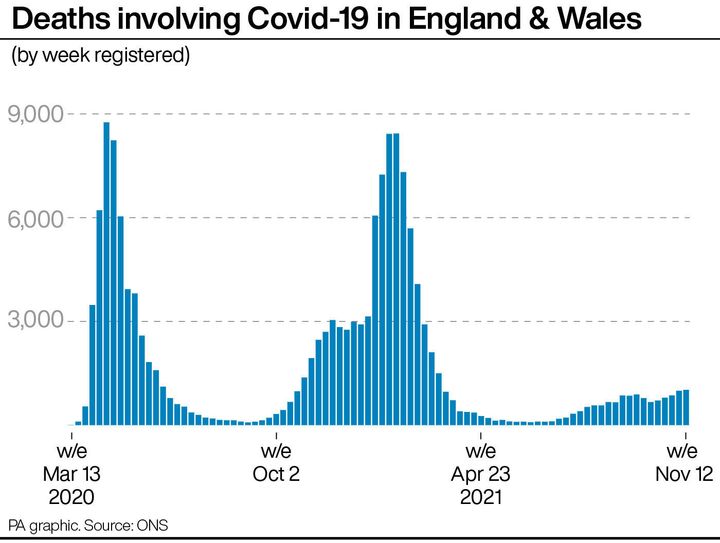
Deaths from Covid remain relatively low, too, compared to the previous rates seen shortly before lockdowns in March 2020, November 2020, and January 2021.

Deaths involving Covid-19 in England & Wales

Sky News’ science correspondent Thomas Moore has also said the government has shown “no inclination towards tightening up the rules” or even bringing in plan B.

Waning immunity and a relaxation in behaviour have triggered small spikes in infections since the UK unlocked in July, but booster jabs have seen these spikes level off quickly.

The prime minister has refused to implement plan B – mandatory face masks and working from home – relying on the vaccine take-up and boosters instead.

The government has promised to keep an eye on the data but also appears wary of bringing about the same anti-lockdown protests seen across Europe.

Only a “firebreak” lockdown will be used if necessary, although business secretary Kwasi Kwarteng told Sky News in October: “I would rule this out.”

Education secretary Nadhim Zahawi has also claimed the UK’s early and successful vaccine rollout means it’s unlikely that more restrictions will be brought in.

What’s happening in Europe?

Yet, Covid cases have certainly been climbing in Europe in recent weeks.

Austria became the first Western country to go into another full, national lockdown in November while Germany’s health minister Jens Spahn warned that by the end of winter, most of the country will be “vaccinated, cured or dead”.

The Netherlands, Belgium, Hungary, Croatia, Ireland, Slovakia and Czechia are all struggling with infections too.

However, Professor Neil Ferguson from Imperial College London, part of the government independent advisory panel SAGE, told Radio 4′s Today programme that the UK has already gone through the wave Europe is experiencing, and so the population has greater immunity compared to Germany and Austria.

Will Christmas be cancelled?

As Christmas 2020 was effectively cancelled just six days before December 25, this is a major concern for many families this year.

Health secretary Sajid Javid said in October: “With winter ahead, we cannot blow it now.

“Although vaccinations are our primary form of defence, there are many more things we can all do to help contain the spread of this virus, like meeting outdoors where it is possible.”

He added Christmas is possible “if we all play our part”.

Dr Mike Tildesley, part of the Scientific Pandemic Influenza Modelling group (Spi-M) told Sky News, “the idea of a winter lockdown is a long way away” unless the NHS comes under severe pressure again.

What you can do to stay safe in winter

As the UK’s future with Covid remains difficult to predict, you can reduce your own Covid risk in the upcoming months through several simple measures.

Make sure you ventilate your home for at least 10 minutes every hour. This prevents Covid from building up indoors.

Get vaccinated if you haven’t already and make sure you accept your booster jab when you are called up by the NHS.

Get your flu jab as the annual virus is likely to affect people more this year following last year’s lockdown – catching the flu could then make you more susceptible to Covid.

Wear a mask in crowded places, both indoors and outdoors, and wash your hands with soap and water for at least 20 seconds when you can.

Work from home where possible and reduce the number of people you see, or try to see more people outdoors.

Share Button