How Much Time To Leave Between Your Two Pfizer Vaccine Doses

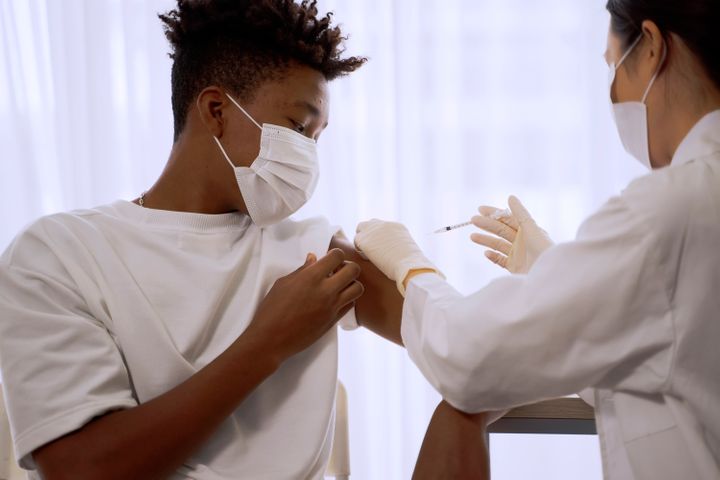
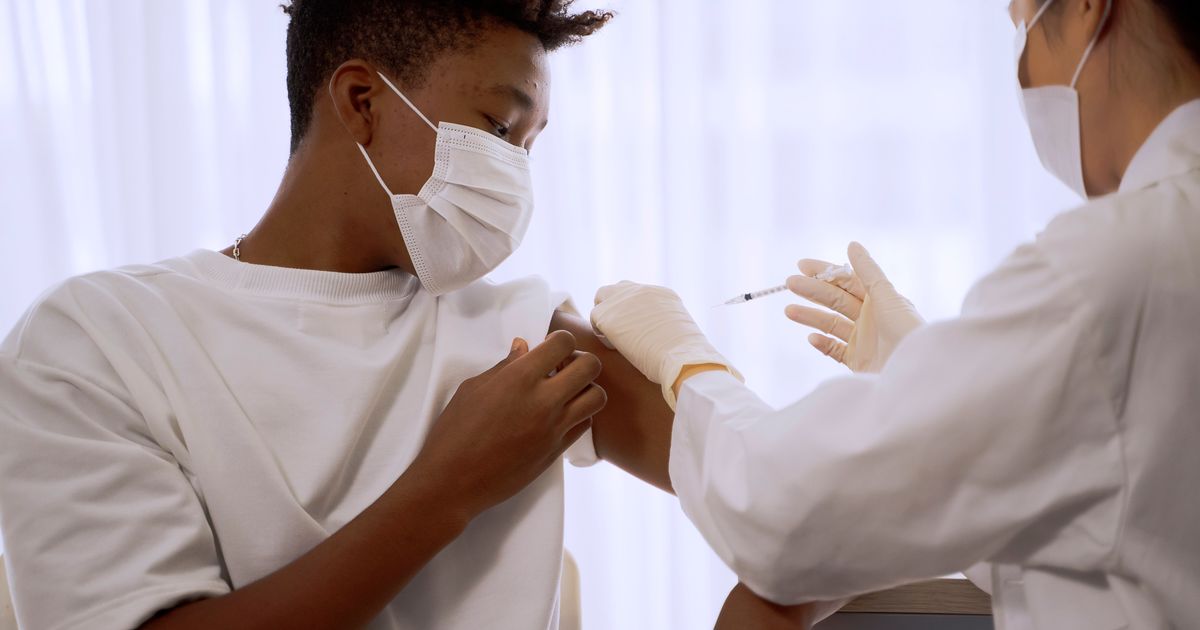
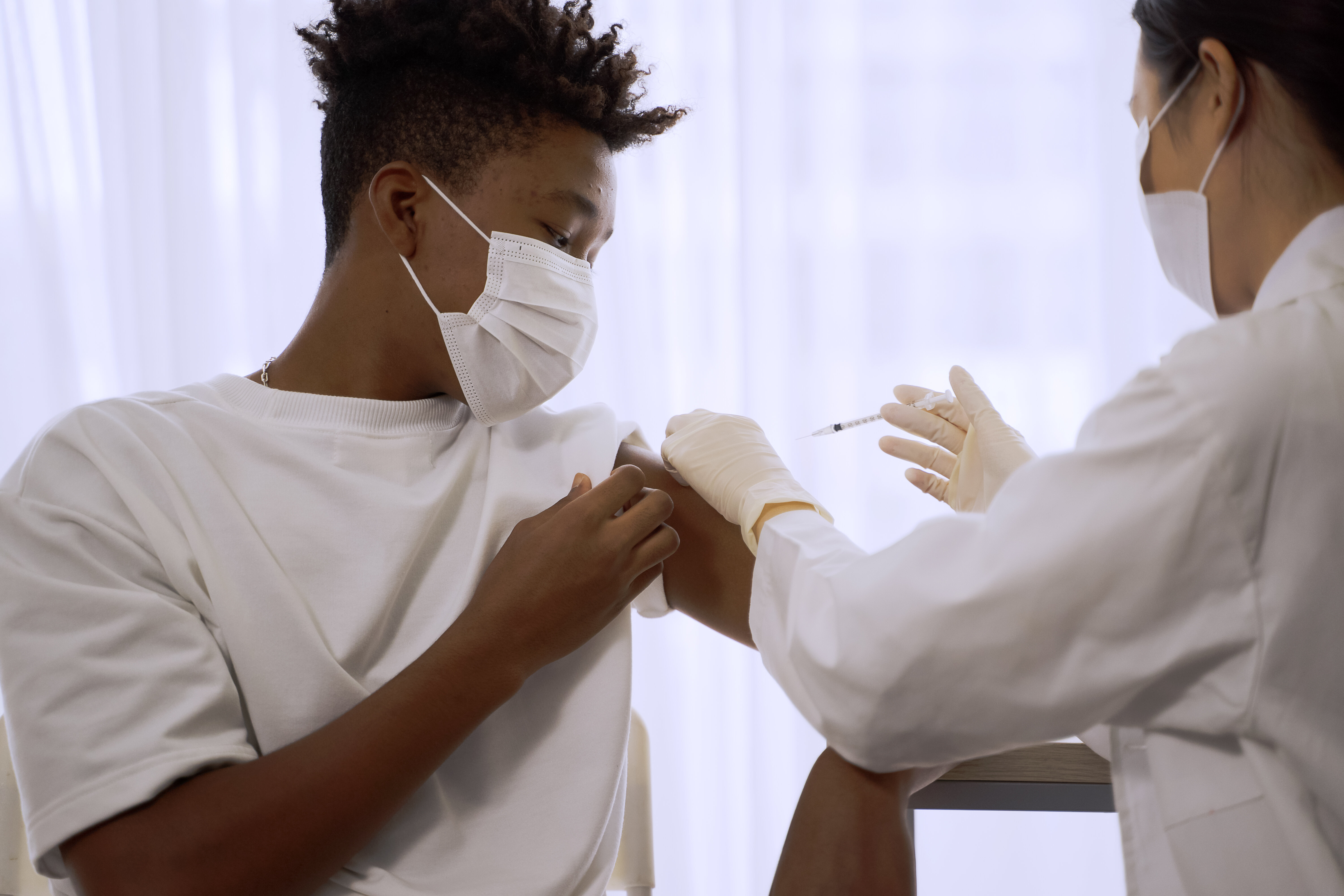
Leaving eight weeks between your first and second dose of the Pfizer Covid-19 vaccine is the optimum gap for immunity and protection, say scientists.

A new study, funded by the Department of Health and Social Care has found that a 10-week gap between doses produces higher antibody levels, as well as a higher proportion of infection-fighting T cells, compared to just four weeks.

However, scientists involved in the study have described an eight-week dosing interval as the “sweet spot” when it comes to generating a strong immune response while also protecting the UK population against the Delta variant of coronavirus – to which people can still be vulnerable after just one jab.

At the start of the second wave of the Covid-19 epidemic, the Joint Committee on Vaccination and Immunisation (JCVI) decided to recommend 12 weeks between two doses for the two vaccines that were available at the time: Pfizer and Oxford/AstraZeneca.

This was when vaccines were in short supply and early research suggested that widening the gap from the manufacturer-recommended four weeks to 12 ramped up the jabs’ immune response.

In May, the guidance was changed to eight weeks as cases associated with the Delta variant – which was first identified in India – continued to rise in the UK.

Professor Susanna Duanchie of the University of Oxford, joint chief investigator in the study, said: “The original recommendation from JCVI was 12 weeks and this was based on a lot of knowledge from other vaccines that often having a longer interval (between doses) gives your immune system a chance to make the highest response.

“The decision to put it to eight weeks is really balancing all the wider issues, the pros and cons – two doses is better than one overall. Also, other factors need to be balanced: vaccine supply, the desire to open up, and so on.”

She added: “I think that eight weeks is about the sweet spot for me, because people do want to get the two vaccine (doses) and there is a lot of Delta out there right now. Unfortunately, I can’t see this virus disappearing so you want to balance that against getting the best protection that you can.”

Researchers recruited 503 healthcare workers for the study, 44% (223) of whom previously had Covid-19, and studied the immune responses generated by the Pfizer jab. They found that both short (three to four-week) and long (10-week) gaps between the Pfizer vaccine doses generated strong antibody and T cell immune responses.

But the longer gap led to higher antibody levels and a higher proportion of helper T cells, which according to the researchers, supports immune memory.

After the second dose, a wider gap also resulted in higher neutralising antibody levels against the Delta variant and all other variants of concern, they found. But in this instance, antibody levels dropped off between first and second dose – leaving the recipients vulnerable against the Delta variant after one jab.

Dr Rebecca Payne, one of the study’s authors from Newcastle University, said the cellular response from infection-fighting T cells remained consistent across both long and short dosing gaps, suggesting they play an important role in protecting against Covid-19 between the first and second jab.

“After the second dose on the longer dosing schedule, antibody levels surpassed those seen at the same timepoint after a shorter dosing interval,” she added. “Although T cell levels were comparatively lower, the profile of T cells present suggested more support of immune memory and antibody generation.”

Researchers said there may be exceptions where the gap between doses may need to be shortened from eight weeks to four, such as before treatments that may affect the immune system, such as cancer or organ transplant.

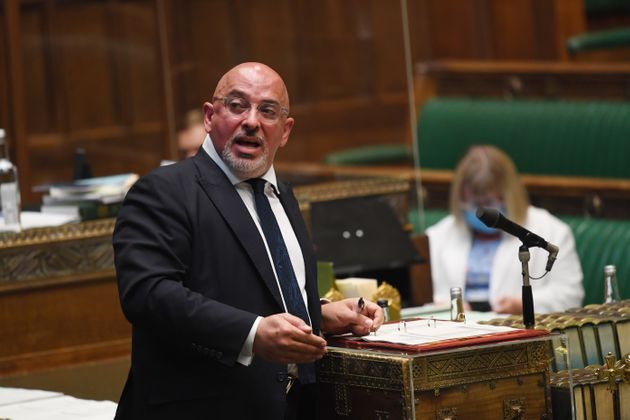
Vaccines minister Nadhim Zahawi said the government took the JCVI’s advice to shorten the dosing interval from 12 to eight weeks to help protect more people against the Delta variant.

“This latest study provides further evidence that this interval results in a strong immune response and supports our decision,” he added.

“I urge every adult to get both doses of the vaccine to protect yourself and those around you and we are looking to offer millions of the most vulnerable a booster jab from September to ensure this protection is maintained.”
Share Button

Child winter respiratory illness on rise in summer

Parents are warned to look out for signs of RSV, after lockdown disrupted its normal winter spread.

Share Button

Martian global dust storm ended winter early in the south

A dust storm that engulfed Mars in 2018 destroyed a vortex of cold air around the planet’s south pole and brought an early spring to the hemisphere. By contrast, the storm caused only minor distortions to the polar vortex in the northern hemisphere and no dramatic seasonal changes. Dr Paul Streeter of The Open University’s Faculty of Science, Technology, Engineering and Mathematics will present the work today (23 July) at the virtual National Astronomy Meeting (NAM 2021).

Over two weeks at the beginning of June 2018, localised dust storms combined and spread to form an impenetrable blanket of dust that hid almost the entire planet’s surface. The global dust storm, which coincided with Mars’s equinox and lasted until mid-September, proved fatal to NASA’s solar-powered Opportunity rover.

Streeter and colleagues from The Open University, NASA and the Russian Academy of Sciences examined the effects of the event on the martian atmosphere by combining data from a Mars Global Climate Model with observations from the European Space Agency/Roscosmos ExoMars Trace Gas Orbiter and NASA’s Mars Reconnaissance Orbiter missions.

Dr Streeter said: “This was a perfect opportunity to investigate how global dust storms impact the atmosphere at the martian poles, which are surrounded by powerful jets of wind in winter. Since the last global storm in 2007, several new missions and instruments have arrived in Mars orbit, so the 2018 event was the most-observed to date.”

Previous research has shown that high levels of dust in the atmosphere can have significant effects on polar temperatures and winds. The vortices at the winter poles also affect temperatures and the transport of air, dust, water and chemicals, so their disruption could mean substantial changes in the martian atmosphere.

The team found that the 2018 storm had profoundly different effects in each hemisphere. At the south pole, where the vortex was almost destroyed, temperatures rose and wind speeds fell dramatically. While the vortex may have already been starting to decay due to the onset of spring, the dust storm appears to have had a decisive effect in ending winter early.

The northern polar vortex, by contrast, remained stable and the onset of autumn followed its usual pattern. However, the normally elliptical northern vortex was changed by the storm to become more symmetrical. The researchers link this to the high dust content in the atmosphere suppressing atmospheric waves caused by the extreme topography in the northern hemisphere, which has volcanoes over twice as tall as Mount Everest and craters as deep as terrestrial mountains.

Dr Streeter added: “Global dust storms at equinox may enhance transport into the southern pole due to the diminished vortex, while the more robust northern vortex continues to act as an effective barrier. If this pattern for global dust storms holds over the course of the thousands of years that Mars maintains this particular axial tilt, it has implications for how dust is deposited at the north and south poles and our understanding of the planet’s climate history.”

Video: https://www.youtube.com/watch?v=tCawZig5fCg

Story Source:

Materials provided by Royal Astronomical Society. Note: Content may be edited for style and length.

Share Button

Meet the Martian meteorite hunters

A team at the Natural History Museum (NHM), London is paving the way for future rovers to search for meteorites on Mars. The scientists are using the NHM’s extensive meteorite collection to test the spectral instruments destined for the ExoMars rover Rosalind Franklin, and develop tools to identify meteorites on the surface of the red planet. The project is being presented today (23 July) at the virtual National Astronomy Meeting 2021.

The cratered surface of our nearest planetary neighbour has a long and complex history, and searching for rocks amidst more rocks may seem like a futile activity. Despite this, Martian rovers statistically have a significantly higher ‘find per mile’ success rate than dedicated meteorite hunts on Earth: for every kilometre travelled by a Mars rover, approximately one meteorite is found, even though the rovers have not been specifically looking for them up till now.

However, as part of the European Space Agency’s upcoming ExoMars mission, the next rover — named Rosalind Franklin, after the chemist best known for her pioneering work on DNA — will drill down into the Martian surface to sample the soil, analyse its composition and search for evidence of past or present life buried underground.

Meteorites are important pieces of evidence that can help us understand this story; once a meteorite lands on a planet, it is subjected to the same atmospheric conditions as the rest of the surface. Chemical and physical weathering can provide information on climate weathering rates and water-rock interactions, meteorite sizes and distribution can help to infer information about the density of the atmosphere, and stony meteorites could be a potential delivery mechanism for organic materials to Mars.

“Meteorites act as a witness plate across geological time,” said Sara Motaghian, the PhD student at the NHM and Imperial College London who is carrying out the work. “Generally, the surfaces of Mars we are exploring are incredibly ancient, meaning there have been billions of years for the surface to accumulate these meteorites and lock in information from across Mars’ past.”

The team are looking in particular at the use of multispectral imaging with the PanCam instrument, hoping to be able to highlight features in images that could be associated with meteorites as the rover moves across the surface. They are also investigating the possibility of using pattern recognition techniques to distinguish features such as Widmanstätten patterns, which can be revealed by extreme weathering.

The launch of the ExoMars rover was originally scheduled for 2020, however was delayed until 2022 due to technical issues and growing concerns over the coronavirus pandemic. Once the rover reaches Mars in 2023, the team hope that their work will allow meteorites on the surface to be studied for longer by the Rosalind Franklin rover before it drives on, helping to build a more complete understanding of the Martian surface and its history, if any, of life.

Story Source:

Materials provided by Royal Astronomical Society. Note: Content may be edited for style and length.

Share Button

Big data-derived tool facilitates closer monitoring of recovery from natural disasters

By analyzing peoples’ visitation patterns to essential establishments like pharmacies, religious centers and grocery stores during Hurricane Harvey, researchers at Texas A&M University have developed a framework to assess the recovery of communities after natural disasters in near real time. They said the information gleaned from their analysis would help federal agencies allocate resources equitably among communities ailing from a disaster.

“Neighboring communities can be impacted very differently after a natural catastrophic event,” said Dr. Ali Mostafavi, associate professor in the Zachry Department of Civil and Environmental Engineering and director of the Urban Resilience.AI Lab. “And so, we need to identify which areas can recover faster than others and which areas are impacted more than others so that we can allocate more resources to areas that need them more.”

The researchers have reported their findings in Interface, a publication of The Royal Society.

The metric that is conventionally used to quantify how communities bounce back from nature-caused setbacks is called resilience and is defined as the ability of a community to return to its pre-disaster state. And so, to measure resilience, factors like the accessibility and distribution of resources, connection between residents within a community and the level of community preparedness for an unforeseen disaster are critical.

The standard way of obtaining data needed to estimate resilience is through surveys. The questions considered, among many others, are how and to what extent businesses or households were affected by the natural disaster and the stage of recovery. However, Mostafavi said these survey-based methods, although extremely useful, take a long time to conduct, with the results of the survey becoming available many months after the disaster.

“For federal agencies allocating funds, recovery information is actually needed in a faster and more near real-time fashion for communities that are trailing in the recovery process,” said Mostafavi. “The solution, we thought, was to look for emerging sources of data other than surveys that could provide more granular insights into community recovery at a scale not previously investigated.”

Mostafavi and his collaborators turned to community-level big data, particularly the information collected by companies that keep track of visits to locations within a perimeter from anonymized cell phone data. In particular, the researchers partnered with a company called SafeGraph to obtain location data for the people in Harris County, Texas, around the time of Hurricane Harvey. As a first step, they determined “points of interest” corresponding to the locations of establishments, like hospitals, gas stations and stores, that might experience a change in visitor traffic due to the hurricane.

Next, the researchers mined the big data and obtained the number of visits to each point of interest before and during the hurricane. For different communities in Harris County, they calculated the time taken for the visits to return to the pre-disaster level and the general resilience, that is, the combined resilience of each point of interest based on the percent change in the number of visits due to the hurricane.

Their analysis revealed that communities that had low resilience also experienced more flooding. However, their results also showed that the level of impact did not necessarily correlate with recovery.

“It’s intuitive to assume, for example, that businesses impacted more will have slower recovery, which actually wasn’t the case,” said Mostafavi. “There were places where visits dropped significantly, but they recovered fast. But then others that were impacted less but took longer to recover, which indicated the importance of both time and general resilience in evaluating a community’s recovery.”

The researchers also noted that another important finding was that the areas that are in close proximity to those that had flooding are also impacted, suggesting that the spatial reach of flooding goes beyond flooded areas.

“Although we focused on Hurricane Harvey for this study, our framework is applicable for any other natural disaster as well,” said Mostafavi. “But as a next step, we’d like to create an intelligent dashboard that would display the rate of recovery and impacts in different areas in near real time and also predict the likelihood of future access disruption and recovery patterns after a heavy downpour.”

Story Source:

Materials provided by Texas A&M University. Original written by Vandana Suresh. Note: Content may be edited for style and length.

Share Button

Why The PM’s Covid Passports Are Now Not A Threat But A Promise

UK ParliamentPA

Nadhim Zahawi

Connoisseurs of parliamentary proceedings will know that while ministers use an opening statement to set out broad policy, the devilish detail is often held back until their answer to their opposition shadow. And for anyone interested in the scale of the government’s planned ‘Covid passports’, today was a perfect example.

In answer to Labour’s Jonathan Ashworth, vaccinations minister Nadhim Zahawi gave a very strong hint that it was not just nightclubs that would require the NHS Covid pass as a condition of entry. He said indoor music venues, as well as “large unstructured outdoor events such as business events”, “music and spectator sport events” were “the ones that we are most concerned about”.

That will ring alarm bells among Labour’s party conference organisers I suspect (it’s due to have a full in-person conference in Brighton, whereas the Tories have pointedly planned a hybrid event and the LibDems a fully online one), as well the UK’s huge but struggling events business. Football matches, gigs, all sound like they’ll need a passport for entry.

And despite suspicions that the nightclub plan for late September was just a bluff to get young people jabbed, it looks like it really is going ahead. One of the few areas where business secretary Kwasi Kwarteng stuck to the script on Thursday was when he said that instead of a specific vote for nightclub passes, there might be “a general vote on the concept”. “I’m very confident we can pass the legislation we require,” he added.

With many Tories worried that a blanket Covid ‘ID card’ could be used for entry to pubs (and with Labour going for the populist line that it would be “unfair” on pubs and pubgoers), Kwarteng’s confidence will be subjected to a serious stress test when the Commons returns after its summer break.

But given Zahawi’s detailed hints, the PM’s own line on Monday – “some of life’s most important pleasures and opportunities are likely to be increasingly dependent on vaccination” – now feels like it’s not a threat but a promise. Zahawi also put Covid passports at the heart of the government’s strategy to be the first country in the world to “transition” from pandemic to endemic, “from pandemic to manageable menace”.

Vaccination does remain the best hope of getting there (new stats showed it had prevented 52,600 hospitalisations), yet there are real worries in Whitehall at the slowing uptake among under-30s. Some 34% of 18-29s have not had their first jab. And as NHS England warns hospitals they may be entering the “most difficult period” of the pandemic for more than a year, it also said high rates of admissions are ”closely linked” to low vaccine uptake.

Just as worrying, the surge in Covid cases has a direct impact on the vaccination programme because anyone infected has to wait 28 days until they can be given the jab. PHE said a total of 1154.7 infections per 100,000 people were recorded among those aged 20 to 29 – the highest figure recorded for any age cohort since the beginning of the pandemic.

In a bitter twist on the PM’s line this week that he’s “turning jabs, jabs, jabs into jobs, jobs, jobs”, the pingtastic third wave is forcing young people to not only delay vaccination but also forcing them to stay off work, with all the consequences for the economy that entails.

One subject that Zahawi didn’t want to touch in any detail on Thursday was NHS pay. He ignored both Ashworth and Jeremy Hunt when they asked just where the £2.2bn needed to fund the 3% rise was coming from. Downing St confirmed for the first time the cash would come from the DHSC budget but not from money “earmarked for the NHS front line”.

The cash will probably come from a mixture of the extra emergency Covid funding for this financial year for the NHS (although trusts are still waiting for the post-September half of that), plus the long term plan. But given the massive £37bn earmarked for Test and Trace over two years, I wonder if Sajid Javid will see that as a target?

Few people realise that Test and Trace actually reported a huge, 39% underspend of its 2020-21 budget of £22bn, mainly because the lockdown earlier this year meant “cancelled activity”. That’s a cool £4.3bn, more than double the pay rise bill.

The Treasury will probably just bank the underspend, but politically just imagine what a win-win it would be to hand cash from a failing service to pay the wages of the tired, heroic staff of the NHS?

Share Button

Concussion and sport: How the lives of ex-sportspeople have been affected by concussion

BBC Radio 5 Live speaks to former sportsmen and women and their families about how concussion has changed their lives.

Share Button

Covid cases at record levels for 20 to 29-year-olds

Everyone in this age group should be cautious when socialising, officials say, and get two jabs.

Share Button

Dawn Butler Ordered To Leave Commons For Calling Boris Johnson A Liar

House of Commons – PA Images via Getty Images

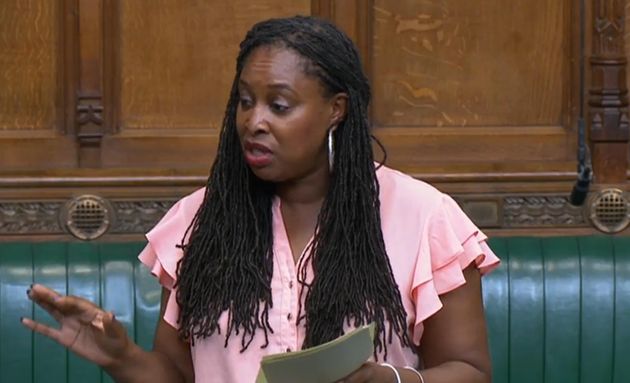
Dawn Butler was told to withdraw from the chamber by temporary deputy speaker Judith Cummins following her remarks in a Commons debate.  

A Labour MP has been ordered to leave the House of Commons after refusing to withdraw claims that Boris Johnson has “lied to the House and the country over and over again”.

Dawn Butler was told to withdraw from the chamber by temporary deputy speaker Judith Cummins following her remarks in a Commons debate.

It is not considered within the boundaries of parliamentary etiquette to call another member a liar.

Butler had said: “Poor people in our country have paid with their lives because the prime minister has spent the last 18 months misleading this House and the country over and over again.”

She highlighted disputed claims made by the Prime Minister, including that the link between Covid-19 infection and serious disease and death had been severed.

She added: “It’s dangerous to lie in a pandemic.

“I am disappointed the prime minister has not come to the House to correct the record and correct the fact that he has lied to the House and the country over and over again.”

Cummins intervened and said: “Order! Order! I’m sure that the member will reflect on her words she’s saying and perhaps correct the record.”

Butler replied: “What would you rather – a weakened leg or a severed leg?

“At the end of the day the prime minister has lied to this House time and time again.

“It’s funny that we get in trouble in this place for calling out the lie rather than the person lying.”

Cummins intervened again and urged Butler to “reflect” on her words and withdraw them.

Butler replied: “I’ve reflected on my words and somebody needs to tell the truth in this House that the prime minister has lied.”

Cummins then read out a statement in which she ordered Butler to “withdraw immediately from the House for the remainder of the day’s sitting”.

Butler left her seat and exited the chamber.

Share Button

AI breakthrough could spark medical revolution

A program has been used to predict the structures of nearly every protein in the human body.

Share Button