Writer Wayne Brown welcomes the change after he was turned away from donating last year.


Writer Wayne Brown welcomes the change after he was turned away from donating last year.
A European Championship match between Denmark and Finland came to an abrupt halt on Saturday when Danish team captain Christian Eriksen collapsed on the field.
Players swiftly called over medical personnel and ― with some in tears ― formed a human shield around Eriksen as he received chest compressions and other aid at Parken Stadium in Copenhagen.
Eriksen, a star midfielder, was taken away on a stretcher after about 10 minutes of medical attention.
He has been stabilised and transferred to a hospital for tests, according to an announcement from the Union of European Football Associations, which organises the tournament held every four years.
The match then resumed at the request of both teams.
Players were in the first half of the game when Eriksen appeared ready to receive a pass but instead collapsed near the sideline.
“Moments like this put everything in life into perspective,” UEFA President Aleksander Čeferin said in a statement. “At these times, the unity of the football family is so strong and he and his family carry with them the good wishes and prayers of everyone.”
Eriksen reportedly spoke to his teammates on a video call to reassure them he felt okay.

Wolfgang Rattay – Pool via Getty Images
As spectators awaited further update on Eriksen’s condition, tributes poured infrom fans, journalists and football clubs around the world.
“Incredible effort from the paramedic team,” tweeted Google CEO Sundar Pichai.
“My god, thinking of Eriksen and his family and sending all the love and strength available,” Team USA star player Megan Rapinoe said.

FRIEDEMANN VOGEL via Getty Images
Video from the stadium showed the fans shouting “Christian” and “Eriksen” back and forth in solidarity during the pause in the game, which lasted roughly 90 minutes.
The next match, between Belgium and Russia, will go forth as scheduled, the UEFA said.




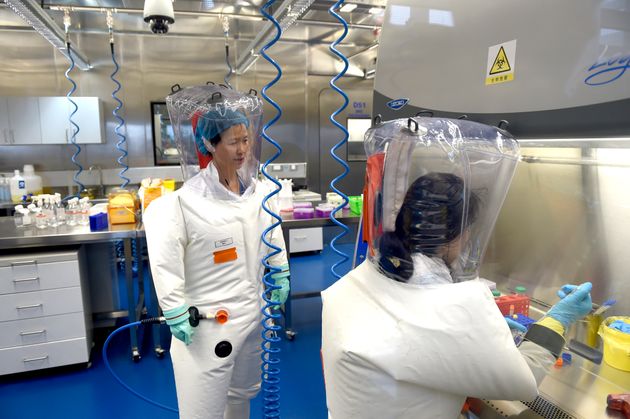
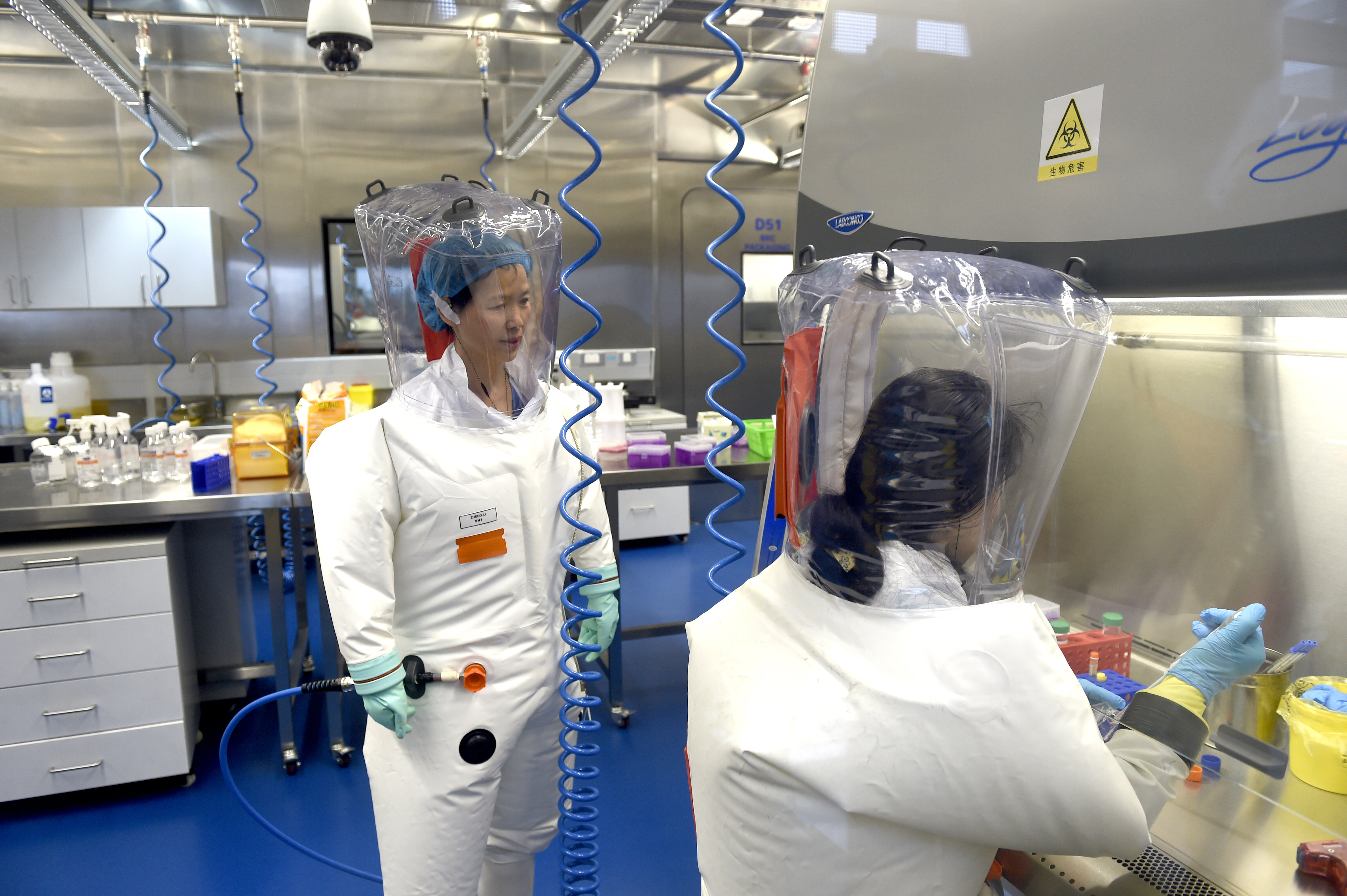
G7 leaders discussed the theory that Covid-19 leaked from a laboratory in the Chinese city of Wuhan, the head of the World Health Organisation (WHO) has revealed.
WHO director-general Tedros Adhanom Ghebreyesus said leaders discussed the so-called “lab leak” theory during talks on Covid on Saturday.
It comes after a leaked draft communique for the summit seen by Bloomberg suggested G7 leaders will call for a new investigation into the origins of coronavirus.
Most experts believe that Covid jumped to humans from an animal host naturally.
But US president Joe Biden surprisingly last month decided to expand an American investigation into the virus’s origins, with one of the country’s intelligence agencies leaning towards the lab leak theory, while two others believe it had natural origin.
G7 leaders are likely to have discussed the theory Covid leaked from the Wuhan Institute of Virology at the instigation of Biden.
At a summit media briefing, Tedros was asked: “In today’s whole summit of the G7 did the origin of Covid come up, in particular the Wuhan lab leak theory?”
Tedros replied: “It was raised.
“We discussed… the origins.
“What we discussed was on the future and the challenges of sharing information, sharing data, sharing pathogens or in sharing biological materials and in sharing technology like vaccines.
“Now we are having vaccine equity problems and we are seeing a two-track pandemic – some countries are doing well while others are actually in trouble because of lack of access to vaccines.
“So we are going to address all these problems and address the origin issues for the future, we need to have a binding pandemic treaty so there will be rules of the game and we have countries abiding to laws and so we can have all the challenges we are facing now addressed.
“So the origins was discussed in relation to now, but more in relation to how this should be handled in the future.”
Barcroft Media via Getty Images
Tedros meanwhile urged China to be more transparent when the WHO begins the second phase of its Covid origins inquiry.
“More than 174m people have been confirmed [with] Covid illness, this is actually an underestimate, it could be more,” he said.
“And so far 3.75m people have died.
“This is very tragic and I think the respect these people deserve is knowing what the origin of this virus is so that we can prevent it from happening again.
“The origin study is something the WHO takes really seriously.
“We are preparing for the second phase.
“We will need cooperation from the Chinese side, we need transparency in order to understand or find the origin of this virus.”
Boris Johnson says it is vital any changes are “irreversible”, amid rising Delta variant cases.

Boris Johnson has threatened to suspend a key Brexit deal on Northern Ireland in an increasingly bitter row with the EU.
The prime minister spoke after meeting key EU players in the margins of the G7 summit in Cornwall, as wrangling over the Northern Ireland protocol threatened to overshadow the gathering.
French president Emmanuel Macron on Saturday morning urged Johnson to “keep his word” and apply the protocol in full, while European Commission president Ursula von der Leyen and European Council leader Charles Michel told him to “implement what we agreed on”.
German chancellor Angela Merkel also discussed the issue in talks with Johnson, who has now hit back with a complaint that the EU was being “theologically draconian” about the deal.
EXPLAINED Why A Brexit Sausage War Risks Overshadowing The Entire G7 Summit
Downing Street has indicated the UK would be prepared to unilaterally delay the full implementation of the protocol to prevent a ban on chilled meats crossing the Irish Sea from Great Britain.
Restrictions on British-produced chilled meats entering Northern Ireland are due to come into force at the end of the month, triggering talk of a so-called “sausage war”.
Johnson has now warned that unless there was a solution he would invoke Article 16 of the protocol which allows either side to take unilateral action to suspend the deal if its implementation were to lead to “serious economic, societal or environmental difficulties”.
PM tells me NI protocol can be implemented in a pragmatic way or “in a theologically draconian way” and right now there are too many unnecessary barriers #G7pic.twitter.com/PkrhbVthP5
— Andy Bell (@andybell5news) June 12, 2021
Explaining his position, the PM told Channel 4 News: “It’s stated abundantly in the text that the protocol should be implemented in such a way as to ensure free trade, free movement of goods between Great Britain and Northern Ireland and all parts of the UK.
“It’s not working like that at the moment. We need to make sure it’s applied in a sensible way.
“There’s no reason at all to have prohibitions or barriers to the movement of potted plants, tractor parts, guide dogs for the blind, chilled meats – you name it – from Great Britain to Northern Ireland.”
On Sky News, he added: “I think we can sort it out but… it is up to our EU friends and partners to understand that we will do whatever it takes.
“I think if the protocol continues to be applied in this way, then we will obviously not hesitate to invoke Article 16, as I have said before.
“Don’t forget, the EU themselves invoked Article 16 in January, to disapply the protocol, so they can stop removal of vaccines from the EU to the UK.
“I’ve talked to some of our friends here today, who do seem to misunderstand that the UK is a single country, a single territory. I just need to get that into their heads.”
Johnson used the meetings with EU leaders to call for “pragmatism and compromise on all sides”, repeating his call to “minimise the impact [of the protocol] on the day-to-day lives of people in Northern Ireland”.
“I certainly think that the protocol is capable of being used and interpreted – by the way, up to the EU – in a pragmatic way or a theologically draconian way,” he told Channel 5.
“At the moment we are seeing… a lot of unnecessary difficulties. I think we can sort it out, with goodwill.
“What we don’t want to see is any more unnecessary barriers to trade and we want to sort it out as fast as we can, I’m sure with goodwill we can.”
Asked if there would be a trade war if agreement could not be reached, Johnson said: “The UK will do whatever we need to do to protect the UK internal market.”
“I don’t happen to think that a trade war is a very sensible or likely way forward.
“I just think that we need some pragmatic solutions.”


Covid passports could be used at events such as sports matches and concerts, the BBC understands.
The coronavirus has changed and changed again, getting more transmissible each time.

Vitamin D deficiency strongly exaggerates the craving for and effects of opioids, potentially increasing the risk for dependence and addiction, according to a new study led by researchers at Massachusetts General Hospital (MGH). These findings, published in Science Advances, suggest that addressing the common problem of vitamin D deficiency with inexpensive supplements could play a part in combating the ongoing scourge of opioid addiction.
Earlier work by David E. Fisher, MD, PhD, director of the Mass General Cancer Center’s Melanoma Program and director of MGH’s Cutaneous Biology Research Center (CBRC), laid the foundation for the current study. In 2007, Fisher and his team found something unexpected: Exposure to ultraviolet (UV) rays (specifically the form called UVB), causes the skin to produce the hormone endorphin, which is chemically related to morphine, heroin and other opioids — in fact, all activate the same receptors in the brain. A subsequent study by Fisher found that UV exposure raises endorphin levels in mice, which then display behavior consistent with opioid addiction.
Endorphin is sometimes called a “feel good” hormone because it induces a sense of mild euphoria. Studies have suggested that some people develop urges to sunbathe and visit tanning salons that mirror the behaviors of opioid addicts. Fisher and his colleagues speculated that people may seek out UVB because they unknowingly crave the endorphin rush. But that suggests a major contradiction. “Why would we evolve to be behaviorally drawn towards the most common carcinogen that exists?” asked Fisher. After all, sun exposure is the primary cause of skin cancer, to say nothing of wrinkles and other skin damage.
Fisher believes that the only explanation for why humans and other animals seek out the sun is that exposure to UV radiation is necessary for production of vitamin D, which our bodies can’t formulate on their own. Vitamin D promotes uptake of calcium, which is essential for building bone. As tribes of humans migrated north during prehistoric times, an evolutionary alteration might have been needed to compel them to step out of caves and into the sunshine on bitterly cold days. Otherwise, small children would have died of prolonged vitamin D deficiency (the cause of rickets) and weak bones might have shattered when people ran from predators, leaving them vulnerable.
This theory led Fisher and colleagues to hypothesize that sun seeking is driven by vitamin D deficiency, with the goal of increasing synthesis of the hormone for survival, and that vitamin D deficiency might also make the body more sensitive to the effects of opioids, potentially contributing to addiction. “Our goal in this study was to understand the relationship between vitamin D signaling in the body and UV-seeking and opioid-seeking behaviors,” says lead author Lajos V. Kemény, MD, PhD, a postdoctoral research fellow in Dermatology at MGH.
In the Science Advances paper, Fisher, Kemény and a multidisciplinary team from several institutions addressed the question from dual perspectives. In one arm of the study, they compared normal laboratory mice with mice that were deficient in vitamin D (either through special breeding or by removing vitamin D from their diets). “We found that modulating vitamin D levels changes multiple addictive behaviors to both UV and opioids,” says Kemény. Importantly, when the mice were conditioned with modest doses of morphine, those deficient in vitamin D continued seeking out the drug, behavior that was less common among the normal mice. When morphine was withdrawn, the mice with low vitamin D levels were far more likely to develop withdrawal symptoms.
The study also found that morphine worked more effectively as a pain reliever in mice with vitamin D deficiency — that is, the opioid had an exaggerated response in these mice, which may be concerning if it’s true in humans, too, says Fisher. After all, consider a surgery patient who receives morphine for pain control after the operation. If that patient is deficient in vitamin D, the euphoric effects of morphine could be exaggerated, says Fisher, “and that person is more likely to become addicted.”
The lab data suggesting that vitamin D deficiency increases addictive behavior was supported by several accompanying analyses of human health records. One showed that patients with modestly low vitamin D levels were 50 percent more likely than others with normal levels to use opioids, while patients who had severe vitamin D deficiency were 90 percent more likely. Another analysis found that patients diagnosed with opioid use disorder (OUD) were more likely than others to be deficient in vitamin D.
Back in the lab, one of the study’s other critical findings could have significant implications, says Fisher. “When we corrected vitamin D levels in the deficient mice, their opioid responses reversed and returned to normal,” he says. In humans, vitamin D deficiency is widespread, but is safely and easily treated with low-cost dietary supplements, notes Fisher. While more research is needed, he believes that treating vitamin D deficiency may offer a new way to help reduce the risk for OUD and bolster existing treatments for the disorder. “Our results suggests that we may have an opportunity in the public health arena to influence the opioid epidemic,” says Fisher.

Cells contain machinery that duplicates DNA into a new set that goes into a newly formed cell. That same class of machines, called polymerases, also build RNA messages, which are like notes copied from the central DNA repository of recipes, so they can be read more efficiently into proteins. But polymerases were thought to only work in one direction DNA into DNA or RNA. This prevents RNA messages from being rewritten back into the master recipe book of genomic DNA. Now, Thomas Jefferson University researchers provide the first evidence that RNA segments can be written back into DNA, which potentially challenges the central dogma in biology and could have wide implications affecting many fields of biology.
“This work opens the door to many other studies that will help us understand the significance of having a mechanism for converting RNA messages into DNA in our own cells,” says Richard Pomerantz, PhD, associate professor of biochemistry and molecular biology at Thomas Jefferson University. “The reality that a human polymerase can do this with high efficiency, raises many questions.” For example, this finding suggests that RNA messages can be used as templates for repairing or re-writing genomic DNA.
The work was published June 11th in the journal Science Advances.
Together with first author Gurushankar Chandramouly and other collaborators, Dr. Pomerantz’s team started by investigating one very unusual polymerase, called polymerase theta. Of the 14 DNA polymerases in mammalian cells, only three do the bulk of the work of duplicating the entire genome to prepare for cell division. The remaining 11 are mostly involved in detecting and making repairs when there’s a break or error in the DNA strands. Polymerase theta repairs DNA, but is very error-prone and makes many errors or mutations. The researchers therefore noticed that some of polymerase theta’s “bad” qualities were ones it shared with another cellular machine, albeit one more common in viruses — the reverse transcriptase. Like Pol theta, HIV reverse transcriptase acts as a DNA polymerase, but can also bind RNA and read RNA back into a DNA strand.
In a series of elegant experiments, the researchers tested polymerase theta against the reverse transcriptase from HIV, which is one of the best studied of its kind. They showed that polymerase theta was capable of converting RNA messages into DNA, which it did as well as HIV reverse transcriptase, and that it actually did a better job than when duplicating DNA to DNA. Polymerase theta was more efficient and introduced fewer errors when using an RNA template to write new DNA messages, than when duplicating DNA into DNA, suggesting that this function could be its primary purpose in the cell.
The group collaborated with Dr. Xiaojiang S. Chen’s lab at USC and used x-ray crystallography to define the structure and found that this molecule was able to change shape in order to accommodate the more bulky RNA molecule — a feat unique among polymerases.
“Our research suggests that polymerase theta’s main function is to act as a reverse transcriptase,” says Dr. Pomerantz. “In healthy cells, the purpose of this molecule may be toward RNA-mediated DNA repair. In unhealthy cells, such as cancer cells, polymerase theta is highly expressed and promotes cancer cell growth and drug resistance. It will be exciting to further understand how polymerase theta’s activity on RNA contributes to DNA repair and cancer-cell proliferation.”
This research was supported by NIH grants 1R01GM130889-01 and 1R01GM137124-01, and R01CA197506 and R01CA240392. This research was also supported in part by a Tower Cancer Research Foundation grant.
Story Source:
Materials provided by Thomas Jefferson University. Note: Content may be edited for style and length.

For decades, the ice shelf helping to hold back one of the fastest-moving glaciers in Antarctica has gradually thinned. Analysis of satellite images reveals a more dramatic process in recent years: From 2017 to 2020, large icebergs at the ice shelf’s edge broke off, and the glacier sped up.
Since floating ice shelves help to hold back the larger grounded mass of the glacier, the recent speedup due to the weakening edge could shorten the timeline for Pine Island Glacier’s eventual collapse into the sea. The study from researchers at the University of Washington and British Antarctic Survey was published June 11 in the open-access journal Science Advances.
“We may not have the luxury of waiting for slow changes on Pine Island; things could actually go much quicker than expected,” said lead author Ian Joughin, a glaciologist at the UW Applied Physics Laboratory. “The processes we’d been studying in this region were leading to an irreversible collapse, but at a fairly measured pace. Things could be much more abrupt if we lose the rest of that ice shelf.”
Pine Island Glacier contains approximately 180 trillion tons of ice — equivalent to 0.5 meters, or 1.6 feet, of global sea level rise. It is already responsible for much of Antarctica’s contribution to sea-level rise, causing about one-sixth of a millimeter of sea level rise each year, or about two-thirds of an inch per century, a rate that’s expected to increase. If it and neighboring Thwaites Glacier speed up and flow completely into the ocean, releasing their hold on the larger West Antarctic Ice Sheet, global seas could rise by several feet over the next few centuries.
These glaciers have attracted attention in recent decades as their ice shelves thinned because warmer ocean currents melted the ice’s underside. From the 1990s to 2009, Pine Island Glacier’s motion toward the sea accelerated from 2.5 kilometers per year to 4 kilometers per year (1.5 miles per year to 2.5 miles per year). The glacier’s speed then stabilized for almost a decade.
Results show that what’s happened more recently is a different process, Joughin said, related to internal forces on the glacier.
From 2017 to 2020, Pine Island’s ice shelf lost one-fifth of its area in a few dramatic breaks that were captured by the Copernicus Sentinel-1 satellites, operated by the European Space Agency on behalf of the European Union. The researchers analyzed images from January 2015 to March 2020 and found that the recent changes on the ice shelf were not caused by processes directly related to ocean melting.
“The ice shelf appears to be ripping itself apart due to the glacier’s acceleration in the past decade or two,” Joughin said.
Two points on the glacier’s surface that were analyzed in the paper sped up by 12% between 2017 and 2020. The authors used an ice flow model developed at the UW to confirm that the loss of the ice shelf caused the observed speedup.
“The recent changes in speed are not due to melt-driven thinning; instead they’re due to the loss of the outer part of the ice shelf,” Joughin said. “The glacier’s speedup is not catastrophic at this point. But if the rest of that ice shelf breaks up and goes away then this glacier could speed up quite a lot.”
It’s not clear whether the shelf will continue to crumble. Other factors, like the slope of the land below the glacier’s receding edge, will come into play, Joughin said. But the results change the timeline for when Pine Island’s ice shelf might disappear and how fast the glacier might move, boosting its contribution to rising seas.
“The loss of Pine Island’s ice shelf now looks like it possibly could occur in the next decade or two, as opposed to the melt-driven subsurface change playing out over 100 or more years,” said co-author Pierre Dutrieux, an ocean physicist at British Antarctic Survey. “So it’s a potentially much more rapid and abrupt change.”
Pine Island’s ice shelf is important because it’s helping to hold back this relatively unstable West Antarctic glacier, the way the curved buttresses on Notre Dame cathedral hold up the cathedral’s mass. Once those buttresses are removed, the slow-moving glacier can flow more quickly downward to the ocean, contributing to rising seas.
“Sediment records in front of and beneath the Pine Island ice shelf indicate that the glacier front has remained relatively stable over a few thousand years,” Dutrieux said. “Regular advance and break-ups happened at approximately the same location until 2017, and then successively worsened each year until 2020.”
Other co-authors are Daniel Shapero and Ben Smith at the UW; and Mark Barham at British Antarctic Survey. The study was funded by the U.S. National Science Foundation, NASA and the U.K. Natural Environment Research Council.
Story Source:
Materials provided by University of Washington. Original written by Hannah Hickey. Note: Content may be edited for style and length.
