Regular and strenuous exercise can increase the risk of MND in people who are vulnerable, scientists say.


Regular and strenuous exercise can increase the risk of MND in people who are vulnerable, scientists say.

Researchers have studied human kidney cells in the lab to examine the effects of COVID-19 on kidney health. The findings appear in an upcoming issue of JASN.
Many individuals who develop COVID-19 also experience kidney damage, but it’s unclear if this is a direct result of viral infection or a consequence of another condition or the body’s response to the infection. To investigate, a team led by Benjamin Dekel, MD, PhD (Sheba Medical Center, in Israel) cultivated human kidney cells in lab dishes and infected them with the virus that causes COVID-19.
The researchers found that although the virus that causes COVID-19 could enter, infect, and replicate in human adult kidney cells, this did not typically lead to cell death. Prior to infection, the cells contained high levels of interferon signaling molecules, and the infection stimulated an inflammatory response that increased these molecules. In contrast, infection of kidney cells deficient in such molecules resulted in cell death, suggesting a protective effect.
The cells in these experiments were grown as a three-dimensional spheroid that imitates the healthy kidney or as a two-dimensional layer that mimics the cells of an acutely injured kidney. Cells that mimicked an acutely injured kidney were more prone to infection and additional injury but not cell death.
“The data indicate that it is unlikely that the virus is a primary cause of acute kidney injury seen in COVID-19 patients. It implies that if such injury takes place in the kidney by any cause, the virus might jump on the wagon to intensify it. Therefore, if we’re able to limit the common scenario of acute kidney injury in the first place, then there might be the possibility to minimize potential damage caused by the virus,” Dr. Dekel explained.
Study co-authors from the Sheba Medical Center and the Israel Institute for Biological Research include Dorit Omer, PhD, Oren Pleniceanu, MD, PhD, Yehudit Gnatek, MSc, Michael Namestnikov, Osnat Cohen-Zontag, PhD, Sanja Goldberg, PhD, Yehudit Eden Friedman, MD, Nehemya Friedman, PhD, Michal Mandelboim, PhD, Einat B. Vitner, PhD, Hagit Achdout, PhD, Roy Avraham, PhD, Eran Zahavy, PhD, Tomer Israely, PhD, and Haim Mayan, MD.
Disclosures: Dr. Dekel is a co-founder and shareholder at KidneyCure Ltd.
Story Source:
Materials provided by American Society of Nephrology. Note: Content may be edited for style and length.
TOBY MELVILLE via Getty Images
Imagine the nerves of hosting the first party for your group of friends after a year and a half in Covid lockdown.
Now imagine that your 12 guests are the leaders of some of the world’s richest countries and their spouses.
This is the challenge facing Boris Johnson at this weekend’s G7 summit in Cornwall.
And true to form, the prime minister has taken a massive risk by choosing to invite the likes of Joe Biden and Angela Merkel to a barbecue on the beach… in Britain.
The danger of relying on the UK’s changeable summer weather has already been highlighted after Johnson and Biden were forced to move their first ever face-to-face meeting indoors at the last minute on Thursday, as Cornish “mizzle” (mist/drizzle) shrouded the beautiful island of St Michael’s mount.
The PM will be hoping it clears in time for the Saturday night barbecue so leaders get a clear sight of the Red Arrows flypast as they dine on barbecued sirloin steaks and local lobster on the Carbis Bay sand.
And if a beach barbecue in 15C potentially cloudy weather wasn’t risky enough, leaders will be asked to stay outside after dinner to listen to sea shanty group Du Hag Owr while enjoying baked brie, hot buttered rum and toasted marshmallows around fire pits on the beach.
Despite the boho stylings sparking fresh speculation about Carrie Johnson’s influence over her husband, the PM’s official spokesperson told HuffPost UK she did not play a role in the decision to hold a beach barbecue, although she was closely involved in the partners’ programme for the weekend.
If Saturday night’s event is a risk, Johnson should have some credit in the bank from the Friday when he will host a reception with senior royals including the Queen, Prince Charles, Prince William and Kate, followed by a lavish dinner among the biomes of the Eden Project.
The menu for Friday night, cooked by Emily Scott, chef at the Watergate Bay hotel near Newquay:
Starter: spiced melon, gazpacho, coconut, high note herbs.
Main: Turbot roasted on the bone with Cornish new potatoes and wild garlic pesto with greens from the local Padstow kitchen gardens.
Cornish cheese course: Gouda, Cornish yarg, helford blue.
Dessert: English strawberry pavlova.
Petit fours: clotted cream fudge, mini clotted cream ice cream cone with chocolate earl grey truffles.
The menu for Saturday night, cooked by Simon Stallard, from the Hidden Hut in Portscatho:
Canapes including: sparkling scallops, Curgurrell crab claws and Portscatho mackerel.
Main: Seared and smokey Moorland sirloin, Newlyn lobster and scorched leeks served with sides of layered Cornish potato chips, St Just purple sprouting broccoli and salt-baked beetroot.
Dessert: Beach Hut Sundae.
Afterwards the leaders will also be able to have baked brie, hot buttered rum and toasted marshmallows around fire pits on the beach.


Metformin is a widely prescribed blood sugar-lowering drug. It is often used as an early therapy (in combination with diet and lifestyle changes) for type 2 diabetes, which afflicts more than 34 million Americans.
Metformin works by lowering glucose production in the liver, reducing blood sugar levels that, in turn, improve the body’s response to insulin. But scientists have also noted that metformin possesses anti-inflammatory properties, though the basis for this activity was not known.
In a study published online June 8, 2021 in the journal Immunity, a multi-institution team led by researchers at University of California San Diego School of Medicine identified the molecular mechanism for the anti-inflammatory activity of metformin and, in mouse studies, found that metformin prevents pulmonary or lung inflammation in animals infected with SARS-CoV-2, the virus that causes COVID-19.
Over the past year, several retrospective clinical studies had reported that metformin use by diabetic and obese patients prior to hospital admission for COVID-19 correlated to reduced severity and mortality. Both diabetes and obesity are recognized risk factors for COVID-19, and are linked to more severe outcomes. Notably, other drugs used to control blood sugar levels do not appear to produce a similar effect.
But while these clinical studies suggested metformin’s anti-inflammatory activity, rather than lowering of blood glucose, could be responsible for reduced COVID-19 severity and mortality, none of the studies offered an explanation or prompted large, randomized clinical trials needed for obtaining conclusive answers.
“The clinical studies were plagued by confounders that made conclusions hard to reach. There was some skepticism in their findings,” said corresponding study author Michael Karin, PhD, Distinguished Professor of Pharmacology and Pathology and Ben and Wanda Hildyard Chair for Mitochondrial and Metabolic Diseases at UC San Diego School of Medicine. “And because metformin is an out-of-patent, low-cost drug, there is little impetus to conduct large-scale trials, which are quite expensive.”
Karin, with co-senior author Elsa Sanchez-Lopez, PhD, an assistant professor at the Department of Orthopedic Surgery, postdoctoral fellow Hongxu Xian, PhD, and others, turned their focus to a mouse model of acute respiratory distress syndrome (ARDS), a life-threatening condition in which fluids leak into the lungs, making breathing difficult and restricting oxygen supply to essential organs.
ARDS is triggered by trauma and by bacterial or viral infections. It is a frequent cause of death in patients hospitalized with COVID-19. The researchers found that metformin administered to mice prior to or after exposure to bacterial endotoxin, a surrogate for bacterial pneumonia, resulted in the inhibition of ARDS onset and lessening of its symptoms. Metformin also produced a marked reduction in mortality in endotoxin-challenged mice and inhibited IL-1? production and inflammasome assembly within alveolar macrophages — immune cells found in the lungs.
IL-1?, along with IL-6, are small proteins called cytokines that cause inflammation as an early immune response. Their amounts are often highly elevated in persons infected by SARS-CoV-2, creating “cytokine storms” in which the body starts attacking its own cells and tissues. They are signs of an acute immune response gone awry.
Production of IL-1? depends on a large protein complex called the inflammasome, whose presence in lung tissue is found to be highly increased in deceased COVID-19 patients, a discovery made by co-authors Moshe Arditi, MD, and Timothy R. Crother, PhD, at Cedars-Sinai Medical Center in Los Angeles.
Working with colleagues at The Scripps Research Institute, the UC San Diego researchers confirmed that metformin inhibited inflammasome activation and prevented SARS-CoV-2-induced pulmonary inflammation in mice.
Cell culture studies using macrophages revealed the underlying mechanism by which metformin exerts its anti-inflammatory activity: reduced production of ATP by mitochondria. ATP is the molecule that mitochondria use to store chemical energy for cells. It is essential to all cellular processes, but blunted ATP production in liver cells is responsible for the glucose lowering effect of metformin.
Lower amounts of ATP in macrophages led to inhibition of mitochondrial DNA synthesis, which had been previously identified by Karin’s lab as a critical step in NLRP3 inflammasome activation. Subsequent research found that clearing away damaged mitochondria reduced NLRP3 inflammasome activity and reduced inflammation.
UC San Diego researchers also confirmed that specific interference with mitochondrial DNA synthesis in macrophages caused by removal of the enzyme CMPK2 (cytidine monophosphate kinase 2) inhibited IL-1? (but not IL-6) production and prevented ARDS onset.
“These experiments strongly suggest that improved delivery of metformin or CMPK2 inhibitors into lung macrophages can provide new treatments for severe COVID-19 and other forms of ARDS,” said Sanchez Lopez.
The authors said the findings suggest metformin may have therapeutic potential for treating a variety of neurodegenerative and cardiovascular diseases in which NLRP3 inflammasome activation is a factor. “Inhibition of inflammasome activation may also account for the poorly explained anti-aging effect of metformin,” said Karin.
Co-authors include: Alexandra Rundberg Nilsson, Raphaella Gatchalian and Sarah Kang, UC San Diego; Warren G. Tourtellote and Yi Zhang, Cedars-Sinai; German R. Aleman-Muench, Gavin Lewis, Weixuan Chen and Pejman Soroosh, Janssen Research & Development; and Melissa Luevanos, Dorit Trudler, Stuart A. Lipton, John Teijaro, and Juan Carlos de la Torre, The Scripps Research Institute.
Disclosure: Michael Karin is founder of Elgia Pharmaceuticals, where he is also an inventor and serves on the advisory board. Karin also receives research support from Gossamer Bio, Janssen Pharmaceuticals and Merck.

Karwai Tang via Getty Images
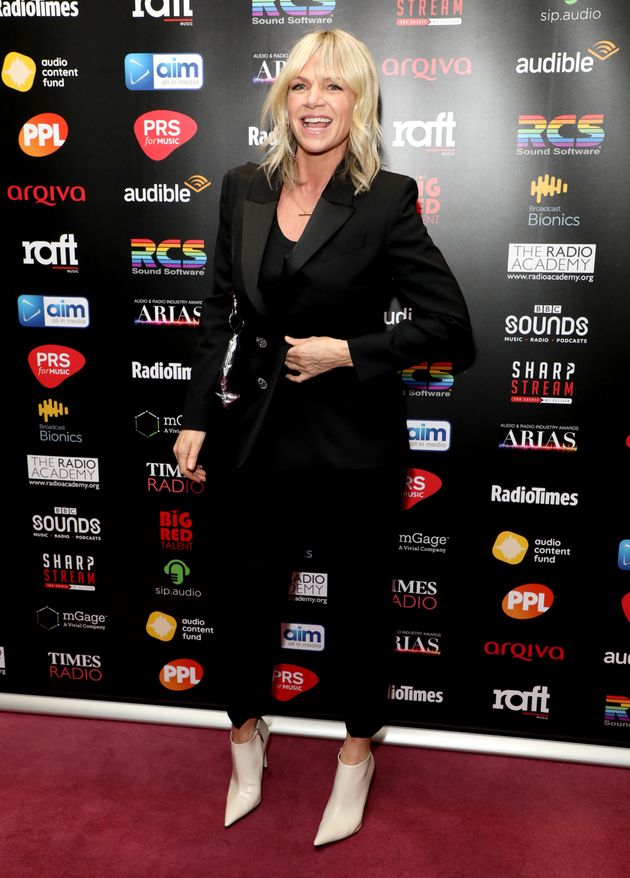
Janette announced the news on Thursday’s edition of The One Show, revealing: “It’s a dream come true to become part of the It Takes Two team! Although it’s impossible to fill in the shoes of a legend like Zoe Ball, I hope to make her and all of the Strictly fans proud.”
She added: “I will miss dancing on that iconic dancefloor weekly, but forever grateful to continue being a part of the Strictly Come Dancing family!”
Janette will be joining current It Takes Two presenter Rylan Clark-Neal – who first began co-hosting with Zoe in 2019 – on this year’s series.
Lia Toby – PA Images via Getty Images
During her time on Strictly, Janette has been partnered with fashion designer Julien Macdonald, EastEnders legend Jake Wood, singer Peter Andre, broadcaster Melvin Odoom, JLS star Aston Merrygold, This Morning’s Ranj Singh, Paralympian Will Bayley and pop star HRVY.
Although she’s never lifted the Glitterball trophy, she has won the Strictly Christmas special on two occasions – with Melvin and Aston – and made it to last year’s final with HRVY.
Strictly Come Dancing is expected to return to our screens in the autumn for a full 13-week run, after last year’s series had to be cut short due to the pandemic.
Janette is married to Strictly pro Aljaž Škorjanec, who will remain with the show in 2021.




The collection of nasopharyngeal swab (NPS) samples for COVID-19 diagnostic testing poses challenges including exposure risk to healthcare workers and supply chain constraints. Saliva samples are easier to collect but can be mixed with mucus or blood, and some studies have found they produce less accurate results. A team of researchers has found that an innovative protocol that processes saliva samples with a bead mill homogenizer before real-time PCR (RT-PCR) testing results in higher sensitivity compared to NPS samples. Their protocol appears in The Journal of Molecular Diagnostics, published by Elsevier.
“Saliva as a sample type for COVID-19 testing was a game changer in our fight against the pandemic. It helped us with increased compliance from the population for testing along with decreased exposure risk to the healthcare workers during the collection process,” said lead investigator Ravindra Kolhe, MD, PhD, Department of Pathology, Medical College of Georgia, Augusta University, Augusta, GA, USA.
The study included samples from a hospital and nursing home as well as from a drive-through testing site. In the first phase (protocol U), 240 matched NPS and saliva sample pairs were tested prospectively for SARS-CoV-2 RNA by RT-PCR. In the second phase of the study (SalivaAll), 189 matched pairs, including 85 that had been previously evaluated with protocol U, were processed in an Omni bead mill homogenizer before RT-PCR testing. An additional study was conducted with samples with both protocol U and SalivaAll to determine if bead homogenization would affect the clinical sensitivity in NPS samples. Finally, a five-sample pooling strategy was evaluated. Twenty positive pools containing one positive and four negative samples were processed with the Omni bead homogenizer before pooling for SARS-CoV-2 RT-PCR testing and compared to controls.
In Phase I, 28.3 percent of samples tested positive for SARS-CoV-2 from either NPS, saliva, or both. The detection rate was lower in saliva compared to NPS (50.0 percent vs. 89.7 percent). In Phase II, 50.2 percent of samples tested positive for SARS-CoV-2 from either saliva, NPS, or both. The detection rate was higher in saliva compared to NPS samples (97.8 percent vs. 78.9 percent). Of the 85 saliva samples tested with both protocols, the detection rate was 100 percent for samples tested with SalivaAll and 36.7 percent with protocol U.
Dr. Kolhe observed that the underlying issues associated with lower sensitivity of saliva to RT-PCR testing could be attributed to the gel-like consistency of saliva samples, which made it difficult to accurately pipet samples into extraction plates for nucleic acid extraction. Adding the homogenization step rendered the saliva samples to uniform viscosity and consistency, making it easier to pipet for the downstream assay.
Dr. Kolhe and his colleagues also successfully validated saliva samples in the five-sample pooling strategy. The pooled testing results demonstrated a positive agreement of 95 percent, and the negative agreement was found to be 100 percent. Pooled testing will be critical for SARS-CoV-2 mass surveillance as schools reopen, travel and tourism resume, and people return to offices.
“Monitoring SARS-CoV-2 will remain a public health need,” Dr. Kolhe said. “The use of a non-invasive collection method and easily accessible sample such as saliva will enhance screening and surveillance activities and bypass the need for sterile swabs, expensive transport media, and exposure risk, and even the need for skilled healthcare workers for sample collection.”

Small pieces of plastic are everywhere, stretching from urban environments to pristine wilderness. Left to their own devices, it can take hundreds of years for them to degrade completely. Catalysts activated by sunlight could speed up the process, but getting these compounds to interact with microplastics is difficult. In a proof-of-concept study, researchers reporting in ACS Applied Materials & Interfaces developed self-propelled microrobots that can swim, attach to plastics and break them down.
While plastic products are omnipresent indoors, plastic waste and broken bits now litter the outdoors, too. The smallest of these — microplastics less than 5 mm in size — are hard to pick up and remove. In addition, they can adsorb heavy metals and pollutants, potentially harming humans or animals if accidentally consumed. So, previous researchers proposed a low-energy way to get rid of plastics in the environment by using catalysts that use sunlight to produce highly reactive compounds that break down these types of polymers. However, getting the catalysts and tiny plastic pieces in contact with each other is challenging and usually requires pretreatments or bulky mechanical stirrers, which aren’t easily scaled-up. Martin Pumera and colleagues wanted to create a sunlight-propelled catalyst that moves toward and latches onto microparticles and dismantles them.
To transform a catalytic material into light-driven microrobots, the researchers made star-shaped particles of bismuth vanadate and then evenly coated the 4-8 ?m-wide structures with magnetic iron oxide. The microrobots could swim down a maze of channels and interact with microplastic pieces along their entire lengths. The researchers found that under visible light, microrobots strongly glommed on to four common types of plastics. The team then illuminated pieces of the four plastics covered with the microrobot catalyst for seven days in a dilute hydrogen peroxide solution. They observed that the plastic lost 3% of its weight and that the surface texture for all types changed from smooth to pitted, and small molecules and components of the plastics were found in the left-over solution. The researchers say the self-propelled microrobot catalysts pave the way toward systems that can capture and degrade microplastics in hard-to-reach-locations.
Story Source:
Materials provided by American Chemical Society. Note: Content may be edited for style and length.
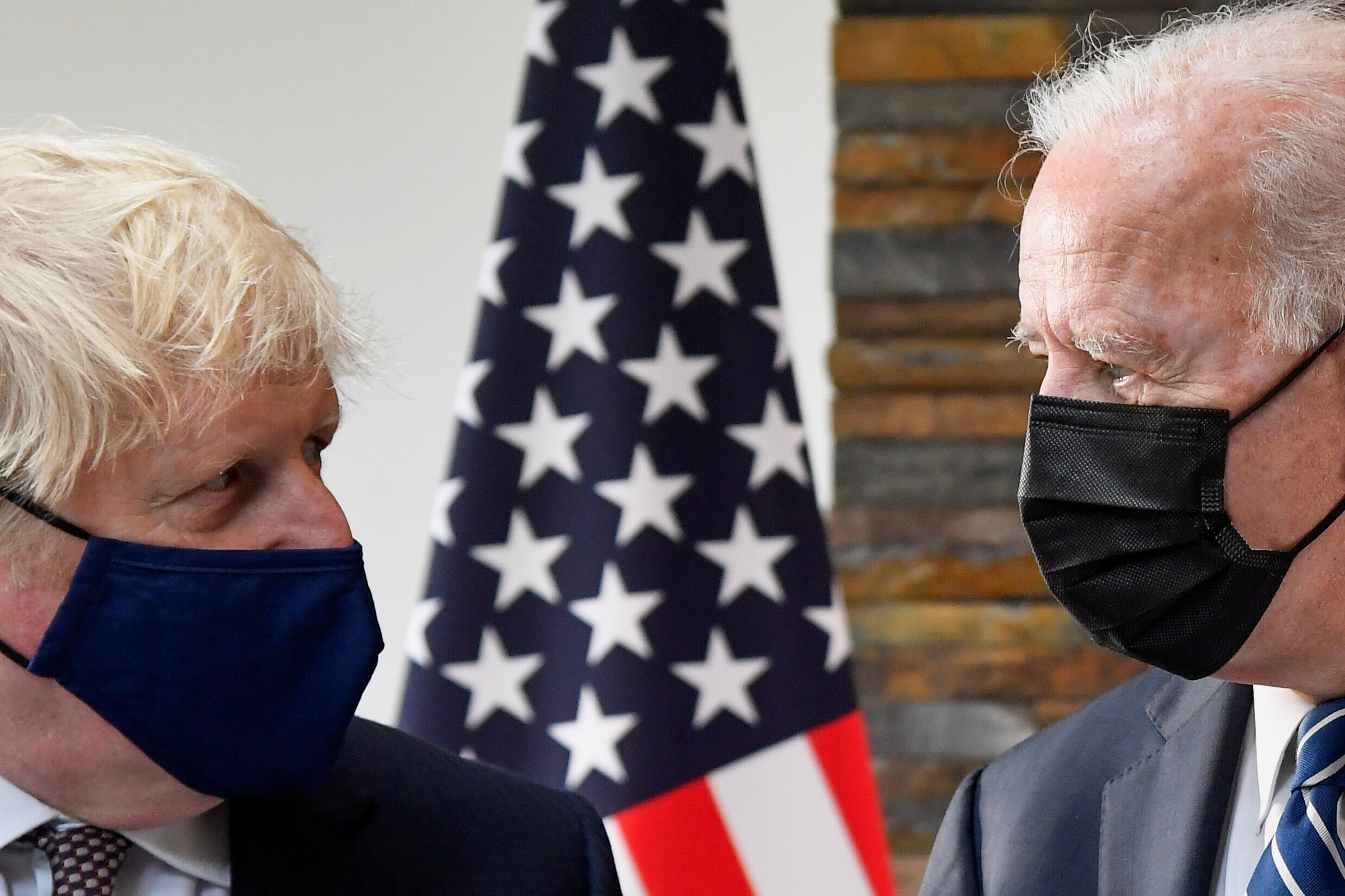
Boris Johnson has attempted to downplay tensions with US president Joe Biden over Brexit following the pair’s first ever face-to-face meeting as leaders.
The prime minister praised Biden as a “breath of fresh air” after the Donald Trump years and an ally who wants to work with the UK on issues from security to climate change.
Johnson meanwhile insisted that there is “absolutely common ground” as No.10 spoke of “complete harmony” between the pair on the need to protect peace in Northern Ireland amid a simmering row between the UK and EU over how post-Brexit arrangements are being implemented in the region.
Biden – who is proud of his Irish ancestry – is thought to be concerned about Johnson potentially refusing to implement parts of the Northern Ireland protocol and earlier this month ordered officials to deliver a formal diplomatic rebuke to the UK for imperilling the peace process over Brexit.
Johnson and his Brexit minister Lord Frost want the EU to be less “purist” about applying checks on goods entering Northern Ireland from Great Britain, but Brussels is threatening a trade war with the UK unless it properly implements the deal it signed up to.
The president was expected to use Thursday’s meeting to urge Johnson to “stand behind” the protocol.
But asked if Biden urged him to “crack on” and implement the deal, Johnson told reporters: “No he didn’t.
“But what I can say is that America, the United States, Washington, the UK plus the European Union, have one thing we absolutely all want to do, and that is to uphold the Belfast Good Friday Agreement and make sure we keep the balance of the peace process going.
“That’s absolutely common ground and I’m optimistic that we can do that.”
The PM added: “The talks were great, they went on for a long time, we covered a huge range of subjects and it’s wonderful to listen to the Biden administration and to Joe Biden because there’s so much that they want to do together with us, from security, Nato to climate change.
“It’s fantastic, it’s a breath of fresh air.”
WPA Pool via Getty Images
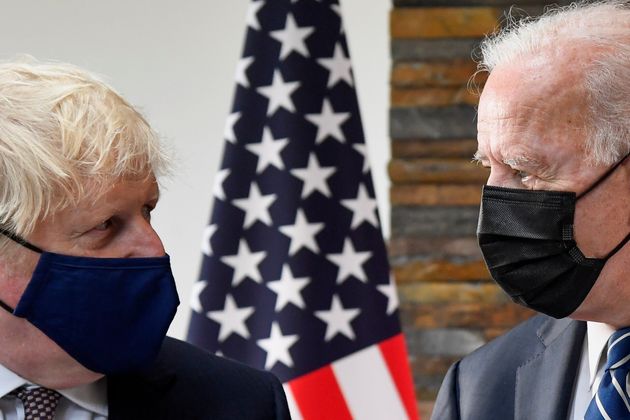
It came after 80 minutes of talks between Johnson and Biden on the eve of the G7 summit in Carbis Bay, Cornwall, at which they signed a new Atlantic charter, paving the way for co-operation on challenges including climate change and security.
Also attending the meeting were UK foreign secretary Dominic Raab and US secretary of state Anthony Blinken.
Yael Lempert, America’s most senior diplomat in the UK, was also present hours after the Times revealed that she was ordered by Biden to deliver a demarche – a formal protest – in a meeting with Brexit minister Lord Frost on June 3.
In a joint statement following the meeting, Johnson and Biden reaffirmed their commitment to the Good Friday Agreement for peace in Northern Ireland.
But Johnson had earlier tried to gloss over any tensions with Biden by suggesting the pair would not disagree on “anything”.
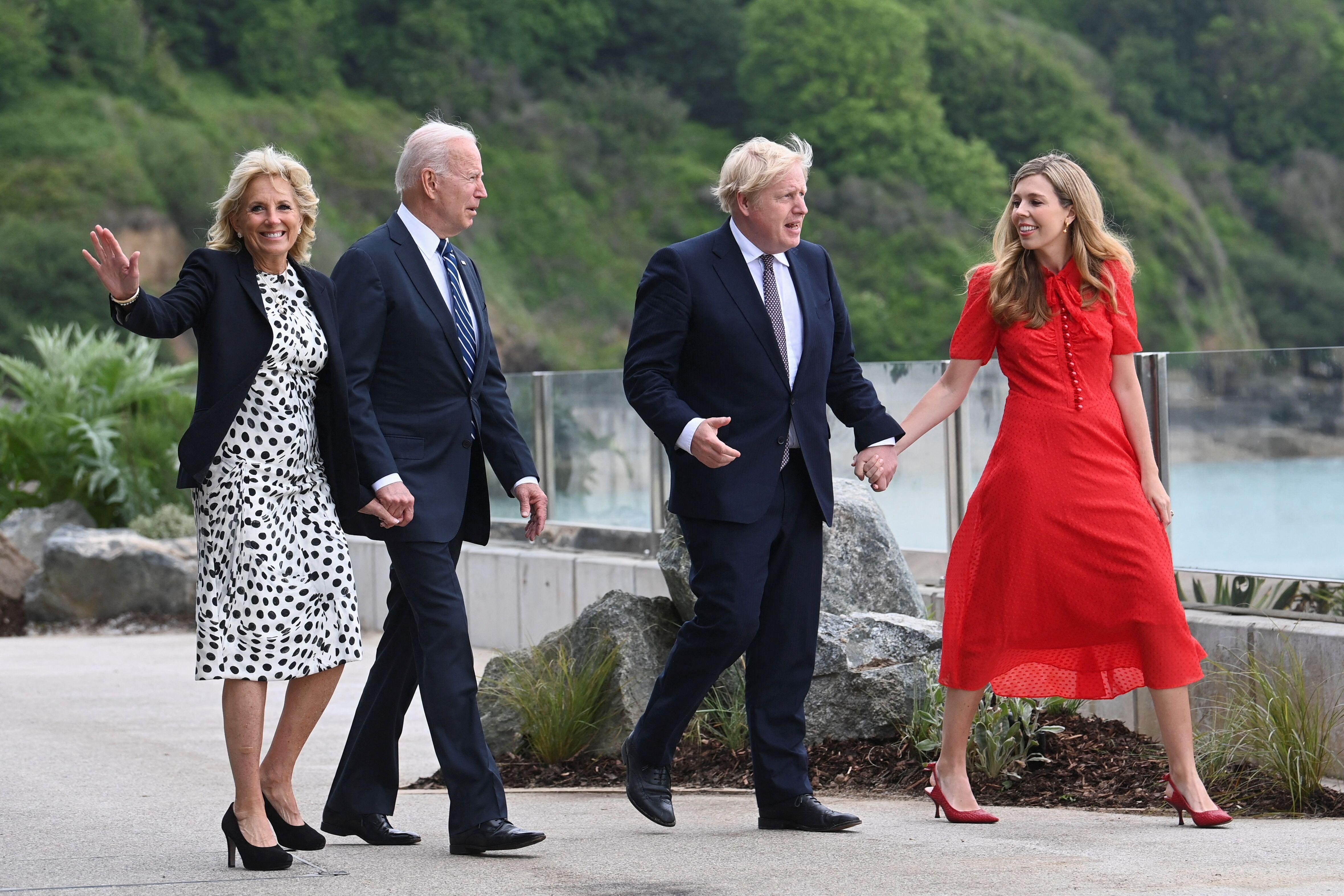
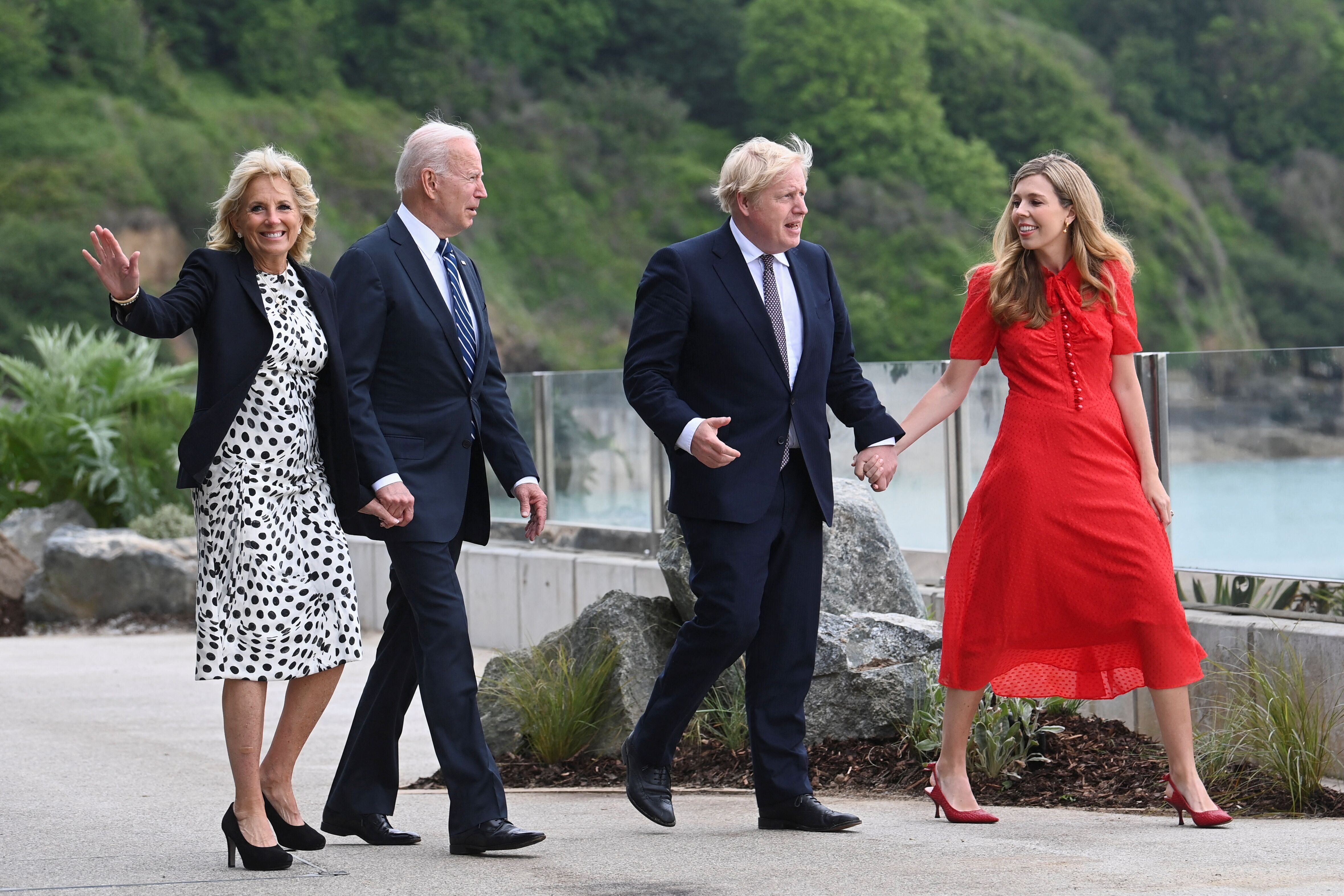
Ahead of the high level talks, the two leaders admired the view over Carbis Bay with their wives – Carrie Johnson and Jill Biden.
TOBY MELVILLE via Getty Images
As the politicians sat down to talk, Biden said: “I told the prime minister we have something in common. We both married way above our stations.”
Johnson responded: “I’m not going to dissent on that one. I’m not going to disagree with you there or indeed on anything else, I think highly likely.”
Art, clothes and a bike – leaders exchange gifts
As is customary, the leaders and their wives exchanged gifts.
Johnson gave Biden a framed photograph of a mural of Frederick Douglass, a former slave who became a leading figure in the 19th century abolitionist movement in the United States.
The image, painted by Ross Blair, is part of a mural trail around Edinburgh and the photograph was taken by Melissa Highton – a UK-US dual national.
First lady Jill Biden was given a first edition of Daphne du Maurier’s The Apple Tree. The author lived in Cornwall and drew inspiration for many of her works from the surroundings.
Meanwhile, the PM received from the Bidens a US-made bicycle and helmet, while Carrie Johnson was given a leather tote bag made by American military wives and a presidential silk scarf.
Talks between Frost and the European Commission’s Maros Sefcovic on Wednesday failed to make a breakthrough on the protocol.
The EU has threatened to launch a trade war against Britain if it fails to implement checks on goods entering Northern Ireland under the terms of the Brexit “divorce” settlement which Johnson signed.
But Frost has refused to rule out unilaterally delaying the imposition of checks on British-made sausages and other chilled meats due to come into force at the end of the month.
At a press conference in Brussels on Thursday ahead of the summit, European Commission president Ursula von der Leyen again insisted the protocol was the “only solution” to prevent a hard border between Northern Ireland and the Republic of Ireland and must be implemented in full.
In a joint statement following the meeting, Johnson and Biden reaffirmed their commitment to the Good Friday Agreement for peace in Northern Ireland.
A Downing Street spokesperson added separately: “The prime minister and president both reaffirmed their commitment to the Belfast (Good Friday) Agreement and to protecting the gains of the peace process.
“The leaders agreed that both the EU and the UK had a responsibility to work together and to find pragmatic solutions to allow unencumbered trade between Northern Ireland, Great Britain and the Republic of Ireland.
“The prime minister outlined his ambitions to further expand opportunities for all the people in Northern Ireland and hoped that the US would continue to work with the UK to boost prosperity there.”
Two people were admitted to a hospital in England, but one has since been discharged.
Authorities plan to leave a maximum of eight weeks between the first and second dose.
