Trump Foiled In Attempt To Slip Back On To Twitter

Former US president Donald Trump’s most recent attempt to get a platform has been thwarted.

On the heels of the launch of his new webpage, “From the Desk of Donald J Trump”, on Wednesday, his team created the handle @DJTDesk on Twitter.

By Wednesday night, the account had been suspended.

“As stated in our ban evasion policy, we’ll take enforcement action on accounts whose apparent intent is to replace or promote content affiliated with a suspended account,” a spokesperson for Twitter said in a statement.

Trump’s “From the Desk” page is essentially a blog with a timeline format that resembles both Twitter and Facebook’s platforms. In the site’s brief life thus far, Trump has made a series of scattered, combative posts attacking Republicans including Liz Cheney and Mitch McConnell. He also lambasted Twitter, Facebook and Google by name.

“What Facebook, Twitter, and Google have done is a total disgrace and an embarrassment to our Country,” Trump wrote in a post on Wednesday. “Free Speech has been taken away from the President of the United States because the Radical Left Lunatics are afraid of the truth, but the truth will come out anyway, bigger and stronger than ever before. The People of our Country will not stand for it! These corrupt social media companies must pay a political price, and must never again be allowed to destroy and decimate our Electoral Process.”

Both Facebook and Twitter banned Trump from their platforms in the wake of the January 6 insurrection at the US Capitol, which left several people dead.

Twitter penned a blog post about its permanent suspension of Trump, saying it did so “due to the risk of further incitement of violence.”

“In the context of horrific events this week, we made it clear on Wednesday that additional violations of the Twitter Rules would potentially result in this very course of action,” the company wrote. “Our public interest framework exists to enable the public to hear from elected officials and world leaders directly. It is built on a principle that the people have a right to hold power to account in the open.”

Facebook CEO Mark Zuckerbergslammed the insurrection as a demonstration by Trump to “use his remaining time in office to undermine the peaceful and lawful transition of power to his elected successor, Joe Biden”.

“We believe the risks of allowing the President to continue to use our service during this period are simply too great,” Zuckerberg wrote in a Facebook post at the time. “Therefore, we are extending the block we have placed on his Facebook and Instagram accounts indefinitely and for at least the next two weeks until the peaceful transition of power is complete.”

As Facebook’s ban was “indefinite” and not permanent, Facebook’s quasi-independent advisory board said this week that it would be giving the company a six-month window to further review Trump’s suspension, and to “determine and justify a proportionate response that is consistent with the rules that are applied to other users of its platform”.

HuffPost has reached out to Twitter for further comment.

Share Button

Donald Trump’s Adult Children Are Still Costing Taxpayers Thousands Of Dollars A Day

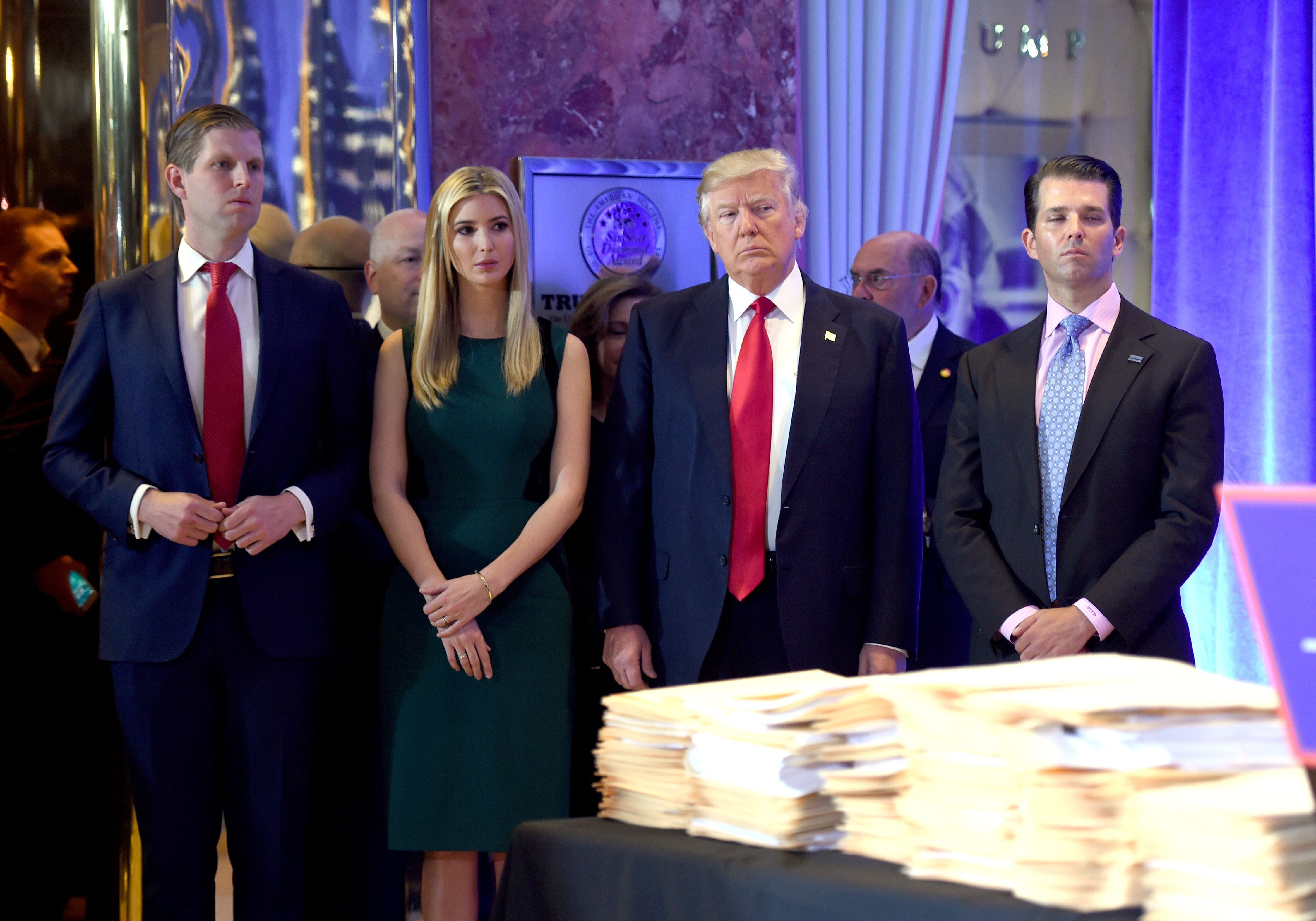
Ivanka Trump, Donald Trump Jr and Eric Trump – three of ex-US president Donald Trump’s adult children – continue to land taxpayers with the cost of their Secret Service protection.

They racked up more than $140,000 in charges in the first month following new president Joe Biden’s inauguration on January 20, according to watchdog group Citizens for Responsibility and Ethics in Washington, which analysed Secret Service spending records obtained under the Freedom of Information Act.

Agents protecting Trump’s progeny spent $52,296.75 on travel and $88,678.39 on hotel costs during the 30-day period, including on trips to Salt Lake City, Miami and New York, the group said Wednesday.

It works out to around $4,699 per day.

And the total costs to taxpayers could be even higher, because the Secret Service “did not provide records of spending at Trump businesses, which is the most controversial aspect of the extended protection”, CREW added.

That the Trump offspring can benefit from publicly-funded security details at all is down to their father’s six-month extension of their protection following his departure from the White House.

Only the ex-president, former first lady Melania Trump and their son Barron, 15, are entitled to automatic protection.

Trump, however, extended the perk to his aforementioned kids (plus youngest daughter Tiffany Trump) and their partners in the final days of his administration.

“While it may be tempting to put the story of the Trump family’s profiteering in the past, we cannot until they have actually stopped directing taxpayer money into their own bank accounts,” said the group, which has long exposed instances of taxpayer money being funneled to Trump properties. “Thanks to Trump’s unusual extension of their protection, they’ve got a few more months to continue the grift.”

Share Button

Alcohol deaths highest for 20 years in England and Wales

Last year, deaths rose from March onwards and were mostly related to long-term drinking problems.

Share Button

Covid: Black leaders fear racist past feeds mistrust in vaccine

Mistrust and inequality may explain why vaccine take-up is lower in the black community, say campaigners.

Share Button

Covid: Canada authorises Pfizer vaccine for children aged 12 to 15

It’s the first country to allow the Pfizer jab for this age group.

Share Button

London Mayoral Election: These Candidates Sum Up How Weird Politics Is

PA/YouTube/Getty

London mayoral election candidates (clockwise from top left) Count Binface, Laurence Fox, Brian Rose and Niko Omilana.

Britain has a rich recent history of eccentric candidates running for office despite having little chance of success, and every chance of losing their deposit.

The English musician Screaming Lord Sutch achieved fame in the 1980s after founding the Official Monster Raving Loony party. In total, he stood for parliament 39 times and was trounced 39 times. But no television coverage of election night was complete without at least one lingering shot of Sutch in his trademark top hat and leopardskin jacket.

Sutch was perhaps a forerunner of what now seems a staple of UK elections, and the ballot for Thursday’s London mayoral election is chock-full of candidates you might charitable describe as outside bets.

Some 20 people are standing and the final Savanta ComRes poll on Wednesday shows that Labour incumbent Sadiq Khan has a commanding 41% of first preference votes, holding a double-digit lead over Conservative challenger, Shaun Bailey. 

So with the contest looking like a two-horse race – or one horse, if we’re completely honest – many political watchers have turned their eye to the battle lower down the ticket. So who are they, what are they offering, and who will get the wooden spoon? 

Niko Omilana

Niko Omilana is the break-out election star that most professional politicos have never heard of – but millions of people have. The YouTuber is among several candidates who are running independently, and is set to be the most successful.

The Savanta ComRes poll has the 23-year-old is arguably punching above his weight on 6% of first preferences, which is up one point on the last survey. To put that in context, he’s just two percentage points behind the Liberal Democrat candidate and one ahead of the Green party’s nomination.

Omilana has around 3.5 million subscribers on YouTube alone, and more social media followers than all the other candidates combined. The content on his channel is typically pranks, challenges, and elaborate stunts.

In a video clip uploaded to Twitter announcing his campaign, he introduced himself as the “founding father and supreme leader of the Niko Defence League”, known more commonly as NDL. The “NDL” was a knowing parody of the far-right English Defence League, and Omilana even trolled its figurehead Tommy Robinson by getting him to endorse his group.

If he manages to stay above 5% on election day, he keeps the £10,000 deposit required to stand.

What he would do if he won seems to be less of the point of the campaign than it being another opportunity to create “content”. The first policy listed in his manifesto is: “Boris Johnson will be forced to shush.” 

Count Binface

Count Binface is the “interplanetary space warrior” who first came to prominence after standing against Boris Johnson in the 2019 general election.

In his manifesto, the count, played by comedian Jon Harvey, 41, plans to rename London Bridge as Phoebe Waller Bridge and have London join the EU.

Another pledge is to ensure that no croissant is sold for more than £1 and that a hand dryer at an Uxbridge pub will be moved “to a more sensible position”.

“These are just obvious policies and it mystifies me that it takes a space warrior to point them out,” he reflects. 

The count said he would like to be endorsed for mayor by some illustrious names:  “Top of my list at the moment are probably Ian McShane, Barack Obama, Emily Maitlis and Chris Rea.”

He is one of nine candidates polling at 1% in London.

Brian Rose 

On the surface, Brian Rose is a fairly routine candidate – a businessman who wears expensive suits claiming that politics can be transformed by applying the principles of business and old-fashioned common sense.

But the American, who has lived in London for the past 21 years, raised eyebrows when two clips emerged of the 49-year-old drinking his own urine (one was posted on his Instagram in 2018).

“The whole team here thinks I’m crazy and thinks it’s kind of gross,” Rose said, before adding that he was drinking his urine because “it’s medicinal”.

The poll suggests 1% of Londoners like what they hear. 

Laurence Fox

There has been blanket coverage of the one-time Lewis actor turned anti-lockdown, anti-woke publicity hound, who is standing under the Reclaim Party banner and its ‘Free London’ pledges.

The mainstream media’s fascination – long interviews have run in The Telegraph, New Statesman, and Evening Standard in the last week – and a campaign said to have £5 million in the coffers has put him on 2% of the vote, edging ahead of Binface in the fierce battle everyone is talking about.

Other notables

Another YouTuber – Max Fosh, who has 419,000 subscribers – is running simply to “get more votes” than Fox (they both went to Harrow school) and admits he would be a terrible mayor. He trails Fox on 1%.

Former weather forecaster Piers Corbyn, the former Labour leader’s older brother, is a notorious anti-vaxxer, anti-lockdown protester and climate change sceptic. Also tied on 1%.

UKIP’s candidate, meanwhile, is called Peter Gammons. Another on the 1% berth.

Share Button

Unite Should Stop Trying To Be Keir Starmer’s ‘Backseat Driver’, Gerard Coyne Warns

Ian Forsyth via Getty Images

Unite the union should stop acting like Keir Starmer’s “backseat driver” and give him time to do his job, a lead contender in the race to replace Len McCluskey has declared.

Gerard Coyne, who was narrowly defeated by McCluskey in 2017, said Unite had been “more focused in messing around in Westminster politics” than delivering for its 1.2 million members in recent years.

In an interview with HuffPost UK, Coyne also said the union should “throw open the shutters” on how it spent members’ money, not least on running up legal bills to fight “political cases” and on a controversial £98m hotel complex it has built in Birmingham.

Starmer is under increasing pressure ahead of the May 6 elections, with the possible loss of the Hartlepool by-election according to some opinion polls.

Earlier this year, McCluskey warned the Labour leader he risked being “dumped in the dustbin of history” if he continued to attack the Left of the party and failed to readmit Jeremy Corbyn as an MP.

But Coyne, the union’s former West Midlands regional secretary, said that he wanted to move Unite away from its general secretary’s practice of regularly commenting on the Labour leadership.

“Keir is the leader of the Labour Party and deserves the time with which to set out his positions. I would prefer to see a Labour government, so I’m supporting what the leader of the Labour Party is doing,” he said.

“But my focus is on what’s happening in Unite the union and focusing on our members. We’ve spent way too much time giving our opinions, our thoughts on the direction of Labour, being a backseat driver for the Labour Party.

“It needs to get on with its day job and we need to get on with our day job. Theirs is to go and win elections, and ours is to represent working people and improve their pay and conditions, and make sure that they’re supported when they need it.

“I’ve been a committed member of the Labour Party all my life, but it’s not what I’m here to do, I’m here to fight an election for the general secretary.”

The UK’s second biggest union is Labour’s biggest financial backer and has played a key role in Labour leadership elections, helping Ed Miliband narrowly beat his brother David in 2010 and defending Corbyn through his tenure. It also has key seats on the party’s ruling National Executive Committee (NEC).

The race to succeed McCluskey started last month and the new general secretary will be in place by September. As well as Coyne, other candidates include senior union officials Steve Turner, Howard Beckett and Sharon Graham.

Jane Barlow – PA

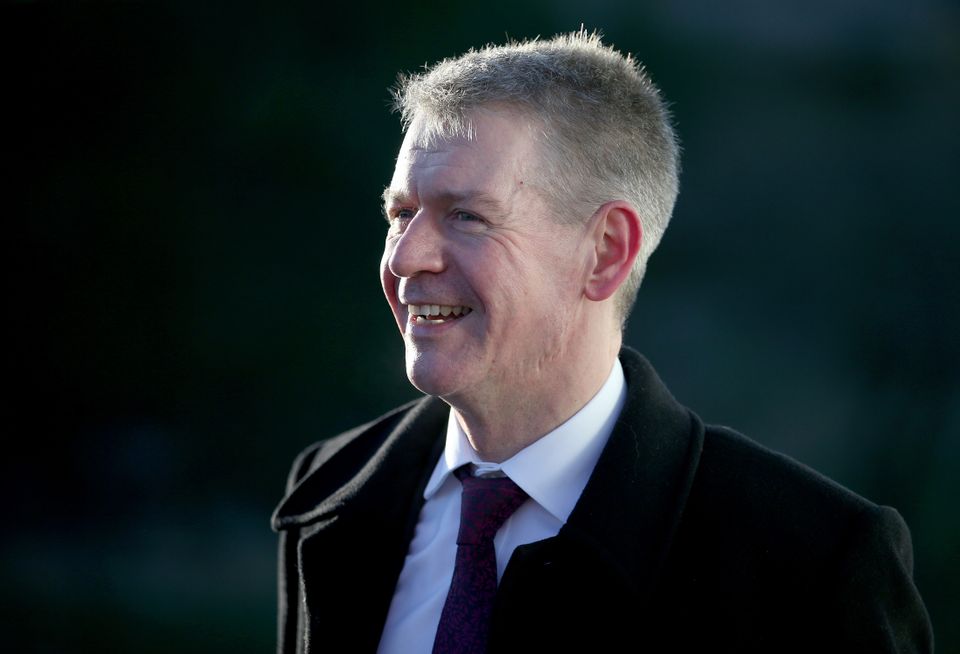
Unite leadership candidate Gerard Coyne

Coyne said that he was confident of getting the 174 branch nominations required to get on the ballot paper, but pointed out that the hurdle was much higher than Unison’s 25 and the GMB’s 50.

“That gives an indication about how determined they were to try and get me off the ballot paper, but I don’t think that’s going to work somehow,” he said.

Although the Covid pandemic makes it difficult to physically meet the union’s members, Coyne said that Zoom call technology had made it easier to get in touch with hundreds of Unite reps, many miles apart.

“I think that the union has to operate in a hybrid version of engagement with our workplace reps that uses modern technology like this. It’s created a more direct form of democracy. If and when I’m elected that is how I will carry on as general secretary because it’s meant that I’ve been able to touch the pulse of the union.”

He called on the union to embrace the technology and hold a national online hustings for the general secretary election. Although some Unite workplaces such as Rolls Royce are holding remote hustings, the format does not allow for debate or interaction between candidates.

With turnouts in union elections as low as 10%, Coyne wants Unite to do much more to promote the general secretary race and if elected has pledged to create an internal “democracy commission” to regularly engage members.

”It’s fundamental really in terms of the long term future of the union, because if we are going to be a democratic organisation, we’ve got to start increasing the participation of our members. After all, we are a £175 million annual turnover organisation, it’s something that they have a direct interest in because they are paying the wages.”

The spending of members’ money is an issue which Coyne has made a centrepiece of his campaign, with a call for an independent review of the £98m spent on the Unite hotel and conference centre complex in Birmingham.

“When you hear the estimated spend was £7m, then £35m, then £55m and finally £98m, we absolutely have to have a root and branch review to learn the lessons,” he said.

“Did you know there’s a proposal for a ‘Birmingham 2’? In principle, the [union] executive have given the go ahead for a mutli-storey car park and another hotel. My view is we are not a property developer, we’re a trade union and that’s what we should stick to.”

Hollie Adams – PA Images via Getty Images

Len McCluskey, general secretary of Unite the union

Coyne’s plan for greater financial transparency includes a register of interests and benefits for all union staff. “I just think we’ve got to throw open the shutters and let the daylight in.”

Another area he believes money has been wasted is on legal fees for court cases, including some against the Labour party, that have little direct impact on union members.

Unite is due in court again next week as it faces demands to settle damages and lawyers’ costs to former MP Anna Turley, who won a libel action against it and Skwawkbox blogger Stephen Walker.

Coyne contrasts Unite’s record with that of unions like the GMB, which won rights for Uber drivers and Asda workers, and Unison, which challenged employment tribunal fees.

“That’s the bedrock of what trade unionism should be focusing on, on its legal activities driven from the bottom up, and not choosing to spend money on very high profile political cases. We should be actually focusing on the ones that benefit our members. Legal services should be driven by industrial need.”

He also thinks that under McCluskey the union has lost touch with its mainstream membership, not least on some issues that arose in the pandemic. 

“I’ve heard from lorry drivers who are bitterly complaining that there is no toilet provision for them when they drop off their cargo. Members want the union to be campaigning on the practical things like that that help them, real nuts and bolts issues.”

Although his three rivals are undeniably more to the left of him, Coyne is also frustrated at being portrayed as a “right winger” in the general secretary race. 

“I don’t recognise that parody of me being the right-wing candidate. I’ve been in the union as an employee for 28 years, I’ve been a member for 35.

“In terms of the classic ‘do you oppose strike action?’, of course I’m not opposed to our members taking an industrial dispute. Have I ever signed a sweetheart deal? No, never have. Have I ever signed a no strike deal? No. I just fight for members’ interests. Am I afraid of anybody? No, I think I’ve proved that.”

Coyne wasn’t afraid of his first boss when he was a 16-year-old with a part-time supermarket shelf stacking job at Sainsbury’s. “We had a store manager, who basically instituted a policy of when you were working on the tills you couldn’t talk to the people next to you,” he explained.

“This was before barcode scanning, you had to type it in and it was the most mind-numbing work. Not being able to talk to the person next to you made every shift drag and there was a sense of annoyance amongst a lot of my colleagues.

“So I went down to the local office of the Transport and General [union, a forerunner of Unite], grabbed a handful of forms. I started first by recruiting my mates and we recruited most of the store into the union. We raised it with the management and fairly quickly after that, that manager was moved on.”

Coyne’s activism stemmed from his deep family roots in trade unionism. His staunch socialist father was the local Fire Brigades Union brigade secretary. His maternal grandfather came out of the First World War to found his local Labour party in Birmingham. All five of his brothers have been involved in the labour movement.

Like his nearest rival in the general secretary race, his trade unionism is also informed by his love of football. Whereas Steve Turner supports Millwall, Coyne is a lifelong fan of West Bromwich Albion, another team that has for years battled against the odds and is facing relegation from the top flight.

“The truth is that I’ve always supported an underdog team,” he said, with a smile. “We’re certainly doing better than Millwall, whether we manage to stay in the Premier League or not.”

Share Button

Crohn’s disease patients have specific IgG antibodies to human bacterial flagellins

Last year, Charles O. Elson, M.D., demonstrated a potential preventive treatment for Crohn’s disease, a form of inflammatory bowel disease. He used a mouse model that included immune-reactive T cells from patients with Crohn’s disease in a flagellin peptide-specific immunotherapy. This study provided proof-of-principle that a flagellin-directed immunotherapy might provide similar benefits in patients.

Now University of Alabama at Birmingham researchers have moved a step closer to possible clinical testing of this treatment, say Elson and co-first authors Katie Alexander, Ph.D., and Qing Zhao, M.D., Ph.D. Their study, published in the journal Gastroenterology, is the first to describe IgG antibodies in Crohn’s disease specific for human-derived flagellins of bacteria belonging to the Lachnospiraceae family. Knowledge of the specific flagellin epitopes that drive the pathogenic adaptive immune response in Crohn’s disease is necessary information for Elson’s potential triple-punch Crohn’s disease treatment. Goals of the treatment are removing or exhausting pathogenic T memory cells and increasing the number of immunomodulatory T regulatory cells.

Elson is a professor, Alexander an assistant professor and Zhao a postdoctoral fellow in the UAB Department of Medicine Division of Gastroenterology and Hepatology.

Crohn’s disease and ulcerative colitis — another type of inflammatory bowel disease — are characterized by dysregulated adaptive immune responses to the microbiota in genetically susceptible individuals, but the human specificity of these responses had so far been largely undefined. Mouse microbiota flagellins have previously been defined as immunodominant antigens in Crohn’s disease.

Flagellins are building blocks of the hairlike motility flagella that extend from the bacterial cell wall. Flagellin is a potent immune activator and antigen, and it is the only known microbial protein that has three receptors for innate immunity encoded in the host genome, in addition to immunoglobulin and T cell receptors.

The UAB researchers individually probed blood sera from 87 healthy volunteers, 152 patients with Crohn’s disease and 170 patients with ulcerative colitis. They used protein arrays of microbiota bacterial flagellins of both mouse and human origin, and they analyzed sera for IgG and IgA antibody responses.

They found selective patterns of antibody reactivity to microbiota flagellins among the inflammatory bowel disease patients.

The Crohn’s disease patients — but not the ulcerative colitis patients — had augmented serum IgG antibodies to Lachnospiraceae flagellins from various species of Roseburia and one species of Eubacterium. These bacteria are normal residents in the human ileum, the third segment of the small intestine. A subset of the Crohn’s disease patients had very high responses, with antibodies against more than 10 different flagellins.

For that subset of Crohn’s disease patients, the multiflagellin hyper-reactivity was associated with indications of severe dysregulated immune response. Patients in the subset had: 1) elevated flagellin-specific T memory cells; 2) a reduced ratio of flagellin-reactive T regulatory to T effector cells; and 3) a high frequency of disease complications.

“Thus,” Elson said, “Crohn’s disease patients displayed a strong adaptive immune response to human-derived Lachnospiraceae flagellins, which may be targeted for prognosis and future personalized therapies.”

Story Source:

Materials provided by University of Alabama at Birmingham. Original written by Jeff Hansen. Note: Content may be edited for style and length.

Share Button

Scientists model Saturn’s interior, explain planet’s unique magnetic field

New Johns Hopkins University simulations offer an intriguing look into Saturn’s interior, suggesting that a thick layer of helium rain influences the planet’s magnetic field.

The models, published this week in AGU Advances, also indicate that Saturn’s interior may feature higher temperatures at the equatorial region, with lower temperatures at the high latitudes at the top of the helium rain layer.

It is notoriously difficult to study the interior structures of large gaseous planets, and the findings advance the effort to map Saturn’s hidden regions.

“By studying how Saturn formed and how it evolved over time, we can learn a lot about the formation of other planets similar to Saturn within our own solar system, as well as beyond it,” said co-author Sabine Stanley, a Johns Hopkins planetary physicist.

Saturn stands out among the planets in our solar system because its magnetic field appears to be almost perfectly symmetrical around the rotation axis. Detailed measurements of the magnetic field gleaned from the last orbits of NASA’s Cassini mission provide an opportunity to better understand the planet’s deep interior, where the magnetic field is generated, said lead author Chi Yan, a Johns Hopkins PhD candidate.

By feeding data gathered by the Cassini mission into powerful computer simulations similar to those used to study weather and climate, Yan and Stanley explored what ingredients are necessary to produce the dynamo — the electromagnetic conversion mechanism — that could account for Saturn’s magnetic field.

“One thing we discovered was how sensitive the model was to very specific things like temperature,” said Stanley, who is also a Bloomberg Distinguished Professor at Johns Hopkins in the Department of Earth & Planetary Sciences and the Space Exploration Sector of the Applied Physics Lab. “And that means we have a really interesting probe of Saturn’s deep interior as far as 20,000 kilometers down. It’s a kind of X-ray vision.”

Strikingly, Yan and Stanley’s simulations suggest that a slight degree of non-axisymmetry could actually exist near Saturn’s north and south poles.

“Even though the observations we have from Saturn look perfectly symmetrical, in our computer simulations we can fully interrogate the field,” said Stanley.

Direct observation at the poles would be necessary to confirm it, but the finding could have implications for understanding another problem that has vexed scientists for decades: how to measure the rate at which Saturn rotates, or, in other words, the length of a day on the planet.

This project was conducted using computational resources at the Maryland Advanced Research Computing Center (MARCC).

Story Source:

Materials provided by Johns Hopkins University. Note: Content may be edited for style and length.

Share Button

Process for eliminating unneeded cells may also protect against cancer

For all animals, eliminating some cells is a necessary part of embryonic development. Living cells are also naturally sloughed off in mature tissues; for example, the lining of the intestine turns over every few days.

One way that organisms get rid of unneeded cells is through a process called extrusion, which allows cells to be squeezed out of a layer of tissue without disrupting the layer of cells left behind. MIT biologists have now discovered that this process is triggered when cells are unable to replicate their DNA during cell division.

The researchers discovered this mechanism in the worm C. elegans, and they showed that the same process can be driven by mammalian cells; they believe extrusion may serve as a way for the body to eliminate cancerous or precancerous cells.

“Cell extrusion is a mechanism of cell elimination used by organisms as diverse as sponges, insects, and humans,” says H. Robert Horvitz, the David H. Koch Professor of Biology at MIT, a member of the McGovern Institute for Brain Research and the Koch Institute for Integrative Cancer Research, a Howard Hughes Medical Institute investigator, and the senior author of the study. “The discovery that extrusion is driven by a failure in DNA replication was unexpected and offers a new way to think about and possibly intervene in certain diseases, particularly cancer.”

MIT postdoc Vivek Dwivedi is the lead author of the paper, which appears today in Nature. Other authors of the paper are King’s College London research fellow Carlos Pardo-Pastor, MIT research specialist Rita Droste, MIT postdoc Ji Na Kong, MIT graduate student Nolan Tucker, Novartis scientist and former MIT postdoc Daniel Denning, and King’s College London professor of biology Jody Rosenblatt.

Stuck in the cell cycle

In the 1980s, Horvitz was one of the first scientists to analyze a type of programmed cell suicide called apoptosis, which organisms use to eliminate cells that are no longer needed. He made his discoveries using C. elegans, a tiny nematode that contains exactly 959 cells. The developmental lineage of each cell is known, and embryonic development follows the same pattern every time. Throughout this developmental process, 1,090 cells are generated, and 131 cells undergo programmed cell suicide by apoptosis.

Horvitz’s lab later showed that if the worms were genetically mutated so that they could not eliminate cells by apoptosis, a few of those 131 cells would instead be eliminated by cell extrusion, which appears to be able to serve as a backup mechanism to apoptosis. How this extrusion process gets triggered, however, remained a mystery.

To unravel this mystery, Dwivedi performed a large-scale screen of more than 11,000 C. elegans genes. One by one, he and his colleagues knocked down the expression of each gene in worms that could not perform apoptosis. This screen allowed them to identify genes that are critical for turning on cell extrusion during development.

To the researchers’ surprise, many of the genes that turned up as necessary for extrusion were involved in the cell division cycle. These genes were primarily active during first steps of the cell cycle, which involve initiating the cell division cycle and copying the cell’s DNA.

Further experiments revealed that cells that are eventually extruded do initially enter the cell cycle and begin to replicate their DNA. However, they appear to get stuck in this phase, leading them to be extruded.

Most of the cells that end up getting extruded are unusually small, and are produced from an unequal cell division that results in one large daughter cell and one much smaller one. The researchers showed that if they interfered with the genes that control this process, so that the two daughter cells were closer to the same size, the cells that normally would have been extruded were able to successfully complete the cell cycle and were not extruded.

The researchers also showed that the failure of the very small cells to complete the cell cycle stems from a shortage of the proteins and DNA building blocks needed to copy DNA. Among other key proteins, the cells likely don’t have enough of an enzyme called LRR-1, which is critical for DNA replication. When DNA replication stalls, proteins that are responsible for detecting replication stress quickly halt cell division by inactivating a protein called CDK1. CDK1 also controls cell adhesion, so the researchers hypothesize that when CDK1 is turned off, cells lose their stickiness and detach, leading to extrusion.

Cancer protection

Horvitz’s lab then teamed up with researchers at King’s College London, led by Rosenblatt, to investigate whether the same mechanism might be used by mammalian cells. In mammals, cell extrusion plays an important role in replacing the lining of the intestines, lungs, and other organs.

The researchers used a chemical called hydroxyurea to induce DNA replication stress in canine kidney cells grown in cell culture. The treatment quadrupled the rate of extrusion, and the researchers found that the extruded cells made it into the phase of the cell cycle where DNA is replicated before being extruded. They also showed that in mammalian cells, the well-known cancer suppressor p53 is involved in initiating extrusion of cells experiencing replication stress.

That suggests that in addition to its other cancer-protective roles, p53 may help to eliminate cancerous or precancerous cells by forcing them to extrude, Dwivedi says.

“Replication stress is one of the characteristic features of cells that are precancerous or cancerous. And what this finding suggests is that the extrusion of cells that are experiencing replication stress is potentially a tumor suppressor mechanism,” he says.

The fact that cell extrusion is seen in so many animals, from sponges to mammals, led the researchers to hypothesize that it may have evolved as a very early form of cell elimination that was later supplanted by programmed cell suicide involving apoptosis.

“This cell elimination mechanism depends only on the cell cycle,” Dwivedi says. “It doesn’t require any specialized machinery like that needed for apoptosis to eliminate these cells, so what we’ve proposed is that this could be a primordial form of cell elimination. This means it may have been one of the first ways of cell elimination to come into existence, because it depends on the same process that an organism uses to generate many more cells.”

Dwivedi, who earned his PhD at MIT, was a Khorana scholar before entering MIT for graduate school.

This research was supported by the Howard Hughes Medical Institute and the National Institutes of Health.


Share Button