The UK has 7.3 critical care beds per 100,000 people, compared to Germany’s 33.8 and the US’s 34.3.


The UK has 7.3 critical care beds per 100,000 people, compared to Germany’s 33.8 and the US’s 34.3.
The whereabouts of one infected person is unknown, as they did not give their full contact details.
The milestone is a “huge national achievement” and “every jab makes a difference”, Boris Johnson says.
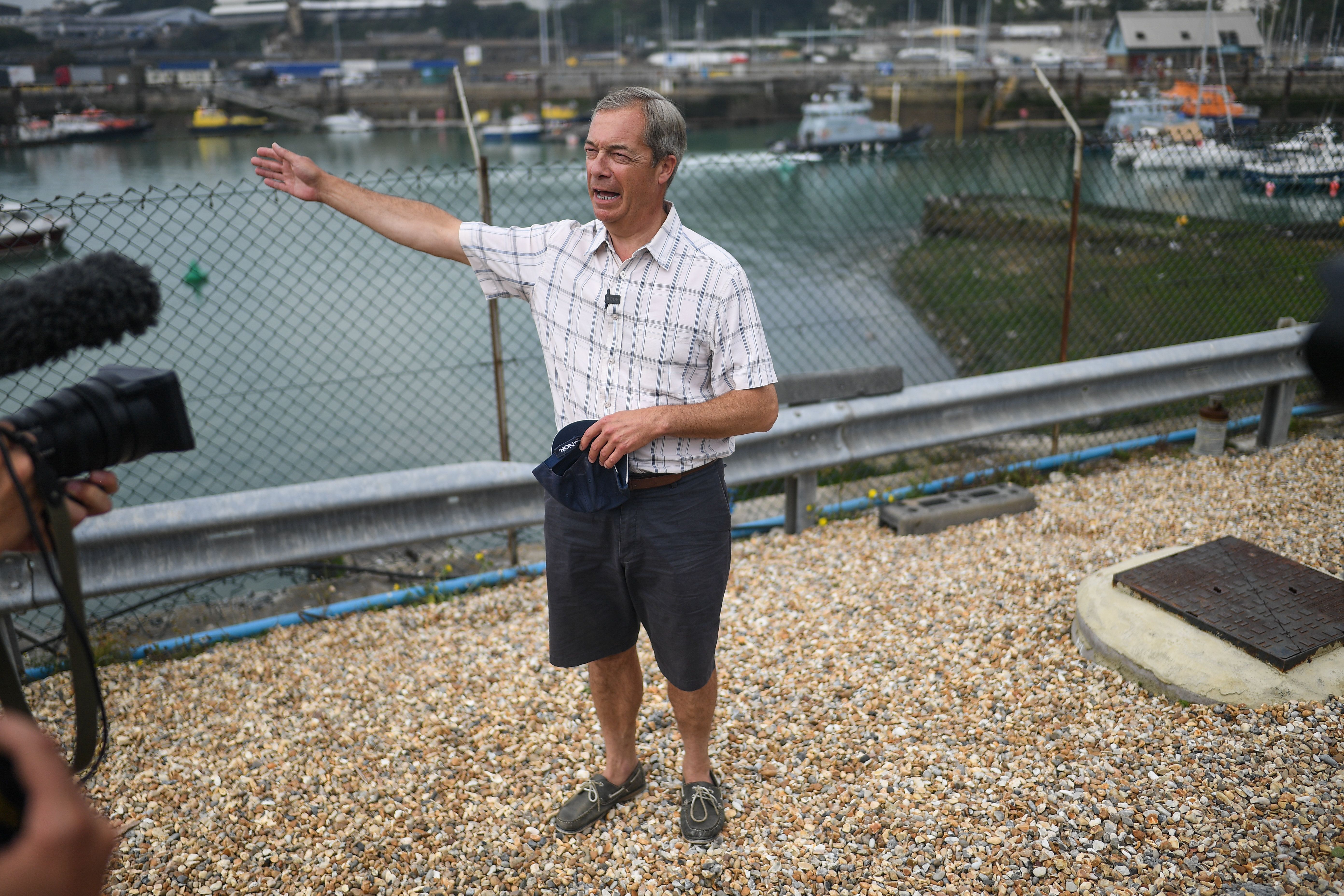
Nigel Farage has been called out by the Home Office over a tweet in which he claimed 12 migrants arriving in Dover on Saturday had tested positive for coronavirus.
The Reform UK leader detailed what he described as a “Covid crisis” and called on home secretary Priti Patel to “get a grip”.
Covid crisis in Dover this morning. One migrant boat with 12 on board and they all tested positive for the virus. Get a grip @pritipatel.
— Nigel Farage (@Nigel_Farage) February 27, 2021
But hours later the Home Office refuted the claim, saying none of the people referred to by Farage had tested positive.
“This is incorrect,” it said in a tweet. “None of these 12 people tested positive for Covid-19. All adults who arrived today have been tested for Covid-19.”
@nigel_farage This is incorrect. None of these 12 people tested positive for Covid-19. All adults who arrived today have been tested for Covid-19
— Home Office (@ukhomeoffice) February 27, 2021
Four small boats in total carrying 87 people including children made the dangerous Channel crossing into the UK on Saturday.
The Home Office has said all adults who arrived in Dover were tested for Covid-19, and only one person tested positive.
It is not known how Farage obtained the false information and his tweet is yet to be deleted.
HuffPost UK has contacted Reform UK for comment.
Elsewhere, a new study last week found those who support Reform UK are the least likely to take up the offer of a coronavirus jab.
Only 53.7% of those planning to vote for Reform UK favour taking the vaccine, a two-wave study by Oxford University found.
This contrasts dramatically to over 90% for supporters of the Conservatives, Labour and the Liberal Democrats, at 94.8%, 91.4% and 92.1% respectively, and 100% for those who intend to vote for the SNP.
People who did not know who they would vote for were less likely to take the vaccine at 82.6%, as were supporters of the Green Party at 77.4%.
The study found strong relationships between political attitudes and intention to accept the jab, with whether you voted for Brexit also appearing related to vaccine acceptance, according to Oxford researchers.

Rishi Sunak has indicated he will extend emergency support packages as the coronavirus lockdown is unwound and did not deny he would first raise taxes before cutting them ahead of the election.
The chancellor insisted ahead of this week’s Budget that he is in favour of low taxes but said he needs to repair the public finances from the “shock” of the pandemic.
He did not deny telling Tory MPs in private that he would raise them now before cutting them in a pre-election Budget in the future.
Sunak said he must “level with people”, with Covid having had an “enormous hold on our economy” that will cause debt to “rise indefinitely” if borrowing continues after the recovery.
But he suggested current support packages for jobs and businesses, such as the furlough scheme, would continue as England comes out of the national lockdown in the coming months.
He said he wants to “support people and businesses along that path” to ending restrictions steadily until June 21, as set out by Boris Johnson.
“We went big, we went early and there’s more to come next week,” Sunak told Sky’s Sophy Ridge On Sunday.
The chancellor was pressed on whether he told Conservative MPs in private that he would seek to raise taxes now and then cut them before the election.
“I think in the short term what we need to do is protect the economy and keep supporting the economy through the road map, and over time what we need to do is make sure our public finances are sustainable,” Sunak said.
“That isn’t going to happen overnight, that’s going to be work that takes time given the scale of the shock that we’ve experienced but if you’re asking do I want to deliver low taxes for people, of course I do.”
Sunak said he cannot talk about tax outside the Budget and declined to say whether he would stick by the manifesto pledge not to raise the rate of income tax, VAT or national insurance.
Treasury sources did not deny a report suggesting the chancellor plans to raise £6 billion by freezing income tax thresholds for at least three years.
The Sunday Times said he would freeze the £12,500 point at which people start paying the basic rate of income tax and the £50,000 threshold where they begin paying the higher 40p rate, as he aims to raise £43 billion a year.
The move would allow Sunak to raise extra funds without breaking the manifesto pledge that guaranteed the Conservatives would not raise the “rate” of income tax.
But it was estimated the move would push an extra 1.6 million people into a higher tax bracket before the next general election is due in 2024.


Pupils’ households and bubbles will be offered tests to take themselves at home twice a week.

Litter is not only a problem on Earth. According to NASA, there are currently millions of pieces of space junk in the range of altitudes from 200 to 2,000 kilometers above the Earth’s surface, which is known as low Earth orbit (LEO). Most of the junk is comprised of objects created by humans, like pieces of old spacecraft or defunct satellites. This space debris can reach speeds of up to 18,000 miles per hour, posing a major danger to the 2,612 satellites that currently operate at LEO. Without effective tools for tracking space debris, parts of LEO may even become too hazardous for satellites.
In a paper publishing today in the SIAM Journal on Imaging Sciences, Matan Leibovich (New York University), George Papanicolaou (Stanford University), and Chrysoula Tsogka (University of California, Merced) introduce a new method for taking high-resolution images of fast-moving and rotating objects in space, such as satellites or debris in LEO. They created an imaging process that first utilizes a novel algorithm to estimate the speed and angle at which an object in space is rotating, then applies those estimates to develop a high-resolution picture of the target.
Leibovich, Papanicolaou, and Tsogka used a theoretical model of a space imaging system to construct and test their imaging process. The model depicts a piece of fast-moving debris as a cluster of very small, highly reflective objects that represent the strongly reflective edges of an item in orbit, such as the solar panels on a satellite. The cluster of reflectors all move together with the same speed and direction and rotate about a common center. In the model, multiple sources of radiation on the Earth’s surface — such as the ground control stations of global navigation satellite systems — emit pulses that are reflected by target pieces of space debris. A distributed set of receivers then detects and records the signals that bounce off the targets.
The model focuses on sources that produce radiation in the X-band, or from frequencies of 8 to 12 gigahertz. “It is well known that resolution can be improved by using higher frequencies, such as the X-band,” Tsogka said. “Higher frequencies, however, also result in distortions to the image due to ambient fluctuations from atmospheric effects.” Signals are distorted by turbulent air as they travel from the target to receivers, which can make the imaging of objects in LEO quite challenging. The first step of the authors’ imaging process was thus to correlate the data taken at different receivers, which can help reduce the effects of these distortions.
The diameter of the area encompassed by the receivers is called the physical aperture of the imaging system — in the model, this is about 200 kilometers. Under normal imaging conditions, the physical aperture’s size determines the resolution of the resulting image; a larger aperture begets a sharper picture. However, the quick movement of the imaging target relative to the receivers can create an inverse synthetic aperture, in which the signals that were detected at multiple receivers as the target moved throughout their field of view are synthesized coherently. This configuration can effectively improve the resolution, as if the imaging system had a wider aperture than the physical one.
Objects in LEO can spin on timescales that range from a full rotation every few seconds to every few hundred seconds, which complicates the imaging process. It is thus important to know — or at least be able to estimate — some details about the rotation before developing the image. The authors therefore needed to estimate the parameters related to the object’s rotation before synthesizing the data from different receivers. Though simply checking all of the possible parameters to see which ones yield the sharpest image is technically feasible, doing so would require a lot of computational power. Instead of employing this brute force approach, the authors developed a new algorithm that can analyze the imaging data to estimate the object’s rotation speed and the direction of its axis.
After accounting for the rotation, the next step in the authors’ imaging process was to analyze the data to develop a picture of the space debris that would hopefully be as accurate and well-resolved as possible. One method that researchers often employ for this type of imaging of fast-moving objects is the single-point migration of cross correlations. Though atmospheric fluctuations do not usually significantly impair this technique, it does not have a very high resolution. A different, commonly-used imaging approach called Kirchhoff migration can achieve a high resolution, as it benefits from the inverse synthetic aperture configuration; however, the trade-off is that it is degraded by atmospheric fluctuations. With the goal of creating an imaging scheme that is not too heavily affected by atmospheric fluctuations but still maintains a high resolution, the authors proposed a third approach: an algorithm whose result they call a rank-1 image. “The introduction of the rank-1 image and its resolution analysis for fast-moving and rotating objects is the most novel part of this study,” Leibovich said.
To compare the performance of the three imaging schemes, the authors gave simulated data of a rotating object in LEO to each one and compared the images that they produced. Excitingly, the rank-1 image was much more accurate and well-resolved than the result of single-point migration. It also had similar qualities to the output of the Kirchhoff migration technique. But this result was not entirely surprising, given the problem’s configuration. “It is important to note that the rank-1 image benefits from the rotation of the object,” Papanicolaou said. Though a rotating object generates more complex data, one can actually incorporate this additional information into the image processing technique to improve its resolution. Rotation at certain angles can also increase the size of the synthetic aperture, which significantly improves the resolution for the Kirchhoff migration and rank-1 images.
Further simulations revealed that the rank-1 image is not easily muddled by errors in the new algorithm for the estimation of rotation parameters. It is also more robust to atmospheric effects than the Kirchhoff migration image. If receivers capture data for a full rotation of the object, the rank-1 image can even achieve optimal imaging resolution. Due to its good performance, this new imaging method could improve the accuracy of imaging LEO satellites and space debris. “Overall, this study shed light on a new method for imaging fast-moving and rotating objects in space,” Tsogka said. “This is of great importance for ensuring the safety of the LEO band, which is the backbone of global remote sensing.”

The ocean floor is vast and varied, making up more than 70% of the Earth’s surface. Scientists have long used information from sediments at the bottom of the ocean — layers of rock and microbial muck — to reconstruct the conditions in oceans of the past.
These reconstructions are important for understanding how and when oxygen became available in Earth’s atmosphere and ultimately increased to the levels that support life as we know it today.
Yet reconstructions that rely on signals from sedimentary rocks but ignore the impact of local sedimentary processes do so at their own peril, according to geoscientists including David Fike in Arts & Sciences at Washington University in St. Louis.
Their new study published Feb. 26 in Science Advances is based on analyses of a mineral called pyrite (FeS2) that is formed in the presence of bacteria. With its chemical-reduced iron (Fe) and sulphur (S), the burial of pyrite in marine sediments is one of the key controls on oxygen levels in Earth’s atmosphere and oceans.
The researchers compared pyrite in sediments collected in a borehole drilled in the shelf just off the eastern coast of New Zealand with sediments drilled from the same ocean basin but hundreds of kilometers out into the Pacific.
“We were able to get a gradient of shallow to deep sediments and compare the differences between those isotopic compositions in pyrite between those sections,” said Fike, professor of Earth and planetary sciences and director of environmental studies at Washington University.
“We demonstrate that, for this one basin in the open ocean, you get very different signals between shallow and deep water, which is prima facie evidence to argue that these signals aren’t the global fingerprint of oxygen in the atmosphere,” said Fike, who also serves as director of Washington University’s International Center for Energy, Environment and Sustainability (InCEES).
Instead of pointing directly to oxygen, the same signals from pyrite could be reinterpreted as they relate to other important factors, Fike said, such as sea level change and plate tectonics.
Fike and first author Virgil Pasquier, a postdoctoral fellow at the Weizmann Institute of Sciences in Israel, first questioned the way that pyrite has been used as a proxy in a study published in PNAS in 2017 using Mediterranean Sea sediments. For his postdoctoral research, Pasquier has been working with professor Itay Halevy at the Weizmann Institute to understand the various controls on the isotopic composition of pyrite. Their results raise concerns about the common use of pyrite sulfur isotopes to reconstruct Earth’s evolving oxidation state.
“Strictly speaking, we are investigating the coupled cycles of carbon, oxygen and sulfur, and the controls on the oxidation state of the atmosphere,” Pasquier said.
“It’s much more sexy for a paper to reconstruct past changes in ocean chemistry than to focus on the burial of rocks or what happened during the burial,” he said. “But I find this part even more interesting. Because most microbial life — especially back when oxygen was initially accumulating in the atmosphere — occurred in sediments. And if our ultimate goal is to understand oxygenation of the oceans, then we have to understand this.”
For this study, the team conducted 185 sulfur isotope analyses of pyrite along the two boreholes. They determined that changes in the signals in pyrite from the nearshore borehole were more controlled by sea level-driven changes in local sedimentation, rather than any other factor.
In contrast, sediments in the deeper borehole were immune to the sea-level changes. Instead, they recorded a signal associated with the long-term reorganization of ocean currents.
“There is a water depth threshold,” said Roger Bryant, a co-author and PhD graduate of Fike’s laboratory at Washington University, now a postdoctoral fellow at the University of Chicago. “Once you go below that water depth, sulfur isotopes apparently are not sensitive to things like climate and environmental conditions in the surface environment.”
Fike added: “The Earth is a complicated place, and we need to remember that when we try to reconstruct how it has changed in the past. There are a number of different processes that impact the kinds of signals that get preserved. As we try to better understand Earth’s long-term evolution, we need to have a more nuanced view about how to extract information from those signals.”

A team of international researchers went back to the formation of the solar system 4.6 billion years ago to gain new insights into the cosmic origin of the heaviest elements on the periodic table.
Led by scientists who collaborate as part of the International Research Network for Nuclear Astrophysics (IReNA) and the Joint Institute for Nuclear Astrophysics — Center for the Evolution of the Elements (JINA-CEE), the study is published in the latest issue of the journal Science.
Heavy elements we encounter in our everyday life, like iron and silver, did not exist at the beginning of the universe, 13.7 billion years ago. They were created in time through nuclear reactions called nucleosynthesis that combined atoms together. In particular, iodine, gold, platinum, uranium, plutonium, and curium, some of the heaviest elements, were created by a specific type of nucleosynthesis called the rapid neutron capture process, or r process.
The question of which astronomical events can produce the heaviest elements has been a mystery for decades. Today, it is thought that the r process can occur during violent collisions between two neutron stars, between a neutron star and a black hole, or during rare explosions following the death of massive stars. Such highly energetic events occur very rarely in the universe. When they do, neutrons are incorporated in the nucleus of atoms, then converted into protons. Since elements in the periodic table are defined by the number of protons in their nucleus, the r process builds up heavier nuclei as more neutrons are captured.
Some of the nuclei produced by the r process are radioactive and take millions of years to decay into stable nuclei. Iodine-129 and curium-247 are two of such nuclei that were pro-duced before the formation of the sun. They were incorporated into solids that eventually fell on the earth’s surface as meteorites. Inside these meteorites, the radioactive decay generat-ed an excess of stable nuclei. Today, this excess can be measured in laboratories in order to figure out the amount of iodine-129 and curium-247 that were present in the solar system just before its formation.
Why are these two r-process nuclei are so special? They have a peculiar property in common: they decay at almost exactly the same rate. In other words, the ratio between iodine-129 and curium-247 has not changed since their creation, billions of years ago.
“This is an amazing coincidence, particularly given that these nuclei are two of only five radioactive r-process nuclei that can be measured in meteorites,” says Benoit Côté from the Konkoly Observatory, the leader of the study. “With the iodine-129 to curium-247 ratio being frozen in time, like a prehistoric fossil, we can have a direct look into the last wave of heavy element production that built up the composition of the solar system, and everything within it.”
Iodine, with its 53 protons, is more easily created than curium with its 96 protons. This is because it takes more neutron capture reactions to reach curium’s higher number of protons. As a consequence, the iodine-129 to curium-247 ratio highly depends on the amount of neutrons that were available during their creation.
The team calculated the iodine-129 to curium-247 ratios synthesized by collisions between neutron stars and black holes to find the right set of conditions that reproduce the composition of meteorites. They concluded that the amount of neutrons available during the last r-process event before the birth of the solar system could not be too high. Otherwise, too much curium would have been created relative to iodine. This implies that very neutron-rich sources, such as the matter ripped off the surface of a neutron star during a collision, likely did not play an important role.
So what created these r-process nuclei? While the researchers could provide new and insightful information regarding how they were made, they could not pin down the nature of the astronomical object that created them. This is because nucleosynthesis models are based on uncertain nuclear properties, and it is still unclear how to link neutron availability to specific astronomical objects such as massive star explosions and colliding neutron stars.
“But the ability of the iodine-129 to curium-247 ratio to peer more directly into the fundamental nature of heavy element nucleosynthesis is an exciting prospect for the future,” said Nicole Vassh from the University of Notre Dame, coauthor of the study.
With this new diagnostic tool, advances in the fidelity of astrophysical simulations and in the understanding of nuclear properties could reveal which astronomical objects created the heaviest elements of the solar system.
“Studies like this are only possible when you bring together a multidisciplinary team, where each collaborator contributes to a distinct piece of the puzzle. The JINA-CEE 2019 Frontiers meeting provided the ideal environment to formalize the collaboration that led to the current result,” Côté said.
This work was supported in part by JINA-CEE a U.S. National Science Foundation (NSF) Physics Frontiers Center operating under grant No. PHY- 1430152, and by IReNA, an NSF AccelNet Network of Networks operating under grant OISE-1927130.

Drew Angerer via Getty Images
The US hit a tragic anniversary Friday, exactly 12 months after then-president Donald Trump gloated that the nation was doing a “pretty good job” against the spread of Covid-19 and that the 15 reported cases would quickly be “down to close to zero.”
He declared the following day that “like a miracle, it will disappear.”
The US Covid-19 death toll has now surpassed 510,000, with cases in the country topping 28 million.
Donald Trump, one year ago today: “And again, when you have 15 people, and the 15 within a couple of days is going to be down to close to zero, that’s a pretty good job we’ve done…We’re going very substantially down, not up.” pic.twitter.com/Ax8vHY4OOG
— Josh Jordan (@NumbersMuncher) February 26, 2021
The New York Daily News used Trump’s quote on the front page when the US passed a half million Covid-19 deaths on Monday. “So Far From Zero” the headline said.
The day before Trump’s 2020 prediction, Dr Nancy Messonnier, director of the Centres for Disease Control and Prevention’s National Centre for Immunisation and Respiratory Diseases, warned: “We expect we will see community spread in this country. It’s not so much a question of if this will happen anymore but rather more a question of exactly when this will happen and how many people in this country will have severe illness.”
Trump threatened to fire Messonnier after her warning, The Wall Street Journal reported.
Yet Trump admitted to Washington Post journalist Bob Woodward weeks before he claimed Covid-19 would vanish that he knew it was far more dangerous than he had let on.
“You just breathe the air and that’s how it’s passed,” Trump said in a February 7 call with Woodward, who reported the conversation in his book “Rage.” “And so that’s a very tricky one. That’s a very delicate one. It’s also more deadly than even your … strenuous flus …. This is deadly stuff.′
However 2 1/2 weeks before on February 7 this is what Donald Trump told Bob Woodward. Very contagious and it was airborne! Donald Trump helped to kill 500,000 Americans and wreak our Economy pic.twitter.com/Z7XE0ZtSlb
— Lillith Alexander (@lillithmind) February 27, 2021
He told Woodward in March: “I wanted to always play it down.”