Health24.com | Frequent hand-washing tough on those with eczema

  • Regular hand-cleaning is essential to prevent the spread of Covid-19
  • Soaps and hand sanitisers can, however, irritate the skins of people with eczema
  • An American expert recommends regular application of moisturiser to prevent skin drying out

Hand-washing is one of the best ways to prevent the spread of Covid-19 and other viruses, but for people with skin conditions like eczema, lathering up frequently can lead to dryness, cracking, itchiness, pain and even an infection.

If you’re struggling to balance pandemic hand-washing and skin conditions, Dr Jonathan Silverberg, a dermatologist at George Washington University School of Medicine in Washington, D.C., offers some advice.

  • Regular washing is better than hand sanitiser: When you cleanse with soap and water, then immediately apply moisturiser, you can “offset much of the drying effects of hand-washing”, Silverberg said in a news release from the Asthma and Allergy Foundation of America. He recommends carrying a pocket tube of moisturiser so you can apply it on the go.
  • Avoid antiseptic and antibacterial soaps: You may not need them, as long as you scrub thoroughly with soap for at least 20 seconds and then rinse.
  • Moisturise properly: After washing, pat your hands until they are mostly dry, using a paper towel or tissue. “Once mostly dry, [i.e., your skin is still a little damp], apply a generous amount of moisturiser to coat the entire surface of your hands and fingers,” Silverberg said.
  • Beware of gloves plus sanitiser: To avoid irritation from hand-washing, some people with skin conditions wear disposable gloves and then use sanitiser on them – an approach Silverberg does not recommend. “When we apply hand sanitiser on our bare skin, we can feel if we covered the entire surface of the hands and fingers,” he said. “But when wearing gloves, we limit the ability to feel this and might miss some spots on the gloves and then accidentally carry some germs.” It makes more sense to change gloves and/or wash or sanitise hands often, Silverberg said.
  • Wear gloves when cleaning: Cleaning products are especially harsh on the skin. “People should always wear gloves when using antiseptic wipes and cleaning products,” Silverberg said.
  • Sterilise containers: If you carry bottles of soap and moisturiser with you, clean and sterilise the containers to remove harmful germs. And remember: Moisturiser should not be applied unless hands are clean, to prevent contaminating the product.

Image credit: Shutterstock

Share Button

Coronavirus: ‘Reassuring’ study of children’s ‘tiny’ risk

Severe Covid-19 is rare and dying from it exceptionally rare, a study of UK hospital data finds.

Share Button

Health24.com | Whether from diet or surgery, weight loss has equal benefits for diabetics

  • More than 250 000 people in the United States have weight-loss surgery every year
  • Gastric bypass surgery has been assumed to be the main cause of better glucose control
  • A new study, however, indicates that weight loss by any means has the same results

The metabolic benefits of weight loss in severely obese people are the same whether they lose excess pounds through dieting or surgery, a new study says.

That suggests that weight loss alone, not any effects of weight-loss (bariatric) surgery, is responsible for metabolic improvements such as better blood sugar control and diabetes remission, according to researchers at the Washington University School of Medicine in St. Louis.

“It has been presumed that gastric bypass surgery has therapeutic, metabolic effects that result in better glucose control and even remission of diabetes beyond the effects expected from weight loss alone,” said principal investigator Dr Samuel Klein, director of the university’s Center for Human Nutrition. “But we found gastric bypass surgery improves metabolic function by causing weight loss.”

Similar improvements

He said there were no differences in reduction of diabetes medications or in rates of diabetes remission between surgery patients and those who lose the same amount of weight through dieting alone.

The study included 22 severely obese adults with diabetes who lost 18% of their body weight after gastric bypass surgery or through diet alone. Each group had 11 patients.

After their weight loss, both groups showed similar improvements in metabolism, including lower blood sugar throughout the day; better insulin action in liver, muscle and fat tissue, and reduced need for insulin and other diabetes medications.

The findings were published on 20 August in the New England Journal of Medicine.

Unique therapeutic effects

“It has been suggested that weight loss induced by gastric bypass surgery is different from weight loss induced by a low-calorie diet, based on the fact that certain factors – such as increased bile acid concentrations, decreased branched-chain amino acid concentrations and alterations in the gut microbiome – are different in surgery patients and may be responsible for the unique therapeutic effects of gastric bypass surgery,” Klein said in a university news release.

Researchers found that all of those factors were, in fact, different in the two groups.

“Yet,” Klein pointed out, “those changes were not associated with any physiologically or clinically important metabolic benefits.”

Each year more than 250 000 people in the United States have weight-loss surgery.

Image credit: iStock

Share Button

Scientists target coronavirus immunity puzzle

There’s to be a new effort to understand how the immune system responds to Covid-19.

Share Button

Cholesterol concerns? Get moving

Mayo Clinic does not endorse companies or products. Advertising revenue supports our not-for-profit mission.

Advertising & Sponsorship

Mayo Clinic Marketplace

Check out these best-sellers and special offers on books and newsletters from Mayo Clinic.

Share Button

Museum Felt ‘Extremely Compromised’ By Minister’s Plea To Keep Slave Trader Statue

HuffPost is part of Verizon Media. We and our partners will store and/or access information on your device through the use of cookies and similar technologies, to display personalised ads and content, for ad and content measurement, audience insights and product development.

Your personal data that may be used

  • Information about your device and internet connection, including your IP address
  • Browsing and search activity while using Verizon Media websites and apps
  • Precise location

Find out more about how we use your information in our Privacy Policy and Cookie Policy.

To enable Verizon Media and our partners to process your personal data select ‘I agree‘, or select ‘Manage settings‘ for more information and to manage your choices. You can change your choices at any time by visiting Your Privacy Controls.

Share Button

Coronavirus: Daily cases highest since mid-June

The number of new positive test results has risen to 1,522 in the past 24 hours.

Share Button

My 5-Minute Vegan Breakfast

I often get asked what I eat as a vegan, so I’ll share one of my favorite breakfasts that I’ve been enjoying lately. I’ve eaten this simple meal for most days of the month.

Previously I would typically have steel cut oatmeal for breakfast, but this month I’m doing a 30-trial of eating grain-free, legume-free, and sugar-free. So I needed to figure out a breakfast that would satisfy those criteria.

This breakfast is also:

  • Quick to make (a few minutes tops)
  • Quick to eat
  • Satisfying
  • Delicious

Here we go…

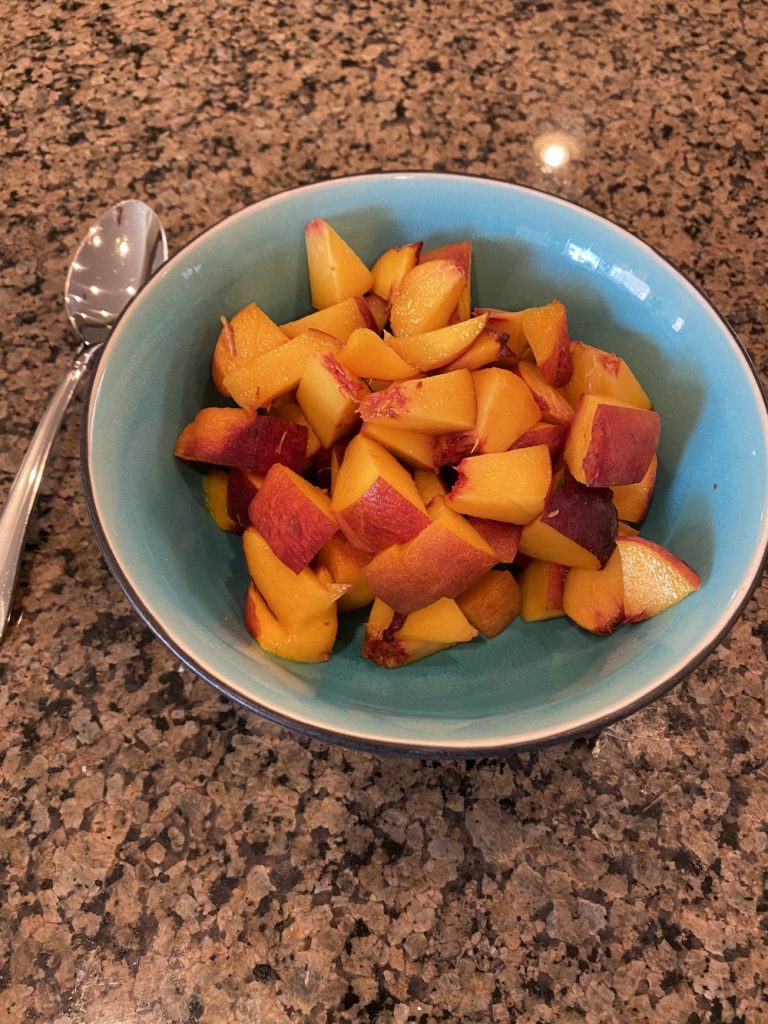
2 sliced peaches (110 calories):

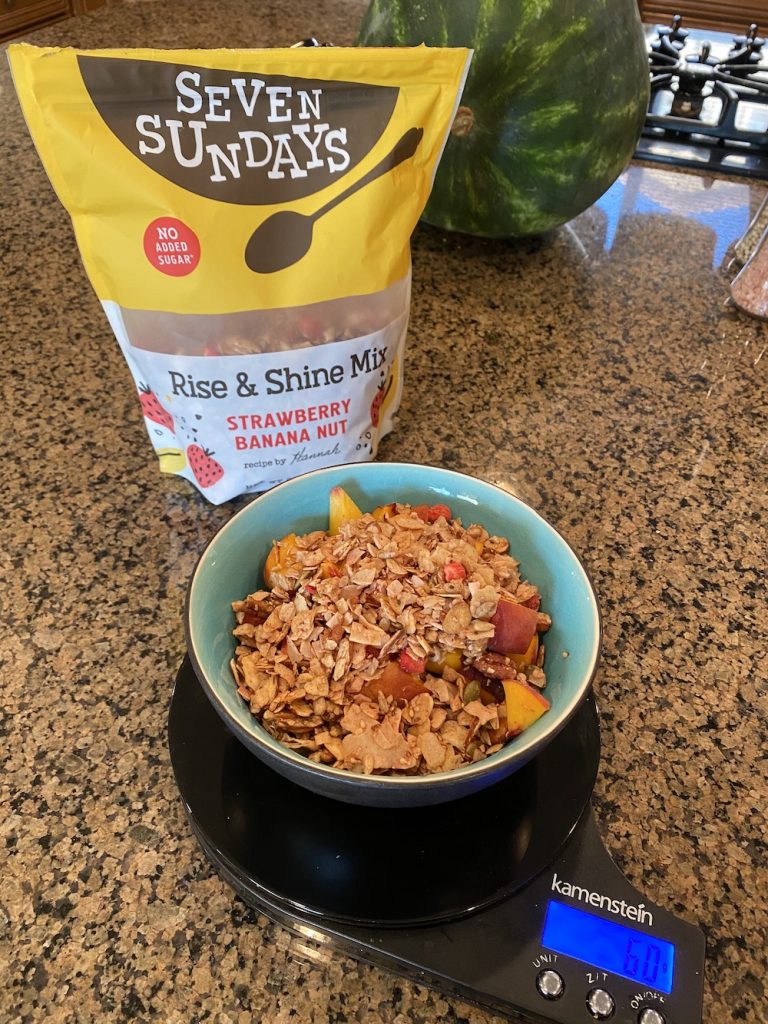
60g grain-free granola (340 calories):

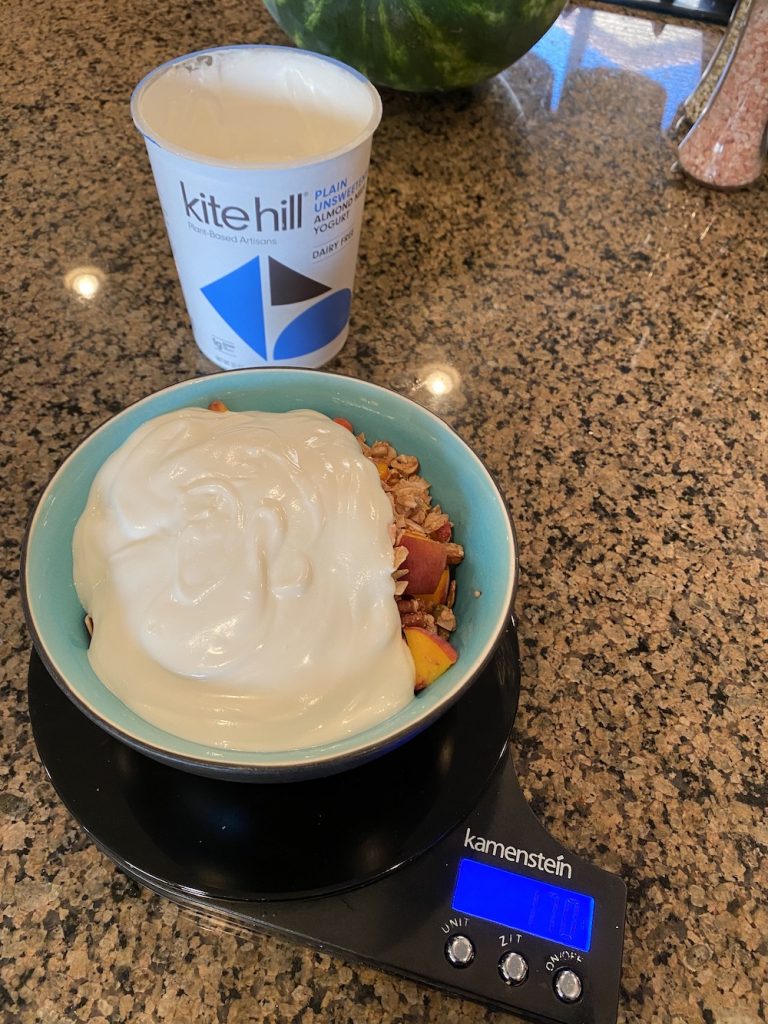
170g unsweetened almond milk yogurt (140 calories):

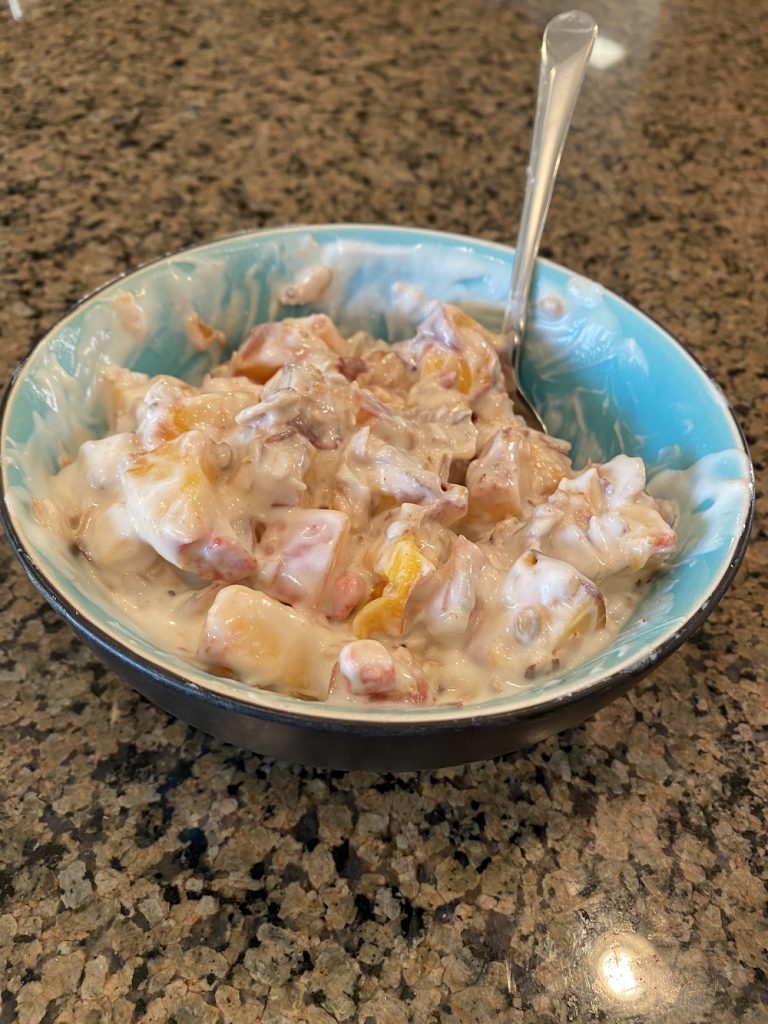
After mixing:

So good! I just love the combo of the juicy softness of the peaches, the creaminess of the yogurt, and the mild crunch of the granola.

Total calories = 110 (peaches) + 340 (granola) + 140 (yogurt) = 590

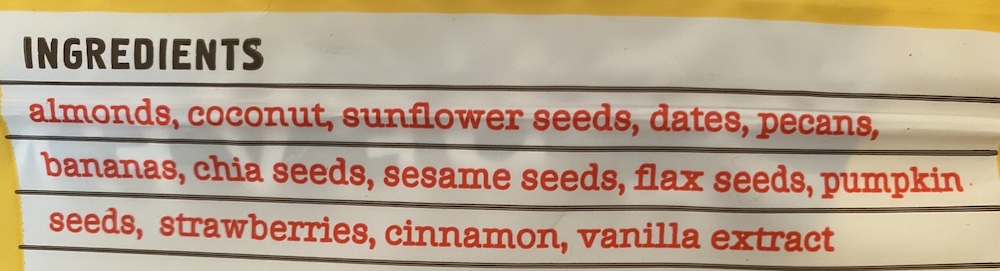
Here are the granola ingredients:

The peaches are from Trader Joe’s (this time, but I usually get them from Costco), the granola from Costco, and the yogurt from Whole Foods. Getting groceries from 3+ different stores is pretty normal for a vegan, and fortunately all of these stores are close to us.

Here are some variations I often make:

  • Use white peaches instead of yellow peaches. Personally I like the yellow ones best.
  • Swap peaches for blueberries, sliced strawberries, nectarines, sliced banana, or other favorite fruits.
  • Use more fruit (and a larger bowl), like twice as many peaches or a combo of multiple fruits. I especially like peaches with blueberries.
  • Swap almond yogurt for cashew yogurt (I use Forager brand) or coconut milk.
  • Use 30g granola instead of 60g for a lighter meal (shaves off 170 calories, so 420 calories total).

If you like coffee, this goes really well with coffee too. I recommend trying it with a cup of Stumptown Founder’s Blend (organic) mixed with 50 ml of coconut milk (no sugar).

I especially like how this meal makes me feel. It digests easily, gives me good energy, and leaves me feeling light and happy. This is a really satisfying breakfast to have after a morning run.

Enjoy!

Share Button

Engineers use heat-free technology to make metallic replicas of a rose’s surface texture

Nature has worked for eons to perfect surface textures that protect, hide and otherwise help all kinds of creatures survive.

There’s the shiny, light-scattering texture of blue morpho butterfly wings, the rough, drag-reducing texture of shark skin and the sticky, yet water-repelling texture of rose petals.

But how to use those natural textures and properties in the engineered world? Could the water-repelling, ultrahydrophobic texture of a lotus plant somehow be applied to an aircraft wing as an anti-icing device? Previous attempts have involved molding polymers and other soft materials, or etching patterns on hard materials that lacked accuracy and relied on expensive equipment. But what about making inexpensive, molded metallic biostructures?

Iowa State University’s Martin Thuo and the students in his research group have found a way in their pursuit of “frugal science/innovation,” what he describes as “the ability to minimize cost and complexity while providing efficient solutions to better the human conditions.”

For this project, they’re taking their previous development of liquid metal particles and using them to make perfectly molded metallic versions of natural surfaces, including a rose petal. They can do it without heat or pressure, and without damaging a petal.

They describe the technology they’re calling BIOMAP in a paper recently published online by Angewandte Chemie, a journal of the German Chemical Society. Thuo, an associate professor of materials science and engineering with a courtesy appointment in electrical and computer engineering, is the corresponding author. Co-authors are all Iowa State students in materials science and engineering: Julia Chang, Andrew Martin and Chuanshen Du, doctoral students; and Alana Pauls, an undergraduate.

Iowa State supported the project with intellectual property royalties generated by Thuo.

“This project comes from an observation that nature has a lot of beautiful things it does,” Thuo said. “The lotus plant, for example, lives in water but doesn’t get wet. We like those structures, but we’ve only been able to mimic them with soft materials, we wanted to use metal.”

Key to the technology are microscale particles of undercooled liquid metal, originally developed for heat-free soldering. The particles are created when tiny droplets of metal (in this case Field’s metal, an alloy of bismuth, indium and tin), are exposed to oxygen and coated with an oxidation layer, trapping the metal inside in a liquid state, even at room temperature.

The BIOMAP process uses particles of varying sizes, all of them just a few millionths of a meter in diameter. The particles are applied to a surface, covering it and form-fitting all the crevices, gaps and patterns through the autonomous processes of self-filtration, capillary pressure and evaporation.

A chemical trigger joins and solidifies the particles to each other and not to the surface. That allows solid metallic replicas to be lifted off, creating a negative relief of the surface texture. Positive reliefs can be made by using the inverse replica to create a mold and then repeating the BIOMAP process.

“You lift it off, it looks exactly the same,” Thuo said, noting the engineers could identify different cultivars or roses through subtle differences in the metallic replicas of their textures.

Importantly, the replicas kept the physical properties of the surfaces, just like in elastomer-based soft lithography.

“The metal structure maintains those ultrahydrophobic properties — exactly like a lotus plant or a rose petal,” Thuo said. “Put a droplet of water on a metal rose petal, and the droplet sticks, but on a metal lotus leaf it just flows off.”

Those properties could be applied to airplane wings for better de-icing or to improve heat transfer in air conditioning systems, Thuo said.

That’s how a little frugal innovation “can mold the delicate structures of a rose petal into a solid metal structure,” Thuo said. “This is a method that we hope will lead to new approaches of making metallic surfaces that are hydrophobic based on the structure and not the coatings on the metal.”

Share Button

Meteorite study suggests Earth may have been wet since it formed

A new study finds that Earth’s water may have come from materials that were present in the inner solar system at the time the planet formed — instead of far-reaching comets or asteroids delivering such water. The findings published Aug. 28 in Science suggest that Earth may have always been wet.

Researchers from the Centre de Recherches Petrographiques et Geochimiques (CRPG, CNRS/Universite de Lorraine) in Nancy, France, including one who is now a postdoctoral fellow at Washington University in St. Louis, determined that a type of meteorite called an enstatite chondrite contains sufficient hydrogen to deliver at least three times the amount of water contained in the Earth’s oceans, and probably much more.

Enstatite chondrites are entirely composed of material from the inner solar system — essentially the same stuff that made up the Earth originally.

“Our discovery shows that the Earth’s building blocks might have significantly contributed to the Earth’s water,” said lead author Laurette Piani, a researcher at CPRG. “Hydrogen-bearing material was present in the inner solar system at the time of the rocky planet formation, even though the temperatures were too high for water to condense.”

The findings from this study are surprising because the Earth’s building blocks are often presumed to be dry. They come from inner zones of the solar system where temperatures would have been too high for water to condense and come together with other solids during planet formation.

The meteorites provide a clue that water didn’t have to come from far away.

“The most interesting part of the discovery for me is that enstatite chondrites, which were believed to be almost ‘dry,’ contain an unexpectedly high abundance of water,” said Lionel Vacher, a postdoctoral researcher in physics in Arts & Sciences at Washington University in St. Louis.

Vacher prepared some of the enstatite chondrites in this study for water analysis while he was completing his PhD at Universite de Lorraine. At Washington University, Vacher is working on understanding the composition of water in other types of meteorites.

Enstatite chondrites are rare, making up only about 2 percent of known meteorites in collections.

But their isotopic similarity to Earth make them particularly compelling. Enstatite chondrites have similar oxygen, titanium and calcium isotopes as Earth, and this study showed that their hydrogen and nitrogen isotopes are similar to Earth’s, too. In the study of extraterrestrial materials, the abundances of an element’s isotopes are used as a distinctive signature to identify where that element originated.

“If enstatite chondrites were effectively the building blocks of our planet — as strongly suggested by their similar isotopic compositions — this result implies that these types of chondrites supplied enough water to Earth to explain the origin of Earth’s water, which is amazing!” Vacher said.

The paper also proposes that a large amount of the atmospheric nitrogen — the most abundant component of the Earth’s atmosphere — could have come from the enstatite chondrites.

“Only a few pristine enstatite chondrites exist: ones that were not altered on their asteroid nor on Earth,” Piani said. “In our study we have carefully selected the enstatite chondrite meteorites and applied a special analytical procedure to avoid being biased by the input of terrestrial water.”

Coupling two analytical techniques — conventional mass spectrometry and secondary ion mass spectrometry (SIMS) — allowed researchers to precisely measure the content and composition of the small amounts of water in the meteorites.

Prior to this study, “it was commonly assumed that these chondrites formed close to the sun,” Piani said. “Enstatite chondrites were thus commonly considered ‘dry,’ and this frequently reasserted assumption has probably prevented any exhaustive analyses to be done for hydrogen.”

Story Source:

Materials provided by Washington University in St. Louis. Original written by Talia Ogliore. Note: Content may be edited for style and length.

Share Button