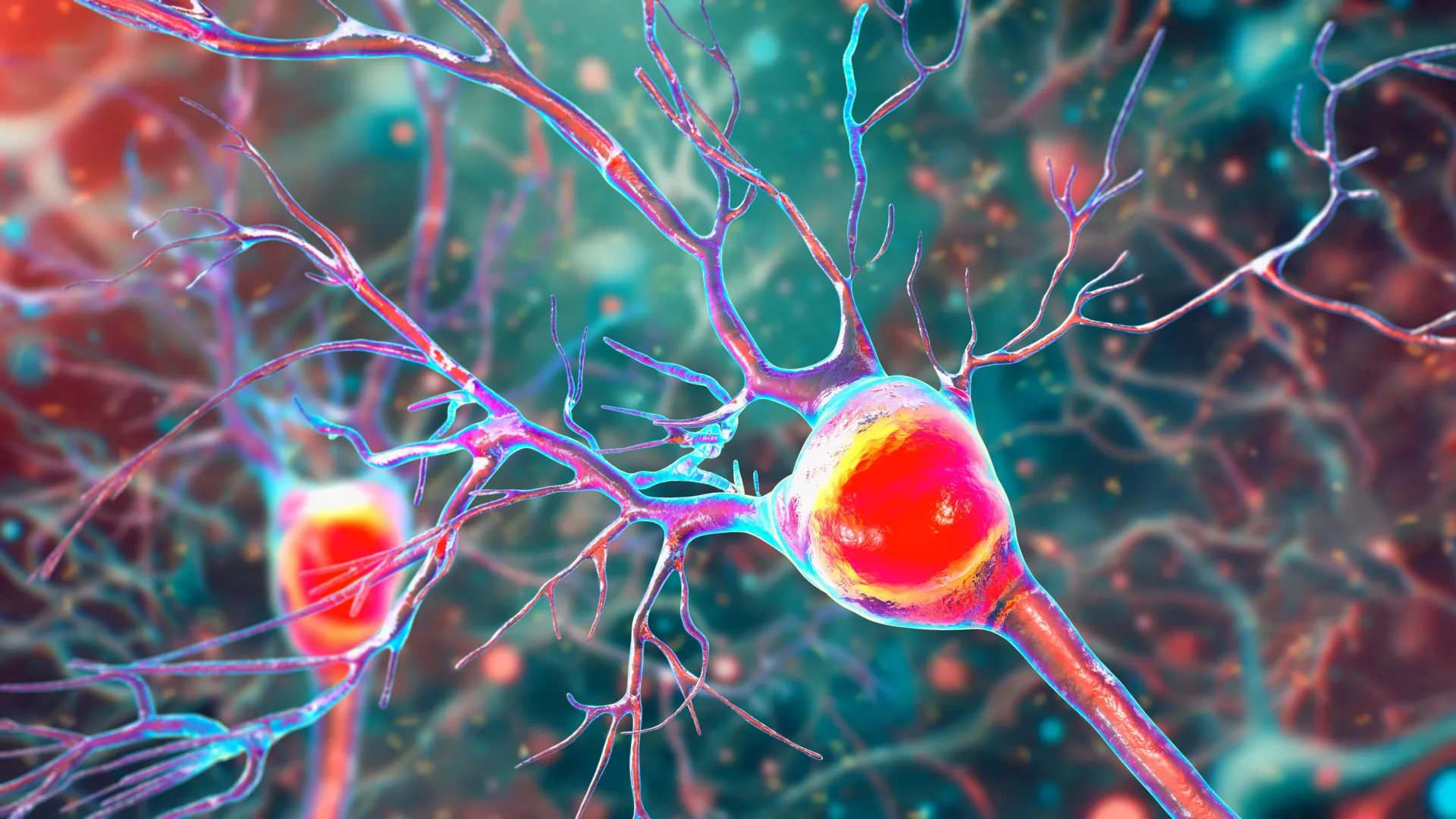
Why multiple sclerosis slowly steals balance and movement

Multiple sclerosis (MS) affects about 2.3 million people worldwide. In roughly 80% of cases, the disease involves inflammation in the cerebellum, a region of the brain essential for balance and coordinated movement. Damage in this area can trigger tremors, unsteady motion, and difficulty controlling muscles. Over time, these symptoms often intensify as healthy tissue in the cerebellum is gradually lost.

New research from the University of California, Riverside offers fresh insight into why this decline occurs. The study, published in the Proceedings of the National Academy of Sciences, points to malfunctioning mitochondria as a major contributor to the progressive breakdown of cerebellar neurons known as Purkinje cells. The loss of these cells appears closely tied to worsening movement problems in people with MS.

Inflammation, Myelin Loss, and Energy Failure

MS is defined by ongoing inflammation and demyelination within the central nervous system. Demyelination is the process in which the myelin sheath — a protective, insulating layer surrounding nerve fibers in the brain and spinal cord — is damaged or destroyed. Without this insulation, electrical signals struggle to travel efficiently along nerves, leading to a wide range of neurological symptoms.

Mitochondria play a different but equally critical role. These structures supply most of a cell’s energy, which is why they are often called the “powerhouses” of the cell.

“Our study, conducted by my graduate student Kelley Atkinson, proposes that inflammation and demyelination in the cerebellum disrupt mitochondrial function, contributing to nerve damage and Purkinje cell loss,” said Seema Tiwari-Woodruff, a professor of biomedical sciences in the UC Riverside School of Medicine, who led the research team. “We observed a significant loss of the mitochondrial protein COXIV in demyelinated Purkinje cells, suggesting that mitochondrial impairment contributes directly to cell death and cerebellar damage.”

Why Purkinje Cells Matter

Everyday movements such as walking, reaching, or maintaining balance rely on tight coordination between muscles, sensory organs, and multiple brain regions. The cerebellum plays a central role in this process.

“Inside the cerebellum are special cells called Purkinje neurons,” Tiwari-Woodruff said. “These large, highly active cells help coordinate smooth, precise movements — like dancing, throwing a ball, or even just walking. They’re essential for balance and fine motor skills.”

In MS and related neurological diseases, damage to the cerebellum often leads to the gradual death of Purkinje cells. As these neurons disappear, people may develop ataxia, a condition marked by poor coordination and unstable movement.

“Our research looked at brain tissue from MS patients and found major issues in these neurons: they had fewer branches, were losing myelin, and had mitochondrial problems — meaning their energy supply was failing,” Tiwari-Woodruff said. “Because Purkinje cells play such a central role in movement, their loss can cause serious mobility issues. Understanding why they’re damaged in MS could help us find better treatments to protect movement and balance in people with the disease.”

Evidence From an MS Mouse Model

To better understand how these changes unfold, the researchers also studied experimental autoimmune encephalomyelitis (EAE) — a mouse model that develops MS-like symptoms. This allowed them to track mitochondrial changes as the disease progressed.

Over time, the mice experienced a steady decline in Purkinje cells, mirroring what is seen in human MS.

“The remaining neurons don’t work as well because their mitochondria, the energy-producing parts, start to fail,” Tiwari-Woodruff said. “We also saw that the myelin breaks down early in the disease. These problems — less energy, loss of myelin, and damaged neurons — start early, but the actual death of the brain cells tends to happen later, as the disease becomes more severe. The loss of energy in brain cells seems to be a key part of what causes damage in MS.”

Although the EAE model does not replicate every feature of MS, its similarities to the human condition make it a powerful tool for studying neurodegeneration and testing new therapeutic approaches.

Targeting Mitochondria as a Treatment Strategy

“Our findings offer critical insights into the progression of cerebellar dysfunction in MS,” Tiwari-Woodruff said. “Targeting mitochondrial health may represent a promising strategy to slow or prevent neurological decline and improve quality of life for people living with MS. This research brings us a step closer to understanding the complex mechanisms of MS and developing more effective, targeted treatments for this debilitating disease.”

What Comes Next

The research team is now exploring whether mitochondrial damage extends beyond Purkinje cells to other cerebellar cell types, including oligodendrocytes, which help form white matter, and astrocytes, which support overall brain function.

“To answer this, one of our ongoing research projects is focused on studying mitochondria in specific types of brain cells in the cerebellum,” Tiwari-Woodruff said. “Such research can open the door to finding ways to protect the brain early on — like boosting energy in brain cells, helping them repair their protective myelin coating, or calming the immune system before too much damage is done. This is especially important for people with MS who struggle with balance and coordination, as these symptoms are tied to damage in the cerebellum.”

The Importance of Continued Research

Tiwari-Woodruff stressed the broader importance of sustained investment in medical research.

“Cutting funding to science only slows progress when we need it most,” she said. “Public support for research matters now more than ever.”

The study was conducted by Tiwari-Woodruff and Atkinson alongside Shane Desfor, Micah Feria, Maria T. Sekyia, Marvellous Osunde, Sandhya Sriram, Saima Noori, Wendy Rincóna, and Britany Belloa.

Researchers analyzed postmortem cerebellar tissue from individuals with secondary progressive MS and compared it with tissue from healthy donors. The samples were obtained from the National Institutes of Health’s NeuroBioBank and the Cleveland Clinic.

Funding for the study was provided by the National Multiple Sclerosis Society.

The research paper is titled “Decreased mitochondrial activity in the demyelinating cerebellum of progressive multiple sclerosis and chronic EAE contributes to Purkinje cell loss.”


Share Button

Tiny 3D-printed light cages could unlock the quantum internet

Storing quantum information is essential for the future of both quantum computing and a global quantum internet. Today’s quantum communication systems struggle with signal loss over long distances, which limits how far quantum information can travel. Quantum memories help solve this problem by making quantum repeaters possible, allowing information to hop across a network through entanglement swapping rather than fading away.

A new study published in Light: Science & Applications reports a major advance in this area. Researchers from the Humboldt-Universität zu Berlin, the Leibniz Institute of Photonic Technology, and the University of Stuttgart have introduced a new type of quantum memory built from 3D-nanoprinted structures known as “light cages” filled with atomic vapor. By bringing both light and atoms together on a single chip, the team has created a platform designed for scalability and seamless integration into quantum photonic systems.

What Makes Light Cages Different

Light cages are hollow-core waveguides engineered to tightly guide light while still allowing access to the space inside. This design offers a key advantage over conventional hollow-core fibers, which can take months to fill with atomic vapor. In contrast, the open structure of light cages lets cesium atoms diffuse into the core much more quickly, cutting the filling process down to just a few days without sacrificing optical performance.

The structures are fabricated using two-photon polymerization lithography with commercial 3D printing systems. This approach allows researchers to directly print intricate hollow-core waveguides onto silicon chips with extremely high precision. To protect the devices from chemical reactions with cesium, the waveguides are coated with a protective layer. Tests showed no signs of degradation even after five years of operation, highlighting the system’s long-term stability.

“We created a guiding structure that allows quick diffusion of gases and fluids inside its core, with the versatility and reproducibility provided by the 3D-nanoprinting process. This enables true scalability of this platform, not only for intra-chip fabrication of the waveguides but also inter-chip, for producing multiple chips with the same performance,” explained the research team.

Turning Light Into Stored Quantum Information

Inside the light cages, incoming light pulses are efficiently converted into collective excitations of the surrounding atoms. After a chosen storage time, a control laser reverses this process and releases the stored light exactly when needed. In a key demonstration, the researchers successfully stored very weak light pulses containing only a few photons for several hundred nanoseconds. They believe this approach can eventually be extended to store single photons for many milliseconds.

Another major milestone was the integration of multiple light cage memories on a single chip placed inside a cesium vapor cell. Measurements showed that different light cages with the same design delivered nearly identical storage performance across two separate devices on the same chip. This level of consistency is essential for building scalable quantum systems.

The strong reproducibility comes from the precision of the 3D-nanoprinting process. Variations within a single chip were kept below 2 nanometers, while differences between chips remained under 15 nanometers. Such tight control is critical for spatial multiplexing, a technique that could dramatically increase the number of quantum memories operating together on one device.

Implications for Quantum Networks and Computing

Light cage quantum memories address several long-standing challenges in quantum technology. In quantum repeater networks, they could synchronize multiple single photons at the same time, greatly boosting the efficiency of long-distance quantum communication. In photonic quantum computing, the memories provide controlled delays that are needed for feed-forward operations in measurement-based quantum computing systems.

The platform also stands out for its practicality. Unlike many competing technologies, it operates slightly above room temperature and does not require cryogenic cooling or complex atom-trapping setups. This makes the system easier to deploy while also offering higher bandwidth per memory mode. The ability to produce many identical quantum memories on a single chip opens a clear path toward large-scale quantum photonic integration.

Thanks to its flexible fabrication process, the technology can potentially be combined with direct fiber coupling and existing photonic components. These advantages position light cage quantum memories as a strong candidate for future quantum communication infrastructure.

A Scalable Path Forward

The development of light cage quantum memories marks a significant step in quantum photonic research. By merging advanced 3D-nanoprinting with core principles of quantum optics, the researchers have created a compact, scalable system that could speed the arrival of practical quantum networks and more powerful quantum computers.

Share Button

A simple drug pair may succeed where liver fibrosis treatments failed

Researchers have found that a pair of existing drugs is far more effective when used together than when either is taken alone. The findings point to a practical and potentially fast route toward a long-awaited treatment for liver fibrosis.

Liver fibrosis is a common but often overlooked condition that affects hundreds of millions of people worldwide. Over time, it can worsen into cirrhosis or liver cancer. Even after decades of scientific effort, there are still no antifibrotic drugs approved for clinical use.

The disease develops when repeated or long-term liver damage — caused by viral hepatitis, excessive alcohol use, metabolic disorders, toxins, or autoimmune disease — triggers an overactive healing response. A major driver of this process is the activation of hepatic stellate cells (HSCs). Under normal conditions, these cells remain inactive. When injury occurs, they switch into collagen-producing cells that build up scar tissue in the liver.

This harmful transformation is controlled by several overlapping signaling systems, including TGF-β, PDGF, and Wnt/β-catenin pathways. Because fibrosis involves many biological routes at once, drugs that target only one pathway often have limited success. This complexity has fueled growing interest in combination treatments that can block multiple drivers of disease at the same time.

A New Use for Two Familiar Drugs

A study published in Targetome on December 15, 2025 by Hong Wang’s & Haiping Hao’s team, China Pharmaceutical University, reports that a fixed-dose combination of silybin and carvedilol can strongly suppress hepatic stellate cell activation. By targeting Wnt4/β-catenin signaling, the drug pair was able to reverse liver fibrosis in experimental models, offering a promising strategy for a disease that currently lacks approved therapies.

To better understand silybin’s potential and its limitations, the researchers combined laboratory experiments, animal studies, phenotype-based drug screening, and molecular analysis. Early tests focused on liver cell injury models triggered by ActD/TNFα, tBHP, and TNFα. These experiments showed that silybin effectively protected liver cells by restoring viability, lowering harmful reactive oxygen species, and reducing inflammatory gene activity. It also showed strong antiapoptotic, antioxidative, and anti-inflammatory effects without detectable toxicity.

However, when researchers examined whether silybin could directly stop fibrosis, the results were less impressive. In human LX-2 and rat HSC-T6 stellate cells stimulated with TGFβ1, silybin only slightly lowered key fibrosis-related markers such as COL1A1, COL1A2, ACTA2, and TGFB. Similar patterns appeared in mice with liver fibrosis caused by carbon tetrachloride exposure. While silybin led to modest improvements in liver enzymes, collagen buildup, and fibrotic gene expression, its benefits appeared to come mainly from protecting liver cells rather than directly blocking stellate cell activation.

Finding the Right Partner Drug

To overcome this limitation, the research team screened 397 FDA-approved drugs using a COL1A1-luciferase reporter system to identify compounds that could enhance silybin’s antifibrotic effect. Carvedilol emerged as the strongest synergistic partner.

When used together, silybin and carvedilol sharply reduced collagen production and stellate cell activation in human and rat cell cultures, as well as in primary hepatic stellate cells. In every case, the combination outperformed either drug on its own.

Further testing in animals showed that a fixed-dose ratio of 50:1 (silybin to carvedilol) produced the most consistent and powerful results. This optimized pairing significantly reduced liver injury, inflammation, and fibrosis severity in mice. The effects increased with dose and were stronger than those seen with obeticholic acid.

How the Drug Duo Stops Liver Scarring

Mechanistic studies revealed why the combination works so well. Together, silybin and carvedilol shut down the Wnt/β-catenin signaling pathway more effectively than either drug alone. This includes suppressing the Wnt ligand Wnt4 and reducing downstream β-catenin activity. These findings provide a clear molecular explanation for the combination’s strong antifibrotic effects.

A Fast Track Toward Clinical Use

The study highlights a realistic treatment strategy based on drug repurposing and carefully designed combination therapy. Both silybin and carvedilol are already widely used in clinical practice, have established safety records, and are low in cost. As a result, their combined use could move quickly into clinical testing and help address a major unmet medical need.

Beyond liver fibrosis, the research also demonstrates how phenotype-based screening can reveal powerful and unexpected drug partnerships that may be hiding in plain sight.

Funding and Support

This work was supported by the Major State Basic Research Development Program of China (2022YFA1303800 and 2021YFA1301300); the National Natural Science Foundation of China (82373946, 82073926, 82321005, 82530122, and 81930109); Major Science and Technology Project of Jiangsu Province (BG2024045); Overseas Expertise Introduction Project for Discipline Innovation (G20582017001); the Project of State Key Laboratory of Natural Medicines, China Pharmaceutical University (SKLNMZZ202402); and the Project Program of Basic Science Research Center Base (Pharmaceutical Science) of Yantai University (P202404).

Share Button

Parents say babies failed by delayed diagnosis like Jesy Nelson’s twins

After Little Mix star Jesy Nelson’s revelation that her twins have SMA, parents speak about their children’s late diagnoses.

Share Button

Our children waited too long for the same diagnosis as Jesy Nelson’s twins

After Little Mix star Jesy Nelson’s revelation that her twins have SMA, parents speak about their children’s late diagnoses.

Share Button

New NHS online hospital to focus on eyes, menopause and prostates

NHS Online due to launch in England next year will provide eye, prostate and menopause care.

Share Button

Nestle recalls some baby formula products over toxin fears

Nestle said it had received no reports of problems and was recalling the products “out of an abundance of caution”.

Share Button

US cuts universal childhood vaccine recommendations, including covid and hepatitis

The overhaul is the latest in a host of sweeping changes made under the Trump administration by health secretary Robert F Kennedy Jr.

Share Button

Venezuela Is Not The Only Country Trump Has His Eye On

Donald Trump stunned the international stage when he initiated a takeover of Venezuela over the weekend – but this could just be the beginning.

The US president initiated military strikes against the South American country on Saturday and captured its president, Nicolas Maduro, before indicting him on narco-terrorism charges.

Trump has since promised to “run” Venezuela until a safe transition of power can take place.

The US president has also made it clear that he wants to expand America’s president internationally, and revive the 19th-Century idea known as the Monroe Doctrine, designed to keep Europe out of the Western Hemisphere.

He said his modern-day equivalent would be called the “Don-roe Doctrine” and establish US dominance over the whole hemisphere, backed by military strength.

He has repeatedly threatened to take action against other territories, both in South America and outside of it, particularly those run by leftist governments.

While UK prime minister Keir Starmer’s top team insists the idea of Trump seizing other countries is just “hypothetical”, the US president has openly been welcoming the idea of initiating action against other countries.

Here’s what you need to know.

Colombia

Speaking on Monday, Trump said: “Colombia is very sick too, run by a sick man who likes making cocaine and selling it to the United States and he’s going to be doing it good for very long, let me tell you.”

Asked if that meant there would be a US operation into Colombia, he said: “Sounds good to me.”

It comes after Trump told his cabinet in December that military strikes on land targets inside Venezuela would “start very soon”.

As he claimed any country producing narcotics could be a potential target, he called out Colombia – even though the nation has been working with the US government for decades on its war on drugs.

Trump said Colombia’s president Gustavo Petro had to “watch his ass”.

Petro has already been slapped with sanctions by the US administration following claims that he has been involved with the global drug trade.

But Petro warned the White House: “To threaten our sovereignty is to declare war; do not damage two centuries of diplomatic relations.”

He added: “I deeply reject Trump speaking without knowing; my name does not appear in the judicial files on drug trafficking over 50 years, neither from before nor from the present.”

Trump’s comments could also have been related to the upcoming presidential elections in Colombia, where leftist Petro will be prevented from running again, according to the constitution – so the US might back a right-wing candidate.

Greenland

Trump has long had his eye on Greenland for its advantageous location and its untapped oil supplies.

But, as part of Denmark, it is Nato territory – meaning Trump could run into major trouble if he attempts to seize it.

The US president told The Atlantic on Sunday: “We do need Greenland, absolutely. We need it for defence.”

Former Trump administrational official Katie Miller also posted a map of Greenland on social media covered with the US flag, along with the caption: “SOON.”

But Danish PM Mette Frederiksen said Trump has “no right to annex” the land, and the States already has access to Greenland through security agreements.

She said: “I would therefore strongly urge the US to stop threatening a historically close ally and another country and people who have made it very clear that they are not for sale.”

Prime minister Starmer has already made it clear that he stands with Denmark if Trump attempts to move against it.

He said: “Denmark is a close ally in Europe, it is a Nato ally, and it’s very important the future of Greenland is, as I say, for the Kingdom of Denmark, and for Greenland, and only for Greenland and the Kingdom of Denmark.”

Other European leaders have also followed suit in backing Denmark.

Cuba

Cuba is under a particularly microscope within the Trump administration especially after US officials claimed Cuban bodyguards were protecting Maduro when he was captured.

Cuba also admitted 32 of its officers were killed in Trump’s military strikes.

Trump told reporters: ”[Cuba] is going down. It’s going down for the count.”

US Secretary of state Marco Rubio claimed the country is “run by incompetent, senile men, and in some cases not seen now, but incompetent nonetheless.”

Rubio – the son of Cuban immigrants – adding: “If I lived in Havana and I was in the government, I’d be concerned at least a little bit.”

Cuba has been under US sanctions since its revolution in 1959, and according to Trump, its already struggling economy will face further upheaval without subsidized oil from Venezuela.

The country’s president, Miguel Dias-Canal has already denounced the US capture of Maduro, claiming it is “state terrorism”.

Iran

Iran is enduring a period of domestic unrest, with deadly protests rocking the whole country.

Human rights activists say protests have taken place in at least 26 of Iran’s 31 provinces in the last week, and approximately 19 protesters and one member of the security forces have been killed.

As its economy struggles following its brief conflict with Israel last year, the public are questioning the Islamic Republic.

Trump has weighed in, promising protesters: “We’re watching it very closely. If they [Iranian authorities] start killing people like they have done in the past, I think they’re going to get hit very hard by the United States.”

“We are locked and loaded and ready to go,” he claimed.

It remains unclear exactly what action the US would take against Iran but US bombers were involved in strikes against Iranian nuclear facilities last year.

But supreme leader Ayatollah Ali Khamenei has promised Iran “will not yield to the enemy”.

Mexico

Trump also criticised Mexico after his strikes on Venezuela.

“You have to do something with Mexico. Mexico has to get their act together,” the US president said, claiming they must do more to address drug trafficking.

Trump claims to have repeatedly offered to send US troops to Mexico but that president Claudia Sheinbaum has prevented it.

He claimed that she is a “terrific person” but she is “concerned, she’s a little afraid” about military action.

Trump also said the Mexican government is capable of addressing the issues of the drug trade, but “unfortunately the cartels are very strong in Mexico”.

According to Reuters, Shainbaum has already rejected Trump’s remarks, saying: “The Americas do not belong to any doctrine or any power. The American continent belongs to the peoples of each of the countries that comprise it.

“It is necessary to reaffirm that in Mexico, the people rule and that we are a free and sovereign country-cooperation, yes; subordination and intervention, no.”

Share Button

Met Office Shares 5 ‘Essentials’ For Snow-Related Power Cuts

Hundreds of schools have been forced to close on the first Monday of the new year as snow covers parts of the UK.

This follows temperatures as low as -10.9°C recorded on 4 January, in Cumbria and 52cm of snowfall recorded at Tomintoul in Banffshire this morning (Monday, 5 January).

Yellow snow and ice alerts are in place across Scotland, Northern Ireland, the North of England, Devon, Cornwall, the East of England, and the West of Wales.

These warnings mean “possible power cuts and an increased risk of other services, like phone signal, becoming impaired,” the Met Office’s site reads.

That’s why experts recommend getting some “essentials” together in advance in case you’re affected by a power cut, as driving in the snow is best avoided when at all possible.

Which essentials do you need in a power cut?

Per the Met Office, you should ensure you have:

  1. Torches
  2. Batteries
  3. Candles
  4. Matches or lighters
  5. A mobile phone power pack.

The office added that if you’ve been affected by a power cut, you should unplug all electronics that need to be attended at the wall. That way, when the power comes back on, you won’t accidentally restart them and forget, eg, a pair of hair straighteners that you were using when the power cut began.

Leave at least one light on so you can figure out when the power is back, and check to see if your neighbour has the same problem (if they don’t, the problem could be a tripped switch).

Wrap up warm, keep internal doors shut to trap in heat, and use a portable heater if you have one.

Additionally, you can call 105 – it’s a free service for those in Scotland, England, and Wales which allows you to report the power cut to your electricity network operator, and receive more information if you need any.

Why do snow and ice cause power cuts to begin with?

Snow and ice can build up on branches and power lines in a way that water, which drips off, can’t.

That can make branches fall onto power lines or weigh the lines themselves down, Interesting Engineering shared.

Then, there’s the simple fact of the temperature. The many component parts of a power system each have ideal running temperatures; very cold and very hot weather can throw them off, forcing the network to work harder.

Even in the absence of snowfall, tree roots can sometimes provide a pathway for ice on the ground to make its way to underground power lines.

Share Button