Blow For Keir Starmer As Labour Whip Vicky Foxcroft Quits Over Welfare Cuts

A Labour MP has quit as a government whip over controversial plans to slash the welfare budget by £5 billion.

In a major blow for Keir Starmer, Vicky Foxcroft said she could not vote for the policy and had no option but to resign.

In a letter to the prime minister, she said: “I have wrestled with whether I should resign or remain in the Government and fight for change from within.

“Sadly it now (seems that we are not going to get the changes I desperately wanted to see.

“I therefore tender my resignation as I know I will not be able to do the job that is required of me and whip – or indeed vote – for reforms which include cuts to disabled people’s finances.”

A government spokesperson said: “This Labour government was elected to deliver change. The broken welfare system we inherited is failing the sick and most vulnerable and holding too many young people back. It is fair and responsible to fix it.

“Our principled reforms will ensure those who can work should, that those who want to work are properly supported, and that those with most severe disabilities and health conditions are protected.”

Foxcroft is the first Labour frontbencher to resign over the proposed benefit cuts, which will be voted on my the Commons on July 1.

More than 100 Labour MPs have written to the government’s chief whip making clear their opposition to the plans, which would see cuts to Personal Independence Payments (PIP) and Universal Credit.

The government’s own assessment of the policy has suggested that 250,000 people could be pushed into poverty as a result, including 50,000 children.

Share Button

As Trump Weighs Up Joining Israel’s War Against Iran, Here’s A Reminder How We Got Here

Donald Trump is currently considering whether to join Israel in bombing Iran – a seismic decision which could cause chaos across the Middle East and beyond.

The UK is particularly nervous to see what the mercurial president does next, knowing that there may well be pressure for Britain to assist America, as one of its closest allies.

So as much of the West and the Middle East nervously await news from the White House, here’s a look back at just how we ended up on this knife-edge…

Why has Israel been bombing Iran?

Israel claims it had no option but to attack Iran because Tehran was close to developing nuclear weapons.

The Fordo nuclear site is one of two facilities where Iran can enrich uranium. It’s build into a mountain for safety, 124 miles south of Tehran.

While the facility has been hit by Israel’s recent attacks, it’s thought the Israeli Defence Force (IDF) was actually trying to weaken Iran’s defence capabilities around the facility.

Only one conventional weapon could actually destroy the fortified site, and it belong to the US.

Smoke rises up after Israel's attack, in Tehran, Iran, Wednesday, June 18, 2025.
Smoke rises up after Israel’s attack, in Tehran, Iran, Wednesday, June 18, 2025.

via Associated Press

Is Iran on the cusp of developing a nuclear bomb?

It’s not clear.

To build such a bomb, a country would need to have uranium enriched to 90%, the ability to build a warhead and a way to direct that warhead to an end point.

While Iran is definitely working on some nuclear capabilities, it has always insisted that its nuclear programme is peaceful.

In March, Trump’s director of national intelligence Tulsi Gabbard told Congress that “while Iran had an unprecedented stockpile of weapons-grade uranium, it did not appear to be building a nuclear weapon”.

But Trump has dismissed this intelligence.

Israel has also claimed “over the past few months intelligence has shown that Iran is closer than ever to obtaining a nuclear weapon”.

Meanwhile, the UN’s nuclear watchdog, the International Atomic Energy Agency (IAEA) announced earlier this month that Iran had breached its non-proliferation obligations for the first time in almost two decades.

It concluded that Iran has amassed around 400kg of uranium enriched to 60% – that’s more than is required for civil nuclear use.

Is Israel a nuclear power?

Israel is believed to have up to 90 nuclear warheads, but the country has not confirmed or denied whether that is true.

Israel is also not part of the global nuclear non-proliferation treaty meant to prevent more countries – like Iran – from building their own weapons.

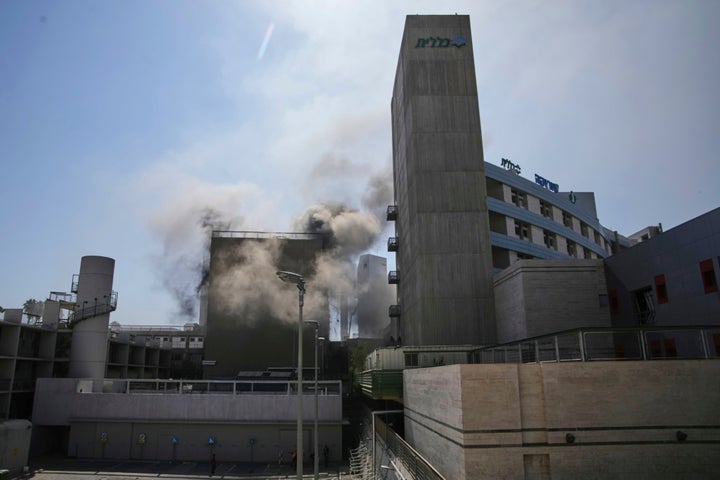
Smokes raises from a building of the Soroka hospital complex after it was hit by a missile fired from Iran in Beersheba, Israel, Thursday, June 19, 2025.

via Associated Press

Why were there already tensions between Israel and Iran?

Tensions in the Middle East rose sharply in October 2023 when Iranian-backed militants Hamas crossed from Gaza into Israel and killed 1,200 people, taking a further 250 captive.

Israel declared war on Hamas, launched a ground offensive and imposed a blockade on aid heading into the Palestinian territory.

The Hamas-run health ministry say at least 54,000 people have been killed in Gaza since the war began.

After Israel declared war, other Iranian proxies – like Houthi rebels in Yemen and Hezbollah in Lebanon – began to fight Israel.

The US, Israel’s most powerful friend, has helped to subdue these attacks in recent months, while other allies like the UK, continue to send Israel weapons.

Iran is also weakened after the deposition of Syria’s leader Bashar al-Assad, although that was not a result of Israeli actions.

What was Iran’s nuclear deal – and why did it fall apart?

The Joint Comprehensive Plan of Action (JCPOA), also known as the Iran nuclear deal, was put in place in 2015.

Iran agreed with the US, UK, France, China, Russia and Germany to limit its sensitive nuclear activities and allow international inspectors in to monitor their work.

In exchange, world powers would lift the economic sanctions it placed on the country.

The deal was due to expire in 2031 but it began to fall apart in May 2018 when Trump pulled out.

He claimed the accord was “defective at its core” and reinstated all US sanctions on Iran.

Trump wanted to force Tehran into a tougher deal which would limit Iran’s involvement in regional conflicts.

Iran rejected that plan even as the sanctions triggered a recession and skyrocketing inflation.

In 2019, Tehran began to exceed the deal’s restrictions on its nuclear programme, blaming the US for its own “non-performance”.

Joe Biden tried to revive the JCPOA in 2021 when he was elected as president, but Iran said it was waiting for the US to lift sanctions first.

When he left office and Trump was re-elected, the US was expected to resume nuclear talks with Iran this month.

However, Israel’s recent strikes have set back any potential talks.

Why would the US (and possibly the UK) join the regional conflict?

Trump initially called for de-escalation, but he has also called for Iran’s “unconditional surrender” and threatened to attack its supreme leader whom he claims is an “easy target”.

Asked if he would join in with the attacks, Trump said on Wednesday night: “I may do it, I may not do it. Nobody knows what I’m going to do.”

The US may seek the UK’s permission to use the British airbase in the Chagos Islands to launch its mission.

But Trump risks putting American lives at risk if he does target Iran.

There are about 40-50,000 US troops at around 19 locations across the Middle East who could be vulnerable to attack.

Share Button

Tina Fey Reveals How Season 2 Of The Four Seasons Is Going To Work

This article contains major spoilers for The Four Seasons on Netflix.

Fans who found themselves hooked on the low-stakes drama of The Four Seasons on Netflix earlier this year were delighted when the show was renewed for a second run last month.

And in a new interview with Deadline, Tina Fey – who also co-created the series, and wrote two of its episodes – is teasing exactly how the next season will work.

The first run of The Four Seasons checked in with the same group of friends on four different group trips, as we caught up with where they were all at in their different personal dramas.

In light of big changes the gang went through by the end of season one, Deadline’s reporter asked Tina whether this format would still be the case for the new episodes.

“One of the things we like about it is what we kept calling the container plate of it. The game of, we only see them on vacation,” Tina responded. “We only see them throughout the year.

She added: “We definitely want to keep the format of only seeing them when they’re together, only seeing them over four occasions.”

Tina Fey at a screening of The Four Seasons last month

via Associated Press

Tina also spoke about the possibility of Steve Carell putting in an appearance, despite his character having now been killed off.

“I couldn’t possibly say,” she said. “We have our format.”

She then quipped: “I mean, of the many mistakes I’ve made in my career, killing him will hopefully go down as the biggest.”

Work on the second season of The Four Seasons is now underway, with cast members Will Forte, Colman Domingo, Kerri Kenney-Silver and Marco Calvani expected to return in the new episodes.

Until then, the first series of The Four Seasons is streaming on Netflix – with the platform making announcements about three other fan-favourite shows when it was first revealed that a second season was on the way.

Share Button

Six ways to keep your home and yourself cool in hot weather

Six simple things you can do to help keep your house cool when temperatures rise.

Share Button

UK hits hottest day of the year as heatwave approaches

Alerts across England are in force until Monday morning and come as heatwave conditions are expected.

Share Button

Thinking AI models emit 50x more CO2—and often for nothing

No matter which questions we ask an AI, the model will come up with an answer. To produce this information – regardless of whether than answer is correct or not – the model uses tokens. Tokens are words or parts of words that are converted into a string of numbers that can be processed by the LLM.

This conversion, as well as other computing processes, produce CO2 emissions. Many users, however, are unaware of the substantial carbon footprint associated with these technologies. Now, researchers in Germany measured and compared CO2 emissions of different, already trained, LLMs using a set of standardized questions.

“The environmental impact of questioning trained LLMs is strongly determined by their reasoning approach, with explicit reasoning processes significantly driving up energy consumption and carbon emissions,” said first author Maximilian Dauner, a researcher at Hochschule München University of Applied Sciences and first author of the Frontiers in Communication study. “We found that reasoning-enabled models produced up to 50 times more CO2 emissions than concise response models.”

‘Thinking’ AI causes most emissions

The researchers evaluated 14 LLMs ranging from seven to 72 billion parameters on 1,000 benchmark questions across diverse subjects. Parameters determine how LLMs learn and process information.

Reasoning models, on average, created 543.5 ‘thinking’ tokens per questions, whereas concise models required just 37.7 tokens per question. Thinking tokens are additional tokens that reasoning LLMs generate before producing an answer. A higher token footprint always means higher CO2 emissions. It doesn’t, however, necessarily mean the resulting answers are more correct, as elaborate detail that is not always essential for correctness.

The most accurate model was the reasoning-enabled Cogito model with 70 billion parameters, reaching 84.9% accuracy. The model produced three times more CO2 emissions than similar sized models that generated concise answers. “Currently, we see a clear accuracy-sustainability trade-off inherent in LLM technologies,” said Dauner. “None of the models that kept emissions below 500 grams of CO2 equivalent achieved higher than 80% accuracy on answering the 1,000 questions correctly.” CO2 equivalent is the unit used to measure the climate impact of various greenhouse gases.

Subject matter also resulted in significantly different levels of CO2 emissions. Questions that required lengthy reasoning processes, for example abstract algebra or philosophy, led to up to six times higher emissions than more straightforward subjects, like high school history.

Practicing thoughtful use

The researchers said they hope their work will cause people to make more informed decisions about their own AI use. “Users can significantly reduce emissions by prompting AI to generate concise answers or limiting the use of high-capacity models to tasks that genuinely require that power,” Dauner pointed out.

Choice of model, for instance, can make a significant difference in CO2 emissions. For example, having DeepSeek R1 (70 billion parameters) answer 600,000 questions would create CO2 emissions equal to a round-trip flight from London to New York. Meanwhile, Qwen 2.5 (72 billion parameters) can answer more than three times as many questions (about 1.9 million) with similar accuracy rates while generating the same emissions.

The researchers said that their results may be impacted by the choice of hardware used in the study, an emission factor that may vary regionally depending on local energy grid mixes, and the examined models. These factors may limit the generalizability of the results.

“If users know the exact CO2 cost of their AI-generated outputs, such as casually turning themselves into an action figure, they might be more selective and thoughtful about when and how they use these technologies,” Dauner concluded.

Share Button

Microscopic heist: How lung bacteria forge weapons to steal iron and survive

Bacteria of the genus Pandoraea have not been studied much to date. Their name is reminiscent of Pandora’s box from Greek mythology, which is a symbol of uncontrollable dangers. “We have been working with an antibiotic-resistant bacterium,” says Elena Herzog. She is the first author of the publication and works as a doctoral researcher in the team of Christian Hertweck, the head of the study at the Leibniz Institute for Natural Product Research and Infection Biology (Leibniz-HKI). However, like so many things in nature, these pathogenic bacteria do not only have negative properties. “Pandoraea bacteria not only harbor risks. They also produce natural products with an antibacterial effect.”

Despite the high health risk posed by Pandoraea, their molecular properties were hardly known until now. “We only knew that these bacteria occur in nature and that they can be pathogenic because they have been found in the lung microbiome of patients with cystic fibrosis or sepsis,” explains Herzog.

The race for iron

As for most living organisms, iron is also essential for bacteria. “Iron plays a central role in enzymes and the respiratory chain of living organisms, for example,” explains Herzog. Particularly in iron-poor environments such as the human body, the conditions for sufficient absorption of the element are anything but ideal. Many microorganisms therefore produce so-called siderophores: small molecules that bind iron from the environment and transport it into the cell.

“However, there were no known virulence or niche factors in the Pandoraea bacteria that could help them survive,” says Herzog. The research team therefore wanted to find out how Pandoraea strains can survive in such a competitive environment.

Using bioinformatic analyses, the team identified a previously unknown gene cluster called pan. It codes for a non-ribosomal peptide synthetase – a typical enzyme for the production of siderophores. “We started with a gene cluster analysis and specifically searched for genes that could be responsible for the production of siderophores,” reports Herzog.

Through targeted inactivation of genes as well as culture-based methods and state-of-the-art analytical techniques – including mass spectrometry, NMR spectroscopy, chemical degradation and derivatization – the researchers from Jena succeeded in isolating two new natural products and elucidating their chemical structure: Pandorabactin A and B. Both are able to complex iron and could play an important role in how Pandoraea strains survive in difficult environments. “The molecules help the bacteria to take up iron when it is scarce in their environment,” says Herzog.

Less iron, fewer competitors

Bioassays have also shown that pandorabactins inhibit the growth of other bacteria such as Pseudomonas, Mycobacterium and Stenotrophomonas by removing iron from these competitors.

Analyses of sputum samples from the lungs of cystic fibrosis patients further revealed that the detection of the pan gene cluster correlates with changes in the lung microbiome. Pandorabactins could therefore have a direct influence on microbial communities in diseased lungs.

“However, it is still too early to derive medical applications from these findings,” emphasizes Herzog. Nevertheless, the discovery provides important information on the survival strategies of bacteria of the genus Pandoraea and on the complex competition for vital resources in the human body.

The study was carried out in close cooperation between the Leibniz-HKI and the universities of Jena, Heidelberg and Hong Kong. It was conducted as part of the “Balance of the Microverse” Cluster of Excellence and the ChemBioSys Collaborative Research Center and was funded by the German Research Foundation. The imaging mass spectrometer used for the analyses was funded by the Free State of Thuringia and co-financed by the European Union.

Share Button

Massive thread of hot gas found linking galaxies — and it’s 10 times the mass of the Milky Way

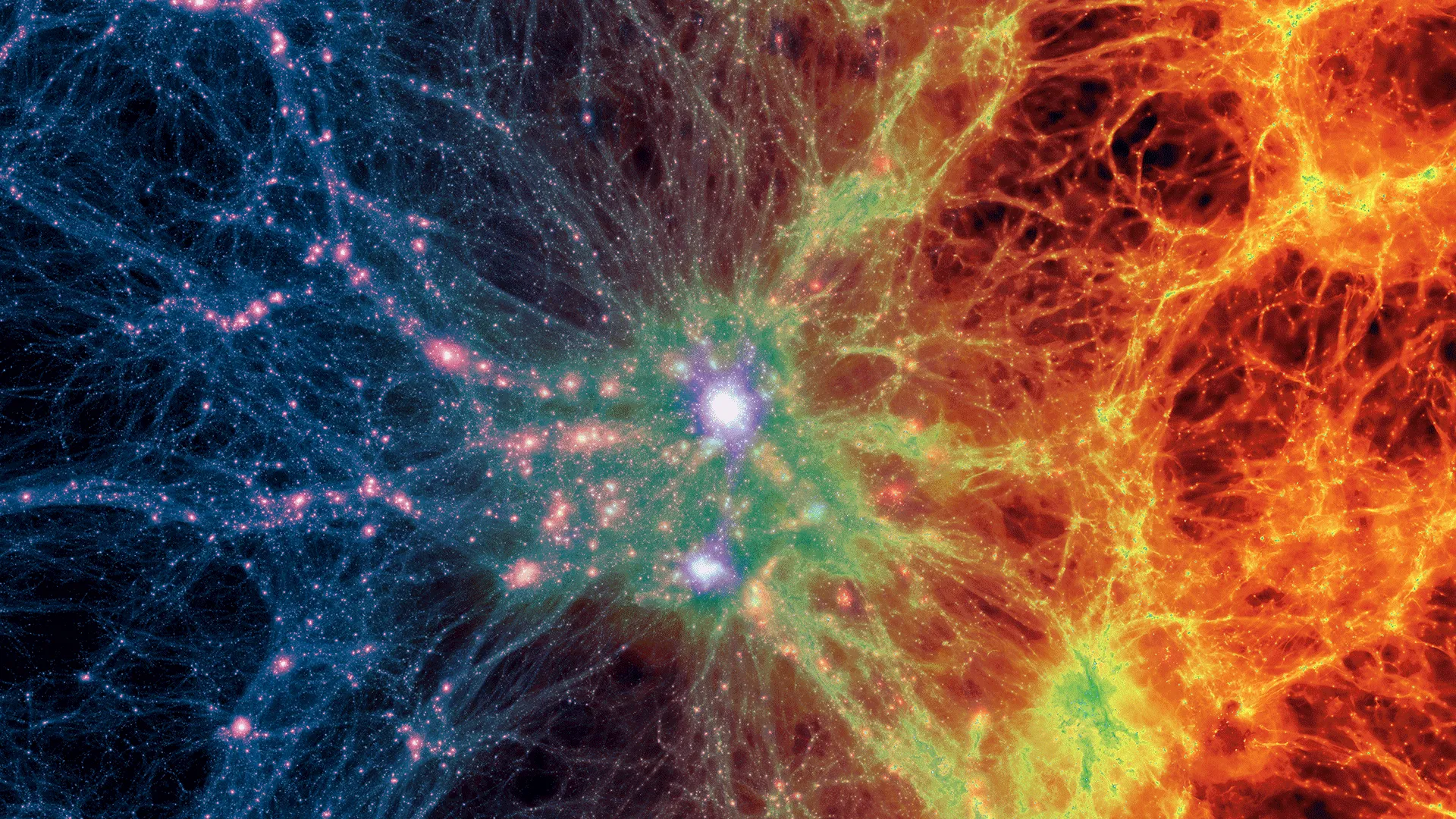
Astronomers have discovered a huge filament of hot gas bridging four galaxy clusters. At 10 times as massive as our galaxy, the thread could contain some of the Universe’s ‘missing’ matter, addressing a decades-long mystery.

The astronomers used the European Space Agency’s XMM-Newton and JAXA’s Suzaku X-ray space telescopes to make the discovery.

Over one-third of the ‘normal’ matter in the local Universe – the visible stuff making up stars, planets, galaxies, life – is missing. It hasn’t yet been seen, but it’s needed to make our models of the cosmos work properly.

Said models suggest that this elusive matter might exist in long strings of gas, or filaments, bridging the densest pockets of space. While we’ve spotted filaments before, it’s tricky to make out their properties; they’re typically faint, making it difficult to isolate their light from that of any galaxies, black holes, and other objects lying nearby.

New research is now one ofthe first to do just this, finding and accurately characterizing a single filament of hot gas stretching between four clusters of galaxies in the nearby Universe.

“For the first time, our results closely match what we see in our leading model of the cosmos – something that’s not happened before,” says lead researcher Konstantinos Migkas of Leiden Observatory in the Netherlands. “It seems that the simulations were right all along.”

XMM-Newton on the case

Clocking in at over 10 million degrees, the filament contains around 10 times the mass of the Milky Way and connects four galaxy clusters: two on one end, two on the other. All are part of the Shapley Supercluster, a collection of more than 8000 galaxies that forms one of the most massive structures in the nearby Universe.

The filament stretches diagonally away from us through the supercluster for 23 million light-years, the equivalent of traversing the Milky Way end to end around 230 times.

Konstantinos and colleagues characterized the filament by combining X-ray observations from XMM-Newton and Suzaku, and digging into optical data from several others.

The two X-ray telescopes were ideal partners. Suzaku mapped the filament’s faint X-ray light over a wide region of space, while XMM-Newton pinpointed very precisely contaminating sources of X-rays – namely, supermassive black holes – lying within the filament.

“Thanks to XMM-Newton we could identify and remove these cosmic contaminants, so we knew we were looking at the gas in the filament and nothing else,” adds co-author Florian Pacaud of the University of Bonn, Germany. “Our approach was really successful, and reveals that the filament is exactly as we’d expect from our best large-scale simulations of the Universe.”

Not truly missing

As well as revealing a huge and previously unseen thread of matter running through the nearby cosmos, the finding shows how some of the densest and most extreme structures in the Universe – galaxy clusters – are connected over colossal distances.

It also sheds light on the very nature of the ‘cosmic web’, the vast, invisible cobweb of filaments that underpins the structure of everything we see around us.

“This research is a great example of collaboration between telescopes, and creates a new benchmark for how to spot the light coming from the faint filaments of the cosmic web,” adds Norbert Schartel, ESA XMM-Newton Project Scientist.

“More fundamentally, it reinforces our standard model of the cosmos and validates decades of simulations: it seems that the ‘missing’ matter may truly be lurking in hard-to-see threads woven across the Universe.”

Piecing together an accurate picture of the cosmic web is the domain of ESA’s Euclid mission. Launched in 2023, Euclid is exploring this web’s structure and history. The mission is also digging deep into the nature of dark matter and energy – neither of which have ever been observed, despite accounting for a whopping 95% of the Universe – and working with other dark Universe detectives to solve some of the biggest and longest-standing cosmic mysteries.


Share Button

What to do if you think someone has heat exhaustion or heatstroke

Know the signs and what to do if someone is unwell in hot weather.

Share Button

Police maternity investigation to interview staff

Police are determining if criminal action should be taken over errors at two Shropshire hospitals.

Share Button