Cell death discovery could lead to next-gen drugs for neurodegenerative conditions

Researchers have discovered how to block cells dying, in a finding that could lead to new treatments for neurodegenerative conditions like Parkinson’s and Alzheimer’s.

The team at WEHI in Melbourne, Australia, have identified a small molecule that can selectively block cell death.

Published in Science Advances, the findings lay the groundwork for next-generation neuroprotective drugs for degenerative conditions, which currently have no cure or treatments to stop their progression.

At a glance

  • Researchers have discovered how to block cell death, an important first step towards slowing neurodegenerative conditions.

  • The study from team at WEHI, including researchers from the Parkinson’s Disease Research Centre, has revealed new insight into the mechanisms behind cell death and how it is controlled.

  • The discovery was made possible through the advanced screening technologies of the National Drug Discovery Centre.

A new hope in the fight against degenerative conditions

Millions of cells are programmed to die in our bodies every day. But excessive cell death can cause degenerative conditions including Parkinson’s disease and Alzheimer’s disease, with the premature death of brain cells a cause of symptoms in these diseases.

Professor Grant Dewson, co-corresponding author and head of the WEHI Parkinson’s Disease Research Centre, said: “Currently there are no treatments that prevent neurons from dying to slow the progression of Parkinson’s. Any drugs that could be able to do this could be game changing.”

The new study aimed to find new chemicals that block cell death and could be useful to treat degenerative diseases in the future.

To identify novel small molecules, the team worked with researchers in the National Drug Discovery Centre, headquartered at WEHI.

A high-throughput screen of over 100,000 chemical compounds identified one that was effective at stopping cells from dying, by interfering with a well-understood cell death protein.

Co-corresponding author Professor Guillaume Lessene said: “We were thrilled to find a small molecule that targets a killer protein called BAX and stops it working.

“While not the case in most cells, in neurons turning off BAX alone may be sufficient to limit cell death.”

Building on decades of pioneering cell death research

The new research builds on decades of world-leading WEHI discoveries in cell death. A pioneering discovery at WEHI in 1988 of a protein that stopped programmed cell death sparked huge interest in the field, and has since led to a new drug to treat cancer.

While drugs that trigger cell death are transforming treatment of certain cancers, the development of cell death blockers — that could be similarly game-changing for neurodegenerative conditions — has proven challenging.

The new molecule targets a killer protein called BAX which kills cells by damaging mitochondria, the powerhouse of cells.

Lead author and Dewson Lab researcher Kaiming Li said: “For the first time we could keep BAX away from mitochondria and keep cells alive using this molecule.

“This could pave the way for next-generation cell death inhibitors to combat degenerative conditions.”

The study demonstrates the potential to identify drugs that block cell death and may open a new avenue to find much-needed disease-modifying drugs for neurodegenerative conditions such as Parkinson’s and Alzheimer’s.

The WEHI Parkinson’s Disease Research Centre is focusing on its expertise in cell death, ubiquitin signalling, mitochondria and inflammation in the hunt for disease-modifying therapies for Parkinson’s.

By using a multidisciplinary approach to build understanding of the mechanisms behind the disease, the centre hopes to accelerate the discovery of drugs to stop disease progression, transforming the lives of those living with the condition.

The new research was supported by the Bodhi Education Fund and the National Health and Medical Research Council.

Share Button

Care providers say overseas worker crackdown ‘short-sighted’

Many care workers say it is a rewarding job, so the task is how to get more people in the UK to apply.

Share Button

Rugby star part of campaign to better mental health

The England fly-half will be at the University of Surrey promoting a new set of wellbeing exercises.

Share Button

Doctor accused of falsifying artificial mesh records

Tony Dixon was suspended after mesh surgery was found to have caused harm to hundreds of patients.

Share Button

My bowel had to be removed after years of constipation

Kathryn Nicklas said embarrassment as a teenager meant she had struggled to advocate for herself.

Share Button

Rugby club hosts mental health day for pupils

The BBC Radio Northampton Headfest event offers children the chance to learn, relax and get moving.

Share Button

From Kardashian popcorn to pancakes – is the protein health craze worth it?

A rising number of food products contain claims about being a source of protein or being rich in it.

Share Button

Weight-loss drugs tested in head-to-head trial

Scientists test Mounjaro and Wegovy – the big beasts of weight loss medication – to see which is best.

Share Button

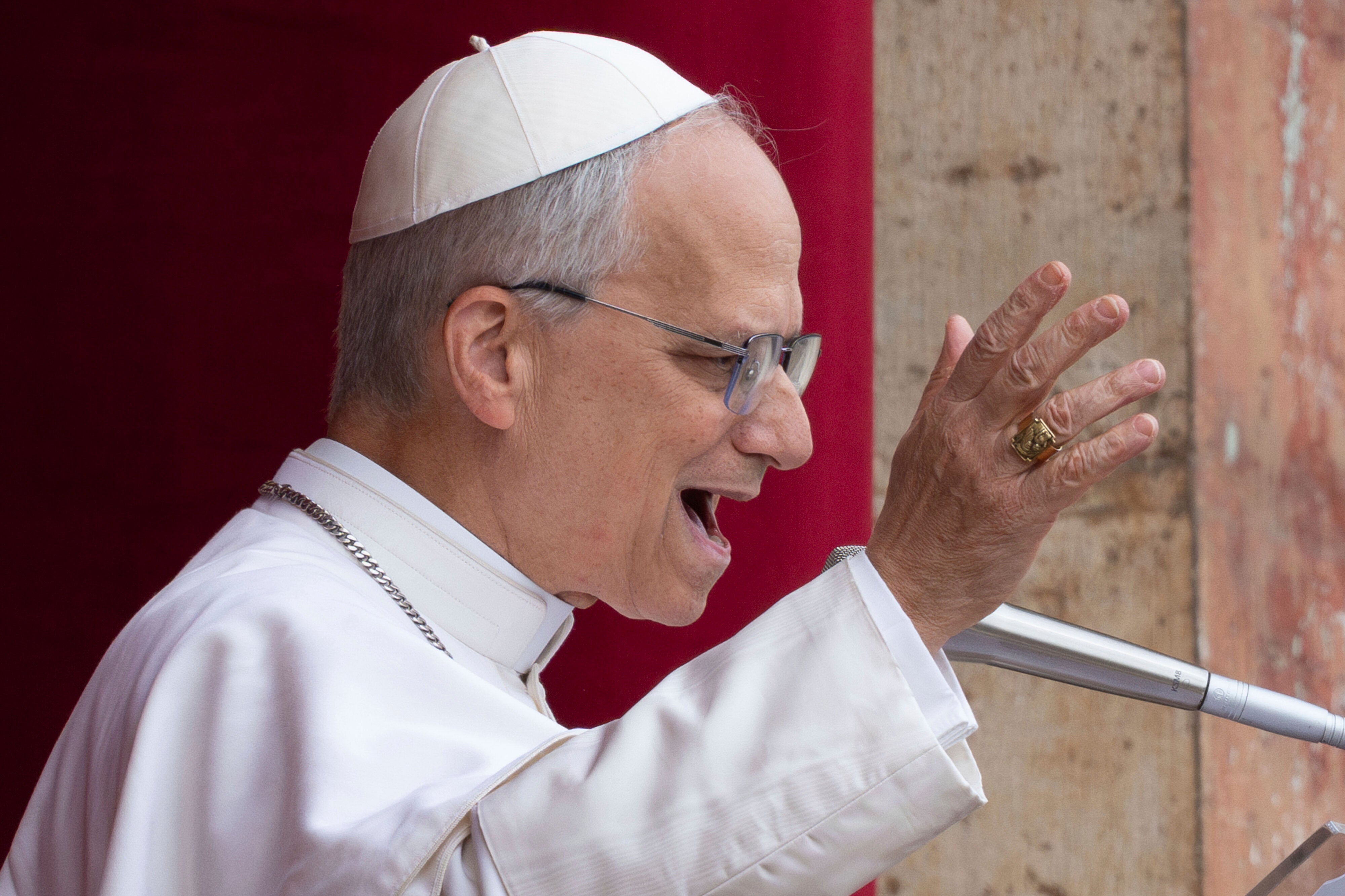
Pope Leo XIV Calls For End To All Wars In First Sunday Blessing As Pontiff

Pope Leo XIV wasted no time making his position clear on global conflict, using his first Sunday blessing as pontiff to follow in his predecessor’s footsteps and call for an end to all wars currently ravaging the world.

“The immense tragedy of the Second World War ended 80 years ago, after so many millions of victims. And now we’re facing the tragedy of a Third World War in pieces, as Pope Francis often said,” the new pope told the massive crowd from the balcony of St. Peter’s Basilica at the Vatican.

“I too would like to address the powerful people of the world by repeating the ever-present call ‘never again war.’”

Last week’s conclave swiftly resulted in the unprecedented election of the first North American pope ― a 69-year-old missionary who hails from Chicago and spent much of his life in Peru. His first appearance as pontiff came Thursday, where he delivered a message of peace and unity. On Sunday, he called out specific conflicts and war that have divided much of the world.

A crowd attends the first Sunday blessing by Pope Leo XIV at St. Peter's Square in the Vatican, on May 11. Leo (formerly Robert Francis Prevost) was elected to the papacy on May 8 following the death of Pope Francis on April 21.
A crowd attends the first Sunday blessing by Pope Leo XIV at St. Peter’s Square in the Vatican, on May 11. Leo (formerly Robert Francis Prevost) was elected to the papacy on May 8 following the death of Pope Francis on April 21.

Laura Lezza via Getty Images

“I carry in my heart the suffering of the beloved Ukrainian people,” Leo said, referring to Russia’s yearslong war against its neighbour. “May whatever is possible be done to reach an authentic, true and lasting peace as quickly as possible. May all the prisoners be freed. May children return to their families.”

The pope also said that he is “deeply hurt” by the humanitarian crisis facing Gaza due to Israel’s invasion. Leo called for a ceasefire to “immediately come into effect,” for desperately needed aid to reach Palestinian families and for all hostages to be freed.

Leo added that he was “happy to hear” of the ceasefire agreement between India and Pakistan, expressing his hope that the two nuclear powers can negotiate a “lasting accord.” Just hours after the ceasefire, however, both countries allegedly restarted their bombing campaigns.

Before Leo, Pope Francis gained a reputation for his progressive reforms and for speaking on behalf of marginalised peoples who bear the consequences of global conflict and war launched by major powers. Both the public and a polarized Catholic Church had been waiting to see if the new pope would follow his predecessor’s lead.

Pope Leo XIV speaks from the central balcony of St. Peter's Basilica, where he delivered his first Sunday blessing to the faithful gathered in St. Peter's Square, on May 11.
Pope Leo XIV speaks from the central balcony of St. Peter’s Basilica, where he delivered his first Sunday blessing to the faithful gathered in St. Peter’s Square, on May 11.

Domenico Stinellis via Associated Press

“My hope would be that he has, now, a new platform to reintroduce what the church has always called for in terms of its social justice agenda, and it will give people another opportunity to take a second look at what Francis was saying – but now in the words and the voice of an American who speaks like an American. I think that’s going to be very powerful going forward,” Cardinal Blase Cupich, archbishop of Chicago, told ABC’s This Week on Sunday.

Pope Francis frequently butted heads with the United States, specifically the Trump administration in regards to immigrants. Cupich said that Leo will continue his predecessor’s work in standing up for the vulnerable ― including in his home country, the US.

“I think he’s going to help complete and complement our political agenda. He’ll talk a lot about the immigrants as well because he knows about the sufferings of people and the real needs that they have for a better life,” Cupich said.

“And he knows too that people in Oceania, for instance, where the rising sea levels are just overwhelming those islands, where people are trying to escape; he sees the drug trade that’s happening in Central and South America, where there are weapons from the United States going there,” he continued. “He knows that those people need an option. And he’ll for, I think, as the bishops have in the United States, fixing this broken immigration system.”

Share Button

Need Baby Name Inspo? These Were The Most Popular In America Last Year

The data is in! The Social Security Administration has released its official list of the most popular baby names of 2024.

For the sixth straight year, the No. 1 name for girls is Olivia, which overtook Emma in 2019. Meanwhile, Liam is still the most popular name for boys for the eight year in a row. Noah and Emma also held steady as the No. 2 names.

The SSA compiles the annual list based on the names parents in the US gave their babies born in the previous year. Although the top name rankings usually don’t super dramatically from year to year, there were a few interesting small changes from 2023 to 2024.

Amelia surpassed Charlotte for the No. 3 spot, Mia jumped up to No. 5 in place of Sophia, and Evelyn knocked Ava down a ranking. Meanwhile, Sofia (with an f) joined the top 10 for the first time ever last year as the 10th most popular name for girls, ousting Luna from the list.

As for the boys, Theodore jumped up three places from No. 7 to No. 4. Henry is now the sixth most popular name for boys, having risen two spots, and Mateo moved down to seventh.

Without further ado, here are the top 10 girls’ and boys’ names of 2024.

Share Button