Carbon-based quantum technology

Quantum technology is promising, but also perplexing. In the coming decades, it is expected to provide us with various technological breakthroughs: smaller and more precise sensors, highly secure communication networks, and powerful computers that can help develop new drugs and materials, control financial markets, and predict the weather much faster than current computing technology ever could.

To achieve this, we need so-called quantum materials: substances that exhibit pronounced quantum physical effects. One such material is graphene. This two-dimensional structural form of carbon has unusual physical properties, such as extraordinarily high tensile strength, thermal and electrical conductivity — as well as certain quantum effects. Restricting the already two-dimensional material even further, for instance, by giving it a ribbon-like shape, gives rise to a range of controllable quantum effects.

This is precisely what Mickael Perrin’s team leverage in their work: For several years now, scientists in Empa’s Transport at Nanoscale Interfaces laboratory, headed by Michel Calame, have been conducting research on graphene nanoribbons under Perrin’s leadership. “Graphene nanoribbons are even more fascinating than graphene itself,” explains Perrin. “By varying their length and width, as well as the shape of their edges, and by adding other atoms to them, you can give them all kinds of electrical, magnetic, and optical properties.”

Ultimate precision — down to single atoms

Research on the promising ribbons isn’t easy. The narrower the ribbon, the more pronounced its quantum properties are — but it also becomes more difficult to access a single ribbon at a time. This is precisely what must be done in order to understand the unique characteristics and possible applications of this quantum material and distinguish them from collective effects.

In a new study published recently in the journal Nature Electronics, Perrin and Empa researcher Jian Zhang, together with an international team, have succeeded for the first time in contacting individual long and atomically precise graphene nanoribbons. Not a trivial task: “A graphene nanoribbon that is just nine carbon atoms wide measures as little as 1 nanometer in width,” Zhang says. To ensure that only a single nanoribbon is contacted, the researchers employed electrodes of a similar size: They used carbon nanotubes that were also only 1 nanometer in diameter.

Precision is key for such a delicate experiment. It begins with the source materials. The researchers obtained the graphene nanoribbons via a strong and long-standing collaboration with Empa’s nanotech surfaces laboratory, headed by Roman Fasel. “Roman Fasel and his team have been working on graphene nanoribbons for a long time and can synthesize many different types with atomic precision from individual precursor molecules,” Perrin explains. The precursor molecules came from the Max Planck Institute for Polymer Research in Mainz.

advertisement


As is often required for advancing the state of the art, interdisciplinarity is key, and different international research groups were involved, each bringing in their own specialty to the table: The carbon nanotubes were grown by a research group at Peking University, and to interpret the results of the study, the Empa researchers collaborated with computational scientists at the University of Warwick. “A project like this would not be possible without collaboration,” Zhang emphasizes.

Contacting individual ribbons by nanotubes posed a considerable challenge for the researchers. “The carbon nanotubes and the graphene nanoribbons are grown on separate substrates,” Zhang explains. “First, the nanotubes need to be transferred to the device substrate and contacted by metal electrodes. Then we cut them with high-resolution electron-beam lithography to separate them into two electrodes.” Finally, the ribbons are transferred onto the same substrate. Precision is key: Even the slightest rotation of the substrates can significantly reduce the probability of successful contact. “Having access to high-quality infrastructure at the Binnig and Roher Nanotechnology Center at IBM Research in Rüschlikon was essential to test and implement this technology,” Perrin says.

From computers to energy converters

The scientists confirmed the success of their experiment through charge transport measurements. “Because quantum effects are usually more pronounced at low temperature, we performed the measurements at temperatures close to absolute zero in a high vacuum,” Perrin explains. But he is quick to add yet another particularly promising quality of graphene nanoribbons: “Due to the extremely small size of these nanoribbons, we expect their quantum effects to be so robust that they are observable even at room temperature.” This, the researcher says, could allow us to design and operate chips that actively harness quantum effects without the need for an elaborate cooling infrastructure.

“This project enables the realization of single nanoribbon devices, not only to study fundamental quantum effects such as how electrons and phonons behave at the nanoscale, but also to exploit such effects for applications in quantum switching, quantum sensing, and quantum energy conversion,” adds Hatef Sadeghi, a professor at the Univeristy of Warwick who collaborated on the project.

Graphene nanoribbons are not ready for commercial applications just yet, and there is still a lot of research to be done. In a follow-up study, Zhang and Perrin aim to manipulate different quantum states on a single nanoribbon. In addition, they plan on creating devices based on two ribbons connected in series, forming a so-called double quantum dot. Such a circuit could serve as a qubit — the smallest unit of information in a quantum computer. Moreover, Perrin, in the context of his recently obtained ERC Starting Grant and an SNSF Eccellenza Professorial Fellowship, plans to explore the use of nanoribbons as highly-efficient energy converters. In his inaugural lecture at ETH Zurich, he paints a picture of a world, in which we can harness electricity from temperature difference, while hardly losing any energy as heat — this would indeed be a real quantum leap.

Share Button

NHS: Is Wales worse than England for waiting lists?

Can waiting times be compared between Wales and England?

Share Button

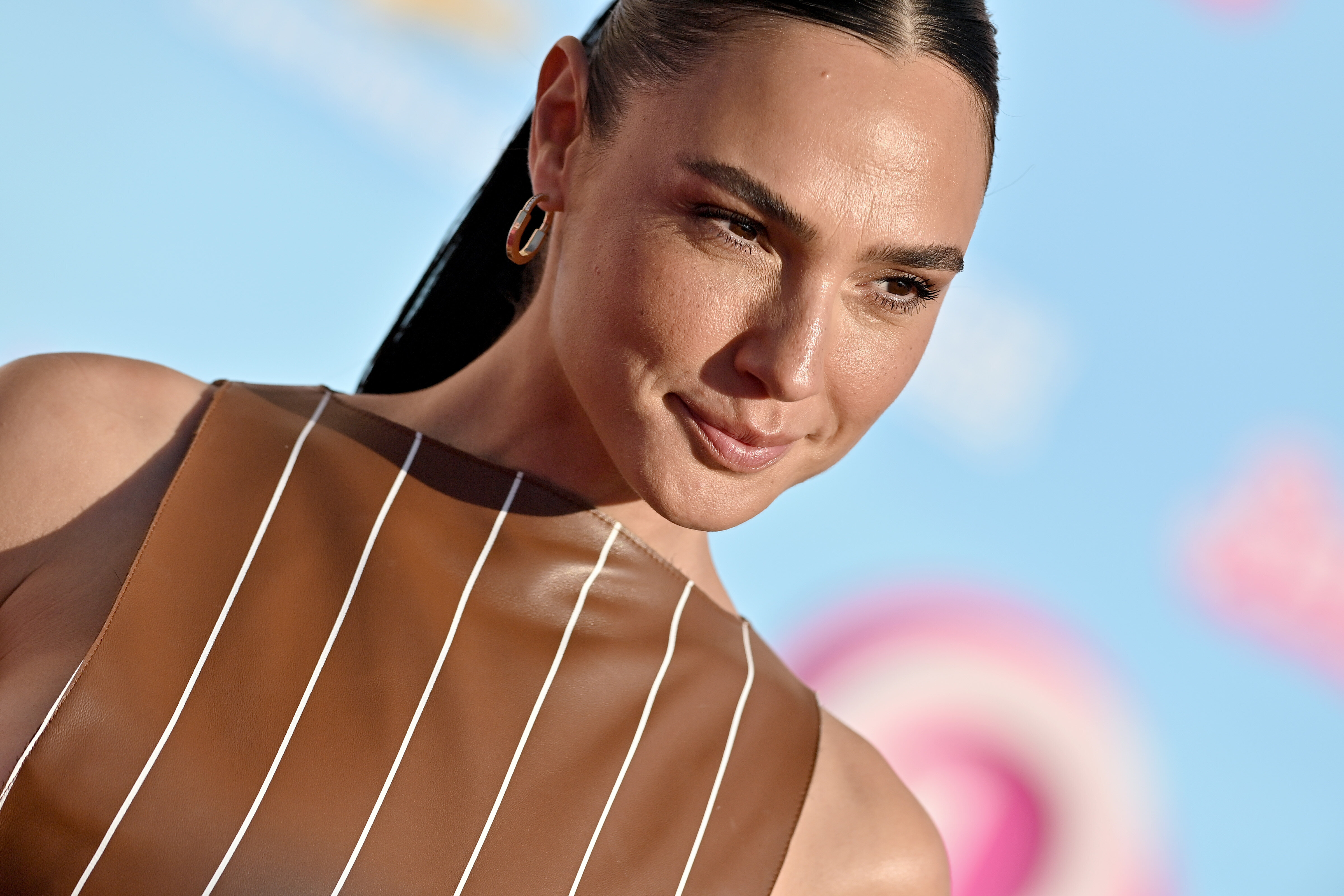
Gal Gadot Shares How She Really Feels About Being Margot Robbie’s First Pick To Play Barbie

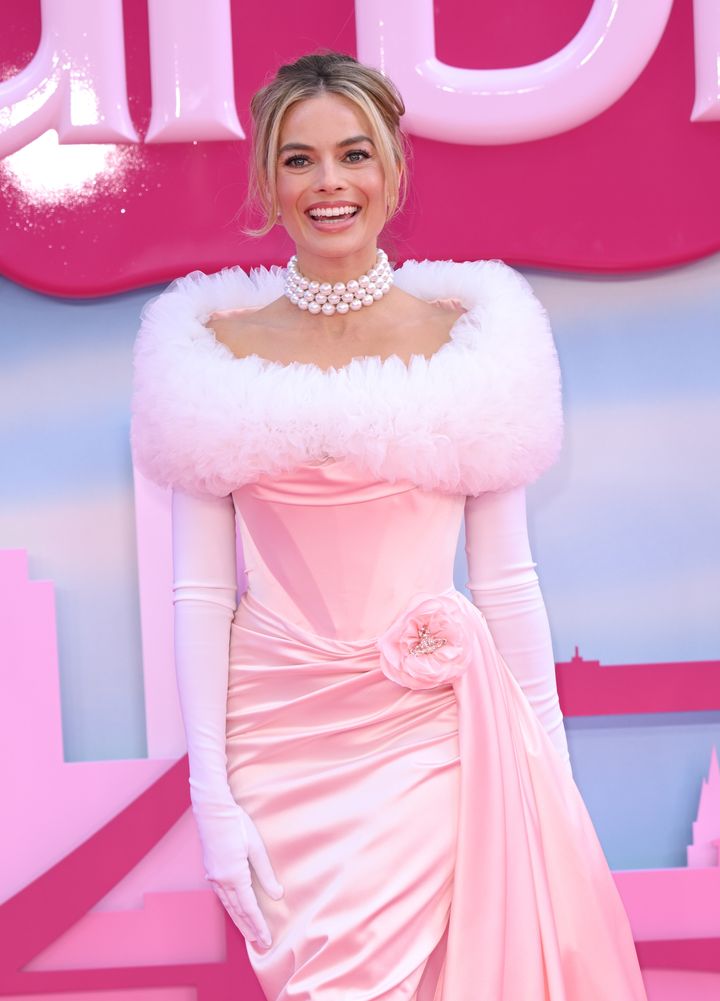
Margot Robbie’s role in Barbie has resonated with millions of fans of the beloved Mattel doll, but the film nearly got a different leading lady: Gal Gadot.

The Australian actor, who was also a producer on the record-breaking movie, first revealed to Vogue back in May ahead of its release, that she and director Greta Gerwig first looked to the Wonder Woman actor to take on the role of Stereotypical Barbie.

But Gal wasn’t available to film at the time.

Gal has since responded to being Margot’s front-runner to play the pink-powered icon. The Israeli actor gushed that she was flattered to be offered the role of the eponymous doll despite not taking it.

“I adore Margot,” Gal recently told Flaunt magazine in an interview that was held before the 2023 SAG-AFTRA strike.

“Margot is one of those women who you just want to be friends with. She is so funny, warm, fun and smart and obviously so talented. She brings so much to the table. I would love to do anything with Margot and was very touched [by her comments].”

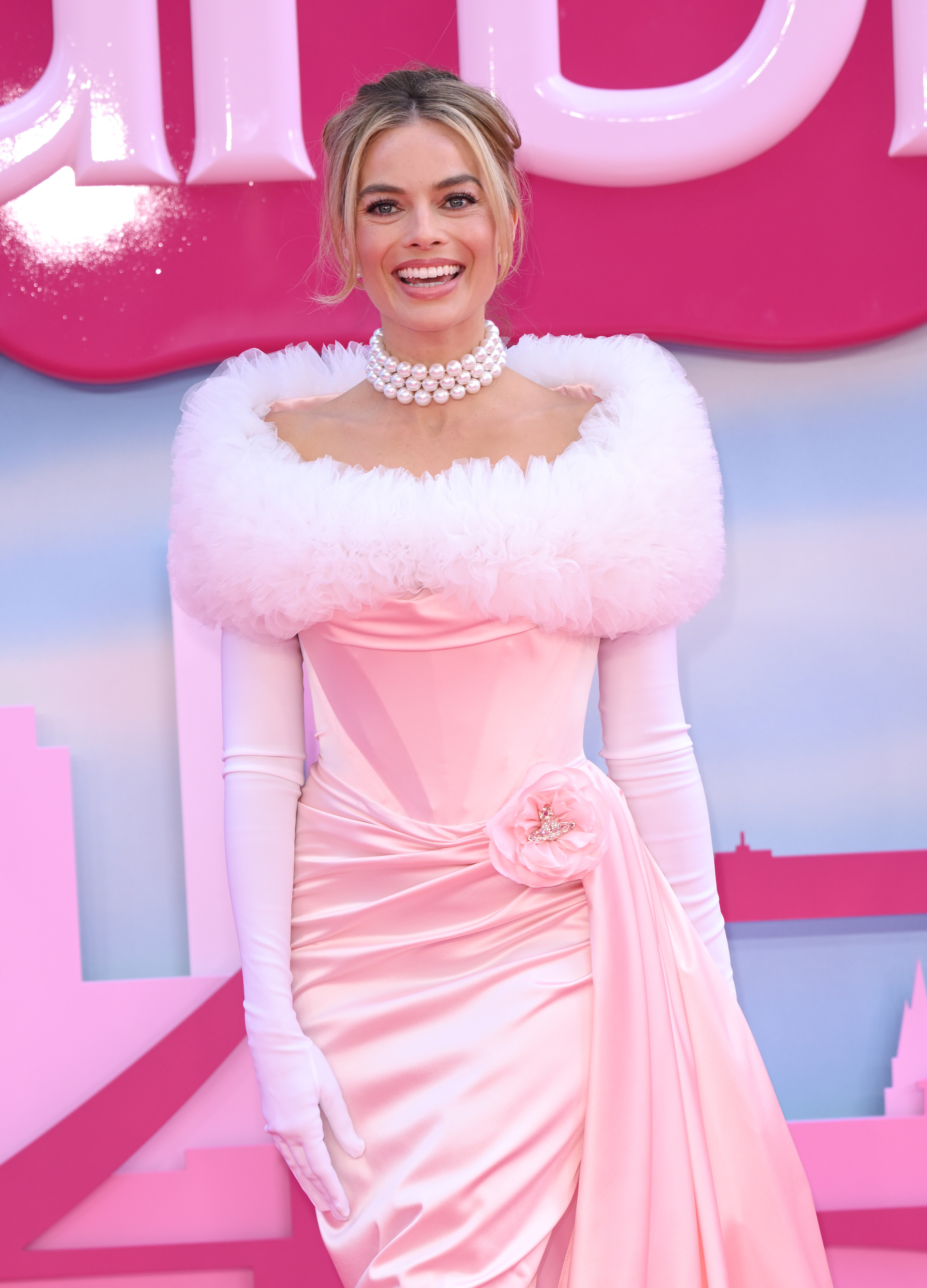
Margot Robbie
Margot Robbie

Karwai Tang via Getty Images

The Heart Of Stone actor added: “She warmed my heart with everything that she said about me. I’m super excited for them, and I’m so excited for Barbie.”

Gal isn’t the only star that Margot and Greta tried to tap to join the massively successful film.

The filmmaker told CinemaBlend before the film hit cinemas that she also tried to get her Lady Bird and Little Women actors Saorise Ronan and Timothée Chalamet to cameo in the movie, but things didn’t quite pan out.

“It was going to be a specialty cameo,” she revealed to the outlet. “I was also going to do a specialty cameo with Timmy. Both of them couldn’t do it and I was so annoyed. But I love them so much. But it felt like doing something without my children. I mean, I’m not their mom, but I sort of feel like their mom.”

With Barbie recently joining the $1 billion club, rumours began flying about a possible sequel, which means Gal might have a chance to visit Barbie Land after all.

Greta further ignited sequel rumors after she told People she hopes the movie “is the launch of a world and a bunch of different Barbie movies.”

“There’s a tone and a humour and a joy, and obviously the world is so beautiful,” the filmmaker added. “I want to go back to Barbie Land.”

Share Button

Billy Porter Continues To Criticise Vogue For Featuring Harry Styles In A Dress

Billy Porter is doubling down on his distaste for Harry Styles’ historic Vogue cover.

In an interview with The Telegraph, Billy claimed that Harry had been chosen to be the first man to land a solo cover for Vogue because he’s “white and straight”. Harry appeared in the publication’s December 2020 issue in a lacy Gucci gown and a Wales Bonner kilted skirt, among other boundary-smashing looks.

“Non-binary blah blah blah blah. No. It doesn’t feel good to me,” said the Pose actor and singer, whose red carpet looks have made him a gender-fluid fashion icon.

“You’re using my community — or your people are using my community — to elevate you. You haven’t had to sacrifice anything.”

For the record, Harry has never labeled his sexuality in interviews or on social media, though he has only been in public relationships with women.

Billy’s harshest criticisms, however, were directed at “the gatekeepers” that permitted Harry to appear on the cover of Vogue, rather than the pop star himself. That group, he explained, includes the magazine’s longtime editor-in-chief, Anna Wintour.

The Emmy winner said he met with Anna for an interview six months before Harry’s Vogue cover was unveiled. During the Q&A, which took place in front of staff at Vogue’s publisher Condé Nast, Billy claims Anna asked for his input on how to approach the rise of gender-fluid fashion.

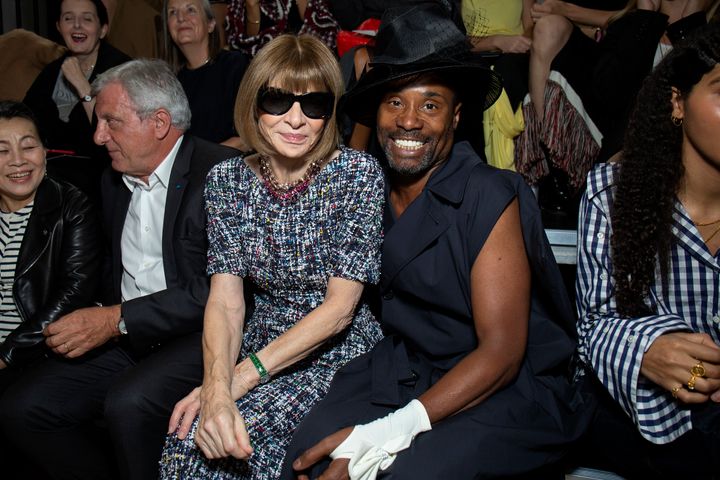
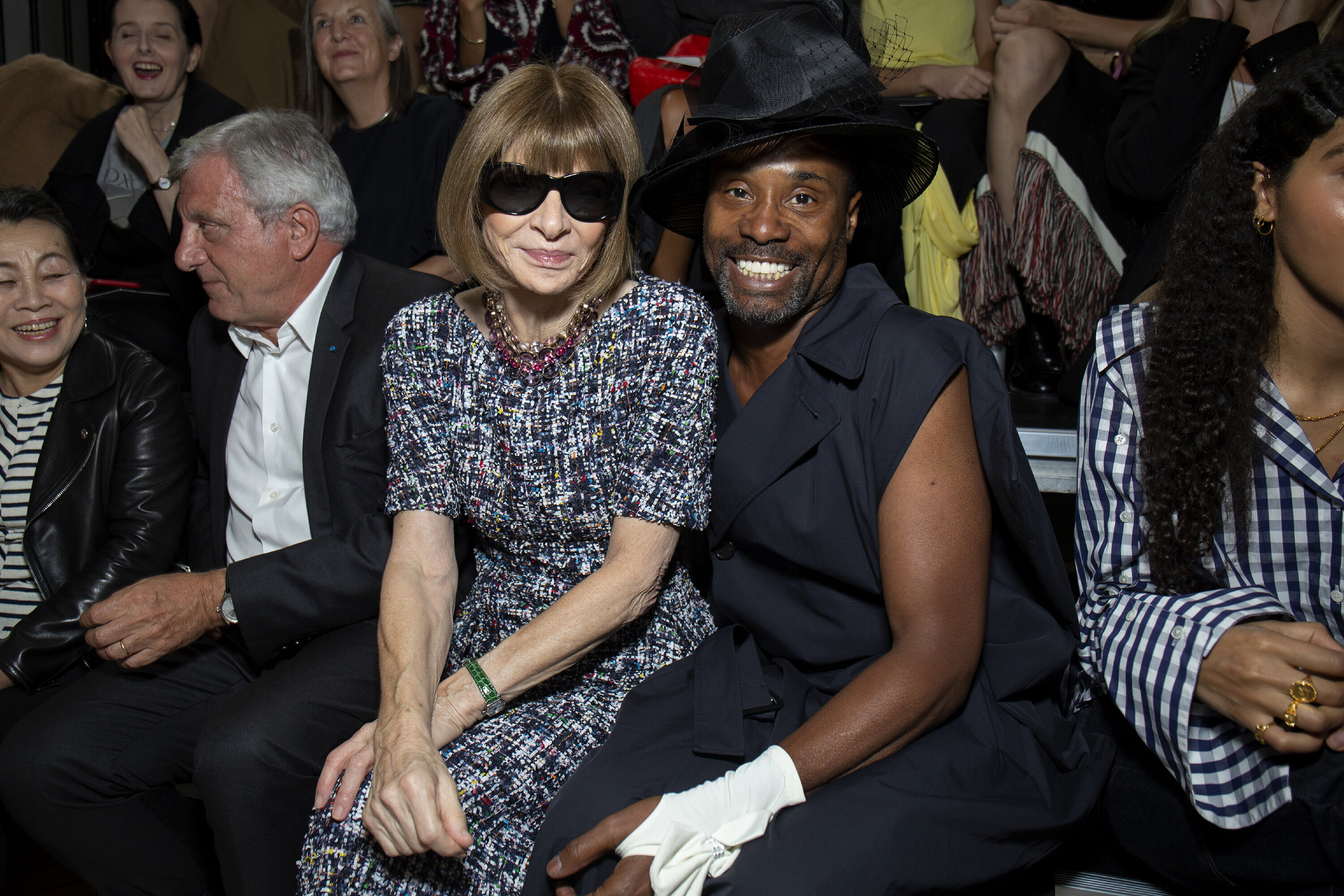
Anna Wintour (left) and Billy Porter in 2019.

Santiago Felipe via Getty Images

“That bitch said to me at the end, ‘How can we do better?’ And I was so taken off guard that I didn’t say what I should have said,” he recalled. In hindsight, he now wishes he would’ve urged the journalist to “use your power as Vogue to uplift the voices of the leaders of this de-gendering of fashion movement”.

Representatives for Vogue did not immediately respond to HuffPost’s request for comment.

Billy ― who is currently promoting a new album, Black Mona Lisa ― previously called out Harry and Vogue in a 2021 interview with The Sunday Times.

“I created the conversation [about gender-fluid fashion] and yet Vogue still put Harry Styles, a straight white man, in a dress on their cover for the first time,” he said at the time.

“He doesn’t care, he’s just doing it because it’s the thing to do. This is politics for me. This is my life. I had to fight my entire life to get to the place where I could wear a dress to the Oscars and not be gunned now.”

Just weeks later, Billy clarified his remarks while appearing on The Late Show.

“Harry Styles, I apologise to you for having your name in my mouth,” he said. “It’s not about you. The conversation is not about you.”

Share Button

Linda Evangelista Shares Sweet Story About Her Son’s Stepmother Salma Hayek

Linda Evangelista might utter the name “Salma Hayek” when asked what she’s grateful for during Thanksgiving.

During an interview with Vogue, Linda opened up about what it was like co-parenting her teenage son, Augustin, with the Oscar nominee. Augustin is the son of the Frida star’s husband, French billionaire François-Henri Pinault.

The supermodel told the magazine that she mostly spends holidays with Salma and François-Henri, but there was one time where she couldn’t partake in the festivities.

“I was sick at Thanksgiving,” she said. “And Salma got on the plane with her daughter, came here, and made Thanksgiving dinner.”

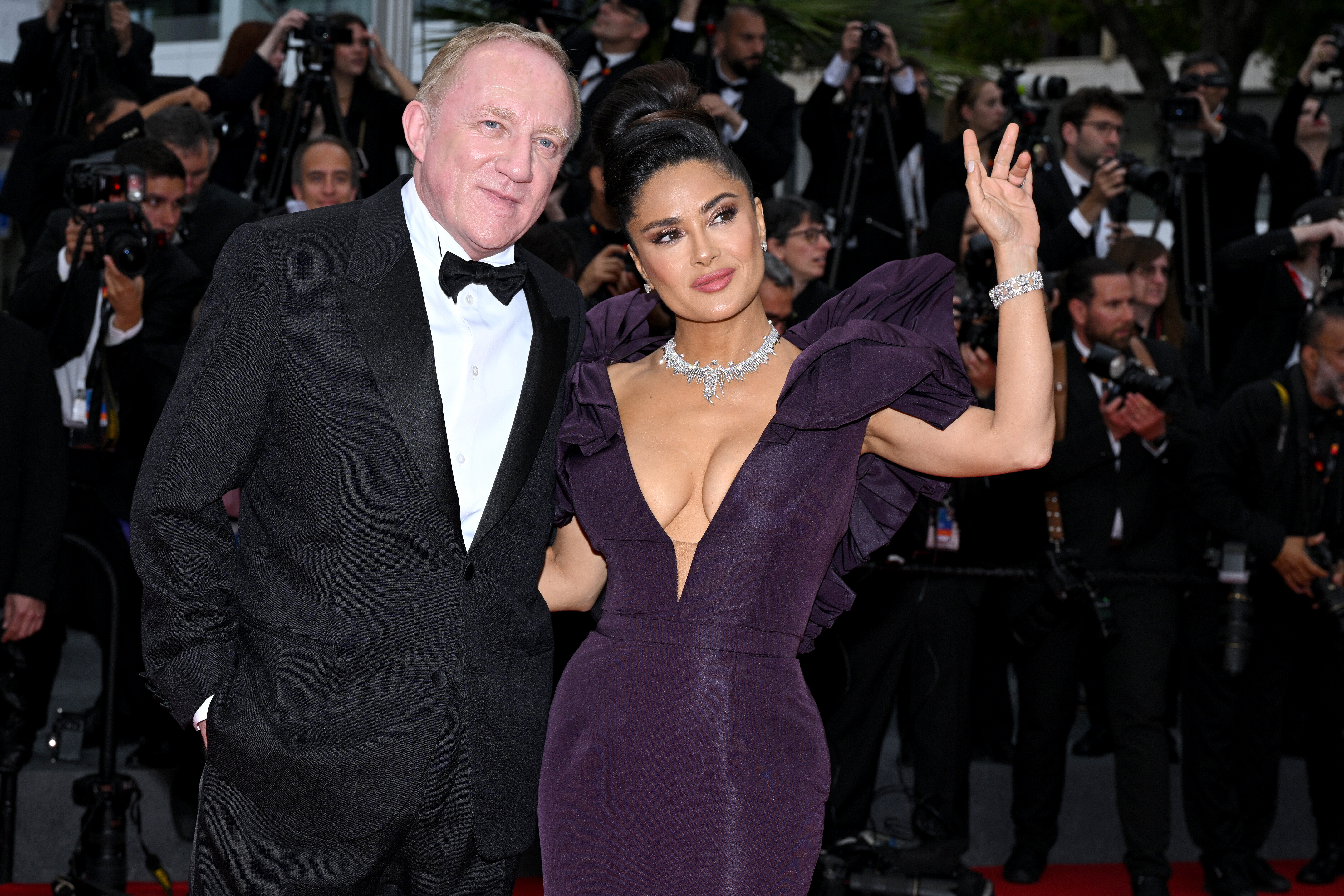
François-Henri Pinault and Salma Hayek attend the "Killers of the Flower Moon" red carpet in May.
François-Henri Pinault and Salma Hayek attend the “Killers of the Flower Moon” red carpet in May.

Lionel Hahn via Getty Images

When the Black Mirror actor asked Linda what she wanted to eat, she responded with an “eclectic wish list”.

“I wanted her Mexican chicken with truffled potatoes. And she spent the day in the kitchen and cooked it herself. No help,” she recalled.

“The kids helped her at the end. She made a feast — a beautiful, beautiful meal. I had told her that I wasn’t going to have Thanksgiving; I wasn’t feeling well. And she said, ‘Oh yes you are: I am coming.’ And poof, she was here.”

Linda and her ex dated for four months between 2005 and 2006, and Augustin was born in October later that year, according to People. However it wasn’t until Linda filed court documents in 2011, seeking child support, that confirmed François-Henri was the father.

Salma then married him in 2009, but the two welcomed their daughter, Valentina Paloma Pinault, in 2007.

Linda also told Vogue that she wants her son to have a “normal upbringing” despite his mother’s fame and his father’s vast wealth.

She shared that she and Augustin are both big sports fans, and she would get free tickets to sit courtside at Madison Square Garden, but no longer gets that perk anymore.

“Now we buy our tickets and we sit with the fans in nosebleed — we’re fine with that.”

Augustin, however, seems to miss the VIP treatment. Linda noted that sometimes her son gets annoyed when they have to wait in lines.

“What’s wrong with standing in this line? I stand in lines,” Linda tells her son. “We went to Chanel a couple of weeks ago to get a present and we waited half an hour to get in. He said, ‘Isn’t there someone you could call?’”

But she says she doesn’t relent.

“I do not want an entitled child,” she said.

Share Button

Eating disorder psychologist ‘made patients sicker’

Multiple women say they were told to take part in ‘bizarre’ treatment practices by a psychologist.

Share Button

Mum fears NHS trust cover-up over Cambridgeshire suicides review

Hannah Roberts’s mother heard about a review into the NHS trust’s suicides via the media.

Share Button

Weight-loss apps to offer NHS help to obese

The draft health guidance says more people will benefit from access to online support.

Share Button

£250m funding for more hospital beds in England this winter

Government funding will provide 900 new hospital beds by January, with 4,100 to follow soon after.

Share Button

Scientists explore dinosaur ‘Coliseum’ in Denali National Park

University of Alaska Fairbanks scientists have discovered and documented the largest known single dinosaur track site in Alaska. The site, located in Denali National Park and Preserve, has been dubbed “The Coliseum” by researchers.

The Coliseum is the size of one-and-a-half football fields and contains layer upon layer of prints preserved in rock. The site is a record of multiple species of dinosaurs over many generations that thrived in what is now Interior Alaska nearly 70 million years ago. The scientists describe the site in a paper recently published in the journal Historical Biology.

“It’s not just one level of rock with tracks on it,” said Dustin Stewart, the paper’s lead author and a former UAF graduate student who published the paper as part of his master’s thesis. “It is a sequence through time. Up until now, Denali had other track sites that are known, but nothing of this magnitude.”

At first glance, the site is unremarkable in the context of the park’s vast landscape: just a layered, rocky outcrop rising 20-some stories from its base.

“When our colleagues first visited the site, they saw a dinosaur trackway at the base of this massive cliff,” said Pat Druckenmiller, senior author of the paper and director of the University of Alaska Museum of the North. “When we first went out there, we didn’t see much either.”

Stewart recalled being initially underwhelmed when he approached the site at the end of a seven-hour hike. Then dusk approached, and the team took another look.

“When the sun angles itself perfectly with those beds, they just blow up,” he said. “Immediately all of us were just flabbergasted, and then Pat said, ‘Get your camera.’ We were freaking out.”

In the Late Cretaceous Period, the cliffs that make up The Coliseum were sediment on flat ground near what was likely a watering hole on a large flood plain. As Earth’s tectonic plates collided and buckled to form the Alaska Range, the formerly flat ground folded and tilted vertically, exposing the cliffs covered with tracks.

advertisement


The tracks are a mix of hardened impressions in the ancient mud and casts of tracks created when sediment filled the tracks and then hardened.

“They are beautiful,” Druckenmiller said. “You can see the shape of the toes and the texture of the skin.”

In addition to the dinosaur tracks, the research team found fossilized plants, pollen grains, and evidence of freshwater shellfish and invertebrates.

“All these little clues put together what the environment looked like as a whole,” Stewart said.

The area was part of a large river system, he said, with ponds and lakes nearby. The climate in the area was warmer than today, more like the Pacific Northwest. There were coniferous and deciduous trees and an understory of ferns and horsetails.

Based on the tracks, a variety of juvenile to adult dinosaurs frequented the area over thousands of years. Most common were large plant-eating duck-billed and horned dinosaurs. The team also documented rarer carnivores, including raptors and tyrannosaurs, as well as small wading birds.

advertisement


Every year, thousands of people visit Denali National Park and Preserve to experience the stunning natural landscape and environment, Druckenmiller said. “It’s amazing to know that around 70 million years ago, Denali was equally impressive for its flora and fauna.

“It was forested and it was teeming with dinosaurs,” he said. “There was a tyrannosaur running around Denali that was many times the size of the biggest brown bear there today. There were raptors. There were flying reptiles. There were birds. It was an amazing ecosystem.”

Preserving fossil sites like The Coliseum is an important part of the National Park Service’s mission, said Denny Capps, the park’s geologist.

“On one hand, we must protect world-class fossil sites like The Coliseum from disturbance and theft,” he said. “On the other hand, we encourage visitors to explore for fossils in their geologic context to better grasp the evolution of landscapes and ecosystems through time, while leaving them undisturbed for others to appreciate.”

Druckenmiller plans to continue collaborating with the National Park Service to study The Coliseum and other track sites.

“Our track research in the park complements our work on dinosaur bones we collect in northern Alaska, along the Colville River,” Druckenmiller said. “Denali National Park and Preserve is a world-class area for dinosaur tracks. There is a lifetime of exploring left to do, and I can only wonder what other surprises await.”

Share Button