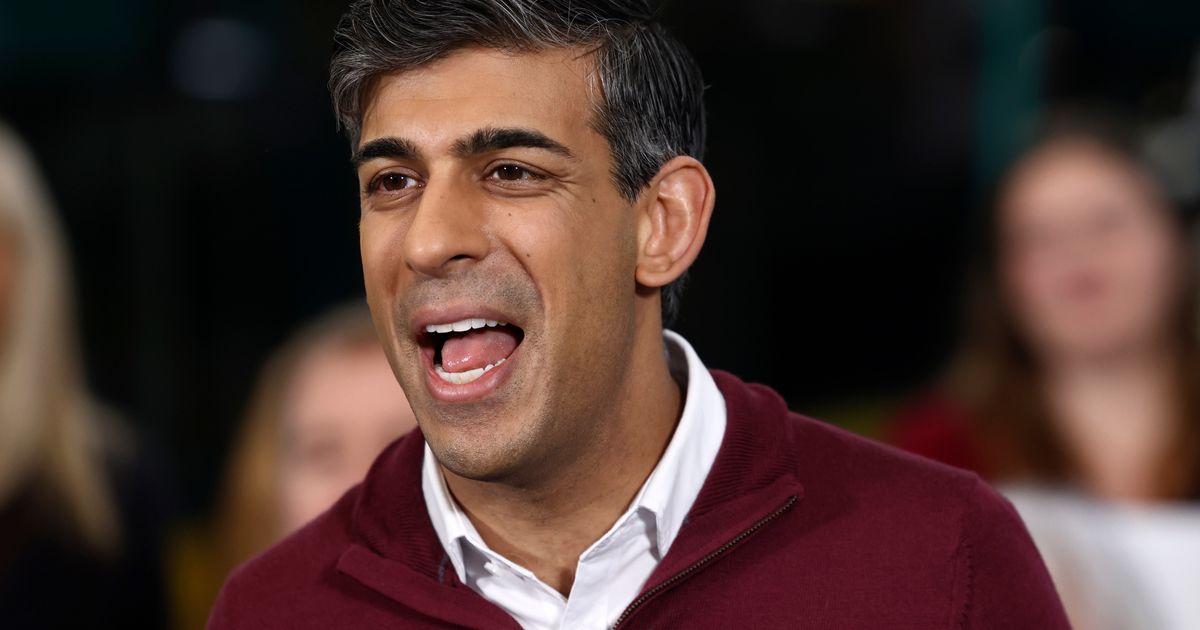
Rishi Sunak Urged To Ignore Hardliners In Tory Battle Over Human Rights Laws

A fresh Tory civil war over immigration has erupted after Rishi Sunak was warned not to give in to his right-wing backbenchers by ignoring human rights laws.

The prime minister is planning to unveil emergency legislation within days to ensure deportation flights to Rwanda finally get off the ground after the Supreme Court ruled the policy was illegal last month.

Members of different groups of right-wing Tory MPs are joining forces to pile pressure on Sunak to opt out of European Convention on Human Rights rulings on asylum cases as a way of preventing that happening again.

They are prepared to vote against the government bill if they do not think it goes far enough.

But in a fresh headache for the PM, the One Nation Caucus of moderate Tory MPs has warned him it would be “a mistake” to ignore the ECHR.

The group’s chair, Damian Green, said: “The UK has for generations been a world-leader on human rights. We have set the standard on what a law-abiding, well-functioning democracy should look like.

“Successive Conservative governments have played a vital role in creating and protecting the ECHR as well as the refugee and torture conventions. We have continued to hold these treaties dear and they should be seen as a fundamental part of protecting the UK’s democratic legacy.”

Green, who was Theresa May’s de facto deputy when she was prime minister, added: “The government should think twice before overriding both the ECHR and Human Rights Act and not rush such long term, difficult decisions.”

Matt Warman, another member of the One Nation Caucus, said: “Overriding the ECHR is a red line for a number of Conservatives.

“Protecting and reforming institutions and upholding human rights should be the cornerstone of any Conservative government.”

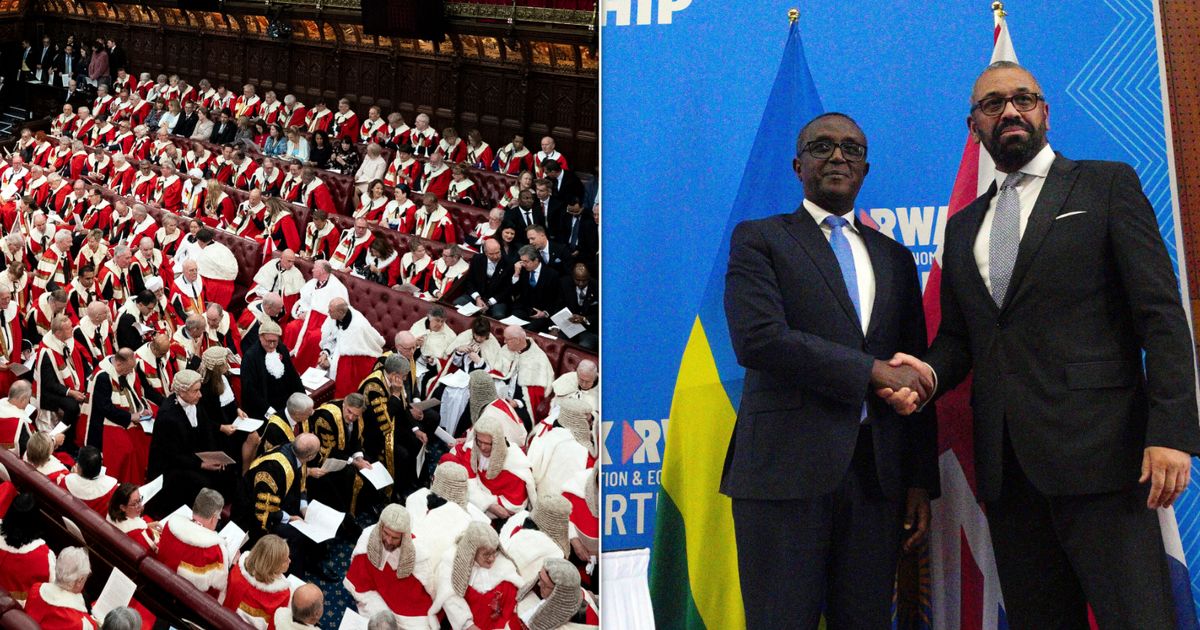
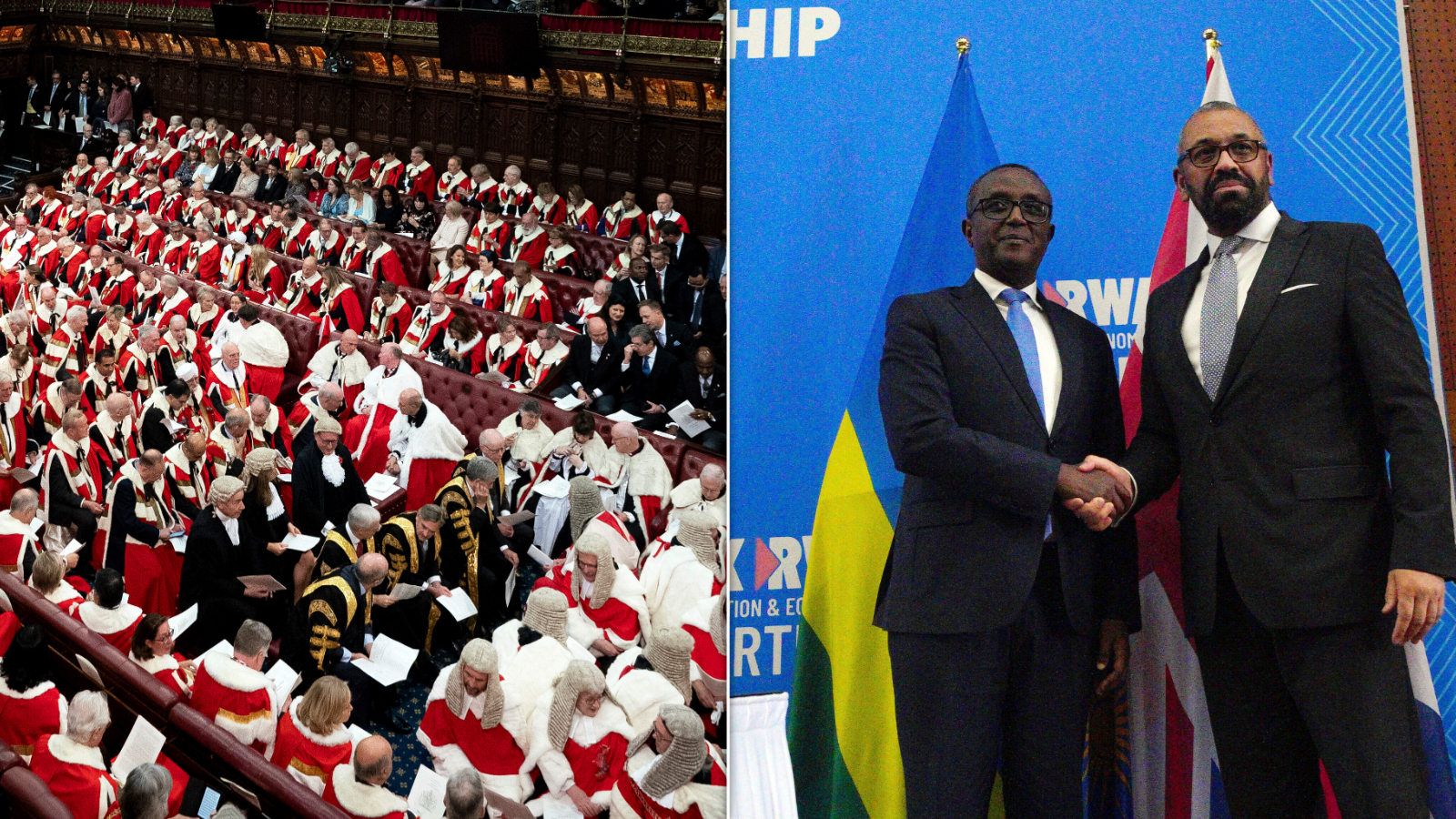
The row comes as James Cleverly became the third Tory home secretary to sign an agreement with the Rwandan government over the deportation plan.

Priti Patel first announced the controversial policy in April 2022, but since then not a single asylum seeker has been sent to the east African country.

The new treaty seeks to address the concerns raised by the Supreme Court, especially the judges’ concerns that migrants could end up being sent back to their home countries.

Cleverly said: “I am grateful to our Rwandan partners for their willingness, dedication and commitment to strengthening this partnership further.

“The Supreme Court recognised that changes may be delivered which would address their conclusions – this treaty responds directly to that.”

Share Button

James Cleverly Announces Major Crackdown On Migration Following Record Numbers

Foreign workers will need to earn at least £38,700 to be given a visa to come to the UK under plans to slash net migration.

Home secretary James Cleverly told the House of Commons that the move was part of a five-point plan to bring down the numbers of immigrants coming to the UK by 300,000 a year.

It comes after new figures revealed two weeks ago that 672,000 more people entered the UK than left it in the 12 months to June.

The Tories’ 2019 general election manifesto pledged to bring the figure down to less than 229,000.

Right-wing Tory backbenchers have warned Rishi Sunak that the party could cease to exist unless it keeps its promise to voters.

Cleverly said he was increasing the minimum salary threshold for foreign workers from £26,200 to £38,700, although it will not apply to those coming to work in health and social care.

The minimum income requirement for anyone wanting to move foreign family members with them will also more than double to £38,700.

Overseas care workers will be banned from bringing dependents with them to the UK, while the shortage occupation list, which allows companies to hire overseas workers for 20% less than the going rate, will be scrapped.

The immigration health surcharge, paid by foreigners who use the NHS, will also be increased from £624 to £1,035, while the graduate visa route will also be reviewed amid concerns it is currently being abused.

He told MPs that immigration was “far too high” and that ministers were now “taking more robust action than any government before” to deal with it.

He said the government’s plans would lead to the “biggest ever reduction in net migration” and mean 300,000 a year fewer people coming to the UK in future.

The home secretary added: “We have taken decisive action to reduce legal migration – enough is enough.”

Shadow home secretary Yvette Cooper said Cleverly’s statement was “an admission of total failure for years by the Conservative government – failure on the immigration system and failure on the economy”.

Christina McAnea, general secretary of the Unison trade union, said: “These cruel plans spell total disaster for the NHS and social care. They benefit no one.

“Migrant workers were encouraged to come here because both sectors are critically short of staff. Hospitals and care homes simply couldn’t function without them.

“There’s also a global shortage of healthcare staff. Migrants will now head to more-welcoming countries, rather than be forced to live without their families.

“The government is playing roulette with essential services just to placate its backbenchers and the far-right.”

Share Button

Sky News Presenter Mocks Tory Minister Over Government’s Stalled Rwanda Plan

A Tory minister was told that the only person the government has managed to send to Rwanda is home secretary James Cleverly as a Sky News presenter mocked the stalled policy.

Rishi Sunak’s aim of deporting asylum seekers to the east African country was dealt a hammer blow last month when the Supreme Court ruled it was unlawful.

The prime minister has pledged to introduce “emergency legislation” too address the judges’ concerns about the policy.

Meanwhile, the Sunday Times reports today the government is planning to give the Rwandan government another £15 million to secure a new immigration treaty between the two countries.

On Trevor Phillips on Sunday this morning, health secretary Victoria Atkins was put on the spot over the policy’s ongoing problems.

Phillips told her: “The only person who seems to be on their way to Rwanda at the moment actually is the home secretary, James Cleverly. There’s no asylum seekers going there any time soon.

″When he was here, he told me they were going to introduce emergency legislation urgently to make it possible to send asylum seekers to Rwanda for processing and that was weeks ago.

″It can’t be that much of an emergency because we haven’t seen the legislation.”

Atkins replied: “We are very much working across government on this. It will take a little bit of time to draw up this legislation because we want to make sure it’s in the right form.”

Asked if the legislation would be ready by Christmas, she would only say: “I know that the home secretary is working incredibly hard and quickly on this.”

Sunak is under huge pressure from his backbenchers to get flights to Rwanda off the ground to give him a chance of meeting his pledge to “stop the boats” carrying asylum seekers across the Channel.

But the cabinet is split over whether the new legislation should give the government the right to ignore rulings under the European Convention on Human Rights and the Human Rights Act.

Share Button

‘It’s Going The Wrong Way’: Health Secretary Shown How The Tories Have Failed On NHS Waiting Lists

A Tory minister was told NHS waiting lists were “going the wrong way” despite Rishi Sunak’s pledge to bring them down.

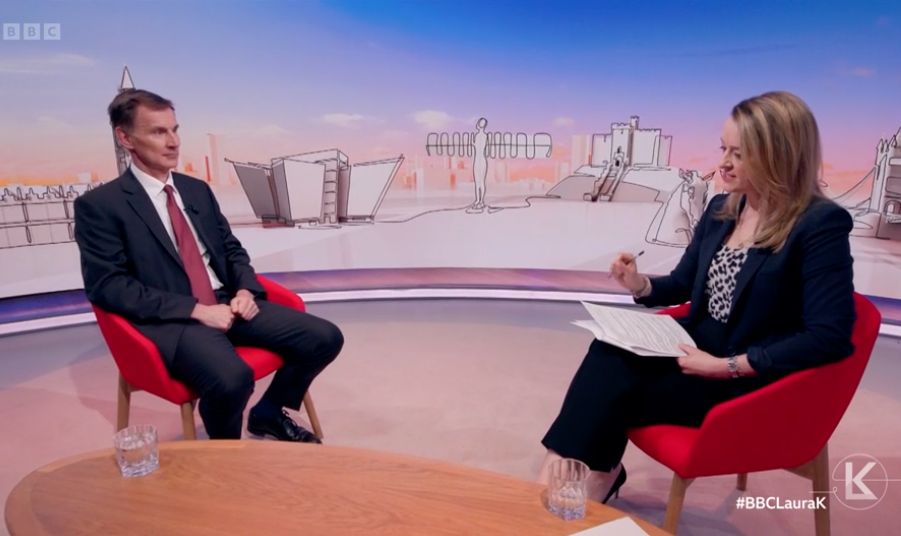
Health secretary Victoria Atkins was shown a damning graph setting out how the lists have almost doubled in the last five years to almost 8 million.

That is despite the prime minister vowing at the start of the year that they would be lower within 12 months.

Appearing on Sunday with Laura Kuenssberg on BBC One this morning, Atkins refused to confirm that the lists would be down in time for the next election.

Pointing to the graph, Kuenssberg said: “This is what has happened to waiting lists. We know of course the pandemic made things much more challenging, but our viewers can see it was going up well before the pandemic.

“Lots more money has gone in, there are many, many more staff. This is the situation that people are having to deal with.

“This is the prime minister’s target and it’s going the wrong way.”

The minister claimed the long-running industrial action by doctors and nurses was to blame for the government’s failure.

“Since December last year we’ve seen some 1.1 million appointments have to be rescheduled,” she said.

Atkins said the government has reached a pay agreement with unions representing NHS consultants, and that talks were ongoing with junior doctors as well.

But Kuenssberg pointed out that Atkins’ predecessor as health secretary, Steve Barclay, had refused to negotiate with the trade unions for months.

“You’ve said that the strikes are a big reason why the waiting lists are sky high and people are suffering,” she said. “Why then did the government sit on its hands for months refusing to talk to the doctors. Isn’t that responsibility on you too?”

The presenter went on: “With the numbers going the wrong way, can you commit that you’re actually going to hit these targets before the general election?”

The minister replied: “We are looking to meet those targets, but I need the consultants to pass this settlement that we have put forward.”

Kuenssberg replied: “You’re saying that if the doctors accept the new deal, the prime minister might hit his targets. But if you don’t, he won’t.”

Atkins said: “We’re doing everything we can.”

The graph Atkins was shown setting out how waiting lists have soared.
Share Button

Keir Starmer Faces Left-Wing Backlash After Praising Margaret Thatcher

Keir Starmer is facing a left-wing backlash after he lavished praise on Margaret Thatcher as he attempts to persuade Tory voters to back Labour at the next election.

He said the former prime minister – a hate figure for many – had “sought to drag Britain out of its stupor by setting loose our natural entrepreneurialism” during her 11 years in office.

The Labour leader also said Thatcher, like ex-Labour PMs Tony Blair and Clement Attlee, had brought about “meaningful change” in the UK.

But his comments, in an article for the Sunday Telegraph, received fierce criticism from many of those on the left of British politics.

Andrew Fisher, a former senior adviser to Jeremy Corbyn when he was Labour leader said Thatcher had “set loose unemployment and inequality” in the country.

Former Labour mayor Jamie Driscoll, who left the party after failing to get selected as an election candidate, accused Starmer of “abandoning the Red Wall”.

Left-wing singer Billy Bragg posted on X: “Oh fuck off.”

Labour-supporting Daily Mirror journalist Kevin Maguire said Thatcher had “turbo-charged inequality, created mass unemployment, flogged public assets on the cheap to her mates and tried to crush trade unions”.

Asked about Starmer’s words on Sky News this morning, health secretary Victoria Atkins said: “I think the public will see this for what it is.

“Don’t forget he wasn’t appealing to Margaret Thatcher’s entrepreneurial spirit when he was courting votes from the hard left.

“And I suspect the great lady herself would view a man who is trying to ride on the coattails of her success with the following words: No, no, no.”

Elsewhere in his Sunday Telegraph article, Starmer said he wanted to “extend the hand of friendship to you, no matter where you are or who you have voted for in the past” – a clear pitch to disaffected Tories.

He said: “Across Britain there are people who feel disillusioned, frustrated, angry, worried. Many of them have always voted Conservative but feel that their party has left them. I understand that.

“I saw that with my own party and acted to fix it. But I also understand that many will still be uncertain about Labour. I ask them to take a look at us again.”

The Labour leader also accused the Conservatives of squandering “the possibilities of Brexit”.

Share Button

King Charles Wears Tie With Greek Flag At COP28 Amid UK’s Row With Athens

King Charles caused quite the stir with his outfit choice during his keynote speech at COP28 on Friday.

While at first glance it may appear pretty subtle, upon closer inspection, the Greek flag appears to have been printed on the monarch’s blue and white tie, with a similar pattern seen on his pocket-square.

Earlier this week, prime minister Rishi Sunak triggered a diplomatic row with Greece when he decided to cancel a meeting with his Greek counterpart at the last minute.

No.10 claim it was because Kyriakos Mitsotakis broke his promise not to publicly discuss Greece’s demand for the UK to return the 2,500-year-old Elgin Marbles (or Parthenon sculptures) to their place of origin – Greece.

This has led to significant public backlash against Sunak for his supposed “petulance”.

Sending subtle political messages through clothing, while outwardly maintaining your place as an apolitical figurehead, was an art Charles’ mother Queen Elizabeth II was well-known for.

The Queen’s decision to wear a blue hat with yellow circles on it at the 2017 state opening of parliament was widely perceived as a sign of solidarity with the EU at a time when Brexit negotiations were pulling Westminster apart.

The Queen’s dresser Angela Kelly later denied any political intent behind the outfit, saying it “never occurred to her” that it would be comparable to the EU flag.

The King has managed to steer clear of direct intervention in politics since ascending the throne in September last year – as his role demands – despite his reputation as the “activist prince” when he was the heir apparent.

He does have Greek heritage through his father, the late Prince Philip who was born in Corfu as the Prince of Greece and Denmark, and has visited the European country on multiple occasions.

However, the King did also seem to wear the same tie last week, when meeting the South Korean president – before the Elgin Marbles row kicked off.

Charles meeting the South Korea president on November 21

CHRIS JACKSON via Getty Images

Share Button

Bewildered By Language Used In COP28? 5 Key Climate Terms, Explained

The largest climate summit of the year began this week amid hope that world leaders may actually agree to an effective deal to target the environmental crisis.

The 28th Conference Of Parties – COP28 – is being held in Dubai, UAE, this year, and will run from November 30 to December 12.

Activists are looking for governments to agree for a more equitable management of the environment this year, as extreme weather hit almost every part of the planet over the last 12 months.

What’s decided at COP28 could therefore be very consequential – but it can be hard to understand what’s happening through all of the jargon.

So here’s a breakdown of some of the phrases we can expect to see this year.

1. Abated fossil fuels

The abatement of fossil fuels does not have an official definition, but is loosely meant to describe reducing use of the carbon-spewing resources.

It pops up regularly in climate commitment plans – it turned up seven times in the April G7 summit’s final statement – but the exact definition has not been spelt out by governments.

According to the UN’s Intergovernmental Panel on Climate Change (IPCC), it often alludes to the controversial practise of carbon capture and storage.

Critics see that as a means for the fossil fuel companies to continue selling the product, and it has been widely described as a delay tactic which stops companies from having to phase out fuels.

Supporters of abatement argue that this is needed for the foreseeable future, as the planet is not even close to phasing out fossil fuels altogether.

2. Climate finance

The UN describes climate finance as “local, national or transnational financing—drawn from public, private and alternative sources of financing—that seeks to support mitigation and adaptation actions that will address climate change”.

Effectively, developed nations promise to pass some funds onto developing countries that have fewer resources to defend against the climate crisis.

COPs have repeatedly agreed to pass more finances onto other countries since 1992.

Back in 2009, the parties agreed to share $100 billion a year from developed countries to developing countries by 2020, but this target was missed.

This year’s COP will see countries debate several controversial elements of climate financing: how the finance is allocated; how much goes to adaptation; and how much goes to loss and damage.

3. Carbon pricing

Carbon pricing ties the cost the public ends up paying for greenhouse gas emissions – from crop damage to sea level rise – to their sources through a price, according to the World Bank Group.

This usually means putting a price on the amount of CO2 emitted, in an effort to put the carbon burden back onto the producers of the fossil fuels, while also boosting revenue to help the environment.

President of the European Commission, Ursula von der Leyen, said in her opening remarks that there must be a “price on carbon”.

She said: “Carbon pricing nudges the private sector towards innovation. It makes heavy polluters pay a fair price. And the revenues can be reinvested in the fight against climate change, in innovation and in a just transition.”

Activists march with a Just Stop Oil banner during a demonstration in Trafalgar Square.

SOPA Images via Getty Images

4. The UN Global Stocktake (GST)

This is a measure for countries (and other stakeholders) to see where they’re collectively making progress toward meeting the goals of the Paris Agreement, according to the UN.

It describes this as a “critical turning point” when it comes to addressing climate change, and akin to “taking inventory”.

The first ever global stocktake is going to conclude at the end of COP28, and will take place every five years after that.

It’s likely to be pretty damning considering scientists have warned we are still a long way off limiting global temperature change to 1.5C compared to pre-industrial levels.

“Governments will take a decision on the global stocktake at COP28, which can be leveraged to accelerate ambition in their next round of climate action plans due in 2025,” the UN said.

The GST is also meant to inform future NDCs.

5. Nationally Determined Contributions (NDCs)

These are the pledges at the centre of the Paris Agreement, and they’re unique to each country. They are submitted every five years to the UN – so the next ones will be due in 2025.

Each nation tries to see how it can reduce national emissions and adapt to climate change by taking these actions.

The UN understands these targets will be harder for developing countries to achieve, so emission reduction is “undertaken on the basis of equity, and in the context of sustainable development as well as efforts to eradicate poverty”.

Share Button

Earlier Lockdown Would Have Saved ‘Many, Many Lives’, Matt Hancock Claims

Locking the UK down three weeks earlier would have saved “many, many lives” during the Covid pandemic, Matt Hancock has claimed.

The former health secretary said the measures should have been introduced on March 2, 2020 instead of March 23.

He admitted that he was speaking with the benefit of hindsight and defended the government’s decision to hold off from locking down the country at the time.

Hancock was speaking during his second evidence session at the Covid Inquiry.

He said: “At the time, there was still enormous uncertainty, the number of cases was still very low – in fact, there were only 12 cases reported on March 1 – and the costs of what I’m proposing were known and huge.

“So I defend the actions that were taken by the government at the time, knowing what we did, but with hindsight, that’s the moment we should have done it, three weeks earlier, and it would have been, would have saved, many, many lives.

“Having obviously thought about this and reflected on this a huge deal over the last few years, the first moment we realistically could have really cracked it was on March 2, three weeks earlier than we did.”

Hancock was also accused by Dominic Cummings of lying to the inquiry over his claim that he had pushed then prime minister Boris Johnson on March 13 to order a lockdown.

Cummings posted on X (formerly Twitter): “Hancock flat out lying to inquiry claiming he privately pushed for lockdown on 13th with PM – but admits there’s no evidence for it .”

An ally of Hancock hit back: “Cummings is not a reliable witness and this tweet is wrong.

“Matt called Boris on 13th, argued for lockdown on 14th and then Boris invited Matt into the smaller meeting after Cummings had tried to exclude him.”

Share Button

Dominic Cummings Has Accused Matt Hancock Of ‘Flat Out Lying’ To The Covid Inquiry

Dominic Cummings has accused Matt Hancock of “flat out lying” to the Covid Inquiry by claiming he was the first to push for the UK to go into lockdown.

The former health secretary Hancock claimed he urged then prime minister Boris Johnson to enforce a lockdown on March 13, 2020.

But in a scathing post on X (formerly Twitter) as Hancock was still giving evidence to the inquiry, Cummings said that was untrue.

He said: “Hancock flat out lying to Inquiry claiming he privately pushed for lockdown on 13th with PM – but admits there’s no evidence for it .”

Cummings also claimed that he “physically stopped” the then-health secretary coming to a meeting the following day because he “was bull****ting everybody about herd immunity”.

But an ally of Hancock said: “Cummings is not a reliable witness and this tweet is wrong.

“Matt called Boris on 13th, argued for lockdown on 14th and then Boris invited Matt into the smaller meeting after Cummings had tried to exclude him.”

Giving evidence today, Hancock told the inquiry that Cummings was a “malign influence” who created a toxic “culture of fear” in government.

Cummings is not the first witness to accuse the former health secretary of dishonesty.

In an earlier evidence session, former chief scientific adviser Patrick Vallance told the inquiry that Hancock had a habit of saying things that “were not true”.

And Helen MacNamara claimed he “regularly” told colleagues things “they later discovered weren’t true”.

Former deputy cabinet secretary Helen MacNamara also said Hancock would say things “which surprise people because they knew the evidence base wasn’t there”.
Hancock refuted these claims during his evidence session.

Covid inquiry counsel Hugo Keith also seemed skeptical at the legitimacy of Hancock’s lockdown assertions. He asked why there was no mention of it in his book, Pandemic Diaries.

“There is a whole page on how you woke up from the dawn flight to Belfast … you then went to Cardiff and so on.

“Telling the prime minister of this country, for the first time, that he had to call an immediate lockdown, is surely worthy of some recollection, is it not?”

Hancock replied: “I didn’t have full access to my papers for the writing of that, and this came to light in researching the papers ahead of this inquiry.”

Share Button

Dominic Raab Had ‘Five Minutes Notice’ He Was Taking Over Running The Country

Dominic Raab has said he was given “five minutes notice” that he was taking over the running of the country from Boris Johnson during the pandemic.

The former foreign secretary told the Covid inquiry on Wednesday he believed the government “did a reasonable job” during his time in charge.

He stepped up as de facto prime minister in April 2020 when Johnson was incapacitated due to being serious ill with Covid.

At the time, Raab was also first secretary of state, with Johnson having told him “you’ve got my back” if he ever became unable to do his job.

Raab revealed he was told by officials he would need to take charge moments after wrapping up one of the Downing Street daily press conferences on April 6.

“I was effectively told on five minutes’ notice,” he told the inquiry.

The chance Johnson could die triggered a crisis at the top of government and Raab said he needed to “steady the ship”.

“We actually did a reasonable job during that four, five weeks”, Raab said, thanks to “British pragmatism”.

Raab also said he was wary of imposing too much of his own will on the government while serving as interim-PM.

“I didn’t want anyone saying Dom Raab is enjoying this just a bit too much,” he said. “I wasn’t. I was there to do a job.”

“I was mindful of not looking like I was camping out in No.10 while my prime minister was ill-disposed.”

The Covid inquiry is still due to hear from Rishi Sunak, Johnson and Matt Hancock.

Share Button